
What It Really Means When A Mourning Dove Keeps Landing In Your Pennsylvania Yard
Follow us on Google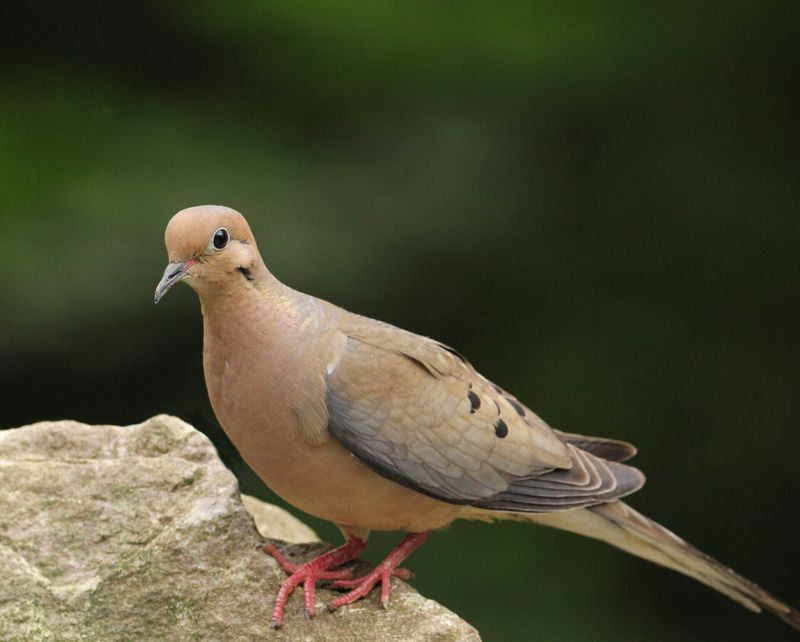
You step outside on a quiet April morning, coffee still warm in your hand, and there it is again, a soft gray bird sitting in the same spot as yesterday.
Mourning doves have a way of stopping people in their tracks, partly because of that low, aching coo that sounds almost like it carries a message.
For a lot of Pennsylvania homeowners, a repeat visitor starts to feel personal, and that feeling deserves a real answer.
What the bird is actually telling you about your yard is more grounded, and honestly more useful, than you might expect.
The Visit Has A Natural Explanation And A Personal Meaning
Mourning doves are hard to ignore.
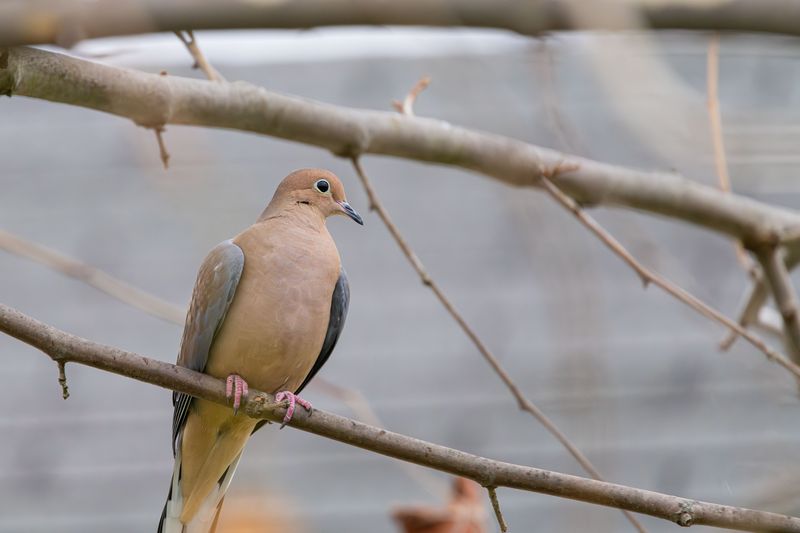
Their plumage runs from warm tan to soft gray, with a black spot behind each eye and a tail that fans into a pointed wedge when they land.
That sound, the slow, mournful coo repeated two or three times, is where the name comes from, and it has been pulling at human feelings for a very long time.
Across religious traditions and cultural histories, doves broadly carry associations with peace, love, grief, and remembrance.
Many people who lose someone they love find comfort in the idea that a visiting dove carries a message from that person.
That comfort is real, and there is nothing wrong with holding it.
What wildlife sources do not support is the claim that a mourning dove is proof of a specific supernatural event, a prediction, or a direct communication from a deceased individual.
Those readings belong to personal belief and cultural symbolism, not to the bird’s behavior.
The evidence-based place to start is your yard itself.
Cornell Lab’s species account for mourning doves describes birds that respond to accessible seeds, open ground, scattered trees, nearby perches, cover from weather, and dependable water.
A yard that keeps offering those things is a yard a dove will keep returning to.
The meaning you attach to that is yours to keep, and the habitat explanation does not take it away.
It just gives you something practical to work with alongside it.
Accessible Seeds May Be Bringing It Back
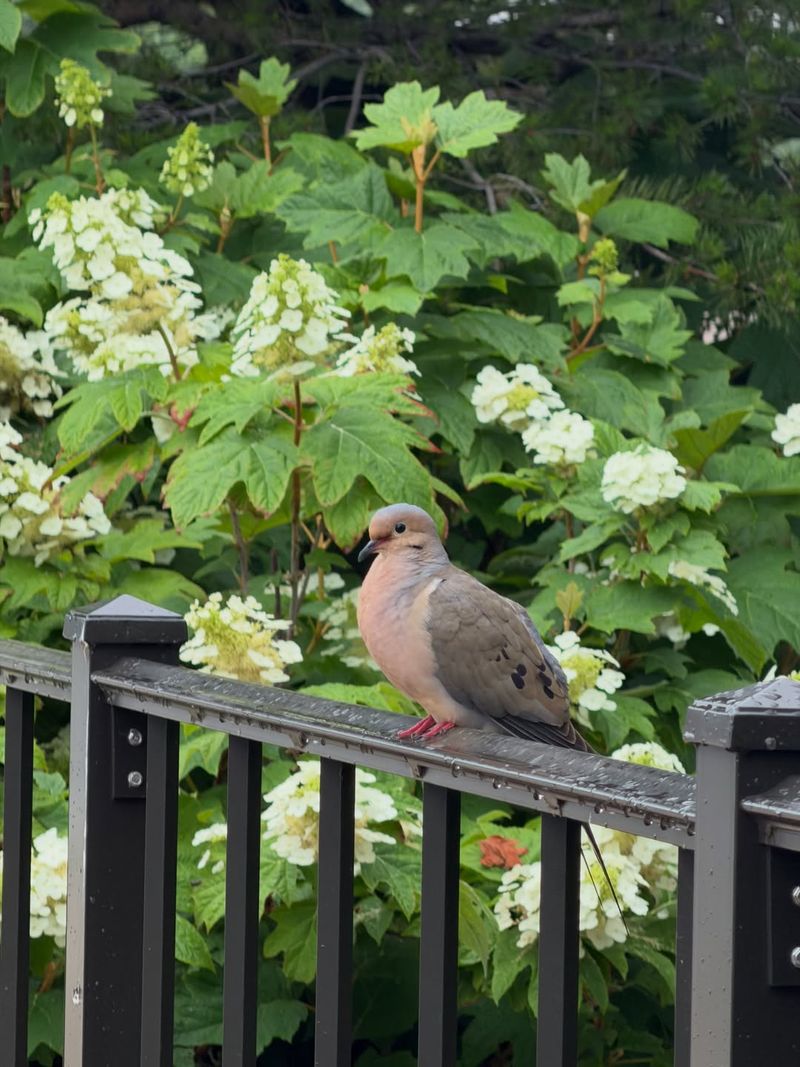
Seeds make up roughly 99 percent of a mourning dove’s diet, according to Cornell’s species research, and Pennsylvania Game Commission material puts weed seeds and waste grains at about 98 percent of what these birds actually eat.
That is not a bird that dabbles in seeds between other meals.
Seeds are essentially the whole story.
What makes mourning doves different from many backyard birds is how they eat.
They do not scratch through leaves the way a towhee or a chicken does.
They walk slowly and pick seeds directly from bare ground or very shallow litter.
A lightly exposed patch of soil beneath a feeder, a strip of gravel at the garden edge, or a spot where grass has thinned out can all look like an open invitation.
If the dove keeps landing in roughly the same location, spend a minute looking at what is on the ground there.
Pennsylvania Game Commission guidance describes mourning doves as common visitors to areas with weed seeds, waste grain, and spilled birdseed.
Native grasses, sedges, sunflower, and millet can all contribute usable seed.
That said, not every weed in a Pennsylvania yard is a wildlife benefit.
Some common weeds are invasive or simply unwanted in a residential landscape, and framing all of them as dove food overstates the case.
The bird is finding accessible seeds, full stop.
It is not judging your landscaping choices or acting as a pest-control crew.
Mourning doves eat almost no insects, so counting on one to handle spotted lanternflies or Japanese beetles is not a reasonable expectation.
Open Edges Give The Dove A Complete Route
Dense forest does not suit mourning doves well.
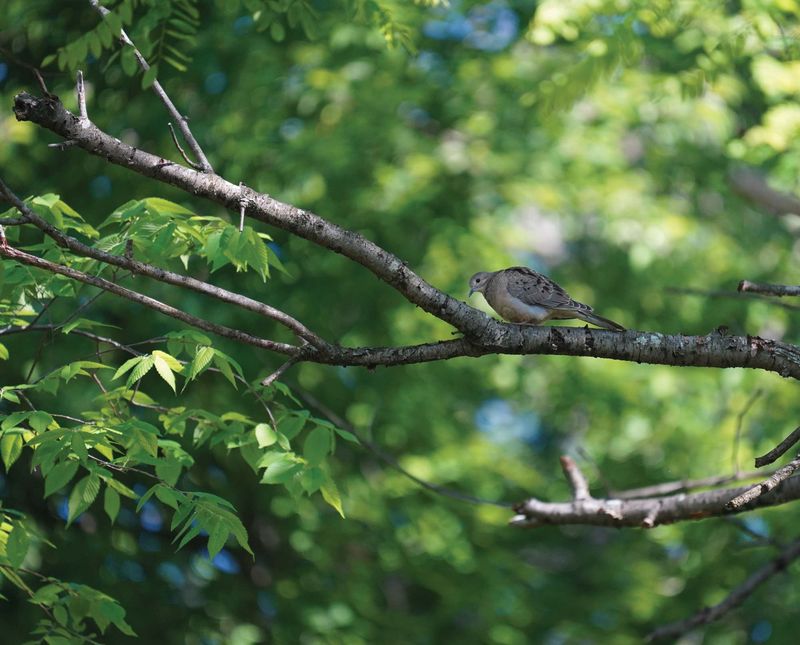
They are birds of edges, the places where open ground meets scattered trees, where a lawn fades into a shrub row, or where a garden border backs up to a fence line with a few tall perches above it.
A yard that combines open feeding space with nearby trees and some evergreen cover is offering something close to ideal habitat.
Each feature in that combination does a specific job.
Open ground is where the feeding happens.
A nearby tree, even a single one, gives the dove a place to perch and coo before dropping down to eat, and a place to retreat to quickly if something startles it.
Shrubs and evergreen stands provide shelter from wind and rain and a degree of cover from predators.
Cornell’s species account notes that mourning doves commonly use open country, woodland edges, orchards, roadside trees, suburban gardens, and scattered shrubs, while genuinely dense forest stays largely off their route.
Watch where the bird goes before it lands and after it lifts off.
Many Pennsylvania homeowners notice the dove arriving from a particular tree line, feeding for a few minutes, then retreating to a specific branch or rooftop.
That flight path is a map of what your yard is providing.
One visit shows only that some part of the property is useful at that moment.
It does not mean the yard is fully wildlife-friendly or that every habitat need is being met.
But tracing the route can show you which features are already working and where a gap might exist.
Water Can Complete The Attraction
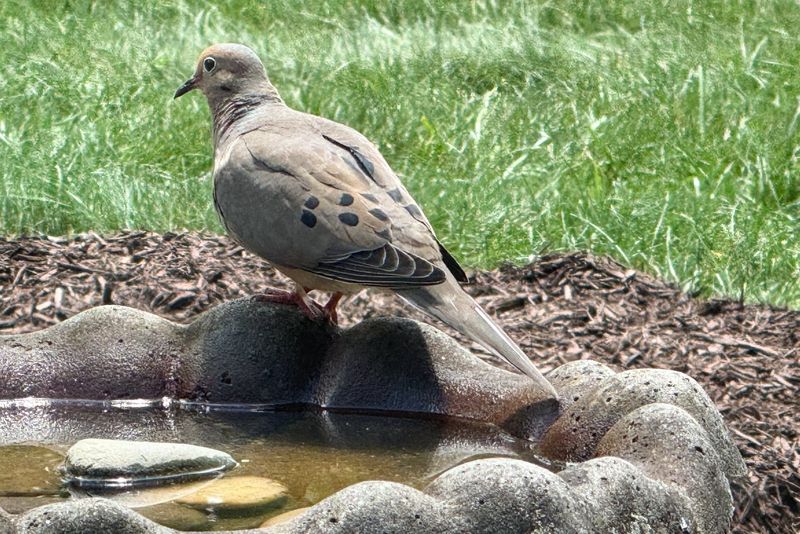
Food and cover explain a lot of repeat visits, but water can be the piece that locks the pattern in place.
Pennsylvania Game Commission guidance notes that mourning doves need water every day and commonly visit streams, creeks, or ponds in the morning and evening.
If your yard sits within easy flying distance of a reliable water source, that alone can make it part of a regular route.
A birdbath can genuinely help, but it comes with a real maintenance obligation.
Change the water at least every 3 days, and more often during warm Pennsylvania summers when algae can establish itself quickly and mosquitoes can begin breeding in as little as a week of standing water.
Scrub the basin each time you refill it.
Cornell’s guidance on birdbath algae recommends regular scrubbing to keep the basin safe for birds and manageable for the homeowner.
A bath that sits unattended through a hot August week is not a wildlife benefit.
Placement matters too.
Birds use a birdbath more confidently when they can see their surroundings clearly and escape quickly if something moves nearby.
Open placement with a perch or low branch within a few feet gives the dove a staging spot.
At the same time, dense shrubs immediately beside the basin can give a cat or other predator a place to wait unseen.
There is no universal distance rule here, but a little open space around the bath is a reasonable starting point for most Pennsylvania yards.
Pennsylvania’s Seasons Change The Pattern
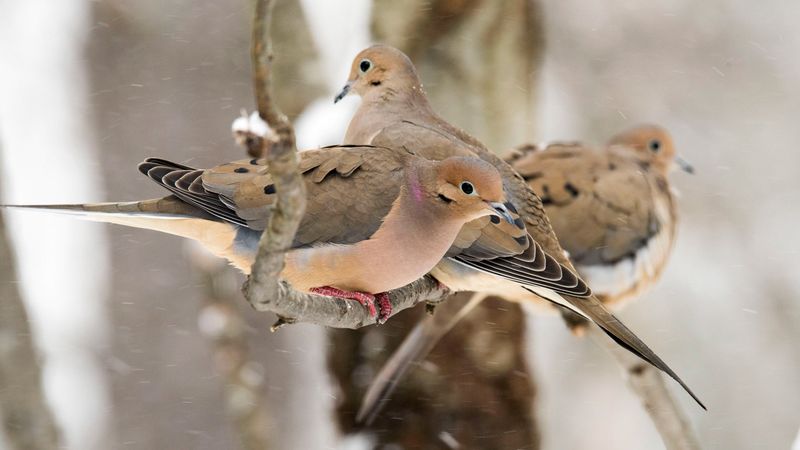
Seasonal movement can make a perfectly normal habitat connection feel like something more mysterious.
A dove that seems to appear out of nowhere in late March is not breaking a pattern.
It is following one.
Pennsylvania Game Commission records show doves beginning to return in early March, with arrivals peaking from mid-March through April.
Migration generally begins again by mid-September or early October, though some birds stay through winter, particularly where food and open ground remain accessible.
A dove that visits through June and July and then disappears by October has not delivered its message and moved on.
It has followed the food and the weather, the way birds do.
Pennsylvania is not one climate, and that matters for how you read the timing.
The Lake Erie region near Erie can carry lake-effect snow well into spring, while the Allegheny Plateau and northern tier stay colder longer with shorter growing seasons.
Southeastern Pennsylvania, including the Delaware Valley, warms earlier and holds heat later, which means seed availability and nesting windows shift by region.
A homeowner in the Poconos and a homeowner outside Philadelphia may notice very different visit patterns even in the same calendar week.
Summer drought between heavy downpours, which can hit central valleys and western Pennsylvania hard in July and August, can also push birds toward reliable water sources in ways that look like a sudden increase in visits.
Seasonal timing reflects habitat conditions, not personal signals.
A Recurring Presence May Include Several Birds
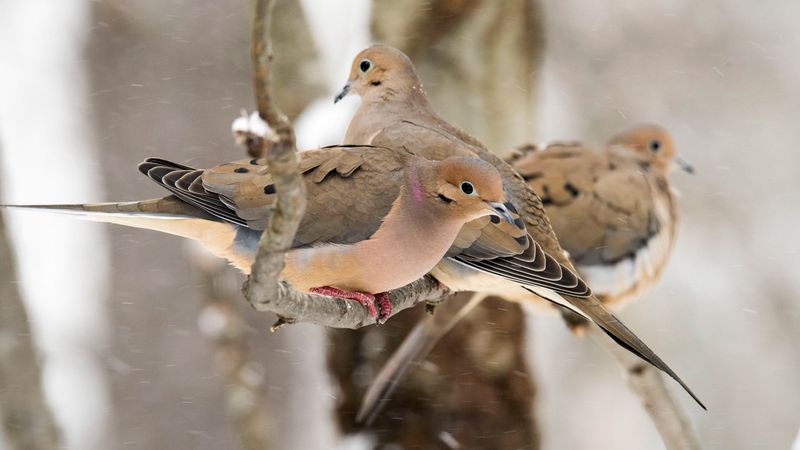
Mourning doves look remarkably similar to one another.
The soft brown-gray coloring, the black eye spot, the gentle head bob as they walk, these features are consistent across the species.
Without a leg band, a distinctive injury, or some other reliable identifying mark, there is no way to know whether the dove you saw yesterday is the same individual standing in your yard this morning.
A more accurate description is a recurring presence.
Where food, water, and open ground overlap, mourning doves gather, and several birds may use the same spot on the same day without the homeowner realizing it.
That does not make the visits less interesting.
It does mean that treating one dove as a specific returning individual, especially one carrying a personal meaning, goes beyond what observation can actually confirm.
Nesting adds another layer to watch for.
Cornell’s mourning dove profile notes that these birds may nest in trees, shrubs, gutters, eaves, flowerpots, or other structures close to human activity.
If you find a nest, leave it alone.
Fish and Wildlife Service guidance explains that most bird nests are protected under the Migratory Bird Treaty Act, and disturbing a nest with eggs, chicks, or dependent young is illegal.
A fledgling sitting on the ground near a shrub is often behaving normally, not abandoned.
Parents may be watching from nearby.
If a bird appears clearly injured, orphaned, or in immediate danger, Pennsylvania Game Commission resources can connect you with a permitted wildlife rehabilitator.
Healthy fledglings do not need rescuing.
Feeding Requires More Care Than A Seed Pile
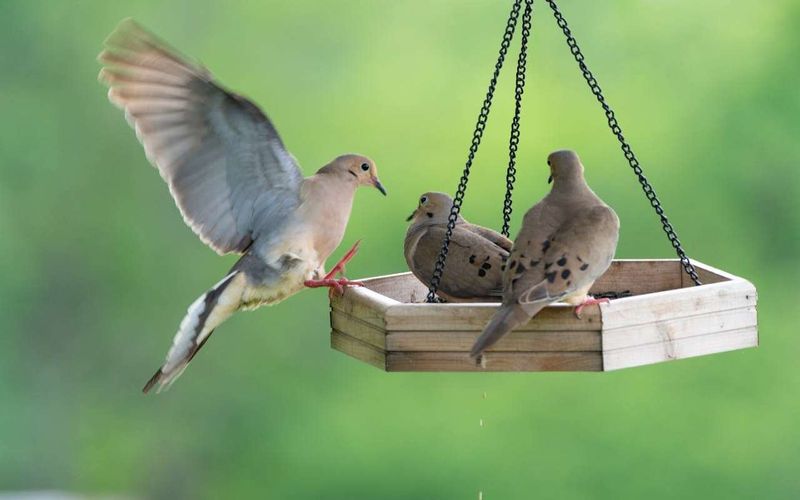
The impulse to keep a mourning dove coming back is understandable, and a lot of Pennsylvania homeowners reach for a bag of seed without thinking much further.
Supplemental feeding can work, but it is not automatically harmless, even with a common species.
Penn State Extension’s winter bird feeding guidance reports that mourning doves visited 94 percent of Pennsylvania feeding stations tracked in Project FeederWatch data, which makes them one of the most consistent backyard visitors in the state.
A sturdy platform feeder or hopper feeder suits them well because they need room to stand and pick.
Narrow tube feeders do not work for a bird this size.
Ground feeding is possible but creates real problems if seed accumulates, gets wet, or attracts unwanted wildlife such as rats or raccoons.
Rotate and limit what you put on the ground, and never scatter large amounts at once.
Sanitation is where most backyard feeding goes wrong.
CDC guidance on the 2020-2021 Salmonella outbreak linked to wild songbirds recommends cleaning feeders and baths at least once a week, and more often when visibly dirty or during periods of heightened disease concern.
The method: scrub with warm soapy water, soak in a solution of 1 part bleach to 9 parts water for at least 10 minutes, then rinse and dry completely before refilling.
Do this outside, never in a kitchen sink or food-preparation area.
Keep pets away from spilled seed and any area beneath a feeder.
If a sick or dead bird appears near your feeder or bath, remove both for 2 weeks and clean them outdoors.
Pennsylvania Game Commission guidance on supplemental feeding also recommends checking current Pennsylvania wildlife-health advisories before resuming.
Disease risk does not disappear because a species is common.
Improve The Habitat Without Chasing One Dove
Chasing one particular dove is a losing game.
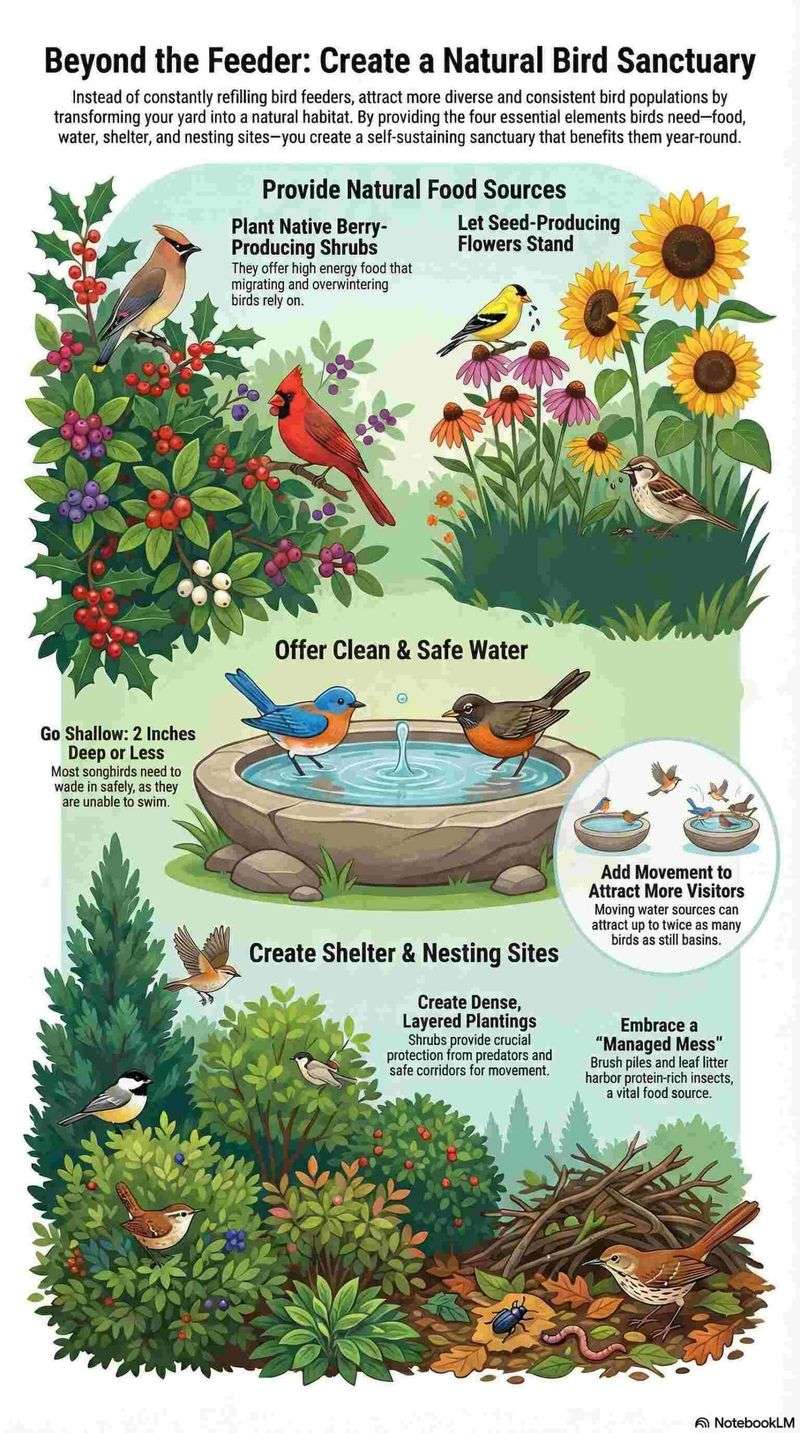
The more useful goal is building a yard that supports a range of wildlife consistently, and mourning doves will find it on their own if the conditions are right.
Start with a modest open feeding patch, a spot of bare or lightly covered ground where seeds can accumulate naturally from nearby plants.
Then build outward with layered native vegetation.
Penn State Extension’s home gardening for wildlife resources recommend combining trees, shrubs, and ground-level plants to create the structure different species actually use.
For Pennsylvania yards, that might mean serviceberry (Amelanchier canadensis) for early fruit and nesting structure, eastern redbud (Cercis canadensis) for spring bloom and perch height, and spicebush (Lindera benzoin) for dense shrub cover.
These plants do different jobs.
Serviceberry and redbud provide perches and some seed or fruit.
Spicebush offers cover and berries for other wildlife but does not directly feed mourning doves.
At the ground layer, switchgrass (Panicum virgatum) and Pennsylvania sedge (Carex pensylvanica) produce seeds that mourning doves and other ground feeders can actually use.
Bee balm (Monarda didyma), Joe Pye weed (Eutrochium purpureum), asters, goldenrod, and native milkweeds support pollinators, beneficial insects, and nesting material but serve a different role in the habitat system than seed-producing grasses.
Penn State’s backyard habitat planning guide and their landscaping for wildlife guide covering trees, shrubs, and vines both treat native plants as part of a broader strategy, not a guaranteed dove lure.
Maintain safe water only if you can clean it consistently, keep the feeding area tidy, and watch the yard with some curiosity.
The dove that keeps landing is telling you something real: part of what you have built is already working.