
Why This Native Sage Turns A Florida Backyard Into A Hummingbird Drive-Through
Follow us on Google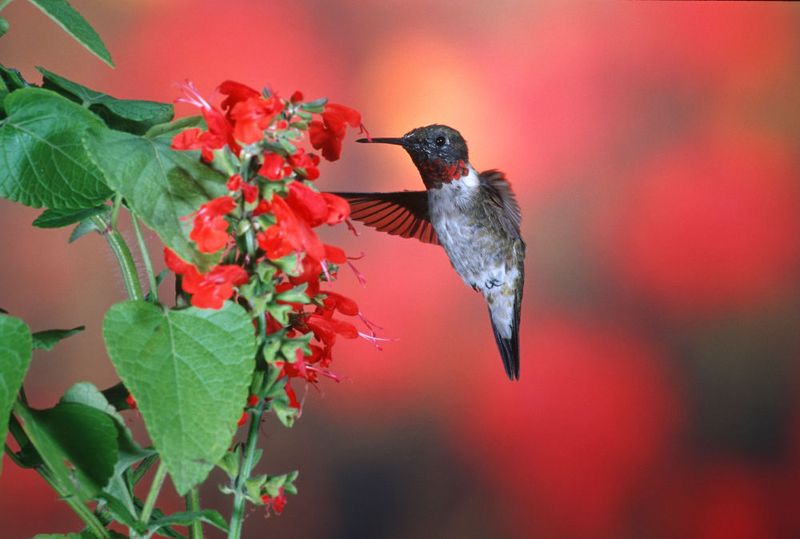
Step outside on a July morning in Florida and you might catch a flash of green and red hovering right at eye level, gone before your coffee cools.
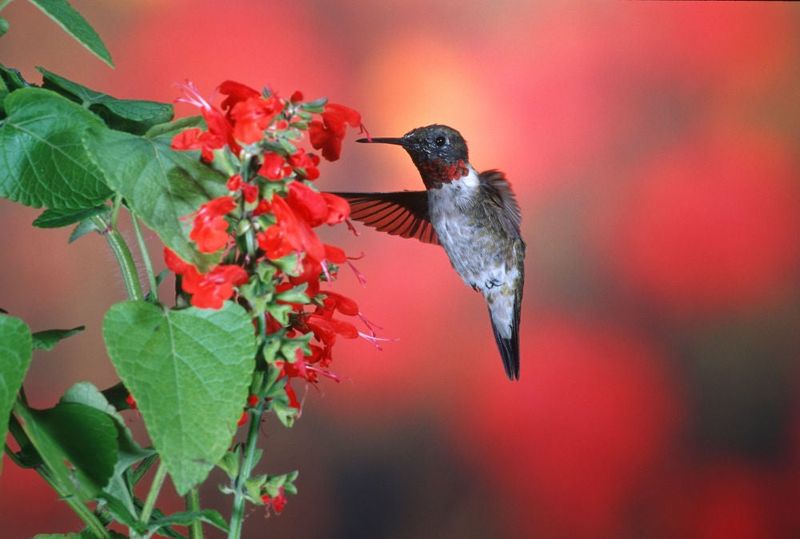
That blur could be a ruby-throated hummingbird working a patch of scarlet sage, and if the plant is happy where you put it, the bird may circle back several times before noon.
One native plant will not transform every yard into a constant hummingbird hotspot, but scarlet sage gives you a real shot at those repeated visits when you match it to the right spot.
Meet Scarlet Sage, the Featured Native
Not every red-flowered sage you see at a garden center is the same plant, and that distinction matters.
The one worth knowing by name is scarlet sage, also called tropical sage or blood sage, Salvia coccinea, a plant native to Florida and the southeastern United States.
You can find it listed and recommended by UF/IFAS as a Florida-adapted native that performs well during the hot, humid months when many other flowering plants give up.
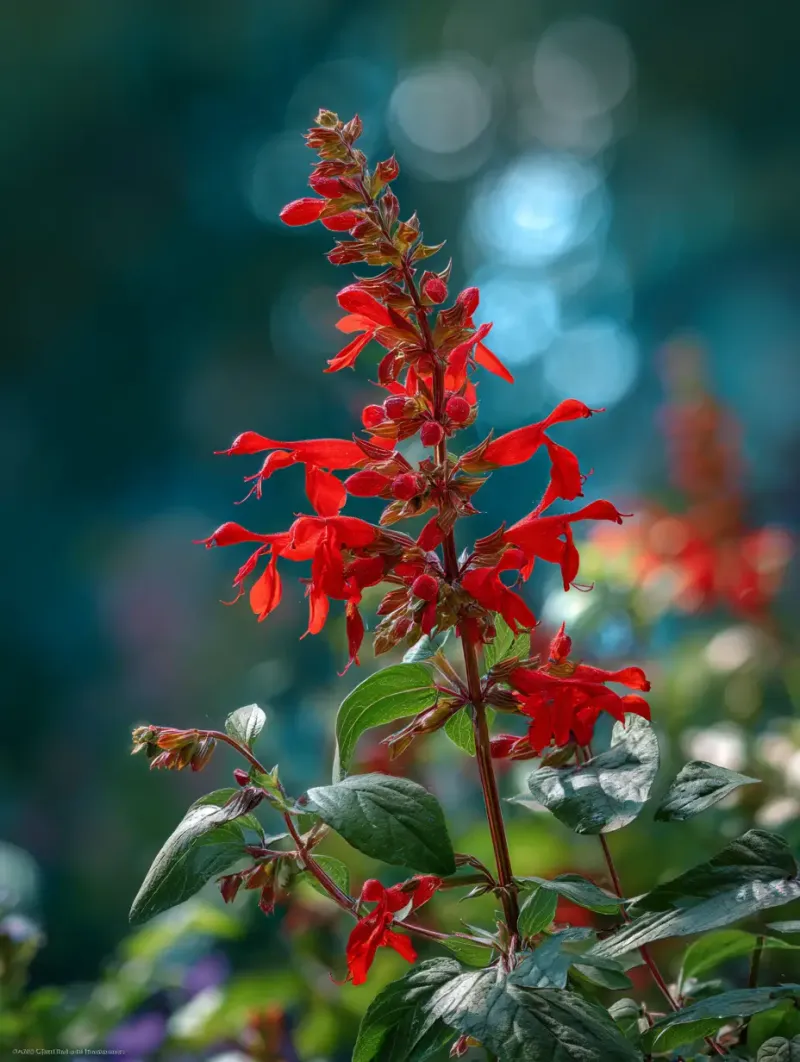
Its flowers are tubular and come in red, pink, or white depending on the cultivar.
The red form is the one most likely to catch a hummingbird’s eye, though all forms draw pollinators.
The plant grows as a soft-stemmed herbaceous perennial rather than a woody shrub, which means it looks nothing like the culinary sage, Salvia officinalis, sitting in a kitchen-herb pot, and it is not the same as the many ornamental salvias sold under vague hummingbird-related names at big-box stores.
How long it lives in your yard depends almost entirely on where you live in Florida.
In warmer Central and South Florida locations it can persist for more than one season.
In North Florida it may die back to the ground after a hard freeze and return from seed the following spring, acting more like an annual than a true perennial.
The Florida Native Plant Society lists its mature size as roughly 2 to 6 feet tall and 0.5 to 2 feet wide, so the plant can stay compact or push up surprisingly tall depending on conditions.
Think of this article as a closer look at one genuinely useful native nectar plant, not a promise that any ornamental salvia will do the same job.
Why Hummingbirds Notice Its Flowers
Hummingbirds do not randomly pick flowers.
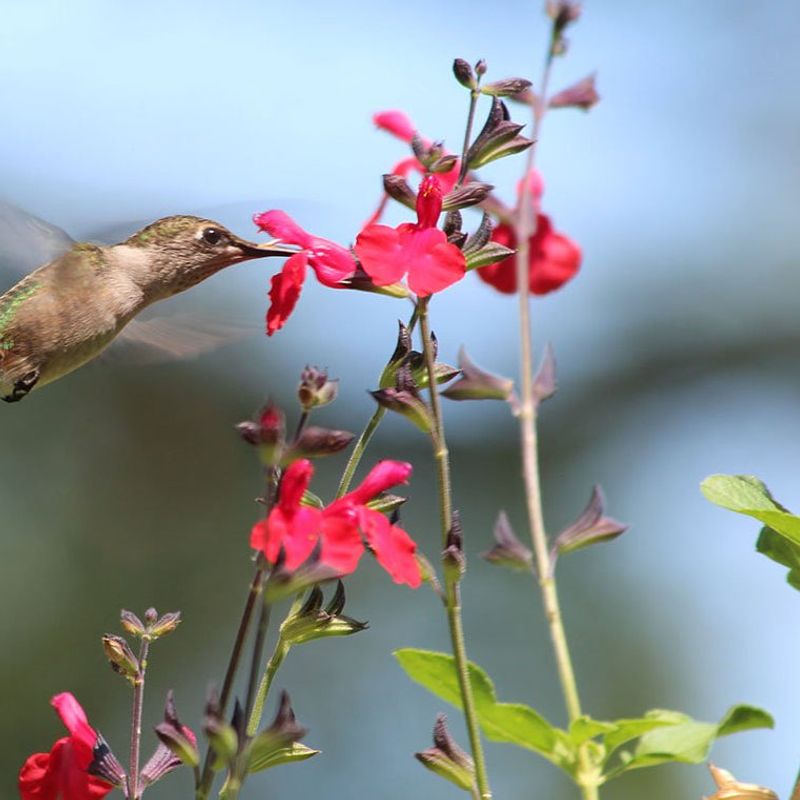
They are drawn to tubular blooms that hold nectar deep enough that most insects cannot reach it easily, and they have a well-documented preference for strong red and orange colors.
Scarlet sage hits both marks.
Its long red tubes are shaped almost exactly for a hovering bird to probe, and the plant keeps producing new flower spikes through the hottest months when the bird needs reliable fuel.
The drive-through image in the headline is a fair one for what can happen under good conditions: a single bird returning again and again to work the same patch, then moving on, then circling back.
But that behavior depends on more than one plant.
UF/IFAS Gardening Solutions recommends scarlet sage as part of a broader hummingbird garden, not as a standalone solution, because hummingbirds visit many plant species and will shift to whatever source is most productive at a given moment.
Butterflies such as gulf fritillaries and zebra longwings also work these flowers, and bees visit the pink and white forms especially.
That activity is genuinely good for the garden, though calling it a pollinator feeding frenzy overstates a real but variable phenomenon.
Research on Salvia species shows that hummingbird pollination occurs across multiple Salvia species, with flower color and tube shape working together as signals that match the bird’s foraging style.
A hummingbird working your scarlet sage today may disappear for a week if a neighbor’s firebush comes into heavy bloom, or if a territorial bird drives others off.
That is normal feeding behavior, not a sign that your plant failed.
The flower is doing its job every time it opens.
Summer Offers the Broadest Seasonal Promise
Florida gardeners in different parts of the state will get very different results from the same plant, and the season matters as much as the location.
Scarlet sage commonly blooms through spring, summer, and fall across much of Florida, making summer the safest seasonal promise you can make.
In frost-free areas of South Florida and the Keys, flowering can continue nearly year-round, which means the nectar window stays open much longer than it does farther north.
Central Florida gardeners often see the plant persist through mild winters and bloom again without replanting, especially in protected spots away from open sky on cold nights.
UF/IFAS notes that scarlet sage performs especially well during hot summer conditions when competing flowering plants tend to decline, which is exactly when a reliable nectar source matters most for visiting birds.
North Florida is the trickier region.
The University of North Florida Botanical Garden documents scarlet sage as a plant that can be killed by winter temperatures in the mid-20s Fahrenheit.
Established plants may not survive that kind of cold, though seedlings often return from the soil the following spring.
Treating it as a reseeding annual in North Florida is a realistic and practical approach, not a disappointment.
Hummingbird activity follows the bloom, not the calendar.
A plant that stops flowering after a hard freeze will not draw birds back until new growth opens.
UF/IFAS guidance on hummingbird gardens ties bird visits directly to flowering performance, which is why matching the plant to your regional conditions is the first step toward consistent summer traffic.
Choose Sun, Drainage, and Room to Spread
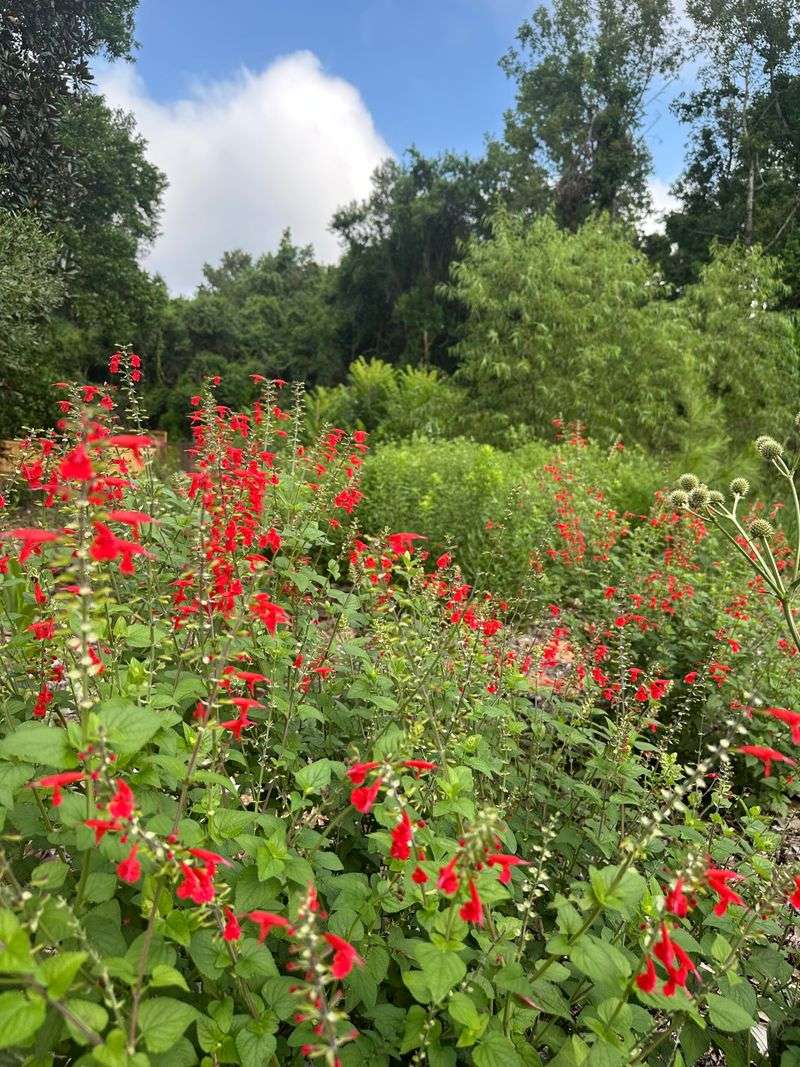
Placement is where most scarlet sage disappointments start.
Put it in the wrong spot and the plant will survive but bloom poorly, which means fewer hummingbird visits and a plant that looks tired by midsummer.
Full sun, meaning at least 6 hours of direct light daily, produces the heaviest flowering.
UF/IFAS specifically notes that flowering decreases as light levels fall, so the shadier the spot, the fewer flowers and the fewer birds.
Drainage matters just as much as light.
Scarlet sage wants moist, well-drained soil during establishment and prefers to stay on the drier side once it is settled in.
Low spots in a yard, compacted beds near a downspout, or areas that hold standing water for hours after a summer downpour are poor choices.
Root rot from constantly wet soil is a real risk, even in a plant that is otherwise low trouble.
Florida’s sandy soil across much of the peninsula actually suits this plant well because it drains quickly.
In parts of South Florida and the Keys where shallow limestone sits close to the surface, a raised planting area or a spot with some organic matter worked in can help, though amendments are not always necessary.
Check how water moves through your specific bed before assuming you need to change the soil.
The Florida Native Plant Society reports a mature width of 0.5 to 2 feet depending on the cultivar and growing conditions, so a practical spacing estimate of 18 to 24 inches between plants gives each one room without leaving large bare gaps.
That is an editorial estimate based on reported widths, not a formal rule, and you can adjust it if you want a denser planting or are working with a known compact form.
Along the Gulf Coast and Atlantic Coast, scarlet sage can handle moderate salt spray and salty wind reasonably well.
It cannot tolerate saltwater flooding or brackish inundation, though, so do not place it where storm surge or tidal water reaches.
It is a garden plant for coastal yards, not a beach plant.
Water by Root-Zone Conditions
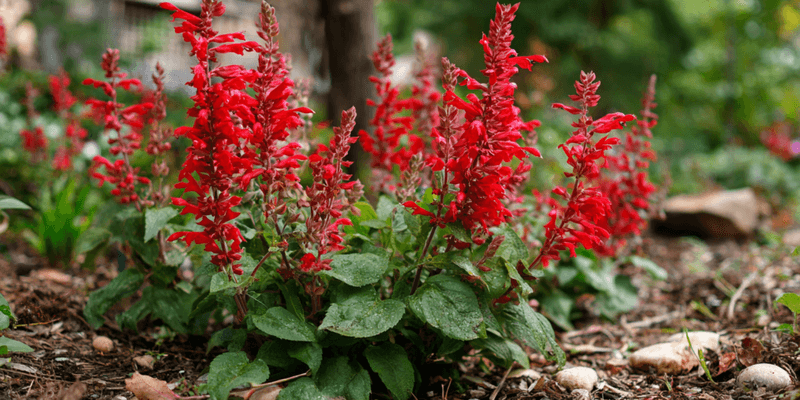
Watering a new scarlet sage correctly is less about following a fixed schedule and more about paying attention to what is actually happening in the soil.
After planting, water the root ball directly and keep the surrounding soil from drying out completely while the plant is getting established.
Checking several inches down with your finger before watering again is more reliable than any calendar reminder.
UF/IFAS guidance on establishing shrubs in Florida landscapes recommends watering newly planted material every 2 to 4 days in North and Central Florida and roughly every 2 days in South Florida during the establishment phase.
Those intervals are a starting point for a small herbaceous plant like scarlet sage, not a rigid rule, and Florida’s summer rain pattern may mean you water far less than that during a wet stretch.
Once the plant is established, irrigation should respond to actual soil moisture, rainfall, temperature, and visible stress rather than running on a permanent timer.
UF/IFAS Florida-Friendly landscaping guidance makes clear that established ornamentals generally do not need a permanent watering schedule and that irrigation based on signs of stress and local conditions protects both the plant and the water bill.
Sandy soil drains fast, sometimes within an hour of a heavy rain, so plants in those conditions may need water sooner than you expect during a dry week in October.
Soil that stays saturated for more than a day after rain is a warning sign that the site drains poorly, and root rot can follow.
Moving the plant or improving drainage is a better fix than adjusting the watering schedule.
UF/IFAS recommends cutting scarlet sage back near the end of the year after flowering finishes and the foliage begins to decline.
That end-of-year cutback tidies the plant and can encourage fresh growth, but it is not required for the plant’s survival.
Florida’s summer storms can knock flower spikes sideways before you ever get to prune, and the plant often recovers or simply reseeds on its own.
Build the Habitat Beyond One Plant
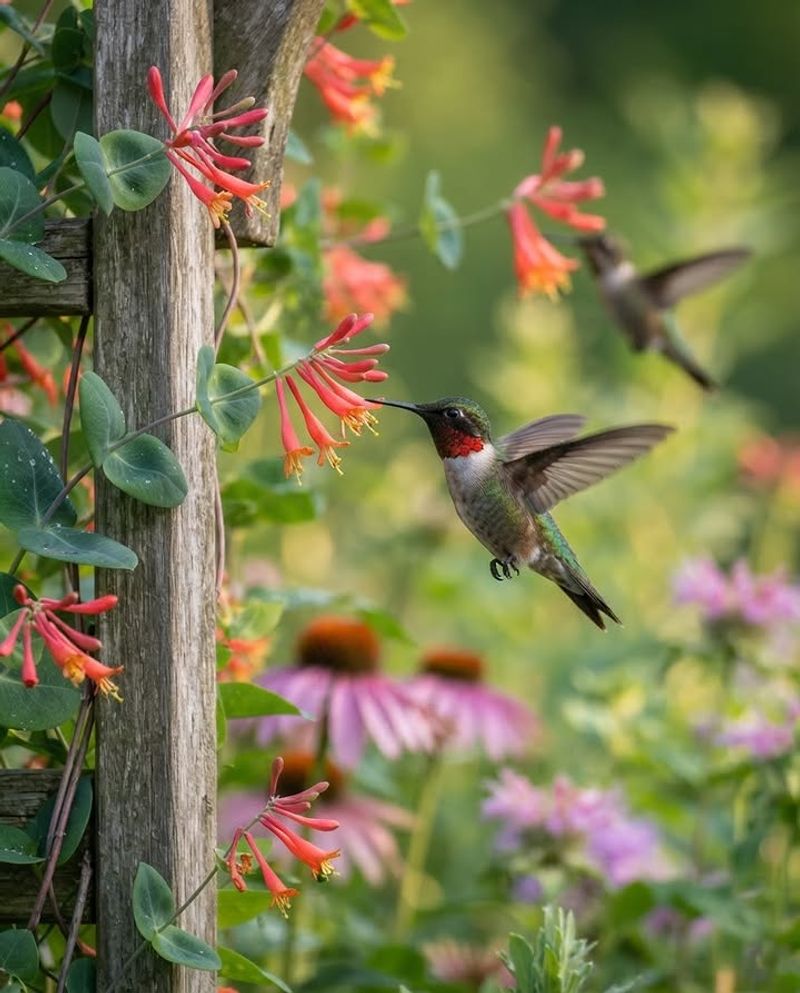
A single scarlet sage plant is a good start, but a hummingbird that visits your yard is looking for more than one flower spike.
UF/IFAS recommends pairing scarlet sage with other Florida-friendly nectar plants such as coral honeysuckle, firebush, cardinal flower, and native milkweeds to create a layered habitat that keeps something blooming across more of the year.
Rotating bloom times means a bird passing through in October finds as much reason to linger as one arriving in June.
Here is something many homeowners miss: ruby-throated hummingbirds eat insects and spiders for protein, not just nectar for energy.
Mosquitoes, gnats, fruit flies, small caterpillars, and aphids are all part of their actual diet.
A yard treated regularly with broad-spectrum insecticides may look full of flowers but still be a poor habitat if the insect prey is gone.
Protecting the blooms means protecting the insects living around them too.
Butterflies such as monarchs on migration, gulf fritillaries, and zebra longwings also use scarlet sage, and bees work the flowers steadily on calm mornings.
That activity is worth encouraging on its own terms, separate from the hummingbird question entirely.
Scarlet sage does not repel whiteflies, thrips, or any other Florida pest, so do not skip a proper diagnosis if something is actually damaging your plants nearby.
A hummingbird feeder is an optional addition, not a requirement or an upgrade over real flowers.
Audubon recommends a feeder recipe of 1 part refined white sugar to 4 parts water, with no red dye, no honey, no artificial sweeteners, and no stronger mixtures.
In Florida heat, that nectar may need replacing every 1 to 3 days, sooner if it turns cloudy, and the feeder itself needs regular cleaning to prevent mold and bacteria.
UF/IFAS Extension Polk County notes that feeders work best as a supplement to natural flowers, not a replacement for them, because native plants and the insects around them support a more complete food web than sugar water alone ever could.
The Honest Payoff for a Florida Yard
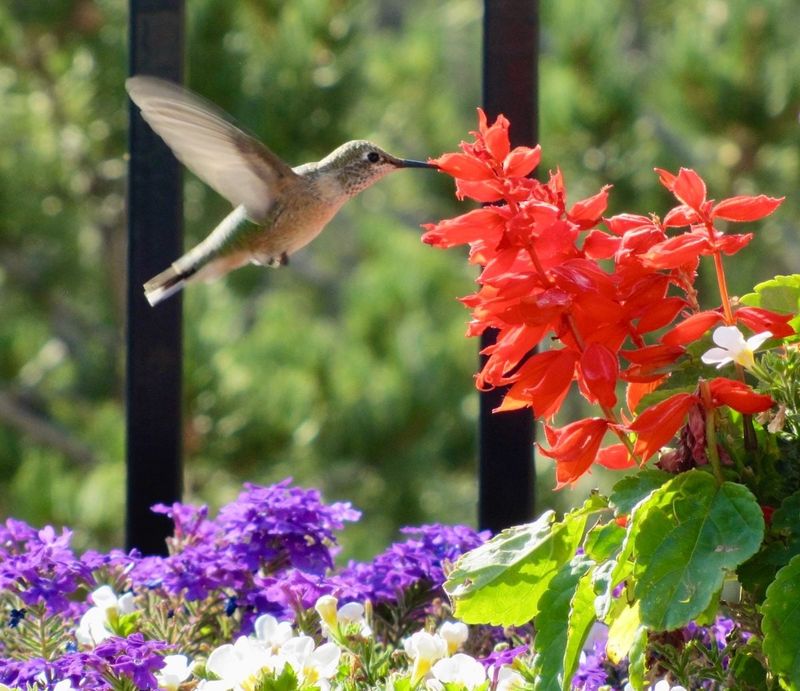
Scarlet sage is not a magic fix, a pest cure, or a storm-proof plant.
Rain from a passing tropical system can flatten its flower spikes overnight, and a hard freeze in North Florida can kill an established plant before spring.
What it actually offers is a potentially dependable summer nectar layer when you put it in the right spot, meaning full sun, well-drained soil, and a region where the winters are mild enough for it to perform.
UF/IFAS describes scarlet sage as having no major pest or disease concerns under suitable growing conditions, which makes it genuinely low-maintenance compared to many flowering plants.
That low-trouble quality is real, but it does not mean the plant thrives identically everywhere in Florida or that you can ignore drainage, light, and regional winter conditions.
Judge success by what actually happens in your yard over a full growing season.
A healthy plant in full bloom drawing repeated hummingbird visits on summer mornings, with butterflies working the lower flowers and bees arriving at dawn, is a better measure than counting birds per hour.
UF/IFAS frames hummingbird gardening as building habitat over time rather than flipping a switch, and scarlet sage fits that approach well.
Accept seasonal dieback or reseeding as part of the plant’s natural cycle in your region, protect the blooms and the insects around them, and let the birds decide when to stop by.
A yard that earns repeated visits is not a drive-through someone built overnight, it is a place a bird learned it can trust.