
North Carolina Gardeners Are Replacing Dead Lawn Patches With These Native Ground Covers Instead
Follow us on Google
You drag your patio chair into the shade on a humid North Carolina afternoon, and that is when your eye catches it again. Another dead patch in the lawn, brown and bare, practically inviting weeds to move in.
You are tired of reseeding the same sad spots every year, only to watch them fizzle by August. Good news, your neighbors across the Tar Heel State are quietly swapping those problem patches for native ground covers that fill in the gaps, cut the mowing, and pull in pollinators and birds.
Here are ten tough natives worth trying, plus what genuinely helps them settle in.
1. Green-and-Gold Creates A Sunny Carpet With Pollinator Appeal
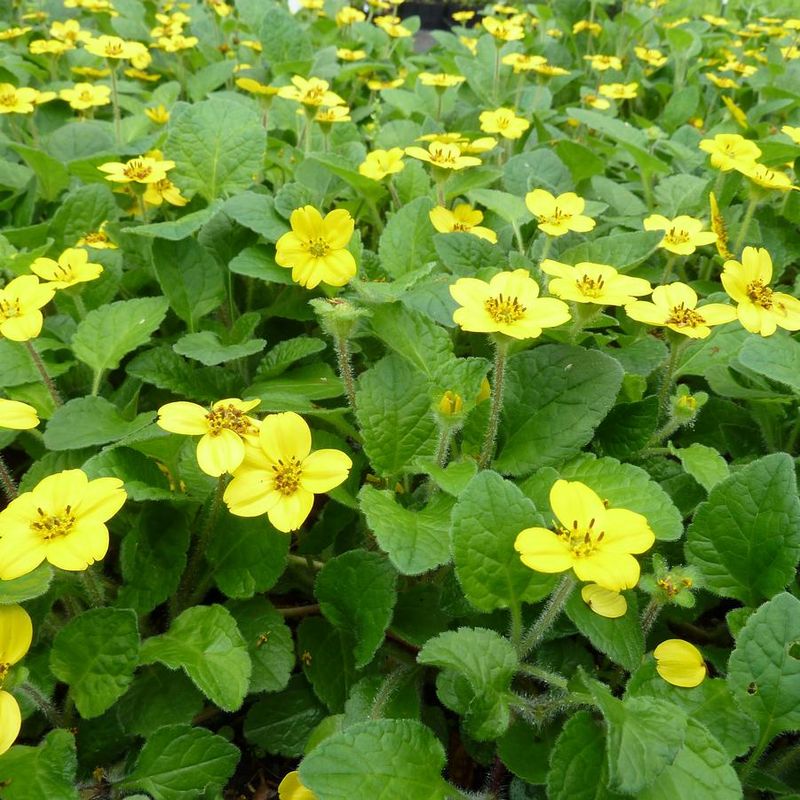
Picture a shady spot where the sun sneaks through for only a few hours, and grass keeps giving up. Green-and-gold, or Chrysogonum virginianum, moves right in as a quiet hero.
It forms a low, semi-evergreen mat that stays around one to two inches high, then throws up cheerful yellow, daisy-like flowers on eight to ten inch stems.
Here is where it gets good for the yard. Those blooms run from March into June across North Carolina, and native bees find them fast.
So a patch that used to be bare dirt turns into a gentle hum of activity right outside your door.
Green-and-gold is easygoing about light. It prefers part to full shade, but it will handle more sun if you keep the soil steadily moist, which our muggy summers usually manage on their own.
It spreads by stolons, the above-ground runners that let a plant crawl sideways, knitting together a carpet that crowds out weeds.
Give plants average to moist, well-drained, slightly acidic soil, and space them eight to eighteen inches apart. It is genuinely deer resistant, a real relief if browsing visitors treat your beds like a salad bar.
It even shrugs off light foot traffic, so it works nicely along a path edge where a kid might cut the corner.
2. Allegheny Spurge Brings Understory Elegance To Shady Corners
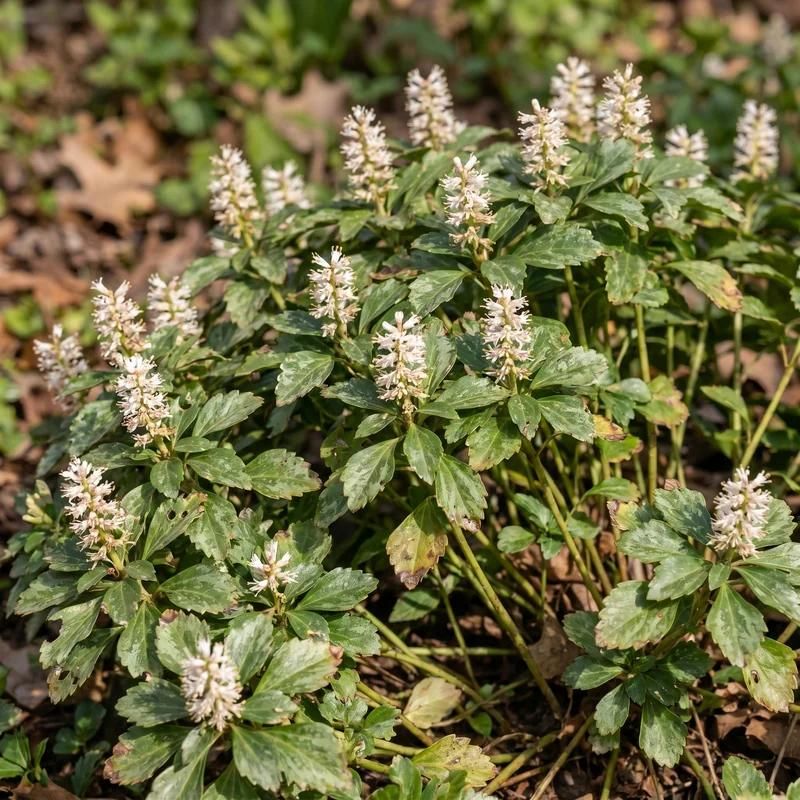
Bare ground under an old tree has a way of shaming a gardener. Grass will not grow there, and nothing else seems to want the job either.
Allegheny Spurge, Pachysandra procumbens, is built for exactly that dim, root-filled corner.
The plant is a native evergreen to semi-evergreen subshrub that grows about six to ten inches tall and creeps along by rhizomes, the underground stems that let it fill in slowly. The blue-green leaves often show silver and purple mottling as the seasons turn, so the mat never looks flat or boring.
And here is the part worth knowing. Its native manners are polite, unlike the invasive Japanese pachysandra that muscles through everything.
Allegheny Spurge forms a tidy colony without staging a takeover. In March or April, it sends up small, fragrant white to pale-pink flower spikes that feed early pollinators when little else is open.
Give it organically rich, well-drained, acidic soil, ideally a pH between 5.5 and 6.5, which suits many North Carolina woodland edges. Space plants six to twelve inches apart, and expect eighty to ninety-five percent coverage within two to three years.
It also grips shady slopes against erosion, so a spot that used to wash out after an afternoon storm finally holds still.
3. Wild Strawberry Offers Edible Ground Cover With Natural Appeal
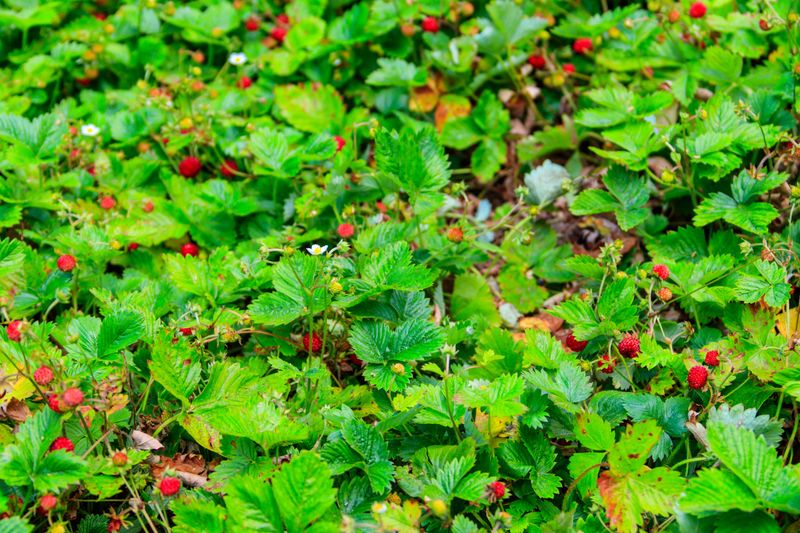
A ground cover that hands you a snack feels almost too generous. Wild Strawberry, Fragaria virginiana, does exactly that, and it grows all across North Carolina, from the sandy Coastal Plain to the sticky red clay of the Piedmont.
It stays low, roughly two to five inches tall, and races outward on runners to form lush patches of three-part leaves that flush maroon and red come fall. So the same plant that fed you in June puts on a color show in October.
White flowers open in mid to late spring and draw an impressive crowd, including caterpillars from around seventy-five different butterfly and moth species. By early summer, those flowers ripen into small red berries that are smaller than store-bought but pack a tangy punch.
Here is the honest catch. Birds, chipmunks, and squirrels adore those berries too, so you may end up sharing more than you planned.
Wild Strawberry takes light foot traffic in stride, which makes it a friendly pick where kids and pets wander. It also holds soil beautifully on open ground and woodland edges.
Space plants about a foot apart, and you will see decent coverage within a single year, faster than most natives on this list.
4. Creeping And Moss Phlox Blanket Spring In Color
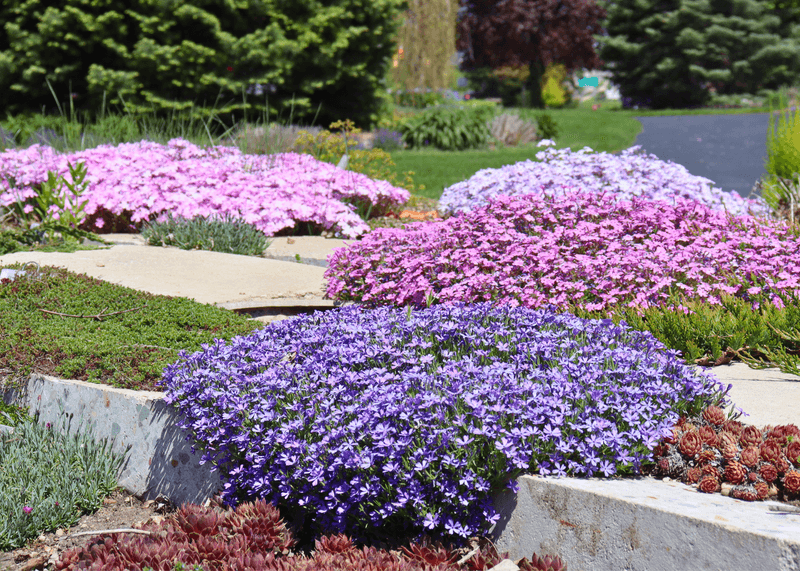
Few natives put on a spring show like phlox, right when North Carolina swings between warm afternoons and sudden rain. You actually get two good choices, and they want opposite conditions, so knowing which is which saves you a wasted trip to the nursery.
Creeping Phlox, Phlox stolonifera, makes a loose mat of semi-evergreen foliage and spreads fast across large areas. Its fragrant flowers, in white, pink, and purple, rise about six inches in mid-spring.
It likes partial shade and average to moist, well-drained, slightly acidic soil, the kind of woodland edge you find tucked into the Appalachian Mountains. Running on stolons, it reaches two to three feet wide.
Moss Phlox, Phlox subulata, is the sun-lover of the pair. It forms a dense, compact mat rarely taller than six inches, with needle-like evergreen foliage that stays put all year.
Its early-spring bloom is so heavy it practically hides the plant under pink, purple, or white.
Moss Phlox thrives in full sun and tolerates dry, well-drained soil, which makes it a smart pick for a baking slope or the sun-scorched Sandhills. Both draw butterflies and lock down loose soil.
So one bad patch, planted right, becomes the corner of the yard the whole street slows down to look at.
5. Partridgeberry Offers Tiny Treasures For Shady Acidic Spots
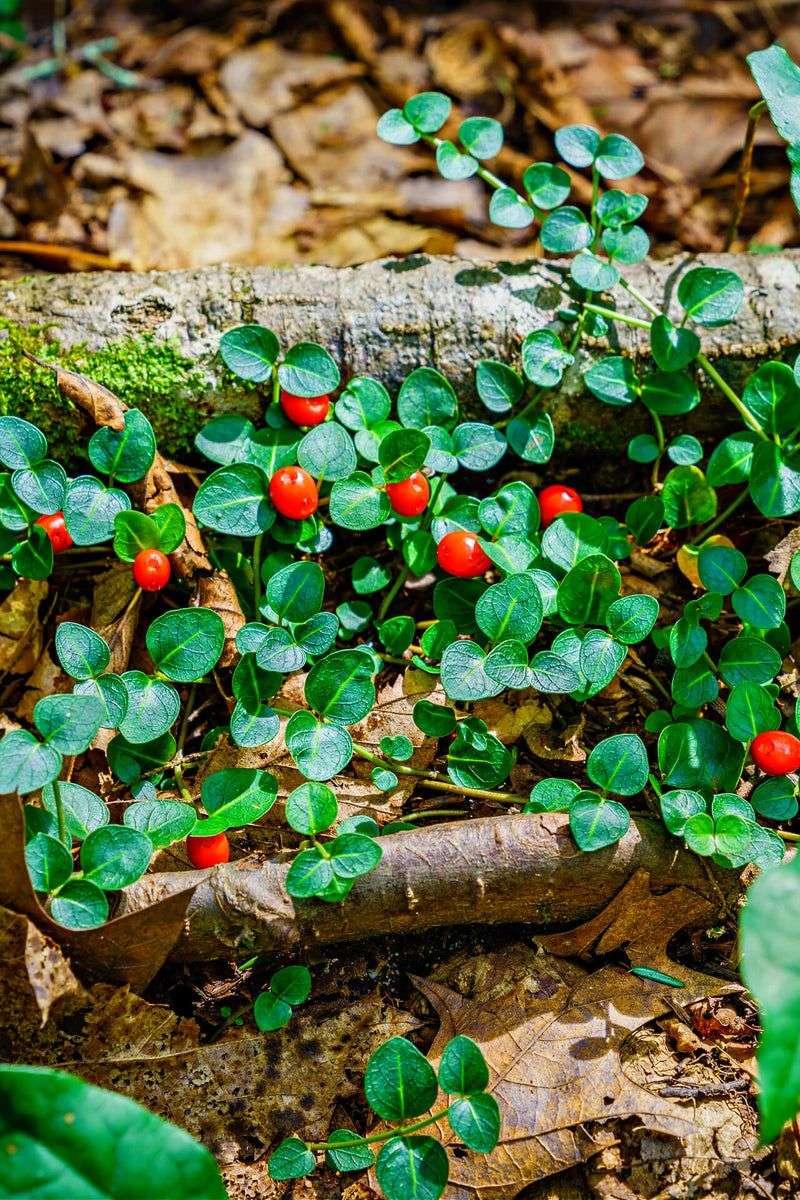
Some corners of the yard stay dark, quiet, and undisturbed, maybe beneath acid-loving azaleas or hydrangeas. Partridgeberry, Mitchella repens, is a subtle native that treats that shade like a gift.
It is a trailing evergreen woody vine that hugs the ground at one to two inches tall, spreading a dense carpet of small, rounded, dark-green leaves. A pale central vein runs down each half-inch leaf, a small detail you notice only when you crouch to look.
Then the payoff arrives. In late spring to early summer, tiny fragrant white flowers open in pairs, and here is the neat trick.
The pair fuses at the base to make a single bright scarlet berry, about a third of an inch across, that ripens in late summer or fall.
Those berries hang on through winter, adding a spark of red to a landscape that has gone dormant and gray. Birds like bobwhite quail and small mammals lean on them as cold-weather food.
Partridgeberry wants moist, well-drained, acidic, humus-rich soil, which describes plenty of North Carolina woodlands. It is slow to start, not a magic quick fix, but once it settles in and roots at its nodes, it asks for almost nothing.
6. Pussytoes Provides Tough Drought-Proof Butterfly Habitat
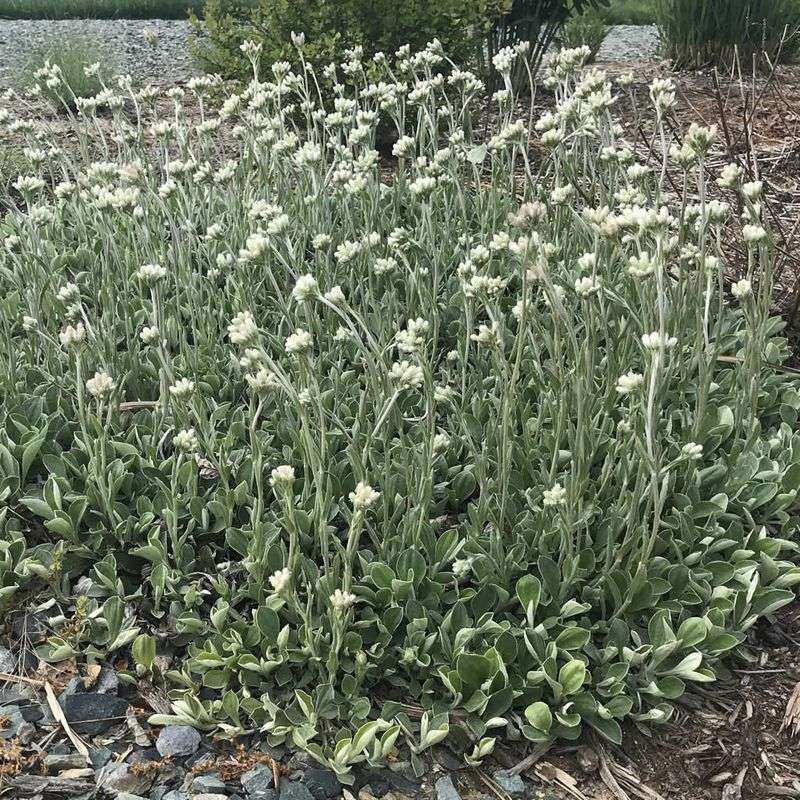
Lean, dry, and stubborn soil defeats most plants. Where Piedmont red clay bakes hard or Coastal Plain sand drains too fast, Pussytoes, Antennaria plantaginifolia, actually shows up and does the work.
The plant lays down a low carpet of soft, gray-green, woolly leaves, usually four to six inches tall, that looks almost silver in strong light. In mid to late spring, fuzzy white flower clusters rise on stems up to twelve inches, and they honestly resemble little cat paws, which is exactly how the plant earned its name.
Small native bees and early skippers sip nectar from those blooms. But the bigger role is quieter and more important.
Pussytoes is a host plant for the American Lady butterfly, meaning its caterpillars feed on the leaves. So planting it does not just decorate a hard spot, it raises the next generation of butterflies right in your yard.
Once established, it is genuinely drought tolerant and deer resistant, a low-fuss answer for a place you would rather not babysit. Give it full sun to part shade and well-drained soil, since soggy ground will rot it fast.
Space plants about two feet apart, and the slow-spreading colonies gradually shade out weeds while giving butterflies a reason to linger.
7. Green Sedges Fill Shady Slopes Where Grass Quits
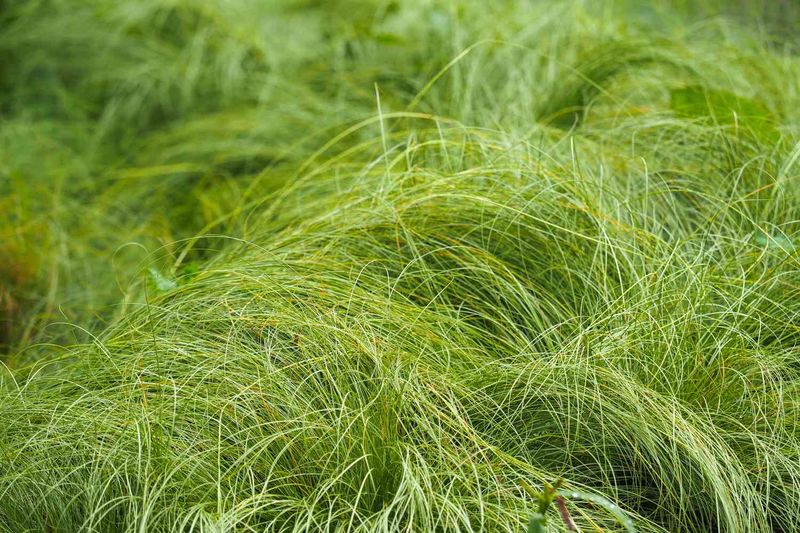
Grass under the trees is a losing battle most North Carolina yards fight every summer. Native sedges, especially Carex pensylvanica, the Pennsylvania sedge, quietly win the ground grass keeps surrendering.
The plant reads like a soft, tumbling lawn but wants none of the mowing. It grows six to ten inches tall in fine, arching blades that spread by rhizomes into a loose, meadow-like mat.
Left alone, it flops into gentle waves. Mowed once or twice a season at three inches, it reads more like a traditional turf.
Here is why that matters for the household. A sedge patch needs a fraction of the water thirsty fescue demands, so your July water bill stops climbing every time the lawn browns out.
And the mat gives ground beetles and other useful yard insects a cool place to shelter, which feeds the songbirds you like watching from the porch.
Pennsylvania sedge prefers part to full shade and average to dry soil, and it handles the dry root zone under oaks and maples with ease. Space plants ten to twelve inches apart for a fuller look inside a year.
NC State Extension points to native sedges as low-input lawn alternatives, which is a fancy way of saying you do far less and it still looks like you tried hard.
8. Green-Leaf Golden Ragwort Fills Damp Trouble Spots Fast
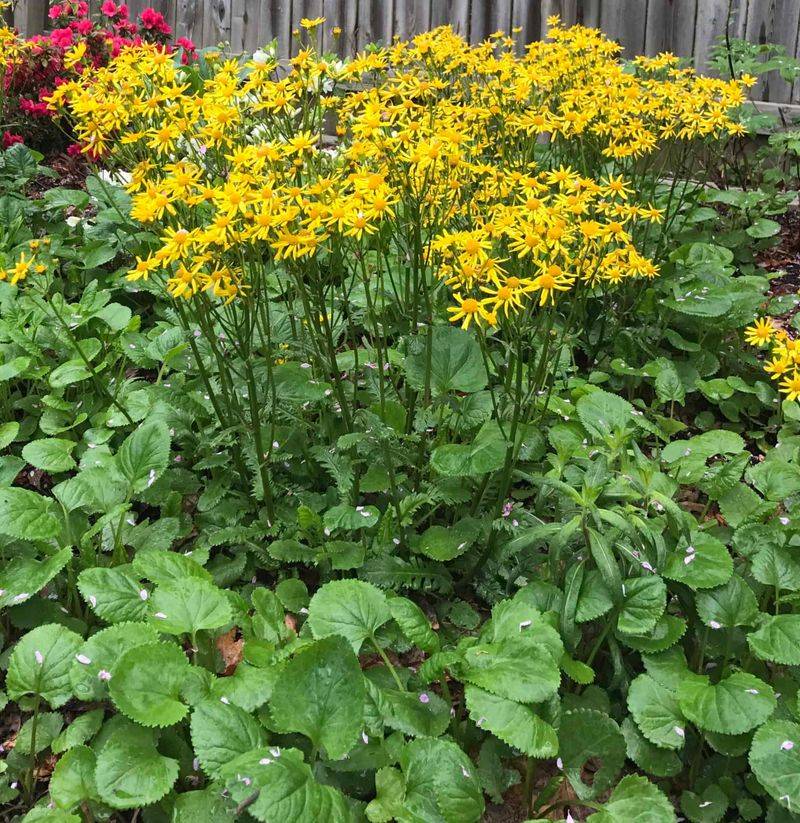
That low corner where water pools after every afternoon storm is a classic North Carolina headache. Turf drowns there, mud takes over, and mosquitoes throw a party.
Golden Ragwort, Packera aurea, actually likes the wet feet that everything else hates.
It forms a low rosette of rounded, dark-green basal leaves, roughly six inches high, that stays semi-evergreen through our mild winters. In April and May, it lifts bright yellow daisy flowers on stems one to two feet tall, then settles back into a tidy ground-hugging mat.
Now for the surprise most people miss. Golden Ragwort spreads by both rhizomes and seed, so a handful of plants can knit a damp swale into solid cover within a couple of seasons.
That living mat slows runoff and holds soil that used to slide toward the driveway.
The early bloom is a genuine lifeline for small native bees and hoverflies waking up hungry in spring. Give it part shade to full sun and moist, average to rich soil, and space plants twelve to eighteen inches apart.
It is deer resistant too, which spares you the fenced-off look. A soggy eyesore becomes a gold-flecked patch that works while you sit and watch it.
9. Green Creeping Mint Handles Foot Traffic And Ticks
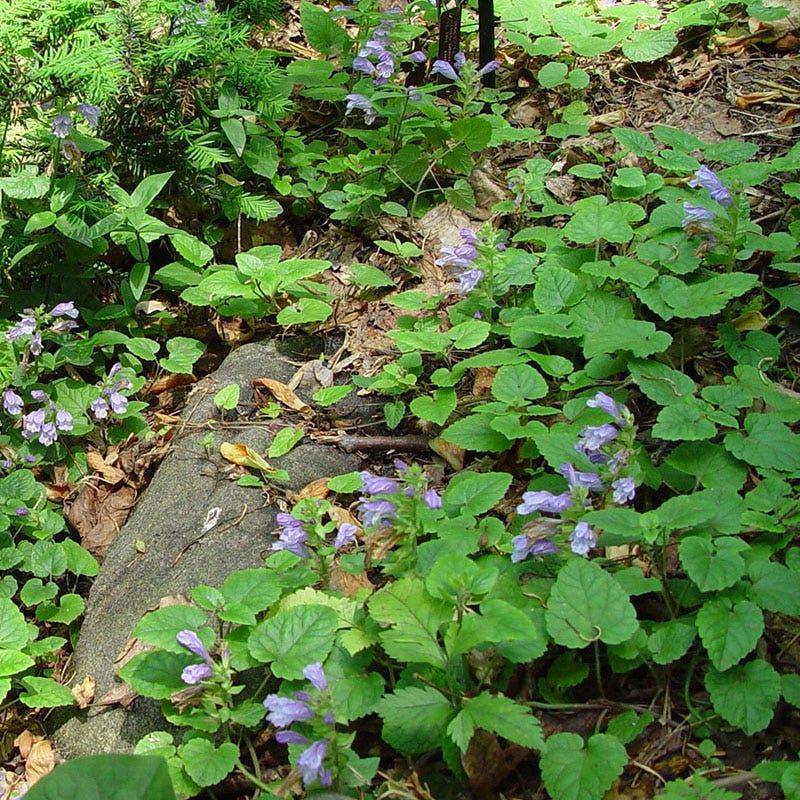
Step on most ground covers and they sulk. Wild Stonecrop and creeping mints handle a footfall better, but the standout for a walked-on path is native creeping mint, Meehania cordata, sometimes called creeping mint or Meehan’s mint.
It stays low, around four to eight inches, and creeps by stolons into a soft, spreading mat of heart-shaped leaves. In late spring, it opens tubular lavender-blue flowers that early bumblebees work over.
Brush it with a shoe and you catch a faint minty scent, a small pleasure on the way to the mailbox.
Here is the practical angle North Carolina families care about. A dense, low mat like this leaves less tall, ragged growth for ticks to climb and wait in, which is one honest layer of a smart tick approach, not a cure on its own.
Pair it with a mowed edge and it keeps the buggy fringe pushed back from where kids play.
Meehania wants part to full shade and moist, humus-rich soil, so it suits woodland edges and shaded path borders across the Piedmont and mountains. Space plants twelve to fifteen inches apart.
Keep it watered its first summer, because a dry spell can stall it before it grabs hold. Once settled, it fills the gaps between stepping stones like it was poured there.
10. What Else Actually Helps These Native Patches Flourish
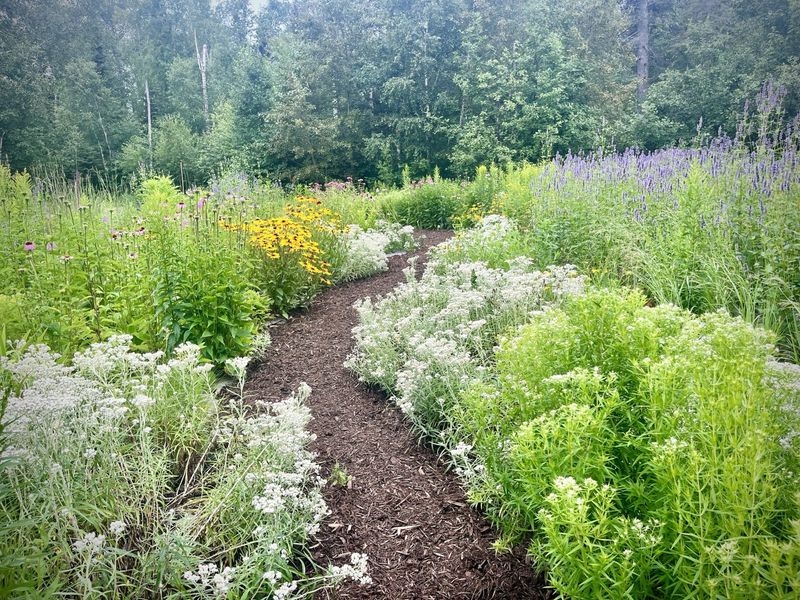
Trading a struggling lawn patch for native ground cover is a smart move for North Carolina yards, cutting water use and bringing more life to the ground. But the switch works far better when you prep first, so start there.
Clear out the existing weeds, then loosen the soil to a depth of eight to ten inches. Whether you fight compacted clay or fast-draining sand, work in a two-inch layer of organic matter like compost or well-rotted leaf mold to fix both drainage and moisture holding.
A soil test through your local NC State Extension office tells you exactly what your ground needs, including any lime to nudge the pH.
Container-grown natives can go in almost any time, but fall planting gives roots a head start before the long, muggy summer arrives. Do not bury the crowns too deep, since that is a quiet killer for new plants.
After planting, lay a three to four inch layer of organic mulch to hold moisture and slow the weeds while your patch settles.
Then comes the part people skip. Even drought-tolerant natives need steady watering to establish, and that can take up to two years, so plan to check them through the first couple of summers.
Get that start right and you earn a patch that mostly runs itself, a corner of the yard that finally looks alive instead of worn out.