
The New 2026 Shrubs That Shrug Off Texas Heat Without Chaining You To The Hose
Follow us on Google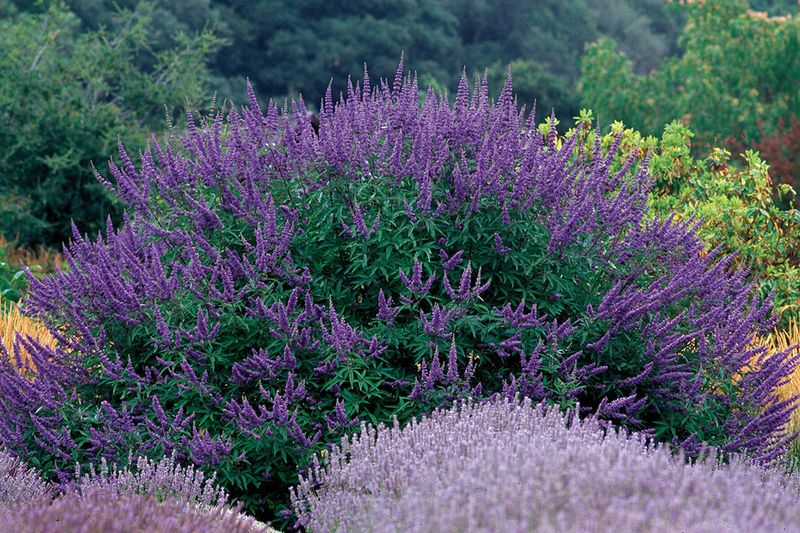
You step outside before breakfast and the patio already feels warm, that faint pink in the sky doing nothing to cool the concrete under your feet.
Another Texas summer is loading up, and you already know how the story usually ends: hopeful new plants sighing under the sun and a water bill climbing higher than the thermometer.
But it does not have to go that way this year.
A fresh crop of tough shrubs for 2026 is built to laugh off triple-digit heat and keep your hose coiled, giving you a yard that stays alive while you stay off the sprinkler timer.
1. Texas Sage Cultivars Keep Getting Tougher
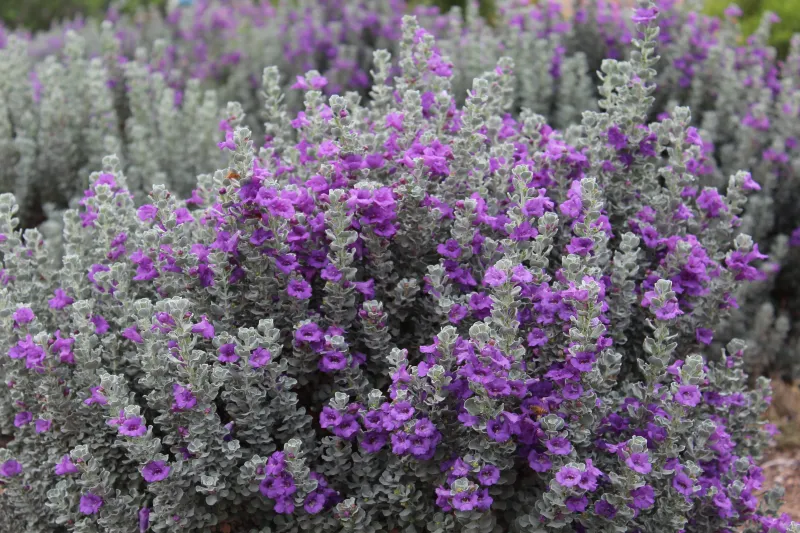
Rain rolls in, and within a day your old Texas Sage, Leucophyllum spp., erupts in purple.
Many Central Texas gardeners call it the barometer shrub for exactly that reason, and its silvery leaves shrug off temperatures well above 100 degrees Fahrenheit.
Here is where it gets tricky.
The 2026 cultivars are solving the one flaw the old ones had, which was hating wet feet.
Take Microburst Texas Sage, Leucophyllum candidum Microburst, a compact grower that tops out near three feet tall and three feet wide.
It genuinely tolerates the heavy blackland clay of North Texas that used to rot older varieties from the roots up.
For drier ground out in West Texas, Little Lynn Texas Sage, Leucophyllum langmaniae Little Lynn, reaches about four feet each way with lavender blooms on silvery-green foliage.
Both want full sun, meaning at least six hours of direct light daily.
So here is your move.
Plant in fast-draining soil, water deeply the first season, then step back.
Once established these shrubs need water only during the longest dry stretches.
That is less time dragging the hose and more time on the porch watching the purple show after every storm.
2. Flame Acanthus Sets Dry Beds On Fire
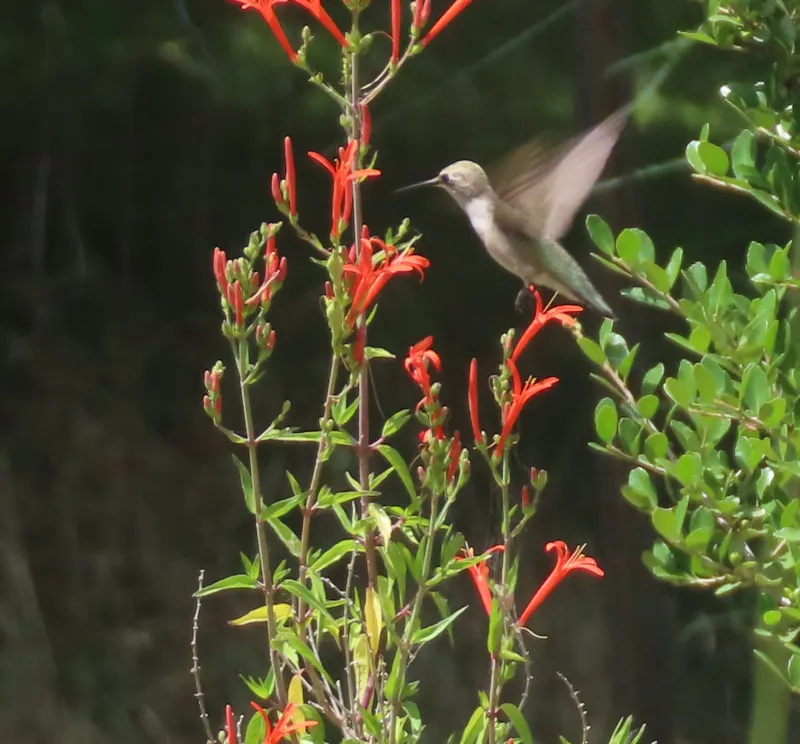
Some plants just look like they were born in Texas, and Flame Acanthus, Anisacanthus quadrifidus var. wrightii, wears that look proudly.
From midsummer straight through the first frost it throws out slender red-orange tubular flowers that hummingbirds cannot resist.
Picture your backyard turning into a tiny wildlife cafe right when everything else has quit for the season.
That is the turn here, because most shrubs give up in August while this native is just warming up.
Growing three to five feet tall and three to four feet wide, it handles the rocky banks of the Edwards Plateau and the arid stretches of West Texas without complaint.
It takes sand, loam, clay, even limestone, and blooms hardest in full sun.
A hard freeze may knock it to the ground, but the roots are hardy and spring brings it right back.
Your job is simple.
Cut it back hard in early spring, close to a foot from the ground, to force dense growth and more flowers.
Water it deeply while it settles, then let the rain carry most of the load.
You get fiery color for months and a front-row seat to the fall hummingbird traffic.
3. Turk’s Cap Thrives In The Shade Others Fear
Finding a shrub that actually blooms in shade without begging for water feels like a myth in Texas.
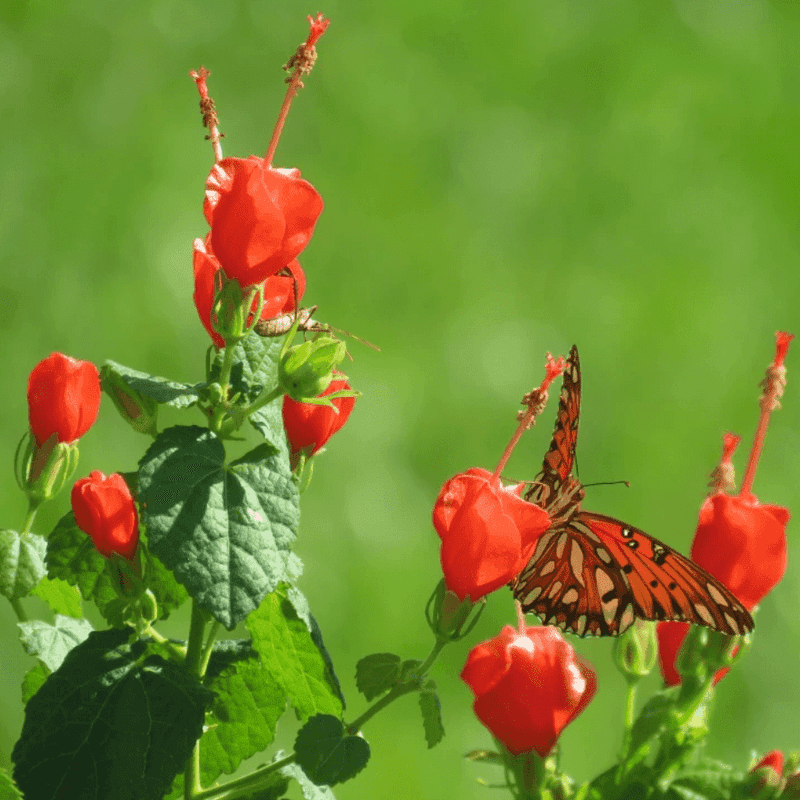
Turk’s Cap, Malvaviscus arboreus var. drummondii, quietly proves it wrong under the trees where most plants sulk.
Its little red flowers never fully open, twisting into a turban shape that gives the plant its name.
They keep coming from spring through fall, pulling in hummingbirds and butterflies all season.
Along the milder Gulf Coast it can stay evergreen and bloom nearly year-round.
This fast grower reaches three to six feet tall and about as wide, sometimes stretching to nine feet in rich ground.
It handles everything from sandy East Texas soil to Houston gumbo clay.
It takes full sun, but the foliage looks its best with afternoon shade, which is exactly why it saves those tricky spots under a live oak.
In North Texas a hard freeze sends it to the ground, and that is fine.
The roots hold, and a late-winter pruning keeps it tidy and blooming.
So the shady corner you gave up on becomes the coolest-looking spot in the yard, and you barely touch the hose to keep it that way.
4. Autumn Sage Blooms From Spring To Frost
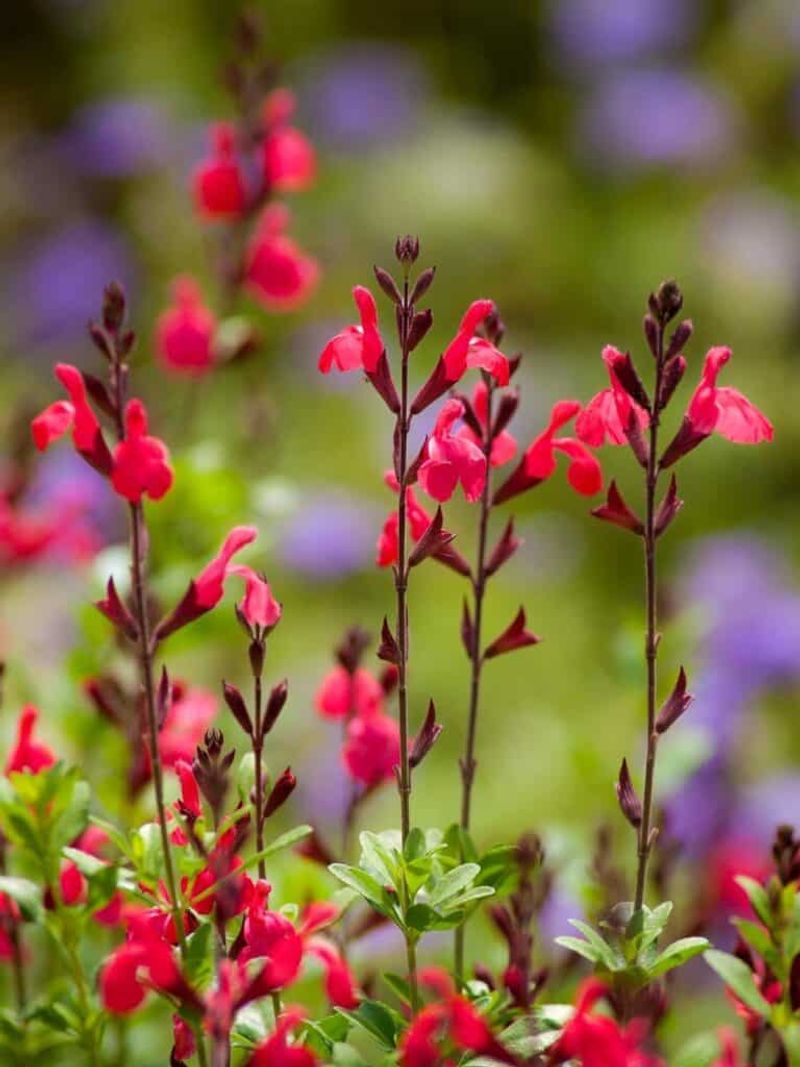
Plenty of shrubs promise a long season and then quit by June.
Autumn Sage, Salvia greggii, is not one of those quitters.
It genuinely flowers from spring all the way to frost, in reds, pinks, purples, yellows, and violets.
Many Hill Country and San Antonio gardeners lean on it to turn hot, rocky ground into a hummingbird and bee magnet.
Brush the small leaves and you catch a faint minty scent, a little bonus most people do not expect.
Compact at two to three feet tall and wide, it slides into perennial borders, rock gardens, and low informal hedges.
It wants full sun but appreciates a touch of afternoon shade in the hottest weather, which can stretch the bloom season even longer.
Well-drained soil is the one thing it insists on, so it loves the shallow alkaline caliche of the Hill Country.
Once it is established, drought barely fazes it, freeing up your water for thirstier corners.
And deer usually walk right past thanks to that aromatic foliage.
Plant a few, space them about two feet apart, and you get months of color with almost no fuss.
5. Gregg’s Mistflower Turns A Bed Into A Butterfly Stop
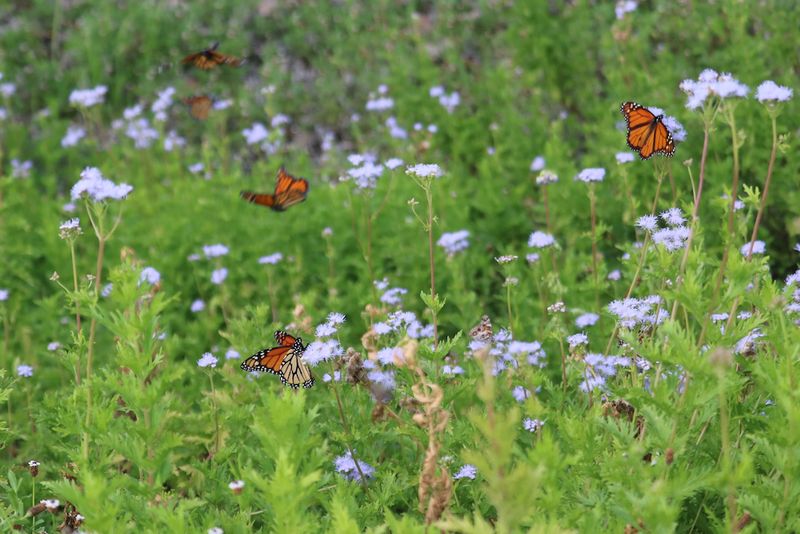
Come fall, migrating Monarchs and Queen butterflies drop out of the sky looking for fuel.
Gregg’s Mistflower, Conoclinium greggii, is the roadside diner they cannot pass up, its fluffy blue-purple flowers practically vibrating with wings.
If you have ever wanted to support pollinators without babying a plant, this Central Texas native earns its keep.
It stays low, one to two feet high, spreading by underground rhizomes into a soft mat of color.
It does spread, but a quick division every couple of years keeps it in bounds, so do not let that scare you off.
It handles hot, dry sites and prefers well-drained, neutral to slightly alkaline soil.
Full sun works, though part shade often means more flowers during the worst of summer.
Once established it drinks lightly, maybe once every ten to fourteen days in shade during a dry spell.
Roots are hardy down near zero degrees Fahrenheit, so it bounces back reliably each spring.
The payoff lands in October, when the fall monarch migration rolls through and your yard becomes the busiest stop on the block.
6. Cenizo Rio Bravo Handles Both Flood And Drought
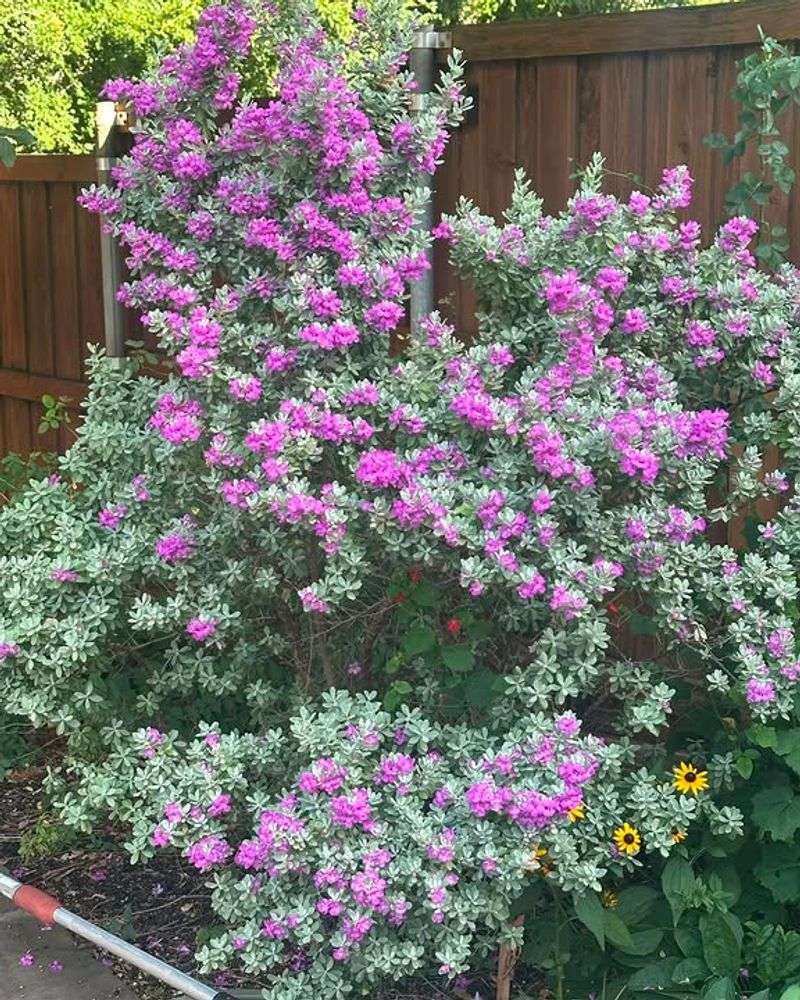
Blackland clay is a trap for pretty shrubs.
It bakes hard in July, then holds water like a bathtub after a downpour, drowning roots that just survived a drought.
Rio Bravo Cenizo, another improved Leucophyllum frutescens selection, was picked for exactly that whiplash.
Denser and more upright than the wild form, it grows four to five feet tall and wide with soft gray leaves and deep purple blooms after rain.
Gardeners across North and Central Texas reach for it as a low-maintenance privacy screen that does not turn leggy and bare at the bottom.
The reason it works comes down to root tolerance.
It shrugs off the sudden Gulf-fed downpours that rot lesser sages, then flips right back to full drought mode within days.
Full sun is non-negotiable here, so give it at least six hours.
Space plants about four feet apart for a screen, water deeply through the first summer, then ease off.
Skip the heavy pruning and heavy feeding, both of which make it floppy.
You end up with a green wall that hides the neighbor’s trampoline and asks for almost nothing in return.
7. Dwarf Yaupon Holly Stays Green When Everything Browns
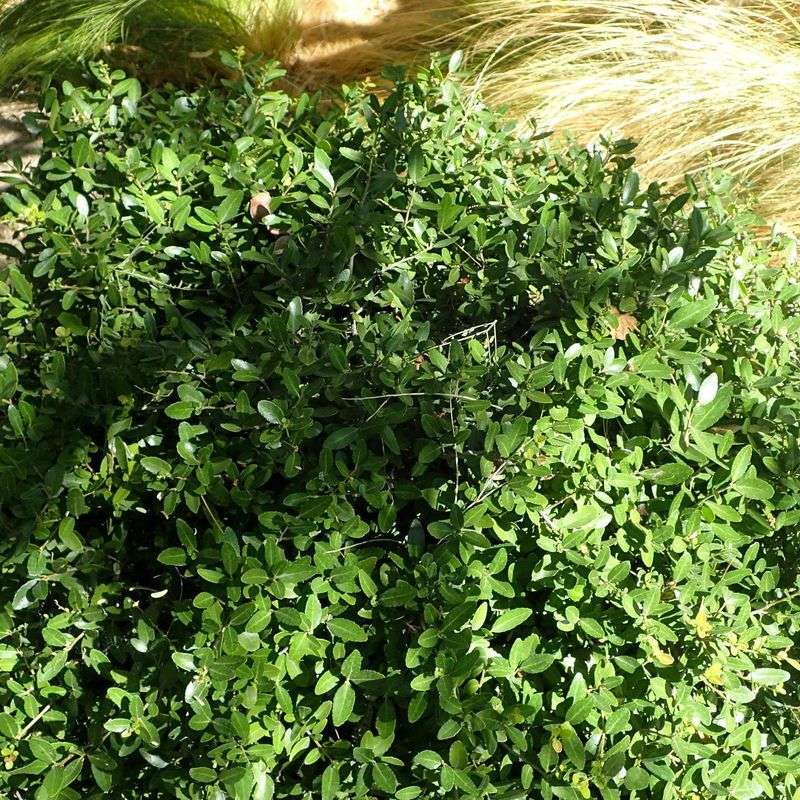
Walk any Texas neighborhood in late August and you will spot the tired boxwoods, edges scorched brown, gasping under the heat.
Dwarf Yaupon Holly, Ilex vomitoria Nana, sits right beside them looking calm and glossy green.
Native from East Texas to the Gulf Coast, it is one of the toughest evergreens you can plant for tight, formal shapes.
It stays compact, roughly three feet tall and wide, and its small leaves resist the sunburn that fries thirstier hedge plants.
Here is the honest limit.
It is not a native flowering showpiece, and that is the point.
It is the quiet workhorse that frames your walkway and holds its shape through drought, hard freezes, and the occasional hailstorm.
Texas A&M AgriLife Extension lists yaupon among the most dependable low-water evergreens for the state.
Plant in full sun to part shade, space about two and a half feet apart for a low hedge, and shear once or twice a year if you want crisp lines.
Water deeply while it roots in, then leave it alone.
It gives you that tidy, green backbone that makes the flashier shrubs around it look even better.
8. Pride Of Barbados Brings Tropical Fire To South Texas
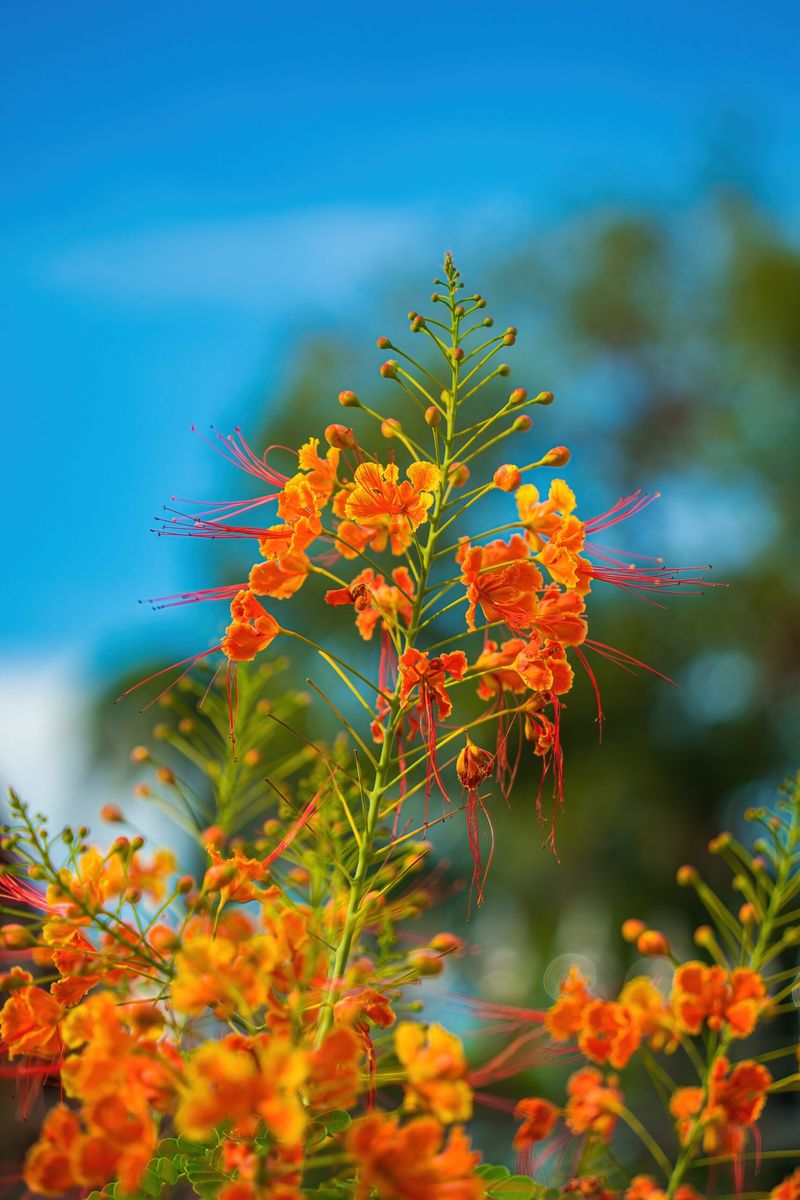
If you want a shrub that treats 105 degrees like a compliment, meet Pride of Barbados, Caesalpinia pulcherrima.
Its orange and red flowers flare open like tiny flames all summer, the kind of color that stops cars in South Texas and along the Gulf Coast.
It grows fast, reaching six to ten feet in a single warm season, which is a gift when you need height in a hurry.
Butterflies and hummingbirds mob it through the hottest months, right when the birdbath is the only busy spot in most yards.
Now the catch.
It loves heat as much as it hates cold, so a hard freeze will cut it back, and in the Panhandle or North Texas it often behaves like a perennial that returns from the roots.
Down in the Lower Rio Grande Valley, zone 10b, it can sail through winter untouched.
Give it full sun and well-drained soil, space plants about four feet apart, and cut it low in late winter to force a bushy comeback.
Water deeply the first season, then only during long dry spells.
You trade a little cold risk for months of tropical fireworks and almost no thirst.
9. What Else Actually Helps These Shrubs Thrive
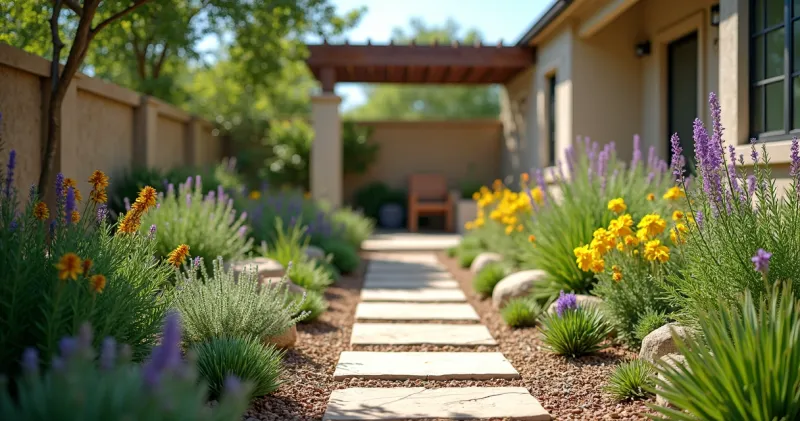
Even the toughest shrub needs a fair start, and the first season is where people either win or lose.
Get the planting right and the rest mostly takes care of itself.
Start with drainage, because it is the quiet killer.
In the heavy blackland clay of North and Central Texas, or the sandy ground of East Texas, work a few inches of compost into the planting area to loosen the structure.
In the shallow alkaline caliche of the Hill Country and West Texas, most of these plants are already at home, so just make sure water moves through instead of pooling.
Once they are in, water deeply to soak the soil six to eight inches down, then let the top dry between drinks.
That trains roots to chase moisture downward, which is what makes a plant drought-proof by its second summer.
Establishment usually takes one full growing season.
Spread about three inches of organic mulch around the base, keeping it off the stems, to hold moisture, cool the roots, and choke out weeds.
Choosing drought-tolerant shrubs like these can trim outdoor water use noticeably, an easy win when restrictions hit.
So you end up with a yard that stays alive, a hose that stays coiled, and a little quiet pride every time a neighbor asks how you do it.