
These North Carolina Front-Yard Plants Look Good Enough For The Street And Still Feed You
Follow us on Google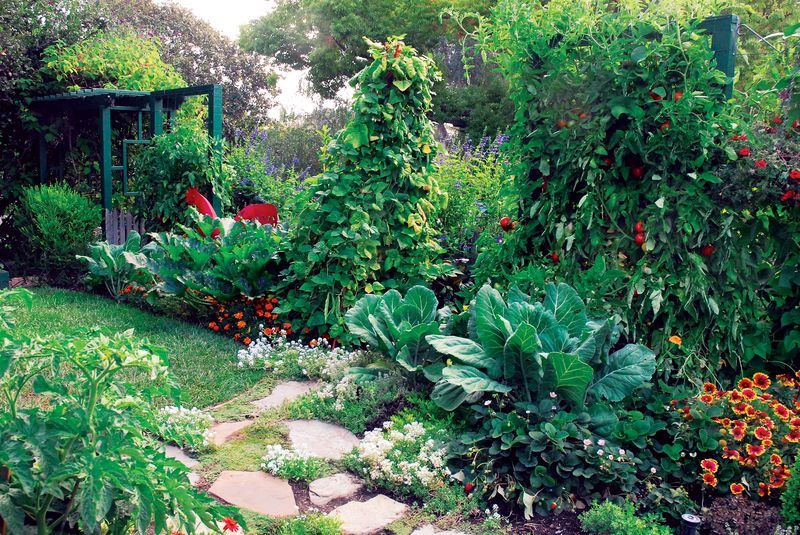
You pull into the driveway on a muggy July evening, and the neighbor’s yard across the street is all clipped boxwood and mulch that feeds nobody. Yours does not have to be that way.
There are plants you can set out front in North Carolina that look sharp enough to make people slow their cars, and they still hand you berries, figs, or flowers you can actually eat. Better still, most of them pull double duty by feeding bees, songbirds, and butterflies while they feed you.
Here are nine that earn their spot along the sidewalk and the dinner table both.
1. Blueberries
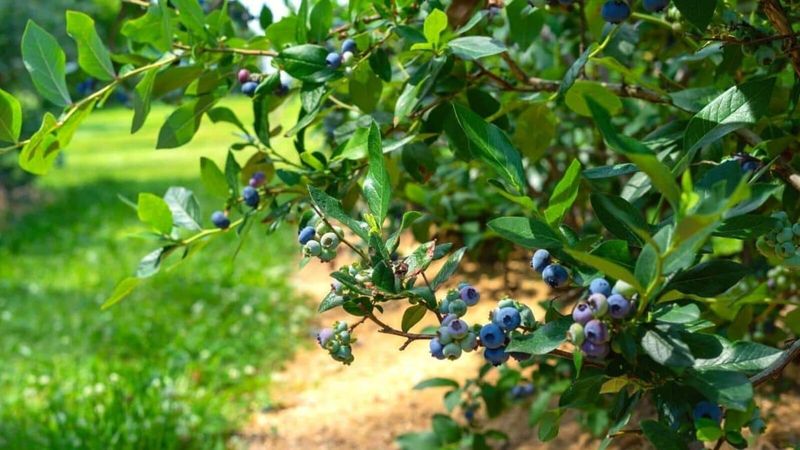
Picture a shrub that flowers pale pink in April, glows green all summer, then catches fire in October with red and yellow leaves you would swear someone painted. That is a blueberry bush (Vaccinium spp.), and it is native to North Carolina, so it already knows how to handle our sticky summers and surprise February cold snaps.
Here is the part people miss. A mature bush can hand you 10 to 20 pounds of berries every summer, which is a lot of pancakes and a lot of birds you get to watch from the porch.
Gray catbirds will find them, so plan to share a little.
The one trick is soil. Blueberries genuinely demand acidic ground, a pH between 4.5 and 5.5, which is lower than most Piedmont red clay runs.
On sandy Coastal Plain soil, NC State Extension suggests roughly 1 pound of wettable sulfur per 100 square feet to drop the pH one point. Heavier clay may need closer to 2 pounds, worked in a season ahead.
Space bushes about 4 feet apart for a hedge that hides the neighbor’s trash cans. Rabbiteye types like Premier and Tifblue suit warmer zones, while Legacy adapts widely.
Plant a couple different varieties so the bees cross-pollinate and the harvest actually fills the bucket.
2. Fig
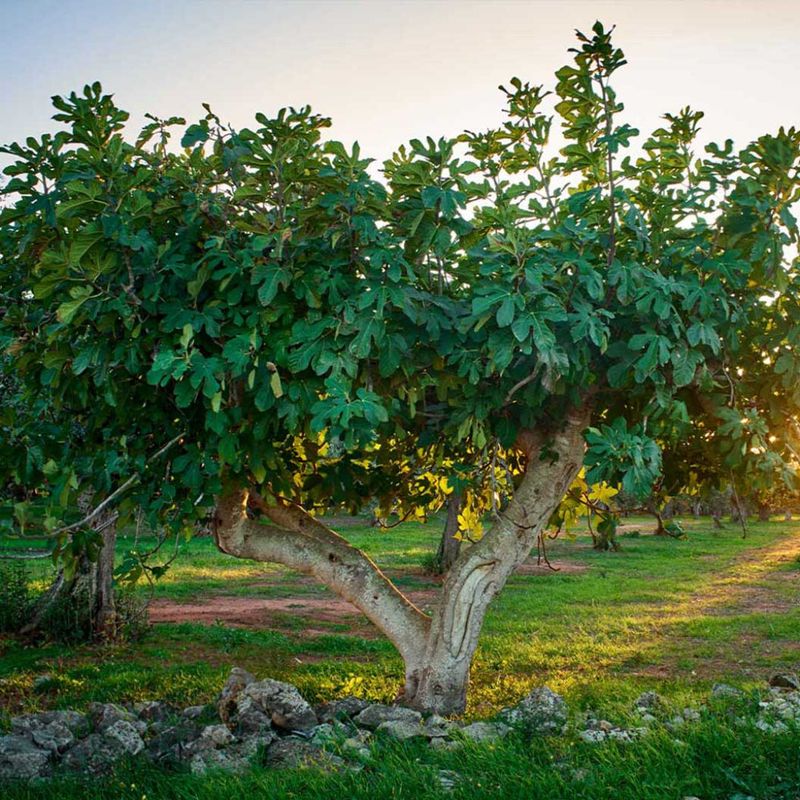
Deer generally will not touch a fig, and if you garden anywhere near the woods in North Carolina, that sentence alone might sell you. Ficus carica brings big, deeply lobed leaves that throw a tropical look over a plain brick front, and older plants develop smooth pale bark that reads almost sculptural in winter.
Come late summer into early fall, the fruit ripens from green to a purplish bronze with soft pink flesh inside. You can eat them off the branch, cook them down, or turn them into preserves that last past the first frost.
Celeste, sometimes called the sugar fig, and Brown Turkey are the two names you will see most at NC nurseries.
Figs love our hot summers, since the Mediterranean where they come from feels a lot like a Sandhills July. Give them full sun and rich, well-drained soil, then plant in early spring with about 10 feet of elbow room.
In cooler mountain pockets, pile mulch over the roots before winter, because a hard freeze can nip young wood.
Celeste shrugs off most pests, though aphids and scale show up now and then. Fruit drop gets messy on the sidewalk, so set it back from the walkway.
The trade is a graceful little tree and a bowl of figs the birds and your kids will fight over.
3. Eastern Redbud
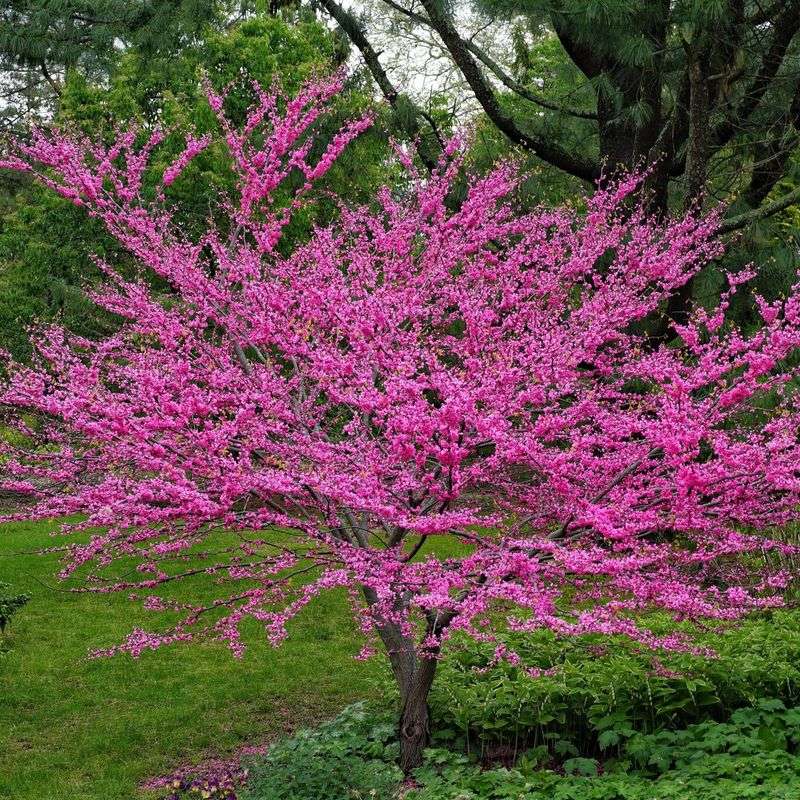
Early spring in the Piedmont, before the dogwoods even think about it, redbuds light up the roadsides in a wash of rose-pink. Cercis canadensis does that trick where the flowers pop straight out of the bare branches and even the trunk, like the tree cannot wait for leaves.
Most folks do not realize those flowers are dinner. They taste crisp and a little sour, sweet on the finish, and they carry a nice hit of Vitamin C.
Toss them over a salad or pickle them, and later in the year the young seed pods eat much like snow peas.
Native across eastern and central North Carolina woodlands, redbud handles clay or sandy soil and swings between full sun and part shade. In our brutal summers it actually prefers a little afternoon shade.
Figure on a mature size of 20 to 30 feet tall and about as wide, so give it room away from the porch roof.
The early blooms feed honeybees and butterflies weeks before much else opens, and it hosts the Henry’s elfin butterfly. Plant it young, because the roots hate being disturbed once settled.
Japanese beetles and borers can pester it, so keep the tree vigorous with a spring mulch ring and steady water its first two summers.
4. Pawpaw
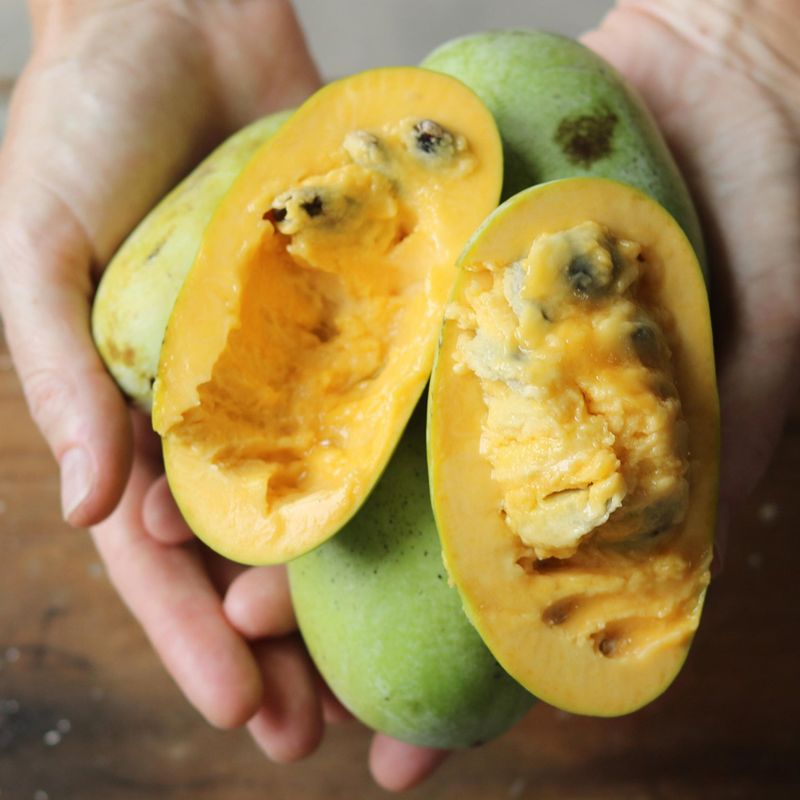
A native tree that grows fruit tasting like banana custard sounds made up, but the pawpaw is the real thing and it is genuinely from here. Asimina triloba wears large, oblong, drooping leaves that give a jungle feel, then turns a clean lemon yellow every fall.
The fruit runs 2.5 to 6 inches long, greenish yellow, and ripens in late summer into early fall with a soft, spoonable middle. Cultivars like NC-1 were bred for more pulp and fewer seeds, so you get more actual eating per fruit.
Songbirds and small mammals hunt them hard, so you will have competition come harvest.
Here is where it gets tricky. You need at least two genetically different pawpaws for cross-pollination, and the flowers smell faintly like meat to draw in flies and beetles rather than bees.
Odd, but it works.
Pawpaws like moist, nutrient-rich, acidic soil and take anything from deep shade to full sun, though sun brings the most fruit. They stay reasonable at roughly 15 to 35 feet.
Best part for a family yard, they host the striking Zebra Swallowtail butterfly, whose caterpillars feed only on pawpaw leaves. Plant two, wait a few years, and you get a butterfly nursery with dessert attached.
5. Common Persimmon
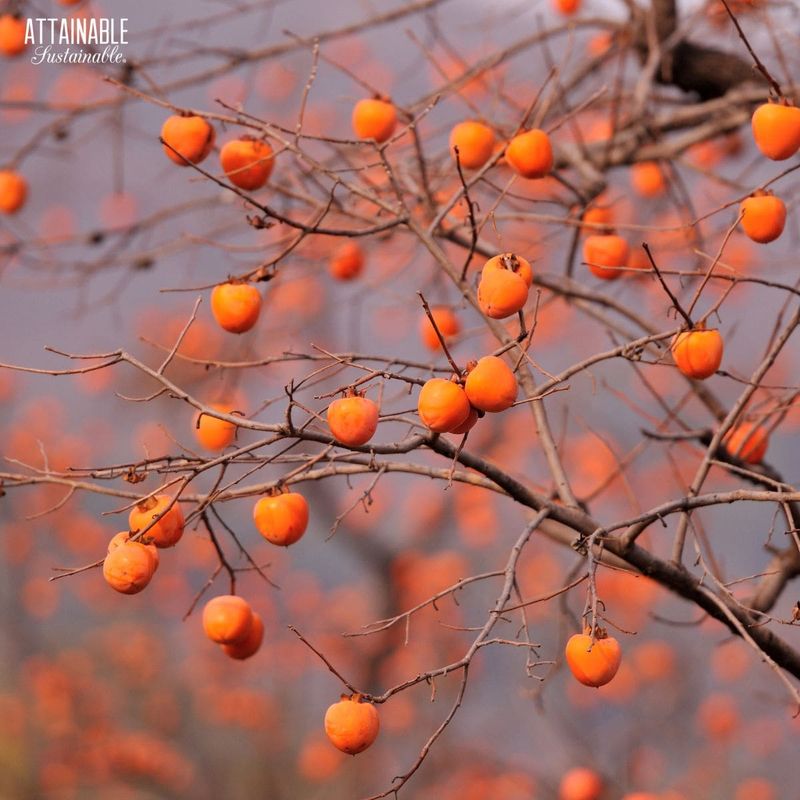
Bite an unripe persimmon and your whole mouth puckers up like you sucked a lemon dipped in chalk. Wait until after the first frost, though, and Diospyros virginiana hands you one of the sweetest fruits growing wild in North Carolina, from the Coastal Plain clear to the mountains.
The tree earns its front-yard spot on looks alone. Fall foliage runs yellow, orange, and bright red, and the mature bark cracks into dark gray blocks folks call alligator bark.
The orange fruit hangs on after the leaves drop, so you get color deep into winter.
Ripe, they go into syrups, jellies, ice cream, and the pudding your grandmother probably swore by. You can even brew the leaves for tea.
Persimmons are tough. They prefer moist, sandy soil but tolerate poor, dry ground, wind, and city grit, and they turn drought-tolerant once rooted.
One catch, they are dioecious, so you need a male and a female tree to get fruit, and it may take 3 to 9 years to start bearing. The tree reaches 30 to 80 feet over time, so site it with room.
It hosts the huge Luna moth and the Hickory Horned Devil, which alone is worth the wait.
6. Red Mulberry
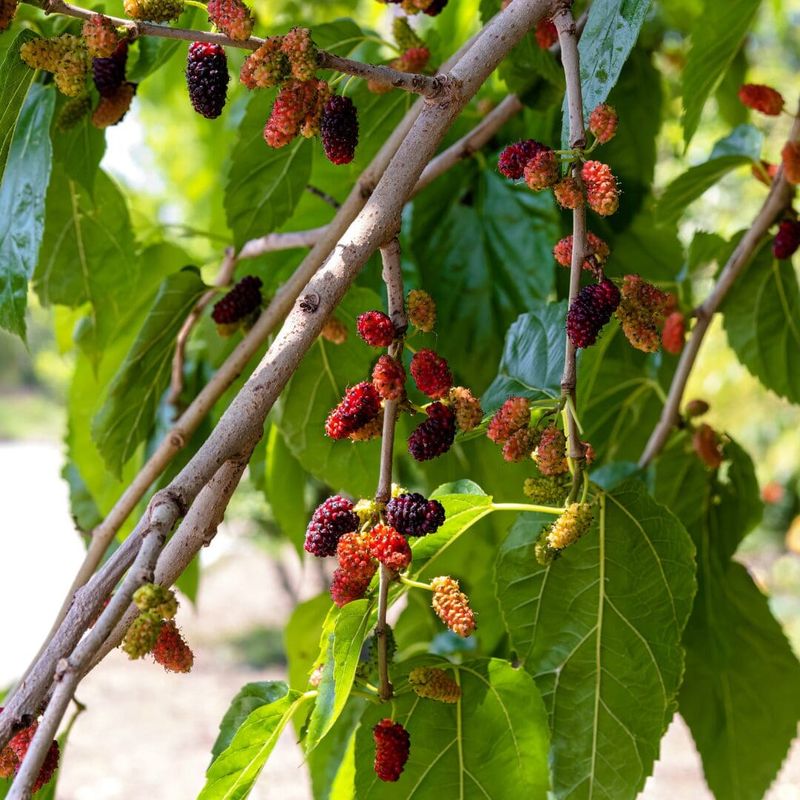
Every kid who has ever climbed a mulberry tree comes down with purple-stained hands and a grin, and the Red Mulberry is the only mulberry native to North Carolina. Morus rubra builds a dense, spreading crown of dark heart-shaped leaves that turn a strong yellow in fall.
The berries look like stretched-out blackberries and go sweet and juicy as they shift from red to deep purple-black. Fresh off the branch, baked into pies, or cooked into jam, they deliver.
A word of caution worth repeating, unripe fruit and the milky sap in every part of the tree are considered poisonous, so eat only the fully ripe, dark berries.
You will find red mulberry in the rich red Piedmont soils and across the Coastal Plain. It wants rich, moist, well-drained ground and full sun, though it handles part shade and drought once established.
Expect 25 to 60 feet tall, and like the persimmon it is usually dioecious, so a male and female pairing sets fruit.
Few trees feed more wildlife. The big leaves shelter nesting birds, and catbirds, mockingbirds, foxes, and squirrels swarm the ripe fruit.
It also hosts the Red Admiral butterfly. Fruit drop stains a sidewalk, so plant it back over the lawn where the mess feeds the soil.
7. Virginia Strawberry
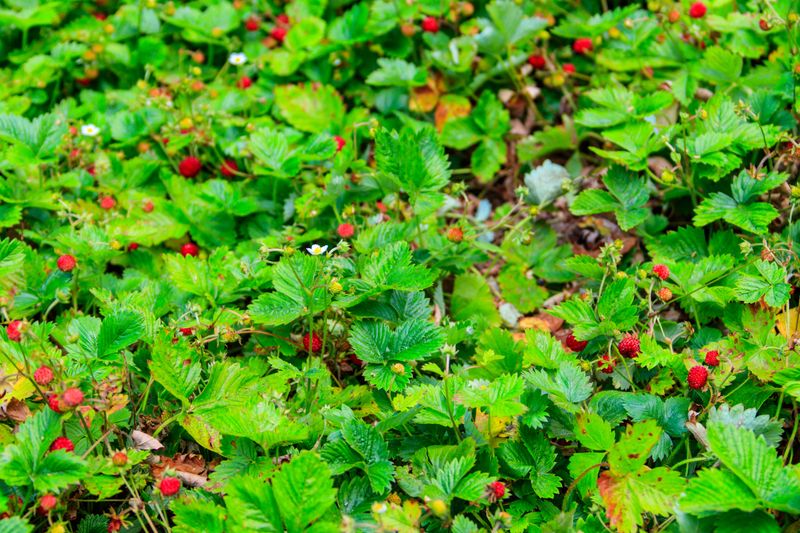
Sometimes the plant that solves a problem is one you have been mowing over for years. Virginia strawberry, Fragaria virginiana, is the wild native groundcover that carpets a slope with white five-petaled flowers in spring and dense green leaves that blush red by winter.
The berries come small and sweet in late spring through midsummer, and these little guys are the actual wild ancestors of the giant supermarket strawberry. You eat them fresh, and the dried leaves brew into a mild tea.
Common through the North Carolina mountains and Piedmont, it thrives in rich, sandy loam that drains well and dislikes soggy feet. It handles full sun to part shade but tends to slow down or go dormant in the worst of our July heat and humidity, then perks back up in fall.
What makes it earn a front spot is coverage. It spreads by runners that root as they sprawl, knitting into a colony that fights erosion on a bank the mower hates.
The flowers feed native bees, and it hosts the Gray Hairstreak butterfly. One heads-up, do not confuse it with the yellow-flowered mock strawberry, which is tasteless.
If ours has white flowers, you found the good one.
8. Rosemary
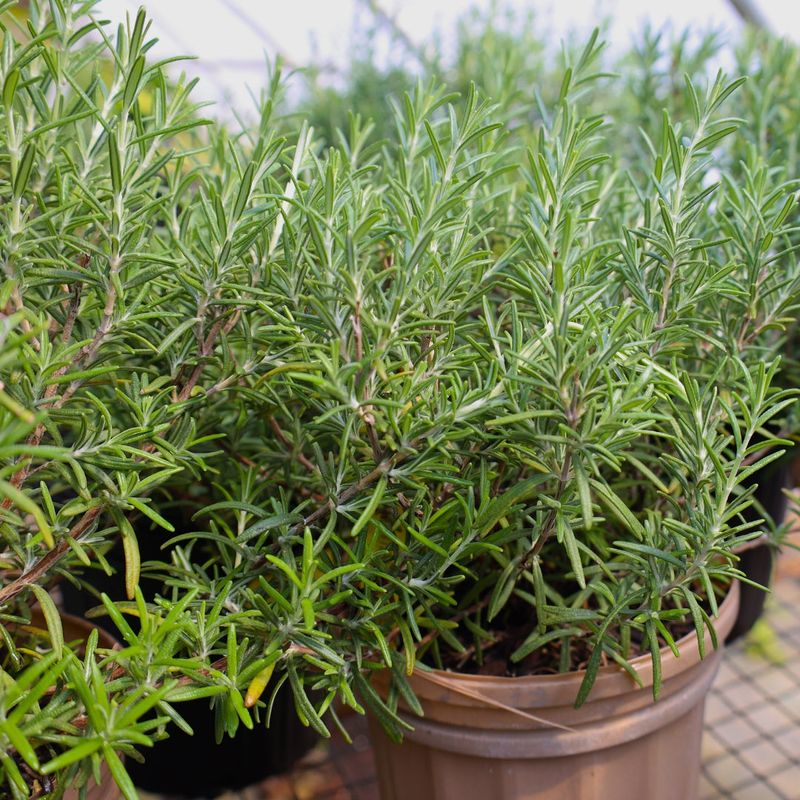
Brush past a rosemary bush on a warm evening and the whole patio smells like Sunday dinner. Salvia rosmarinus is an evergreen shrub, so while everything else goes bare in a mild North Carolina winter, this one keeps its needle-fine, silver-backed leaves and its shape.
The kitchen payoff is obvious. Snip a fresh sprig any month of the year for roasts, bread, or potatoes without a trip to the store.
Little blue, lavender, or white flowers show up in spring and summer as a bonus.
Coming from the Mediterranean, rosemary wants hot sun and sharp drainage, which is where our heavy clay fights it. Plant it high in a raised bed or a container, tolerate salt and lean soil, but keep it out of wet, humid pockets.
Some varieties survive down to -10 degrees Fahrenheit, so with the right spot it holds across much of the state. Upright types reach 4 to 7 feet, while trailing ones spill 4 to 8 feet over a wall.
Here is the neighborly perk. Those oily leaves can help discourage mosquitoes near a seating area, and the flowers pull in bees, butterflies, and hummingbirds.
It is not a magic bug shield, just one honest layer that also happens to be deer-resistant and flavors your supper.
9. Putting It All Out Front
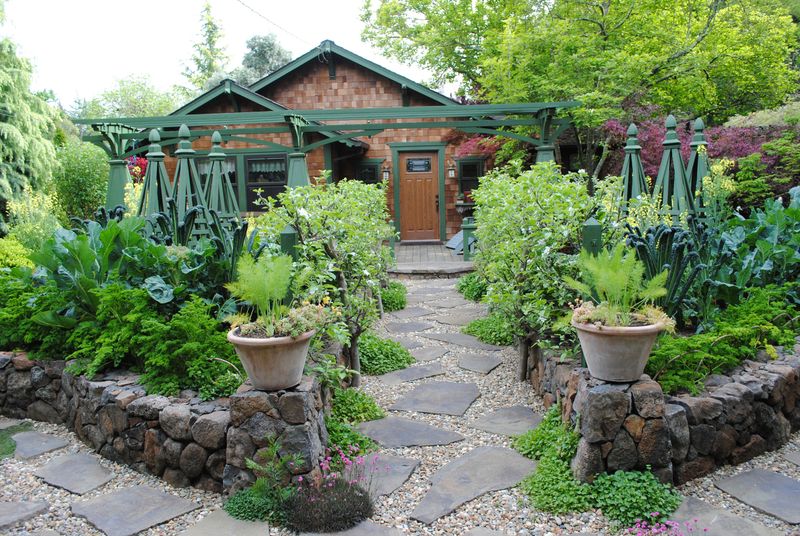
None of these plants asks you to trade a good-looking yard for a useful one, which is the whole point. You can line a walkway with blueberries, anchor a corner with redbud, and let wild strawberry stitch up the slope the mower hates, and the street still sees a yard that looks tended.
Match the plant to your ground first. Sandy Coastal Plain soil suits figs and persimmons, the Piedmont red clay wants raised beds for rosemary and blueberries, and the cooler mountains reward pawpaw and wild strawberry.
Space the trees for their grown size, not the pot they came in, and remember the dioecious pairs need a partner to fruit.
Best of all, every plant here feeds something besides you. Bees work the blueberry blooms, monarchs and swallowtails find the natives, and songbirds line up for the mulberries and figs.
You end up with a front yard that looks sharp from the curb, fills a bowl in season, and hums with the kind of life that makes a summer evening on the porch feel a little richer.