
Grow These North Carolina Natives Instead Of Hostas Where Shade Gets Dry And Rooty
Follow us on Google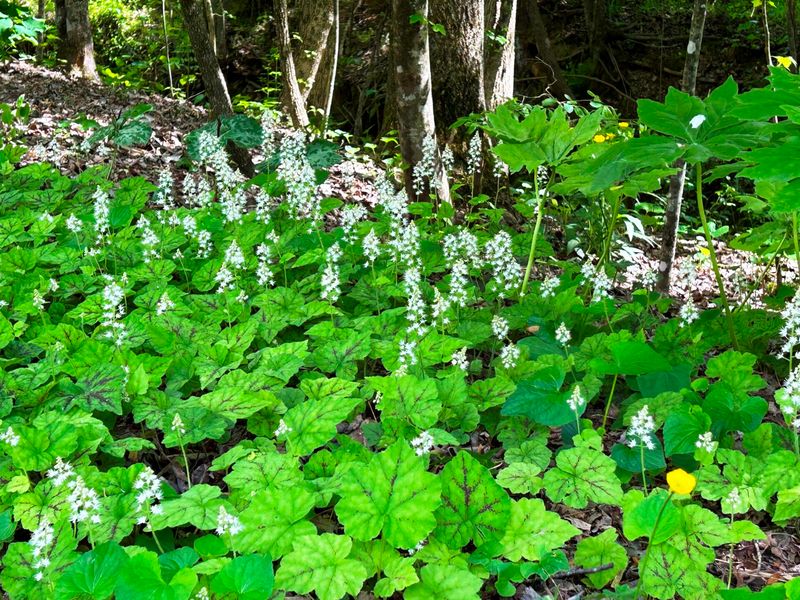
You drag your patio chair into the shade under the big oak, hoping for a cool break from the muggy North Carolina afternoon.
But there sit your hostas, looking more like chewed-up lettuce than the lush leaves you pictured.
That soil is bone dry and packed with tree roots, and it feels like nothing wants to live there.
Good news, our native woods are full of tough plants that actually thrive in exactly that spot, so you do not have to fight this losing battle anymore.
1. Embrace The Evergreen Grace Of Christmas Fern
Most folks assume ferns need a swampy, drippy spot to survive.
Not this one.
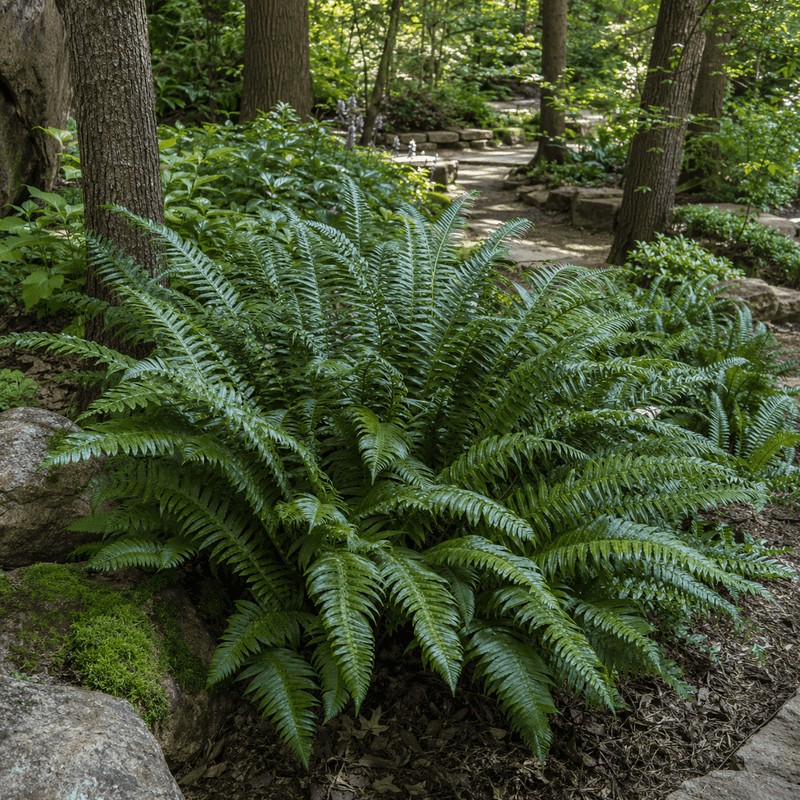
Christmas fern (Polystichum acrostichoides) grows wild in dry woodlands from the sandy Coastal Plain up to the mountain slopes, right where tree roots drink up every drop of rain.
Here is the turn.
Those leathery, deep green fronds are built for average to slightly dry, well-drained soil, and they shrug off heavy shade and rocky ground.
Unlike hostas, they stay green all winter, so you get a quiet hero standing tall when the rest of the bed goes brown.
Each plant forms a fountain-shaped clump about 1 to 2 feet tall and wide, holding its texture through our hottest, stickiest August days.
The fix is easy.
Space them on 16 to 18 inch centers under mature trees, water them through their first full growing season, then mostly leave them be.
They resist deer, control erosion on Piedmont slopes, and give ground-level cover where songbirds duck in for shelter.
NC State Extension lists Christmas fern as a reliable native for dry shade, so you are not gambling on a fussy import.
You end up with a calm green carpet that never looks tired.
2. Discover The Tough Beauty Of American Alumroot
You have probably walked right past the flashy coral bells at the nursery.
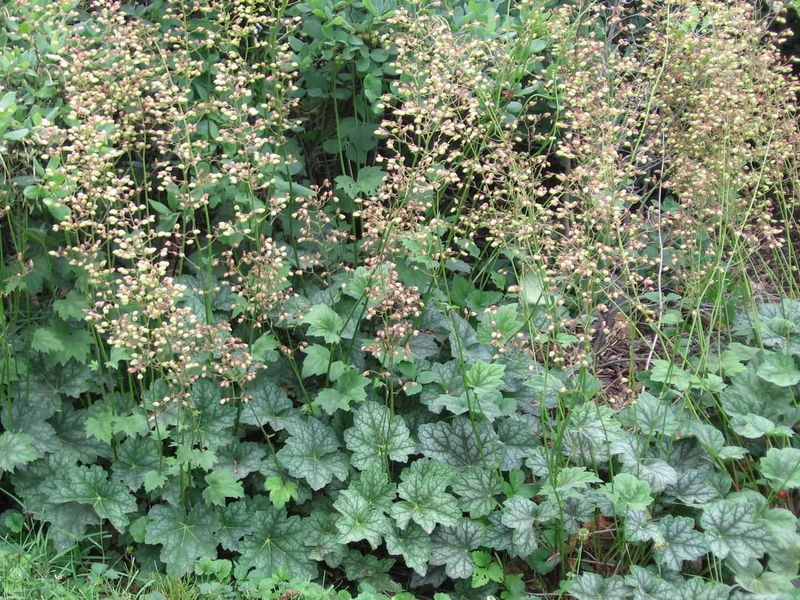
The native cousin, American alumroot (Heuchera americana), is the one that genuinely earns its keep in dry, rooty shade.
Many Piedmont gardeners burn through fussy plants under their hardwoods, where the soil is a dense tangle of roots.
Alumroot laughs at that.
It evolved on rocky forest outcrops and acidic slopes from the mountains down through the Piedmont, so shallow, stony ground feels like home.
The mounded, semi-evergreen rosette carries subtle bronze-purple tones, and wiry stems of tiny bell flowers rise in late spring to feed hummingbirds and native bees.
To plant it, set clumps about 18 inches apart for a flowing groundcover look.
The foliage stays 6 to 12 inches tall, with flower stalks reaching 2 to 3 feet.
High tannin content keeps deer moving along, which is a real relief in NC neighborhoods where they treat yards like a buffet.
Divide the clumps every three to four years in spring or fall to keep them vigorous.
That is the whole job.
You get color, pollinators, and drought grit in one plant that actually wanted to live in your hardest spot.
3. Unleash The Sunny Charm Of Green And Gold
Picture a cheerful splash of yellow lighting up your darkest corner for months at a time.
Sounds impossible in deep shade, right?
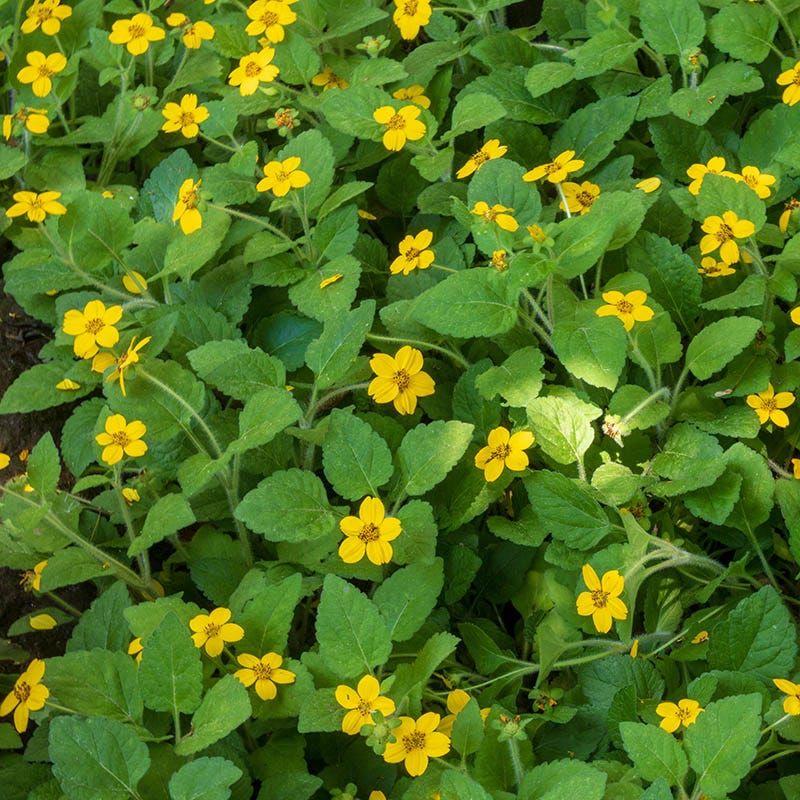
Green-and-gold (Chrysogonum virginianum) genuinely pulls it off.
A lot of gardeners give up and settle for a sea of plain green under the trees.
Here is what changes that.
This little native grows naturally in dry open shade and tolerates real dryness once its roots take hold, especially the ground-hugging southern forms.
It spreads by rhizomes into a low semi-evergreen mat only 2 to 6 inches tall, then throws bright star-shaped flowers from late spring clear through fall.
For the best show, plant it in partial to full shade with a couple hours of gentle morning sun, which nudges it to bloom harder.
It edges woodland paths beautifully and crowds out weeds without any help from you.
Deer tend to pass it by too.
Water it regularly that first season, then step back.
This plant actually thrives on a little neglect, so it rewards the busy homeowner who forgets the hose.
A pop of sunshine where you swore nothing colorful could grow, that is a good trade.
4. Invite Texture With Pennsylvania Sedge
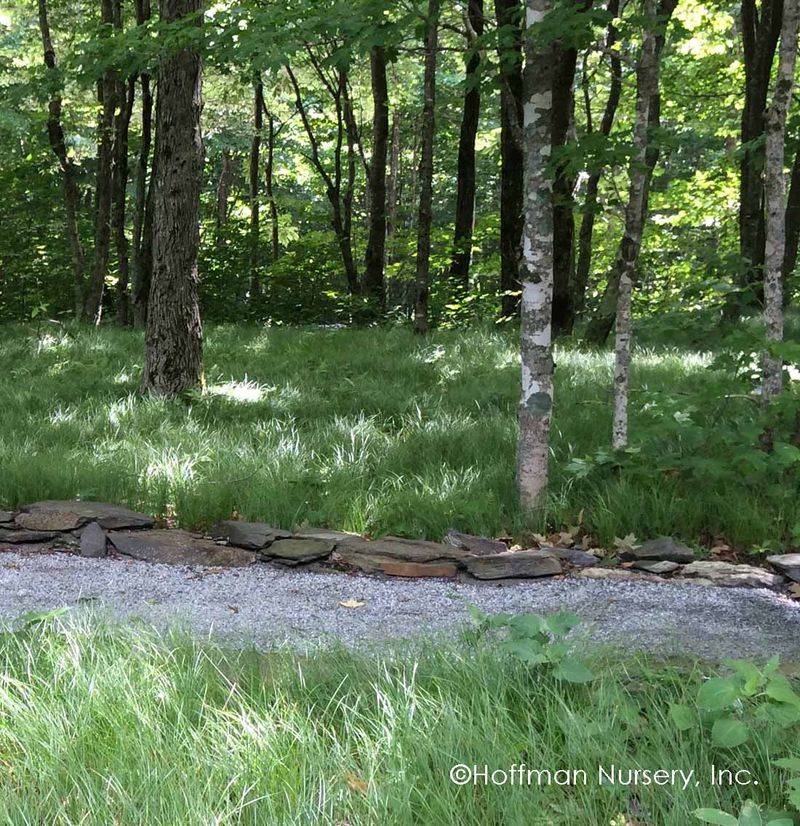
Trying to grow grass under a big oak or pine is a heartbreaker.
The roots form an impenetrable web, the soil dries out in hours, and you end up with thin, patchy turf clinging on for dear life.
Native sedges solve that, and Pennsylvania sedge (Carex pensylvanica) is the standout for dry shade.
It spreads by underground rhizomes into dense mats, working as a groundcover or even a low-traffic lawn stand-in.
The fine, weeping leaves form soft green mounds about 6 to 8 inches high and hold their color well into winter, so the space never looks bare.
Plant it on 8 to 12 inch centers to fill in quickly.
It handles a wide range of ground, from Piedmont red clay to the sandier soils of the Coastal Plain, and once settled it shrugs off drought.
Small wildlife tuck into the cover, and weeds struggle to break through the mat.
The payoff is that those impossible bald spots finally look purposeful.
Instead of fighting a lawn that will never win, you get a flowing, natural carpet that reads as intentional and stays alive without the sprinkler running every night.
5. Enjoy Early Blooms With Golden Ragwort
After a long winter, a shady bed can sit bare and brown well into spring, and it drags the whole yard down with it.
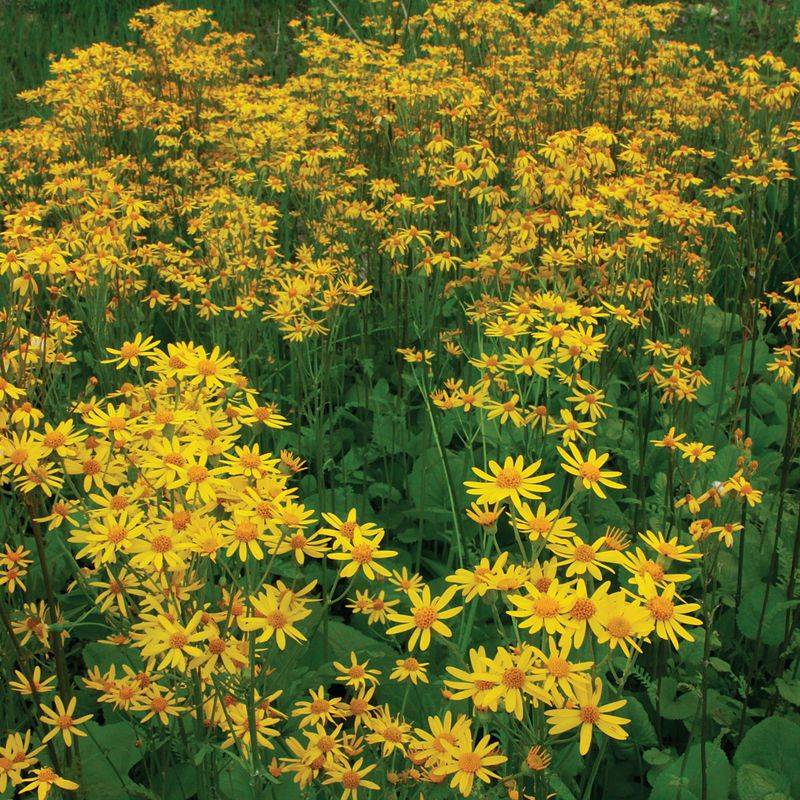
Golden ragwort (Packera aurea) breaks that spell early.
Common through the mountains and Piedmont, it is one of the very first spring wildflowers to open, sometimes as early as March.
Bright golden, daisy-like flowers rise 1 to 3 feet above a dense rosette of heart-shaped, semi-evergreen leaves.
It leans toward moist woods but takes drier conditions with some shade once established, which makes it a flexible pick for tricky ground.
Give it dappled sun to partial shade, and keep it watered while the roots settle in that first year.
After that it toughens up against dry spells.
It spreads by rhizomes and self-seeding into a low, weed-smothering colony, so a few plants become a carpet without much effort from you.
Those early flowers matter beyond looks.
They feed specialist bees and other pollinators waking up hungry, a genuine boost for the North Carolina backyard that wants more life buzzing around.
Deer and rabbits usually leave it alone, so your first spring show stays intact.
6. Layer In Heartleaf Foamflower For Spring Sparkle
Some corners of the yard just beg for something soft and airy, a little lift after the heavy green of summer sets in.
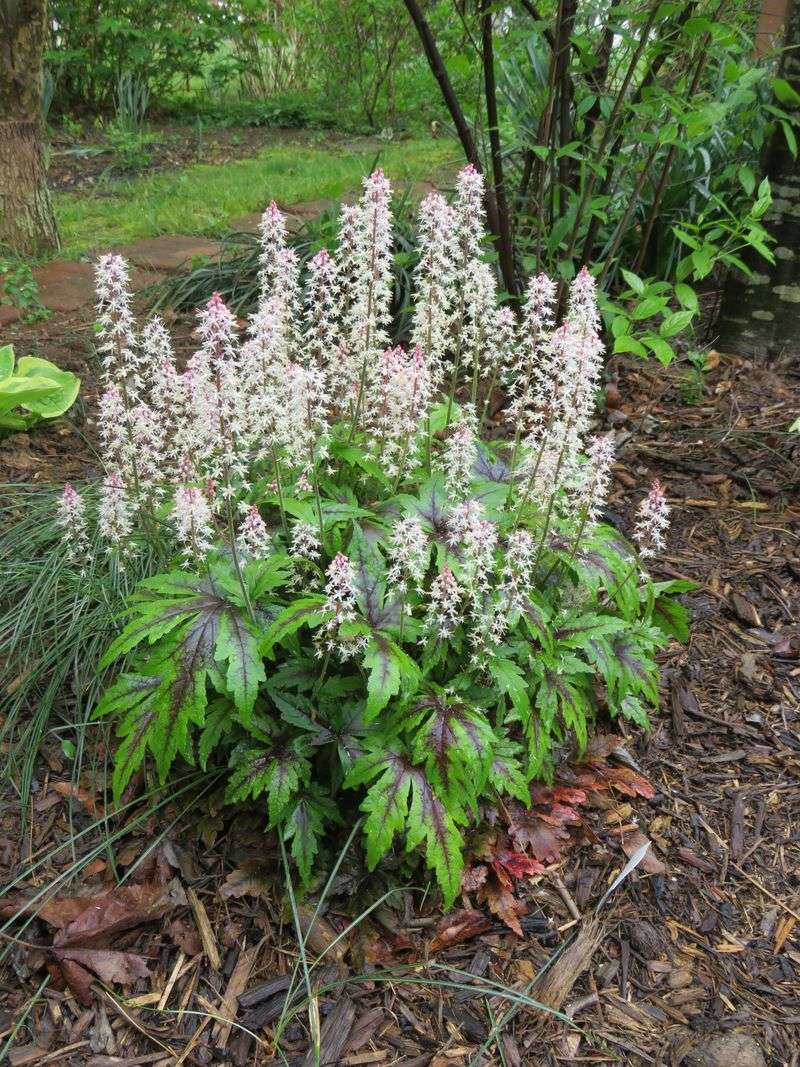
Heartleaf foamflower (Tiarella cordifolia) brings exactly that, with frothy white spires that look like tiny fireworks.
Native across the mountains and into the Piedmont, it forms a low clump of lobed, heart-shaped leaves about 6 to 12 inches tall.
In April and May, wispy flower stalks rise a few inches higher and foam over with pale blooms that early pollinators find quickly.
It leans woodland, but with a couple inches of leaf compost worked in, it holds up in the drier, rootier shade under mature trees better than most people expect.
Set plants about 12 inches apart and let them knit together into a gentle groundcover.
Many forms spread by short runners, filling gaps without turning into a bully.
Water through the first summer, mulch with pine straw, then relax.
The foliage often blushes bronze or red as fall arrives, so you get more than one season out of it.
It is not a magic cure for the worst dry spots, but paired with ferns and sedge it adds a delicate layer that makes the whole planting feel alive and intentional.
7. What Else Actually Helps

Even the toughest native will sulk if you drop it into concrete-hard, root-choked ground and walk away.
The real antagonist here is competition, since those big trees grab water and nutrients first every single time.
Start by amending the soil before you plant.
Work 2 to 3 inches of good leaf compost into the top 6 to 8 inches of soil.
It behaves like a sponge, holding moisture and food right where young roots can reach it.
Then mulch with a 2 to 3 inch layer of pine straw or shredded leaves to hold that moisture, steady the soil temperature, and slowly feed the bed as it breaks down.
Keep mulch a few inches off plant crowns so they do not rot.
Water matters most that first year.
Even drought-tough natives need consistent moisture while they build roots, especially through our muggy summers with their surprise afternoon storms and dry stretches between.
Once established, a deep soak once every 7 to 10 days during a severe drought keeps them looking their best.
Give these quiet heroes a head start, and they pay you back for years.
You end up with a shady spot that feels cool, looks intentional, and hums with more life than a bed of tired hostas ever could.