
The Garden Still Gives You A Kind Of Quiet Most Busy Days Never Do
Follow us on Google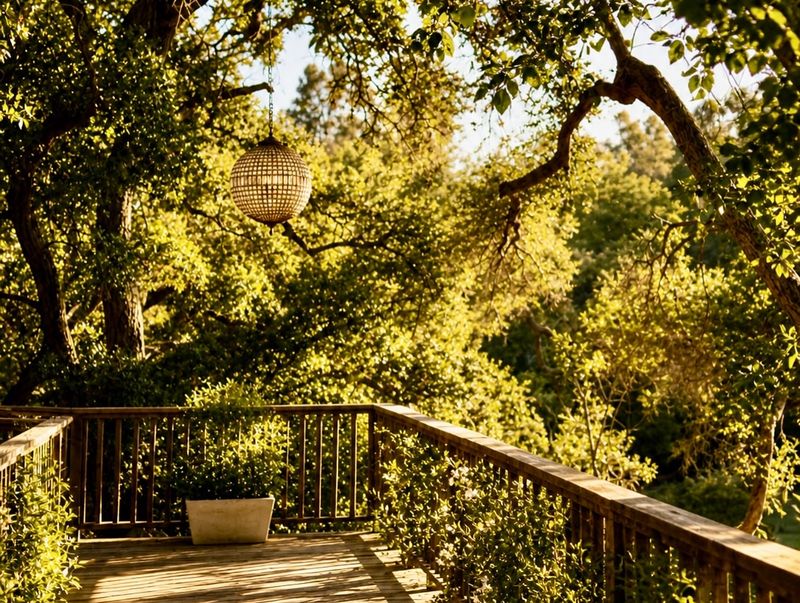
Somewhere between the last work notification and the pile of dishes that will still be there tomorrow, a lot of people find themselves standing in the yard, or on the porch, or next to a single pot of something green, and feeling just a little less pressed.
That feeling is real, and it has something behind it.
A garden can offer a kind of quiet that busy days rarely do, not because it silences everything, but because it asks less of you than almost everything else in your day.
That distinction is worth understanding.
The Quiet Is Not Always Silence
Late afternoon in most American homes sounds like this: a phone buzzing on the counter, a dryer cycling, a neighbor’s mower starting up, maybe a kid asking for something from the next room.
Every one of those sounds carries a small demand.
Then you step outside.
The yard is not silent.
There are birds, wind moving through leaves, maybe traffic a block over.
But something shifts.
The sounds out there do not generally ask you to respond.
That difference, between sounds that demand something and sounds that simply exist, is a big part of what people mean when they say a garden feels quiet.
Research on green space and well-being supports this idea, at least in part.
A WHO review of green and blue spaces and mental health found generally positive relationships between time in natural settings and mood, perceived stress, and well-being, while also noting that no single type of green space works best for everyone.
And one experimental study found that pleasant nature sounds tended to support faster physiological stress recovery compared to urban noise, though the study was small and results varied by individual.
The same outdoor sounds that feel restorative to one person, birds, wind, insects, can feel distracting to someone else, especially near traffic, barking dogs, or loud neighbors.
WHO also notes that green spaces may act as refuges from noise, but a few shrubs are not soundproofing.
The quiet a garden offers is subjective, and that is fine.
It does not need to be universal to be worth noticing.
Your Attention Has Fewer Emergencies Here
Most of the day runs on urgency.
Emails marked important, deadlines, a meeting that could have been a message, the mental list that never fully clears.
A garden operates on a different clock.
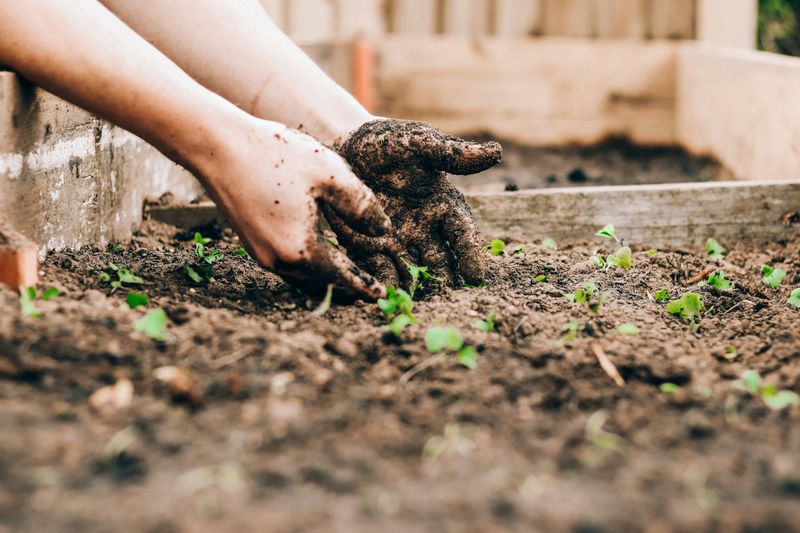
The tomato that needs water will still need water in ten minutes.
The weed you miss today will be there tomorrow.
Nothing in a healthy home garden sends a push notification.
That lower level of demand on your attention may be one reason time outside feels different.
A 2024 umbrella review covering 40 prior reviews found an overall positive relationship between gardening or horticultural therapy and well-being, mood, and quality of life.
But the authors were careful: study quality varied widely, populations and activities differed, and the evidence does not yet support strong clinical recommendations.
A separate and more recent analysis looked specifically at gardening trials and found that when all the studies were pooled together, the overall mental-health effect was not statistically significant.
Heterogeneity was extremely high, meaning the studies measured very different things.
A sensitivity analysis that removed the weakest studies did show a benefit, but that result is less certain than a consistent finding across high-quality trials.
Part of the difficulty is that studies often combine casual home gardening, sitting outdoors, community plots, and structured therapeutic programs into one category.
A 2025 systematic review of social and therapeutic horticulture found promising reductions in depression and anxiety symptoms, but only when programs were led by trained practitioners, and the authors called it a potential support for existing treatment, not a replacement.
Pulling weeds on a Tuesday evening is genuinely different from a clinical program, and that is okay.
The garden can still offer something real without being a prescription.
A Small Green Place Can Still Hold You
Somewhere along the way, the idea took hold that a garden needs to be large and well-designed to feel restorative.
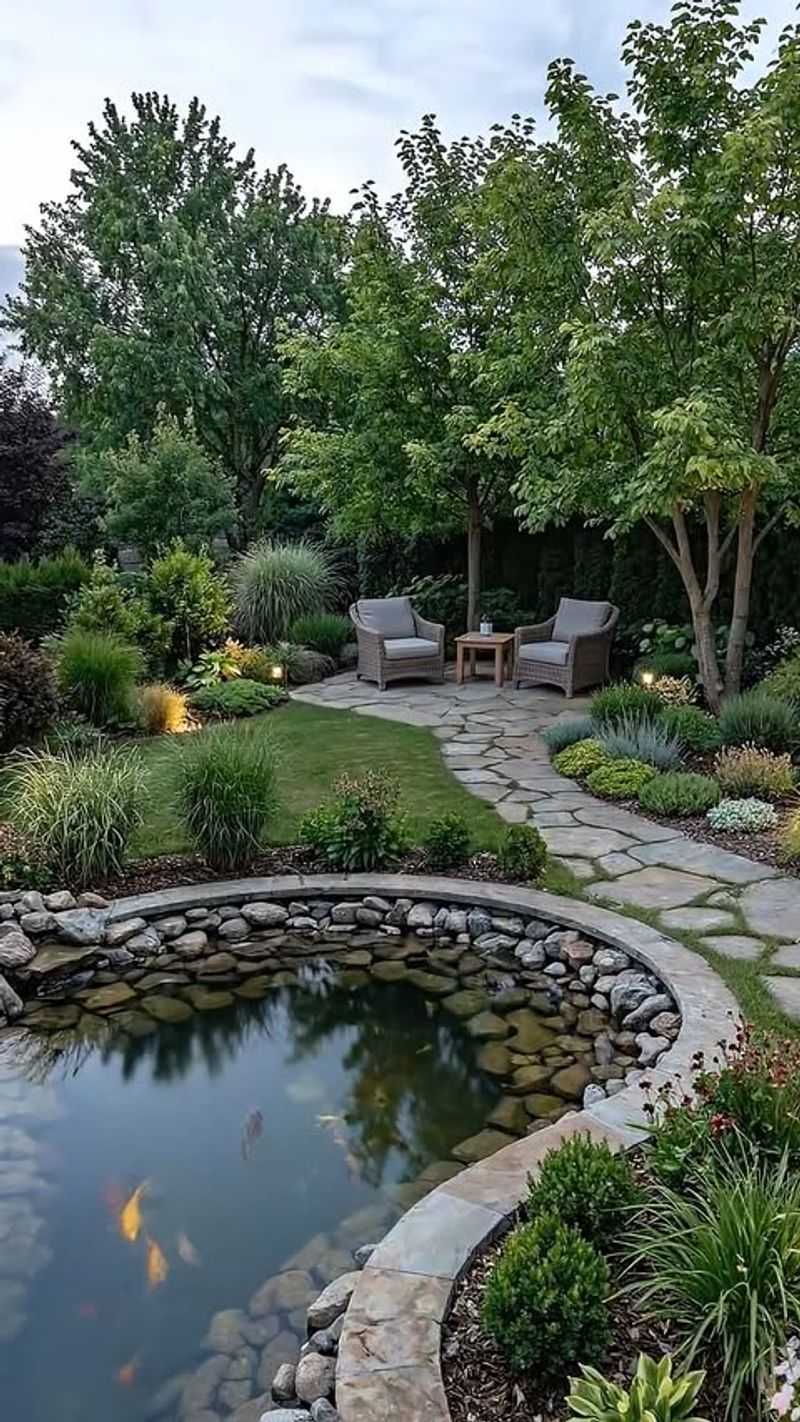
A rolling lawn, layered perennial borders, a water feature.
Most people do not have that, and most people do not need it.
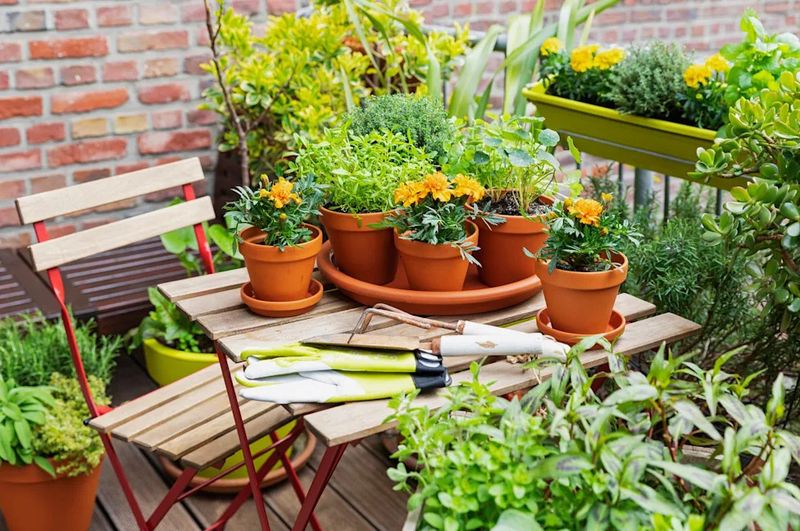
A chair near a container of herbs on a porch.
A small raised bed just outside the back door.
A balcony edge with two or three pots at eye level.
Any of these can create one usable place to pause, and that may be enough.
A systematic review on small amounts of greenery and stress found that even modest green elements can be associated with stress reduction, though the studies varied in design and the results were not uniform across all participants.
One practical approach is to orient your sitting spot toward plants rather than toward the street, a fence, or the back of the house where you can see the kitchen window.
Facing a little bit of layered vegetation and being able to hear ordinary outdoor sounds, rather than having a direct sightline to traffic or household activity, can shift the feel of a space.
That is a design suggestion, not a proven formula.
A WHO review of urban green-space interventions found that green spaces can support positive health and social outcomes, but also noted that better research is needed on which designs work for which groups.
No universal gold standard exists for green-space type or size.
What matters more is whether the space is actually usable on an ordinary day, close enough to reach, comfortable enough to stay in for a few minutes, and low-maintenance enough that it does not add to your list.
The Senses Give Busy Hands Somewhere To Go
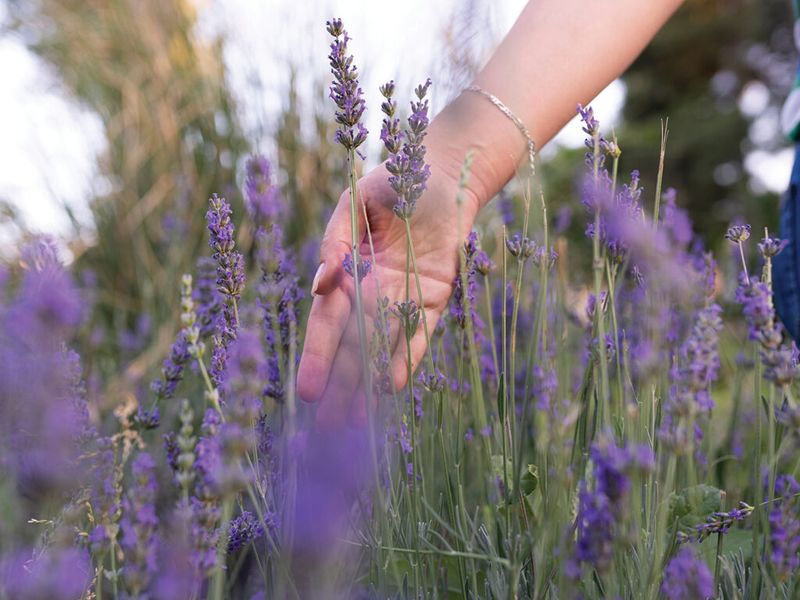
One of the stranger things about a busy day is that your hands are often idle while your mind is overloaded.
You are reading a screen, sitting in a meeting, waiting on hold.
The garden reverses that.
Your hands have something to do, and your mind gets to follow along at a slower pace.
Sight, sound, touch, smell, and sometimes taste all have places in a garden.
Rubbing a sage leaf between your fingers, feeling the soil temperature shift as you dig a few inches down, watching a bee work its way across a flower head.
Penn State Extension describes sensory gardening as an accessible approach for people of different ages and abilities, with plant selection and features chosen to support direct, manageable engagement rather than passive observation.
That kind of absorbed attention is different from the focused concentration work demands.
It is closer to noticing than to solving.
But it is also worth being honest: not everyone finds the same sensory experience calming.
Pollen can worsen allergies and asthma for some readers, strong scents can be overwhelming, insects can be startling, and outdoor noise varies by neighborhood and season.
Brief home-garden tasks, watering, harvesting a handful of herbs, deadheading a few spent blooms, are also genuinely different from practitioner-led therapeutic horticulture.
The 2025 review of therapeutic horticulture programs found promising results for depression and anxiety, but those programs had structured sessions and trained leaders.
A casual ten minutes with a watering can is not the same intervention, and no specific plant, fragrance, color, or soil contact has been identified as the universal source of the benefit.
The sensory engagement itself, manageable, low-stakes, and present-tense, seems to be the point.
The Garden Works Best When It Asks Less
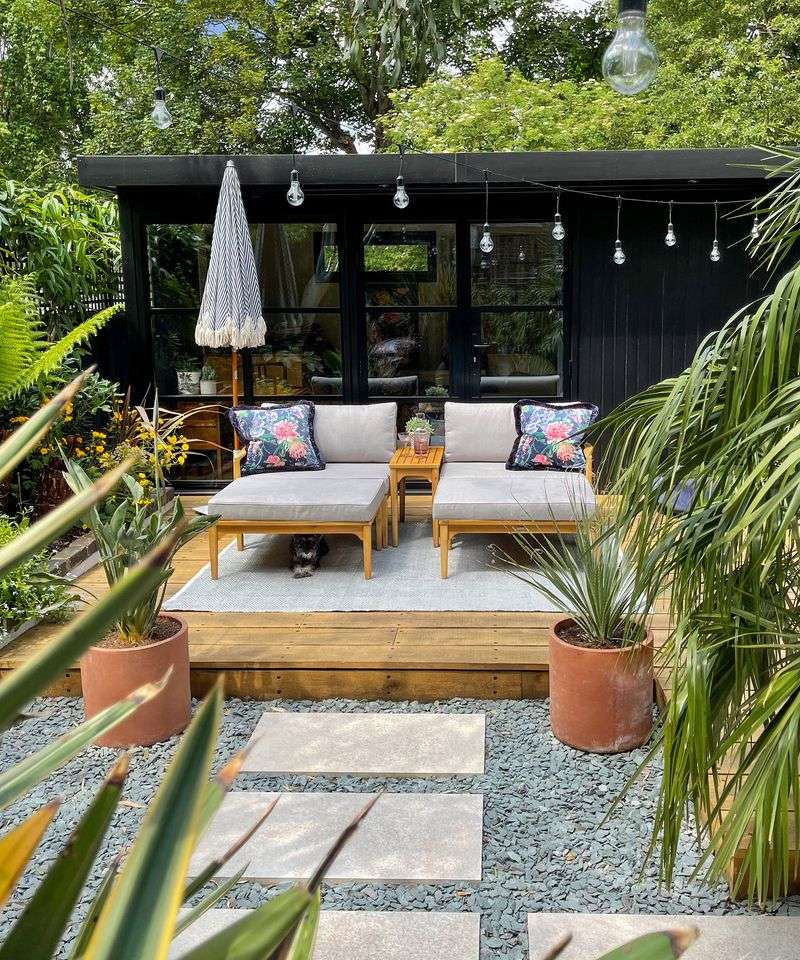
A garden that demands too much stops feeling like a refuge and starts feeling like another chore.
The goal here is not a perfect landscape.
It is one corner of the yard that works on a regular Tuesday, when you have 10 minutes before dinner and zero energy for a project.
A few practical moves make that more likely.
Place your seating and the plants you visit most often close to the house, within a few steps of the back door.
Use stepping stones or a simple path so you are not navigating wet grass or muddy ground to get there.
Keep a small set of tools within reach rather than stored across the yard, because the friction of finding equipment is often what turns a five-minute pause into something you skip.
Choose tasks that have a natural stopping point after a few minutes: watering one container, pulling the obvious weeds from a single bed, picking what is ready to harvest.
These choices reduce the garden’s maintenance burden and make it easier to use on a day when your capacity is low.
Research on small greenery and stress reduction suggests that modest, accessible green spaces may support well-being, which points toward usability over scale.
A beautiful garden you cannot easily reach on a hard day does less for you than a simpler one you actually sit in.
There is no established therapeutic dose here.
No study has confirmed that 15 minutes of weeding produces a specific outcome, or that a raised bed placed 8 feet from the door outperforms one placed 20 feet away.
The WHO green-space review is clear that no universal garden type or characteristic has been confirmed as optimal.
Make the space easy to reach, easy to use, and easy to leave when you need to.
A Peaceful Yard Still Needs Protection
A yard that feels restorative is still a yard, and yards have real physical demands and genuine risks.
Gardening is physical activity.
Digging, hauling, mowing, and working in summer heat can become injury or heat exposure faster than most people expect, especially for older adults, children, pregnant people, people with chronic health conditions, and anyone taking medication that affects how the body regulates temperature.
CDC recommends doing outdoor work during the cooler parts of the day, typically before 10 a.m. or after 4 p.m. in summer, taking shade breaks, and carrying water.
Warning signs of heat illness include dizziness, headache, weakness, nausea, unusual sweating, and confusion.
If you or someone nearby stops sweating, becomes confused, or loses consciousness, that is a heat stroke emergency.
CDC reports that body temperature can rise to 106 degrees Fahrenheit or higher within 10 to 15 minutes during heat stroke, which requires emergency care.
For moderate outdoor activity in heat lasting under two hours, NIOSH occupational guidance suggests roughly 8 ounces of water every 15 to 20 minutes, though individual needs vary.
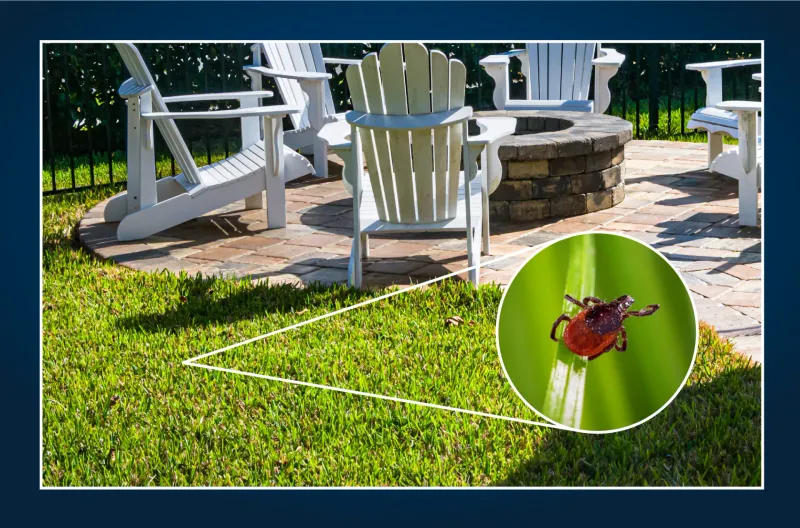
Tick exposure is another real concern, particularly if your yard borders woods, brush, tall grass, or leaf litter.
CDC recommends removing leaf litter, clearing tall grass and brush near the home, mowing regularly, and placing a 3-foot-wide wood-chip or gravel barrier between the lawn and any wooded edge.
These steps reduce exposure but do not make a yard tick-free.
Pollen is worth tracking too.
CDC notes that pollen can worsen allergic rhinitis and asthma, and recommends checking pollen forecasts, limiting outdoor time during high-pollen periods, and showering and changing clothes after outdoor activity when needed.
On the pest and product side, EPA advises identifying the pest first, choosing the least hazardous effective option, and following the label exactly, including reentry intervals and harvest waiting periods.
EPA’s garden pesticide guidance is direct: garden products can harm people, pets, and plants when misused.
Natural surroundings are not the same as risk-free surroundings.
Let the Garden Meet You Where You Are
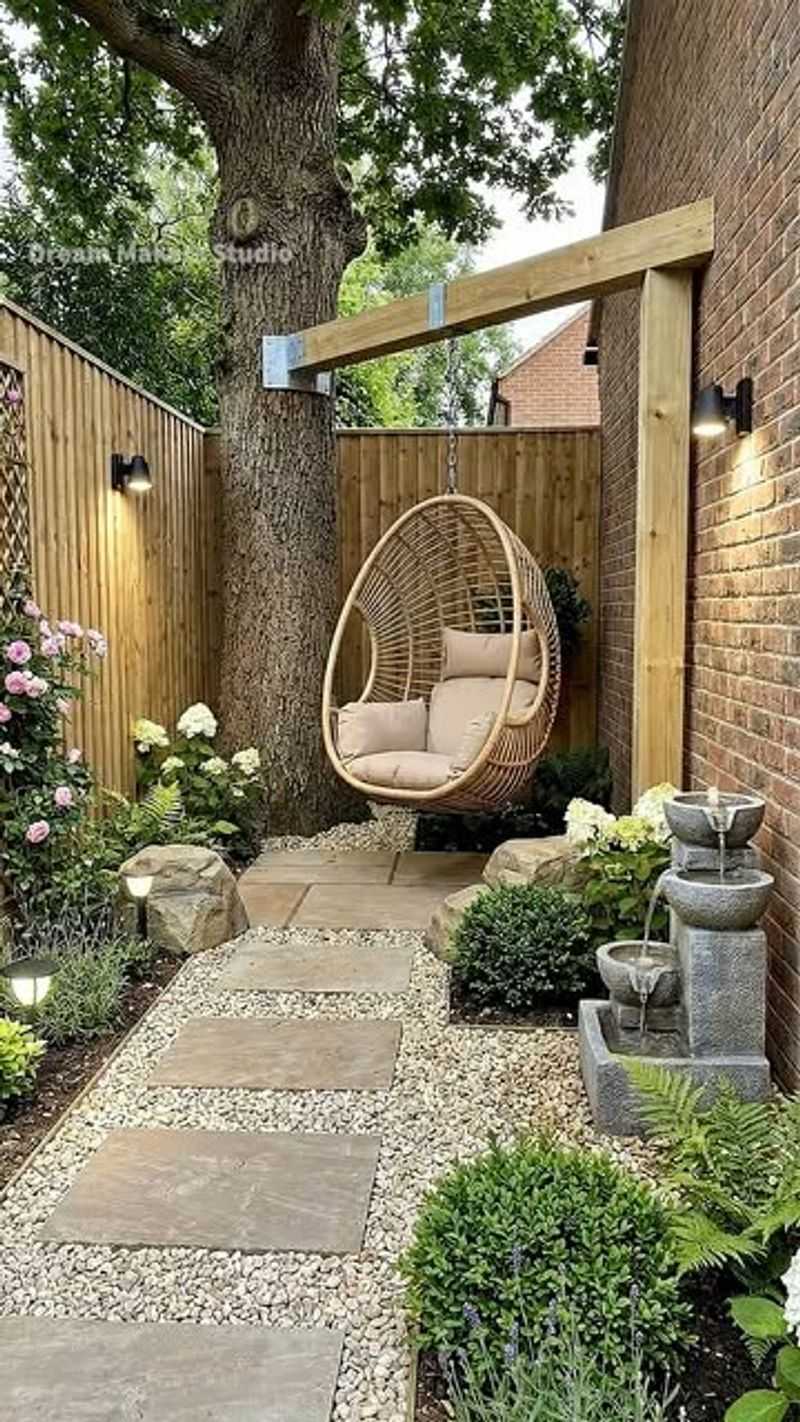
You do not need to transform your yard or build a meditation garden or commit to a new morning routine.
The feeling that brought you to this article, that brief sense of being less pressed when you step outside, is worth taking seriously on its own terms.
A garden can offer a supportive pause.
That is not the same as a cure, and it does not work the same way for everyone.
Access, comfort, climate, disability, allergies, noise, safety, maintenance demands, and personal preference all shape whether a green space feels restorative or just adds to the list.
The 2024 umbrella review found substantial differences across populations, settings, and activities, which is a research way of saying that what helps one person may not help another.
WHO’s review of urban green-space interventions echoes that, noting that equity, quality, and individual fit all matter and that better research is still needed.
So pay attention to which version of the garden actually helps you.
Sitting without doing anything.
Watering slowly.
Listening to what is out there.
Tending something that is growing.
Doing one small task and stopping.
None of these require a perfect garden or a scheduled practice.
The WHO green-space review found positive associations between time in natural settings and well-being across many different study designs, but it also found no universal formula for what that time should look like.
If the garden has ever given you even ten minutes that felt different from the rest of the day, that is the thing.
You do not have to earn it or explain it.
The yard will be there tomorrow, asking nothing urgent.