
The North Carolina Native Ground Covers That Replace Grass And Still Look Good By Winter
Follow us on Google
By 4 p.m. in a North Carolina summer, the lawn can already look tired, crispy, and a little defeated.
Then winter rolls in, and the same patch turns dull and bare just when your yard needs some color most.
Native ground covers solve both problems at once, cutting back on mowing while keeping your space full and alive.
The seven below are the ones homeowners keep coming back to when they want less grass and a yard that still looks good when cold weather shows up.
1. Green-and-Gold
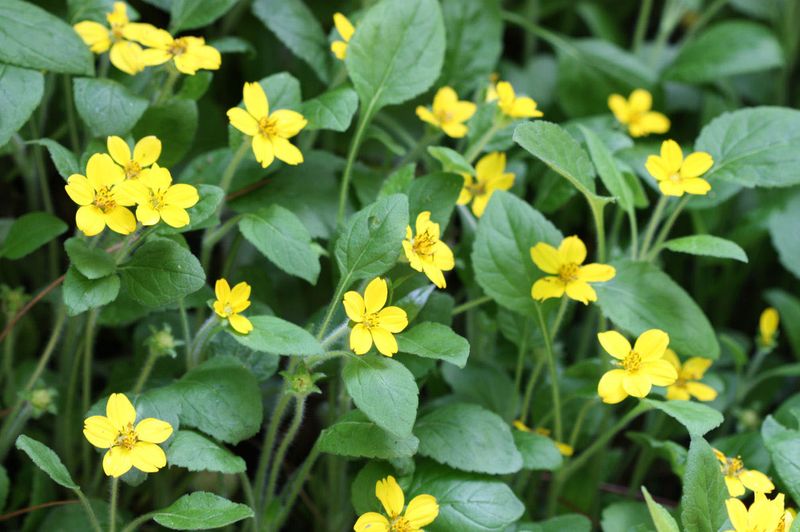
Right when a patch under the dogwood seems too dim for grass and too visible to ignore, Green-and-Gold, Chrysogonum virginianum, steps in like it has been waiting for the job.
It stays low, usually 6 to 12 inches tall, spreads to about 18 inches wide, and keeps a neat green mat that still reads cared-for by December.
What surprises many homeowners is how flexible it is.
In North Carolina, it handles part sun to part shade well, and once established it can deal with average soil, though it fills faster with steady moisture and 1 inch of water a week during the first season.
Here is where it earns its place over grass.
Instead of demanding weekly mowing in muggy 88 to 95 degree weather, it forms a living mulch that shades the soil, slows weeds, and softens the look of hard edges along paths or patios.
NC State Extension often recommends matching plants to site conditions first, and this one fits those awkward in-between spaces that turf never loves.
Set plants 12 inches apart in spring or early fall, then mulch lightly until they knit together in 1 to 2 growing seasons.
By winter, you still have a green carpet, not a patchy brown apology, and that feels like a small backyard win every single year.
2. Allegheny Spurge
Shady corners have a way of exposing every weak plan in a yard.
Grass thins out, moss comes and goes, and then you are left staring at bare dirt under the big trees.
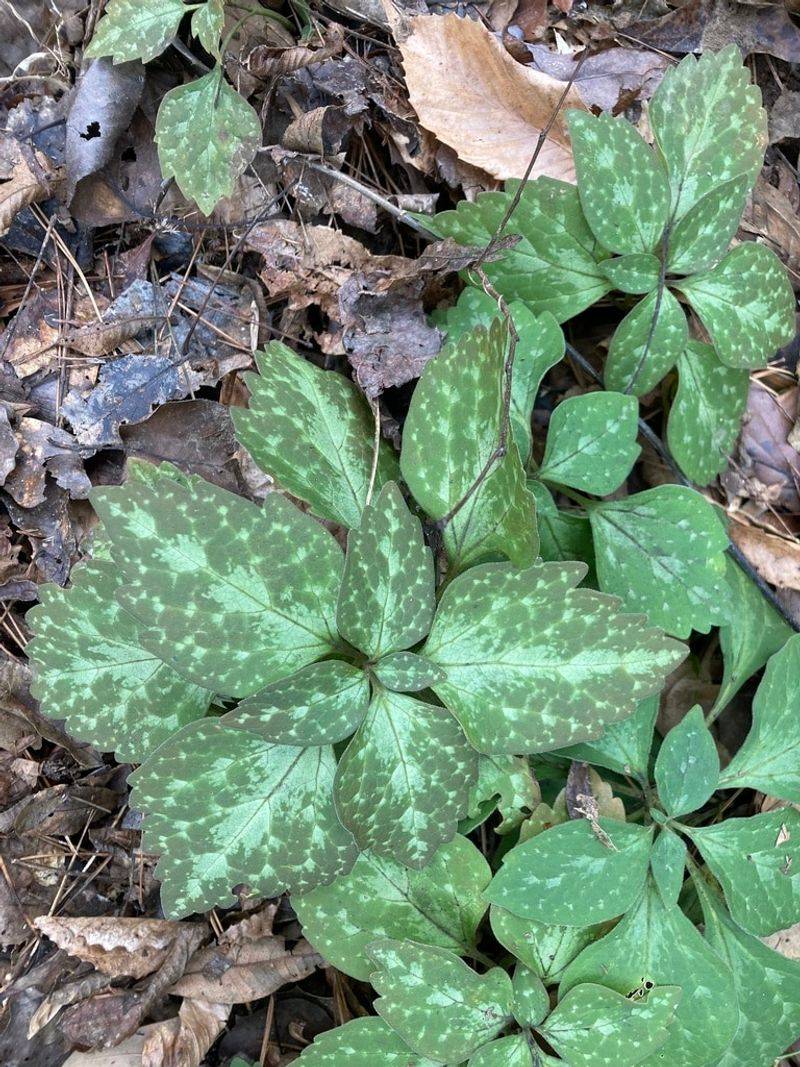
Allegheny Spurge, Pachysandra procumbens, is one of the quiet fixes that makes that whole problem look intentional.
Unlike the more common Japanese pachysandra, this one is native and behaves with better manners.
It spreads by rhizomes at a steady pace, not a wild sprint, and its mottled leaves often hold green, silver, and even a little purple through winter in much of North Carolina.
The reason it stands apart is texture.
Even when flowers are gone, the foliage gives a shaded bed a finished look, especially beside brick foundations, steps, or a porch that gets little direct sun.
In late winter to early spring, small white bottlebrush-like blooms appear before new leaves flush, a nice bonus when the rest of the yard still feels half asleep.
Give it rich soil, good leaf mold, and spacing of 8 to 12 inches.
It prefers shade to dappled light, and in the mountains and upper Piedmont it often looks best with protection from hot afternoon sun.
It is not fast, taking 2 to 3 years to fill in well, but once it settles, that stubborn dark corner finally looks calm instead of abandoned.
3. Creeping Phlox
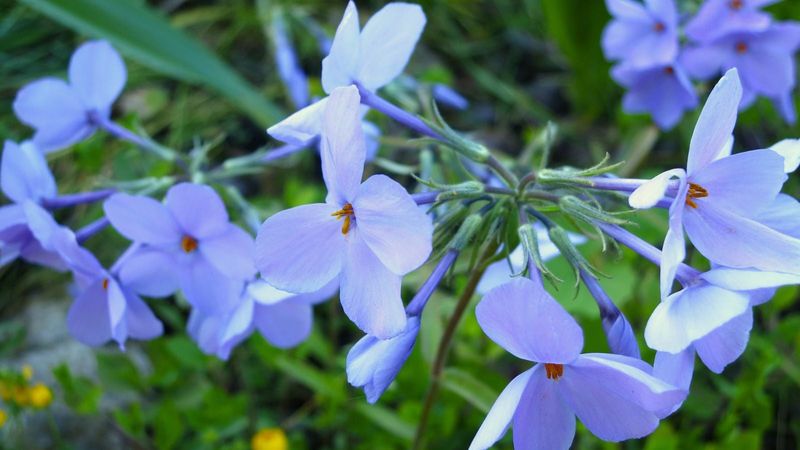
Few plants pull off beauty and usefulness as neatly as Creeping Phlox, Phlox stolonifera.
On a slope where rainwater races downhill after a summer storm, it settles in, spreads across the soil, and helps keep the ground from slipping away one hard downpour at a time.
That matters in North Carolina, where afternoon thunderstorms can dump a lot of water fast, and hurricane season from June through November can turn a bare bank into a muddy mess.
Creeping Phlox forms a low mat, usually around 6 to 8 inches tall, with semi-evergreen foliage that often stays present through winter, especially in zone 7b to 8a gardens.
Spring is the flashy moment, of course.
Lavender, blue, pink, or purple flowers can cover the plant for several weeks, but the real value lasts longer.
The foliage softens hard slopes, edges around stone, and the places near woodland borders where turf struggles because roots and shade gang up together.
Plant it 12 to 18 inches apart in moist, humus-rich soil.
Morning sun with afternoon shade is a safe bet in the Piedmont, while mountain gardeners can often give it a bit more light.
It is not the pick for heavy foot traffic, but for a bank you want stabilized and still handsome by January, it does the job with a little grace.
4. Partridgeberry
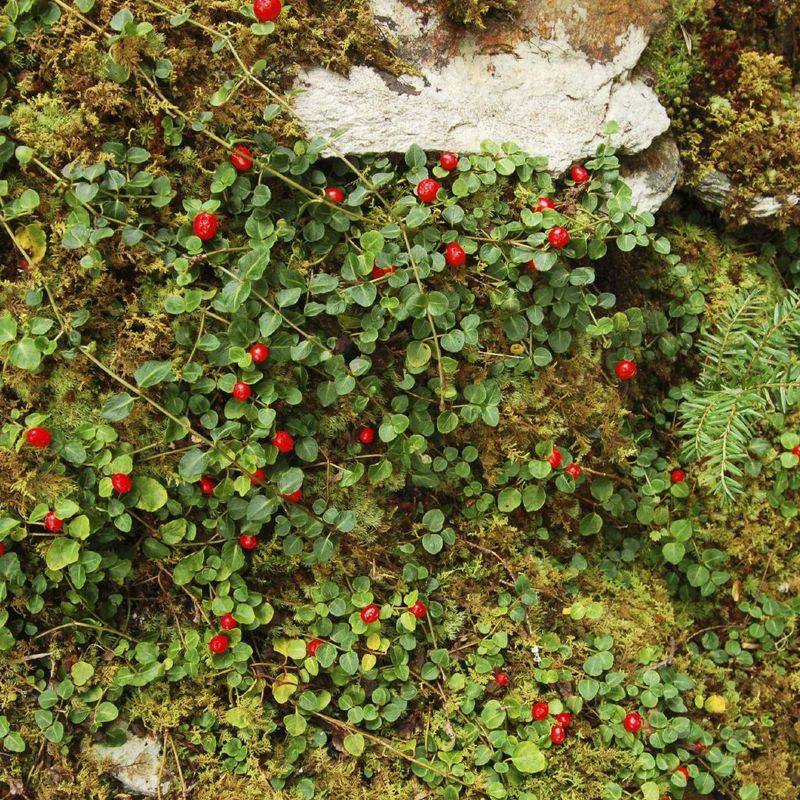
Small plants often get overlooked on a phone screen and in a yard, but Partridgeberry, Mitchella repens, has a trick.
It hugs the ground so tightly, often under 1 inch tall, that by winter its glossy little leaves and red berries feel like hidden decorations tucked into the garden on purpose.
Many Coastal Plain and mountain gardeners love it for spots where a bigger ground cover would look clumsy.
Under native dogwoods, magnolias, or along a shaded path, it creates a fine-textured layer that stays evergreen and adds berries that can linger for months, sometimes close to a full year.
The catch is scale.
Partridgeberry is best where you can see it up close, not across a big open lawn replacement zone.
It likes acidic, well-drained but moist soil, shade to part shade, and some protection from heavy foot traffic and thick leaf piles.
If fall leaves stack 3 or 4 inches deep and stay there, the plant can get smothered.
Set starts 8 inches apart, water regularly through the first summer, and keep the bed gently cleared rather than perfectly bare.
It will not cover a huge backyard fast, but it gives the shadier parts of a North Carolina garden a tucked-in winter charm that grass simply cannot fake.
5. Wild Ginger
Deep shade is where many lawn plans go to fail.
You seed, water, hope a little, then the roots from mature trees drink first and the grass gives up.
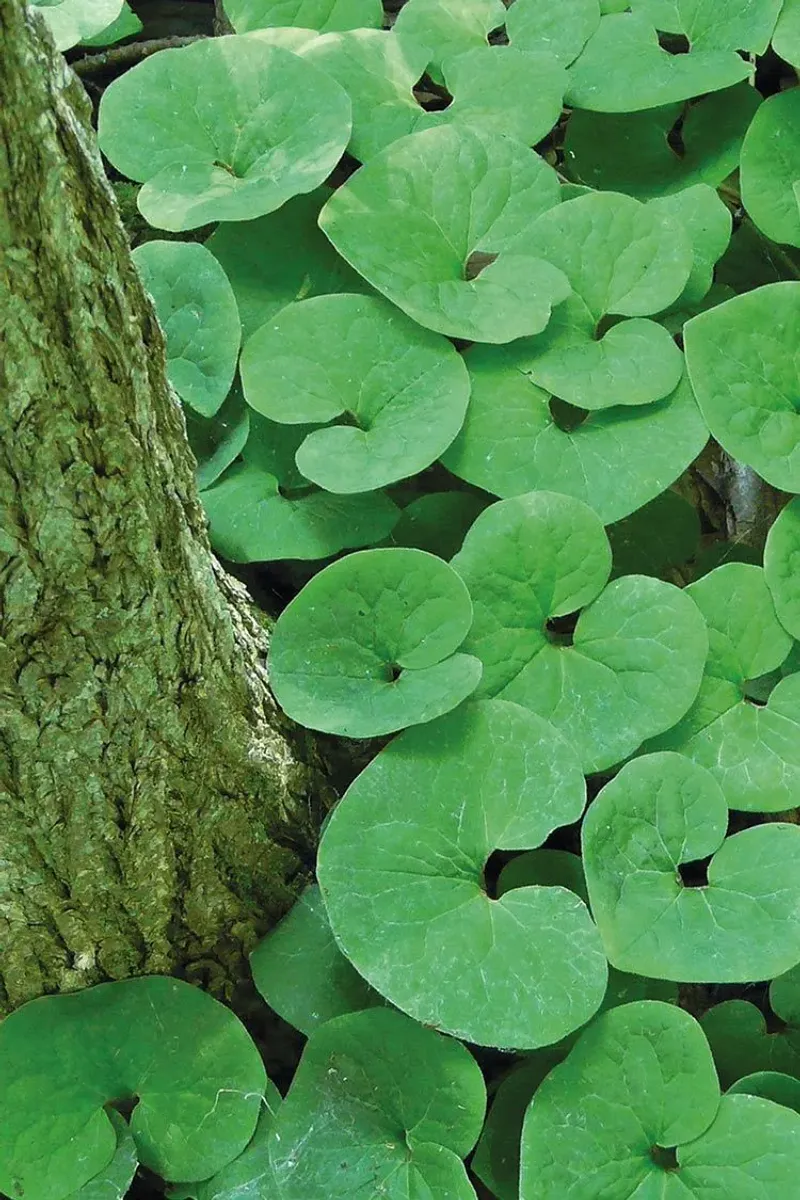
Wild Ginger changes the whole conversation because it was built for those dim woodland conditions.
For North Carolina yards, the detail that matters most is species choice.
Canadian wild ginger, Asarum canadenseAsarum arifolium, is native but deciduous, while heartleaf ginger species such as and related southeastern natives keep foliage longer or stay evergreen, making them better fits for the winter promise in this article.
Their leaves form a dense, handsome patch that reads lush even when the air drops into the 20s.
People often expect a fast spreader here, and that is not the deal.
Wild Ginger moves slowly by rhizomes, usually taking 2 to 4 years to make a solid colony, but the payoff is a weed-blocking layer for dry shade where very few plants look settled.
Those curious jug-shaped flowers hide low near the soil in spring, almost like the plant is keeping a secret.
Plant in rich woodland soil, 10 to 12 inches apart, under deciduous trees or on the north side of the house.
A 2-inch leaf mulch helps the roots stay cool in summer.
It is not a magic solution for every bare spot, but for dark, difficult ground, it is one of the steadiest heroes you can choose.
6. Christmas Fern
Some yards need less of a carpet and more of a backbone.
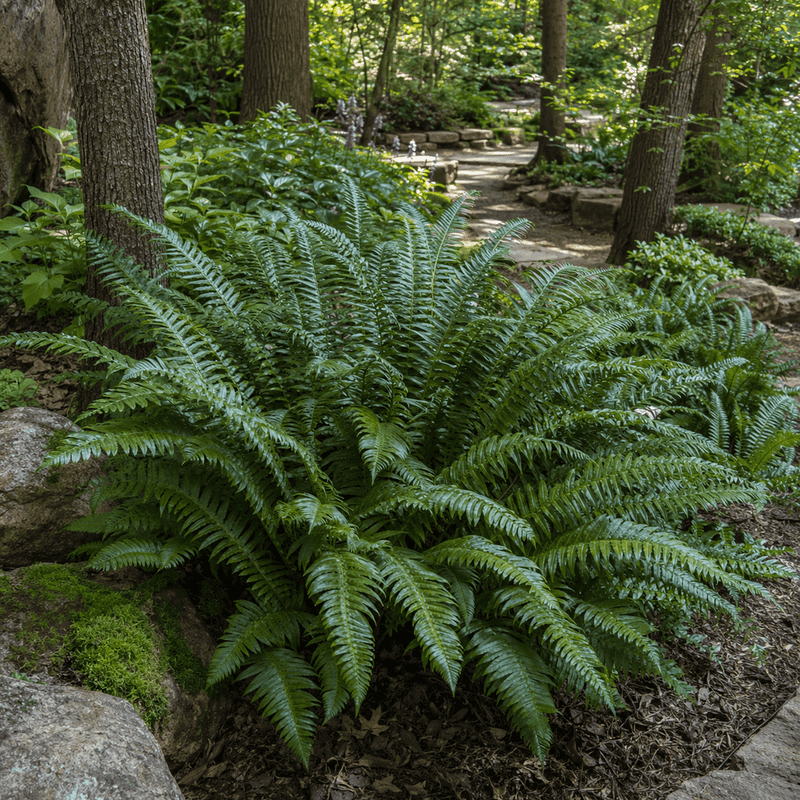
Christmas Fern, Polystichum acrostichoides, brings that structure, keeping dark green fronds upright when everything around it has flattened, disappeared, or turned the color of cardboard.
Across North Carolina, especially in the Piedmont and mountains, this fern earns trust because it handles the same conditions that make turf miserable.
It tolerates shade, root competition, and once established, periods of dryness that would leave a shallow-rooted lawn gasping.
According to NC State Extension, it is one of the more dependable native evergreen ferns for home landscapes.
Now for the honest limit.
Christmas Fern is clump-forming, not a spreading mat, so it works best as a ground cover when planted in groups at 18 to 24 inches apart and allowed to mingle with leaf mulch or other low natives.
Each clump usually reaches about 1 to 2 feet tall and wide, giving the bed a fuller, layered look instead of a shaved-flat lawn feel.
Use it along shady walkways, under hollies, or beneath old oaks where red clay bakes hard in summer and surprise cold snaps hit in winter.
By January, when so much of the yard looks thin, those arching fronds still hold the line, and your landscape keeps its shape without asking for much back.
7. Wild Strawberry
Here is the plant many homeowners already have and do not realize they can use on purpose.
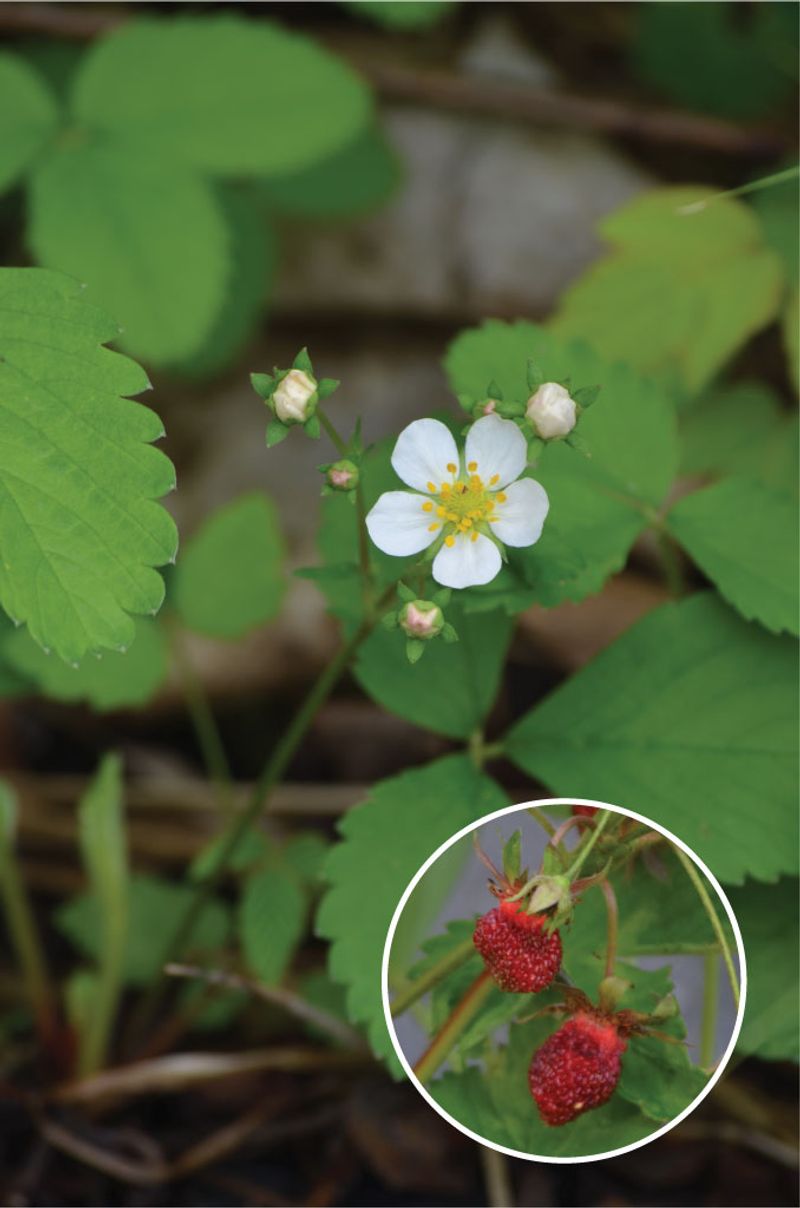
Wild Strawberry, Fragaria virginiana, runs low across the ground, sends out runners fast, and turns a thin patch into a living layer that feels cheerful instead of needy.
Its big selling point is toughness.
In the Piedmont, the Sandhills, and even parts of the coast, it handles full sun to part shade and a wider range of soils than most people expect, from heavier clay to sandy ground.
Once established, it tolerates light foot traffic better than delicate woodland covers, which matters if kids, dogs, or your own shortcut to the grill cut across the area.
Winter looks are part of the bargain too.
In mild years across much of North Carolina, the leaves stay green enough to hold the yard together visually, and by late spring you get small white flowers followed by edible berries.
Wildlife notices.
So do pollinators.
That means your yard can feel more alive without becoming shaggy or hard to manage.
Plant plugs 12 inches apart in spring or early fall and expect visible spreading within one growing season.
It may need occasional edging because runners wander, kind of like a polite guest who still helps itself to one more seat at the table.
If you want a lawn replacement that feels practical, familiar, and a little generous, this is a strong last pick.