
7 Tough Succulents That Keep Blooming In The Hottest Corner Where Everything Else Quits
Follow us on Google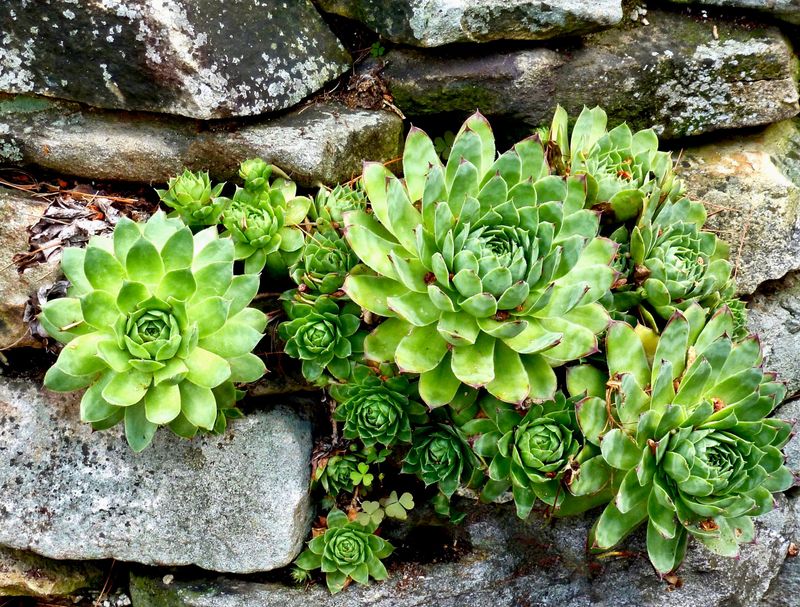
It’s past noon on a July afternoon, and the west-facing corner of your yard bakes like a skillet.
You know the spot.
Everything you plant there crisps up, wilts, and quits by mid-summer, no matter how much you water.
But a handful of succulents actually thrive in that brutal heat, tossing out cheerful blooms all season while asking for almost nothing.
Here are seven tough ones that turn your worst corner into your easiest.
1. Moss Rose Actually Carpets The Hottest Spots With Unending Color
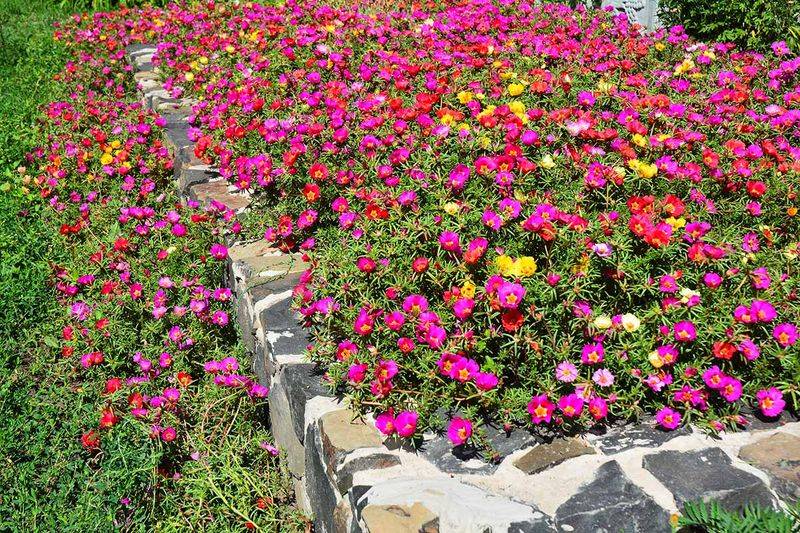
Picture a low mat of rose-like flowers spreading across ground that used to sit bare and cracked.
That is moss rose, Portulaca grandiflora, an annual succulent that shrugs off the heat that sends petunias to the compost pile.
Native to the hot, dry plains of South America, it stores water in fleshy leaves and stems, so it rides out dry spells like a camel.
Give it 6 to 8 hours of direct sun, though 10 to 12 hours brings the best show.
The flowers close at night and on cloudy days, but newer hybrids stay open longer.
Space plants 6 to 12 inches apart and they knit into a dense mat just 3 to 8 inches tall.
Skip the rich soil.
They prefer poor, sandy, gravelly ground that drains fast, and overwatering is their quickest way out.
Let the soil dry completely between drinks.
Bees and butterflies work the blooms all afternoon, so your hot corner suddenly hums with life.
That is a lot of payoff for a plant you barely touch.
2. Hardy Ice Plant Spreads Dazzling Color From Spring To Frost
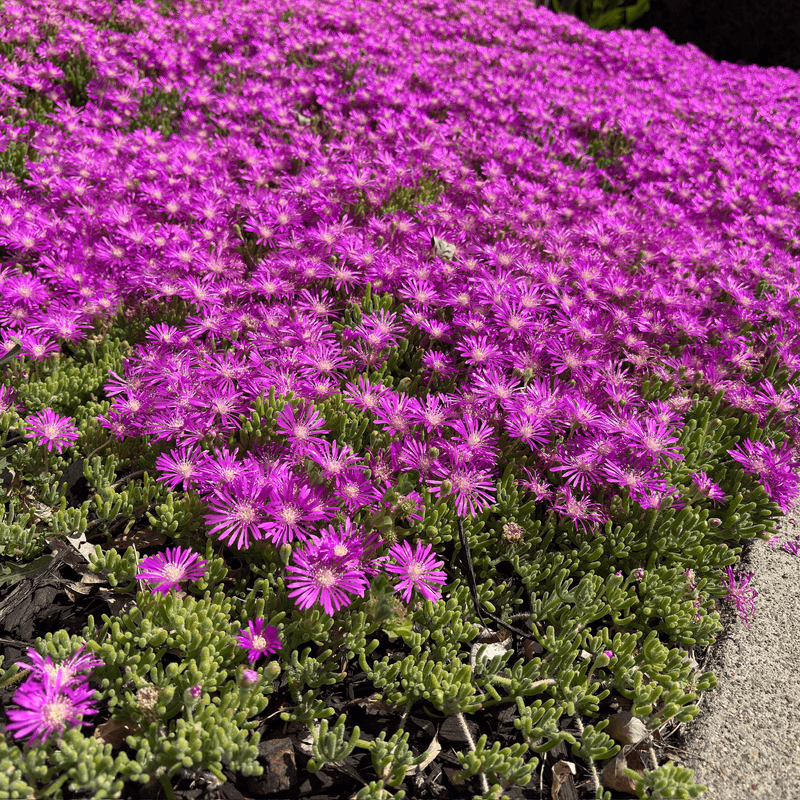
Drive past a sun-baked rock garden and you might catch a shimmering carpet of pink and purple that seems to ignore the heat entirely.
That is hardy ice plant, Delosperma spp., a perennial that treats a scorching corner like home.
It comes from southern Africa, and it forms dense mats of evergreen or semi-evergreen leaves that stay tidy year-round in warm climates.
Unlike plants that flower for two weeks and sulk, ice plant blooms from late spring through fall with small, daisy-like flowers 3/4 to 2 inches wide.
Full sun matters here, so aim for at least 6 to 8 hours daily.
The soil must drain fast, sandy or gravelly, because waterlogged roots rot quickly.
Once established, it wants very little water, though a deep soak during a bad drought helps.
Hardy in USDA Zones 5 to 9, with some varieties pushing into Zone 10, it spreads 12 to 30 inches wide while staying just 3 to 6 inches tall.
That makes it a natural for spilling over walls or filling dry strips where mowing is a hassle.
Bees appreciate it too.
3. Adam’s Needle Sends Spikes Of White Upward Through Summer
Some corners need drama, not just a carpet of color.
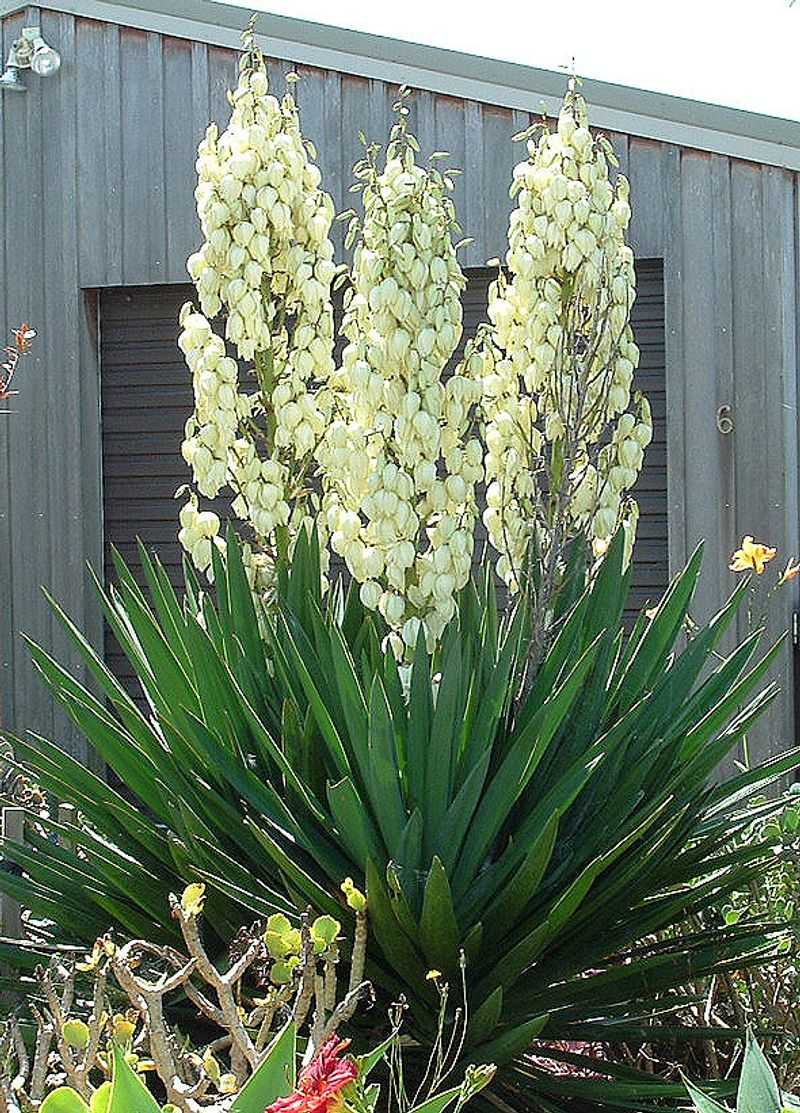
Adam’s Needle, Yucca filamentosa, delivers it with sword-like, blue-green leaves in a rosette 2 to 3 feet tall and 2 to 4 feet wide.
It is native to the southeastern United States, and it holds up in hot, dry Midwest plots without complaint.
From late spring into early summer, mature plants shoot up flower stalks that can reach 5 to 10 feet, hung with creamy, bell-shaped blooms that sway like little lanterns.
Toughness is the whole point here.
It handles full sun, most soils that drain well, long droughts, and even winter salt spray, which makes it a solid pick along a road edge where lesser plants fail.
It likes a neutral pH between 6.0 and 8.0 and cannot stand wet feet.
Give each plant room, spacing them 5 to 10 feet apart, since they clump and spread slowly by offsets.
Beyond looks, the flowers draw hummingbirds and moths, and the plant hosts certain skipper butterfly larvae.
So your bare corner starts pulling its weight for pollinators.
4. Aloe Vera Rewards Neglect With Striking Flower Spikes
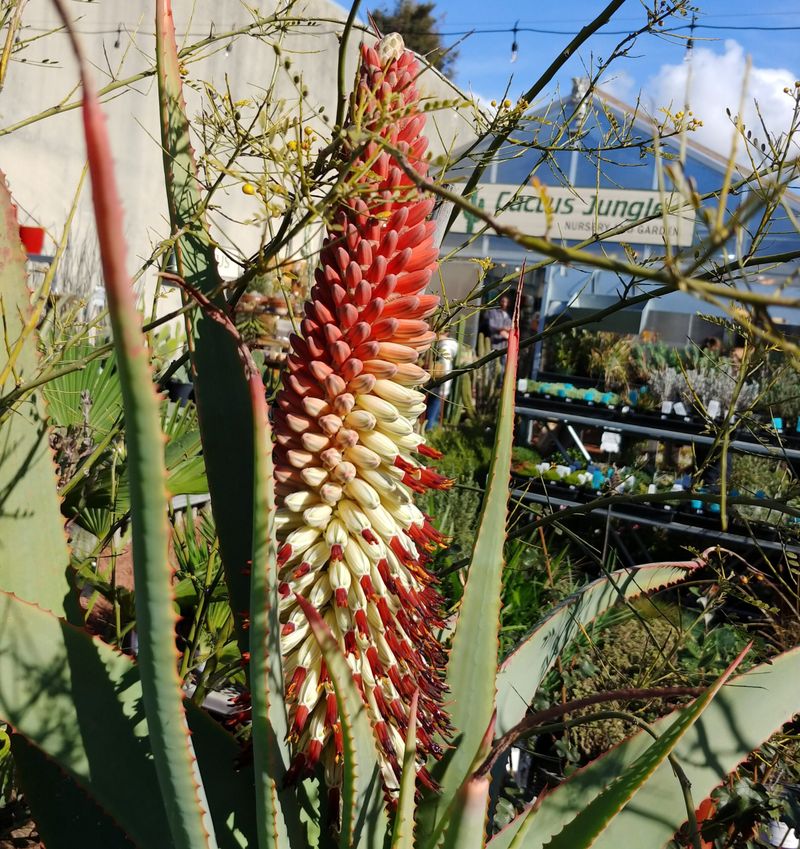
You keep Aloe vera on a windowsill for sunburns, but move it outdoors into real heat and it surprises you.
Given full sun, this familiar succulent throws up tall flower spikes and turns into a pollinator stop.
Thick, fleshy leaves store plenty of water, so it laughs off dry spells and blistering afternoons.
To coax blooms, give it at least 6 hours of bright, direct sun a day.
Many varieties flower in winter and spring in low-desert regions, but plants in full sun elsewhere can bloom in summer too.
The tubular yellow or orange flowers rise on a central stalk and hold for 2 to 3 weeks.
Aim for daytime temperatures between 70 and 85 degrees Fahrenheit for the best display.
Plant it in gritty, fast-draining soil and water deeply but rarely, letting the soil dry out completely so roots do not rot.
One catch worth knowing.
Plants usually need to be at least 4 years old before they bloom, so patience is part of the deal.
When they do, bees and hummingbirds treat the flowers as a nectar bar, especially in dry spots where little else is open.
5. Crown Of Thorns Brings Year-Round Color To Desert Corners
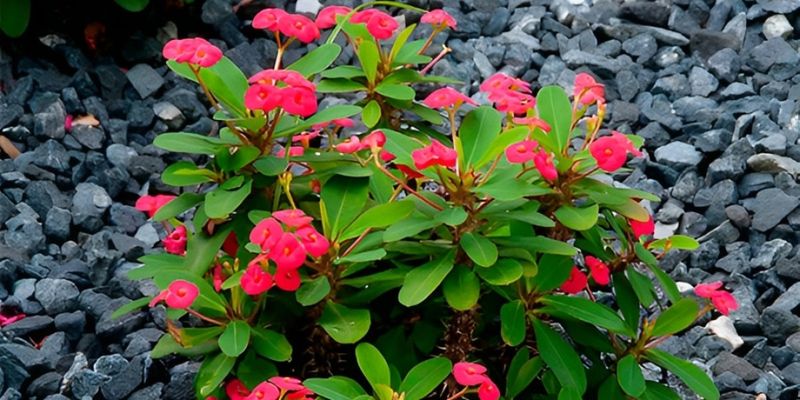
Here is a myth worth busting.
Neglect kills most flowering plants, but Crown of Thorns, Euphorbia milii, actually flowers better when you leave it mostly alone.
Native to Madagascar, this spiny succulent shrub loves heat and drought.
Its stems carry bright green leaves and long-lasting bracts, the colorful parts people mistake for flowers, in red, pink, white, yellow, and salmon.
In warm climates it can bloom nearly year-round, which is rare for anything living in a punishing corner.
Plant it where it gets at least 6 hours of direct sun for the fullest color.
In brutal-summer regions, a little midday shade can actually improve flowering.
It takes poor, rocky, well-drained soil in stride, and overwatering is the main way people lose it, so let the soil dry fully between waterings.
It grows 3 to 6 feet tall and 1 to 3 feet wide outdoors, so space plants about 2 feet apart.
It shrugs off deer, rabbits, and most pests.
One important safety note.
The milky sap is toxic and irritates skin, so wear gloves and keep it away from where small kids and pets play.
6. Hens And Chicks Fill Rocky Spaces With Succulent Spirals
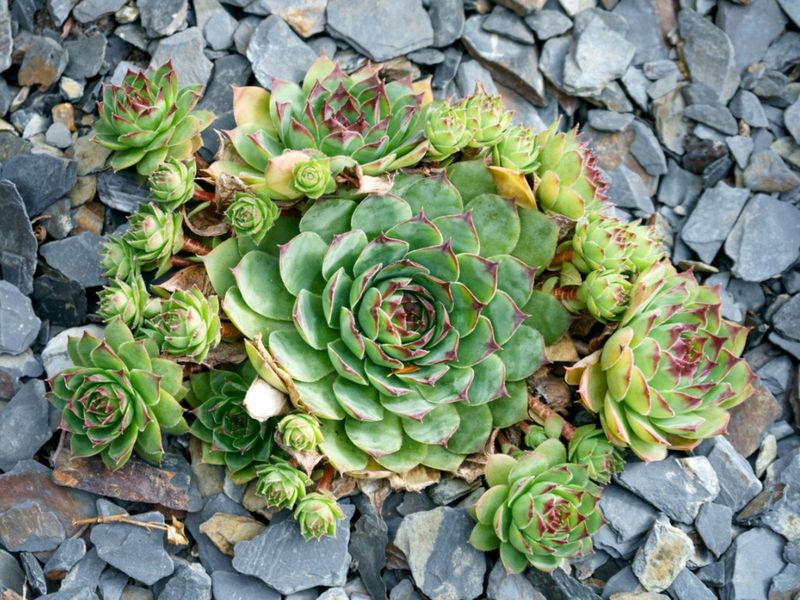
Look hard at that dry crevice by the driveway, the one where nothing sticks.
You may already have a colony of Hens and Chicks, Sempervivum spp., quietly thriving there in rosettes that spiral like green stars.
The name Sempervivum means always living, and it fits.
Each big rosette, the hen, pumps out offsets, the chicks, that ring it and fill in gaps fast.
They do bloom, sending up tall stalks of star-shaped pink or yellow flowers through summer.
Here is the twist.
Each hen is monocarpic, meaning it flowers once and then dies.
But the chicks close the gap so quickly you keep continuous coverage and new blooms each season.
Give them full sun, 6 to 8 hours daily, to hold their tight form and color.
In fierce-summer zones like USDA 9 to 11, a little shade between 2 and 5 p.m. prevents scorch.
Drainage is everything, so plant them in rocky, gritty, or sandy soil where they will not stay wet.
Hardy in USDA Zones 3 to 8, they are among the most cold-tough succulents around, and deer leave them alone.
7. Prickly Pear Cactus Offers Unexpected Beauty In Extreme Heat
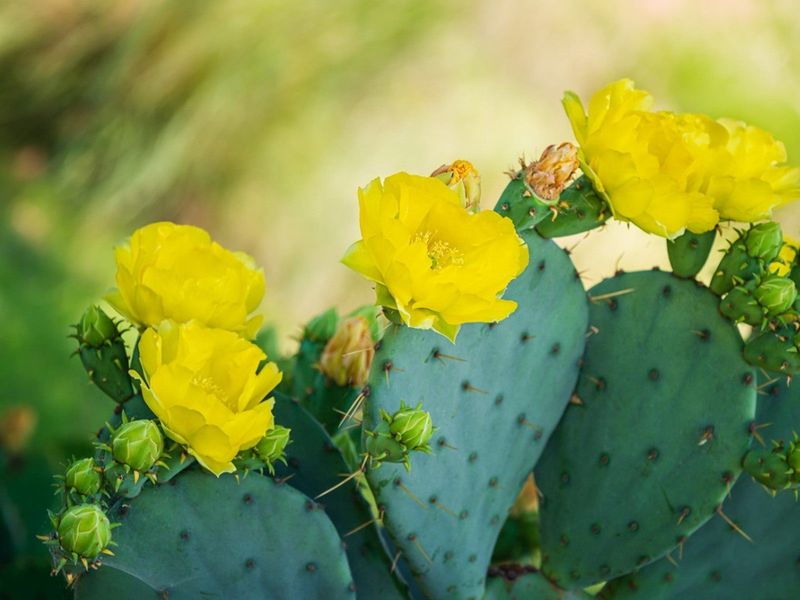
A cactus that survives a 10 degree Fahrenheit night sounds like a contradiction, yet here it is.
Prickly pear, Opuntia spp., stands its ground in scorching sun and then bursts into large, showy blooms that stop you mid-step.
Many species are surprisingly cold-hardy.
Opuntia humifusa, the Eastern Prickly Pear, is native to much of the eastern United States and tolerates temperatures as low as 10 degrees, growing in USDA Zones 4 to 9.
Flat, fleshy pads store water, so it rides out long stretches with no rain.
The waxy flowers come in yellow, orange, pink, or red.
Eastern Prickly Pear blooms from late spring into mid-summer, with each flower lasting a day or two while new ones keep opening for weeks.
Give it full sun, at least 6 to 8 hours, and mineral-based soil that drains hard.
One quirk drives the show.
Most Opuntia need a cool, dry rest of 2 to 4 months in winter, with little to no water, to set flower buds for spring.
Mind the spines and the tiny barbed glochids, but enjoy the pollinators the blooms draw and the edible fruit, called tunas, that some species produce.
For an impossible hot corner, that is a calm, low-fuss finish.