
Your Saved Amaryllis Bulb Is Telling You Its Next Move, And One Look Shows Whether It Blooms This Winter
Follow us on Google
Look at your saved bulb right now. Green leaves mean it is growing, and a firm, leafless bulb may be resting, and that one look tells you what to do next.
It’s a simple clue, but it won’t promise a bloom date. Here’s how to read it and pick the right plan without mistaking healthy growth for failure.
Leaves Show Growth, Not Flower Timing
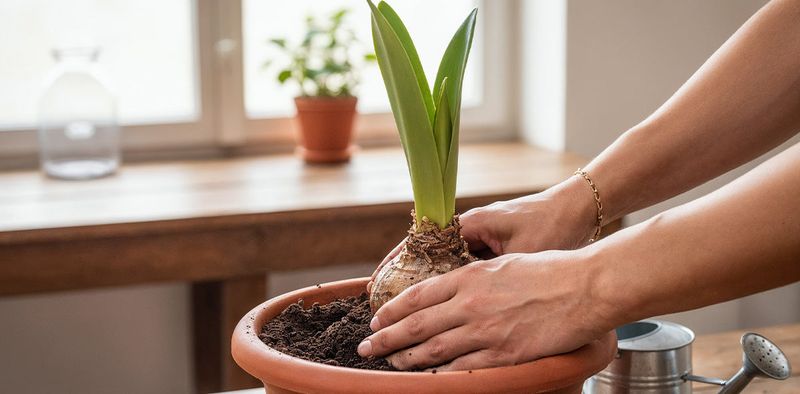
Picture a gray January afternoon, a pot on the kitchen windowsill, and a bulb you saved after the holidays. Two things might be going on.
Either long green leaves are arching out of it, or the bulb sits there firm and bare, like a closed fist.
Green leaves tell you the plant is actively growing. Those leaves work like tiny solar panels, and they can replenish the bulb.
A firm, leafless bulb may simply be resting. Neither look is a failure, and neither one rules a flower in or out.
That last part matters. Leaves do not rule out a winter flower stalk, and a bare bulb does not prove one is coming.
Both Minnesota Extension and Illinois Extension note that leaves can show up before flowers, so a leafy plant may still send up a stalk.
A quick naming note, since it helps with care. The plant sold at holiday time is usually a Hippeastrum hybrid, native to Central and South America.
True Amaryllis is a different genus from Africa, so the two are not the same plant, even though the common name stuck.
So think of the bulb as a messenger. What you see tells you which care step comes next.
It does not hand you a bloom date. The next sections walk through each path, starting with the leafy one.
Keep Caring for Green Leaves
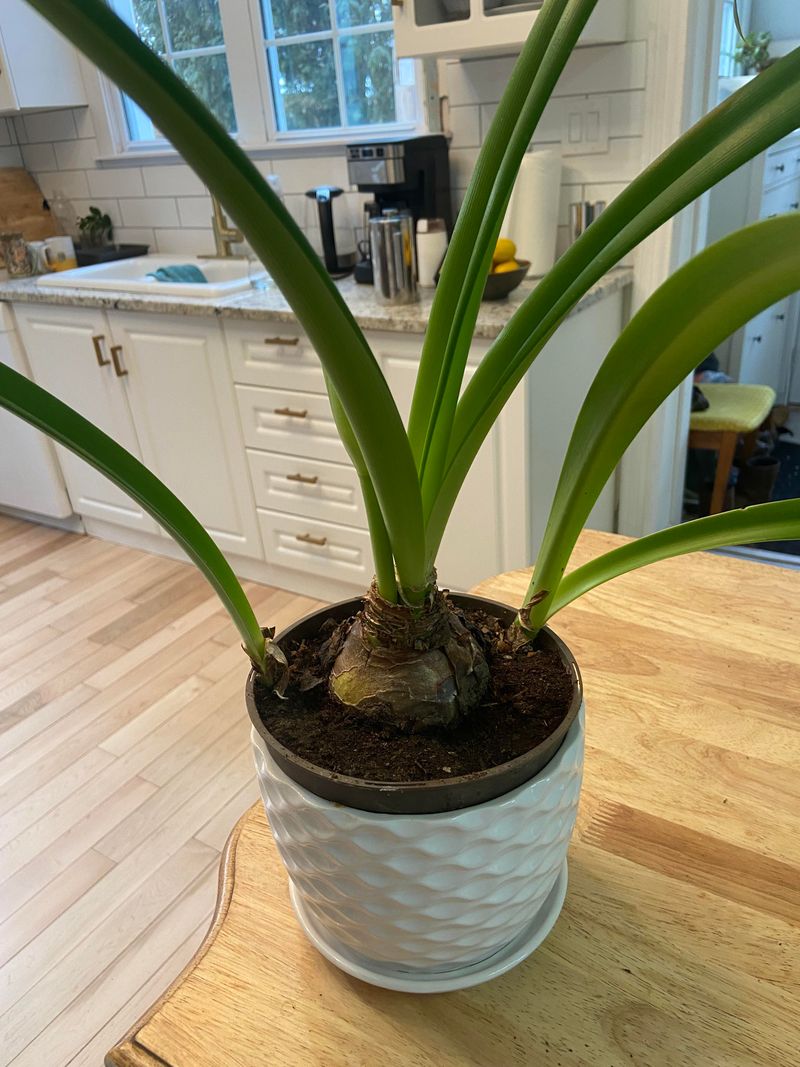
Blunt claim: do not cut those green leaves. Healthy foliage is the bulb’s recharge station, and snipping it for tidiness is like unplugging a phone at 20 percent.
Set the pot in the brightest indoor spot you have, such as a south-facing window. Water when the top 2 inches of mix feel dry, then let the extra water drain away.
Do not let the pot sit in a saucer of water. Minnesota Extension notes that leaves photosynthesize, which helps restore the energy the bulb spent on past flowers.
Here is where gardeners get tripped up. The dry, dark rest you may have heard about is not for a plant that is actively growing.
Do not withhold water or remove healthy leaves to force it into dormancy. Keep caring for the leafy plant instead.
Illinois Extension advises letting foliage yellow or wither on its own before removing it.
One placement warning. Amaryllis is toxic to dogs, cats, and horses, and the ASPCA lists vomiting, diarrhea, abdominal pain, and tremors as possible signs.
Pick a bright shelf your pets cannot reach, and keep any loose bulbs out of chewing range too.
Keep up this routine and the bulb gets a steady meal ticket. That is the best thing you can do for future flowers.
Check a Leafless Bulb for Health
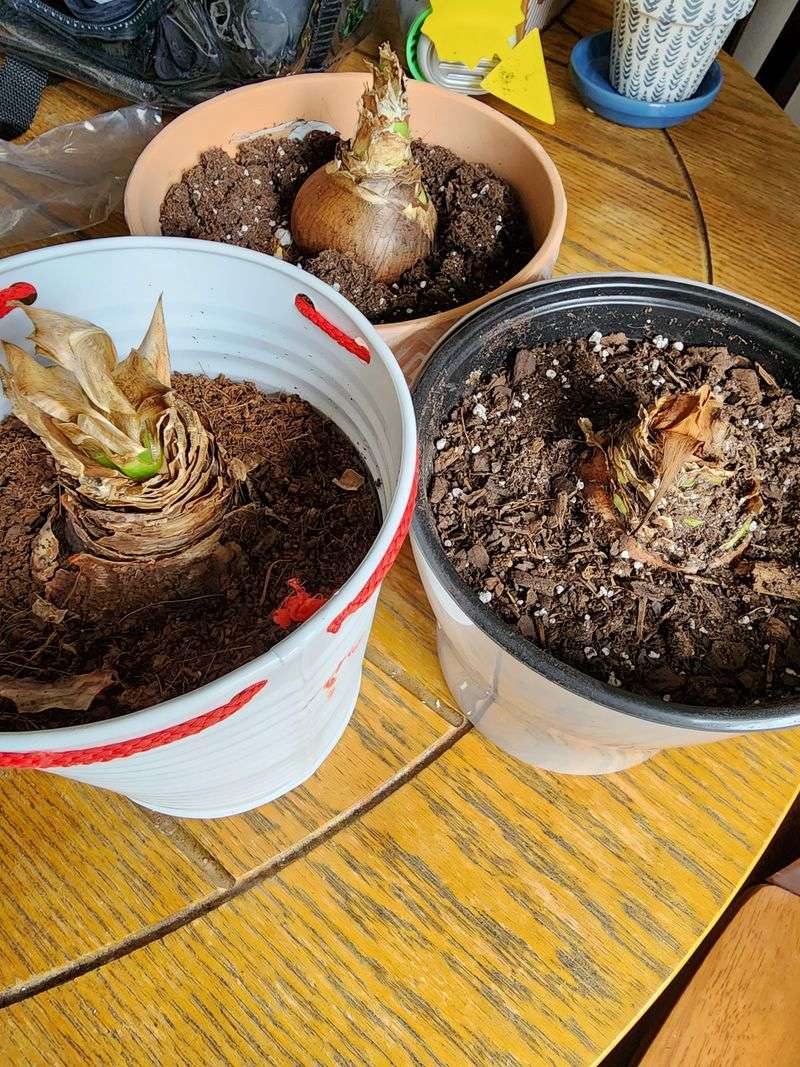
Many gardeners lift a bare bulb out of its pot and feel a jolt of worry. It looks dry and plain, so surely it is dead.
Not so fast.
Leaflessness alone does not mean the bulb is gone. A resting bulb often looks exactly like that.
The useful test is your hands. Give it a gentle squeeze.
A healthy bulb feels firm, much like an onion from the pantry.
Then look it over for trouble. Check for mold, decay, and soft or mushy spots.
Those are red flags, and a bulb that feels squishy or smells off is likely rotting. A bulb that is firm and clean is a good candidate for a rest, or for a restart if it has already rested.
What about a small green tip poking out? That is not automatically a problem.
Maryland Extension notes that flower stalks often emerge before leaves, though leaves sometimes come first, so a little green growth can simply be the plant waking up. If it has a pot with drainage, treat it as a growing plant and water carefully.
Here is the question that decides your next move. Has the bulb finished a rest?
If it still carries healthy green leaves, let them yellow or wither naturally first. Minnesota Extension also stresses keeping wet soil away from a dormant bulb, so keep it dry while you decide.
A Cool Rest Can Help Set Winter Timing
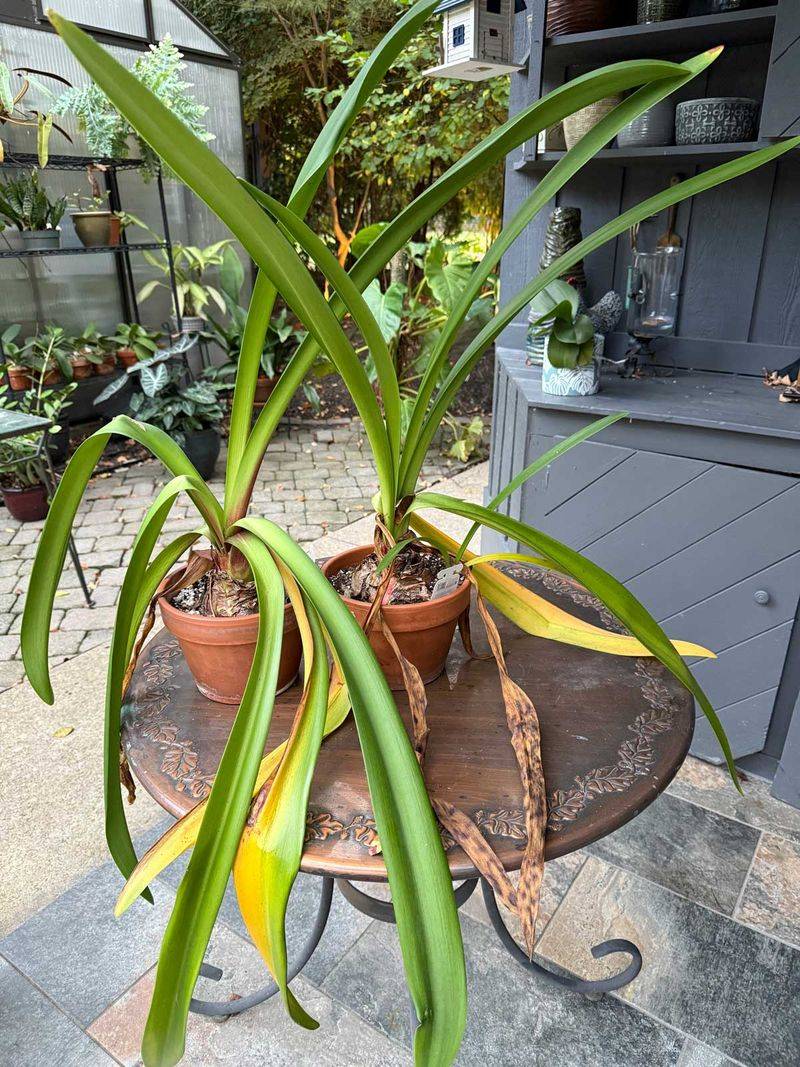
Some gardeners want a say in when the flowers open. A cool rest gives you that, at least in part.
It is a way to help control bloom timing, not a step every plant must take.
Here is the rule that matters most. Begin a deliberate rest only after the foliage has naturally yellowed or withered.
If your plant is leafy and growing, keep caring for it. Do not remove its leaves or cut off its water to force dormancy.
For a healthy bulb that is ready, the plan is simple. Keep it cool, dry, and dark for about 8 to 12 weeks, with no watering.
Temperatures depend on the source. Minnesota Extension recommends about 50 to 60°F, while Illinois Extension gives about 45 to 55°F.
Neither range is universal, so a cool closet or basement that falls near those numbers is a sensible target.
Do experts agree that you must do this? Not entirely.
New Hampshire Extension says amaryllis can rebloom without a forced dormant period if it stays healthy and growing, while Maryland Extension describes dormancy as necessary for holiday rebloom.
So treat the rest as a scheduling tool. It helps you aim for a window, but the 8 to 12 weeks is an estimate, and it does not guarantee a bloom by any date.
After Rest, Give Growth Time to Start
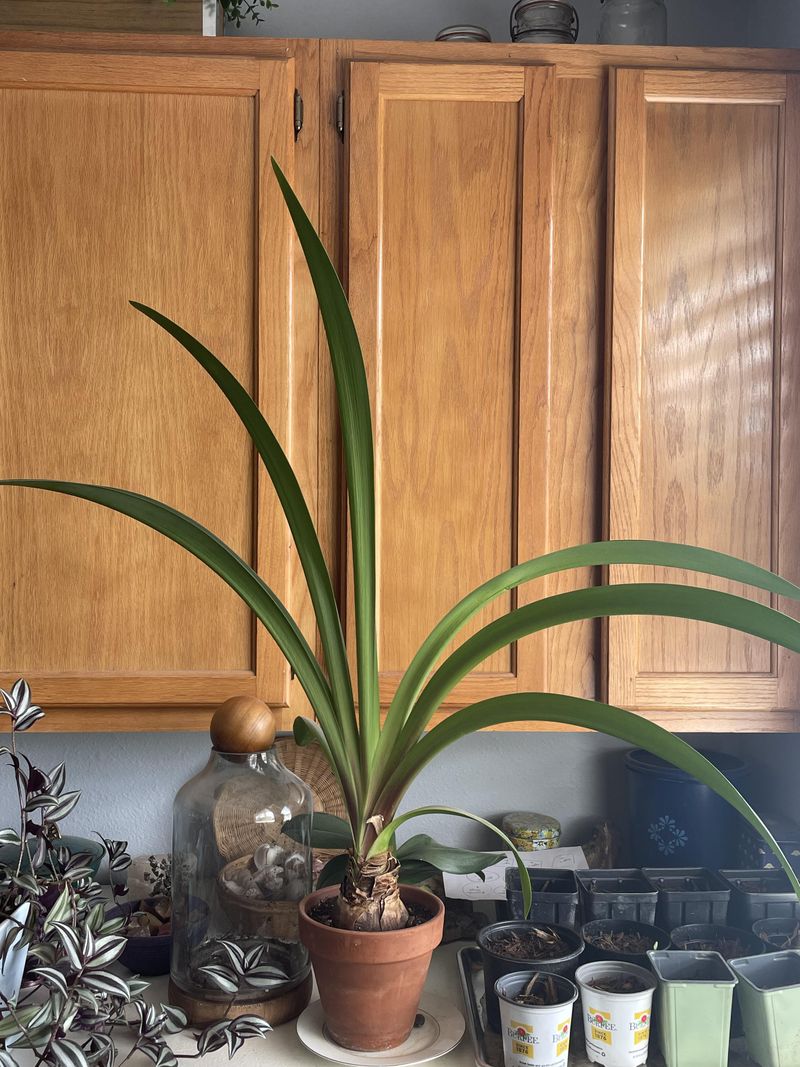
The rest is done, and now the bulb needs a signal to wake up. Warmth and water are that signal.
Think of it as an alarm clock for the bulb.
Move the pot to a bright, warm place and begin watering again. Give it a modest drink at first, then settle into a rhythm and let the water drain.
Do not leave the growing bulb sitting in water, since soggy conditions can lead to bulb and root rot.
Now the timeline. Allow roughly 4 to 6 weeks for flowers, as Minnesota Extension describes, provided the bulb has enough stored energy.
The clock starts when warmth and watering resume. It does not start the day you first peek at the bulb in the closet.
That detail trips up plenty of people. A bulb pulled from storage and left on a cold shelf is still resting in practice.
Count the weeks from the first real watering in warm light.
Look for a fat green tip pushing up. It may be a flower stalk, or it may be a leaf.
Illinois Extension notes that leaves can appear before flowers, so be patient.
Do not promise yourself a holiday or a calendar date. Treat 4 to 6 weeks as a range, and enjoy whatever shows up.
Stored Energy Affects the Flowers
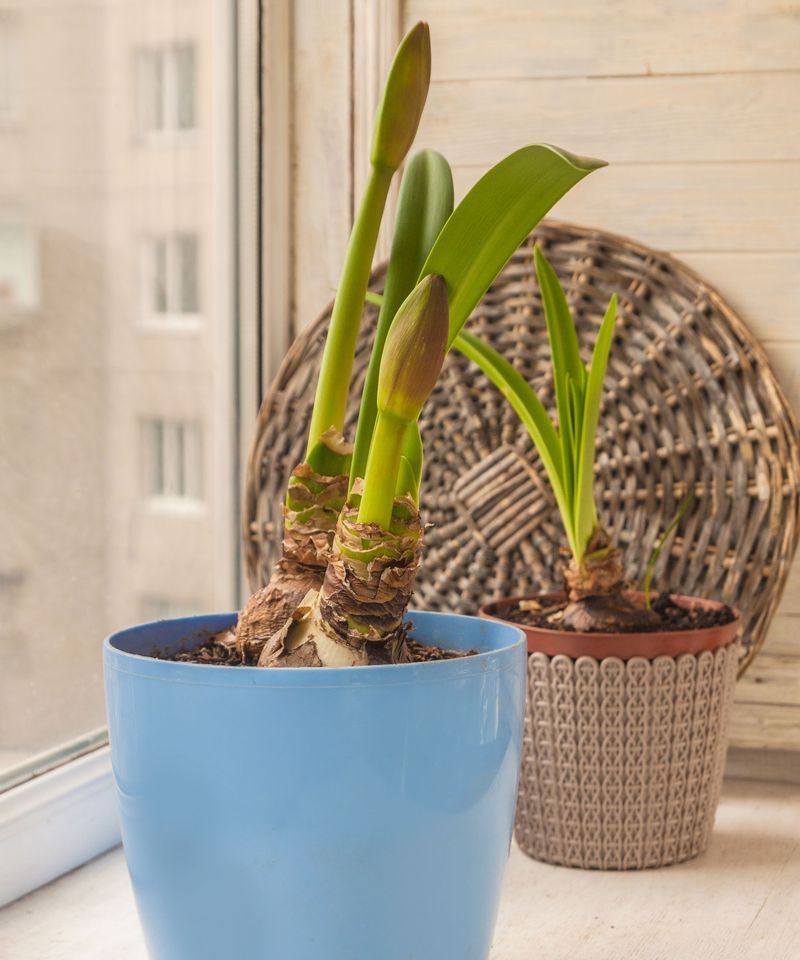
Two gardeners can follow the same steps and get different results. The difference is often hidden inside the bulb.
Flowering depends partly on stored reserves and care history, and appearance alone cannot tell you how much energy is in there.
A bulb can even grow healthy leaves and skip the flowers. Iowa State Extension notes that a bulb with inadequate stored carbohydrates may fail to flower even with good foliage.
That is why green leaves are good news but not a promise.
Here is a clue worth knowing. Flower stalks often appear before leaves, though leaves sometimes come first.
Minnesota Extension and Illinois Extension both say leaves can appear first, so a leaf-only start is not a verdict.
Extension advice also seems to disagree, and the two views fit together. New Hampshire Extension says a healthy, growing plant can rebloom without forced dormancy.
Maryland Extension treats dormancy as necessary for holiday rebloom. The practical middle ground is that rebloom may happen on its own schedule, while a rest helps you plan timing.
If a leafy plant skips flowers this year, keep feeding the bulb through its leaves. A good season of growth is a savings account for the next one.
Waxed Bulbs Need a Different Plan
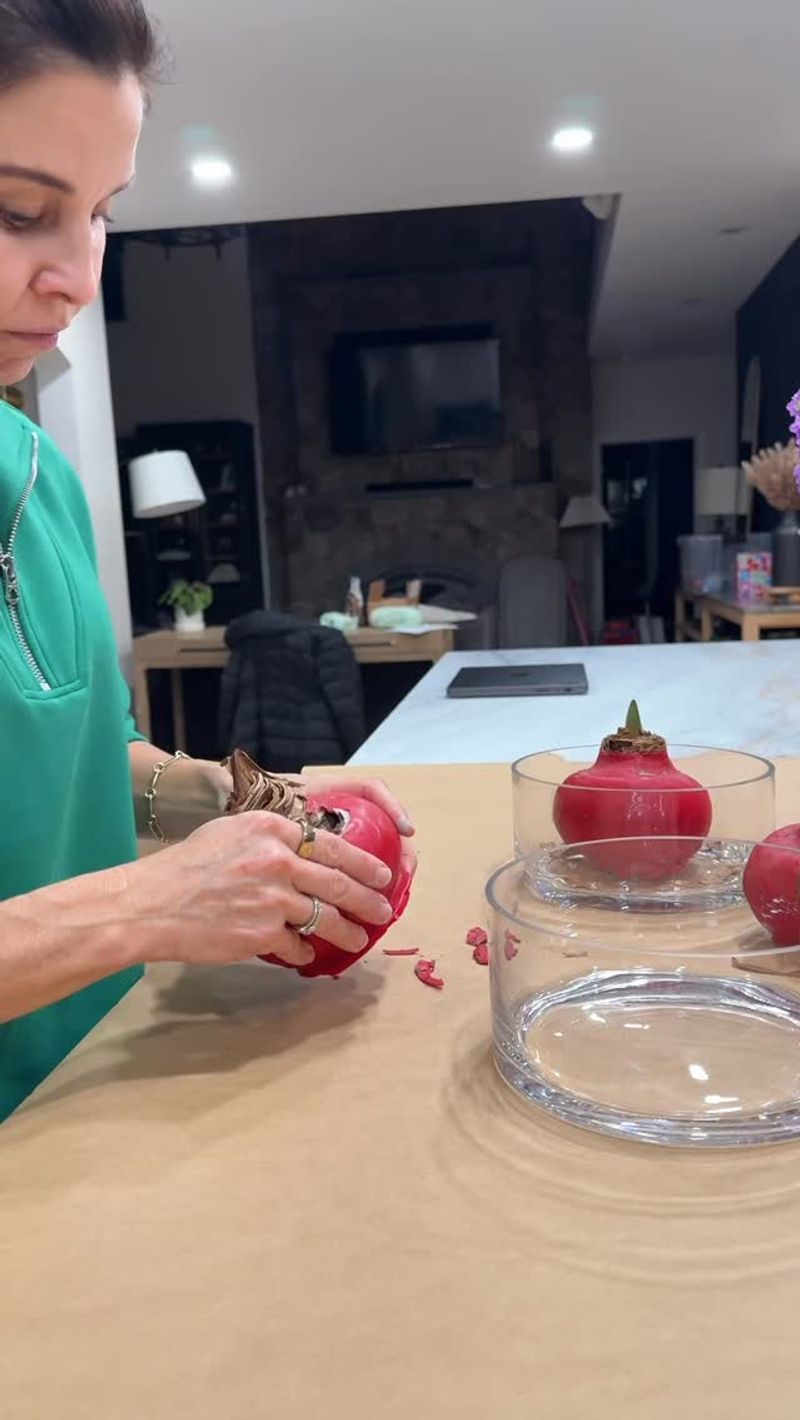
Waxed bulbs look neat, sit on a shelf with no soil, and need no water for their first bloom. That convenience comes with a catch.
They are commonly sold as single-use, so they are not the same as a saved, rooted bulb.
Because the roots were removed before waxing, the bulb has less to work with once the show ends. Illinois Extension describes these as no soil or watering required for the first bloom, which is part of why they are treated as disposable.
Still, you can try. Iowa State Extension says it may be possible to save one by carefully removing the wax and wire, potting the bulb, and rebuilding its reserves.
Rebloom is uncertain, so think of it as an experiment and not a plan you can count on.
Go slowly when peeling, so you do not damage the bulb. Then pot it in a container with drainage and treat it like any growing amaryllis, with bright light and careful watering.
So here is the takeaway. Look at what your bulb is doing now, choose the care that fits, and treat any bloom timeline as an estimate.
The bulb will let you know, one leaf or one stalk at a time.
