
Your Peppers Burn You On Purpose, But The Cardinal Eating Them Feels Nothing
Follow us on Google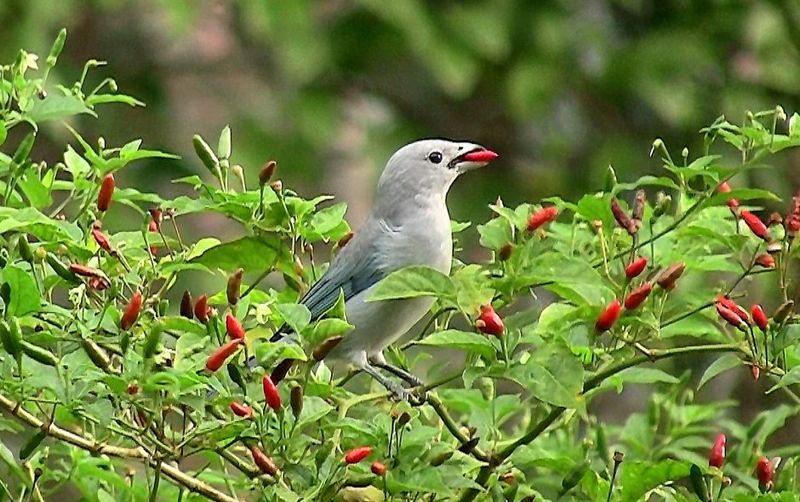
Bite into a hot pepper and your mouth signals a five-alarm fire, even though nothing is actually burning.
A cardinal can swallow the same fruit and fly off without a flinch.
That gap is not an accident of nature, and understanding it can change how you manage your backyard feeder, your garden, and any pepper-based pest product you are thinking about buying.
What Pepper Heat Does Inside A Mammal
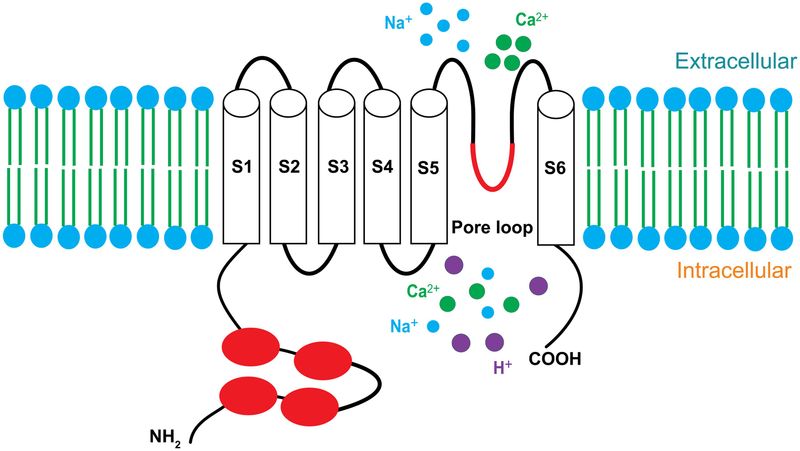
Capsaicin, the compound responsible for pepper heat, does not actually raise the temperature of your mouth.
Instead, it latches onto a protein called TRPV1, a receptor that normally fires when tissue reaches roughly 109 degrees Fahrenheit or when genuine irritants show up.
When capsaicin binds to TRPV1, the receptor sends the same pain-and-heat signal it would send during a real burn, so your brain reads fire even though your tongue is perfectly fine.
That compound is concentrated mainly in the pale placental tissue inside the pepper, the spongy material attached to the seeds, rather than spread evenly through the flesh.
It is a secondary plant chemical, meaning the plant does not use it for basic metabolism.
Its ecological effects on mammals, insects, fungi, and seed dispersers are what make it scientifically interesting.
The chicken version of TRPV1 tells a different story.
Research published in 2002 identifying the avian TRPV1 receptor found that it responds far less strongly to capsaicin than the mammalian version does.
A related Cell study on capsaicin receptor sensitivity across species helped confirm that the structural difference in the receptor, not some general toughness in birds, explains much of the contrast in response.
That biological difference, not any conscious decision by the pepper plant, is the real story here.
Natural selection shaped which animals find peppers tolerable and which find them punishing.
The plant does not choose anything.
The receptor difference just happens to have consequences for who eats the fruit and what happens next.
How Heat Can Favor Some Seed Dispersers
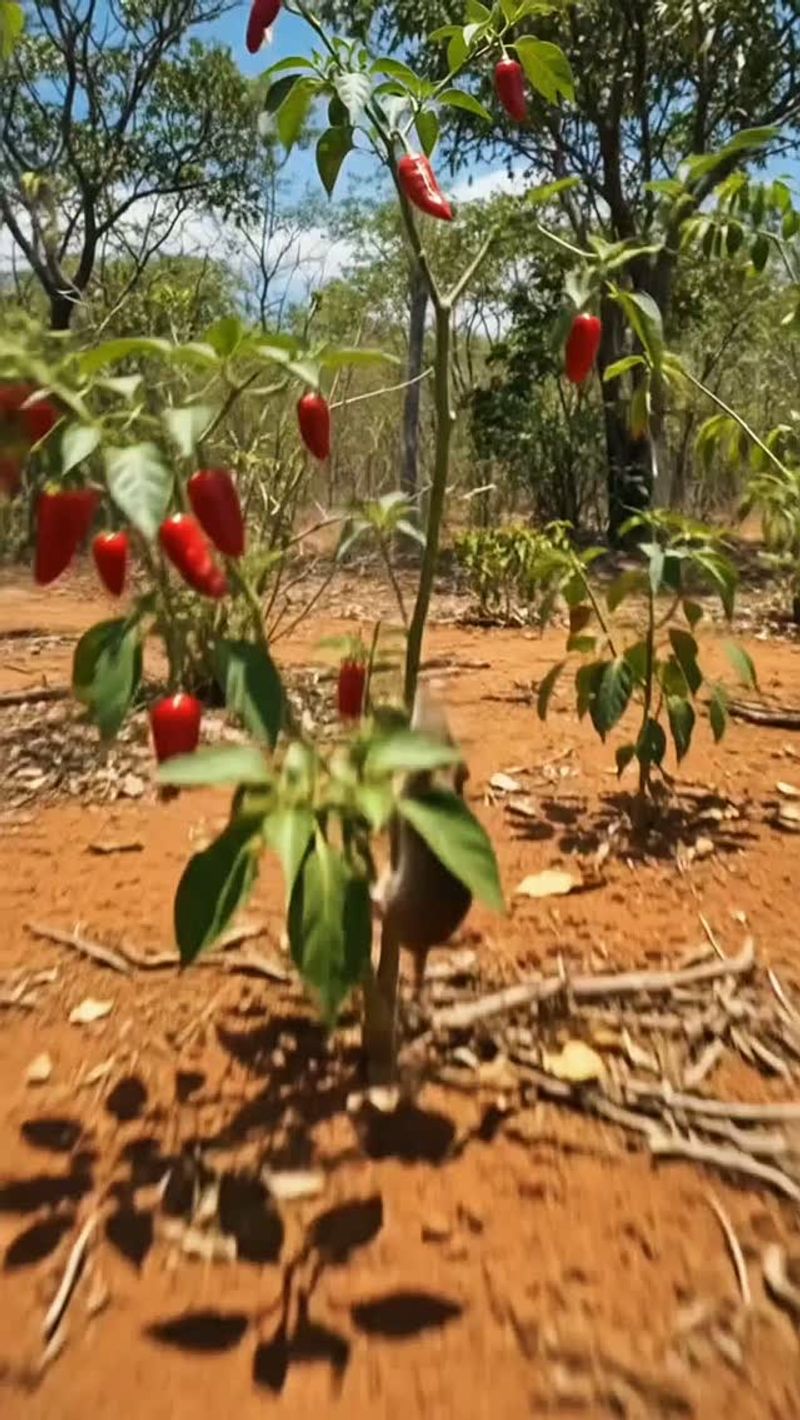
Picture a small wild pepper plant loaded with ripe fruits.
A mouse approaches, sniffs, and pulls back.
A curve-billed thrasher lands on the same branch, swallows two fruits whole, and flies two hundred feet before stopping to preen.
Those two visits have completely different consequences for the seeds inside.
Mammals, including mice, rats, and squirrels, tend to use grinding molars that crush seeds as they eat.
A seed that gets chewed usually does not germinate.
Birds that swallow small fruits whole keep the seeds structurally intact as they move through the digestive tract.
A field study on capsaicin and seed dispersal in wild Capsicum found that pungent peppers were consumed less by rodents than nonpungent ones, while several bird species ate both types without measurable difference in visit rates.
That pattern supports what ecologists call the directed deterrence hypothesis: natural selection may have favored capsaicinoid production in plants whose reproductive success improved when mammals were less likely to destroy seeds and birds were more likely to carry them.
The word “may” matters here.
This is a well-supported evolutionary hypothesis, not a proven single-purpose explanation for why every pepper makes capsaicin.
A broader review of Capsicum ecology and dispersal makes clear that outcomes depend on the specific pepper species, the bird species present, local mammal pressure, and habitat.
A backyard jalapeño growing in suburban Ohio sits in a very different ecological context than a wild chiltepin in the Sonoran Desert, and the hypothesis should not be stretched to cover both without qualification.
What Happens To A Seed After A Bird Eats
Swallowing a seed whole is only the beginning of the story.
What happens inside the bird’s gut, and how long the seed stays there, can either improve its chances of sprouting or reduce them, depending on the pepper species and the bird doing the digesting.
A study on Capsicum frutescens in Guam found that seeds passed through bird digestive systems showed improved emergence rates compared with seeds taken directly from the fruit.
The mechanical and chemical action of gut passage appeared to benefit that particular combination of pepper species and bird.
But research examining retention time and seed structure across Capsicum species showed a more complicated picture: longer gut retention improved germination in Capsicum annuumCapsicum chacoense, yet it damaged seeds of the pungent wild species , which has a thinner seed coat less able to handle prolonged exposure to digestive acids.
So gut passage is not a simple upgrade.
The benefit depends on how thick the seed coat is, how long the bird holds the seed, and which species is involved on both sides of the transaction.
Population-level dispersal modeling for wild Capsicum confirms that seed fate varies widely across sites and bird communities, and that successful establishment requires far more than just a bird dropping a seed in a new spot.
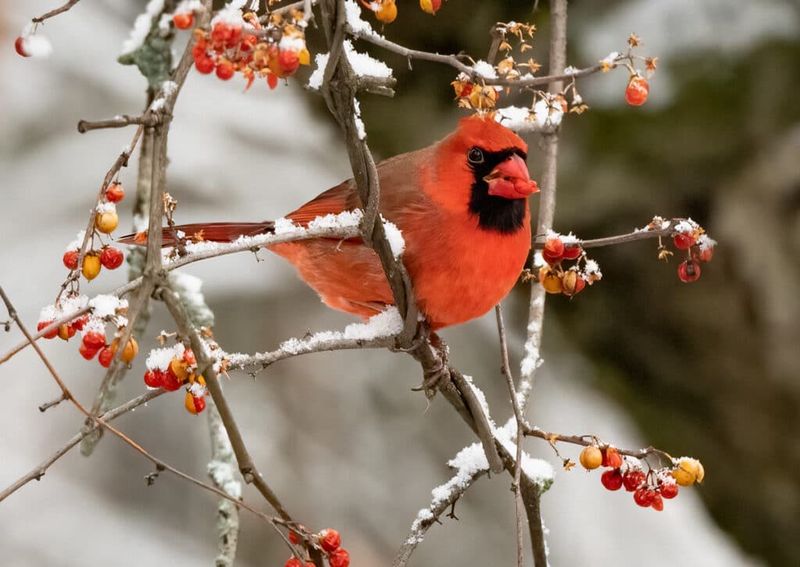
The northern cardinal is a reasonable example of a bird often described as relatively insensitive to capsaicin, and it does eat fruits and seeds.
But the strongest dispersal research concerns wild Capsicum species and identified frugivorous birds studied under field conditions, not necessarily cardinals eating cultivated peppers from a backyard garden.
Treat the cardinal as a relatable illustration, not as proof that your garden pepper will spread itself through the neighborhood.
The Plant May Gain Other Defenses
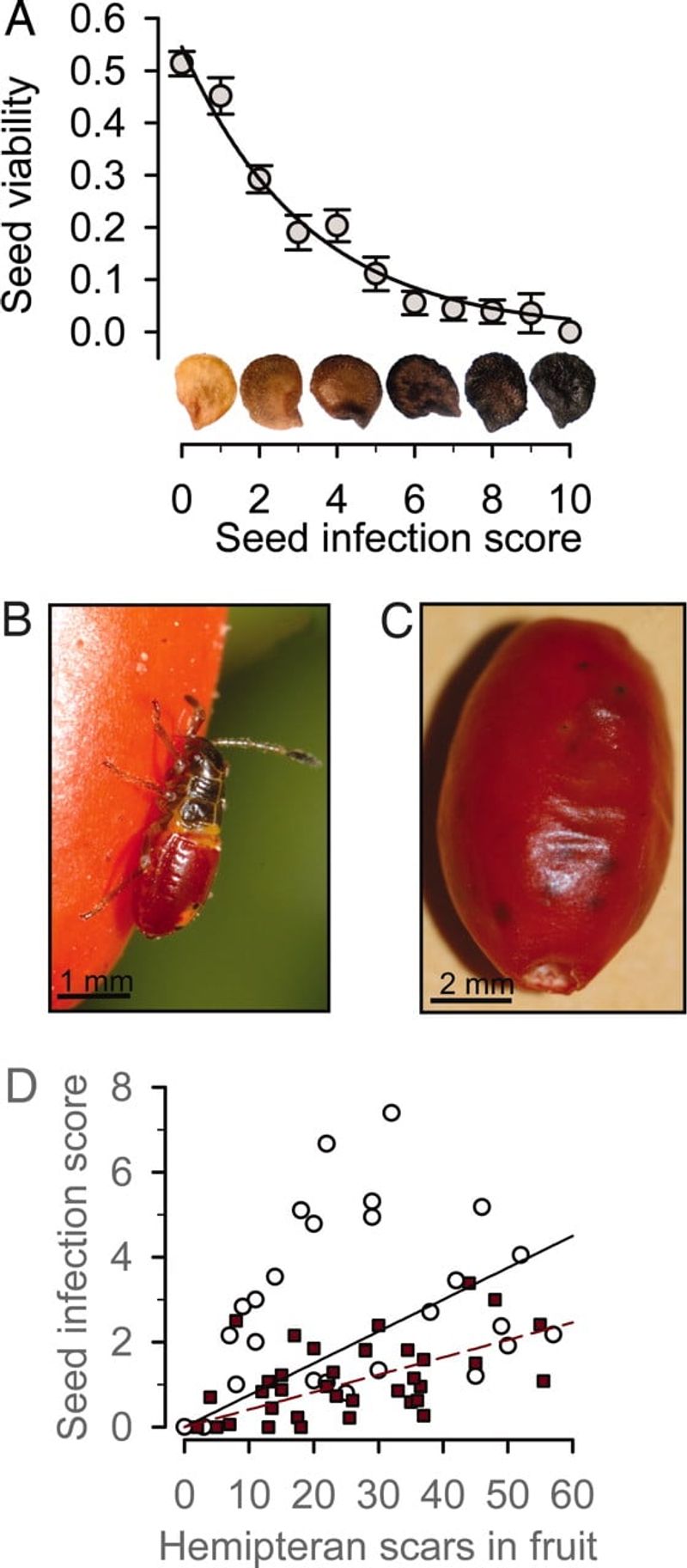
The bird-versus-mammal story is compelling, but capsaicin may be doing more than one job.
Researchers studying wild pepper populations in Bolivia found that pungent plants had noticeably less fungal damage on their fruits than nonpungent plants growing in the same area.
A University of Washington summary of that peer-reviewed research reported that the fungal pathogen involved, a Fusarium species carried by seed-feeding insects, was far less prevalent in pungent fruits.
That finding suggests capsaicinoids may protect the fruit before any seed dispersal happens at all, giving the seeds a better chance of surviving long enough to be eaten and moved.
The two functions, deterring seed-destroying mammals and reducing fungal damage, are not mutually exclusive.
Both could contribute to reproductive success in different ways and to different degrees depending on local conditions.
The caution worth keeping is that this fungal protection finding comes from specific wild pepper populations under particular ecological pressures.
The directed deterrence field work also noted that pungency levels and ecological relationships differ substantially across Capsicum species and habitats.
A cultivated bell pepper, bred for low pungency and grown in a managed garden, does not necessarily follow the same rules as a wild chiltepin in a semi-arid scrubland.
Capsaicinoids also interact with insects, gut passage timing, and germination rates, as earlier sections covered.
The relative importance of each effect shifts depending on which pepper species you are looking at, which animals share its habitat, and what the local pathogen pressure looks like.
Capsaicin is less a single tool and more a compound that happens to be useful in several overlapping ways across different ecological settings.
Why “Birds Feel Nothing” Goes Too Far
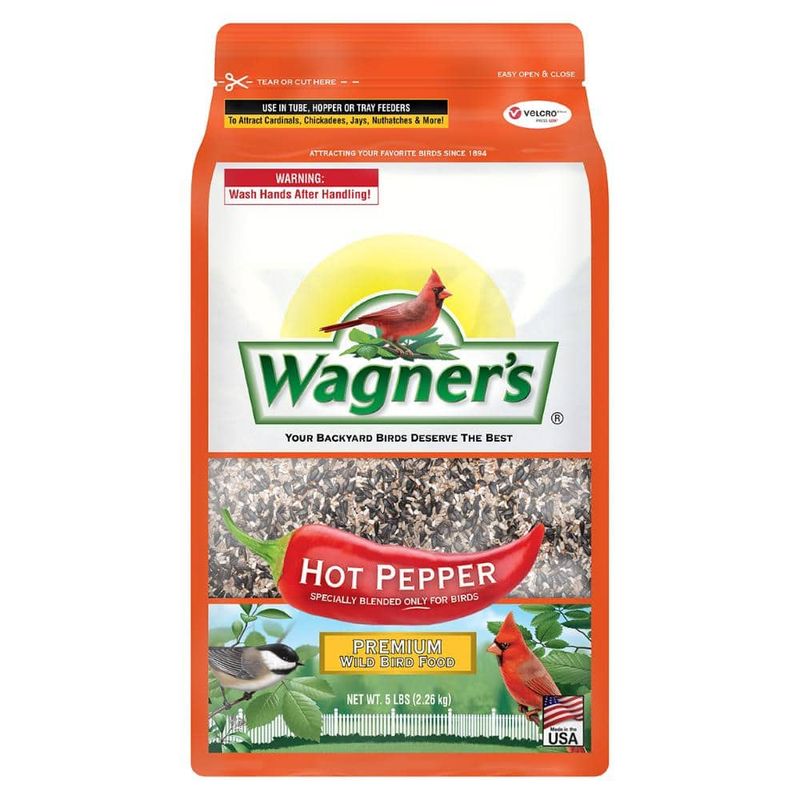
The headline on this article makes a clean claim: the cardinal feels nothing.
That framing is useful as a shorthand, but it goes further than the evidence supports, and the gap matters if you are making decisions about feeders or garden pest management.
Classic receptor studies and feeding trials show that birds are strongly and comparatively insensitive to capsaicin compared with mammals.
That is well established.
What is less settled is whether every bird, at every dose, with every formulation, has no response at all.
A 2025 Audubon report on newer capsaicin and bird behavior experiments described cases where some birds appeared less interested in highly concentrated or coated seed.
The article also notes that researchers could not confirm whether the birds were responding to capsaicin itself or to odor, coating ingredients, or another aspect of the formulation.
The mechanism remains unresolved.
The broader Capsicum ecology literature makes clear that responses differ by bird species, pepper variety, dose, seed coat, and environment.
Some frugivorous birds swallow small pepper fruits readily; others may reject them based on size, color, or unfamiliarity rather than heat.
A Frontiers in Ecology review of avian fruit choice and capsaicinoid variation reinforces that bird responses to pungency are not uniform across species or conditions.
The northern cardinal is a familiar face at feeders across the eastern and central US, and published reviews do list cardinals among bird species considered relatively insensitive to capsaicin.
But the strongest studies involve wild Capsicum and frugivores studied in their native habitat.
Assuming that a cardinal eating a supermarket jalapeño or an ornamental pepper from a garden center behaves exactly like a wild frugivore in a Bolivian pepper patch is a bigger leap than the research justifies.
Use Feeder Barriers Before Pepper Powder
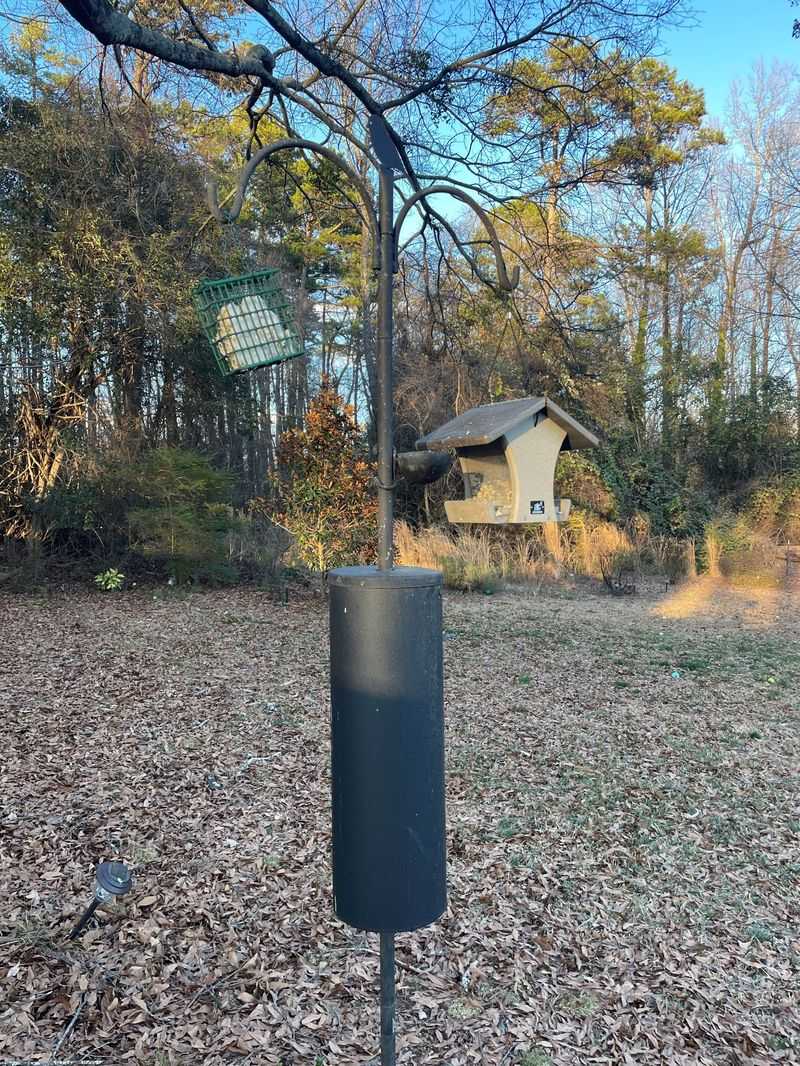
A squirrel hanging off your feeder is a genuinely frustrating sight, and the idea of sprinkling cayenne to solve it is appealing because it sounds harmless and easy.
The science is more complicated than that, and the practical results are less reliable than the marketing sometimes suggests.
A controlled study on capsaicin-treated seed and eastern gray squirrel feeding found that seed treated to roughly 40,000 Scoville Heat Units on the shell reduced squirrel consumption at the test sites, while bird visitation stayed similar or increased.
That is a real finding.
But the same research showed that eastern chipmunks were not deterred, so capsaicin is not a universal solution for small mammals at feeders.
Effectiveness also shifts when food is scarce, because a hungry squirrel may push through discomfort that a well-fed one avoids.
Penn State Extension guidance on managing tree squirrels puts physical exclusion first: a squirrel baffle on the pole below the feeder, placement at least ten feet from tree branches or rooflines that squirrels can use as launch points, and reducing seed spilled on the ground beneath the feeder.
Those steps address the problem structurally rather than relying on the squirrel’s willingness to be repelled by heat.
If you want to try a capsaicin-treated seed product, look for one with a registered label rather than mixing household cayenne powder into your seed bin.
The National Pesticide Information Center capsaicin fact sheet notes that capsaicin is toxic to bees and other beneficial insects, and that bird eye effects are not well established, which is reason enough to use the minimum effective approach and follow label directions carefully.
A labeled commercial product may offer a more standardized formulation than loose kitchen cayenne, but it does not guarantee results, and physical barriers remain the more dependable first layer.
Handle Capsaicin As An Irritant
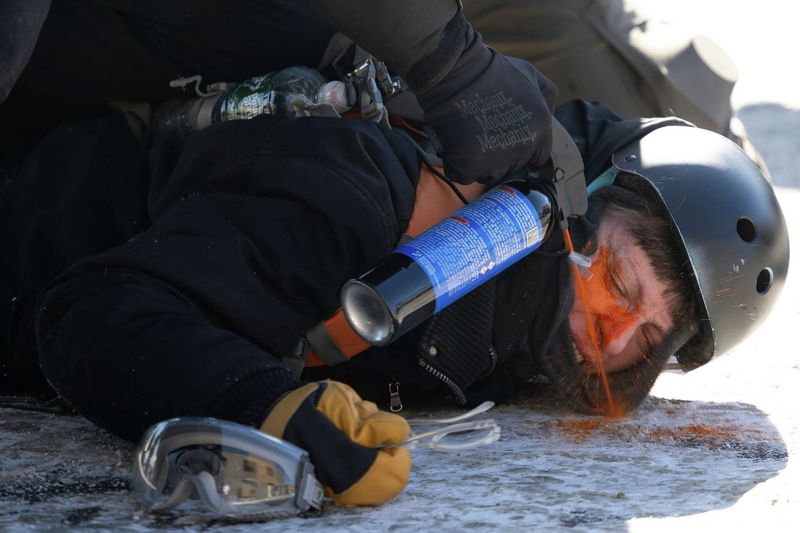
Capsaicin feels harmless when you think of it as a food ingredient, but the same compound that lights up your TRPV1 receptors when you eat a hot pepper does the same thing to your eyes, skin, lungs, and mucous membranes when you handle it as a powder or spray.
Treating it casually is how people end up with burning eyes and irritated airways after a quick session at the feeder.
When handling any capsaicin-containing product outdoors, wear gloves and eye protection, and avoid working on a windy day when powder or mist can drift toward your face.
The NPIC general capsaicin fact sheet describes irritation to skin, eyes, and the respiratory tract as the primary human exposure concerns, and notes that inhalation of fine particles or spray mist is a particular risk.
Do not spray homemade pepper mixtures, cayenne slurries, or chili-based concoctions on edible crops, bird feeders, wildlife, or any surface that will contact food.
Penn State Extension’s caution against home remedies for pest control explains that household mixtures can injure plants, expose people and pets to irritants, and contaminate equipment in ways that are difficult to predict or reverse.
Physical exclusion methods avoid those risks entirely.
For any registered pesticide product containing capsaicin, the label is the legal document that governs how, where, and on what you may use it.
The EPA pesticide label system explains what information labels must carry and why following them is both a legal requirement and a practical safety measure.
Any restrictions involving water, pets, children, or proximity to food gardens will appear on the specific product label, so read yours before you open the container, not after.
Grow Peppers With Local Conditions In Mind
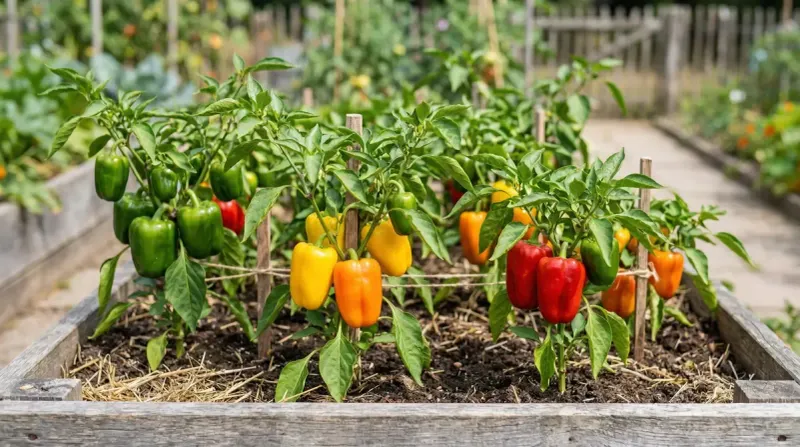
Growing your own peppers connects the biology back to the backyard in a satisfying way.
But planting dates, spacing, and soil temperatures vary enough across the US that any single schedule should be treated as a regional starting point, not a nationwide rule.
Utah State University Extension’s pepper growing guide recommends transplanting after all frost danger has passed and after soil temperature reaches around 60 degrees Fahrenheit.
Peppers generally perform best with daytime air temperatures near 75 to 85 degrees Fahrenheit and nighttime temperatures staying above 60 to 65 degrees.
Below those nighttime lows, fruit set often stalls even on otherwise healthy plants.
USU’s vegetable planting and spacing reference lists about 18 inches between plants and 18 to 24 inches between rows, with seeds sown roughly one-half inch deep if starting from seed indoors.
Those figures reflect conditions in the Intermountain West and may need adjustment for gardeners in humid southeastern climates, the Pacific Northwest, or high-altitude gardens where the growing window is shorter and soil warms more slowly.
A few things are worth keeping in mind as you plan.
Cultivated peppers, whether jalapeños, bells, or ornamental varieties, differ from wild Capsicum in fruit size, pungency, seed traits, and growth habit.
Human breeding changed all of those characteristics, so a backyard pepper plant should not be expected to behave like a wild species in an ecological study.
And if a bird does drop a seed from your garden into a new spot, do not count on it establishing a volunteer plant.
Successful germination and seedling survival require the right soil moisture, temperature, and light at the right time, and most dropped seeds never make it that far.