
This Flowering Plant Stops People Mid-Step, But Most Gardeners Guess Its Name Wrong
Follow us on Google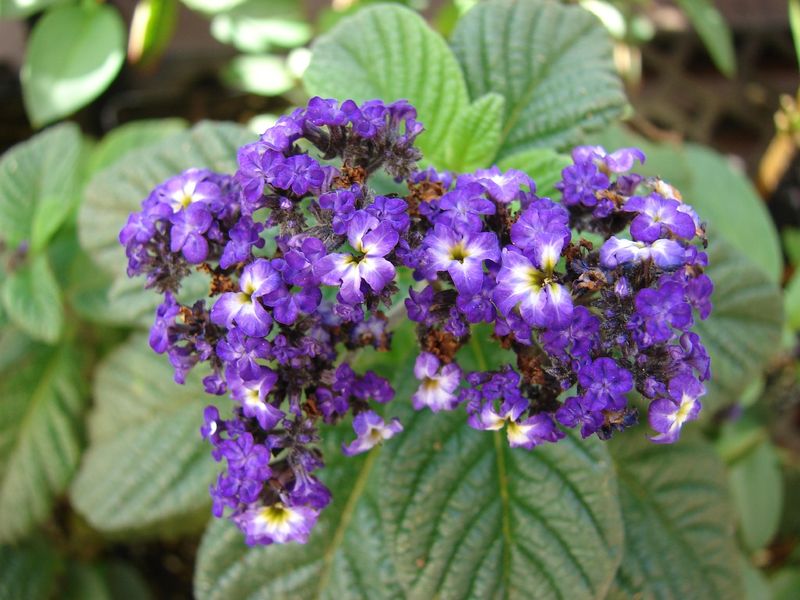
Walk past a certain purple-flowered plant on a warm afternoon and you might catch a scent so sweet it makes you stop and look around.
That plant is probably common garden heliotrope, and its fragrance has a way of catching people off guard when it grows close to a path or porch.
Many gardeners who spot it reach for a familiar name that turns out to be only partly right.
Getting the name straight matters, because this plant has real care needs, a few important lookalikes, and one household-safety rule that every backyard grower should know before planting it.
The Likely Answer Is Common Garden Heliotrope
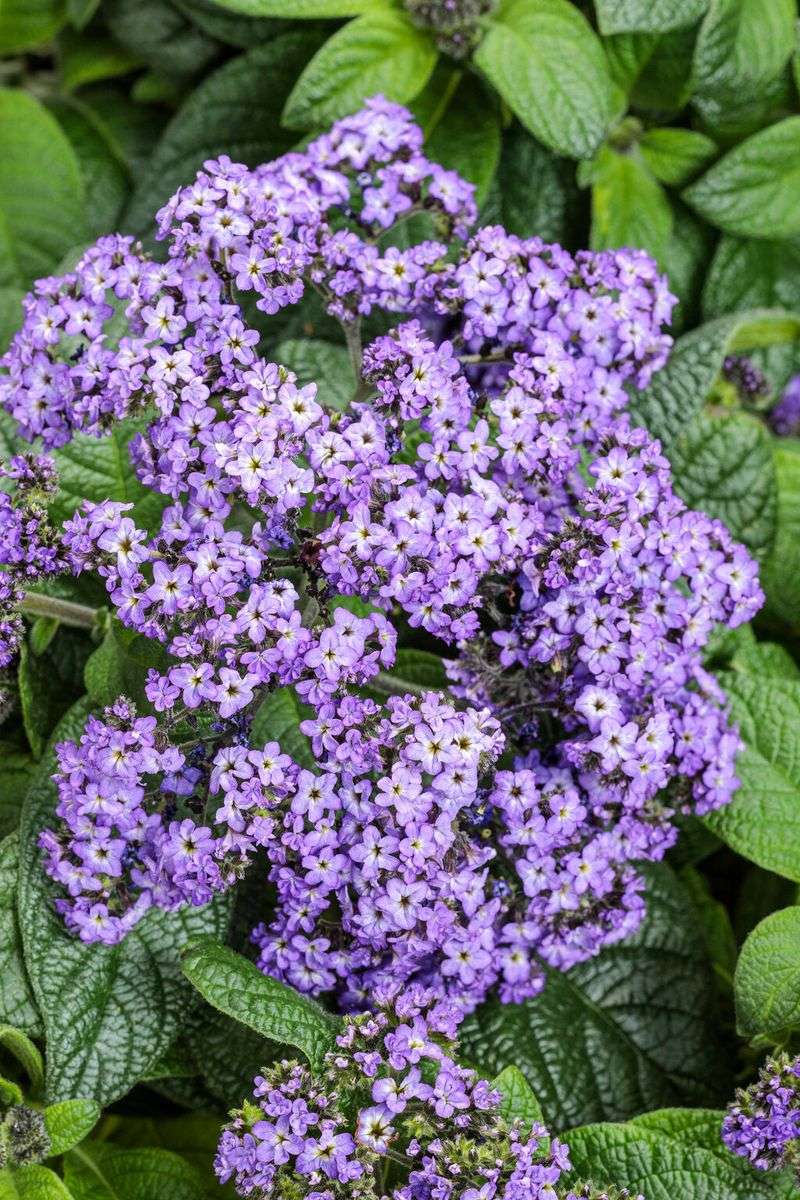
Purple flower clusters near a walkway or porch often turn out to belong to Heliotropium arborescens, described by NC State Extension as a tender perennial native to Peru, Colombia, and Bolivia, usually grown as an annual across much of the United States.
Most people know it by at least one of three names: common garden heliotrope, garden heliotrope, or cherry-pie flower.
All three names point to the same species, but the headline alone cannot make a certain identification without seeing the actual plant.
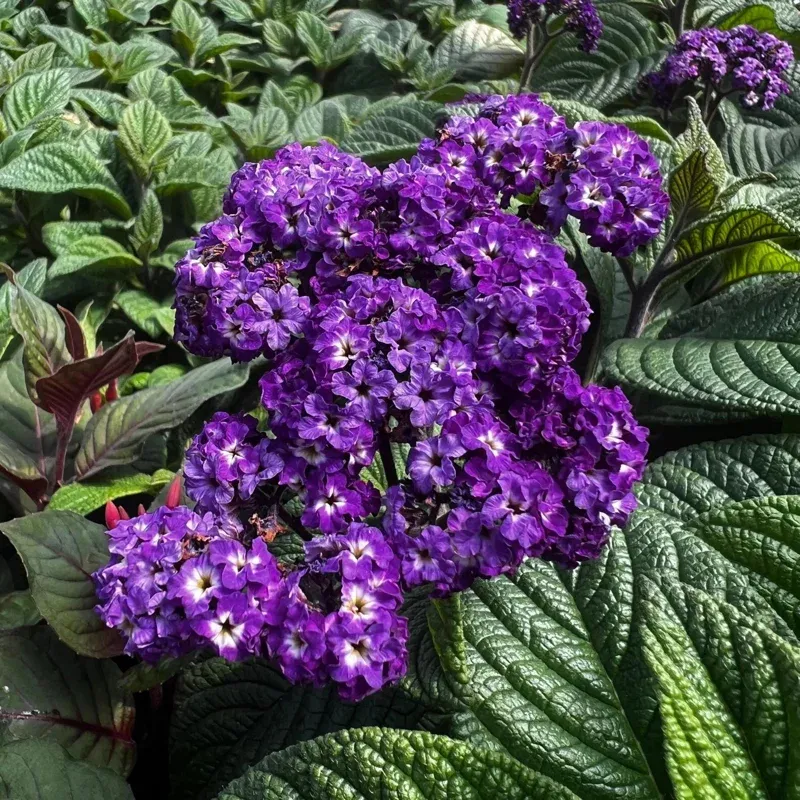
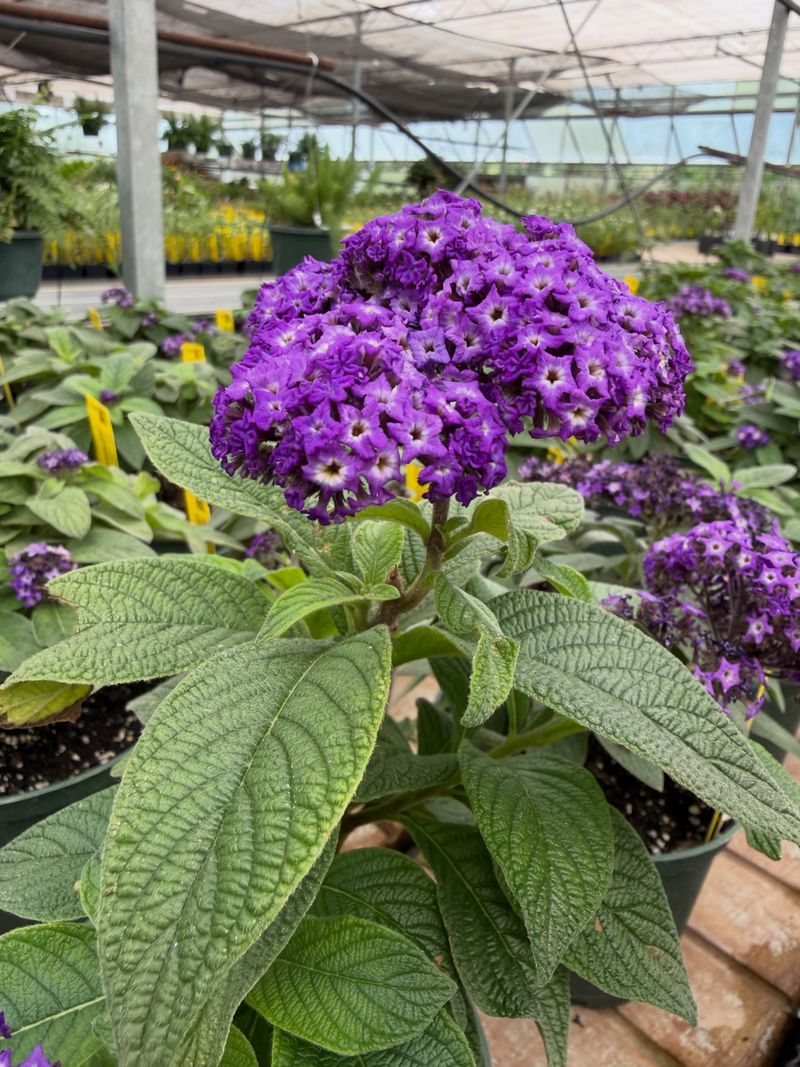
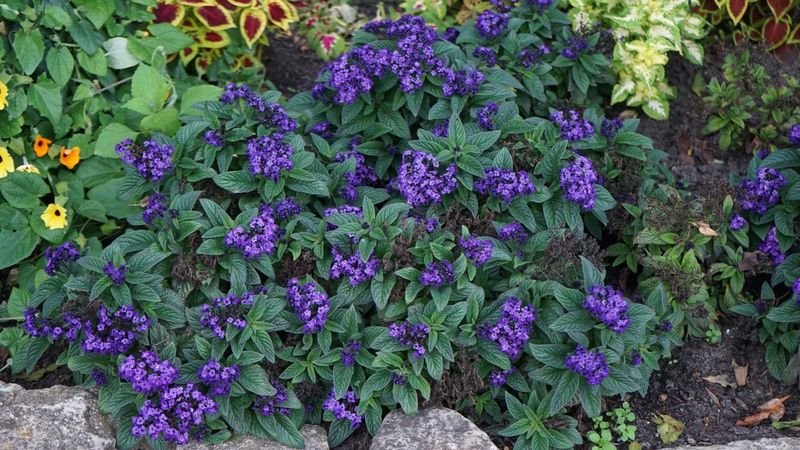
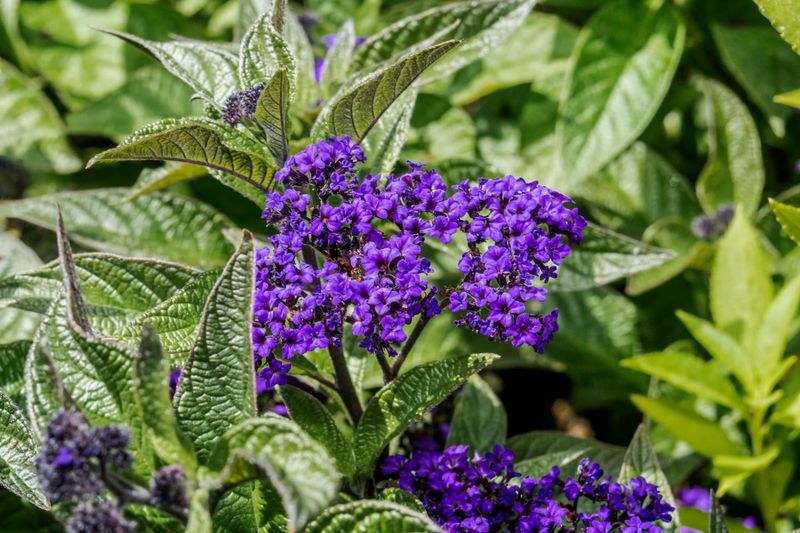
What you are looking for is a rounded plant with dense, slightly domed clusters of small, five-parted flowers.
Those clusters can be purple, lavender, blue, or white depending on the cultivar.
The leaves are oval, dark green, and covered in fine texture with prominent veins that give the foliage a slightly wrinkled look.
The flower clusters themselves are often more reliable for identification than color alone, because purple shows up in many garden plants.
One thing worth knowing right away: the common name heliotrope covers more than one species.
Heliotropium arborescens is the fragrant garden variety most people are looking for, but other plants carry the same label, including sea lavender and several creeping or clasping species.
A University of Florida IFAS publication covers sea lavender as a distinct Heliotropium species with a different appearance and habitat.
Always check the botanical name on the plant tag before assuming you have the fragrant garden type.
The Fragrance Can Make A Nearby Plant Noticeable
Sweet and vanilla-like is the most accurate way to describe what common garden heliotrope smells like up close.
Horticultural sources often reach for the phrase cherry pie or cherry-almond to capture it, which is where the nickname cherry-pie flower comes from.
That name refers entirely to scent, not to any edible quality, and the plant should never be tasted or used in food or drinks.
The headline’s idea of stopping mid-step is a fair description of what can happen when a strongly scented plant sits right beside a walkway, porch edge, or outdoor chair.
Fragrance at close range is genuinely different from fragrance across a yard.
Planting heliotrope at the far end of a large bed means most people will never smell it at all, while a container near a door or a border along a path brings the scent into everyday contact.
That said, no plant fills an entire garden with scent, and individual sensitivity varies.
Cultivar choice matters more than many buyers expect.
Traditional heliotropes tend to carry the strongest fragrance, but UT Gardens found that the heat-tolerant hybrid Augusta Lavender performed well in summer conditions but lacked fragrance entirely.
Temperature also plays a role: the scent tends to be most noticeable on warm, still afternoons rather than on cool or windy days.
If fragrance is the whole point of planting heliotrope, read the plant tag carefully and look for older or heritage varieties rather than assuming every purple-flowered cultivar will smell the same.
Heliotrope Resembles Lavender, But It Is Not Lavender
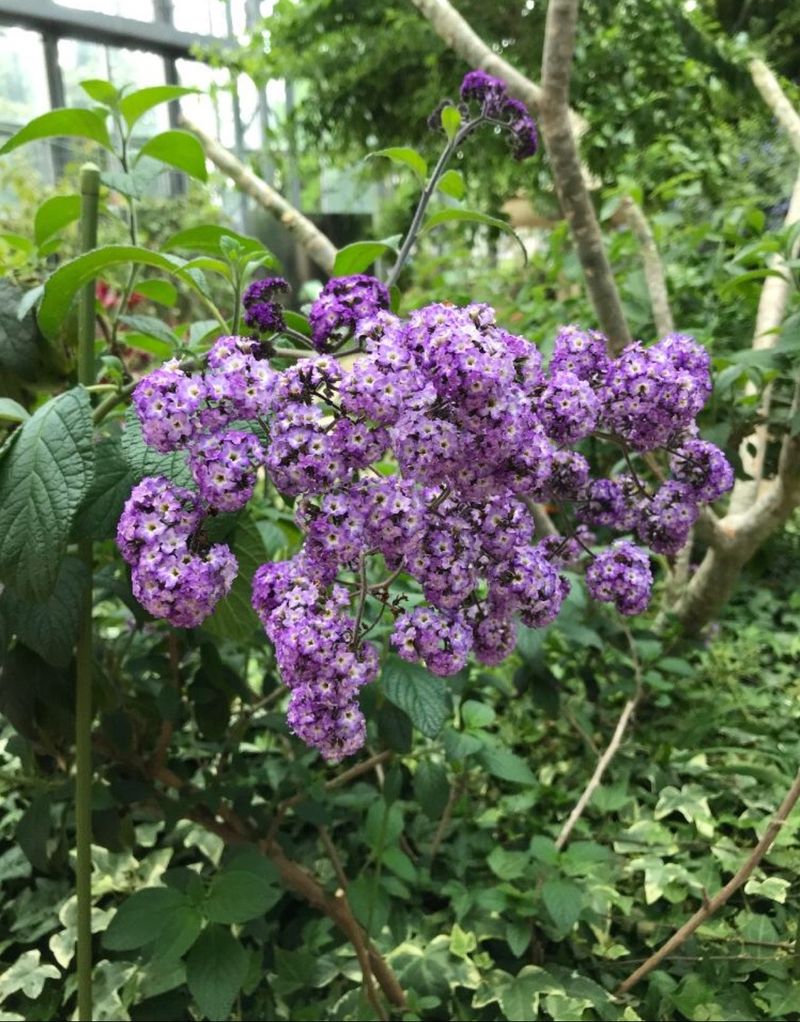
Purple flowers and a pleasant scent are two things heliotrope and lavender share, and that overlap is enough to create a reasonable case of mistaken identity, especially for someone who spots the plant from a few feet away.
The confusion is understandable.
Both plants can produce purple blooms, both attract bees, and both have a reputation for fragrance.
But they are botanically unrelated and need meaningfully different conditions to thrive.
Heliotropium arborescens belongs to the borage family and prefers moist, well-drained soil with steady moisture throughout the season, as University of Missouri Extension notes in its guide to fragrant flowering annuals.
Lavender belongs to the genus Lavandula in the mint family and generally wants sharper drainage, drier conditions between waterings, and lower soil fertility.
Give lavender the moist soil heliotrope needs and you risk root rot.
The growing requirements alone make them poor substitutes for each other.
Visually, the flower forms are also different when you look closely.
Heliotrope produces rounded, slightly domed clusters of many tiny blooms.
Lavender grows its flowers along narrow, upright spikes.
The leaves are another clue: heliotrope has broad, dark, wrinkled-looking oval leaves, while lavender has narrow, silvery-gray foliage.
Recording multiple details gives you a much clearer picture than relying on color alone.
NC Cooperative Extension recommends photographing the whole plant, leaf arrangement, stems, flower clusters, and growing location before trying to confirm an identification.
Color is a starting point, not a conclusion.
Place It Where People Can Smell It
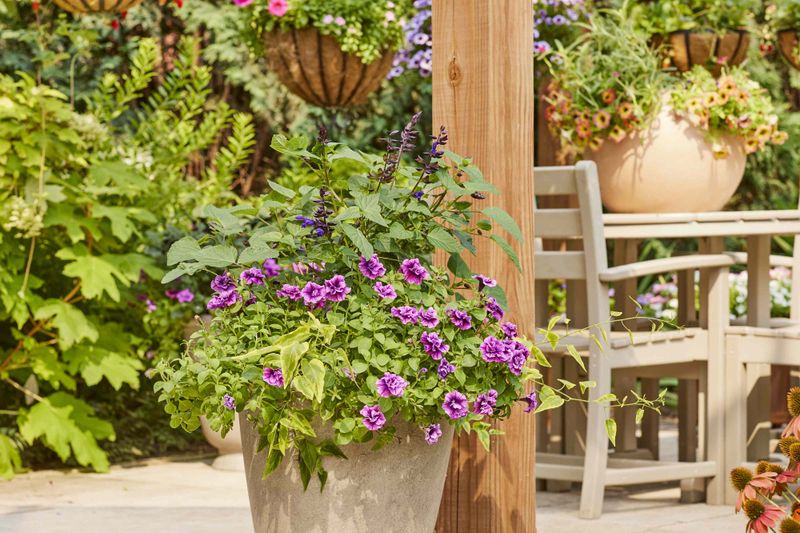
Placement is the single decision that most determines whether heliotrope earns its reputation.
A container near a front door, a cluster at a porch edge, a short row along a walkway, or a spot beside an outdoor chair all put the plant within breathing distance of the people most likely to notice it.
A bed tucked against a back fence 20 feet from the nearest path mostly just feeds the pollinators, which is fine, but it will not deliver the close-range scent experience the plant is known for.
For growing conditions, NC State Extension recommends full sun, humus-rich soil, and consistent moisture as the general starting point.
Moist but well-drained soil matters more than most gardeners expect: heliotrope wants steady water but not soggy roots.
In most parts of the country, a spot that gets 6 or more hours of direct sun per day will suit it well.
Hot-summer regions are the exception.
When afternoon temperatures regularly climb above 90 degrees Fahrenheit, some afternoon shade can help the plant hold its blooms and avoid heat stress.
A spot that gets morning sun and is shaded by a porch overhang or nearby shrub from about 2 p.m. onward often works better in the South than a fully exposed location.
Think of the plant as someone who loves a bright morning but appreciates a shady seat by midday.
Containers give you the flexibility to shift the plant as conditions change through the season, which is one reason heliotrope in a pot near a door is such a practical choice for many home gardeners.
Climate And Cultivar Decide Whether It Returns
For most US gardeners, heliotrope is a warm-season annual.
You plant it after your last local frost date, enjoy it through summer and into fall, and replace it the following year.
University of Missouri Extension lists it as a fragrant perennial grown as an annual, typically reaching 18 to 36 inches tall, with outdoor planting beginning in spring once frost danger has passed.
That frost-free window varies by zip code, so check your local last frost date rather than following a single national calendar.
In USDA Zones 9 and 10, heliotrope may survive the winter and return as a short-lived perennial.
But winter cold tolerance is only one piece of the picture.
NC State Extension notes that Zone 9 and 10 survival is possible, while making clear that heat, humidity, drainage, summer rainfall, and cultivar performance all affect how well the plant actually does.
A hardiness zone tells you about winter lows, not July afternoons.
The Tennessee example makes this concrete.
UT Gardens reported that traditional heliotrope struggled with high heat and humidity, while the hybrid Augusta Lavender reached roughly 12 to 18 inches tall and wide, flowered from May until frost, and held up well in full sun and well-drained soil.
The trade-off was that Augusta Lavender had little to no fragrance.
That is the core tension with heliotrope: the cultivars bred for heat tolerance often sacrifice the scent, while the most fragrant types may need more careful siting in hot, humid summers.
Knowing which outcome you want before you buy saves a season of disappointment.
Keep Care Simple And Watch For Pests
Heliotrope does not demand complicated care, but a few habits keep it performing well through the season.
Steady moisture is the most consistent need: let the soil dry out too much and the plant sulks, let it stay waterlogged and the roots suffer.
Checking the soil an inch or two down every few days gives you a reliable read.
Well-drained soil is not optional, it is the condition that makes consistent watering safe rather than harmful.
Spacing is worth paying attention to before you plant.
NC State Extension lists a planting space of roughly 12 inches to 3 feet depending on cultivar and use.
Read the plant tag for the mature width and give each plant enough room to fill out without crowding its neighbor.
Pinching the growing tips back by a few inches early in the season encourages branching and results in a fuller, more compact plant rather than a leggy one that flops over by midsummer.
Pests are worth monitoring rather than treating on a schedule.
Whiteflies, spider mites, aphids, and mealybugs are the most common visitors.
A strong spray of water from a hose handles light aphid populations.
Heavier infestations may need targeted treatment, but routine spraying does more harm than good by disrupting the bees and butterflies that heliotrope genuinely attracts.
UT Gardens noted pollinators as a benefit of heliotrope plantings, so treat pest problems precisely and protect the visitors you want to keep.
Think of heliotrope as one fragrant layer in a broader planting, not a standalone pollinator solution.
Set A Clear Household-Safety Boundary
Common garden heliotrope looks friendly on a porch or path, and that approachability is part of its appeal.
But the plant carries a toxicity concern that every household needs to know before planting it where children, pets, or grazing animals can reach it.
NC State Extension reports that Heliotropium arborescens contains pyrrolizidine alkaloids and carries medium-severity poison characteristics, with liver damage possible from large amounts eaten by humans and liver failure risk documented in horses.
The cherry-pie nickname makes the plant sound edible.
It is not.
Do not taste it, add it to tea, use it as a garnish, or let children handle it near their mouths.
The scent comes from volatile compounds in the plant, not from any food-safe quality.
That distinction matters especially when curious kids or pets are nearby.
For dogs and cats, the practical rule is to prevent chewing access rather than relying on the animal to avoid the plant on its own.
A raised planter, a small decorative fence, or a placement the animal cannot reach are all reasonable options depending on your yard.
If you suspect a pet has chewed or eaten any part of a potentially toxic plant, UC Davis Center for Companion Animal Health advises contacting a veterinarian promptly rather than waiting to see whether symptoms develop.
Early contact gives the vet the best window to help.
The plant needs a clear household-safety boundary, and setting that boundary before planting is far easier than managing a problem after the fact.
Use The Plant For Its Real Strengths
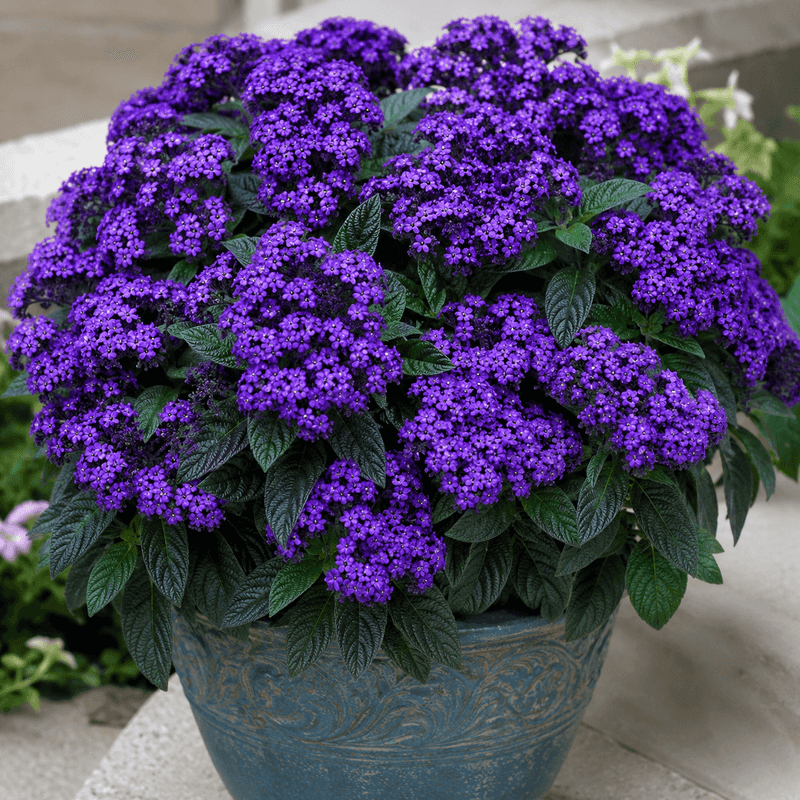
Heliotrope earns its place in a home garden through a specific combination of qualities: seasonal color, a close-range fragrance that rewards people who sit or walk nearby, and reliable pollinator traffic from bees and butterflies.
Those are real benefits, and they are worth planting for.
What heliotrope cannot do is replace a careful species verification, a broader habitat plan, or a safety boundary around the plant.
Before you buy, check the label for both the botanical name and the cultivar.
NC Cooperative Extension recommends verifying botanical names rather than relying on common names alone, because common names shift between species.
If fragrance is your main goal, that verification step matters even more, since some heat-tolerant cultivars carry no scent at all despite the same purple flowers and similar foliage.
A tag that says only heliotrope tells you less than you need.
For a fuller yard, pair heliotrope with plants that bloom at different times and offer different habitat features, such as seed heads for birds or ground cover for beneficial insects.
NC State Extension presents heliotrope as one flowering option among many, not a complete garden solution on its own.
Place the right cultivar close to where people actually spend time, account for your local summer heat and frost calendar, and keep the plant out of reach of anyone in the household who might chew it.
A well-sited heliotrope does not need to be famous to do its job quietly and well.