
The Tree In Your Yard Is Quietly Doing More For You Than Shade
Follow us on Google
Most people think of their backyard tree as a spot to hang a hammock or escape the afternoon sun.
But a healthy, well-placed tree can do a lot more than that, cooling hard surfaces, slowing runoff, softening views, and drawing birds into the yard.
The payoff is real, though how much any one tree delivers depends on where it sits, how big it grows, and how well you care for it.
Understanding those conditions is what turns a tree from a nice-to-have into a genuinely useful part of your outdoor space.
The Best Benefit Is Comfort You Can Feel
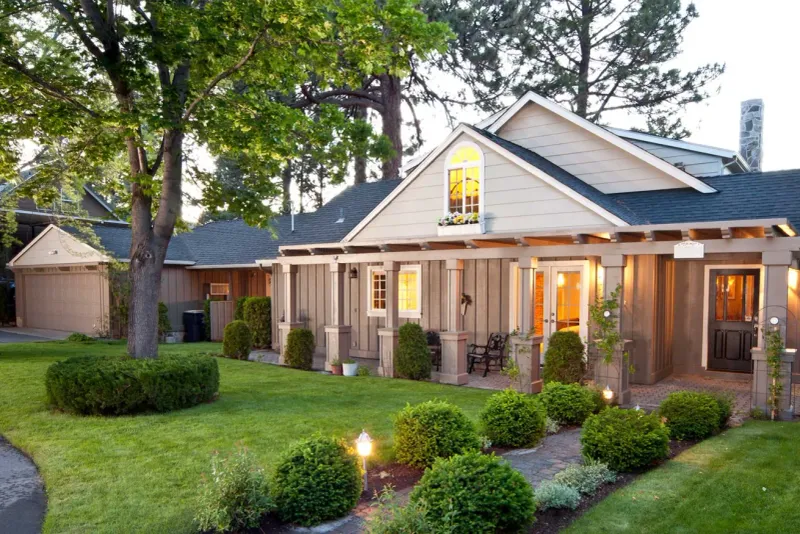
Step onto an unshaded driveway at 3 p.m. in July and you already know what pavement does with heat.
Now step under a mature tree nearby.
The difference you feel is not just shade doing its work, it is also evapotranspiration, the process by which water moves through the tree and escapes as vapor from its leaves.
That vapor release cools the air immediately around the canopy the way a damp cloth cools skin.
EPA research on urban trees and vegetation summarizes studies finding that urban forests averaged about 3.0 degrees Fahrenheit cooler than nearby non-green areas.
That is a broad average across many cities and conditions, not a number you can count on for your specific patio.
What you can count on is that a tree large enough to cast meaningful shade over a porch, a west-facing window, or a stretch of pavement will make those spots feel noticeably cooler on a hot afternoon.
Placement matters more than most people expect.
University of Maryland Extension guidance on trees and climate identifies west-side planting as especially useful for blocking hot afternoon sun, since west-facing walls and windows take the hardest heat late in the day.
East-facing windows catch morning sun, which is gentler but still worth shading in hot climates.
The choice between deciduous and evergreen trees adds another layer.
A deciduous tree drops its leaves in fall, letting winter sun reach the house when you want warmth.
An evergreen keeps its canopy year-round, which can be useful for wind protection but may block desirable solar gain in cold climates if planted too close to a south-facing wall.
The Department of Energy’s home landscaping guide recommends matching tree type to your climate and house orientation rather than treating either choice as universally better.
A tree cannot guarantee a cooler yard from fence to fence.
But one planted in the right spot can make the corner where you actually spend time feel like a different place entirely.
A Tree Helps Slow Rain Before It Becomes Runoff
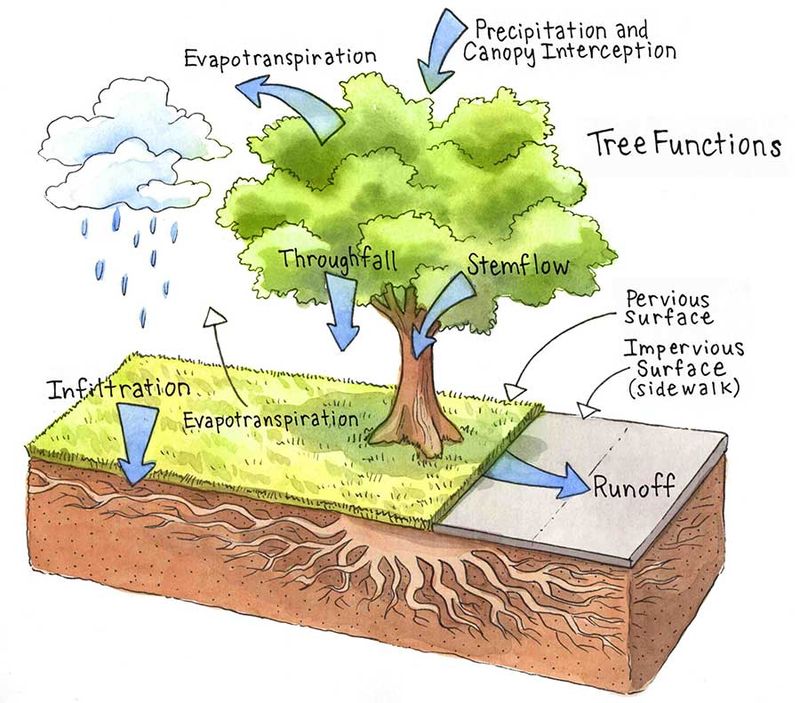
Watch a heavy rain hit a bare lawn versus a mulched area under a tree canopy and you will see two different stories.
Under the tree, leaves catch the first drops, branches slow the rest, and water arrives at the ground more gently and over a longer period.
Roots and the looser, organic-rich soil that tends to build up around them give that water somewhere to go besides straight across the surface toward your patio, foundation, or neighbor’s yard.
EPA’s Soak Up the Rain program describes how trees help reduce stormwater runoff, and broader EPA research on urban vegetation reports that urban trees may reduce stormwater runoff by approximately 15 to 27 percent of annual rainfall.
That range is wide on purpose.
Canopy size, rainfall intensity, soil type, slope, and how much pavement surrounds the tree all push that number up or down.
A young tree with a thin canopy contributes far less than a mature one with a wide spread.
A tree also cannot fix a drainage problem on its own.
If your yard pools near the back steps after a moderate rain, one tree will not solve that.
The stronger approach treats the tree as one piece of a larger system: redirect downspouts away from the foundation, consider a simple rain garden in a low spot, and reduce the amount of compacted lawn or hardscape where water has nowhere to go.
The practical payoff is familiar to anyone who has dealt with muddy paths after a storm or water creeping toward a crawl space.
A well-placed tree with good soil underneath is a quiet, low-maintenance layer of protection that works every time it rains, without any effort from you.
Privacy Comes From A Living Screen
Wanting to eat dinner outside without feeling like you are on display is a reasonable thing.
So is letting kids play in the yard without a direct sightline from the street.
A tree can help with both, but only if you think about it as part of a layered planting rather than a single fix.
One tree rarely forms a complete visual barrier.
Its canopy starts several feet off the ground, and even a dense evergreen has gaps.
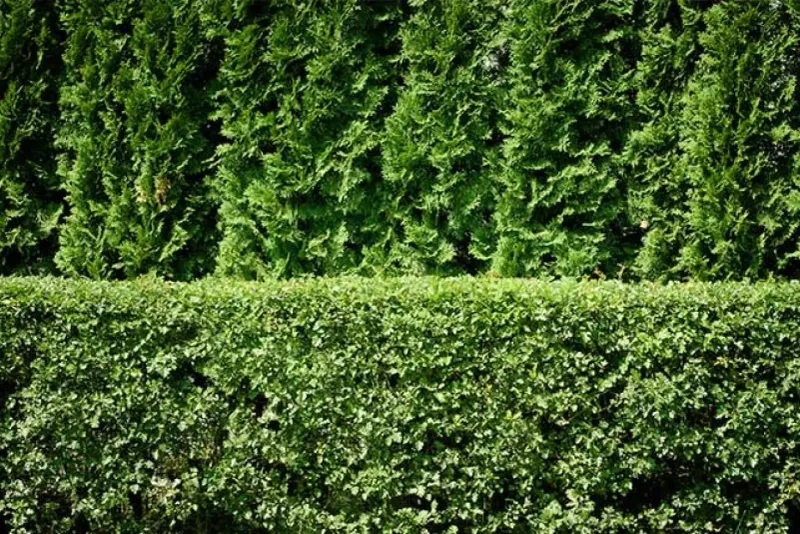
The plantings that actually screen a view well tend to combine a taller tree or two with mid-height shrubs underneath and possibly some ground cover at the base.
That layered structure blocks sightlines at multiple heights and stays effective even when one plant has a slow season.
Oregon State University Extension’s guidance on privacy screens notes that an effective hedge or mixed screen may take approximately 4 to 8 years to reach its working height.
Fast-growing species can shorten that timeline, but speed often comes with tradeoffs like weaker wood, shorter lifespan, and greater susceptibility to pests or disease.
A mixed planting of two or three species reduces the risk that one problem wipes out your entire screen.
On sound, be realistic.
Dense vegetation can soften the edge of noise from a nearby road or neighbor, and it may reduce wind and dust noticeably.
But Forest Service research on vegetation and sound and related Forest Service work on noise barriers both show that substantial sound reduction generally requires adequate planting depth, terrain, or a solid barrier.
Vegetation alone can even scatter sound in ways that do not reduce measured noise levels.
Plan for the view you actually need to block, check the mature width of each plant before you buy, and give the planting enough depth to work.
A screened view and a softer outdoor feel are reasonable goals.
Silence is not.
Layered Habitat May Invite More Birds
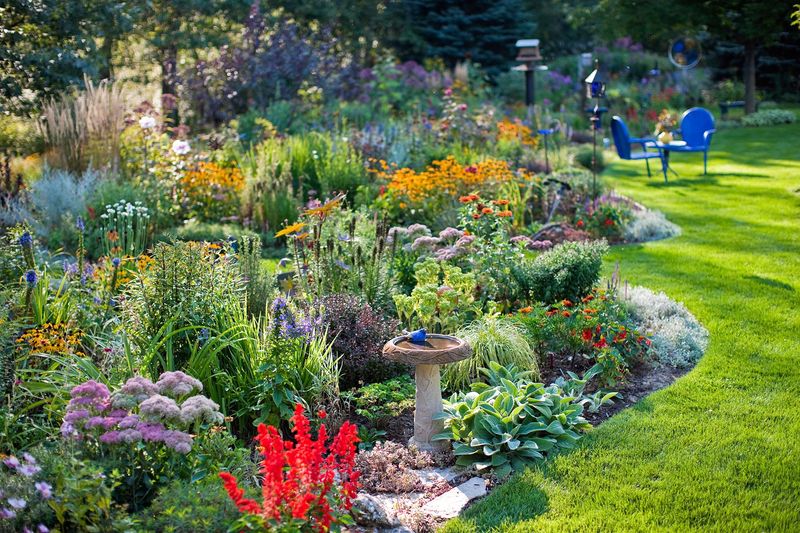
A single tree in an otherwise bare yard might attract a bird or two, but it will not turn your property into a busy bird habitat on its own.
Birds are practical creatures.
They need food, water, shelter from weather and predators, and safe places to nest.
When all of those things are present and layered, bird activity tends to increase.
When only one is available, birds may pass through without staying.
Cornell Lab of Ornithology guidance on backyard birds recommends varied layers of vegetation, including trees, shrubs, and ground cover, along with a reliable water source.
Adding a shallow bird bath and some berry-producing shrubs under or near your tree does more than the tree can do alone.
Trees that are native to your specific region tend to support more insects, and insects are what most nesting birds feed their young.
Audubon’s guide to native plants for birds points to oaks, willows, birches, maples, cherries, pines, and hickories as examples of trees that support caterpillars and other food sources that birds depend on.
Those are region-dependent examples, not a nationwide shopping list.
A tree that is native in the mid-Atlantic may be out of place in the high desert Southwest.
Check with your local Cooperative Extension or a regional native plant society before choosing.
Audubon’s yard bird-friendly overview also makes clear that outdoor cats, pesticide use, and bright outdoor lighting all reduce bird activity regardless of what you plant.
Habitat fragmentation and seasonal migration mean your yard’s bird population will shift through the year no matter what you do.
A well-planted yard raises the odds of seeing and hearing more birds, but birdsong is not a guaranteed outcome.
Think of the tree and its layered companions as an open invitation rather than a sure thing.
A More Inviting Yard May Support Well-Being
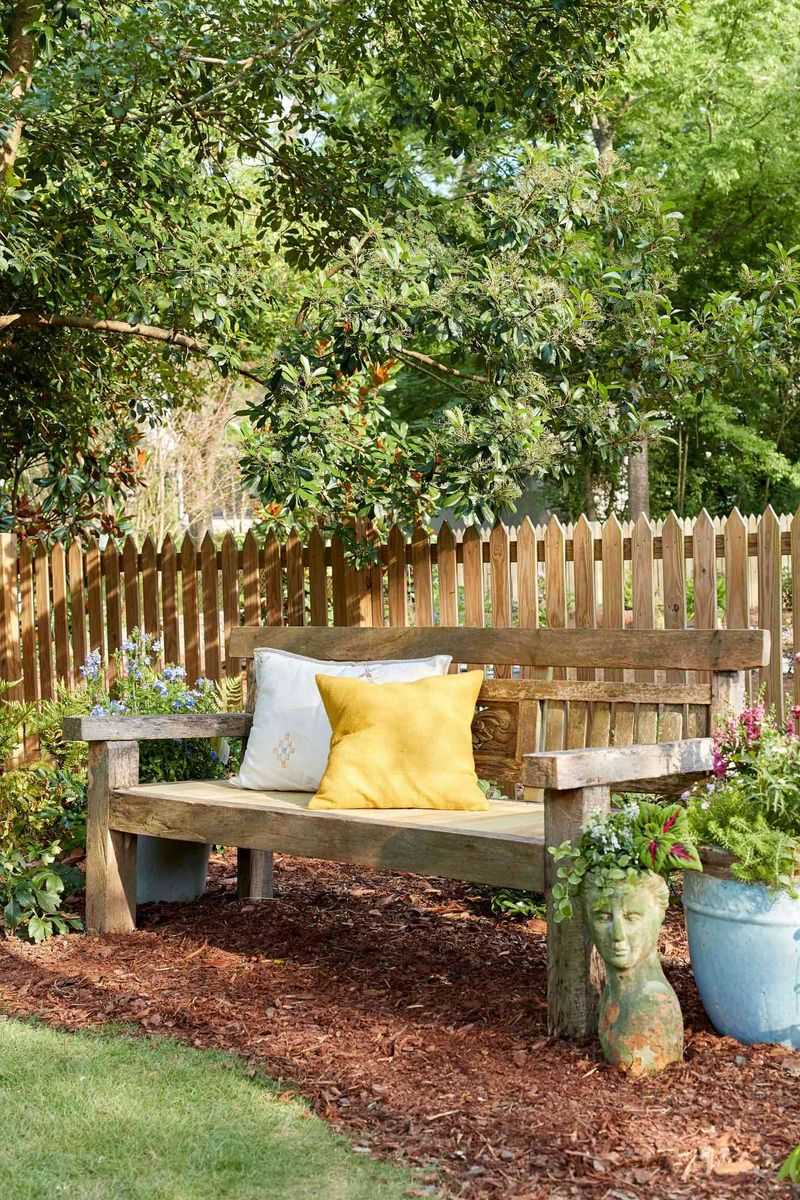
After an hour of yard work on a warm afternoon, sitting down under a tree feels noticeably different from sitting in full sun on a concrete step.
The shade is part of it.
So is the quiet, the slight coolness, and the simple fact that the space feels worth sitting in.
That shift from indoors to a comfortable outdoor spot is where the well-being case for trees is strongest.
Research does support a connection between spending time in natural settings and outcomes like lower perceived stress and improved mood.
A review of studies on nature exposure and health found consistent associations between green space and lower reported stress and better mood scores.
A CDC review of urban green space and human health found similar patterns across a range of studies.
But both reviews also note that results vary depending on the setting, the population studied, and how outcomes were measured.
A more recent review of nature exposure therapies found that evidence for reducing clinical stress, depression, and anxiety through nature contact is mixed, and that private backyard settings with a single tree have been studied far less than parks or forests.
A tree is not a treatment for anxiety or depression, and presenting it as one would be a stretch the research does not support.
The practical takeaway is behavioral rather than medical.
Place shade where it makes a porch chair, a picnic table, or a spot after yard work comfortable enough that you actually use it.
Outdoor time that is easy and pleasant is more likely to happen regularly, and regular time outside is where any benefit accumulates.
The tree’s job is to make that spot worth going to.
Choose For The Site, Not Just The Species
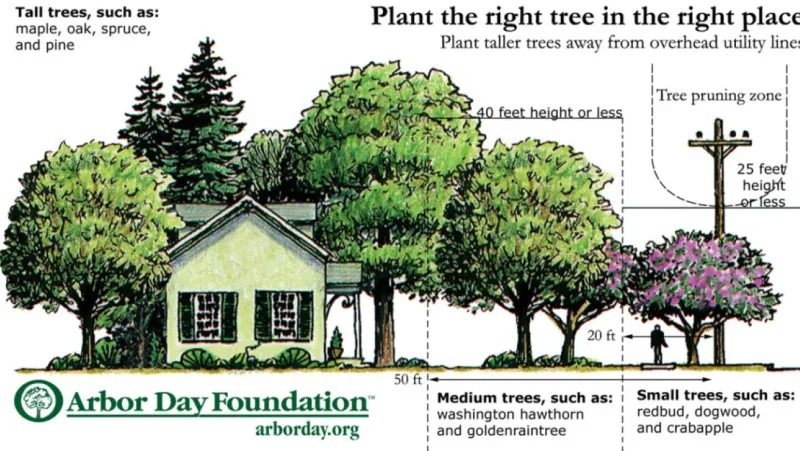
Picking a tree because you liked the look of it at the nursery is a fine starting point, but it is not a plan.
The tree that thrives in your yard and actually delivers on comfort, runoff reduction, or habitat is the one matched to what your specific site can support.
Getting that wrong means years of poor growth, expensive removal, or a tree that creates the exact problems you were trying to avoid.
Start with the basics: How tall and wide will this tree be at maturity?
What is overhead?
Overhead wires are a common conflict, and Penn State Extension’s guidance on trees and utilities recommends choosing trees that mature below about 20 to 30 feet for planting beneath wires, while medium trees up to about 45 feet may be acceptable if planted at least 15 feet from the nearest wire, subject to local utility rules.
What is underground matters just as much.
Roots can conflict with sidewalks, drains, septic systems, and buried utilities, especially where soil is compacted or limited in volume.
Penn State Extension’s community forest planting guide and Colorado State University Extension’s right-plant-right-place resource both emphasize assessing available rooting space before choosing a species.
Always call 811 before digging to have buried utilities marked.
Forest Service research on the value of urban forests confirms that large trees generally provide more shade, stormwater interception, and habitat than small trees.
But large trees also need more rooting space and create greater risks if poorly placed or neglected.
Hardiness zones describe minimum winter temperatures and nothing else.
They do not tell you about summer heat, drought, humidity, soil drainage, or how long the growing season runs.
A tree rated for your zone may still struggle if your site is hot, dry, or poorly drained.
In arid regions like southern Arizona, University of Arizona Extension plant recommendations and Arizona Extension watering guidance for trees and shrubs reflect conditions that are simply not captured by a zone number alone.
Check local Cooperative Extension recommendations for your county before you buy.
Also consider sun exposure, drainage, slope, soil volume, distance from fences and buildings, and available space for both canopy and roots at full size.
A tree that fits its site well is a long-term asset.
One that does not fit becomes a problem you will pay someone to fix.
Early Care Determines The Long-Term Payoff
A tree that struggles through its first two years rarely becomes the mature, shade-casting, bird-drawing asset you were picturing.
The work you put in during establishment, which typically runs one to three years depending on species, size, climate, and soil, largely determines what the tree can do for the next few decades.
Planting technique sets the foundation.
Dig the hole about twice as wide as the root ball but no deeper than the root system requires.
The root flare, the point where the trunk begins to widen at the base, should sit at or just above the soil line after planting.
Burying it too deep is one of the most common mistakes and one of the slowest ways to kill a tree.
University of Minnesota Extension’s planting guide for trees and shrubs walks through proper depth and root placement in detail.
Watering a newly planted tree may mean approximately 5 to 7 gallons per session, possibly twice a week, but that schedule depends on rainfall, heat, wind, soil type, tree size, and the season.
A tree planted in fall in the Pacific Northwest needs far less supplemental water than one planted in midsummer in Texas.
Watch the soil around the root zone rather than following a fixed calendar.
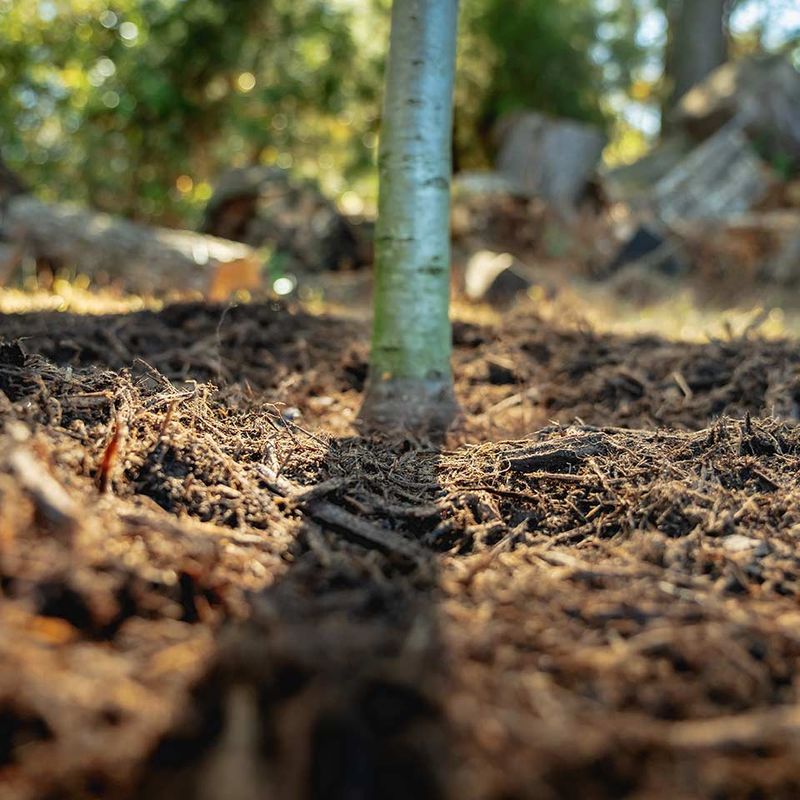
Mulch is one of the most useful things you can apply.
About 2 to 4 inches of organic mulch over the root zone conserves moisture, moderates soil temperature, and reduces competition from grass.
Keep a clear ring of about 6 inches around the trunk.
University of Minnesota Extension’s mulching guide explains why piling mulch against bark, sometimes called a mulch volcano, encourages decay, pests, girdling roots, and poor oxygen exchange at the base.
That pile looks tidy and does real harm.
As the tree grows, resist the temptation to speed things up by choosing the fastest-growing species available.
Colorado State University Extension cautions that fast-growing species are often more prone to weak wood, structural problems, and breakage.
A tree that grows quickly may also require more frequent pruning and have a shorter useful life.
For large limbs, storm damage, or anything near a structure or utility line, hire a qualified arborist rather than attempting the work yourself.
The International Society of Arboriculture’s hazard management guidance and their advice on when to hire an arborist both recommend professional assessment for significant pruning, hazard evaluation, and work near wires or buildings.
A bad cut on a large limb can compromise the tree’s structure for years.
Trees can capture some air pollutants on their leaves and reduce energy demand on nearby buildings, but Forest Service research on urban trees and ecosystem services and Forest Service work on air pollution removal by urban trees both make clear that trees are not outdoor air filters.
Some species also emit compounds that can contribute to ozone formation under certain conditions, as EPA research on air pollution in the southeastern US has documented.
A tree works best as one layer in a broader yard plan, alongside good drainage, healthy soil, and thoughtful plant choices, not as a replacement for any of those things.
A yard that functions well is built in layers, and a well-cared-for tree is one of the most durable ones you can add.