
The One Thing Florida Plumeria Owners Skip That Quietly Wrecks The Late-Summer Blooms
Follow us on Google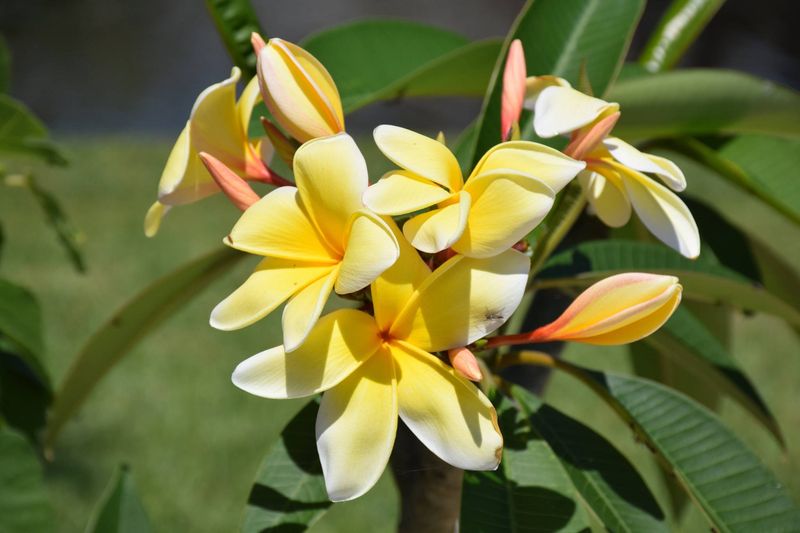
Pull back the shears before you touch that plumeria this July.
The headline above points at a real risk, but the honest version is a little more specific: hard-pruning healthy branch tips while buds are forming can quietly cost you the flowers you have been waiting months to see.
Florida plumeria (Plumeria rubra) can bloom from May through November, and what you do with a pair of loppers during that window matters more than most casual growers realize.
Read on to find out exactly which cuts to skip, which ones to make, and how to give the blooms you still have a fighting chance.
The Real Risk Is An Unnecessary Summer Cut
Put the pruning shears down for a minute.
The headline on this article hints at one missed step, but the more accurate warning is about an unnecessary action rather than a forgotten one: hard-pruning healthy plumeria branch ends while buds or flowers are developing can remove current or near-term flowering sites.
No single statewide deadline guarantees or destroys a bloom season, and the risk is not universal, but the consequence of a poorly timed cut is real and immediate.
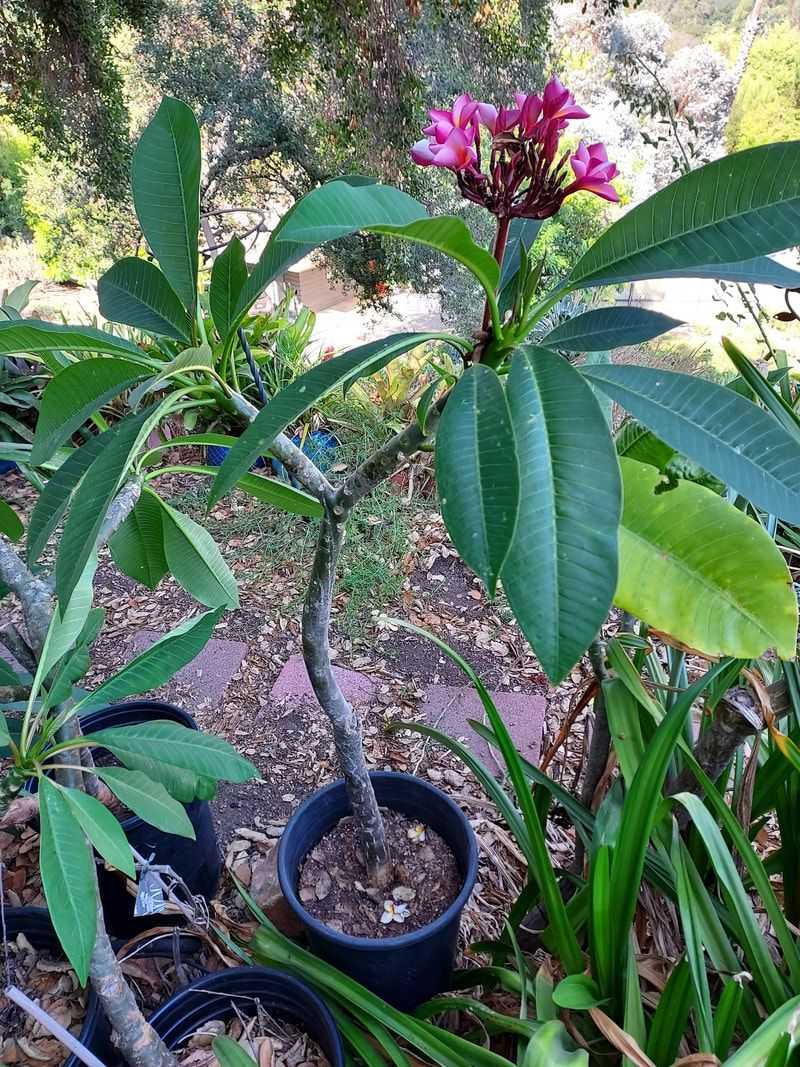
University of Wisconsin Extension notes that flowers form in terminal clusters at stem ends, which means the tip you just removed may have been holding a developing bouquet you never got to see.
University of Hawaii Cooperative Extension goes further, warning that heavy pruning can sacrifice a coming bloom entirely.
Florida plumerias commonly flower from May through November according to UF/IFAS, with exact timing shaped by cultivar, species, climate, plant age, sunlight, water availability, and cold exposure.
That long window is actually good news: you have time to protect what is left.
The practical dividing line is straightforward.
Aesthetic shaping, meaning trimming a plant because it looks a little unruly or lopsided, is the cut to avoid while healthy tips carry buds.
Necessary cleanup is a different matter entirely.
A branch that is clearly dead, visibly broken, showing signs of disease, or creating a safety hazard should come off regardless of the season, using clean tools and a steady hand.
So before you reach for the loppers on a humid August afternoon, walk the plant first.
If you see green tips, swelling nodes, or any hint of a branched flower stalk emerging, set the shears aside and let the plant do its job.
Why The Flower Sites Sit At The Tips
Here is where it gets genuinely interesting.
Plumeria does not flower from old woody stems the way some shrubs do.
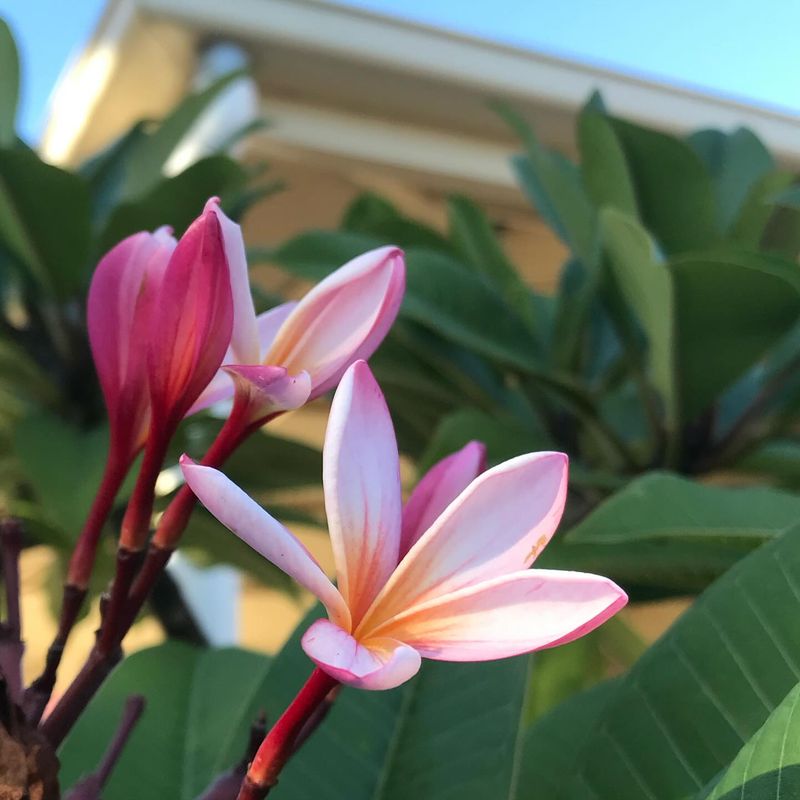
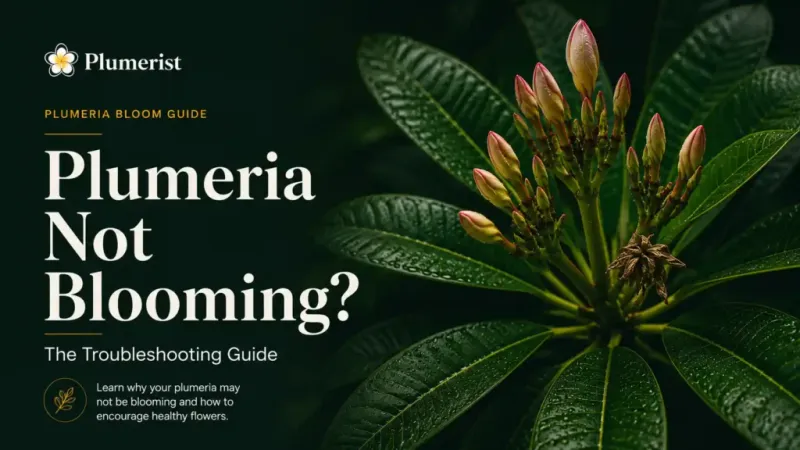
Instead, flowers develop in terminal clusters at the very ends of branches, in what horticulturists call inflorescences, or branched flower stalks.
That tip you are eyeing for a trim may already be quietly building a bouquet inside, even before a single petal shows.
University of Wisconsin Extension reports that the percentage of branch tips that actually produce flowers varies widely by cultivar, roughly 10 to 60 percent depending on the plant.
That range matters because it means not every tip you spare will reward you with flowers, but every tip you cut prematurely cannot.
The math favors patience.
Cultivars differ substantially in flowering behavior, and that variation is worth keeping in mind before drawing conclusions.
A compact, heavily branched plant may produce multiple bloom flushes across a long warm season.
A lanky, fast-growing specimen with fewer tips may put out far less color even under ideal conditions.
Neither outcome proves that pruning caused the problem.
The distinction between cutting for future branching and preserving flowers this season is central to making a good decision.
Pruning does encourage new branching over time, and that is genuinely useful for shaping a young plant.
But University of Hawaii Cooperative Extension guidance explains that summer pollarding can produce short new shoots that do not set flower heads in the current cycle.
Those shoots may bloom in a future season, but they will not save the show you were hoping to enjoy this August.
If flowers this season are the goal, the tips need to stay.
Check Every Branch Before You Cut
Walk the plant before you do anything else.
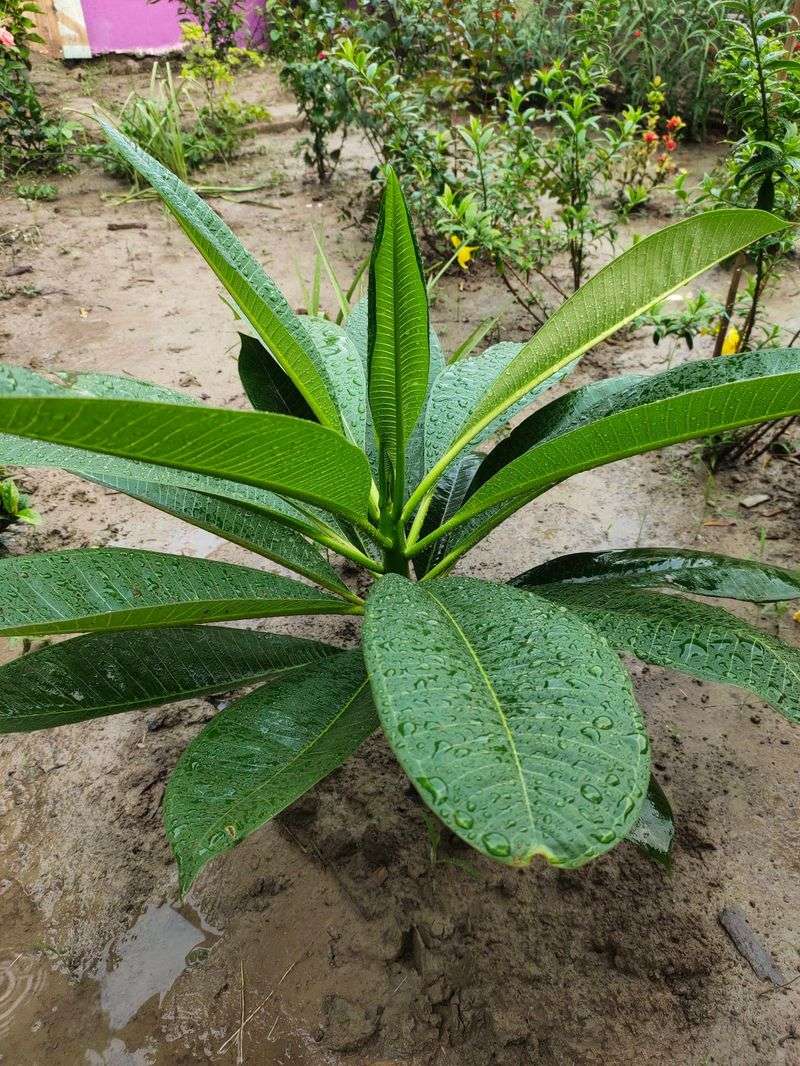
A practical rescue for a plumeria that still carries buds starts with a slow inspection of every branch end, looking for the branched flower stalk that signals a developing inflorescence.
It can look like a small, waxy nub or a cluster of tight green points at the very tip, easy to miss at a glance but unmistakable once you know what you are searching for.
If you find intact tips with any sign of emerging flower growth, stop all shaping cuts immediately.
An intact tip can still carry a bloom to completion.
A removed flower site cannot be restored that season, full stop.
University of Wisconsin Extension recommends saving major size reduction for dormancy or a regionally appropriate period after flowering, so the current season’s display is not sacrificed for a tidier silhouette.
When you do pick up the shears, limit the work to tissue that is clearly dead, visibly broken, diseased, or creating a hazard.
Clean tools matter here.
Wiping blades with isopropyl alcohol between cuts reduces the chance of spreading pathogens from one branch to another, a small step that costs almost nothing.
Storms are a separate chapter.
After a tropical system moves through the Gulf Coast or Atlantic Coast, the temptation to do a full cleanup is understandable.
But UF/IFAS guidance on plumeria supports limiting post-storm work to genuinely damaged or dangerous branches.
Remove what is broken or hazardous, leave healthy tissue alone, and let the plant recover before making any further decisions.
Plumeria is more resilient than it looks after a rough night.
Give Remaining Buds Sun Without Saturating Roots
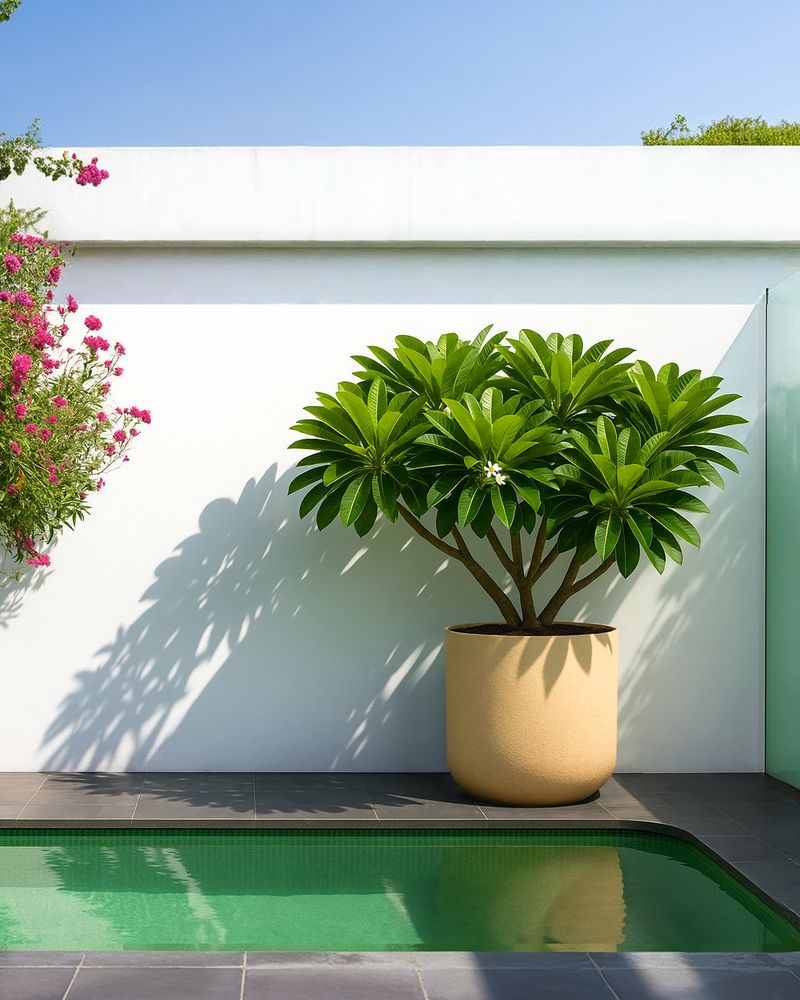
Once you have committed to protecting the tips you have, the next job is giving those developing buds the conditions they need to actually open.
Sun is the single biggest lever.
Most horticultural sources recommend 6 to 8 hours of direct sunlight daily for reliable plumeria flowering, and shade from a house wall, a spreading live oak, or a tall sabal palm can push a plant into producing leaves without a meaningful flower display.
If your plant is in a container, now is a reasonable time to reposition it toward the sunniest corner of the patio or yard.
In-ground plants are harder to relocate, but trimming back an overhanging branch from a neighboring tree can open up several hours of additional light without touching the plumeria itself.
University of Wisconsin Extension confirms that compact plants in full sun tend to flower more heavily than stretched, shaded specimens.
Water is where many Florida gardeners accidentally undermine themselves.
The rule for plumeria is to water thoroughly when the growing medium has dried out somewhat, then let the excess drain completely.
Do not keep the plant constantly wet.
Containers and low, poorly drained spots in the yard face the highest root-rot risk, especially during Florida’s summer downpour season when the ground may already be saturated before you add another drop.
UF/IFAS Extension Miami-Dade County makes the point plainly: more water does not automatically produce more blooms, and a Florida afternoon storm may make additional irrigation harmful rather than helpful.
Check the soil before you reach for the hose, and trust the drainage to do its job.
Separate Rust From Pruning Damage
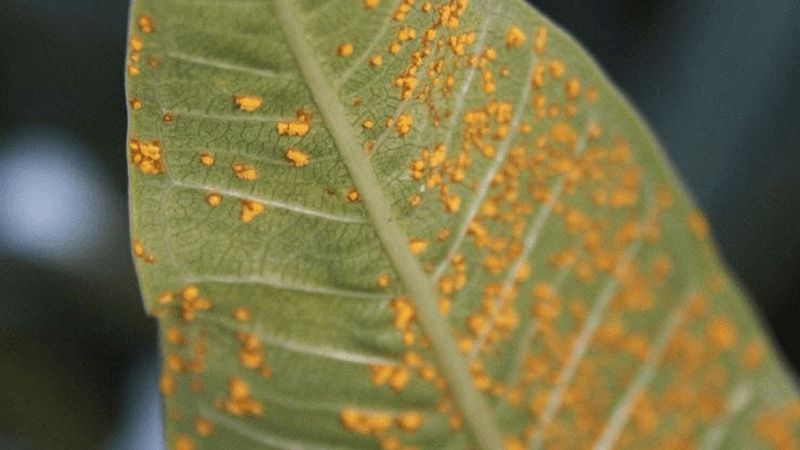
Late summer in Florida brings humidity that clings to everything, and plumeria rust takes full advantage.
Rust is a fungal disease, completely separate from any pruning decision, and it shows up as orange-yellow pustules on the undersides of leaves with corresponding yellow or brown lesions on the upper surface.
Leaves that are badly infected drop early, sometimes in large numbers, and a plant that loses most of its foliage before the season ends can struggle to maintain the energy it needs for a strong bloom.
UF/IFAS research on rusts on ornamentals in Florida identifies warm, wet, humid conditions as the primary driver of disease development, which describes most of Central and South Florida from July through September almost perfectly.
The disease does not usually kill the plant outright, but severe defoliation can reduce vigor and make the plant more vulnerable heading into the cooler months.
Management starts on the ground.
Rake up and dispose of fallen infected leaves rather than leaving them to re-infect the plant, and do not add them to a compost pile.
Clean pruning tools between plants to avoid spreading spores.
UF/IFAS Extension Sarasota County notes that rust mainly shortens leaf life and rarely affects long-term plant survival, which is reassuring, but that does not make the disease worth ignoring.
Fungicides work as a protective measure, not a cure.
UF/IFAS guidance on fungicides for lawn and landscape disease management is clear that products cannot repair already infected leaves.
Any product you use must be labeled for the plant, the disease, the site, and homeowner application.
Protecting new tissue before it becomes infected is the only thing a fungicide can actually accomplish.
Choose Pruning Timing By Goal And Region
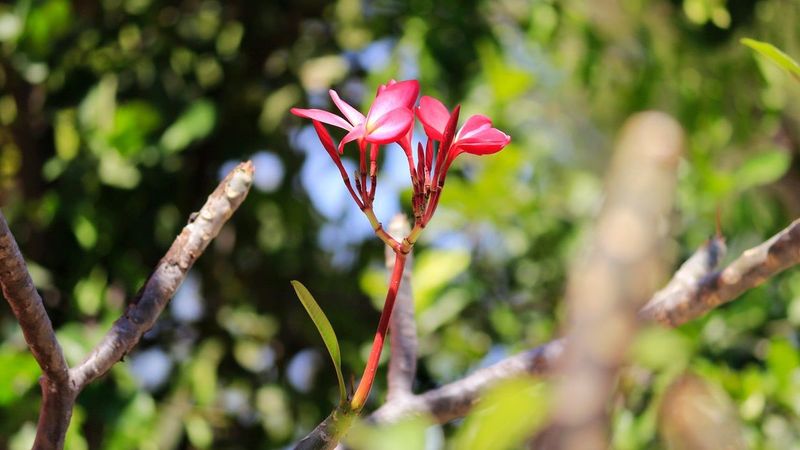
The right time to prune a plumeria depends almost entirely on what you are trying to accomplish, and Florida is not one climate.
Those two facts together mean there is no single pruning month that works for every plant in every yard from Pensacola to Key West.
If the goal is protecting flowers you already have, the answer is simple: wait.
While healthy tips carry buds or open blooms, skip aesthetic shaping entirely.
University of Wisconsin Extension and University of Hawaii Cooperative Extension both support saving structural cuts for after the flowering period, during winter dormancy, or in spring before deciduous types push new growth, depending on the cultivar and local conditions.
Heavy cuts made at the wrong time can reduce the next bloom cycle as well, so the cost of poor timing compounds.
For structural pruning, the supported options are winter after leaf drop, early spring before the plant leafs out, or immediately after a flowering flush ends.
These are not perfectly interchangeable.
A cultivar that reblooms multiple times across a long warm season may have a different natural pause than one that flowers once and stops.
Watch your specific plant over a full season before committing to a major size reduction.
Region shapes everything.
South Florida and the Keys enjoy the longest warm season and the least cold risk, so the window for protecting active blooms stretches furthest there.
Central Florida can support plumeria in protected microclimates, but brief cold snaps remain a real concern.
In North Florida and the Panhandle, container culture is often the safest approach, with plants moved indoors when night temperatures drop below 40 degrees Fahrenheit and returned outside only after frost danger has passed and nights stay above 50 degrees.
Missouri Botanical Garden and UF/IFAS Gardening Solutions both confirm those thresholds as cold-protection guidance for container-grown plants.
Those numbers are about protecting the plant from cold injury, not about setting a pruning calendar.
Do Not Let Fertilizer Become The Next Myth
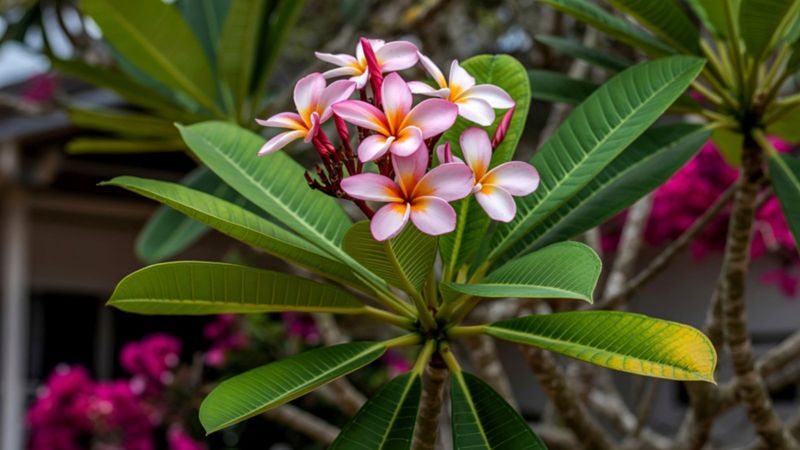
Bloom performance in plumeria reflects a combination of factors: cultivar genetics, plant age, available light, water balance, root health, cold exposure history, and nutrition.
No single missed fertilizer application is established as a universal bloom failure trigger, and treating nutrition as the magic lever can lead growers to over-apply products that create new problems.
High-phosphorus fertilizers are widely recommended in general plumeria care circles, often applied every 2 to 4 weeks during active growth.
But UF/IFAS Extension Hillsborough County cautions that phosphorus is often already adequate in Central and South Florida soils.
Adding more where levels are already sufficient wastes money, can harm local water quality, and may create nutrient imbalances rather than fix them.
A soil or tissue test before adding phosphorus is the honest starting point, not a universal 10-30-10 schedule applied to every plant on the same calendar.
Florida fertilizer ordinances complicate the picture further.
Many jurisdictions restrict phosphorus or general fertilizer use during the rainy season, commonly June through September.
The product label and your county’s current rules take priority over any general recommendation in an article like this one.
UF/IFAS guidance on soil testing makes the case for testing before amending, a step that is genuinely worth the modest cost.
Root problems change the equation entirely.
A plant dealing with waterlogged soil, recent flooding, or root rot is not in a position to absorb nutrients effectively.
Address drainage first, confirm the plant is recovering, and then make fertilizer decisions based on what the soil test and the product label actually support.
Feeding a stressed root system does not accelerate recovery, it can make things worse.
A Weak Bloom Does Not Always Mean You Pruned Wrong
Before assigning blame to the pruning shears, run through a quick diagnostic.
Young plants, especially seed-grown specimens, may need 3 or more years before they flower at all.
Missouri Botanical Garden reports that seed-grown plumerias may take 3 to 4 years to bloom, while cuttings typically flower within 1 to 3 years.
A plant that has never bloomed despite good care may simply be too young, and that is not a pruning problem.
UF/IFAS notes that plumeria is best suited to USDA Zones 10B through 11, with protected Central Florida sites sometimes managing despite frost risk.
A plant that took cold damage last winter, even briefly, may be putting its energy into recovery rather than flowering.
North Florida and Panhandle growers face this reality more often than growers in Miami-Dade or the Keys, where year-round warmth gives plumeria the longest possible runway.
Work through the checklist before making any changes.
Are the intact tips getting 6 to 8 hours of direct sun?
Is the soil draining between waterings?
Are rust pustules appearing on the leaf undersides?
Has the plant experienced cold injury or root stress this season?
Is the cultivar known to be a reliable bloomer, or is it a seedling with unknown genetics?
Each of those questions can explain a disappointing bloom without any pruning mistake involved.
When you do make structural cuts, wear gloves and avoid touching your eyes.
University of Wisconsin Extension confirms that plumeria sap contains irritants, so wash exposed skin promptly and keep pruning debris away from children and pets.
Preserve live flowering tips now, fix light or moisture problems carefully, protect against cold where your region demands it, and save the reshaping for a moment when the plant’s own cycle invites it.
A plumeria that gets those basics right tends to find its bloom on its own schedule, which is honestly the best outcome anyway.