
The Native Texas Vine Homeowners Grow Along A Fence Instead Of Wisteria For Nonstop Blooms
Follow us on Google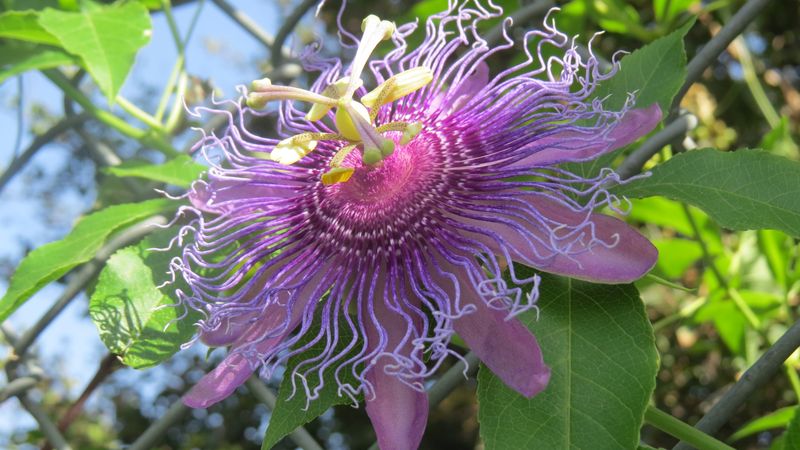
Plenty of Texas fences do nothing but sit there looking sun-bleached and tired, and most homeowners figure wisteria is the fastest fix.
But there is a native alternative that blooms all summer, feeds one of the most eye-catching butterflies in the state, and asks for a lot less babysitting than wisteria ever did.
Maypop, or purple passionflower, turns a plain chain-link or trellis into a butterfly stop, and the chewed-up leaves are actually proof it is working.
A Texas-Friendly Maypop, Not A Statewide Guarantee
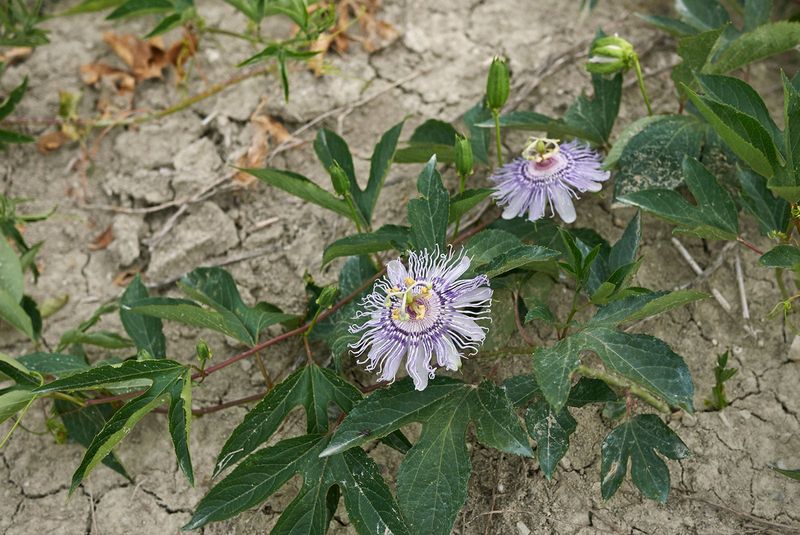
Maypop, the common name for purple passionflower (Passiflora incarnata), is a fast-growing, tendril-climbing perennial vine that can genuinely transform a dull fence line into something worth stopping to look at.
Under favorable conditions, mature vines can reach roughly 25 feet in length, producing intricate lavender-and-white flowers from late spring through early fall.
That kind of reach makes it a legitimate candidate for covering an unattractive fence, but it is not a permanent, flawless privacy wall, and calling it one would set you up for disappointment.
The comparison with wisteria is useful, but only up to a point.
Wisteria blooms heavily in spring and then mostly disappears into foliage for the rest of the year, while maypop keeps pushing new flowers across the warm season.
Maypop also stays closer to home in its roots rather than sending woody stems into gutters and eaves the way wisteria can.
But maypop brings its own tradeoffs: underground spread, possible winter dieback, and leaves that get chewed by caterpillars, which is actually the whole point for a wildlife gardener.
Where maypop genuinely fits is in parts of North and Central Texas, and across much of the eastern half of the state, where its native range and garden performance overlap reasonably well.
The Native Plant Society of Texas documents it as part of the Texas native landscape, and the North Central Texas Chapter plant list includes it as a regional selection.
Performance in the Panhandle, arid West Texas, and the Lower Rio Grande Valley can differ significantly, so check with a local nursery or your county Extension office before you plant.
Maypop is a different set of priorities from wisteria, not a universally superior vine, and knowing your region is the first honest step.
The Chewed Leaves Feed Gulf Fritillaries
Here is where most homeowners panic.
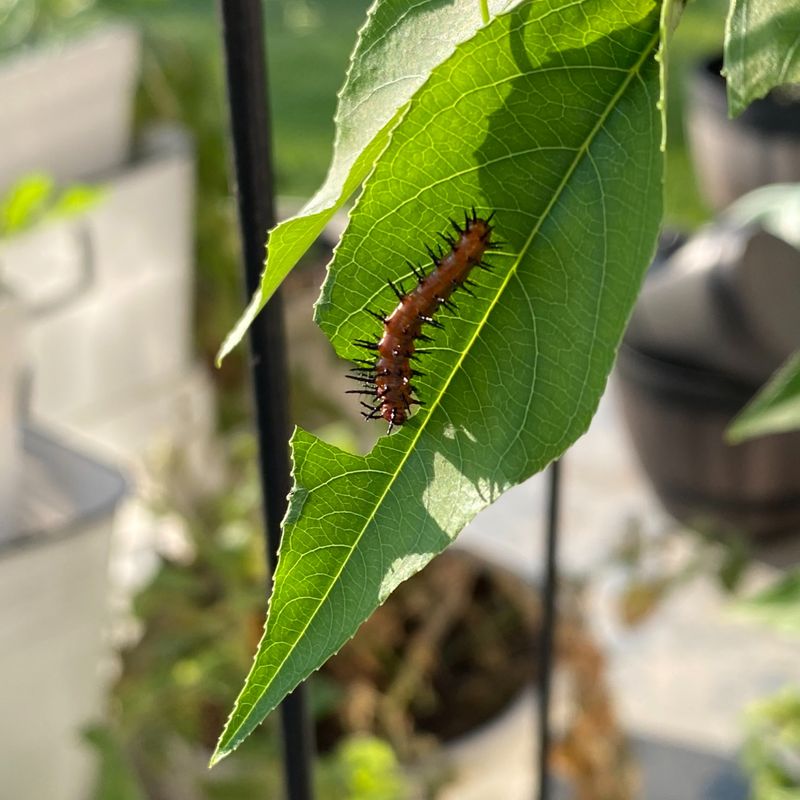
You walk out one morning and the passionflower leaves look like someone took scissors to them, with ragged edges and bare stems where full foliage used to be.
The instinct is to grab a spray bottle, but that would be exactly the wrong move if you planted this vine to support wildlife.
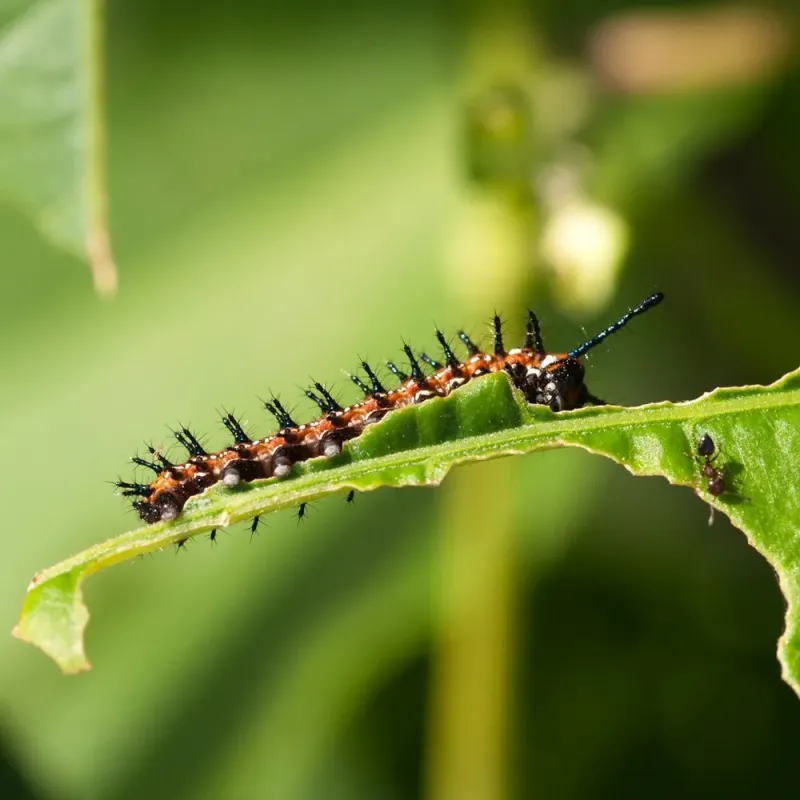
Gulf fritillary females lay their eggs directly on passionflower leaves, and the caterpillars that hatch are bright orange with black spines, striking enough to stop you mid-stride.
Texas A&M AgriLife Extension classifies these caterpillars as harmless in the pest-control sense, meaning they do not sting, bite people, or damage structures.
The chewing is the whole ecological transaction: the vine feeds the caterpillar, the caterpillar becomes the butterfly, and the butterfly eventually visits nectar plants nearby.
Spraying them breaks the chain.
That said, heavy feeding can actually strip a vine down to bare stems and temporarily reduce the ornamental fullness you were counting on.
University of Florida IFAS research on passionflower notes that caterpillar pressure can be significant during peak season.
The honest answer is to plant enough vine to tolerate the browsing.
A single small plant struggling in a tight spot will look rough by August.
Give the vine room to run and let the caterpillars have their share, and you will still have flowers and foliage.
The chewed look is not a failure.
It is evidence the habitat is working.
Expect Repeated Flowers, Not Nonstop Blooms
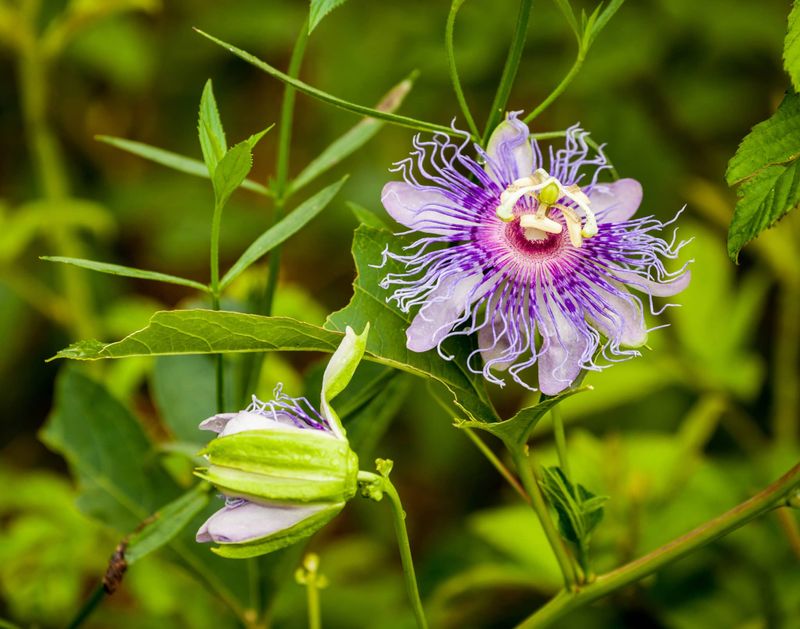
The headline promise is worth a closer look, because maypop does not bloom the way a crape myrtle does, with a long showy flush that hangs on for weeks.
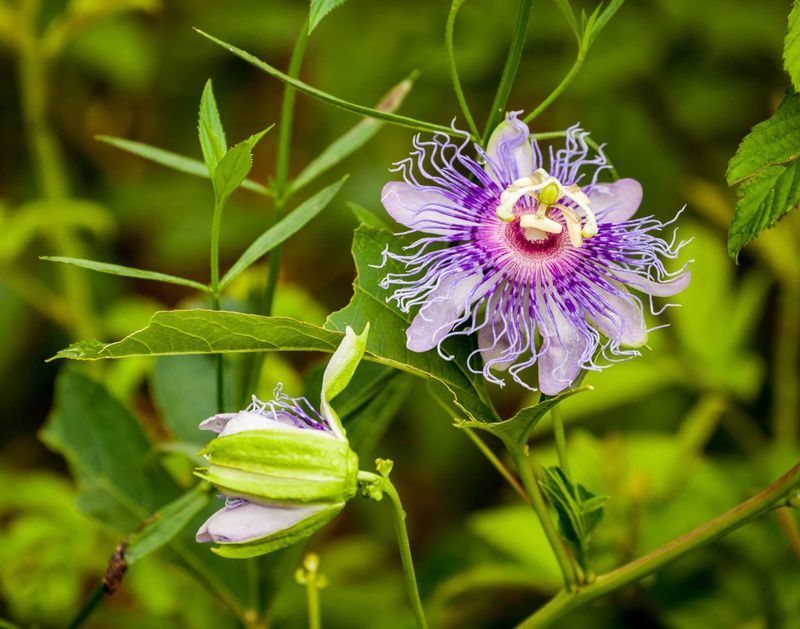
Each individual maypop flower lasts about one day.
One morning it opens, by evening it closes, and that is that flower’s entire life.
What makes the vine feel floriferous across the summer is that new buds keep forming and opening in rotation, so on any given warm morning you are likely to find fresh flowers along the fence.
University of Florida IFAS extension guidance on wild passionflower describes this repeated flowering through summer and into early fall under favorable conditions, which is genuinely impressive for a native vine in Texas heat.
But favorable conditions matter.
Shade, drought stress, poor drainage, and temperature extremes can all reduce how many buds the vine sets at any given time.
Across Texas, bloom timing and performance vary by region.
A well-watered vine in a Central Texas yard with blackland clay and full sun will behave differently from the same plant pushed into shallow alkaline soil in the Hill Country or a partially shaded East Texas fence line.
North Carolina Extension’s plant profile confirms that full sun produces the strongest flowering, and that guidance holds especially true in Texas where summer shade from neighboring structures can quietly cut bloom production.
Expect a vine that rewards good conditions with a steady warm-season show, and be realistic that individual flowers are fleeting, beautiful, and replaced by new ones the next day.
Build A Safe, Sturdy Support
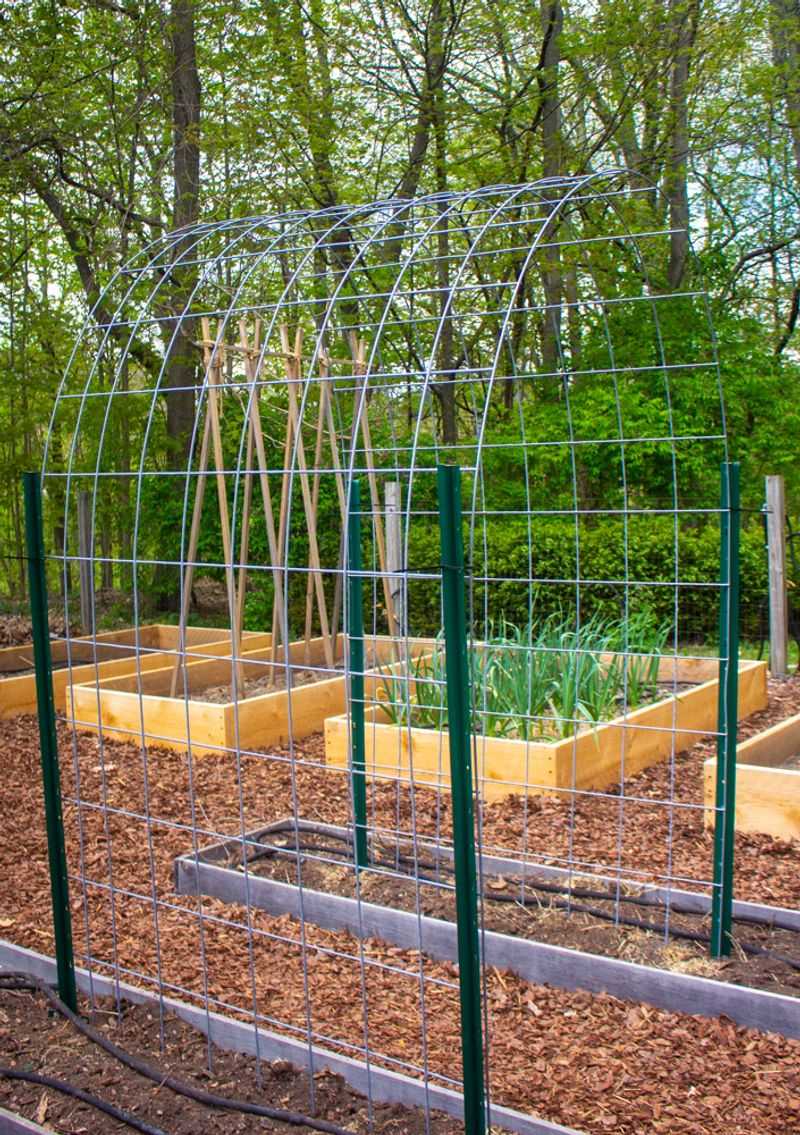
A common mistake is to attach a fast-growing vine directly to an old wooden fence and assume the fence can handle it.
Maypop is not a lightweight plant once it gets going, and a fence covered with foliage catches more wind than a bare one.
Before you plant, walk the fence line and check every post, board, and fastener for rot, wobble, or rust.
A dense vine can add meaningful strain to aging supports, and a Texas thunderstorm or Gulf Coast wind event is not a good time to discover the posts were already failing.
A better approach is to build or attach a separate support structure rather than relying on the fence itself as the primary anchor.
A cattle panel, a heavy-gauge wire system, or a purpose-built trellis attached to solid posts gives the vine something genuinely sturdy to grip.
University of Florida guidance on passionfruit training and IFAS passionflower research both recommend sturdy support systems for vigorous climbing vines, and maypop in a good Texas summer qualifies as vigorous.
The flammability concern is real and worth stating plainly.
North Carolina Extension rates Passiflora incarnata as highly flammable and advises keeping it out of the defensible space nearest a home.
That means no maypop draped over a combustible wood fence that runs close to the house, no vine climbing toward a roofline or under eaves, and no planting in a narrow bed pressed against foundation siding.
A metal or masonry support set in an open fence line away from structures is the safer configuration.
Choose the site before you choose the plant.
Give It Sun, Drainage, And Elbow Room
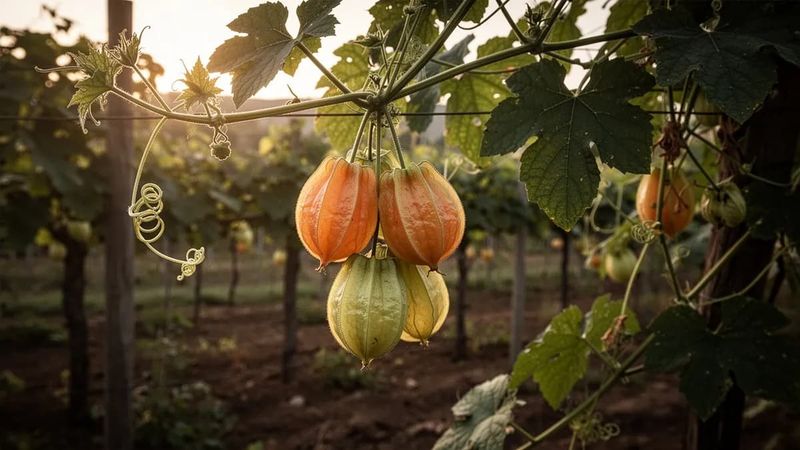
Maypop is not a shade plant.
For the strongest flowering, aim for at least 6 hours of direct sun each day.
A fence line that catches morning shade from a live oak or an afternoon shadow from a neighbor’s garage can quietly reduce bloom production without ever looking obviously wrong, so choose the sunniest available run of fence before you dig the first hole.
Soil drainage matters more than soil type.
Wild passionflower extension guidance from the University of Florida recommends reasonably well-drained soil, and that recommendation holds across Texas whether you are working with blackland clay in the Dallas area, sandy loam in East Texas, or shallow rocky ground in the Hill Country.
Prolonged wet soil, especially through winter, increases the risk of root rot.
University of Illinois Extension also notes good drainage as a key requirement.
If your soil stays soggy after rain, amend it or choose a slightly raised planting area rather than fighting the drainage problem with fertilizer.
Water deeply during establishment, then let the top few inches of soil dry out somewhat between irrigations once the plant is settled in and the soil drains well.
Texas heat and long dry stretches can still slow growth and reduce flowering even on a drought-tolerant vine, so do not abandon it entirely during a summer dry spell.
Mulch the root zone to conserve moisture and moderate soil temperature, but keep mulch pulled back several inches from the stem to avoid rot at the crown.
If you want a denser screen effect, general extension spacing guidance suggests placing plants about 6 to 8 feet apart.
That figure comes from general vine guidance rather than a Texas-specific maypop trial, so treat it as a reasonable starting point rather than a guaranteed result.
Give the planting elbow room from the start and it will fill the fence on its own schedule.
Rushing the spacing rarely speeds up the coverage.
Contain The Suckers Before They Spread
Underground spread is the maintenance reality that catches most maypop growers off guard.
The vine does not just climb, it also sends roots outward and pushes up new shoots several feet away from where you originally planted it.
Left unchecked through a warm Texas summer, a single plant can cover a surprising amount of ground, popping up in the lawn, in a neighbor’s bed, or through a perennial border you spent years building.
North Carolina Extension’s maypop profile flags this spreading habit as a management consideration, and University of Maryland Extension guidance reinforces that mowing sucker tops does not stop the spread.
The root is the issue.
To actually control a wayward shoot, dig it out at the root rather than cutting the top off, which often just encourages the plant to branch and try again from the same spot.
Build a monthly inspection habit during the growing season.
Walk the perimeter of the planting and pull or dig any shoots that have traveled beyond the intended boundary.
A contained bed with a lawn edging barrier, a paved path on one side, or a buried physical barrier can make the job easier, though no source establishes a universally reliable barrier depth for Texas conditions specifically.
Choose the planting location with containment in mind from the start.
Keep maypop away from narrow foundation beds where roots have nowhere to go but toward the house, away from septic fields, and away from a neighbor’s maintained lawn where surprise shoots will create friction fast.
Extension siting guidance consistently points to open fence lines with room for lateral movement as the most manageable location.
Give it space and a clear boundary, and the monthly patrol becomes a manageable chore rather than a crisis.
Plan For Dieback, Butterflies, And Safe Handling
Winter has a way of humbling maypop in a hurry.
After a hard freeze, the vine can lose all its foliage and die back to the ground, leaving nothing but bare stems along the fence for weeks or months.
University of Georgia Extension notes that maypop typically returns from its underground roots after cold weather, but that return takes time, and a bare winter fence is a real possibility rather than an edge case.
Maypop cannot honestly serve as a year-round privacy screen, especially in North Texas or the Panhandle where hard freezes arrive reliably.
Regional suitability deserves one more honest look before you buy.
Maypop performs well across parts of North and Central Texas and much of the eastern portion of the state, but the Panhandle, arid West Texas, and the Lower Rio Grande Valley each present different challenges.
The Native Plant Society of Texas and the North Central Texas native plant community both document it as a regional selection, but local nursery staff and your county Extension office can tell you whether it is actually stocked and grown in your specific area.
On the butterfly side, maypop supports Gulf fritillaries specifically, not monarchs.
Texas A&M AgriLife and Travis County butterfly planting guidance are clear that monarch caterpillars require milkweeds, not passionflower.
Plant native milkweeds separately if supporting monarchs during spring and fall migration is also a goal.
Add a few unrelated nectar plants nearby, such as Gregg’s mistflower or autumn sage, so adult Gulf fritillaries have food after they emerge.
The fruit and foliage require separate handling rules.
Ripe fruit from positively identified Passiflora incarnata is described as edible by University of Florida IFAS edible native plant resources, though the flavor is mild and the fruit is usually harvested after it turns yellowish or drops from the vine.
Do not assume an unidentified passionflower fruit is safe to eat, and do not use the leaves or stems in food or tea.
North Carolina Extension lists cyanogenic glycosides in the leaves and stems, which makes them unsafe for children, dogs, cats, and horses.
Maypop is a genuinely rewarding vine for the right Texas fence line.
The chewed leaves, the fleeting flowers, and the bare winter stems are all part of the honest deal.