
The Monarch In Your Yard Right Now Is About To Fly 2,000 Miles To A Place It Has Never Seen
Follow us on Google
That orange-and-black butterfly resting on your milkweed this week may be carrying one of the most remarkable travel plans in the animal kingdom, and it has never read a map. For eastern North American monarchs born late in the season, the destination is a cluster of mountain forests in central Mexico they have never visited, guided only by instincts built into their biology.
But not every monarch you see right now is actually Mexico-bound, and the real story is even more interesting than the headline suggests.
The Monarch In Your Yard May Not Be Mexico-Bound
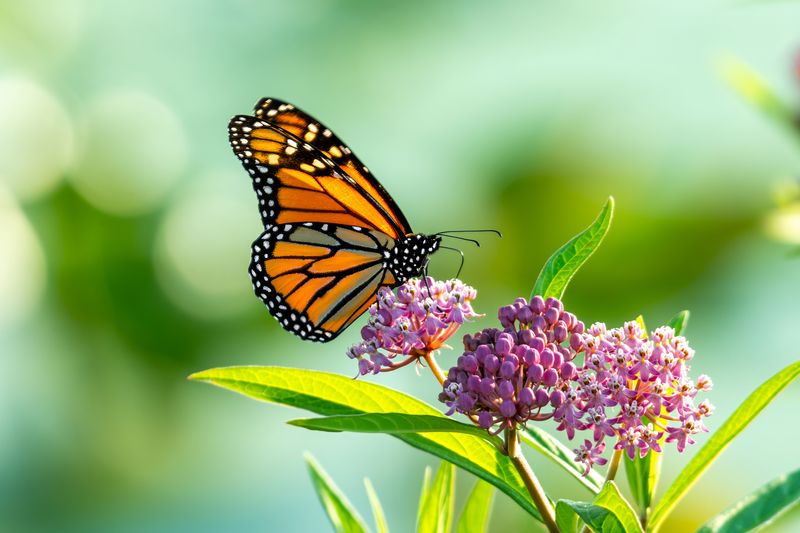
Picture a monarch landing on your milkweed on a warm August afternoon. Your first instinct might be to wave it south toward Mexico, but whether that butterfly is actually preparing for a long migration depends heavily on where you live, what generation it belongs to, and what the weather has been doing lately.
The eastern North American monarch population, the group that generally overwinters in central Mexico, lives east of the Rocky Mountains. The western population usually migrates to coastal California, so if you are gardening in Oregon, Washington, or coastal California, the monarch you just spotted is most likely heading to a grove of eucalyptus or Monterey pine on the Pacific coast, not the mountains of Michoacan.
The Southwest adds another wrinkle, because it sits in a transition zone where the two populations can overlap and some individuals move between them. USDA Forest Service monarch documentation notes that some southern populations may remain resident or semi-resident rather than migrating at all.
Even within the eastern population, timing matters more than the calendar date. In northern states and southern Canada, successful southbound migration commonly begins from early August through late September.
In central and southern states, the main migration window generally runs from early September through late October.
A monarch visiting milkweed in Georgia or Texas in early August is more likely still part of a breeding generation than a traveler preparing to leave. Monarch Joint Venture migration guidance makes clear that the same calendar date can represent completely different life stages depending on the region.
So before you say goodbye to the one on your porch railing, consider your latitude first.
The Migratory Generation Lives For The Journey
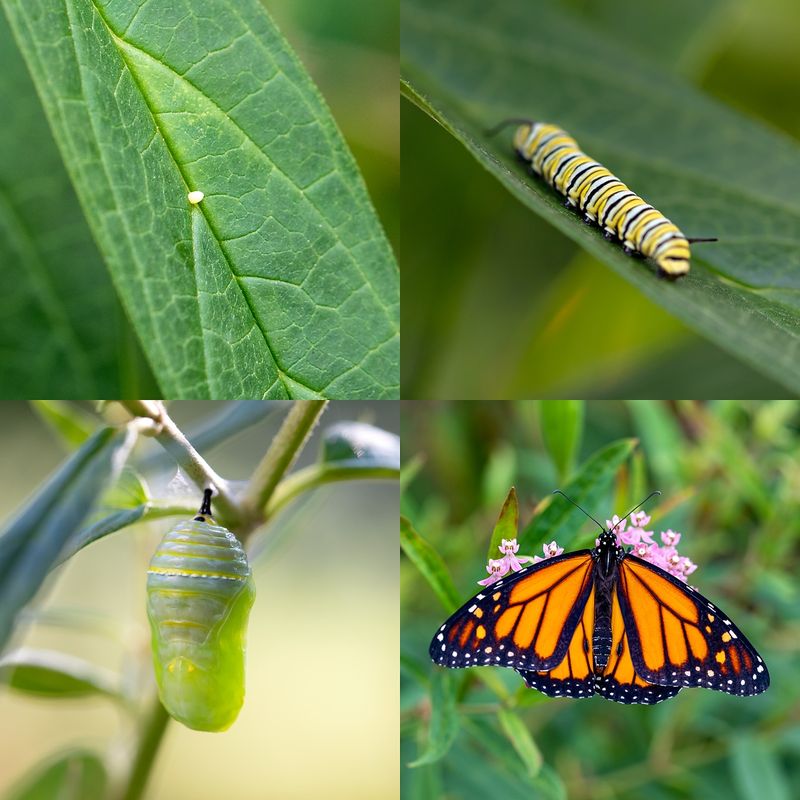
Most monarchs you see between May and August are living short, busy lives. Summer generations typically survive about 2 to 5 weeks, just long enough to find a mate, lay eggs on milkweed, and start the cycle again.
They do not migrate. They breed, and then they are gone.
The final generation of the year is built differently. As days shorten and temperatures drop in late summer, something switches in the biology of monarchs born during that window.
Instead of maturing sexually and reproducing right away, they enter reproductive diapause, a temporary pause in reproductive development that redirects their energy toward fat storage and long-distance travel. USDA monarch monitoring documentation describes how this diapause generation can live roughly 6 to 9 months, compared to the few weeks of their summer relatives.
That extended lifespan is what makes the round trip biologically possible.
Here is where the generational math gets interesting. A fall migrant leaving Minnesota in September may be four or five generations removed from the monarchs that departed Mexico the previous spring.
No parent taught it the route. No family elder passed along a memory of a particular tree.
Monarch Joint Venture life-cycle research confirms that the connection between generations is carried entirely through inherited seasonal behavior and orientation systems, not through learning or experience. The butterfly heading south from your garden has never been to Mexico.
Neither has any monarch it has ever met. Yet the instructions for the journey are already written inside it.
It Uses Compasses, Not Ancestral Maps
Saying a monarch finds its way to Mexico the same way you find your way to a friend’s house using memory and landmarks would be a satisfying story. But the evidence points somewhere more surprising, and honestly more impressive.
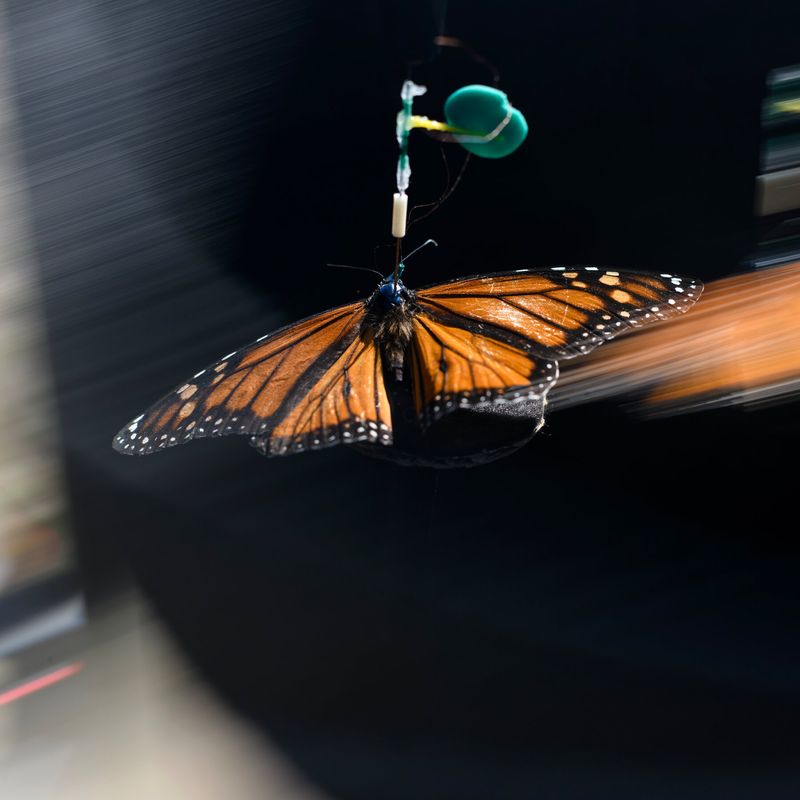
The best-supported piece of the navigation puzzle is the time-compensated sun compass. A monarch tracks the sun’s position in the sky and adjusts for the time of day using an internal clock, which allows it to maintain a consistent southwesterly heading even as the sun moves.
Research on the monarch magnetic compass also documents a light-dependent magnetic compass that can provide orientation backup under some cloudy conditions when the sun is not visible. Together, these two systems give the butterfly a reliable directional heading without requiring a detailed picture of the landscape ahead.
What monarchs apparently do not have is a fine-scale magnetic map that could independently pinpoint one specific overwintering site. A study examining this question found no evidence that monarchs can use magnetic information alone to locate a precise destination.
Research on monarch magnetic map sense supports that conclusion. Earlier displacement experiments described in experimental displacement and tag-recovery studies found that monarchs generally maintain a directional heading rather than correcting their route the way an animal using a geographic map would.
Navigation is almost certainly a layered system. Inherited compass direction, sun position, magnetic cues, landscape features like mountain ridges and river valleys, temperature gradients, and seasonal light levels all likely play a role.
Researchers are still working out exactly how those layers combine. What is clear is that no GPS, no ancestral memory of a particular tree, and no detailed internal map are involved.
A compass and a good set of environmental cues are enough to guide millions of butterflies toward the same narrow band of mountain forest, generation after generation.
The Distance Depends On Where The Flight Begins
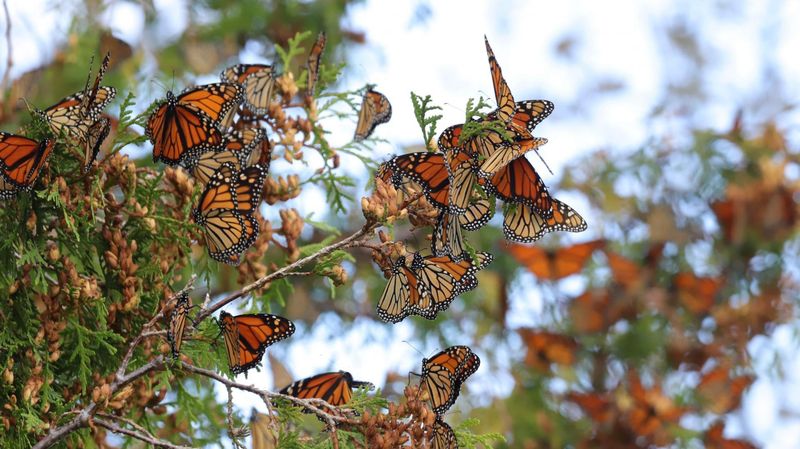
Two thousand miles sounds like a clean, memorable number, and for some monarchs it is close to accurate. But it is not the whole picture, and presenting it as a standard distance can mislead anyone trying to understand what the butterfly in their yard is actually facing.
An eastern monarch’s total travel distance depends almost entirely on where it starts. USGS monarch research notes that the longest journeys can approach 3,000 miles, covering the distance from the northern edge of the breeding range in southern Canada all the way to central Mexico.
A monarch beginning its journey in northern Minnesota or Manitoba is facing a substantially longer trip than one starting in Missouri or Arkansas. Butterflies that begin closer to Mexico travel considerably less.
Daily progress is also variable. Monarch Joint Venture migration data shows that monarchs commonly cover about 25 to 30 miles per day under typical conditions, but favorable tailwinds and warm thermals can push that figure much higher on good days.
On cold or rainy days, they may not fly at all.
Temperature sets the basic threshold. Monarchs need warm flight muscles to get airborne, and many observers note that practical flight activity drops off around 55 degrees Fahrenheit.
Sunlight matters too, since the sun compass requires a visible sun or at least a polarized light pattern to function well. When cold fronts push through, monarchs roost in trees and wait, sometimes in large, showy clusters that can stop traffic on a rural road in Texas or Kansas.
Wind direction is perhaps the biggest daily variable of all, capable of turning a 30-mile day into a 100-mile day or grounding the butterfly entirely.
The Destination Is A Recurring Mountain Forest
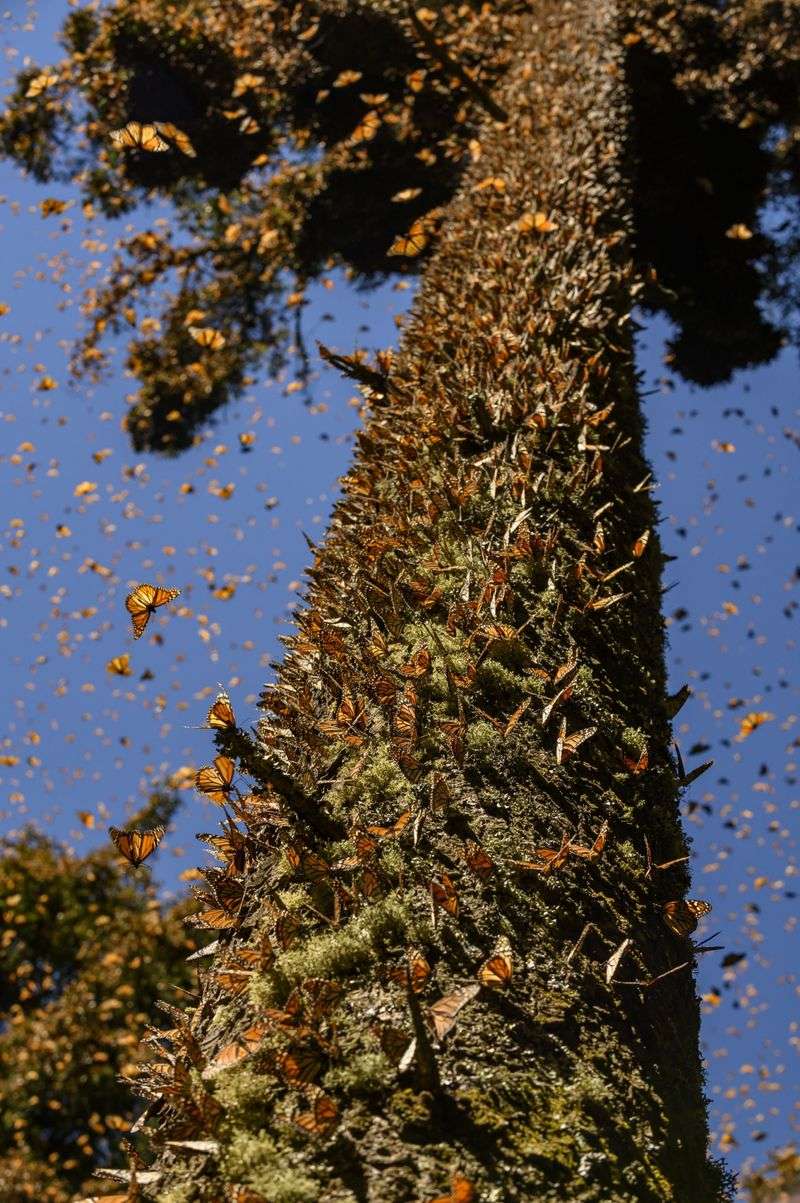
Forget the image of a monarch zeroing in on one specific branch used by its great-great-grandparents. The actual destination is both broader and, in its own way, more astonishing.
Eastern monarchs converge on a limited group of high-elevation oyamel fir forests in central Mexico, concentrated primarily in Michoacan and the State of Mexico. USDA Forest Service monarch documentation describes these forests as recurring overwintering sites used by the population across years, not addresses memorized by individual butterflies.
The colonies gather in places where temperature, humidity, and forest structure keep the butterflies cool enough to conserve energy without freezing, a narrow set of conditions found in only a handful of mountain locations.
Annual colony locations within those forests do shift. The occupied area changes from year to year depending on weather, forest condition, and population size.
So the evidence supports repeated use of the same overwintering regions, not the idea that each butterfly can locate one particular ancestral tree. Research on monarch navigation precision reinforces that point: compass heading and environmental cues can guide a butterfly toward a suitable habitat type without functioning as a precise address.
Think of it less like returning to a specific house and more like an inherited pull toward a particular kind of neighborhood, one with the right altitude, the right trees, and the right microclimate. The real achievement, which genuinely deserves the wonder people feel about it, is that millions of butterflies born across a continent, with no map and no teacher, find their way to the same narrow band of mountain forest every autumn.
That is the story worth telling.
Milkweed Feeds Caterpillars; Nectar Fuels Adults
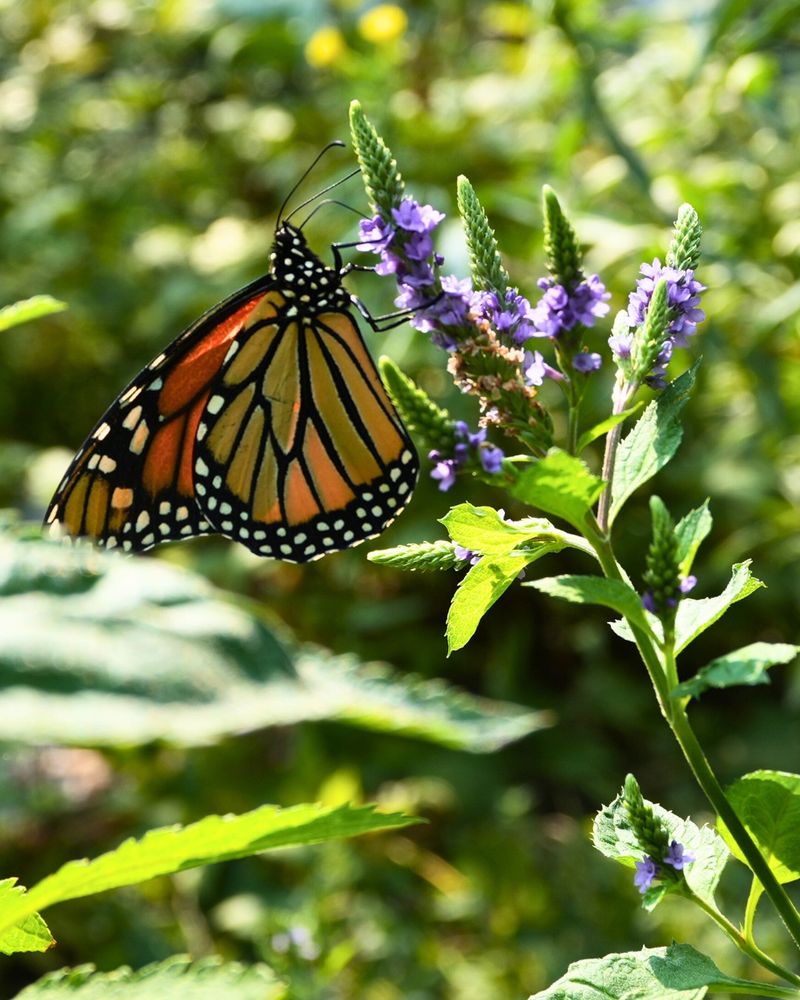
Walk through your yard right now and you might see a monarch caterpillar chewing on milkweed and an adult monarch drinking from a coneflower ten feet away. Those two butterflies need entirely different things from your garden, and understanding that distinction is the most useful thing a homeowner can know.
Milkweed, plants in the genus Asclepias, is the only group of plants monarch caterpillars can eat. No milkweed means no caterpillars, full stop.
Adult monarchs, on the other hand, drink nectar from a wide range of flowering plants and do not need milkweed at all once they have wings. Monarch Watch waystation guidance emphasizes that fall migrants especially need abundant late-season nectar sources to build the fat reserves that will carry them through the journey and sustain them during winter diapause in Mexico.
A well-planned yard can serve both functions across the season. Milkweed supports breeding monarchs from spring through late summer, giving caterpillars the food they need to develop.
Native late-blooming nectar plants, things like goldenrod (Solidago spp.), native asters, and ironweed, keep adults fueled as the migratory season approaches. Monarch Joint Venture planting guidance describes a garden as one small node in a broader habitat network, a breeding patch and a refueling stop rather than a complete solution.
A migrating monarch passing through your yard in October may spend only an hour on your goldenrod before moving on. That hour still matters.
Fat stored from your flowers may be the margin between a butterfly that reaches Mexico and one that does not.
Choose Native Plants And Avoid Hidden Pesticides
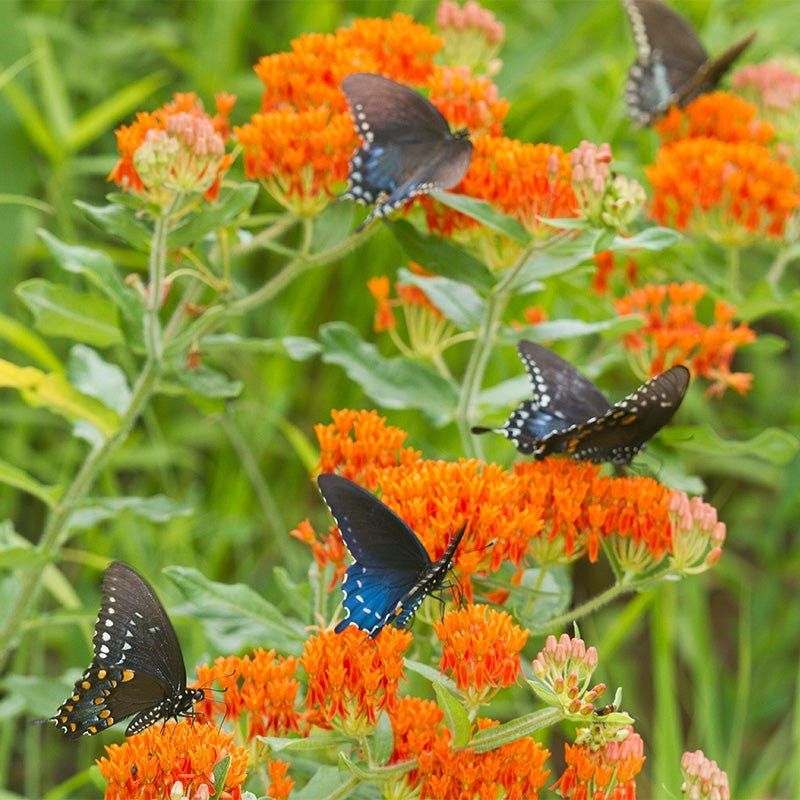
Choosing the right milkweed matters more than most gardening articles admit. There are dozens of Asclepias species native to different parts of North America, and what thrives in a Minnesota prairie garden will not necessarily suit a Georgia backyard or a New Mexico hillside.
Local native plant nurseries, your state’s department of natural resources, and your nearest Cooperative Extension office are the most reliable guides for final species selection in your area.
Some useful regional examples: common milkweed (Asclepias syriaca) and swamp milkweed (Asclepias incarnata) suit much of the Northeast and upper Midwest, while butterfly weed (Asclepias tuberosa) works across a broader range of well-drained soils in the eastern half of the country. The South Central and Southeast regions have their own native species that handle heat and humidity better.
Monarch Watch waystation standards recommend at least 10 milkweed plants representing two or more species when possible, in a garden area of roughly 100 square feet, with at least 6 hours of direct sun and well-drained soil. Swamp milkweed is a useful exception for wetter spots.
Newly planted milkweed needs consistent watering until its roots establish, often through the first full growing season. Once established, most native milkweeds need far less irrigation.
Avoid heavy fertilizing, since excess nitrogen can push leafy growth while reducing the flowers that feed adult butterflies. Monarch Watch milkweed sourcing information also advises asking nurseries directly whether plants were treated with systemic pesticides, including neonicotinoids, before purchase.
Even plants that look healthy can carry residues that harm caterpillars for months after treatment.
Tropical milkweed (Asclepias curassavica) deserves its own caution. It is not native to the United States and is sold widely because it is easy to grow and showy.
In warm-winter regions, it can stay green through the cold months, which may encourage monarchs to breed out of season and increases exposure to the protozoan parasite Ophryocystis elektroscirrha, commonly called OE. Xerces Society milkweed guidance recommends that southern gardeners who already grow tropical milkweed cut it to the ground in early fall to discourage late breeding and reduce parasite buildup on the leaves.
Better yet, replace it gradually with locally native species.
One Yard Helps, But It Cannot Measure Recovery

A yard full of caterpillars in August feels like proof that monarchs are doing fine. It is encouraging, and your garden deserves credit for that.
But local abundance in one season reflects nearby breeding habitat, favorable weather, and natural concentration along flyways, not necessarily a healthier population overall.
Population health for eastern monarchs is measured by the area of occupied overwintering forest in Mexico each winter, not by how many caterpillars you counted in July. A USGS extinction-risk assessment for eastern monarchs documented the long-term decline and the population’s continued vulnerability.
The most recent survey data available as of mid-2026 offers some genuine encouragement: the 2025-2026 eastern overwintering count reported 2.93 hectares, about 7.24 acres, of occupied colony area in Mexico, a 64 percent increase from the previous winter. That is meaningful progress.
It does not erase the longer-term decline or settle the question of whether the population is secure.
What a yard can do is clear. Pesticide-free milkweed and late-season nectar give monarchs food and a safer place to rest.
Avoiding unnecessary handling, leaving caterpillars on their host plants, and skipping mass indoor rearing schemes are all consistent with the most broadly supported habitat guidance from Monarch Joint Venture planting resources. Rearing monarchs indoors has active research and disease-management concerns that go well beyond a simple backyard tip, so the safer default is to focus on habitat rather than intervention.
Your garden cannot direct a butterfly to one particular tree in a Mexican mountain forest. What it can do is make the next hundred miles of a very long route a little more possible, one flower at a time.