
The Late-November Daylily Chore Most Gardeners Skip Is Why Their Clumps Bloom Less
Follow us on Google
Dividing an overcrowded daylily clump is the chore most gardeners skip, and it’s a big reason an old clump bloom less. Roots and fans (the leafy shoots) pile up until the plant is fighting itself for space.
Don’t expect a quick miracle, though, because timing and local weather matter a lot. Here is how to tell if your clump needs it and how to do it right.
Dividing a Crowded Clump Can Help It Flower Again
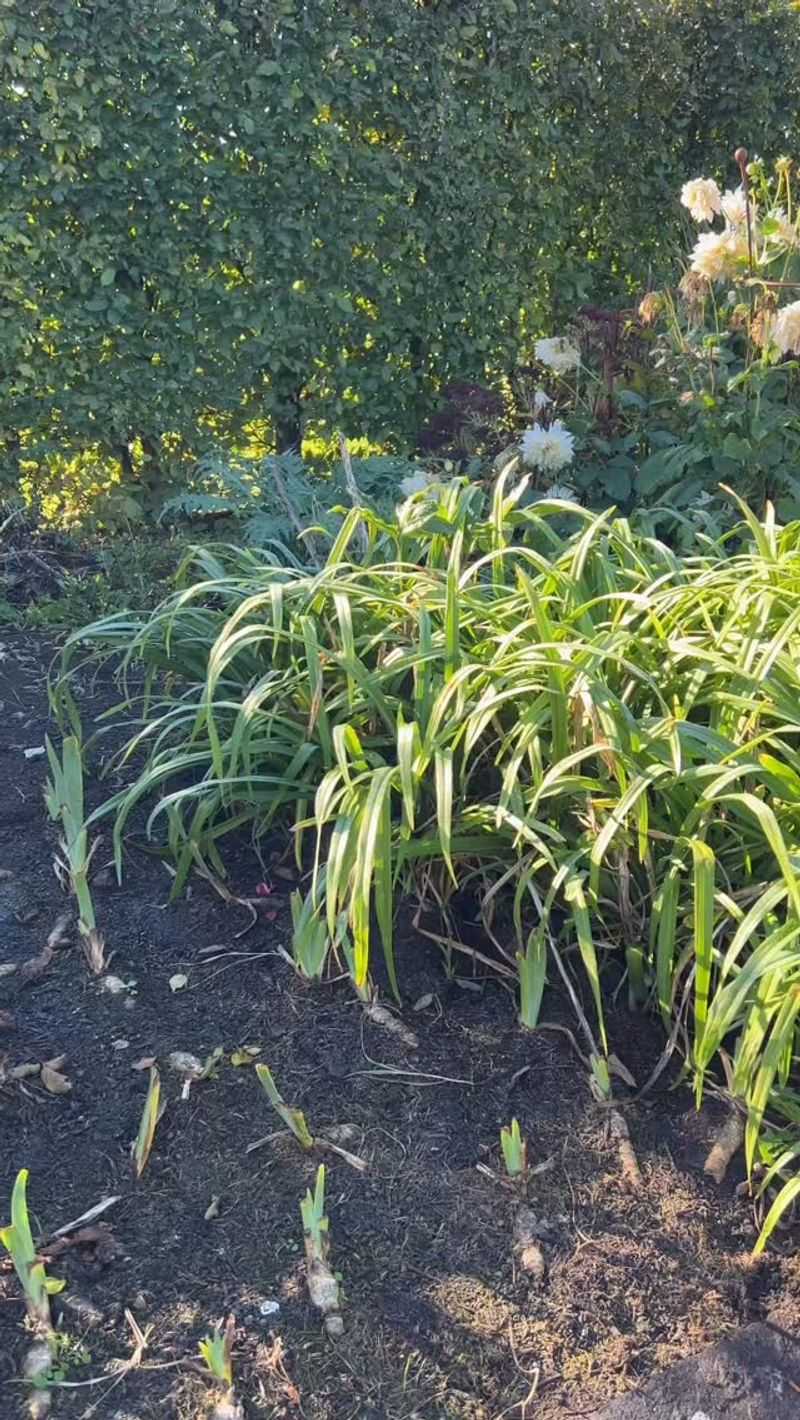
Walk out to a daylily bed on a warm September evening and you may notice the center of the clump looks tired. The leaves are thick, the flower stalks are few, and the plant seems to be crowding itself out.
Dividing an overcrowded daylily (Hemerocallis) clump can help restore flowering over time. Extension guidance, including Iowa State guidance on dividing daylilies, supports division when a clump gets crowded or bloom production declines.
Think of it as giving every root a bigger seat at the table.
Now the honest part. Division does not guarantee more flowers next summer.
A divided plant may bloom less for a year or two while it settles in, so patience is part of the deal.
Nobody is promising you double the flowers by next June. The more realistic payoff is a healthier plant with better blooms down the road, spread across more clumps if you want them.
The other piece is timing. Some gardeners pick a date on the calendar and stick to it, but that does not work across the whole country.
Divide when the plant actually needs it and when your local weather gives roots enough time to settle in before the ground freezes.
A clump in Georgia and a clump in Minnesota live on very different clocks. Arkansas Extension points to crowding as one reason daylilies produce fewer flowers, which is why a good look at your clump comes before any shovel work.
Check Why the Clump Has Fewer Flowers
Fewer flowers is a clue, not a verdict. Crowding is one suspect, but it is not the only one, and digging up a healthy plant for the wrong reason just sets it back.
Start with light. Daylilies bloom best in plenty of sun, and a tree that has grown over the years can quietly shade a bed until the flowers fade away.
If the clump is in more shade than it used to be, dividing will not fix that.
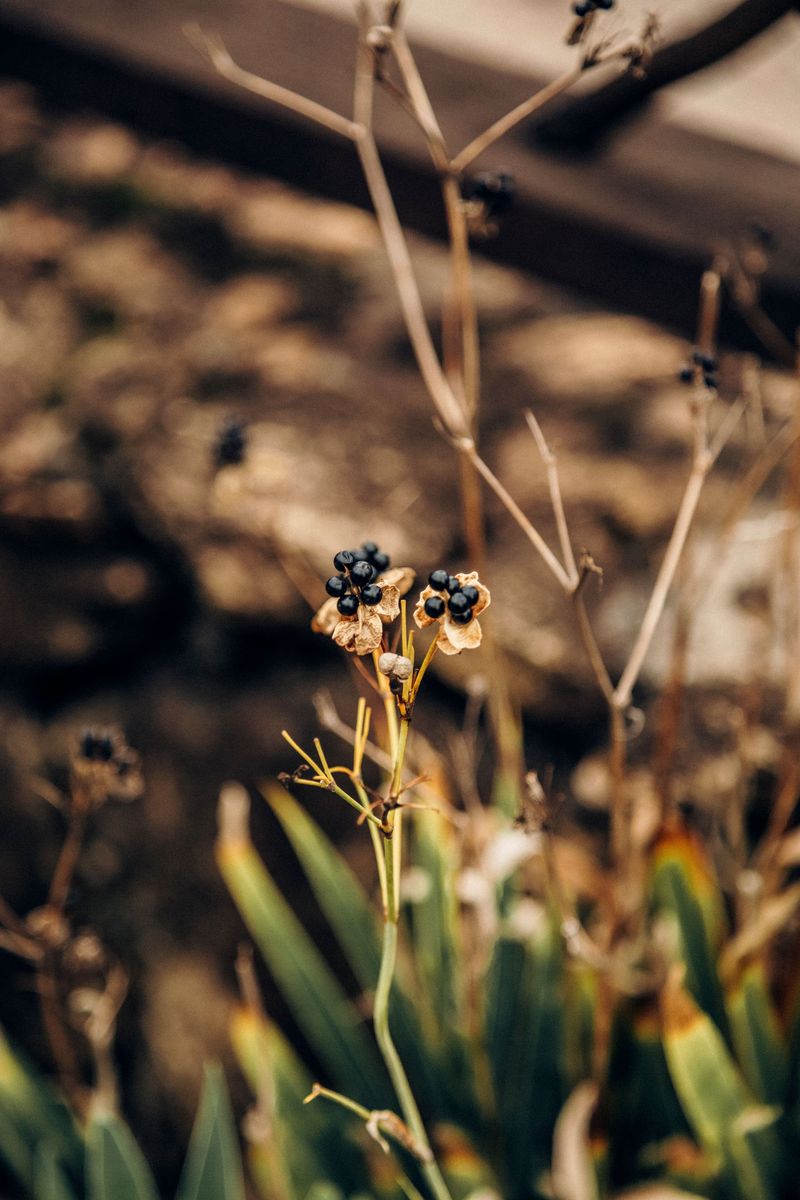
Next, look at seed pods. Minnesota Extension notes that removing spent flowers prevents seed production, and plants that make seed may have fewer flowers the following year.
A plant busy making seed has less energy for blooms.
Then think about fertilizer. Purdue Extension warns that too much nitrogen may reduce bloom.
If you feed the lawn heavily right next to the bed, that runoff could be part of the story, giving you lush leaves and few flowers.
How often should you divide? Purdue says older clumps usually need it only every five to seven years, while other extension sources suggest three to five.
Treat that as a guide, not a rule. Declining flower production, not a rigid interval, is your signal to take a closer look.
Choose the Division Window by Your Local Freeze Date
Late November sounds like a handy date, but across much of the country it is simply too late. Fall division only works if roots have time to grow before the ground freezes.
Nebraska Extension advises finishing fall moves at least four to six weeks before the ground freezes, as noted in its master gardener fall guidance. Count backward from your own typical freeze date and you will see how early that window can close in colder places.
Regional advice differs, and that is okay. In southeastern North Carolina, Onslow County Extension recommends dividing in late summer or early fall so roots can grow before winter.
Colorado State suggests spring division for daylilies that flower in mid- to late summer, according to its perennial gardening resource.
So where does late November fit? In some regions it is a time for winter mulch.
Iowa State recommends several inches of mulch for late-summer plantings to reduce freeze-thaw heaving.
But mulch is a blanket, not a time machine. It does not make a very late division safe everywhere.
If your window has passed, wait for spring and let the plant rest.
Decide Whether the Plant Is Ready to Divide
One thin season of flowers does not prove a clump needs dividing. Weather, shade, seed set, and fertilizer can all dent a bloom count for a year.
Look for a pattern instead. Flowering has dropped over a few seasons, the center looks sparse or hollow, and the clump has grown thick and tight.
Arkansas Extension ties crowding and too much shade to fewer flowers, so check both.
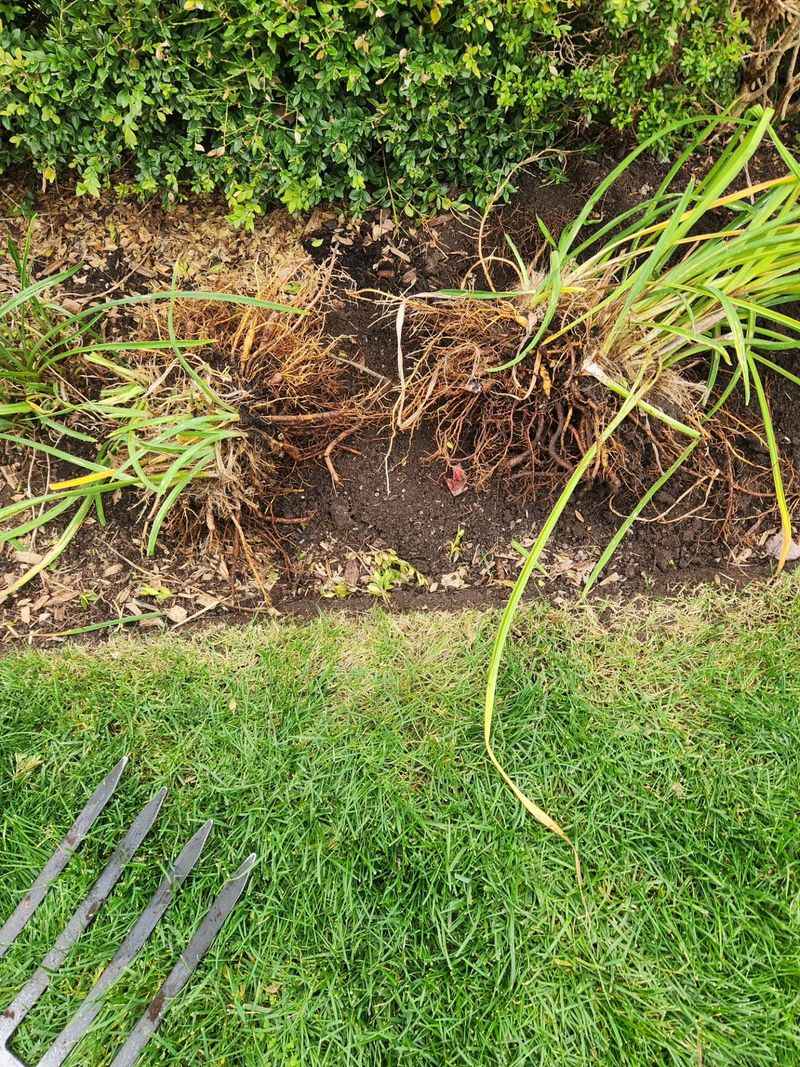
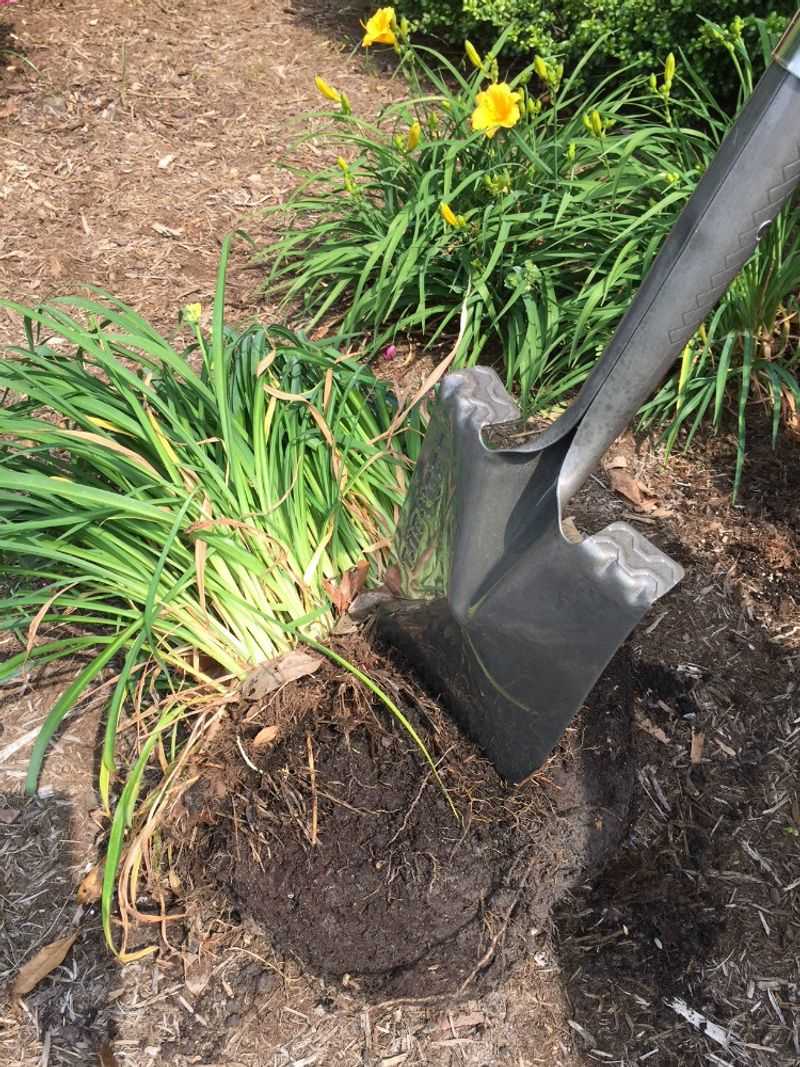
If the clump is a good candidate and your local window is open, water the bed the day before. Push a garden fork into the soil a little outside the clump and lift it gently, keeping as much of the root system as you can.
Shake off loose soil and look at the structure. As Iowa State explains, the clump will pull apart into sections, each with roots and leafy fans.
Use your hands first, and a sharp knife or spade only for stubborn tangles.
A word about pets. Daylilies are toxic to cats, and the ASPCA reports that exposure can cause kidney failure or death.
Keep cats indoors while you work, bag the trimmings, and never assume handling the plant is safe around them.
Replant Each Division with Roots, Fans, and Room
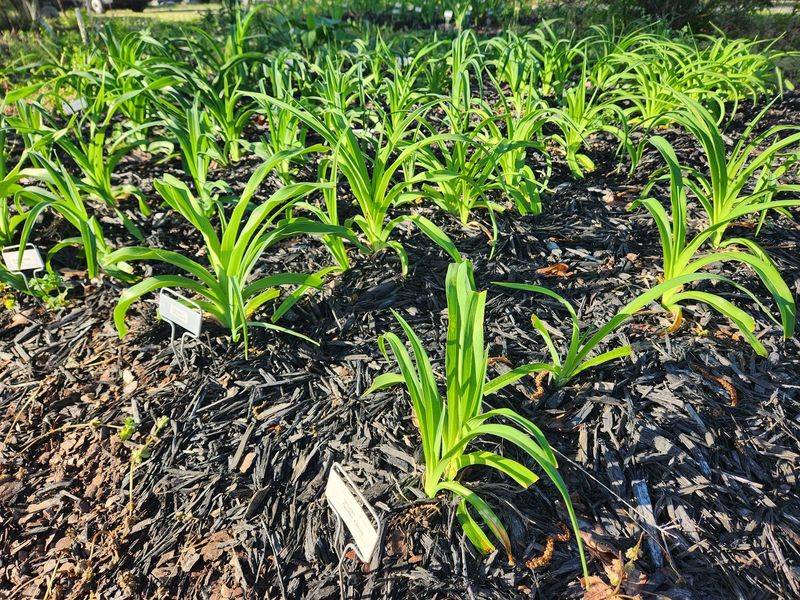
Each division needs three things to thrive: healthy roots, a couple of leafy fans, and elbow room. A fan is just a leafy shoot growing from the crown, the spot where roots meet leaves.
Aim to keep a healthy root system and about two or three fans on every piece. Iowa State recommends replanting promptly with the crown about one inch below the soil surface, then watering thoroughly.
Treat that depth as practical guidance, since cultivars and soils vary.
Spacing depends on the plant. K-State Extension suggests roughly 24 to 30 inches between replanted clumps.
That is a useful example, and you can adjust for smaller or larger cultivars.
If you are planting late where local conditions still allow it, winter protection can help. Minnesota Extension says straw or shredded-leaf mulch can protect unestablished plants from winter injury.
Iowa State also advises several inches of mulch for late plantings, as covered in its late-summer planting answer.
Remember, mulch helps a reasonable planting date, not an unsuitable one. And if you have cats, keep leftover pieces out of their reach.
Give the Plant Time to Recover
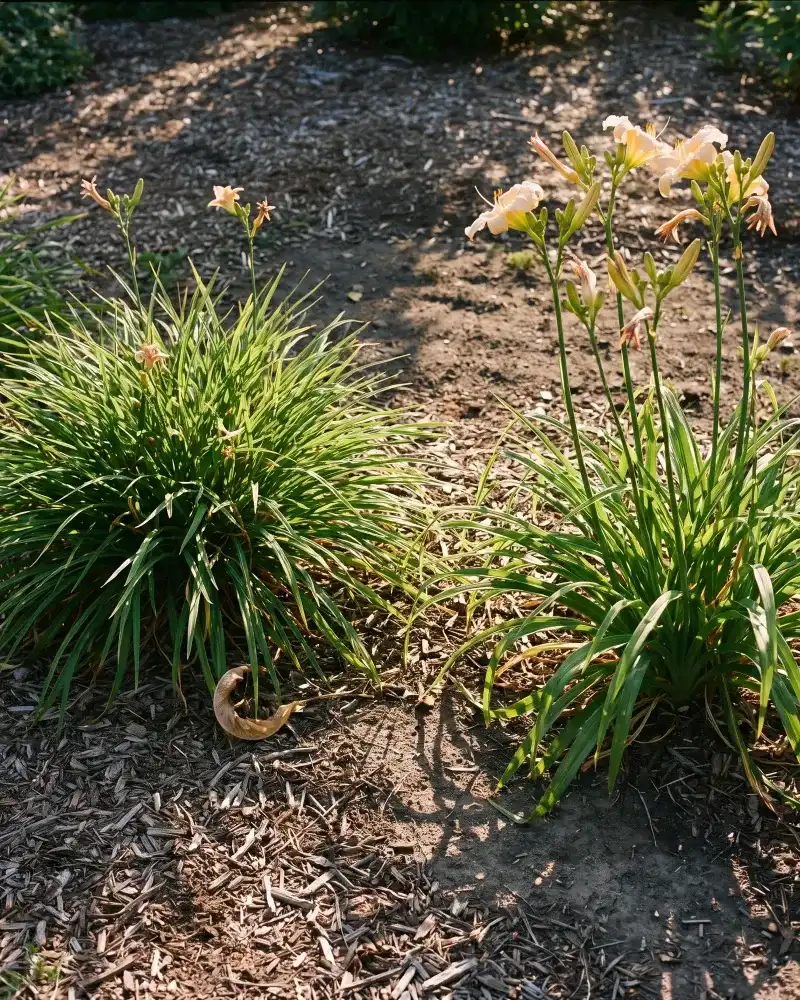
Picture next summer. Your divisions are green and growing, but the flower count looks modest.
That is normal, and it does not mean you did anything wrong.
Iowa State says divided daylilies usually do not bloom well for one or two years, and K-State Extension notes the first year after division has fewer blooms. So do not expect a doubled bloom count the following summer.
Making more plants is not the same as doubling the flowers on the original clump.
While you wait, check the easy things. Give plants enough sun, and consider trimming back nearby growth that has crept over them.
Snap off spent flowers so the plant does not spend energy on seed, which Minnesota Extension links to fewer flowers the next year.
Go easy on nitrogen too. Purdue warns that too much may reduce bloom, so skip the heavy lawn-style feeding.
Some cultivars keep their foliage through winter, so there is no one-size cutting rule for fall. Watch your own plants and let them lead.
When the clump gets crowded again, match your next division to your local conditions and the time left before the ground freezes. A daylily rewards patience better than it rewards a date on the calendar.
