
The Florida Plants That Turn Your Yard Into Owl Territory, And The Rats That Pay For It
Follow us on Google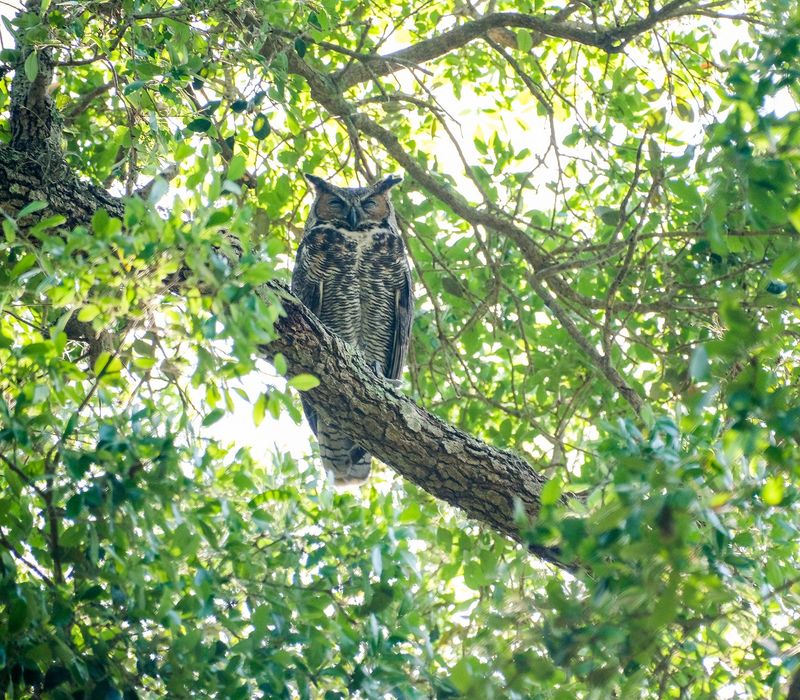
You step onto the patio after dark, the air still thick and warm, and a soft whoosh passes over the live oak. An owl just dropped into your Florida yard, and somewhere near the woodpile a rat is having a very bad night.
The right native plants can genuinely turn your property into a hunting ground for these silent night patrollers. Here are eight plants and habitat pieces that invite owls in, and the plain truth about how they help thin out the rats that have been raiding your fruit trees.
1. Live Oak Gives Owls A Throne With A View
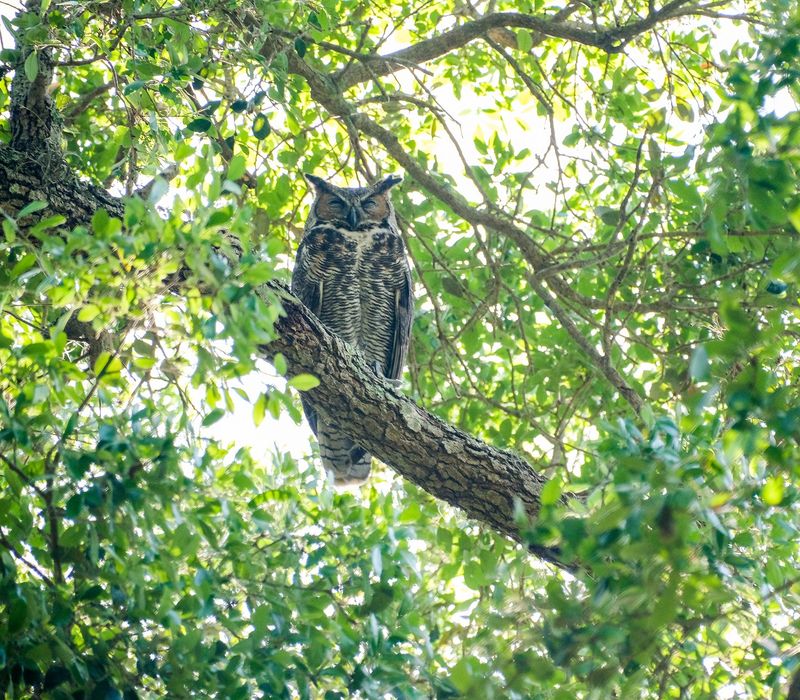
Picture the biggest tree on your street, the one with limbs that stretch sideways like a porch roof. For an owl, that tree is a watchtower.
Live oak (Quercus virginiana) is the anchor of almost every owl friendly yard in Florida.
Great horned owls, which stand up to 25 inches tall, and barred owls, around 20 inches, need thick horizontal limbs to sit still and scan the ground. A live oak canopy also hides them during the day, so crows and blue jays do not chase them off.
The acorns pull in squirrels and rodents, which keeps the menu stocked.
Here is where it gets tricky. Rats love oaks too, especially roof rats that use branches as highways onto your shingles.
UF/IFAS Extension advises trimming limbs at least 3 feet back from your roofline so the tree feeds the owls without handing rats a bridge to your attic.
Plant a young oak at least 30 feet from the house, water it deeply 2 to 3 times a week for the first few months, and let time do the rest. You are planting a perch for owls your grandkids will hear.
2. Longleaf And Slash Pines Become North Florida Nurseries
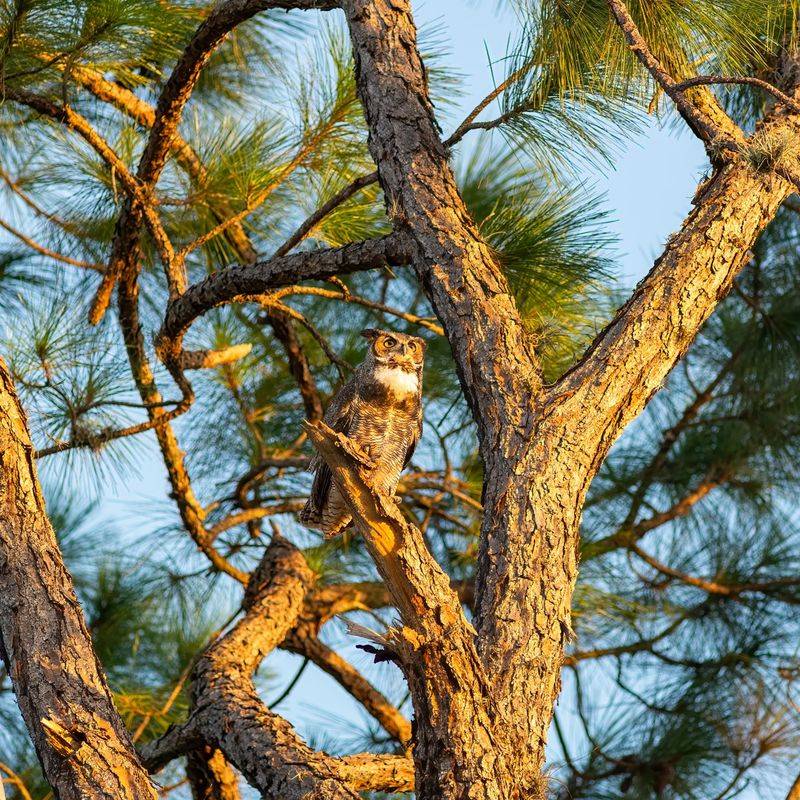
Great horned owls are notorious squatters. They rarely build their own nests, preferring to take over old hawk or crow nests high in tall pines, and they start nesting as early as December or January.
That is why longleaf pine (Pinus palustris) and slash pine (Pinus elliottii) earn their spot in the Panhandle and North Florida. Their straight trunks often climb past 60 feet, and the evergreen needles give owls cover all year, even after the oaks get a little thin during winter dry spells.
Sandy loam and acidic sand suit them just fine.
Plant pines in the back corner, away from the patio and driveway. Owls nest more boldly when people are not walking under them every hour.
Space young pines about 15 to 20 feet apart so each crown has room to spread.
And yes, the pine straw that drops underneath makes a soft carpet where mice and cotton rats scurry at night. The owl overhead has noticed.
You just built the nursery and the pantry in one move.
3. Sabal Palms Shelter Screech Owls And Tempt Roof Rats
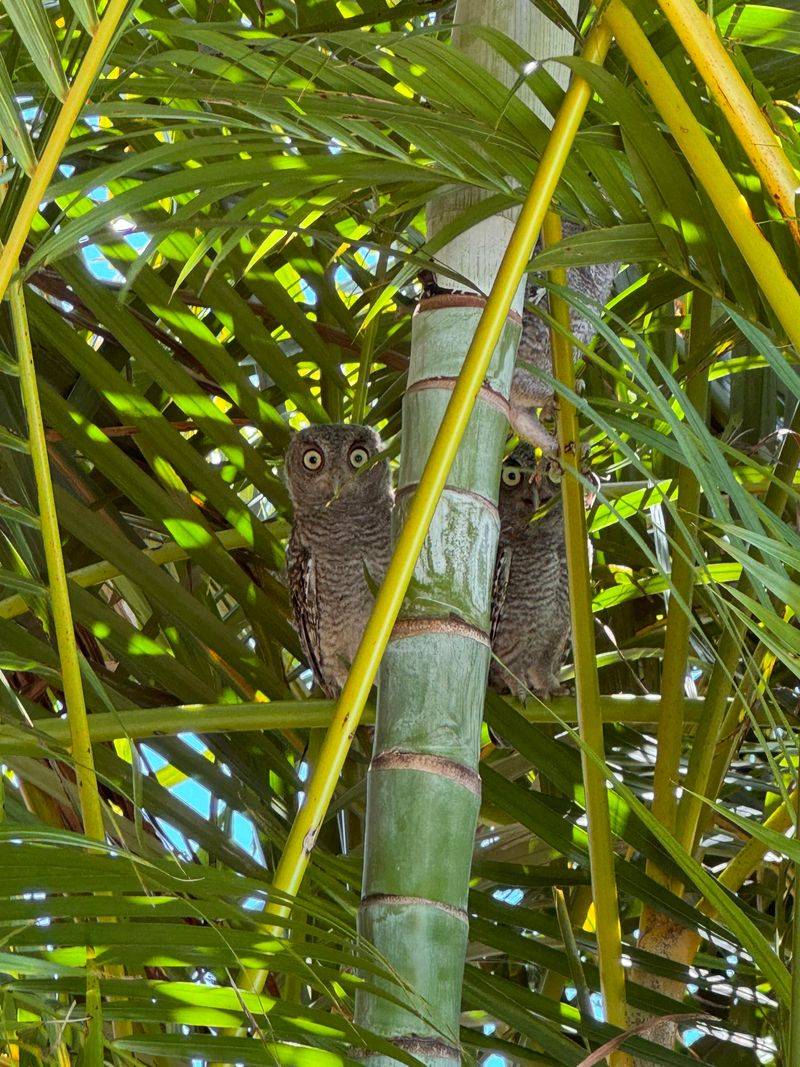
Many Central Florida homeowners assume their palm tree is just decoration. It is actually an apartment building.
The sabal palm (Sabal palmetto), Florida’s state tree, holds old frond bases called boots, and the crown can hide small owls.
Eastern screech owls stand only about 10 inches tall, small enough to tuck into that matted crown. But roof rats, often called palm rats, adore the same spot.
Here is the honest tension. A palm full of dead fronds is a rat hotel first.
The fix is balance. Leave the palm, but trim dead fronds once a year, ideally after hurricane season wraps up in late November, and never cut green fronds above the horizontal line.
That keeps the crown clean enough to discourage rat nests while the tree still offers cover and perches.
Plant sabals at least 10 feet from your roof edge so rats cannot jump across. Then on a quiet night, listen for the trill of a screech owl.
It sounds like a tiny horse whinny, and it means the night shift has clocked in.
4. Yaupon Holly Builds A Thicket Owls Can Roost In
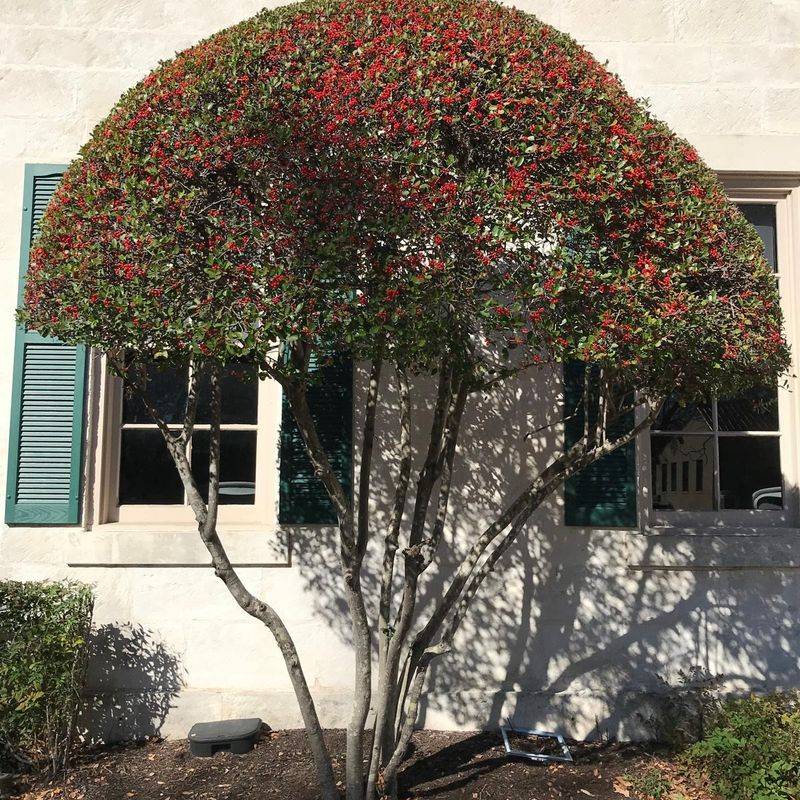
Tidy yards do not attract owls. That surprises people, but a perfectly sheared hedge offers nowhere to hide, for owls or the little animals they eat.
Yaupon holly (Ilex vomitoria) fixes that. It grows 8 to 15 feet tall and 6 to 12 feet wide, stays green through winter, and handles everything from Panhandle cold snaps to Gulf Coast salt breeze.
Its red berries feed songbirds, and the dense twigs give screech owls a place to doze through hot afternoons.
Plant a staggered row along a back fence, spacing shrubs 5 to 6 feet apart so they knit into a thicket within 2 or 3 years. Water twice a week for the first summer, then let rainfall take over in most of the state.
Small rodents will move into that thicket too, and that is the point. They forage outward at night, right where an owl on a nearby limb can see them.
Think of the hedge as a stage, and the owl has the best seat in the house.
5. Simpson’s Stopper Feeds The Whole Food Chain
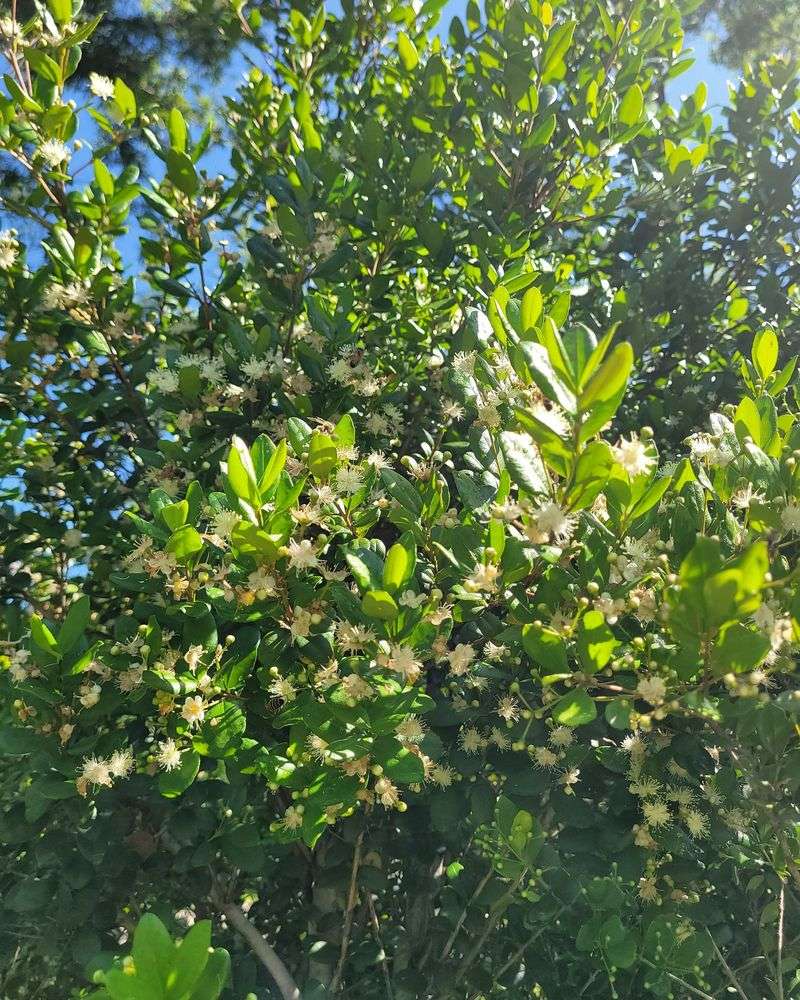
Simpson’s stopper (Myrcianthes fragrans) looks modest, but it quietly runs a food web. Small white flowers bring bees, orange berries bring birds, and the leaves smell faintly of nutmeg when you crush them.
In South Florida and along the Atlantic Coast, it is one of the best native shrubs for layered habitat. It reaches up to 20 feet if left alone, tolerates salt spray, and grows happily in shallow limestone soil where many shrubs sulk.
Full sun to partial shade works.
Why does it matter for owls. Screech owls eat insects, lizards, and small birds as much as rodents, so a shrub that feeds the little creatures feeds the predator too.
More layers mean more prey, which means owls hang around longer.
Plant stoppers 4 to 6 feet apart in a cluster near your oak or palm. Within a season or two, the corner starts humming with life, and you will feel it on the porch.
6. American Beautyberry Draws Prey Into The Open
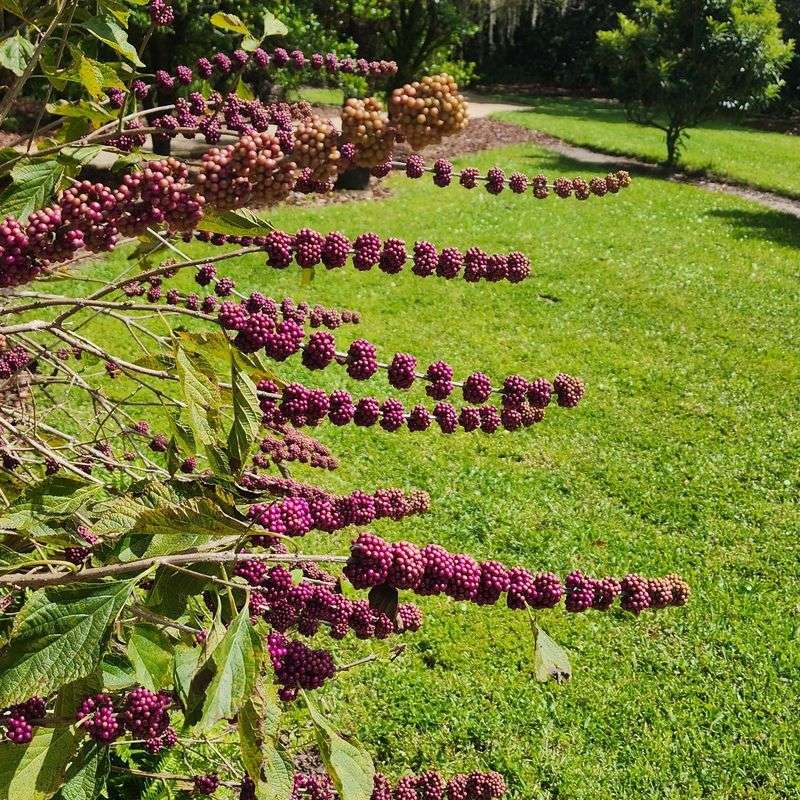
Come September, American beautyberry (Callicarpa americana) puts on a show that stops neighbors on the sidewalk. Clusters of glossy purple berries wrap every stem, and they last into winter.
Birds, raccoons, and small rodents all come for those berries. Cotton rats and mice gather the fallen fruit at night, stepping out from cover to feed.
To an owl sitting 20 feet away, that is a lit up menu board.
Beautyberry drops its leaves in winter, so it will not offer year round cover. Pair it with evergreens like yaupon to keep the habitat working through every month.
It grows 4 to 6 feet tall, so plant it 4 feet apart at the front edge of your thicket, where prey has to cross open ground to reach it.
A hard cut back to 12 inches in late winter keeps it full and fruiting. It is not a rat magnet in the dangerous sense, just a lure that keeps the owl busy.
Nature is doing the trapping for you.
7. Muhly Grass Opens A Hunting Lane For Owls
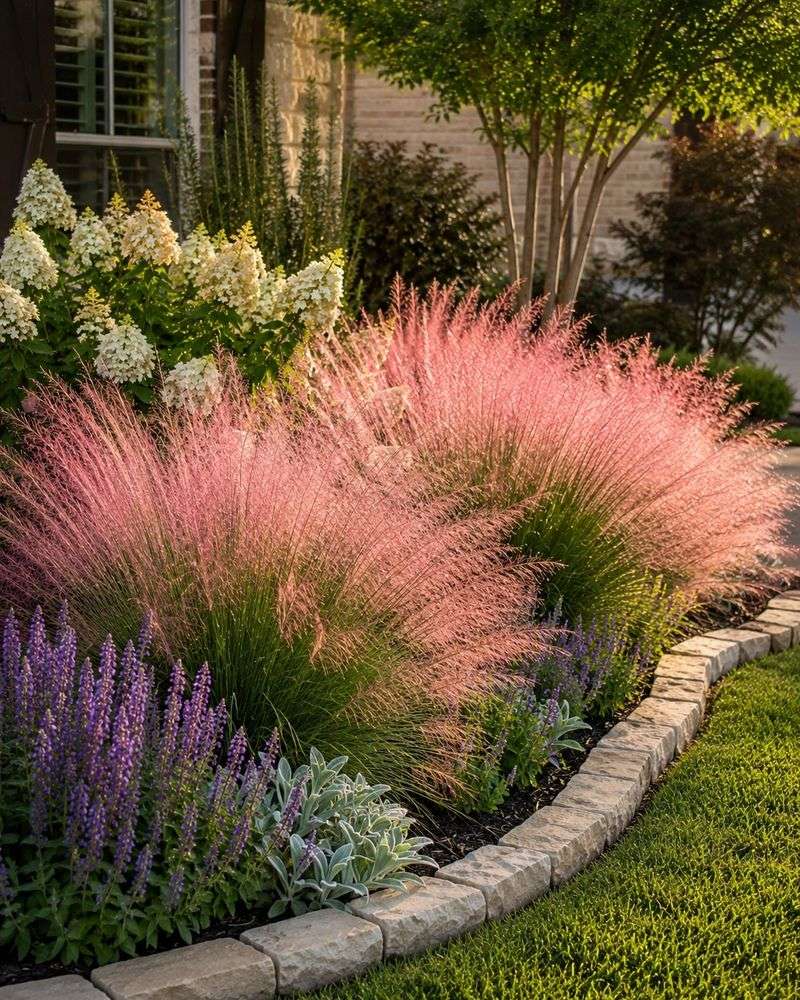
Owls hunt mostly by ear and by swoop. They need some open ground between hiding spots, or prey simply vanishes into the weeds.
Muhly grass (Muhlenbergia capillaris) gives you both. It forms tidy clumps about 3 feet tall, turns a cloud of pink in October and November, and leaves clear gaps between plants.
Native hispid cotton rats run little trails through grassy patches, and those trails cross the gaps.
Plant clumps 3 feet apart in a sunny strip between your shrubs and lawn. Muhly shrugs off drought, sandy soil, and salt, which makes it a strong pick from the Gulf Coast to the Keys.
Cut it back to about 6 inches in late winter.
Burrowing owls, a protected species common in Southwest Florida neighborhoods, prefer grass kept under 5 inches near their burrows, so keep muhly away from any burrow you spot. Elsewhere, this strip becomes a runway, and the owl is the air traffic controller.
8. Skipping Rat Poison Keeps Your Owls Alive
Here is the myth that does the most damage. Many people think rat bait and owls can work together.
They cannot. A poisoned rat stumbles around slowly, which makes it the easiest catch of the night, and the owl eats the poison too.
So the last piece is not a plant, it is a habit. Skip rodenticides entirely, pick up fallen mangoes, citrus, and avocados daily, and bring pet food inside at night.
Turn off bright floodlights after 10 p.m., since owls hunt best in darkness.
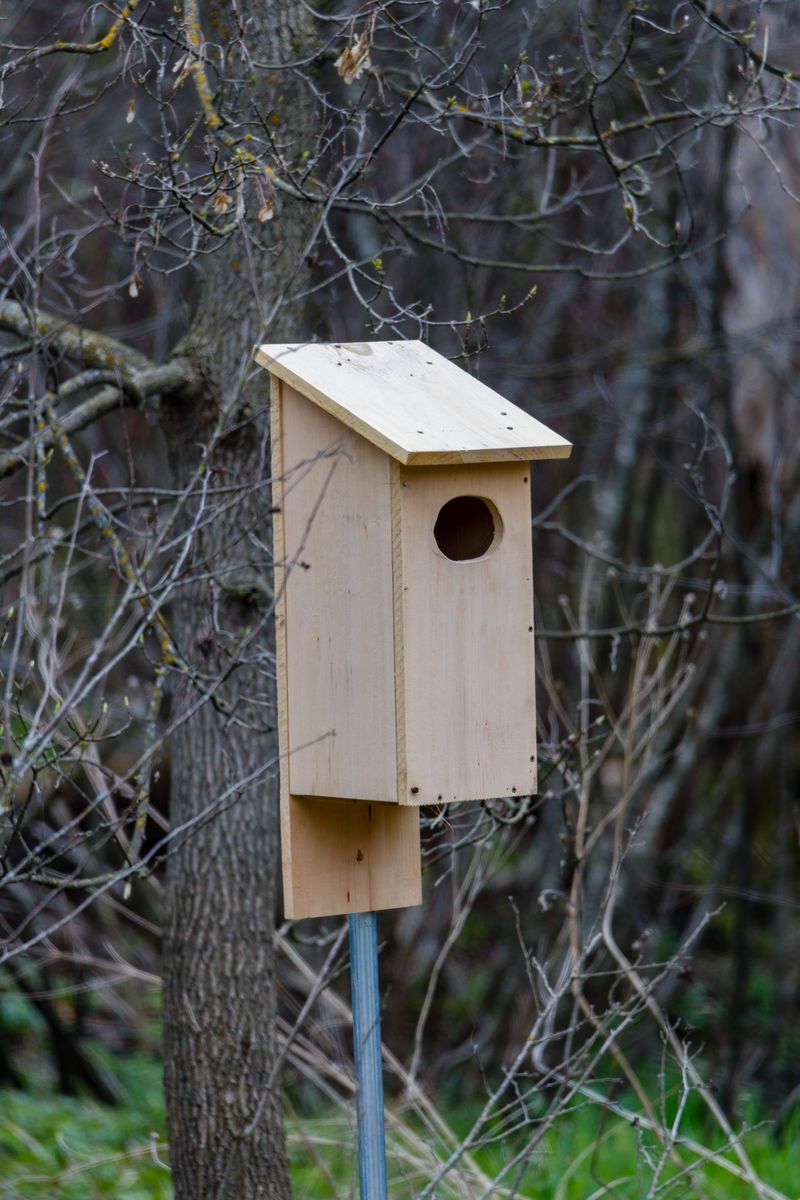
If you want to go further, add a nest box. Screech owl boxes need a 3 inch entrance hole and should sit about 10 feet up, facing south or east.
Barn owl boxes go on poles roughly 8 to 12 feet high. UF/IFAS Extension has supported barn owl box projects in the Everglades Agricultural Area, where owls helped cut rodent numbers and the need for chemicals.
Owls are not a magic solution, and sealing gaps in your house still matters. But with the right plants and a poison free yard, you are building a system that works while you sleep.
Pretty good night’s work for a few shrubs and a tree.
