
That Purple Flower Really Does Smell Like Cherry Pie, But Only The Right One Delivers
Follow us on Google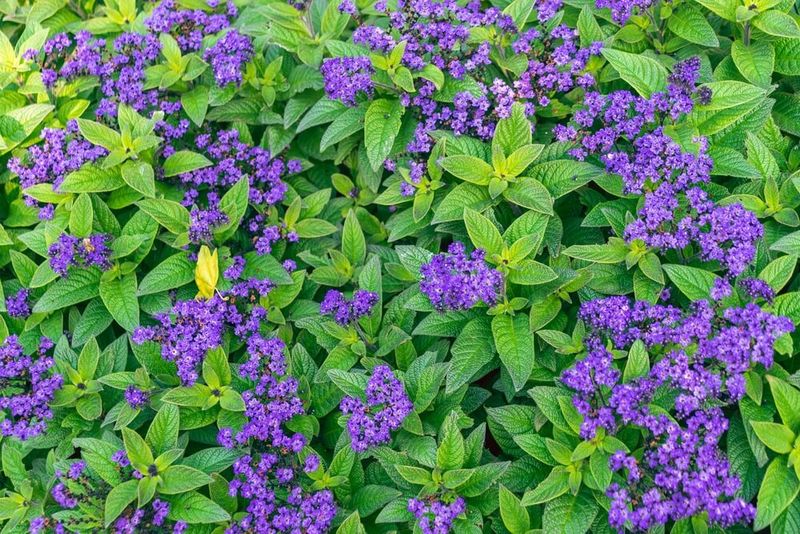
Walk past the right purple flower on a warm evening and something stops you cold, because the air smells faintly like a pie cooling on a windowsill. That flower is garden heliotrope, and the scent is real, but not every plant sold under that name will give you the experience the name promises.
Choosing the wrong selection means bringing home a beautiful plant that delivers nothing to your nose. Getting it right takes about two minutes of reading a label and one good sniff at the garden center.
Garden Heliotrope Is the Purple Flower to Check
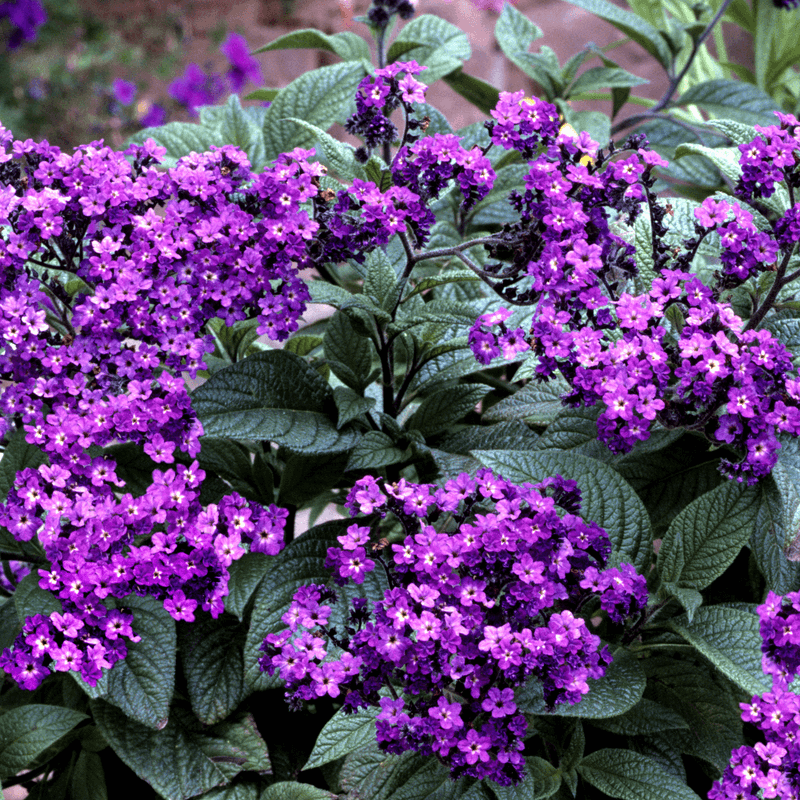
Most people first encounter this plant as a label that says “heliotrope” next to a pot of small purple blooms at a garden center. The plant behind that label is garden heliotrope, Heliotropium arborescens, also called cherry-pie heliotrope or Peruvian heliotrope.
It comes from western South America, including Peru, Colombia, and Bolivia, and carries a long reputation for a scent that gardeners have compared to cherry pie for generations.
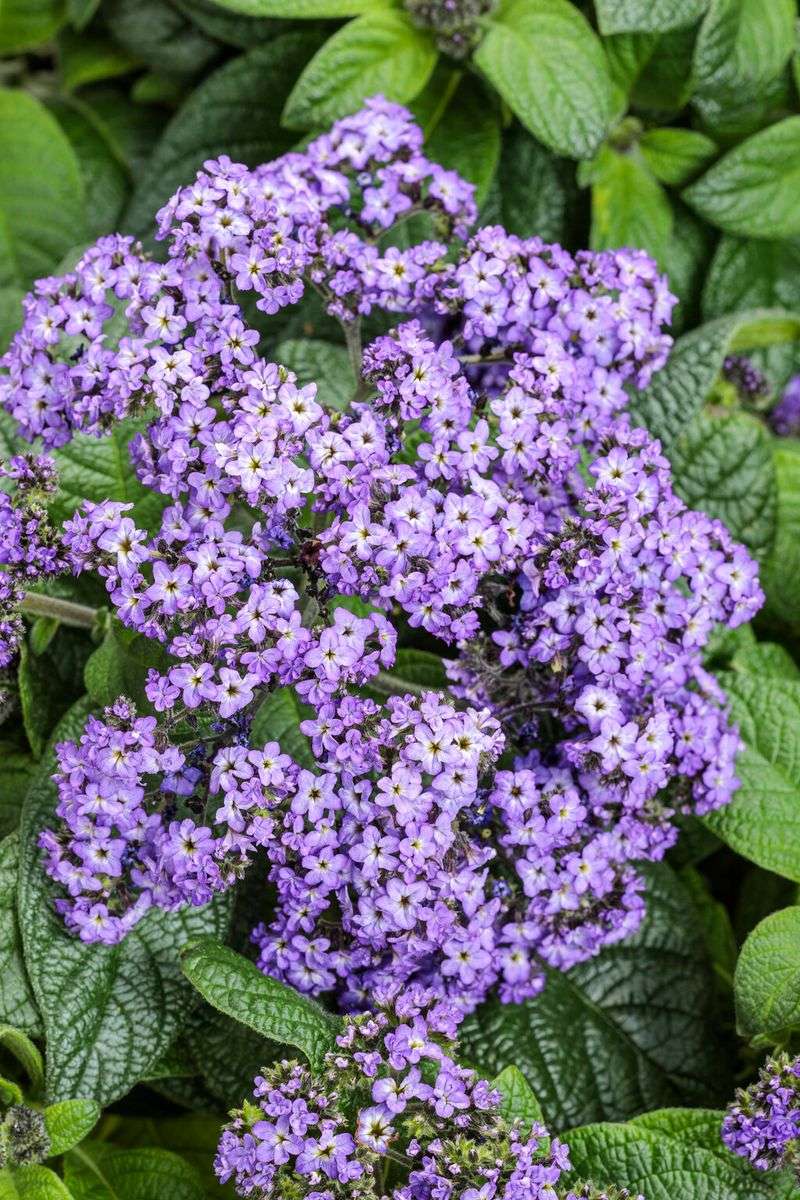
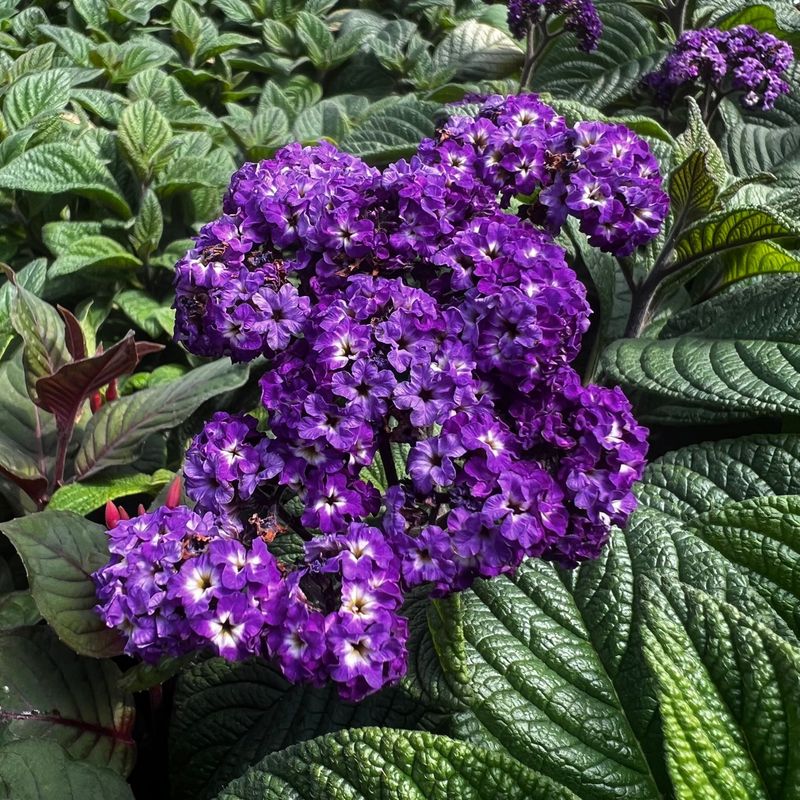
The plant itself is easy to recognize once you know what to look for. Flower clusters are rounded and typically appear in shades of purple, lavender, blue, or white.
The leaves are dark green, oval, and prominently veined, giving the foliage a slightly textured look that holds up well in a border or container.
In most parts of the United States, heliotrope grows as a warm-season annual, planted after frost danger passes and pulled or composted before the first hard freeze. Only in reliably frost-free climates, roughly USDA Zones 10a through 11b, can it survive winters outdoors and develop into a shrubby perennial.
Everywhere else, it is a seasonal pleasure.
Here is the part the plant tag rarely tells you: fragrant heliotrope selections can genuinely deliver that notable scent, but the purple flowers alone cannot guarantee it. Color is not a reliable signal.
The species name is a better starting point, and the cultivar name is the real key. Knowing which plant you are actually buying is the first step toward the porch evening you are picturing.
Cherry Pie Describes the Experience, Not a Formula
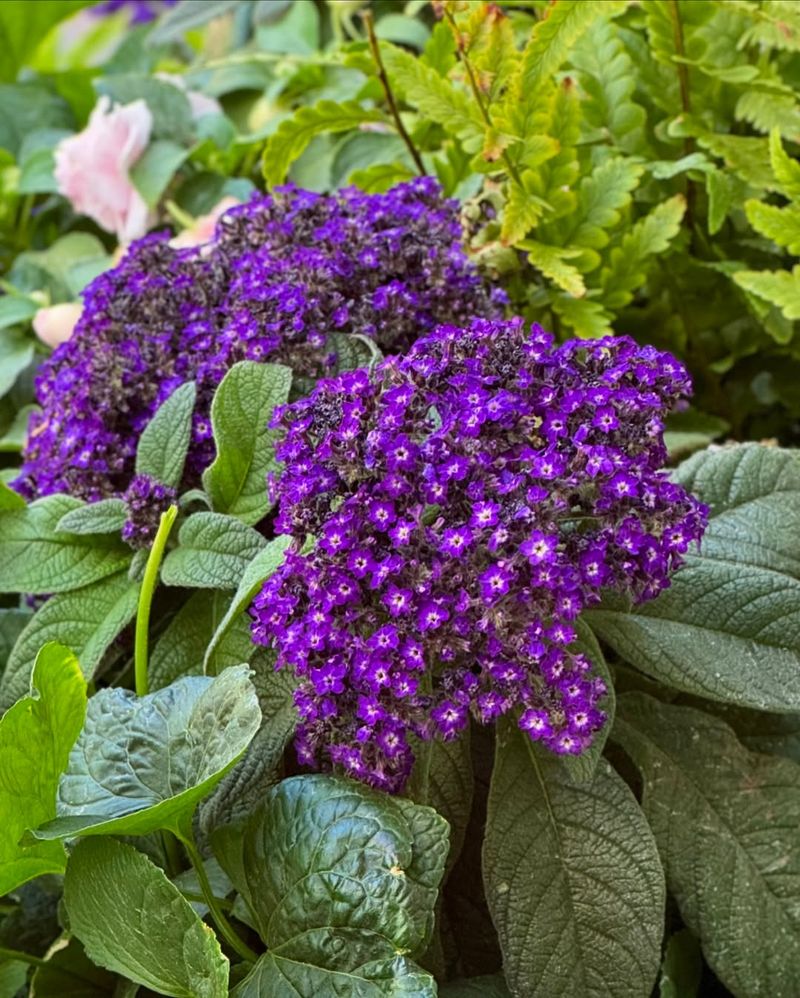
The name “cherry pie” does a lot of work for a scent that is genuinely harder to pin down than a baked dessert. Extension horticulturists most commonly describe the fragrance of Heliotropium arborescens as vanilla-like, and that is a fair starting point.
The cherry-pie comparison comes from gardeners who catch something warmer and fruitier in the mix, a perception that is real but personal.
Why does the same plant smell different to different people? A peer-reviewed HortScience study of Heliotropium arborescens ‘Marine’ identified 41 separate volatile compounds in the flower’s scent profile.
That is not a simple formula. It is a layered blend, and human noses sort those layers differently depending on individual biology, past scent memories, and even how warm or still the air is when you lean in.
Think of it the way you might think of a familiar song played on two different instruments. The notes are the same, but the experience shifts.
One person catches the vanilla. Another catches something closer to ripe fruit.
Neither is wrong, they are just responding to different parts of a complex signal.
What the research also found is that breeding decisions matter to what ends up in that blend. The same study showed that selection for traits like flower size and color has reduced fragrance in some cultivars, meaning the scent chemistry of the plant can change as growers develop new varieties.
The cherry-pie comparison is a useful shorthand for what a genuinely fragrant selection can offer, but it describes a range of possible experiences rather than a single guaranteed smell.
Flower Color Cannot Guarantee Fragrance
A purple flower on a heliotrope tag is about as reliable a fragrance guide as a pretty label on a bottle of perfume. The color tells you what you will see, not what you will smell.
Understanding why requires separating three things that often get lumped together: the species, named cultivars, and modern hybrids.
The classic species is Heliotropium arborescens. Breeders working from that base have developed dozens of named cultivars and hybrids over the years, optimizing for compact growth, large flower heads, vivid color, or heat tolerance.
Published research confirms that selection for flower size and color can diminish floral fragrance in some cultivars, so a showier bloom does not mean a stronger scent.
Augusta Lavender is the clearest documented example of this tradeoff. University of Tennessee Gardens reported that Augusta Lavender performed strongly in full sun and heat, forming a tidy mound and flowering from May until frost.
That is genuinely impressive performance for a plant that traditional types can struggle to match in Southern summers. The same source noted, though, that this selection may have little or no fragrance.
On the other side of that tradeoff, Penn State Extension’s 2025 trial report described Heliotropium arborescens ‘Midnight Sky’ as having a vanilla-cherry fragrance. That is useful, specific evidence for that cultivar.
It does not mean every plant sold as heliotrope will smell the same way.
The practical rule is simple. When fragrance is the main reason you want heliotrope, look for a named Heliotropium arborescens selection with an explicit fragrance description on the tag or in the grower’s notes.
Color alone will not get you there.
Shop by Label and Plant for Easy Smelling
Buying heliotrope for fragrance is a two-step process, and both steps happen before you load the plant into your car. The first step is reading the label carefully.
Look for the full botanical name, Heliotropium arborescens, and a cultivar name. If the tag says only “heliotrope” with a picture of purple flowers, that is not enough information to know what you are getting.
The second step is to smell an open flower cluster while you are still at the garden center. Lean in close and take a slow breath near a cluster that is fully open, not a tight bud.
North Carolina Extension describes the fragrance as vanilla-like, so that is a reasonable thing to look for. If the plant has no detectable scent at the garden center, treat that as a signal.
Scent perception and intensity can vary, but a plant with no fragrance on a warm day is a reasonable reason to choose a different one when scent is your priority.
Placement after purchase matters just as much as the plant you choose. Heliotrope works best within a few feet of where you actually spend time.
A pot near the porch steps, a small cluster along a walkway, or a border plant beside an outdoor chair puts the flowers close enough to enjoy without needing to walk across the yard. A faint fragrance across a large lawn is an unrealistic expectation for any plant.
For light, Purdue University’s ornamental annuals guide gives full sun to part sun as the general exposure range, while North Carolina Extension recommends full sun. In climates with very hot afternoons, a spot that gets morning sun and some afternoon shade can help the plant stay comfortable.
Space plants about 12 to 18 inches apart in the ground, and defer to the cultivar tag if the listed mature width differs from that range.
Steady Moisture Supports a Fuller Plant
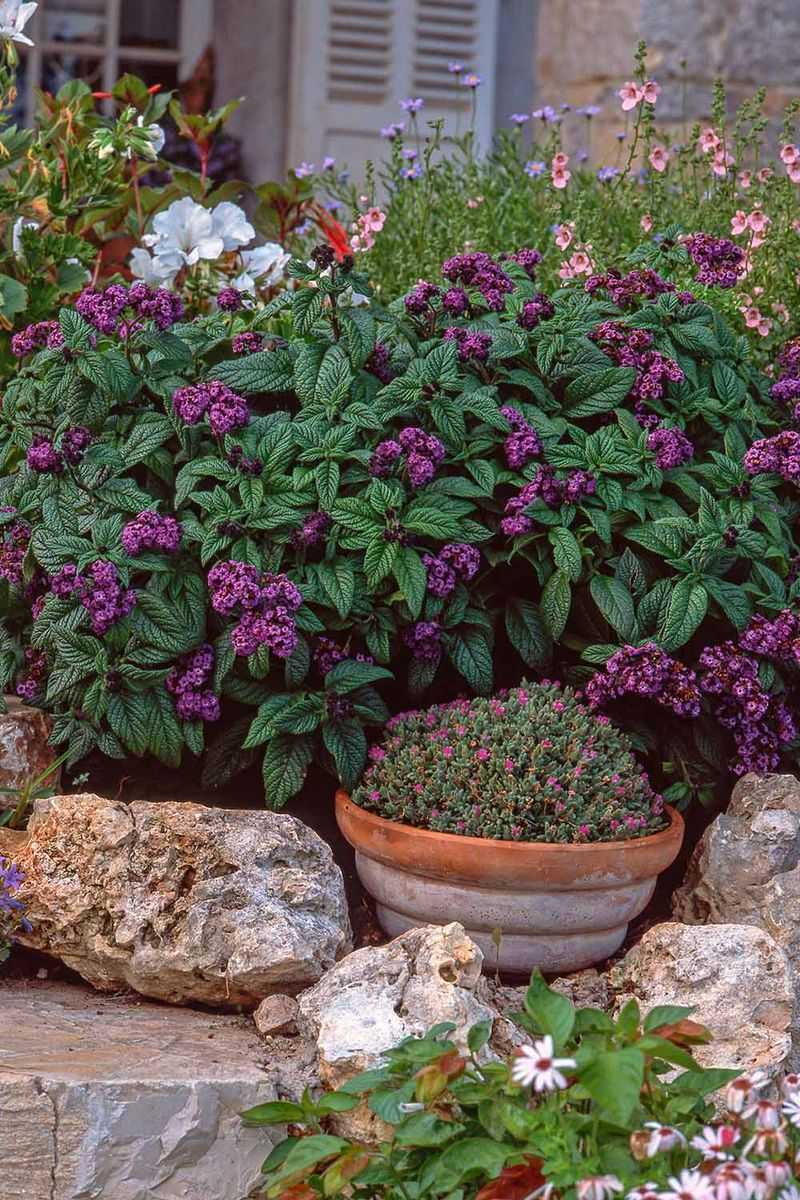
Heliotrope is not a plant that rewards neglect, but it is also not complicated to keep happy once you understand what it needs. The goal is fertile, moisture-retentive soil that still drains well.
Roots sitting in water will rot, but a plant that wilts repeatedly from drought will be slow to recover and slower to bloom.
A practical watering habit is to check whether the top inch of soil feels dry before you water, then water deeply enough to wet the entire root zone. That approach works better than a fixed schedule because local rainfall, soil type, and container size all change how fast the soil dries out.
Purdue notes that slightly drier conditions may improve fragrance, but also cautions that drought-stressed plants recover slowly. That is a narrow target, not a reason to withhold water on hot days.
Container plants need more attention than bed plants. During hot, windy stretches, a pot can dry out in a single day, so checking daily is not excessive.
Plants in garden beds, once established, usually need less frequent watering when natural rainfall is adequate. Your soil type matters too, sandy soils drain faster than clay, and that changes everything about how often you need to water.
Pinching the tips of young stems encourages the plant to branch out and fill in rather than stretch tall and leggy. Think of it as telling the plant to spread its energy sideways instead of straight up.
For older or overgrown plants, a light trim can tidy things up and push new growth. Proven Winners recommends removing no more than one-quarter of the plant at a time on Augusta Lavender, then following up with water and fertilizer if growth has slowed.
That same restraint is a reasonable guide for other selections too.
Heat and Cold Change the Tradeoff
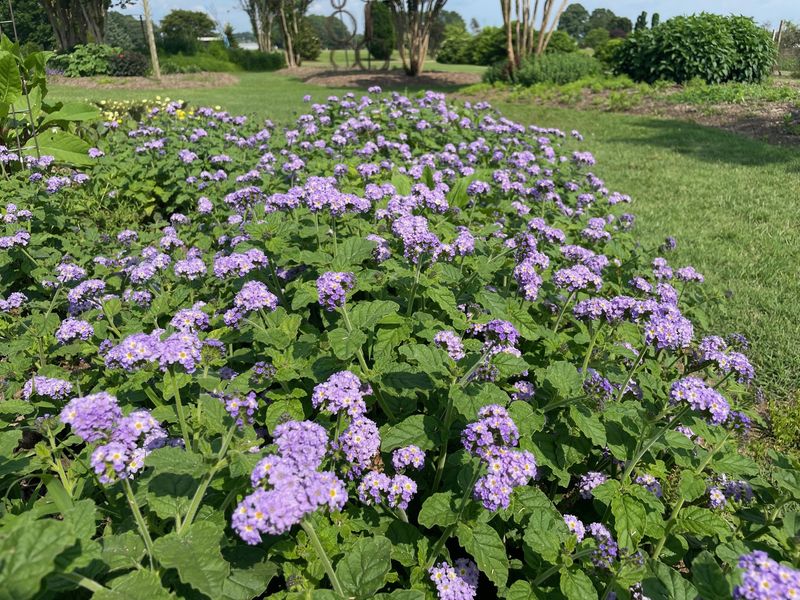
Traditional heliotropes have a reputation for preferring cooler growing conditions, and that reputation is earned. Purdue’s ornamental annuals guide notes that heliotrope prefers cooler climates and that flowering may slow or fade toward the end of a hot, humid summer.
For gardeners in the Midwest or Pacific Northwest, that is rarely a problem. For gardeners in Georgia, Texas, or the Carolinas, summer heat can cut the season short on traditional types.
That is where the cultivar tradeoff becomes most visible. Augusta Lavender, the heat-tolerant selection mentioned earlier, was specifically tested in a Southern climate.
University of Tennessee Gardens documented that it formed a 12-to-18-inch mound and flowered from May until frost in their trial, which is a meaningful performance advantage. The catch, as that same source notes, is that this selection may not carry the classic fragrance.
Summer resilience and strong scent can pull in opposite directions depending on the cultivar.
Cold is equally important to time correctly. Heliotrope is frost sensitive, and one cold night can damage tender foliage quickly, especially in a container where the roots cool faster than they would in the ground.
Northern gardeners should wait until frost danger has fully passed and nighttime temperatures stay reliably mild before planting outside. In the South, planting can happen earlier in spring, but earlier planting does not remove the stress that comes with hot, humid conditions later in the season.
North Carolina Extension lists heliotrope as suited to USDA Zones 10a through 11b, but those zone numbers address winter cold tolerance only. They say nothing about summer heat, humidity, soil, or rainfall.
Most US gardeners should plan to grow heliotrope as a seasonal annual and replace it each year. Containers add flexibility, making it easier to move a plant into afternoon shade during a heat wave or bring it inside ahead of an early cold snap.
Enjoy the Pollinators and Respect the Risks
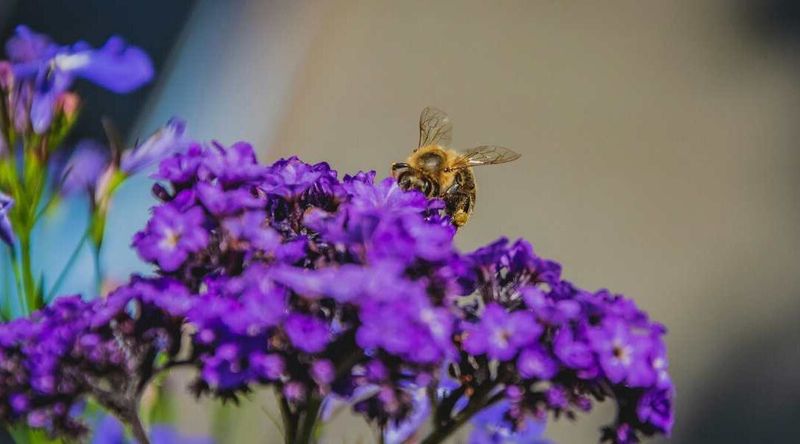
Heliotrope earns its place in a garden for more than just fragrance. The flower clusters attract bees, butterflies, and moths, making it a useful addition to a pollinator border, cottage garden, or container planting near a patio.
That wildlife benefit is real and worth appreciating.
What heliotrope does not do is repel mosquitoes, ticks, flies, or household pests. North Carolina Extension lists whiteflies, spider mites, aphids, and mealybugs as pests to watch on heliotrope itself.
Check the undersides of leaves if growth looks weak, sticky, curled, or off-color. A firm spray of water can help with early, light infestations, and improving overall plant health through consistent moisture and appropriate light is always the first response.
Severe problems are worth a call to your local Cooperative Extension office for guidance specific to your region.
Deer occasionally browse plants they normally avoid when preferred food is scarce, and heliotrope is no exception, though University of Minnesota Extension lists it among deer-resistant plants. “Resistant” is not the same as immune, especially during a dry summer when deer are hungry and options are limited.
The safety issue that deserves the most attention is toxicity. Do not eat heliotrope, brew it as a tea, or use it as a home remedy.
North Carolina Extension identifies pyrrolizidine alkaloids in the plant and lists flowers, fruits, leaves, roots, sap, seeds, and stems as poisonous parts. The risk to humans comes from ingestion, not from handling the plant in the garden.
Horses face the clearest documented risk. The ASPCA lists heliotrope as toxic to horses due to pyrrolizidine alkaloids, and the Merck Veterinary Manual connects pyrrolizidine alkaloidosis to liver disease from large or prolonged ingestion.
Keep heliotrope away from horse pastures, hay storage, and any area where grazing animals can reach it. For any suspected ingestion by a dog, cat, or other animal, contact a veterinarian or an animal poison control service rather than waiting to see what happens.
Choose the Trait You Will Notice Most
Before buying heliotrope, it helps to decide which trait matters most to you on a Tuesday evening in July. If you want fragrance, that decision leads you toward a named Heliotropium arborescens selection with an explicit scent description, a plant you have actually smelled at the garden center, placed within a few feet of where you sit.
Research confirms that breeding for flower size and color has reduced fragrance in some cultivars, so a beautiful bloom is not a scent guarantee.
If summer resilience matters more, a heat-tolerant selection like Augusta Lavender may suit your climate better, especially in the South or mid-Atlantic. University of Tennessee Gardens documented strong season-long performance for that selection in Tennessee heat, but also noted it may carry little or no fragrance.
That is a reasonable trade for a gardener who wants consistent color through a hot summer and does not mind losing the scent.
A few habits make either choice work better. Smell the plant before you buy it.
Place it close enough to a porch, walkway, or chair that you will actually encounter the flowers. Keep the soil steadily moist without letting it pool.
Wait until frost danger has passed before planting, and know your local frost dates rather than relying only on a zone number.
Garden heliotrope can provide a distinctive fragrance and support pollinators, but it does not repel household insects, and no single cultivar suits every climate or goal. The purple flower really can smell like cherry pie, but only if you pick the right one first.