
Most North Carolina Gardeners Think August Is Too Late For Beets, But It Is Their Best Start
Follow us on Google
Pull up the NC State Extension fall planting calendar and beets are sitting right there in August, not crossed out, not asterisked, just listed as a fall crop ready to go.
A lot of gardeners across the Piedmont, Sandhills, and Coastal Plain miss that window every year because August feels wrong for a cool-season vegetable.
The heat, the dry spells, the red clay baking in the afternoon sun, it all reads like a stop sign.
But for much of North Carolina, early to mid-August is actually a documented and workable beet-planting window, and knowing how to manage the seedbed makes all the difference.
August Can Still Work for North Carolina Beets
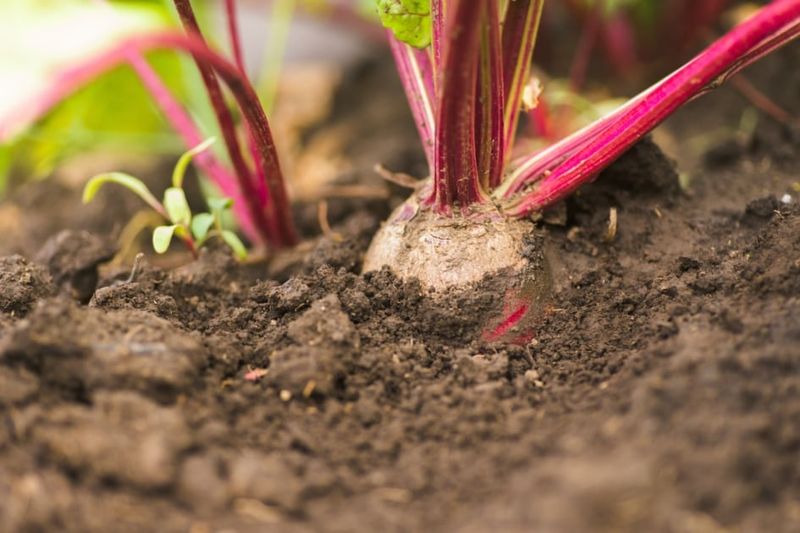
Beets earn their place on the NC State Extension fall vegetable list, and August is the month that puts them there for much of North Carolina.
The NC State Extension Gardener Handbook identifies August as a primary fall planting month for direct-seeded crops, and beets are among the vegetables suited to that season.
That is not a loophole or a workaround.
It is how the fall garden is designed to work.
The catch is that “August” does not mean the same thing in every corner of the state.
A gardener in the Piedmont, say around Greensboro or Raleigh, is working with a different frost calendar and a different soil situation than someone in Boone or Wilmington.
The opportunity is real, but it comes with regional fine print worth reading before you scatter a single seed.
What makes August workable is the math of the season.
Beets are cool-season crops, meaning they do their best eating and growing as temperatures moderate into fall.
Plant in early to mid-August in the Piedmont, and roots can develop through September and into October as the air softens.
The NC State community food-garden handbook places beets squarely in the early-to-mid-August fall group for the Piedmont.
The sections ahead cover how to set that seedbed up for success: which region gets which window, how to prepare the soil for small seeds in hot conditions, when to water, how to thin the clusters, and what a realistic harvest looks like when fall weather does what it usually does in North Carolina.
Use Your Region to Set the Planting Date
Here is where the article earns its keep.
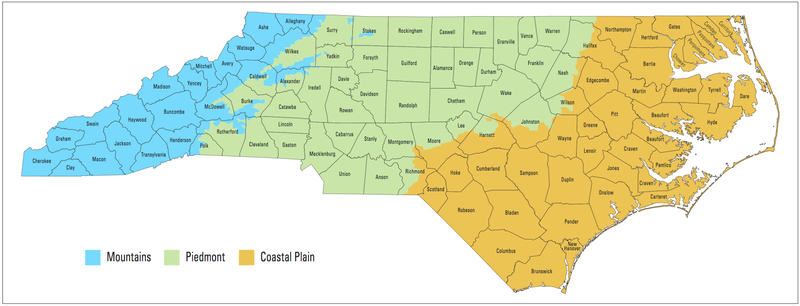
North Carolina stretches across three very different growing environments, and a single planting date does not fit all of them.
Getting the timing right means knowing which region you are gardening in before you open the seed packet.
For the Piedmont, early to mid-August is the documented fall window for beets.
That covers a wide swath of the state, from the Triangle through the Triad and into the Charlotte metro.
Gardeners in that zone have the most direct match with the extension guidance.
Western North Carolina, including the mountains around Asheville and Boone, generally needs to plant earlier.
Shorter growing seasons and cooler overnight temperatures mean the window opens and closes faster.
The Southeastern US Vegetable Crop Handbook places the western North Carolina fall beet window at approximately July 15 to August 15.
If you are gardening at elevation, the earlier end of that range is the safer bet.
The Coastal Plain and areas near the coast generally have more flexibility.
That same handbook lists approximately August 1 to September 15 as the eastern North Carolina fall beet range.
Milder winters and later first frosts give eastern gardeners a longer runway, and the NC State Extension Gardener Handbook notes that Coastal Plain dates often run 7 to 14 days later than Piedmont dates.
None of these windows are guarantees.
First frost timing, soil moisture, variety choice, and actual August weather all shape the outcome.
Use the regional date as your starting point, then adjust based on what your specific yard is doing that week.
A dry spell or a stretch of 95-degree afternoons is a reason to delay or to water more aggressively, not to give up on the crop entirely.
Prepare a Fine, Moisture-Holding Seedbed
Beet seeds are small, and small seeds are unforgiving about the ground they land in.
Clods, hard crust, and loose dry pockets all work against even germination.
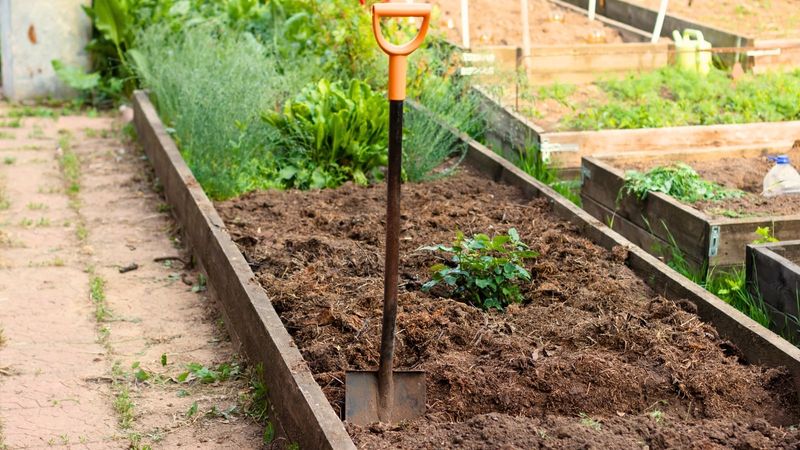
The goal before you plant is a fine, level surface where seeds can make consistent contact with moist soil.
Work the top few inches of the bed until the texture is loose and crumbly, with no large clumps.
August soil in North Carolina, especially Piedmont red clay, can be bone-dry and brick-hard after a run of hot afternoons.
Breaking it up and watering it the evening before you plant gives the bed a head start.
University of Minnesota Extension guidance on seedbed preparation notes that a fine, level surface improves seed-to-soil contact and reduces the risk of seeds being buried too deep or left stranded above the moisture zone.
NC State recommends planting fall seeds a bit deeper than you would in spring, sometimes 1.5 to 2 times as deep, because the surface dries out faster in August.
That extra depth puts the seed closer to consistent moisture, which matters more than almost anything else during germination.
UMN Extension irrigation guidance identifies small-seeded crops like beets as especially sensitive to soil crusting and inconsistent moisture, particularly in clay-heavy soils.
Before adding lime or fertilizer, run a soil test.
NC State’s guide to soil testing explains how a test reveals pH, nutrient levels, and what your soil actually needs, rather than what you are guessing it needs.
Most vegetables do well in the 6.0 to 6.5 pH range, but the test tells you where you actually stand.
One more thing: if you are gardening in an older urban bed, near painted structures, or in soil that came from an unknown source, get that soil tested before planting edibles.
Raised beds or containers filled with tested growing mix are the safer choice when contamination is a real possibility.
Direct-Sow the Seeds and Thin the Clusters
Beets do not move well.
That is not a personality trait, it is a root thing.
Disturbing the taproot during transplanting can cause forking, stunted growth, or misshapen roots, so direct sowing into the prepared bed is the right approach from the start.
University of Minnesota Extension planting guidance notes that beets do not tolerate transplanting well and should be direct seeded for best results.
For row spacing, the Southeastern US Vegetable Crop Handbook suggests rows 15 to 20 inches apart with roughly 15 to 18 seeds per foot of row.
Those are production benchmarks, not rigid rules for a backyard bed.
Sow a little thicker than you think you need, because not every seed will germinate, and thinning later is easier than replanting bare patches.
Here is the part that catches a lot of first-time beet growers off guard.
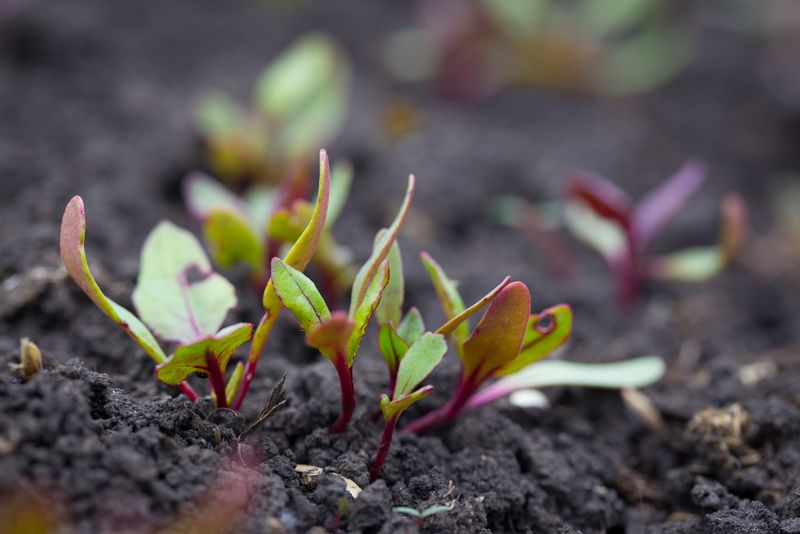
What looks like a single beet seed is often a cluster, a small corky structure that contains several seeds bundled together.
When those clusters germinate, you get a little crowd of seedlings all competing for the same spot.
Left unthinned, they push against each other and produce small, crowded, oddly shaped roots.
Thin after the seedlings are an inch or two tall, snipping rather than pulling so you do not disturb the roots of the ones you want to keep.
The NC State central North Carolina planting calendar lists 2 inches between plants, while the Southeastern handbook suggests 3 inches.
Check your seed packet for the variety-specific recommendation.
The thinnings are edible, so toss them in a salad rather than the compost pile.
Protect August Germination Without Overheating the Bed
Warm soil is not the enemy of beet germination.
The Southeastern US Vegetable Crop Handbook gives an optimum germination range of 50 to 85 degrees F for beets, which means August soil temperatures in North Carolina are often within reach.
The real problem is not the calendar month.
It is what happens to that soil surface between waterings.
Hot afternoons, low humidity, and sandy or clay-heavy soils can dry and crust the top inch of a bed within hours of watering.
When that crust forms over a small beet seed, the seedling cannot push through.
UMN Extension irrigation guidance identifies this crusting problem as a particular risk for small-seeded crops in warm conditions.
Consistent moisture during germination is not optional, it is the job.
Water the bed gently and thoroughly after sowing, then check it daily.
The goal is to keep the top inch of soil moist, not soaking wet, until seedlings are up.
A light misting in the morning and again in the afternoon may be necessary during a dry stretch.
Do not rely on normal summer rainfall alone, because North Carolina’s August storms are hit-or-miss by neighborhood.
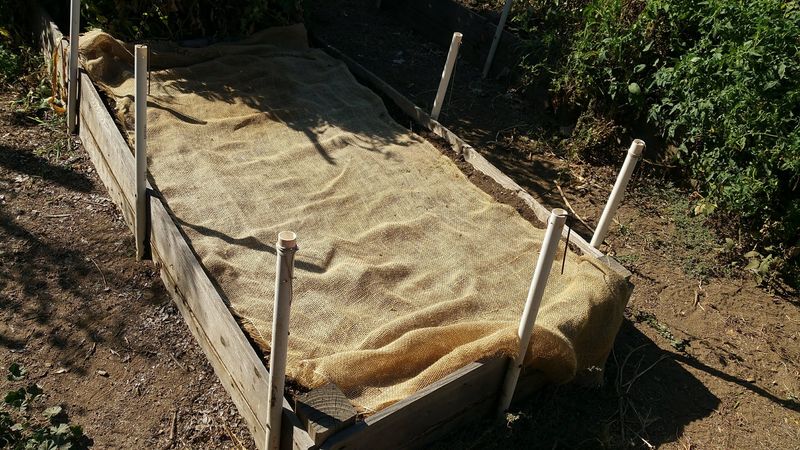
Temporary opaque coverings can help.
The NC State Extension Gardener Handbook recommends laying burlap, damp newspaper, or boards over the seeded area to hold moisture and reduce surface heat.
Remove those coverings as soon as seedlings begin to emerge, because blocking light at that stage does real damage.
Floating row covers are a different tool.
Unlike opaque materials, they let light through while buffering temperature and blocking some pests.
UMN Extension guidance on cover use in vegetable beds suggests monitoring row covers carefully, because they can trap heat on warm days.
Vent or remove them as seedlings grow and as temperatures shift, and adjust based on whether pest pressure or heat management is the bigger concern that week.
Support Fall Growth With Light, Soil-Based Feeding, and Monitoring
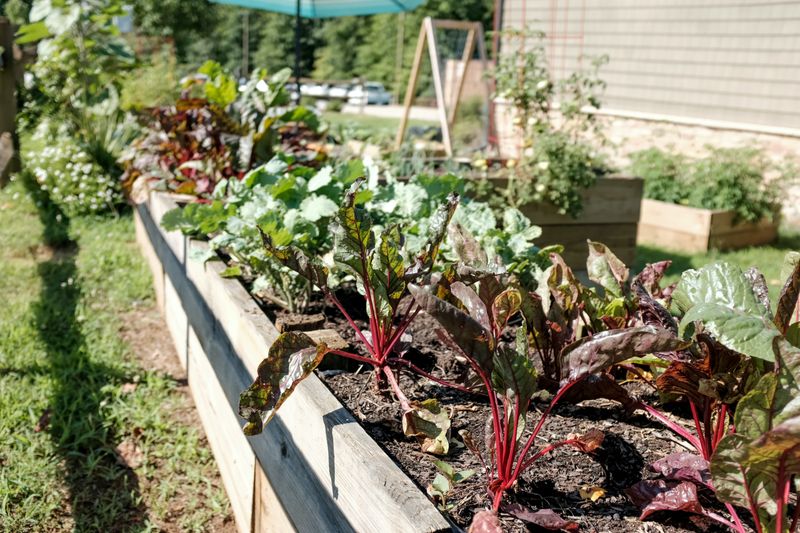
Once beets are up and thinned, the job shifts from germination management to steady growth support.
Beets are cool-season crops, so they are going to get more comfortable as August fades into September.
Your task is to keep conditions favorable while that transition happens.
Light matters more than people expect.
Beets can tolerate some shade, and that is genuinely useful in August when a fence or tree canopy takes the edge off afternoon heat.
The NC State container gardening guide for the Piedmont notes that cool-season vegetables like beets can manage with roughly 3 to 5 hours of direct sun.
But partial shade is a heat-management tool, not a substitute for adequate light.
A bed in deep shade all day will produce slow, leggy plants and smaller roots than one that gets morning sun with afternoon relief.
For feeding, the NC State Extension Gardener Handbook notes that fall vegetables generally benefit from nitrogen applications at roughly three and six weeks after planting.
What that does not mean is that you should grab any bag off the shelf and pour it on.
Fertilizer needs depend on what your soil already contains, and the rate on the product label is your guide.
Run a soil test first if you have not already, and let those results, not guesswork, shape what you apply.
The NC State guide to soil testing walks through exactly what those results mean and how to act on them.
Pest monitoring is worth building into your routine from the start.
The Southeastern US Vegetable Crop Handbook identifies aphids, leafminers, flea beetles, and webworms as common beet pests.
Flea beetles in particular can riddle young beet leaves with tiny holes fast, so check the undersides of leaves a few times a week.
Sanitation and crop rotation are the first line of defense.
Remove plant debris, do not replant beets in the same spot year after year, and use floating row covers as a physical barrier if pressure is high.
Pesticide use is not a given, and any product would need to be labeled for beets with the preharvest interval and safety instructions followed carefully.
Harvest by Root Size, Not by an Exact Date
The 60-day harvest promise is everywhere on seed packets, and it is a reasonable starting point, not a hard deadline.
The NC State central North Carolina planting calendar estimates 55 to 60 days from seed to harvest for beets.
The Southeastern US Vegetable Crop Handbook gives a broader window of 50 to 75 days.
The actual date your beets are ready depends on variety, spacing, fertility, moisture, and whatever weather North Carolina decides to throw at September and October.
The practical approach is to watch the root, not the calendar.
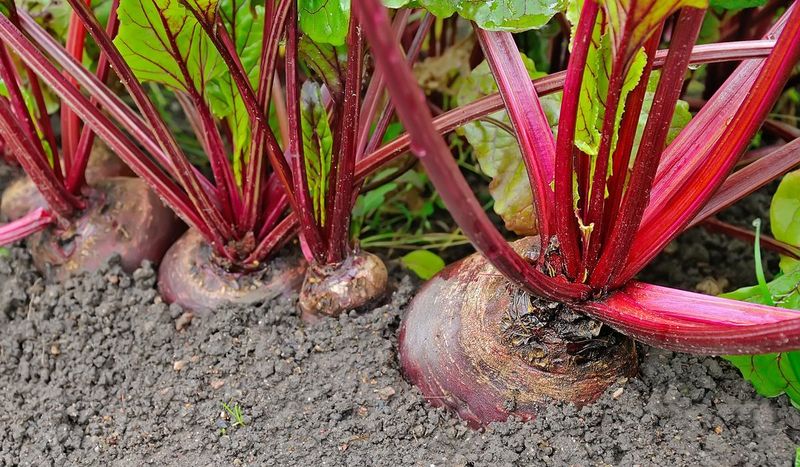
Gently brush soil away from the base of the plant and look at the shoulder of the root.
The handbook cites a typical harvest size of about 1.75 to 2 inches in diameter.
Pull one root and check it.
If the size and texture look right for your intended use, harvest.
Beets left in the ground too long can get woody and tough, especially if temperatures swing warm again after a cool stretch.
Fall growth is not the same as winter growth.
An August planting in the Piedmont is set up to produce roots through October as temperatures moderate.
A later planting, say one that goes in the ground in September on the Coastal Plain, may still produce usable greens and smaller roots before growth slows, but it may not reach full root size before cold genuinely slows things down.
That is not a failure, it is just the nature of a cool-season crop running up against shorter days and dropping temperatures.
After a light frost, beets can stay in the ground for a bit longer, and some gardeners find that a touch of cold actually improves the flavor.
UMN Extension harvesting guidance notes that beet roots can remain in the ground after a light frost.
That does not mean they are frost-proof through a hard freeze, so keep an eye on the forecast and harvest before a serious cold snap arrives.
Make the Decision by Window and Conditions
The decision comes down to two things: where you are in North Carolina and what your seedbed can actually do right now.
For Piedmont gardeners, early to mid-August is a documented and workable fall window backed by NC State Extension community food-garden guidance.
For western gardeners in the mountains, that window opens earlier, closer to mid-July through mid-August, and the frost calendar does not forgive late starts.
For eastern and Coastal Plain gardeners, the window stretches later, sometimes into mid-September, giving more flexibility but not unlimited time.
If the bed is ready, the soil can hold moisture, and you can water consistently through germination, plant now.
Direct-sow into a fine seedbed, set seeds a little deeper than you would in spring, cover temporarily with burlap or damp newspaper to hold moisture, and remove that covering the moment seedlings push up.
Thin to 2 to 3 inches between plants, feed based on soil-test results rather than habit, and monitor for flea beetles and aphids as the season moves along.
The NC State Extension Gardener Handbook frames fall beet planting as a practical part of the North Carolina garden calendar, not an experiment.
The crop is realistic when the regional timing, the seedbed conditions, and the available growing days before first frost line up.
Harvest when roots reach a size you like, not when a specific date on the calendar tells you to.
A beet pulled at the right moment, cool from the soil after a September rain, is the quiet payoff for a decision most people talked themselves out of making.