
How to Carry Your North Carolina Coleus Through Winter in a Glass of Water Instead of a Pot
Follow us on Google
You can carry your favorite coleus through winter in a plain drinking glass on a bright windowsill. Snip a few small stem tips before the cold gets to the plant, set them in clean water, and skip the job of hauling a big pot inside.
Here in North Carolina, a surprise cold snap can turn a lush coleus into mush overnight. A few cuttings take almost no room, and they give you fresh plants come spring.
Save A Few Small Cuttings
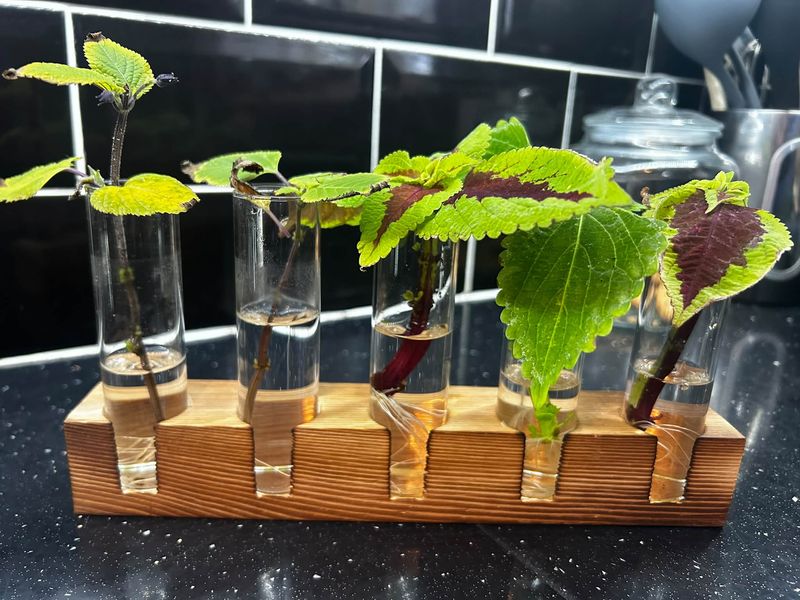
Picture a gray December morning in the Piedmont. Your coleus out front is the star of the porch, and you are not about to drag a sprawling plant through the den.
Good news: you do not have to.
Instead, you can save a few small pieces of your favorite Coleus scutellarioides. Some labels and older books call it Plectranthus scutellarioides, so if you see that name, it is the same plant.
NC State Extension’s Plant Toolbox notes that coleus roots readily in water, which is why this trick works so well for beginners.
Here is the honest part. A glass of water is a way to preserve small cuttings through winter.
It is not proof that coleus will grow big and vigorous in plain water forever. A University of Illinois Extension Master Gardener archive describes keeping coleus cuttings in clean water over winter and repotting them in spring.
That plan has a few moving parts. You take the cuttings, root them, keep the water fresh, give them light, and pot them when roots grow.
It is not a set-it-and-forget-it project, but it asks for a few minutes a week, not a corner of the living room.
Think of each glass as a lifeboat for your favorite color pattern. Small, simple, and worth the attention.
Take Cuttings Before Cold Weather

Many gardeners wait for the first cold warning, then rush out with a flashlight. By then the leaves may already be hurt.
Coleus is a tender plant, and it does not forgive a chilly night.
University of Minnesota Extension says coleus is among the first plants affected by cold overnight lows. That is your cue to act while the parent plant is still healthy, rather than relying on a late rescue.
Healthy stems root better than stressed ones, so earlier is kinder. Walk your beds in early fall and pick out the plants you would truly miss next summer.
Now, when is cold coming? That depends on where you live.
The mountains, the Piedmont, the Sandhills, and the coast all see freezes at different times, so no single date fits the whole state.
Check the National Weather Service frost and freeze maps for North Carolina and your local forecast. Then plan to snip well before your area’s typical first freeze.
Beat the cold by a week or two, and the plant never gets the chance to disappoint you.
Prepare A Healthy Stem Cutting
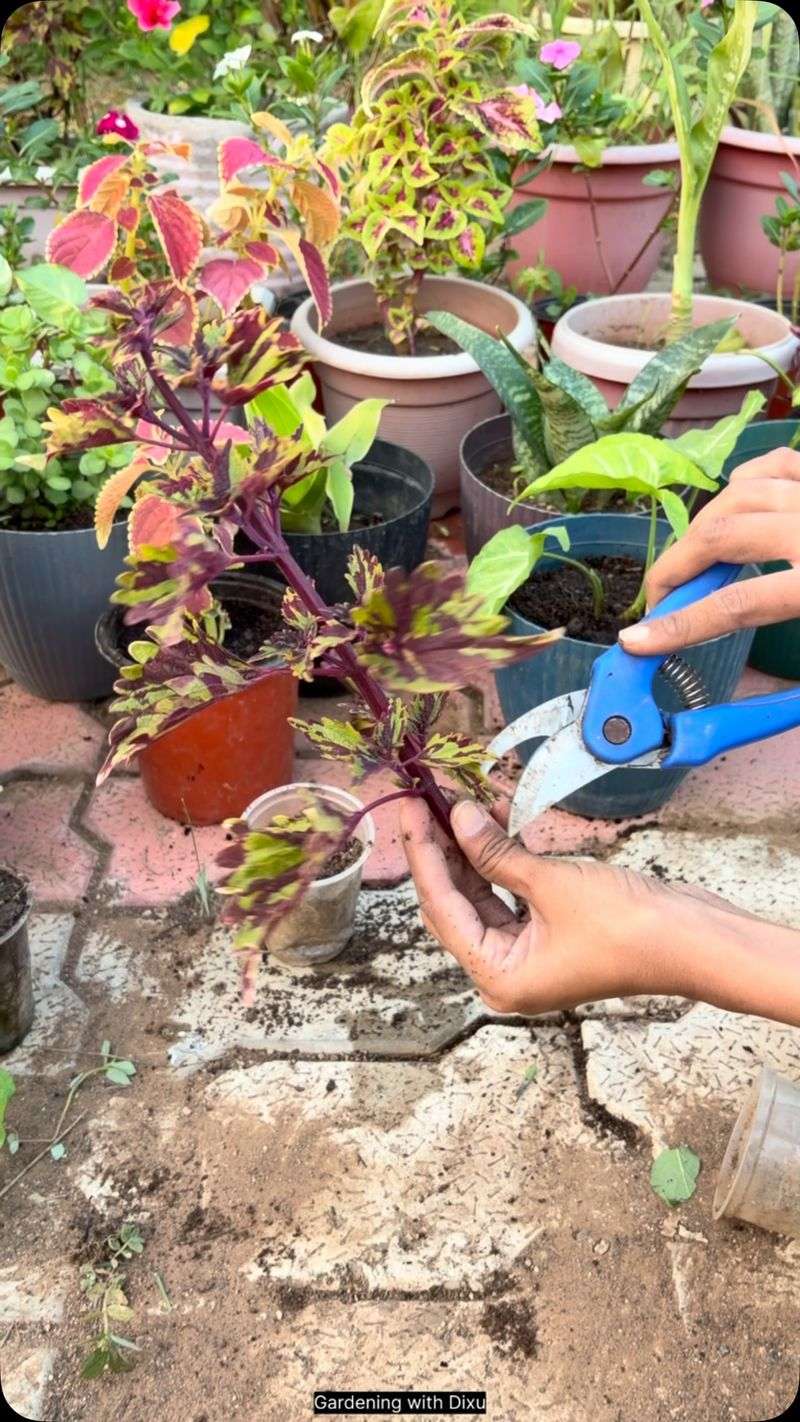
Start with clean tools. Wash your scissors or pruners, and rinse the glasses too.
Missouri Extension recommends clean tools and containers for houseplant propagation, and it says coleus does not need rooting hormone.
Pick a stem that looks strong and actively growing. Skip anything floppy, spotted, or flowering heavily.
A sharp cut makes a cleaner wound than a crushed one.
Now measure by eye. University of Minnesota Extension suggests a stem tip of about four to six inches.
That is roughly the length of a pencil stub.
Next comes the part people skip. Pinch off the leaves from the lower half of the stem.
That bare section will sit in water, and leaves left underwater tend to turn slimy and rot.
Keep the top leaves. They do the work of feeding the little cutting while roots get started.
That is the whole recipe. No powders, no potions, no fancy tricks.
You can take three or four cuttings from your best plant and still leave it looking fine.
Root The Cuttings In Clean Water
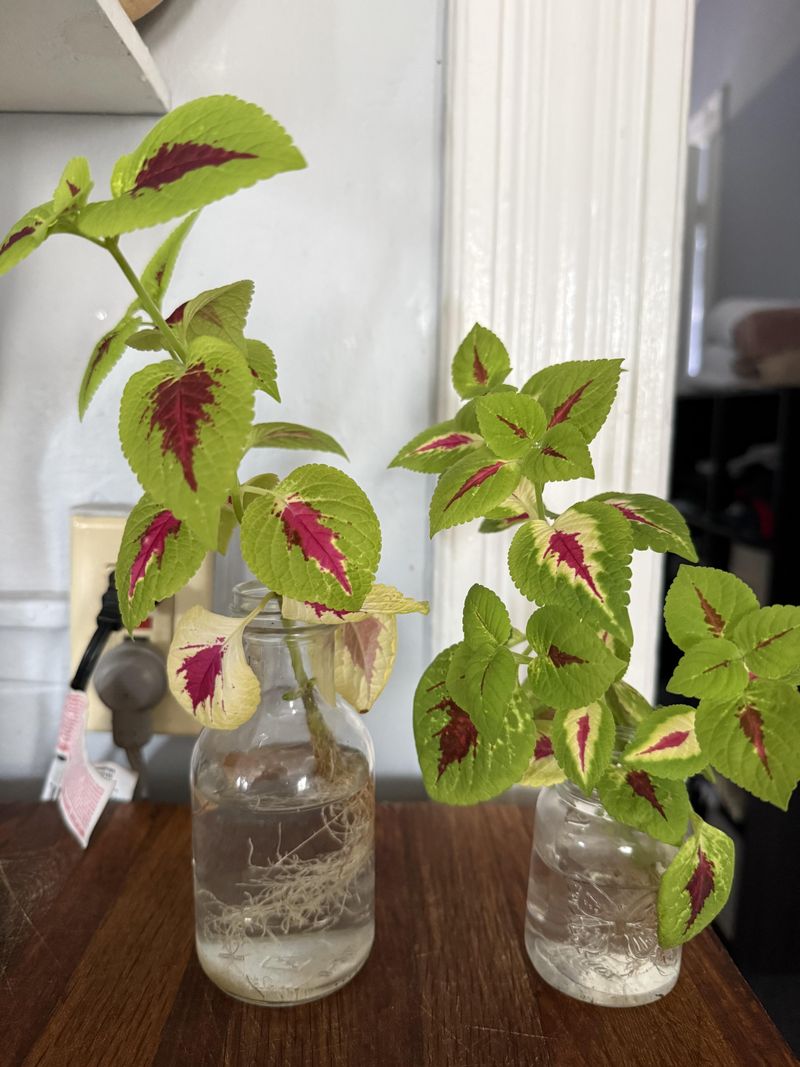
Grab a few clean glasses and fill them with room-temperature water. Set one to three cuttings in each glass, with the bare stem underwater and every leaf above the rim.
Then wait, which is the hard part. Roots often begin to show in about two to three weeks, according to University of Minnesota Extension.
Treat that as a typical estimate, not a promise. A cool room or dim window can slow things down, and some cuttings simply take longer than others.
Look for tiny white threads at the bottom of the stem. When you spot them, you know the cutting has made the move from snipped piece to young plant.
Here is a point worth remembering. The glass is a handy rooting setup.
It is not a guarantee that a cutting will stay happy in water alone. The Illinois Master Gardener archive describes keeping coleus in water through winter before repotting, but that is about keeping small cuttings going, not growing a showpiece.
If a cutting turns mushy and dark, toss it and keep the rest. Losing one is normal, which is why taking a few extras is smart.
Give Cuttings Light And Fresh Water
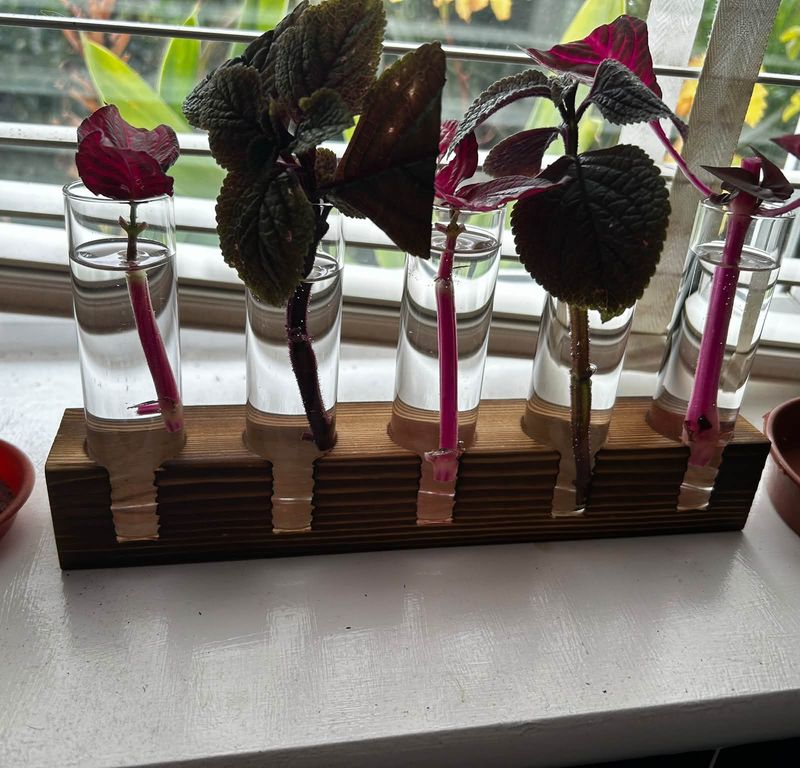
A bright windowsill is the best seat in the house for these cuttings. A south or west window usually works well in North Carolina winters, when daylight is short and weak.
Fresh water matters just as much. Cornell Cooperative Extension’s overwintering advice calls for changing the water as needed, and says coleus can grow at a sunny window or under grow lights until spring.
In practice, that means a quick look every few days. If the water looks cloudy or smells off, rinse the glass and pour in fresh.
Top off if it drops.
Now a reality check. Indoor leaves may lose some color intensity.
That wild burgundy and lime you loved in August may fade to something calmer in January. Cornell notes that color can return once plants are hardened off and moved outdoors, so do not panic.
Do not expect summer-level growth either. Winter cuttings mostly hold on and wait.
Sit them where you will see them every day. A glass you notice is a glass you will remember to freshen.
Pot Rooted Cuttings With Care
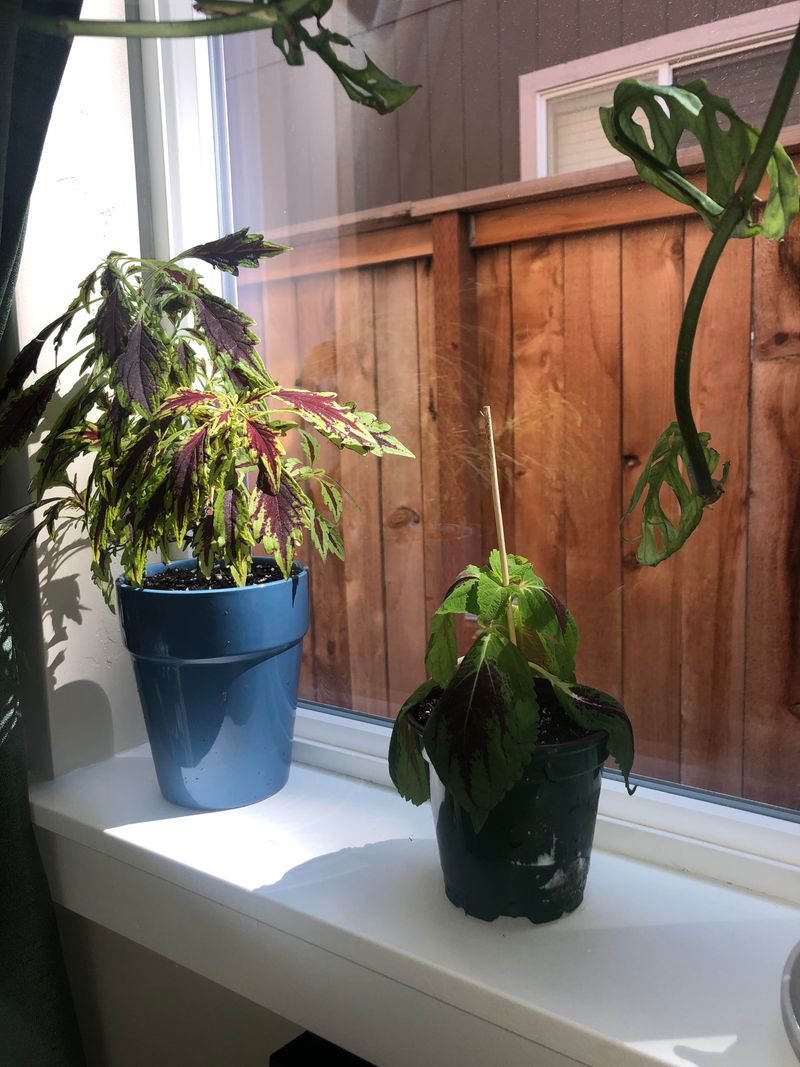
Once roots begin to grow, your cuttings are ready for soil. Minnesota Extension describes rooting first, then planting in soil after roots start to form.
Fill small pots with fresh potting mix and moisten it first. Cornell Cooperative Extension says rooted cuttings can be planted in moistened potting soil.
Poke a hole, lower the roots in gently, and firm the mix around the stem.
Here is where it gets tricky. Roots grown in water are tender and used to a different world.
An Ask Extension response about coleus notes that the move to soil can cause stress.
So expect a little drama. Leaves may droop for a few days.
Keep the soil lightly moist, not soggy, and keep the pots in that same bright window.
Not every cutting will make the jump, and that is okay. This is why you started with a few.
Handle them like sleeping babies. Gentle hands, steady moisture, and a little patience usually win.
Use Local Frost Guidance Before Planting Outdoors
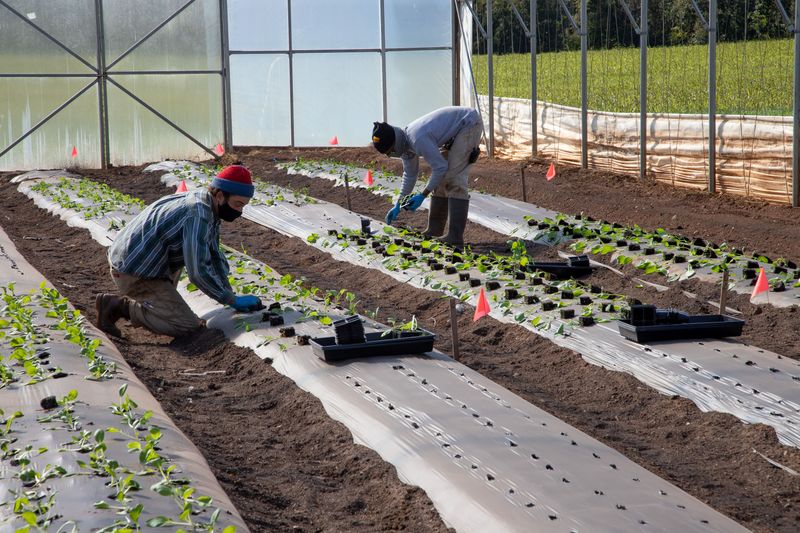
By late winter, your windowsill glasses have become a tray of small potted plants. And the big original never had to squeeze into your living room.
That is the payoff.
Spring is when patience matters again. Coleus cannot handle frost, so wait until your local freeze danger has passed.
Frost timing differs across the mountains, Piedmont, Sandhills, and coast, so use National Weather Service frost and freeze maps and your own local forecast instead of a single statewide date.
Then ease the plants outside. Gardeners call this hardening off.
Set the pots in a sheltered, shady spot for a few hours, then lengthen the time over several days before planting in the ground.
Cornell’s overwintering notes mention that faded indoor color can return after plants are hardened off and moved outdoors. So that pale winter foliage has a good chance of brightening back up.
Keep an eye on the nights, and bring pots in if a late chill sneaks in.
By May, a few glasses of water become a porch full of color.
