
How Blue Jays Are Quietly Planting The Next Oak Forest Across Pennsylvania Backyards
Follow us on Google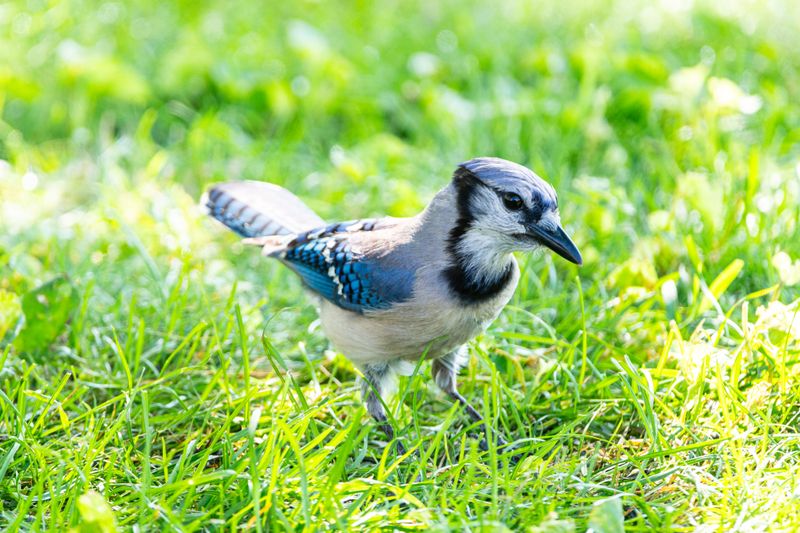
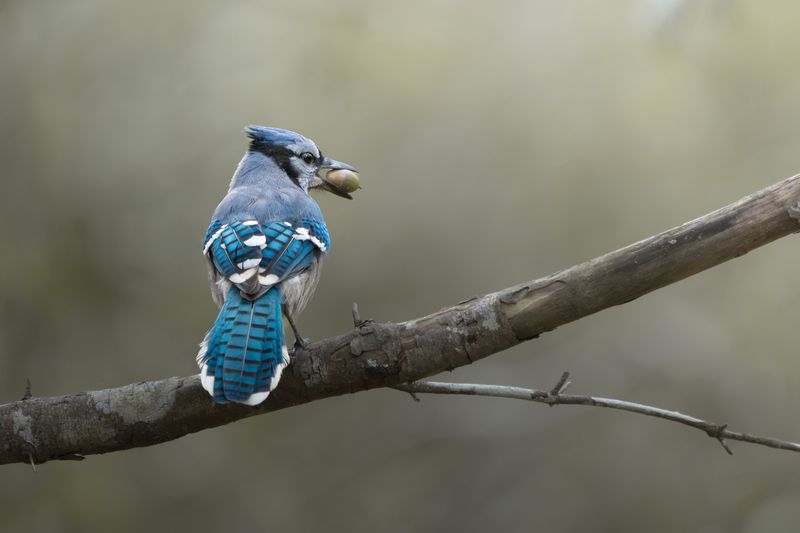
You hear the scream from the maple, and a blue jay drops to your lawn with an acorn in its bill. That loud bird is helping oaks move, because jays carry acorns away from the tree and bury them in the ground.
Some of those buried acorns get forgotten and sprout, which is how a small oak can pop up where nobody planted one. Here in Pennsylvania, that makes the noisy jay a possible tree planter, and it may change how you look at the seedling in your flower bed.
Blue Jays Carry Acorns Away From Trees
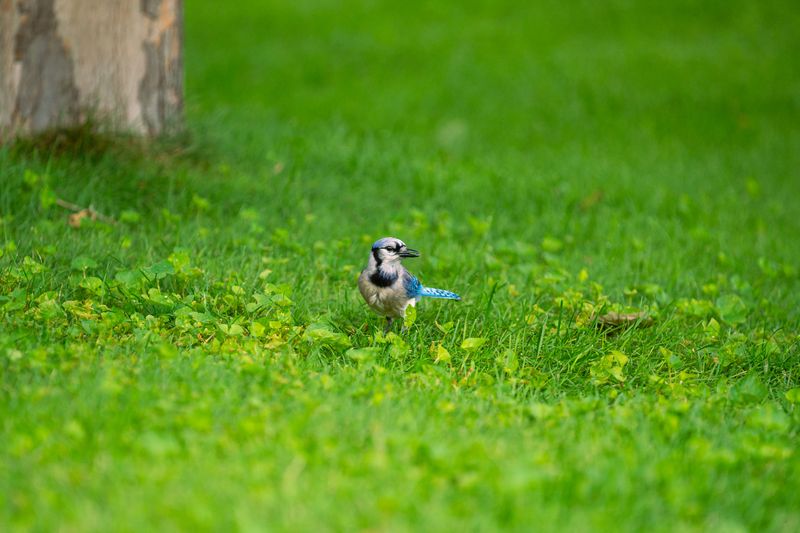
Watch a jay at an oak in October and you will see a bird with a plan. It does not just sit and crack nuts.
It grabs an acorn, flies off, and tucks it away somewhere else.
Blue jays do both things with acorns. They eat plenty, and they also carry and cache them, which means hiding them for later.
According to the Pennsylvania Game Commission, jays cache acorns and other seeds in autumn, in spots such as clearings, edges, and meadows. Some of those cached seeds are never retrieved, and they can sprout.
That is the whole secret. A jay is a small delivery truck with a bad memory for a few of its packages.
The acorn leaves the shade of its parent tree and lands in open ground where a seedling might actually get some light.
Here is where it gets tricky. The Game Commission does not say how many acorns go unclaimed, so nobody can honestly say most of them do.
Plenty get eaten. Plenty get dug up again.
So the fair version of the story is this. Jays help disperse oaks, meaning they move the seeds around.
That gives oaks a route into some yards, not a guaranteed forest in every one.
Still, the next time a jay scolds you from the fence, remember what may be in its beak. It could be a future shade tree.
One Virginia Study Tracks Acorns Far
Most people assume a bird buries a nut right next to the tree. A field study in Blacksburg, Virginia, found something different.
Researchers watched blue jays working a pin-oak stand. In that study of acorn dispersal by the blue jay, jays carried off 54% of the observed pin-oak crop to caches.
They ate another 20% right at the collection site.
The distances are the real surprise. Caches averaged 1.1 kilometers from the source trees, which is roughly two-thirds of a mile.
The reported range ran from 100 meters to 1.9 kilometers.
Picture that from your porch. An acorn could leave a tree a long walk away and end up near your garden shed.
Now the honest part. Those numbers come from one Virginia study, one pin-oak stand, and one setting.
They are not Pennsylvania averages, and they do not describe what every jay does in every yard.
What the study does show is the potential reach of this bird. A jay can move an acorn much farther than the tree could drop it, and that is a genuinely big deal for a plant that cannot walk.
Think of the jay as the oak’s long-distance mail carrier. The route is real, even if your street may not be on it.
Some Pennsylvania Yards Offer Suitable Habitat
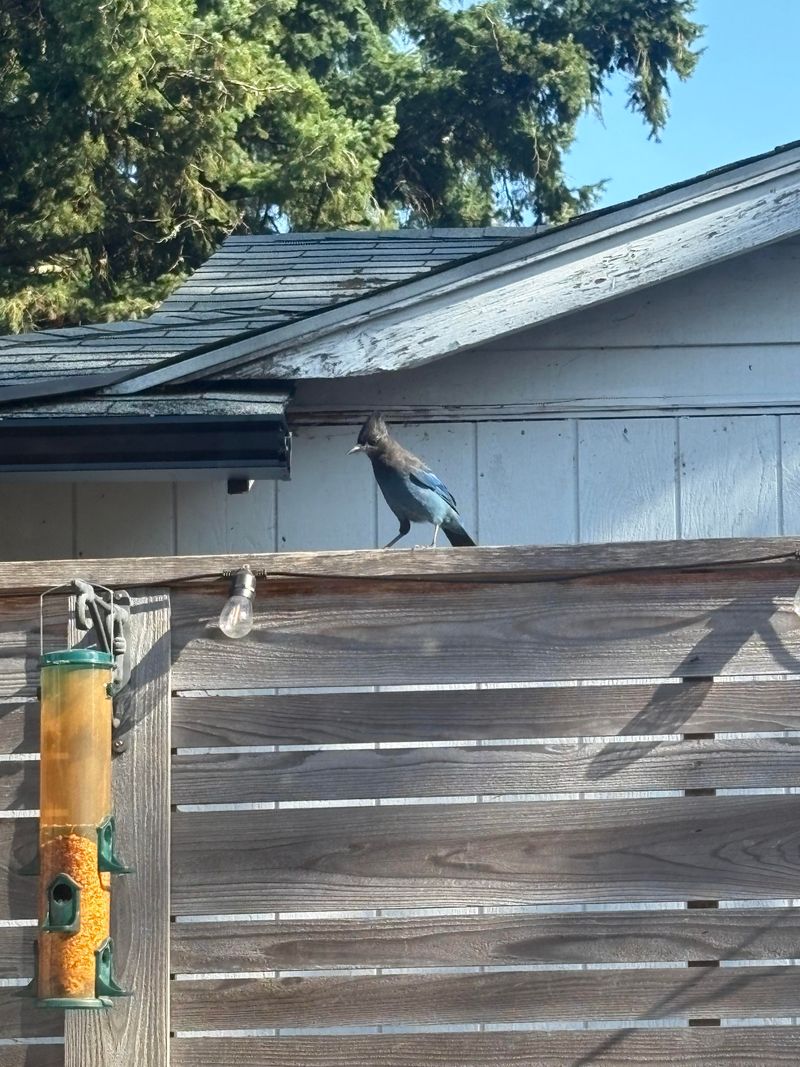
Your yard may look like plain lawn to you. To a blue jay, a place with trees, shrubs, and open patches can look like a decent pantry.
The Game Commission says jays use wooded and partly wooded habitat, including towns and yards. That fits many places in southeastern Pennsylvania, the Susquehanna Valley, and western Pennsylvania suburbs where oaks stand close to homes.
So are jays planting oaks all over the state? Not as far as anyone can prove.
Pennsylvania-linked research is real, but it is small and early.
A 2010 conference abstract reported tracking 835 acorns and 43 jays at eight sites in Indiana and Pennsylvania. The results were preliminary.
Seed survival and dispersal varied by species, site, and year.
That variation matters to you. One fall may move lots of acorns, and the next may move few.
One oak species may get carried more than another.
Treat it as a local clue, not a statewide number. It shows researchers have actually followed jays and acorns here, and that the answer changes with the setting.
If your lot has an oak nearby and a wooded edge, your odds of a volunteer may be better. If it does not, do not feel cheated.
Many yards simply are not on the map.
A Buried Acorn Still Faces Obstacles
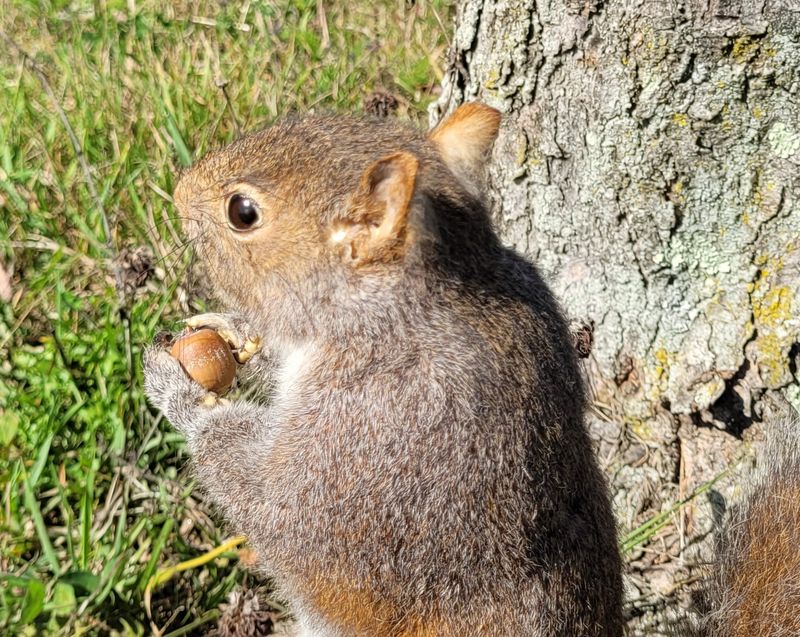
A buried acorn is not a tree. It is more like a lottery ticket that still has to win several drawings.
First, the acorn has to stay alive and sound. Then it has to germinate, which means send out its first root.
After that, the seedling must survive competition from grass and weeds, plus browsing, which is animals nibbling it down.
Pennsylvania has documented trouble at each step. A Pennsylvania Forest Service study on oak regeneration points to acorn weevils, rodents, and deer as all contributing to difficulties.
Insects damage acorns, rodents eat or move them, and deer browse planted seedlings.
That research is historical, so do not read it as today’s loss rate. It does not give a current statewide percentage.
What it does give is a clear list of the hazards a young oak faces.
Here is a diagnostic clue for your yard. A pinhole in an acorn shell often points to an insect that got there first.
A seedling clipped off clean at an angle often points to deer or rabbits.
Planted or carried, burial does not guarantee anything. Plenty of acorns never make it past their first summer.
That is why a seedling standing in your yard in June is worth a second look. It already beat a lot of long odds.
How To Give A Volunteer Seedling A Chance
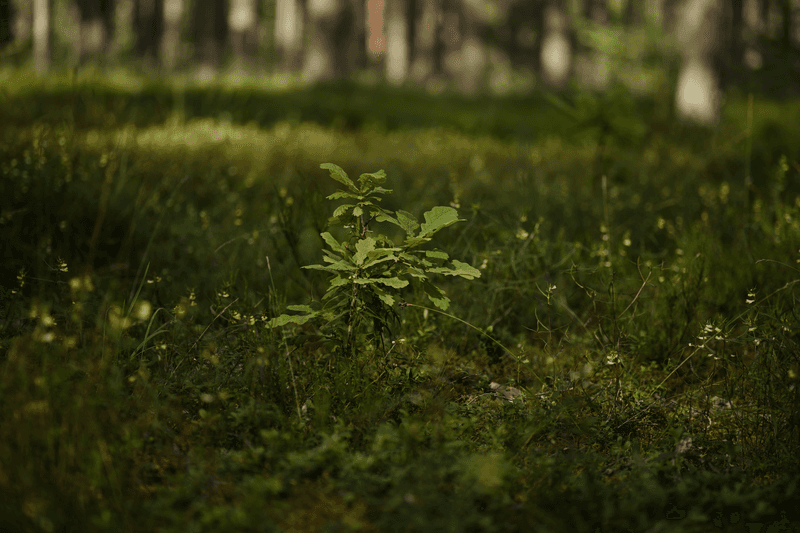
Most volunteer oaks die the same way. Somebody mows them or pulls them as weeds.
A young oak leaf looks lobed or wavy-edged, and the stem is often woody even when it is only a few inches tall. A seedling that sprouts alone, away from other plants, with a leftover acorn at its base is a good sign.
Check around the roots gently if you are unsure.
Your first job is simple. Notice it before the mower does, ideally in late spring or early summer when growth shows.
Second, mark it. A bright stake or a ring of stones about a foot out can save it from the next weeding session.
Third, think about deer. Where deer are common, such as parts of the northern tier and the Laurel Highlands, a wire cage can help.
The Forest Service research mentioned earlier documents deer damage to planted seedlings, so protection is a reasonable layer, not a magic fix.
There is no single method that works everywhere. Cage size, fencing, and placement depend on your deer pressure and your yard.
Keep nearby grass trimmed back so the seedling is not smothered. Water it during dry spells in its first summer if the soil dries out.
You are only improving the odds. But that small effort can be the difference between a tiny sprout and a tree your grandkids climb.
Choose An Oak That Fits The Yard
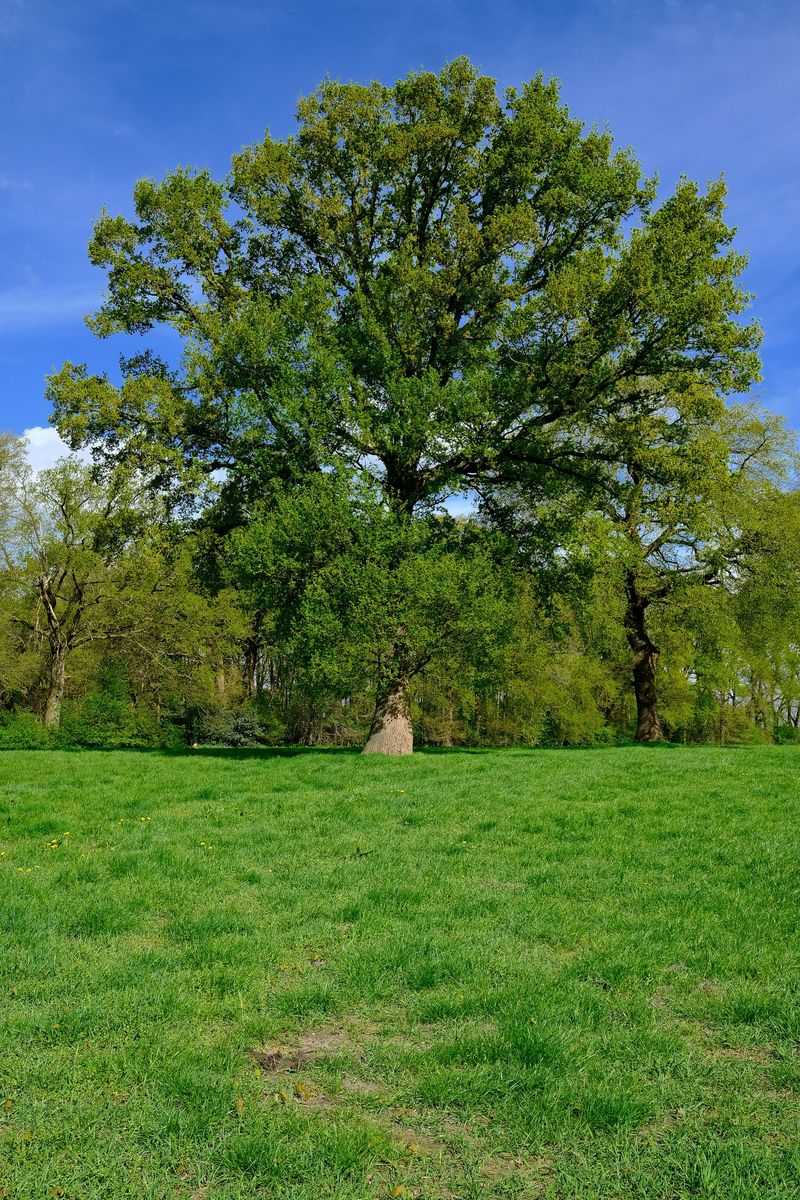
An oak that sprouts for free can still be the wrong tree in the wrong spot. Many oaks grow very large, and a sapling beside a porch can become a problem in thirty years.
According to Penn State Extension, Pennsylvania has fewer than 20 native oak species. They differ in the site conditions they like and in how big they get.
Some prefer wet ground, some like dry slopes, and some tolerate clay better than others.
So before you commit, look up. Check for power lines, the roof, and the septic field.
Then check the soil, since shale, limestone, and heavy clay each suit different species.
If the seedling is in a poor spot, you may be able to move it while it is small, or grow it on in a pot. A Penn State Master Gardener article suggests planting acorns at about the depth a jay or squirrel would cache them, and using a deep pot if you grow a seedling.
Treat that as a practical tip, not a guaranteed recipe.
Not sure of the species? Bring a leaf to your county extension office and ask.
An oak in your yard is a possibility, not a forecast for the whole state. But one well-placed tree is a fine thing to leave behind.
