
Clover Is Not A Weed, It Feeds Your Lawn Free Nitrogen And Laughs At Dog Pee Spots
Follow us on Google
Somewhere between the fertilizer aisle and the dog-urine forums, white clover got a reputation it only half deserves.
The idea that it freely feeds your whole lawn and shrugs off every dog spot is a good story, but the full picture is more useful than the headline.
White clover, Trifolium repens, can genuinely reduce how much nitrogen fertilizer a mixed lawn needs over time, and that is worth understanding clearly.
What it cannot do is just as important to know before you scatter seed or cancel your fertilizer delivery.
White Clover Is A Lawn Option, Not A Lawn Verdict
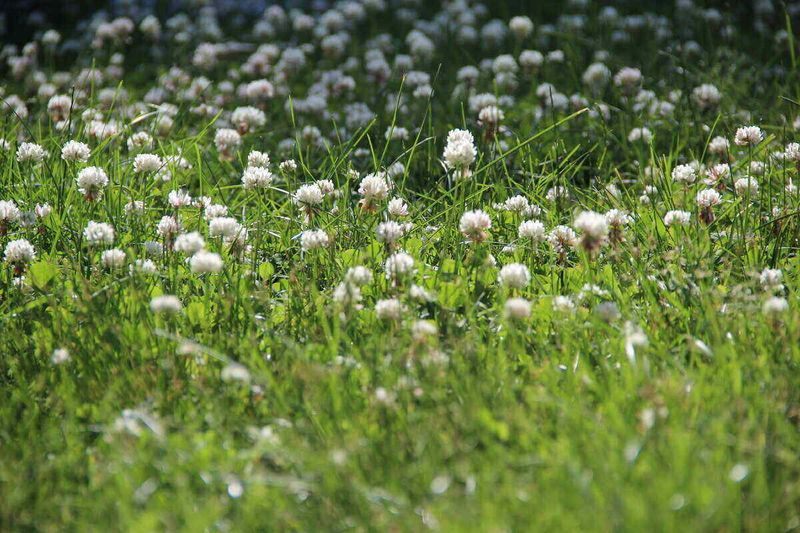
Most lawn owners meet white clover one of two ways: they spot it growing uninvited in a thin patch of turf, or they read that it is a miracle ground cover and order a bag of seed the same afternoon.
Both reactions skip the more useful question, which is whether a managed grass-clover mixture actually fits your yard and your habits.
White clover, Trifolium repens, is a low-growing perennial that spreads through creeping stems called stolons.
Its leaves usually carry three rounded leaflets marked with a pale crescent or watermark, and its small white flower heads appear from late spring through summer.
Penn State Extension’s turfgrass weed guidance lists it as a common broadleaf weed in managed turf, which means extension specialists sometimes recommend removing it and sometimes recommend tolerating or establishing it, depending on the lawn’s goals.
Neither answer is automatically wrong.
The categorical claim that clover is never a weed does not hold up.
In some contexts, like a formal Kentucky bluegrass lawn managed for uniformity, clover genuinely is treated and removed as a weed.
In other contexts, like a low-input mixed lawn in a cool, moist climate, it can be a reasonable component.
University of Minnesota Extension classifies Dutch white clover as a turfgrass weed while also noting conditions under which it naturally colonizes thin turf.
So the starting point is not a verdict on clover as a species.
The starting point is a practical question: does a managed grass-clover mixture match your lawn’s traffic, climate, soil, and maintenance style?
The sections ahead are built to help you answer that honestly.
The Nitrogen Benefit Takes Time
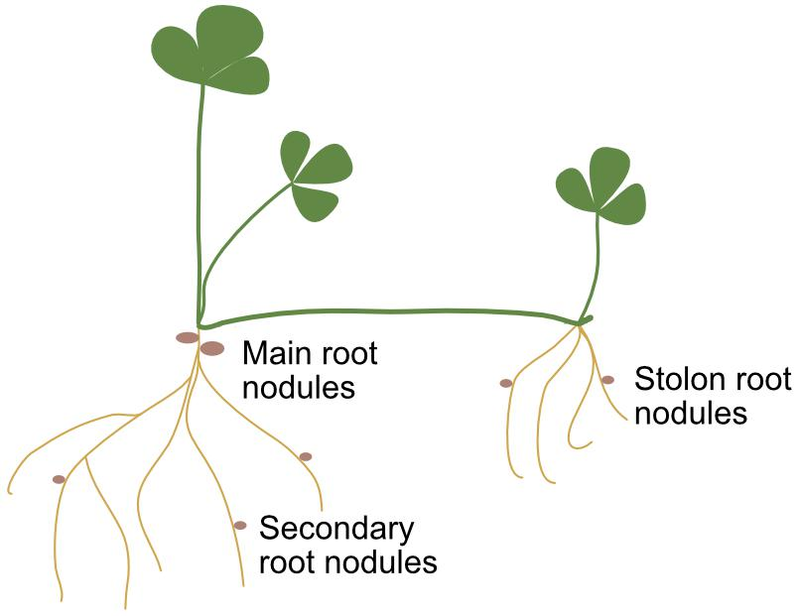
Underground, white clover is doing something grass cannot do on its own.
Rhizobium bacteria colonize clover roots and form small nodules, and inside those nodules they convert atmospheric nitrogen into a form the clover plant can use for its own growth.
This process is called nitrogen fixation, and it is the reason clover has a reputation as a free fertilizer source.
The catch is in that phrase “for its own growth.” The clover receives the primary benefit.
Companion grass does not tap into a ready underground pipeline of usable nitrogen.
University of Georgia Cooperative Extension’s white clover management guide explains that nitrogen transfer to companion plants happens indirectly, mainly as clover roots, leaves, and returned clippings decompose in the soil and release nitrogen through a process called mineralization.
That takes time, and the amount released depends on how much organic material is cycling through the lawn.
A mixed stand where clover clippings are returned to the surface after mowing puts that organic material back into play.
Over a full growing season or more, decomposition can make some of that nitrogen available to nearby grass.
Penn State’s turfgrass weed overview supports the general idea that a grass-clover mixture can reduce nitrogen fertilizer needs in compatible conditions, without promising a specific amount or timeline.
What this means practically is that a lawn with established clover mixed into its turf may need fewer nitrogen applications over time.
It will not eliminate fertilizer needs in every situation, and it will not show results in the first few weeks.
Think of clover less like a fertilizer bag and more like a slow-moving savings account that pays out gradually as the season progresses.
A Clover Patch Can Reveal Thin Turf
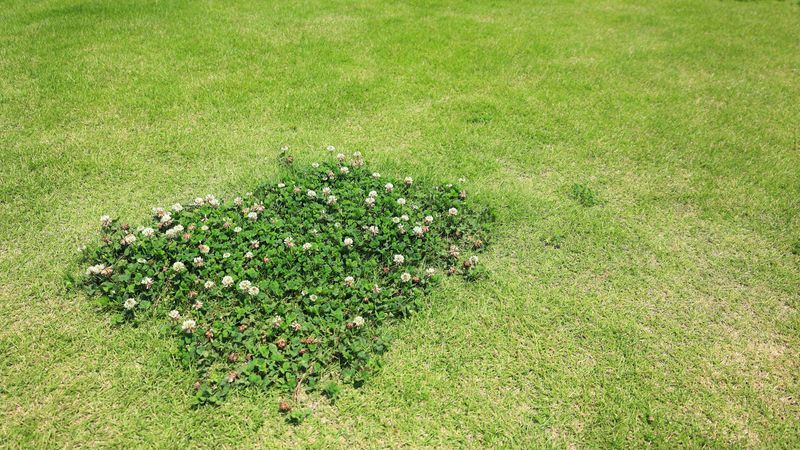
Walk out to a clover patch in your lawn and you are often looking at a map of where the turf ran into trouble first.
White clover tends to colonize areas where grass is thin, compacted, drought-stressed, or low in nitrogen, not because clover caused those problems, but because those conditions give it an opening that dense, healthy grass would close off.
University of Minnesota Extension notes that Dutch white clover naturally appears in turf with reduced competition, which is another way of saying the grass gave ground before the clover arrived.
Before reaching for a broadleaf herbicide, it is worth spending a few minutes looking at what the clover is actually telling you.
Check turf density in the area around the patch.
Is the soil hard and compacted underfoot, or does it give a little?
Has that spot been dry longer than the rest of the lawn, or does water pool there?
Has it gone without fertilizer for a season or two?
Each of those conditions points toward a different fix, and applying herbicide without addressing the underlying cause usually means the clover comes back within a season or two anyway.
Penn State’s turfgrass weed guidance reinforces this: clover’s presence in a lawn is a signal worth reading, not just a target worth spraying.
If the turf is thin because of compaction, core aeration helps more than herbicide.
If nitrogen is genuinely low, a soil test gives you numbers to work with instead of guesses.
And if the clover is spreading into an otherwise healthy lawn, that is a different situation entirely, one where management or removal makes more sense than tolerance.
Establish The Mixture Without Guessing
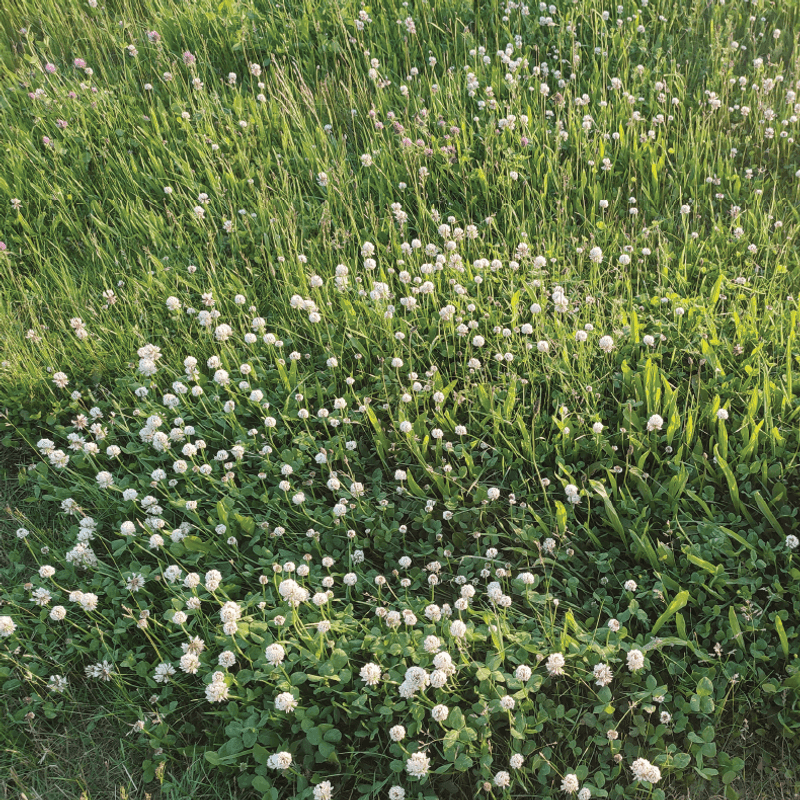
Clover seed is genuinely small.
There are roughly 800,000 seeds per pound, which means a thin layer broadcast over a lawn can still carry a lot of plants.
That also means poor seed placement wastes most of your effort before the season even starts.
Penn State Extension’s white clover guide recommends placing seed no deeper than 1/4 inch, with firm soil and strong seed-to-soil contact.
For an existing lawn, broadcasting seed, lightly raking to work it into the surface, and keeping the area evenly moist gives you the best chance of germination.
Burying the seed deeply or leaving it sitting loose on top of thatch both reduce germination significantly.
Penn State also lists a pasture overseeding rate of 2 to 4 pounds per acre for established grass stands.
Converted to home-lawn terms, that is approximately 0.73 to 1.47 ounces per 1,000 square feet.
That is a pasture rate, meaning it was developed for large-scale forage systems, not for the dense, uniform residential lawn most homeowners are picturing.
Do not treat it as a prescription for how thick your backyard clover should be.
University of New Hampshire Extension suggests up to 10 percent white clover in a seed mix for low-input lawns in northern New England.
That is a regional recommendation for a specific climate and lawn-management style, not a universal starting point for every US homeowner.
Soil conditions matter too.
Clover fixes nitrogen most effectively when the right Rhizobium bacteria are present, so buying inoculated seed can improve your odds in soils where those bacteria are scarce.
UGA Extension’s establishment guide notes that soil fertility still matters alongside fixation: phosphorus, potassium, sulfur, and pH all influence how well clover performs.
Penn State lists a preferred soil pH of about 6 to 7 for white clover, so a basic soil test before seeding is time well spent.
The Payoff Comes From Nutrient Recycling
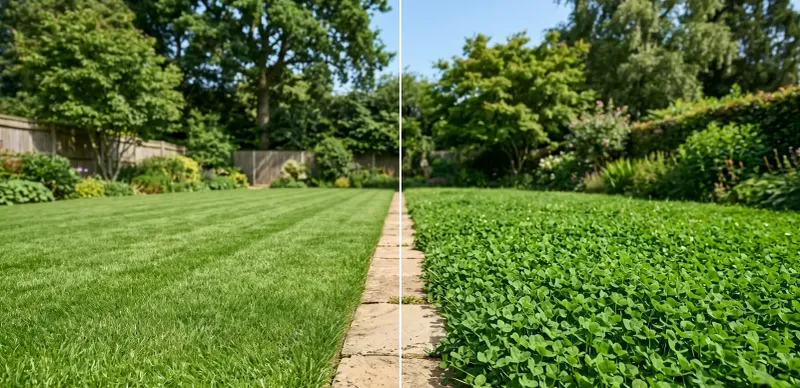
The most practical way to capture clover’s nitrogen contribution is also the simplest: leave the clippings on the lawn after you mow.
When clover leaves and stems are chopped fine and left on the surface, they break down and release the nitrogen they contain back into the soil, where both clover and grass roots can eventually reach it.
Penn State’s turfgrass fertilization guide states that returning grass clippings can reduce fertilizer needs by up to one-third.
That figure applies to returned clippings generally, meaning any grass and clover mixture you mow and leave in place, not to nitrogen supplied specifically by clover roots.
Keep the two ideas separate or you will end up expecting more than the biology delivers.
University of Maryland Extension’s microclover research found that suitable grass-microclover mixtures may reduce approximately one nitrogen application per year in the tested lawn context.
That is a meaningful reduction for a homeowner trying to cut fertilizer costs, but it comes with conditions: the right grass species, sufficient clover density, a compatible climate, and consistent clipping return.
It does not translate directly to every lawn in every region.
How much fertilizer demand actually drops in your lawn depends on several overlapping factors.
Grass species matter, since higher-demand varieties like perennial ryegrass may still need some nitrogen even in a mixed stand.
Clover density matters, since a sparse scattering of plants contributes less than a well-established population.
Climate matters too, because clover fixes nitrogen most actively during cool, moist growing periods, not during a hot July in the Southeast.
UGA Extension notes that fixation rates vary with environmental conditions, reinforcing that the benefit is real but not uniform.
Manage expectations accordingly, and let a soil test tell you what your lawn actually needs rather than assuming clover has it covered.
Clover Does Not Stop Dog-Urine Spots
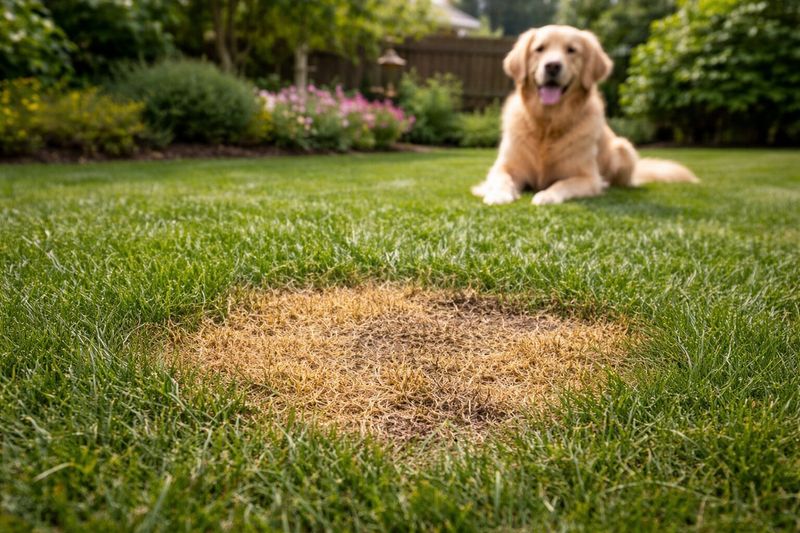
Here is where the headline needs the most correction.
Clover does not prevent dog-urine spots, neutralize them, or protect nearby grass from injury.
The damage comes from concentrated nitrogen-containing compounds and salts deposited in a small area all at once, and no ground cover changes that chemistry.
Colorado State University Extension’s dog-urine lawn guide is direct on the cause: it is the concentration of nitrogen and salts in a small area that burns the turf, not the alkalinity of the urine, and not the sex of the dog.
Any dog that repeatedly urinates in one spot, male or female, can create the same injury pattern.
Blaming female dogs specifically is a common misconception the research does not support.
The only proven method for diluting the deposit before it damages the turf is watering the spot immediately after urination.
Getting your dog to drink more water throughout the day can also reduce urine concentration, which helps at the source.
For yards where repeated injury is a real problem, Colorado State recommends training the dog to use a designated mulch or gravel elimination area as the only reliably long-term solution.
Supplements, vinegar, baking soda, tomato juice, and similar folk remedies are not safe lawn-care recommendations and may harm your dog.
Any change to your dog’s diet or supplement routine requires veterinary guidance first.
When a spot has already gone brown, the repair is straightforward.
Rake away the dead material, loosen the surface, and remove approximately 0.5 to 1 inch of damaged soil and sod where the concentration was highest.
Reseed with the same turf type you have, since mixing grass species can create visible texture and color differences that look worse than the original spot.
Keep the area moist until new grass is established, and water the area after any future dog visits to stay ahead of the next round of damage.
Climate, Traffic, And Bees Set The Limits
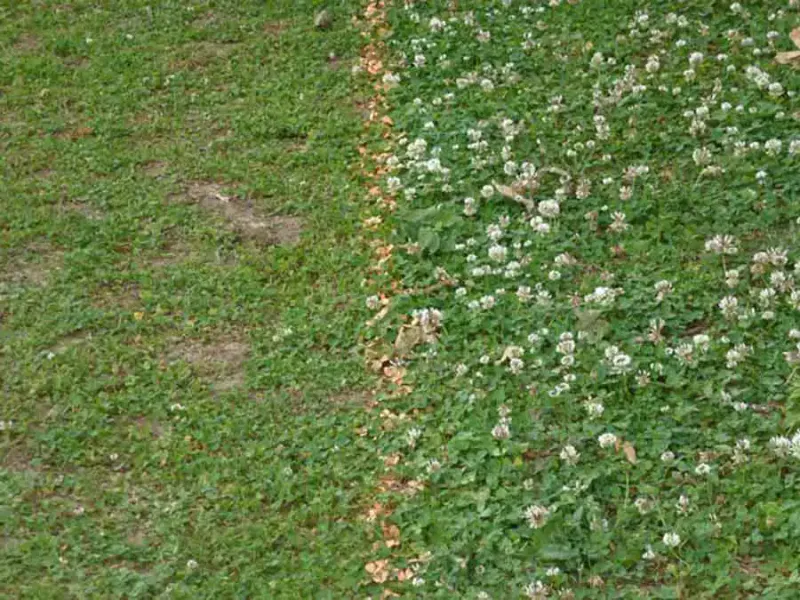
White clover is genuinely a cool-season plant that does its best work in moist, moderate conditions.
That fits parts of the northern United States well, and it fits parts of the South or Southwest much less reliably.
UC IPM notes that perennial clovers may require irrigation during dry summers, which means “clover needs no water” is advice that can fail you badly in a hot, dry region.
University of Maryland Extension reports that microclover, a smaller-leafed variety of white clover with fewer flowers and a less aggressive clumping habit, can decline during high heat and drought and may die back when cool-season turf enters summer dormancy.
Microclover is also generally more expensive, less widely available, and vulnerable to many broadleaf herbicides labeled for turf.
If you are establishing clover intentionally and also using a standard broadleaf weed-control program, University of Minnesota Extension confirms that those herbicides will remove the clover you are trying to keep.
Traffic tolerance is another real limit.
Oregon State Extension’s clover lawn guidance describes white clover as not very traffic tolerant in areas where people consistently walk or play.
A managed mixture with durable grass species, or a dedicated clover zone away from the main play area, is a more realistic plan than a pure clover surface for a yard that sees regular use by kids or pets.
Flowering clover does attract bees, which is genuinely useful for pollinators.
But white clover is introduced from Europe, not a native plant, and UNH Extension’s organic turf guidance advises against intentional clover seeding where any household member has a serious bee-sting allergy.
Mowing before bloom reduces flowers and the associated bee activity, but it also removes most of the pollinator benefit you were hoping for.
Clover flowers are one accessible food source for bees, not a replacement for locally native flowering plants.
Manage Grass And Clover As Partners
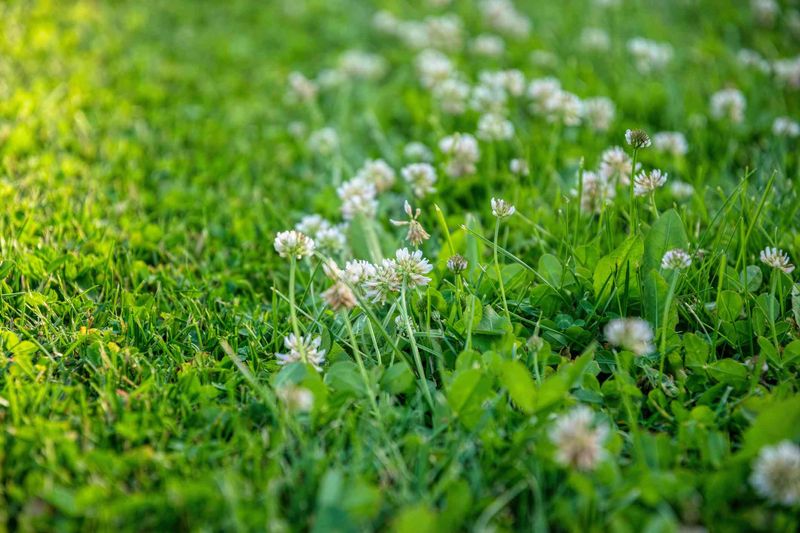
A realistic grass-clover lawn is a managed system, not a set-it-and-forget-it solution.
The two plants have competing preferences, and understanding that keeps expectations honest.
Added nitrogen generally favors grass and can suppress clover, so heavy fertilization after establishment can gradually crowd the clover out.
Penn State’s Kentucky bluegrass guidance illustrates how fertility management shapes which plants thrive in a mixed stand.
Letting clover dominate too heavily creates its own problems.
A lawn that is mostly clover rather than a mixed stand can lose uniformity, become slippery when wet, and provide less durable surface for heavy use.
The goal is a balanced mixture where each plant contributes without overwhelming the other.
University of Maryland Extension frames it as a partnership that requires attention to grass species, clover density, and seasonal conditions rather than a passive background process.
Return your clippings consistently.
Check your soil with a basic test before assuming clover has covered every fertility need, since phosphorus, potassium, and pH still matter even in a mixed lawn.
Penn State’s white clover guidance supports keeping pH near 6 to 7 for effective clover performance.
Protect intentional clover from broadleaf herbicide applications, or accept that a standard weed-control program will remove it.
For dog-urine management, water the spot immediately after your dog uses it and consider a designated gravel or mulch area for repeated visits.
Colorado State Extension is clear that dilution and redirection are the only tools that reliably work.
Clover may help a well-matched lawn buy less nitrogen over time, but the yard still runs on your decisions about water, traffic, pets, soil, and honest expectations.
That is the actual deal, and it is still a pretty good one.