
10 Burgundy Perennials That Add Depth To Florida Tropical Planting Styles
Follow us on Google
Burgundy foliage changes the mood of a Florida garden fast, giving bright tropical plantings a richer, more layered look. If your beds feel a little too green or a little too predictable, these perennials can add the contrast that makes everything around them pop.
I like using dark leaves to anchor flashy flowers, chartreuse foliage, and bold architectural shapes. The plants below handle Florida conditions well and bring the kind of depth that makes a tropical design feel intentional instead of busy.
Ti Plant
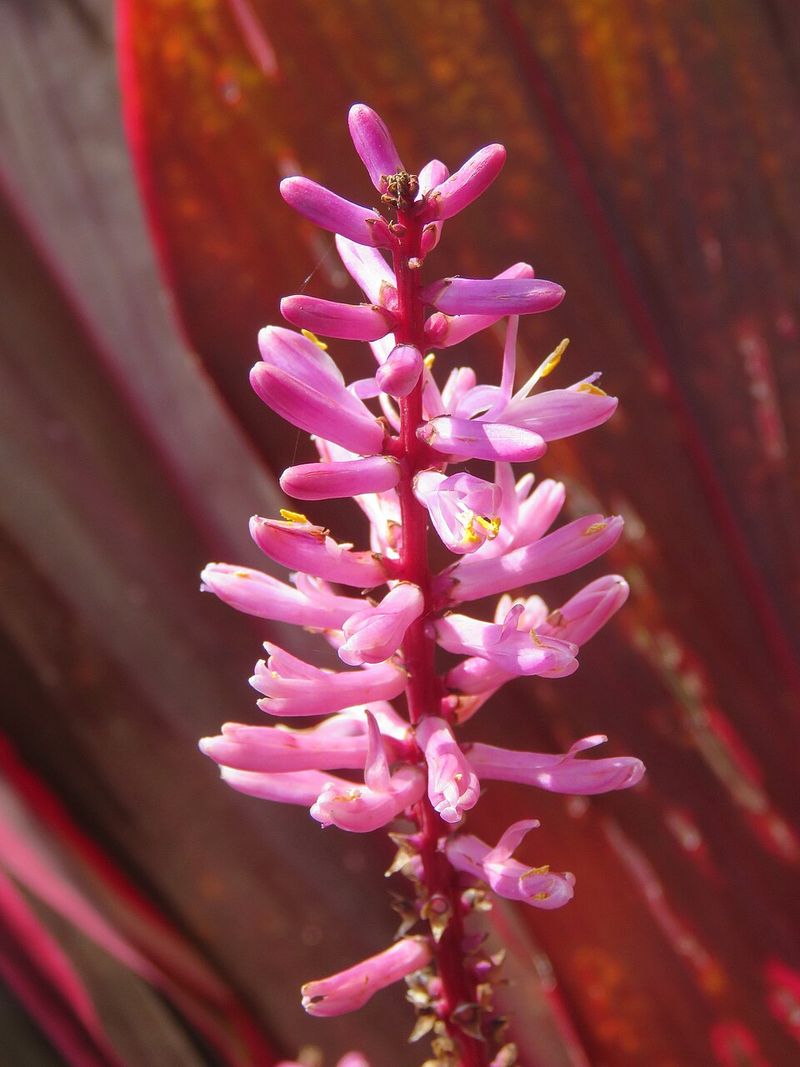
In a Florida planting, few foliage plants give you instant drama like this one. The long, glossy leaves carry rich burgundy tones that look especially strong against lime green, gold, and variegated tropical companions.
You get height, color, and a clean upright shape without relying on flowers to carry the design.
Morning sun with afternoon shade usually keeps the color saturated and the foliage from looking stressed in hotter inland sites. I would place it where irrigation is consistent, because uneven moisture can leave the leaves ragged and dull.
In South Florida it performs as a dependable perennial accent, while in cooler pockets it appreciates a protected microclimate near walls or patios.
Use it as a vertical anchor beside gingers, caladiums, bromeliads, or philodendrons with oversized leaves. Container groupings also benefit from its narrow, fountain-like form, especially when you want a patio corner to feel more composed.
If your border already has orange, pink, or chartreuse foliage, this is the kind of deep burgundy note that keeps the whole scene from feeling overly sweet.
Persian Shield
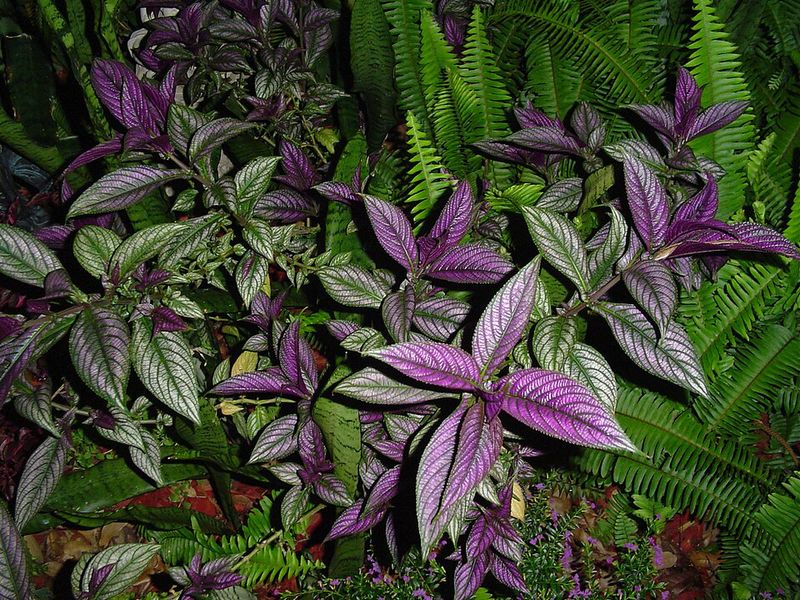
Shimmering foliage can be just as effective as a flower display, and this plant proves it every warm season. Its leaves blend burgundy, violet, and smoky silver, creating a metallic finish that catches shifting light beautifully.
In a tropical-style bed, that sheen adds sophistication without making the palette feel heavy.
Filtered light is usually the sweet spot in Florida, especially where summer sun can bleach the leaf surface. Rich soil and steady moisture keep the stems full instead of lanky, and occasional pinching encourages a denser shape.
I like placing it near paths or seating areas where the leaf texture can be appreciated up close rather than lost in the background.
Pair it with simple greens if you want a refined look, or set it beside chartreuse coleus, pink caladiums, and deep green elephant ears for stronger contrast. It also works well in large containers that need a moody centerpiece through the hottest months.
If your garden feels bright but flat, the layered color in this perennial gives you depth in a way ordinary purple foliage rarely manages.
Bloodleaf
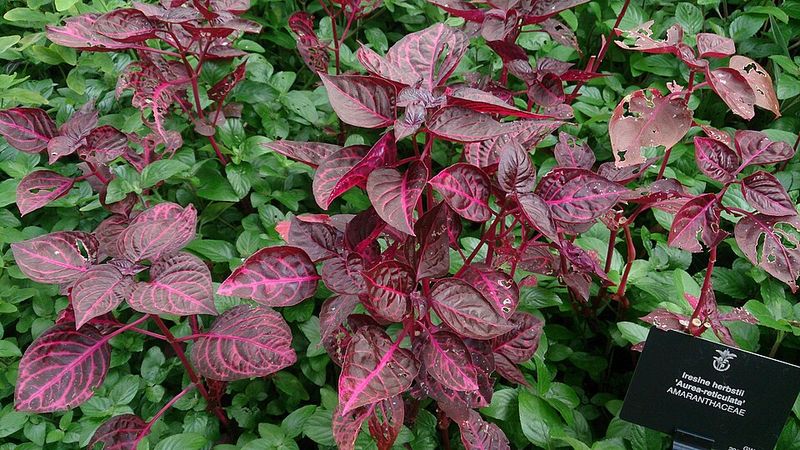
Color saturation is where this perennial really earns its place in a Florida garden. The foliage reads as burgundy, crimson, and deep rose at once, which gives planting beds a vivid, almost painted quality.
Instead of blending into the background, it helps frame nearby greens and pulls the eye through the border.
Warm temperatures and regular moisture keep it growing fast, so expect a fuller presence by midsummer. In brighter shade or gentle morning sun, the leaf color usually stays richer and the edges remain cleaner.
I would avoid letting it dry out repeatedly, because stressed plants can lose the dense, polished look that makes them so useful in tropical compositions.
It plays especially well with banana-like foliage, dark gingers, and low chartreuse edging plants that need a stronger backdrop. You can also repeat it in several pockets across the landscape to make colorful beds feel tied together rather than scattered.
For anyone trying to create a Florida garden with more depth and less visual chaos, this plant gives you bold burgundy tone while still feeling soft enough to mix freely.
Purple Heart
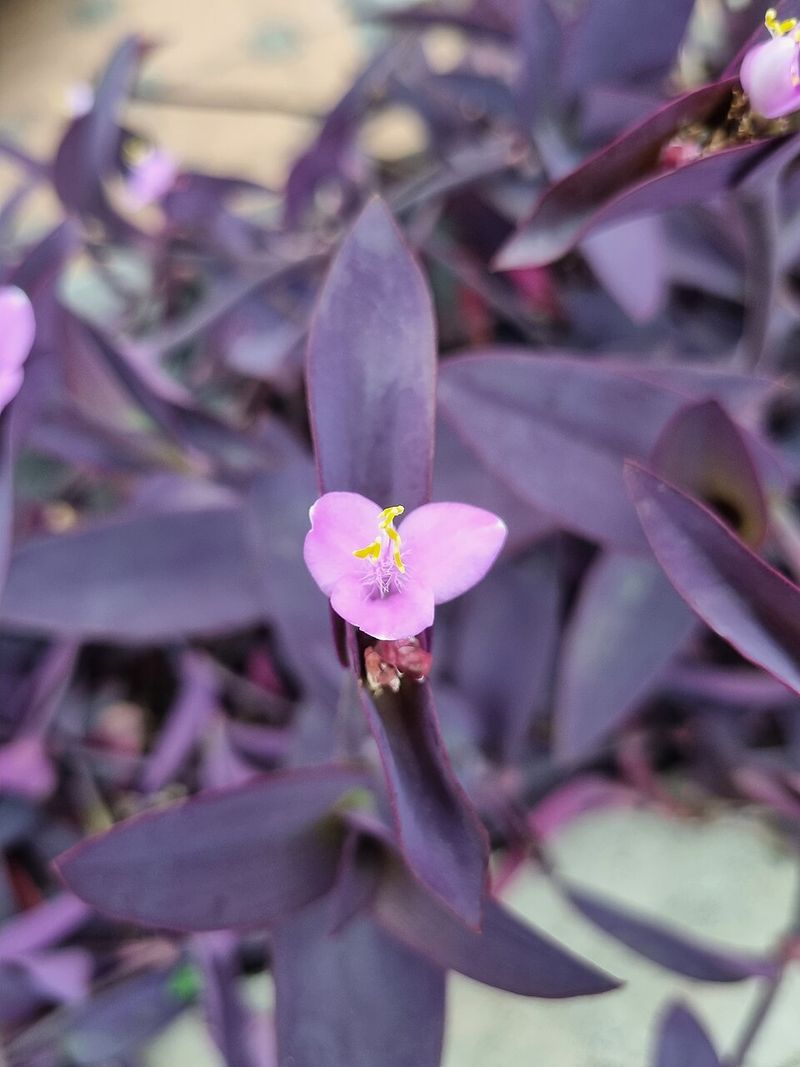
Groundcovers often get treated like filler, but this one can shape the whole color story of a bed. The trailing stems and narrow burgundy-purple leaves create a dark ribbon that softens edges and highlights brighter foliage nearby.
In tropical-style plantings, that spreading habit helps taller plants feel grounded instead of visually top-heavy.
Florida heat rarely bothers it once established, and it handles sun better than many richly colored foliage plants. More light usually means deeper color, while partial shade can make the tone a little greener and looser.
I like using it where irrigation reaches regularly but the soil drains well, such as along walkways, raised borders, or the lip of a mixed container.
The small pink flowers are a bonus, though the foliage is the reason to grow it. Try it around canna lilies, gold duranta, crotons, or dwarf palms when you need a low layer that echoes the mood of darker upright plants.
If you have a bed full of tropical leaves but it still feels unfinished at ground level, this perennial adds a neat, saturated base without demanding much attention.
Canna Lily
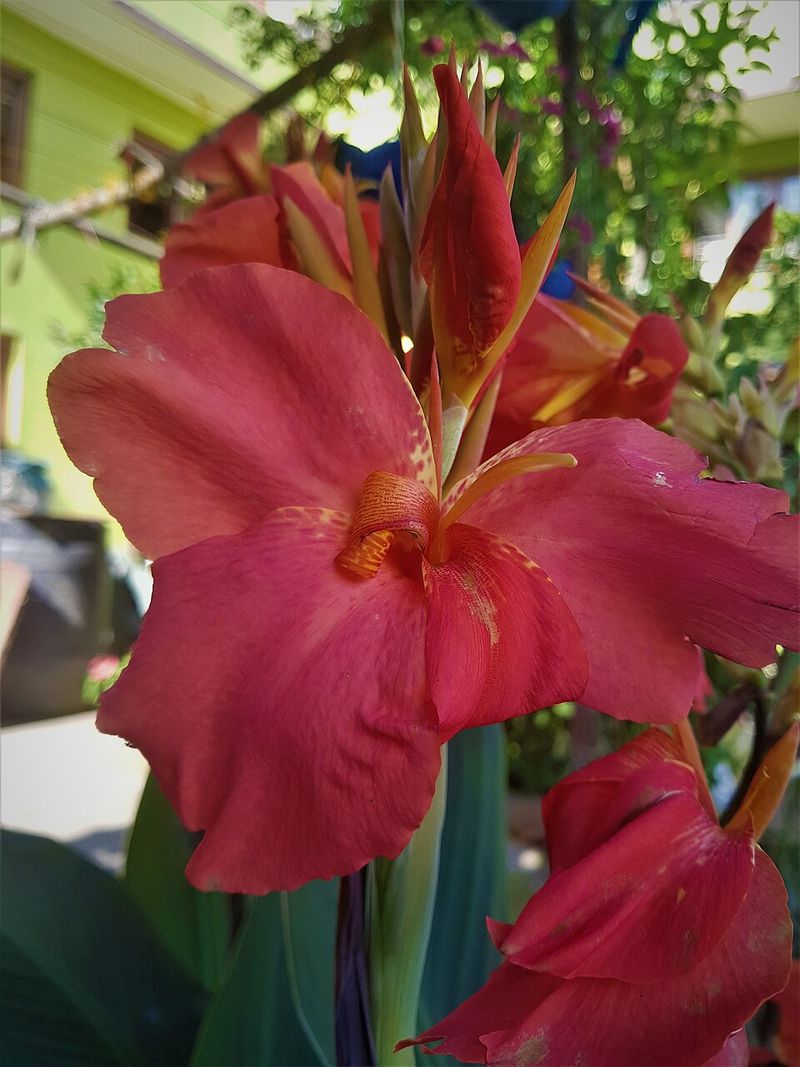
Big leaves instantly change the scale of a planting, and this canna does it with dark burgundy drama. The broad foliage looks almost black in certain light, then glows wine-red when the sun comes through from behind.
Add the red flowers, and you get a plant that feels theatrical without becoming hard to place.
Full sun and regular moisture bring out its best performance in Florida, especially during the long growing season. Rich soil helps produce taller stems and broader leaves, so it rewards a little compost and consistent feeding.
I prefer using it where there is room for the foliage to stand clear, because crowding can hide the elegant vertical rhythm that makes it so effective.
Try pairing it with banana plants, blue-green agapanthus, or low chartreuse sweet potato vine for striking contrast. It also works beautifully beside pools or fences where dark foliage can break up expanses of pale hardscape and bright sky.
If your tropical border needs a strong burgundy statement that still reads as lush and relaxed, this perennial gives you height, bold texture, and dependable summer presence in one package.
Alternanthera dentata ‘Little Ruby’
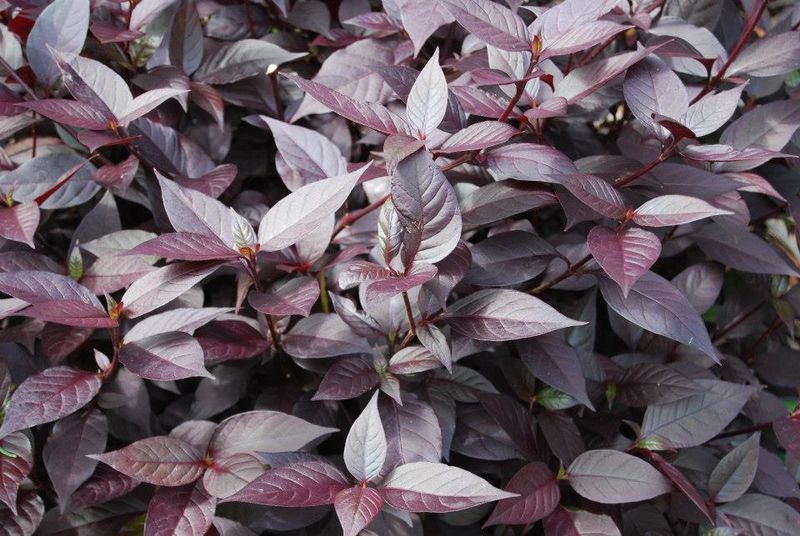
Small plants can do serious design work, and this compact perennial is a great example. The foliage stays richly burgundy to plum, forming low mounds that sharpen the front edge of a tropical bed.
Instead of disappearing under larger leaves, it acts like a dark outline that makes neighboring colors read more clearly.
Sun usually produces the best color and tightest growth in Florida, though light shade can work in especially hot locations. Regular trimming keeps the shape dense, and that makes it useful for repeating a neat rhythm through mixed borders.
I reach for it when a planting feels loose or top-heavy and needs a lower layer that adds order without looking stiff.
It pairs beautifully with crotons, cordylines, golden sedges, and compact palms, especially where you want a polished look near patios or entry paths. Container combinations also benefit from its saturated color and manageable size, since it will not overwhelm the centerpiece.
If your tropical garden has plenty of bold forms but still lacks a clean visual base, this perennial gives you burgundy depth in a tidy, highly workable package.
Coleus ‘Black Dragon’
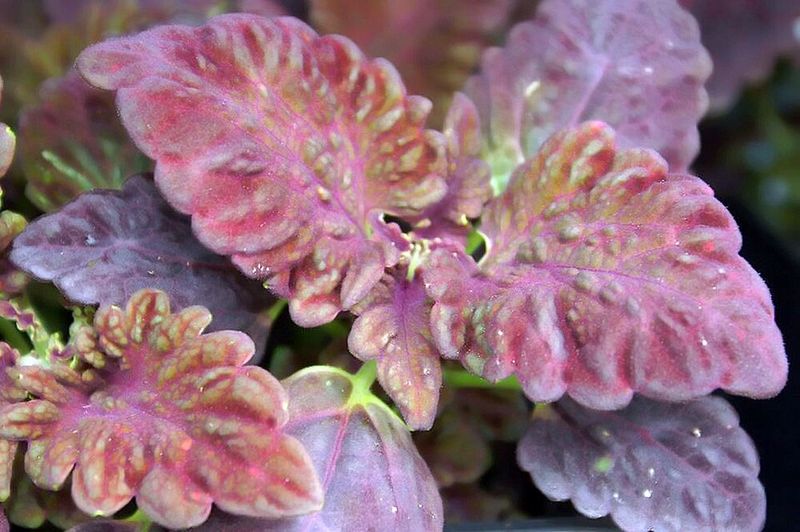
Textured foliage can change the energy of a border, and this coleus brings plenty of it. The heavily ruffled leaves are a deep burgundy that can look almost velvety, giving shady tropical beds a darker, more layered center.
In Florida, it behaves as a tender perennial and often performs long enough to earn a permanent role in warm-climate designs.
Filtered light tends to keep the color full and the leaf edges crisp, while intense midday sun can scorch the most dramatic foliage. Pinching tips encourages bushier growth, which matters because the dense habit makes the dark color read as a solid visual block rather than scattered spots.
I would also remove flower spikes when they appear if the goal is to keep the leaves looking lush and full.
Set it beside lime coleus, silver foliage, pink caladiums, or simple green philodendrons for a high-contrast but cohesive planting. It is especially helpful in shaded entry gardens that need stronger definition without relying on blooms.
If you want burgundy color with extra texture and a more ornamental feel, this perennial-style favorite gives Florida gardens a moody layer that reads beautifully from a distance.
Rex Begonia
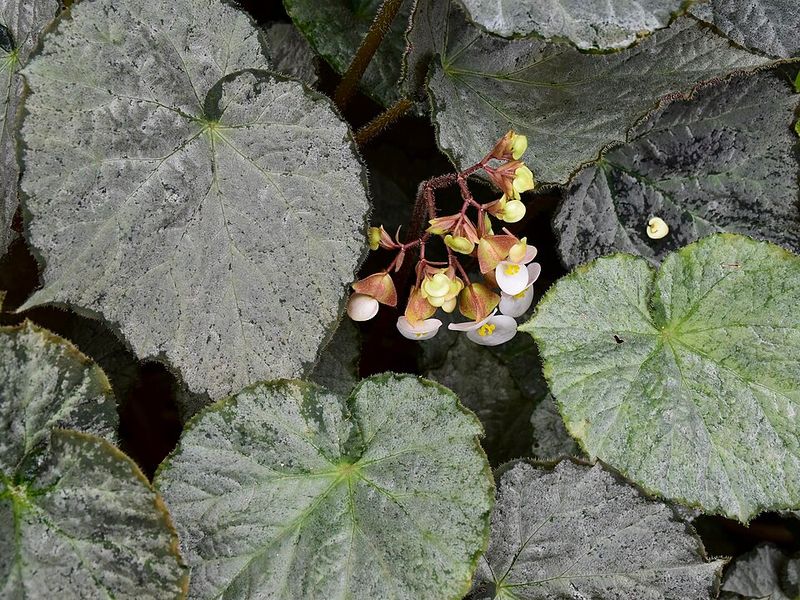
Patterned leaves can bring the same level of interest as flowers, especially in a shaded Florida garden. Rex begonias often mix burgundy with charcoal, silver, and plum, creating foliage that feels detailed and collected rather than loud.
That complexity works beautifully when tropical plantings need depth at eye level or in containers near seating areas.
Protection from harsh sun and heavy rain is important if you want the foliage to stay polished. Bright shade, good drainage, and consistent moisture usually deliver the best results, especially in covered patios, courtyards, or sheltered beds.
I think of this plant as a close-up performer, because the leaf markings deserve to be seen where people naturally pause.
Combine it with maidenhair fern, bromeliads, peperomias, or dark oyster plant for layered texture in small spaces. It also helps soften the broad, simpler leaves of larger tropicals by introducing a finer, more intricate visual note.
If your Florida planting style leans bold but you want a few moments of nuance, this perennial gives you burgundy richness and pattern without demanding the footprint of a larger specimen.
Neoregelia Bromeliad
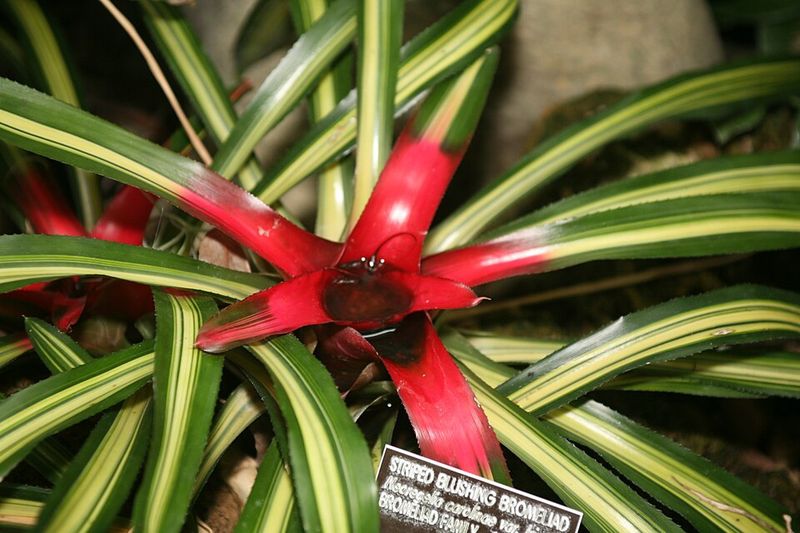
For a low, architectural burst of burgundy, few plants are as useful as a neoregelia. The rosettes hold color in bands, flushes, or central cups, often shifting between green, wine, and red depending on light.
That layered coloration gives tropical borders a sculptural quality that flat foliage simply cannot match.
Florida conditions suit bromeliads extremely well, especially where drainage is sharp and air movement is good. Many varieties color up best with bright filtered light or a bit of morning sun, though too much direct exposure can bleach the leaves.
I like using them in pockets between larger plants because they create a finished, intentional look without needing constant pruning or deadheading.
They pair naturally with palms, gingers, philodendrons, and coarse mulch or stone, which helps the rosette form stand out. Mounted displays and containers also work well if you want burgundy accents on patios or poolside spaces.
If your tropical planting has strong vertical lines but feels empty at the ground plane, this perennial-style bromeliad adds dark color, pattern, and a controlled geometric shape that keeps the design from looking overly loose.
Black Magic Elephant Ear
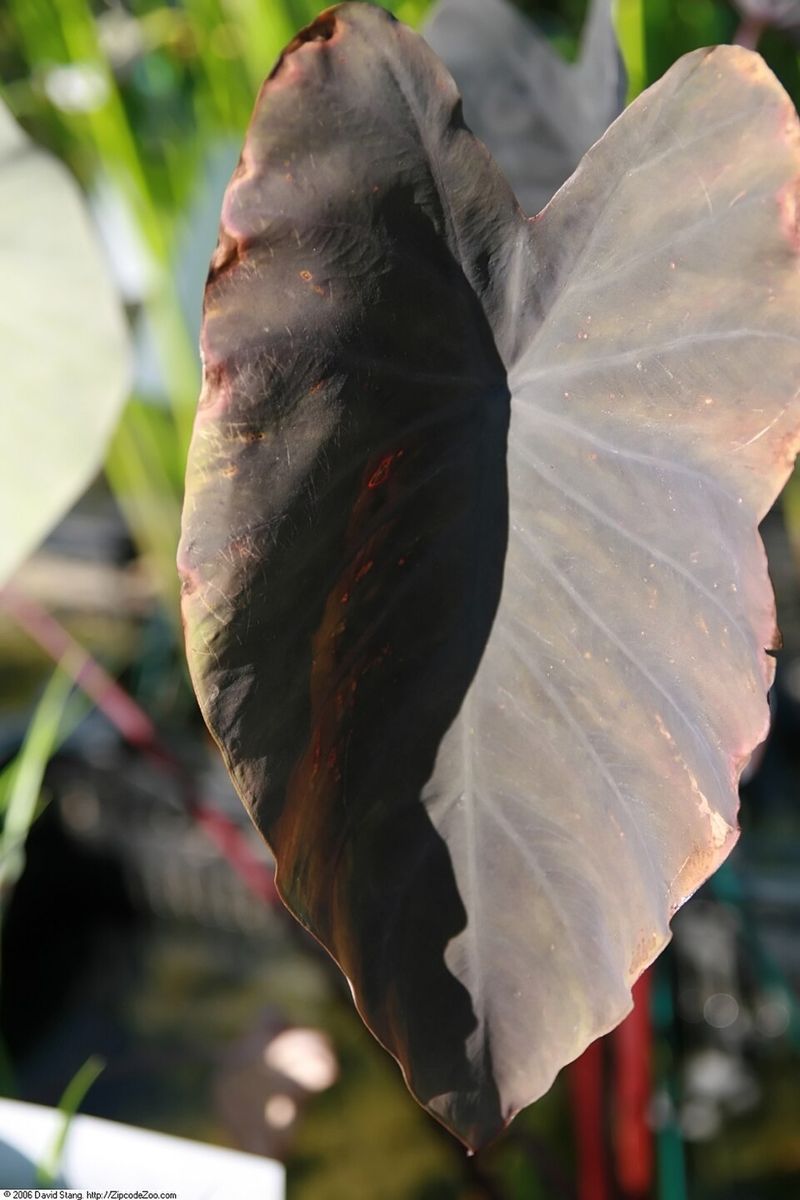
If you want larger foliage with a moodier edge, this elephant ear earns its place fast. The oversized leaves read as deep plum to burgundy in bright light, and they bring that lush, tropical scale Florida beds always seem to need.
It pairs beautifully with chartreuse grasses, orange canna, and glossy green gingers.
In warm, humid gardens, you get strong growth and a bold silhouette through the season. Give it rich soil, regular moisture, and enough room to spread, and the color looks more dramatic.
It is effective near patios, water features, or anywhere you want the planting to feel denser and more layered.