
If Your Cucumber Vines Keep Flowering But No Cucumbers Ever Form, Here’s What’s Going Wrong
Follow us on Google
Watching your cucumber vines explode with yellow blossoms all summer while the vegetable basket stays empty is one of the most puzzling things a North Carolina gardener can experience. The good news is that flowers without cucumbers does not always mean something has gone wrong.
Understanding a little about how cucumber plants actually make fruit can help you figure out exactly what is happening and fix it without overreacting.
Flowering alone does not prove the vine is failing
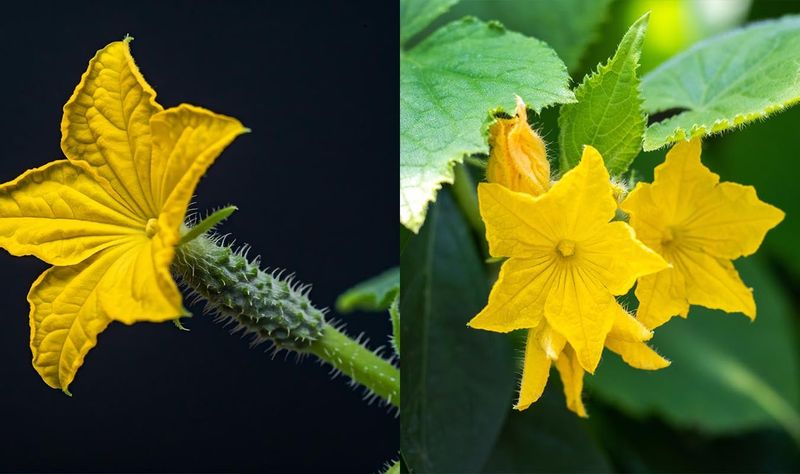
A cucumber vine covered in flowers but empty of fruit is not automatically a plant in trouble. Cucumbers are what botanists call monoecious, meaning each vine grows both male and female flowers separately on the same plant.
University of Minnesota Extension guidance on growing cucumbers confirms that male flowers commonly appear first and fall off after opening, which is entirely normal and not a sign that anything has gone wrong.
The practical starting point is to look closely at the base of each flower before changing anything about how you water, fertilize, or manage pests. A female flower has a swollen, miniature cucumber-shaped ovary sitting right behind the petals, even before pollination occurs.
A male flower sits on a plain, thin stem with no swelling at all. That small but visible difference is the first diagnostic checkpoint in your entire troubleshooting process.
If every flower on your vine is sitting on a thin stem, the plant may simply be in its early male-flowering stage, and female blossoms have not yet opened. Inspect several flowers across the vine over a few mornings before drawing any conclusions.
Persistent concern begins when female flowers with that swollen ovary are present and still not developing into fruit, not when male flowers drop on their own.
Match the visible pattern to the likely cause
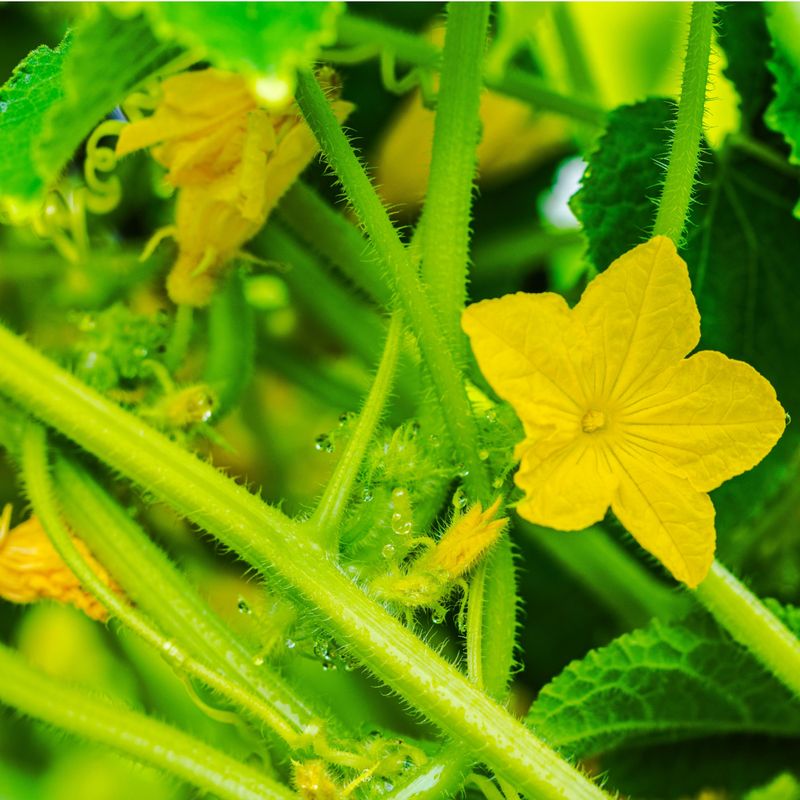
Four distinct patterns can show up on a cucumber vine, and each one points toward a different part of the problem. Sorting out which pattern you are seeing keeps you from treating the wrong issue.
When only male flowers are visible, the vine may simply be in its early production phase. UMN Extension notes that female flowers tend to follow the first flush of male blooms by several days to a couple of weeks, so patience is often the most useful first response.
If female flowers then appear but no tiny cucumbers begin forming behind them, poor pollination becomes the leading suspect, because bees and other insects need to carry pollen from a male flower to that female ovary for fruit to set.
Tiny cucumbers that start forming and then shrivel or drop point toward a different set of possibilities. Incomplete pollination can cause early abortion, but so can heat stress, inconsistent watering, or other plant-level problems, so do not assume pollination is the only answer.
UMN Extension’s cucurbit fruit set resource confirms that weather and water stress can both trigger fruit abortion independent of pollination.
A vine that is very leafy with dense green growth but few female flowers or developing fruit deserves a different look. NC State Extension’s vegetable gardening handbook notes that excess nitrogen can push a plant toward vigorous foliage at the expense of reproductive growth.
Treat each of these patterns as a clue rather than a verdict, and let the combination of symptoms guide your next inspection step.
Why morning pollination conditions matter
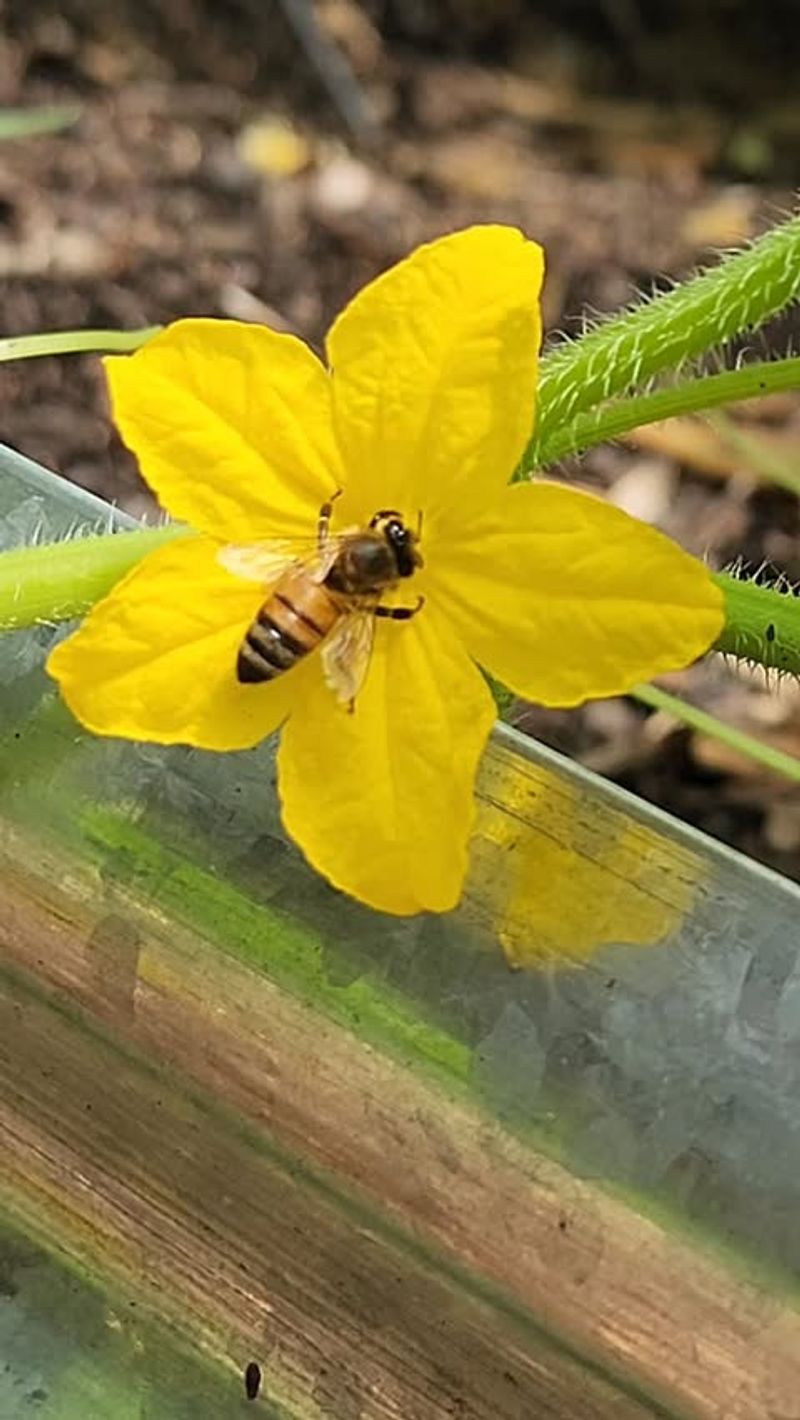
Cucumber flowers open in the morning and stay receptive for only a few hours before closing. That short window is the entire opportunity for a bee or other insect to carry pollen from a male flower to a female flower.
Penn State Extension’s cucumber pollination resource explains that multiple bee visits to a single female flower often improve fruit set, making consistent morning insect activity important rather than just occasional.
Several weather conditions can cut that window short or reduce insect activity during it. Heavy rain keeps bees from foraging and can wash pollen away.
Cool temperatures in early spring slow bee movement. On the other end, UMN Extension’s cucurbit resource notes that excessive heat can reduce pollen viability and cause flowers to abort, though the exact temperature response varies by cultivar, nighttime temperatures, and growing conditions, so there is no single cutoff number that applies to every garden or every variety.
Before concluding that pollination is failing, spend three or four mornings watching female flowers between roughly 7 a.m. and 10 a.m. Not seeing a honey bee does not prove that pollination is not happening.
Bumble bees, sweat bees, and other native bees also visit cucumber flowers, and a brief single observation can easily miss them. The stronger evidence is watching female flowers repeatedly and noting whether they begin to swell into small cucumbers in the days that follow.
If repeated morning observation shows flowers opening and closing without any insect visits and without subsequent fruit development, that combination gives you a real basis to act on the pollination side of the diagnosis.
Check the variety before adding pollinators
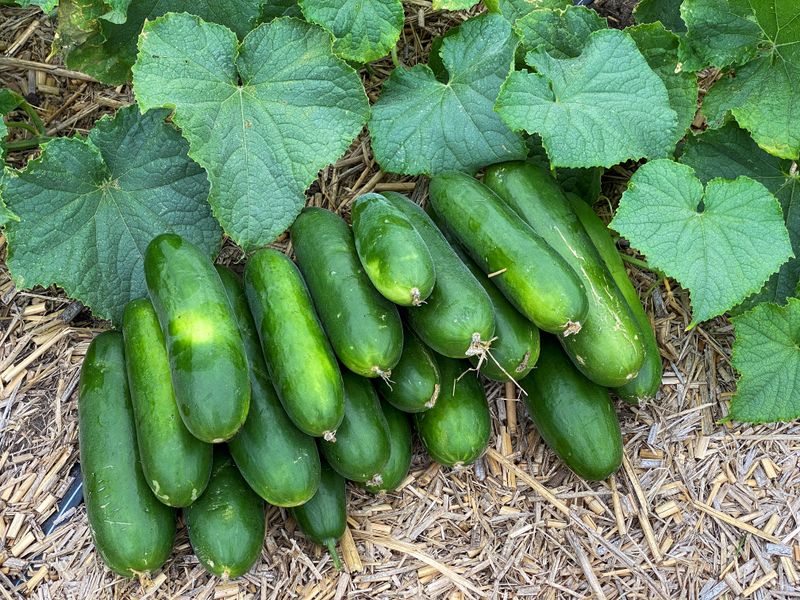
The seed packet or plant label is one of the most useful diagnostic tools you have, and it is easy to overlook. Cucumber varieties fall into three broad categories that each behave differently when it comes to flowering and fruit set, and knowing which one you are growing changes the diagnosis significantly.
Standard slicing and pickling cucumbers produce both male and female flowers on the same vine. One healthy plant in a typical North Carolina backyard is enough to set fruit, so the idea that you need two plants to get cucumbers does not apply here.
Oklahoma State University Extension’s cucumber production guide explains that gynoecious varieties are bred to produce mostly female flowers, which can improve early yields, but they may need a standard pollinizer plant nearby to provide pollen. Some seed companies include a small number of standard seeds in a gynoecious packet for that reason, so checking the label tells you whether that pollinizer is already accounted for.
Parthenocarpic varieties are a special case worth understanding before assuming you need more bees. These cucumbers are bred to set fruit without pollination at all, making them well suited to high tunnels, greenhouses, and situations with limited insect access.
UMN Extension’s pollination requirements resource notes that pollination can sometimes cause parthenocarpic cucumbers to produce seeded or misshapen fruit rather than the smooth, seedless result the variety is designed to deliver.
If you are growing a parthenocarpic cucumber and fruit is still not forming, the problem lies elsewhere, in heat, water, light, disease, or cultivar-specific growing requirements, rather than in a lack of bees.
Support natural pollination, then hand-pollinate if needed
Once you have confirmed that female flowers are appearing and repeated morning observation suggests that insect activity is low, a few practical steps can help without putting pollinators at risk. Growing flowering plants nearby that bloom across the season gives bees and other beneficial insects a reason to visit your yard regularly.
NC State Extension’s native plants handbook highlights that North Carolina native flowering plants support a range of local pollinators and can improve the overall insect activity in a home landscape. Keep in mind that planting flowers improves available habitat but does not guarantee fruit set if other stressors are also present.
Avoiding unnecessary insecticide use is equally important. Many products that target common garden pests can also reduce or harm the bee populations that visit cucumber flowers.
EPA pollinator protection guidance identifies label compliance, bloom restrictions, and avoiding applications while bees are actively foraging as the core measures for protecting pollinators during any necessary pest treatment. If a treatment cannot wait, apply it in the evening after flowers have closed.
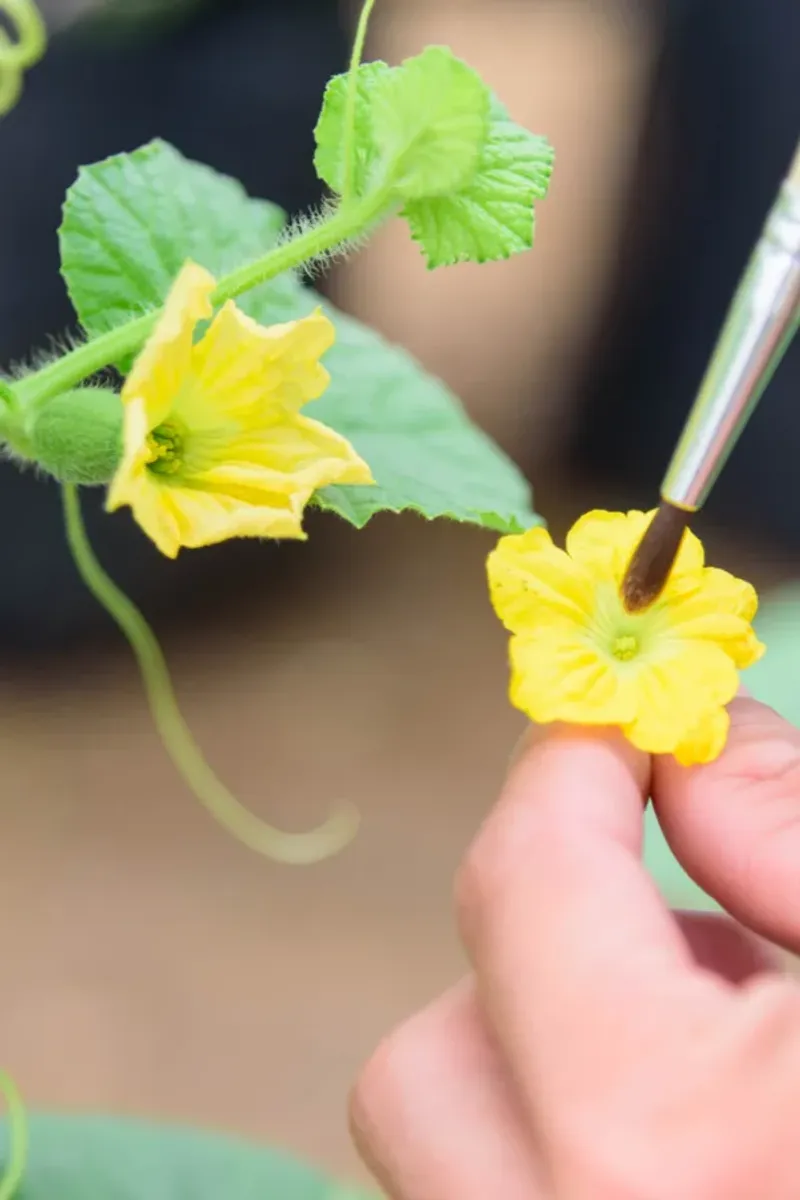
Hand-pollination is a practical backup when female flowers are present and natural pollination appears inadequate after several mornings of observation. Colorado State University Extension’s vegetable garden hints describe the method simply: pick a freshly opened male flower, remove its petals, and gently touch the pollen-covered center to the stigma inside a freshly opened female flower.
Early morning is the best timing because both flowers are freshest and most receptive then. This is a useful tool for specific situations, not a routine step that every North Carolina cucumber grower needs to take.
Penn State Extension frames hand-pollination as a targeted technique when insect activity is genuinely limited, not a substitute for addressing the conditions that reduced that activity in the first place.
Check plant stress after considering pollination
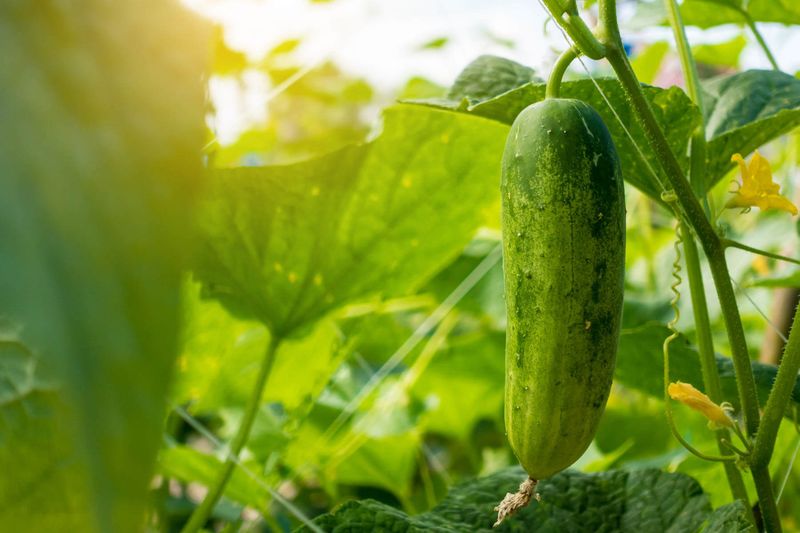
After you have confirmed that female flowers are present and checked the cultivar type, shift your attention to the growing conditions around the plant itself. Soil moisture is one of the first things to evaluate.
Both drought and overwatering can stress cucurbits enough to cause flower or fruit abortion. UMN Extension’s cucurbit fruit set resource notes that flooding can impair root function, which means soggy raised beds or containers without adequate drainage can be just as damaging as dry soil.
Aim for reasonably consistent moisture rather than constant saturation.
Fertilization is another area where more is not always better. NC State Extension’s vegetable gardening handbook notes that too much nitrogen pushes a plant toward lush foliage at the expense of flowers and fruit.
Adding fertilizer as a reflexive fix when cucumbers are not setting is likely to make a nitrogen-heavy situation worse. Follow soil-test results or product-label guidance rather than guessing.
Light, pests, and disease deserve a look as well, though none of them should be diagnosed from flower drop or misshapen fruit alone. Cucumbers need full sun, generally six or more hours of direct light per day, and heavy shade from nearby trees or structures can reduce productivity.
Pest damage to leaves or stems, and fungal or bacterial diseases that affect foliage, can all weaken a plant enough to reduce fruit set. University of Georgia Cooperative Extension’s vegetable crop pollination guide notes that misshapen or undersized fruit can reflect moisture stress, disease, or mechanical injury rather than incomplete pollination, so look at the whole plant before settling on a cause.
One easy step that gardeners sometimes skip is regular harvesting. Mature cucumbers left on the vine signal the plant to slow down or stop producing new fruit.
Picking cucumbers at the right size, before they yellow and enlarge, keeps the plant in an active production mode through the growing season.
Applying an insecticide to solve what looks like a fruit set problem is not a useful fix and can reduce the pollinator activity the plant actually needs.
Use a short morning checklist before taking action
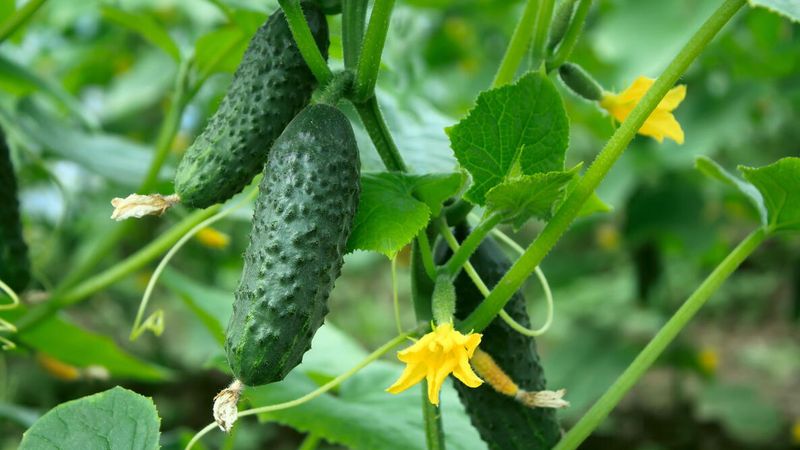
A few minutes of observation each morning can tell you more than any single intervention. Start by looking at the base of each flower to determine whether female flowers, those with the small swollen ovary behind the petals, are present at all.
UMN Extension and Penn State Extension both confirm that early male-only flowering is normal and not a reason to act.
Once female flowers appear, watch for insect visits across several mornings and note whether those flowers begin swelling into small cucumbers within a day or two. Check your seed packet or plant label to confirm the cultivar type, since Oklahoma State University Extension explains that gynoecious and parthenocarpic varieties behave differently and change what solutions actually apply.
Then review moisture, feeding history, light, and pest management before reaching for any product.
The vine rarely needs a dramatic fix. Most North Carolina cucumber problems resolve when the gardener slows down, identifies the real bottleneck, and makes one targeted adjustment at a time.
A patient eye beats a full cart of garden supplies almost every time.