
13 Blue Perennials Creating Calm New England Style Gardens In Massachusetts
Follow us on Google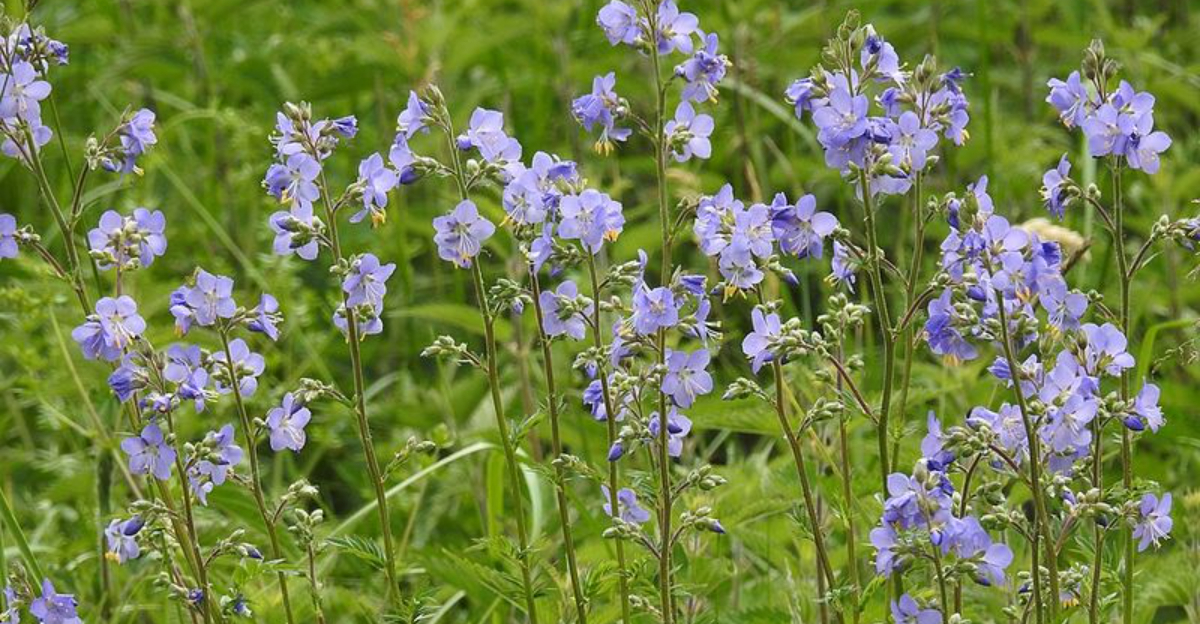
Blue flowers have a quiet way of cooling down a garden, especially when summer in Massachusetts starts feeling bright and busy. If you want that relaxed New England look, the right perennials can make your borders feel settled, timeless, and easy to live with.
These fourteen picks bring soft color, reliable performance, and the kind of gentle structure that makes a yard feel instantly more peaceful. Keep reading if you want a planting palette that looks polished without feeling fussy.
Baptisia australis
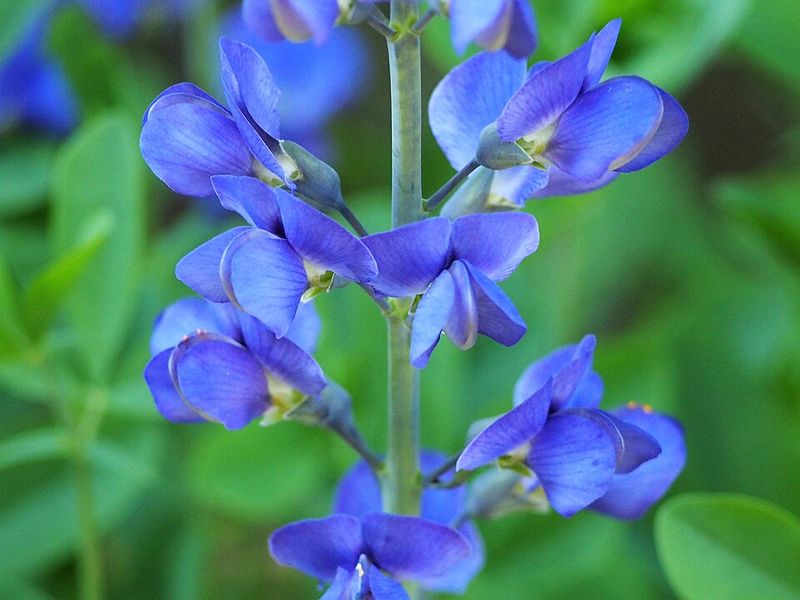
Nothing steadies a border quite like upright blue blooms that arrive in late spring and hold their shape with quiet confidence. In Massachusetts gardens, this native-adjacent favorite looks right at home near old stone walls, white fences, and gravel paths.
You get that classic New England restraint, but with enough color to keep the bed from feeling flat.
Because deep roots help it handle dry stretches once established, you will not need to hover over it every weekend. Give it full sun and room to settle, since mature clumps become broad, shrub-like anchors over time.
I like pairing it with peonies, alliums, and soft grasses so the strong vertical stems feel balanced rather than stiff.
After flowering, the blue-green foliage stays handsome for months, which is useful when you want structure without depending on constant bloom. Dark seedpods also add interest, especially in more natural designs that lean slightly meadow-like.
That extended season matters in smaller yards where every plant needs to earn its place.
Patience pays off here, because younger plants can be slow to size up during the first few seasons. Once established, though, it becomes one of those dependable backbone perennials you will quietly appreciate year after year.
For a calm garden palette, few blues feel more grounded, lasting, and distinctly regional.
Nepeta ‘Walker’s Low’
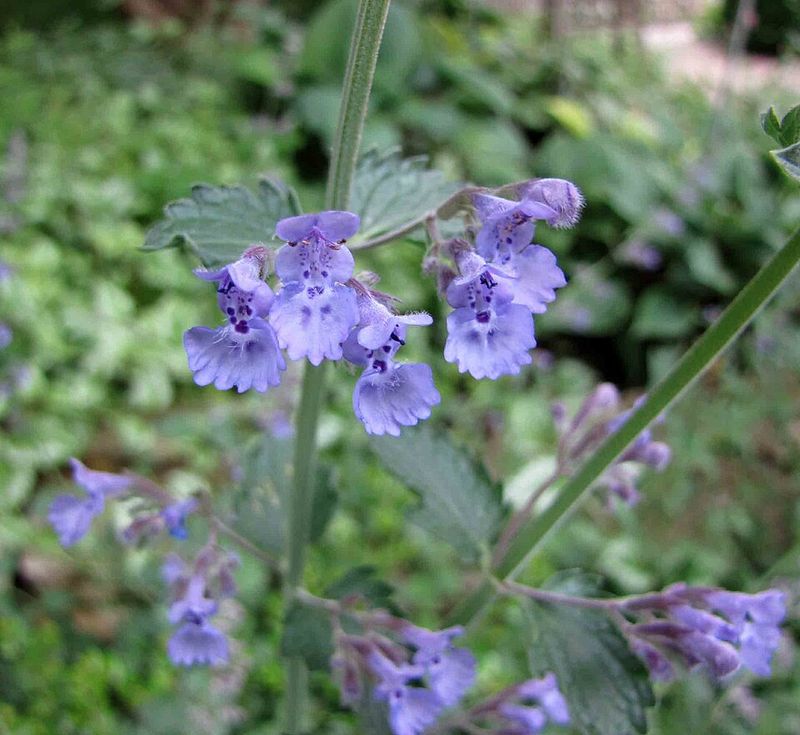
A drifting edge of smoky blue can soften almost any path, patio, or front border without making the planting feel overly formal. This long-blooming catmint is one of the easiest ways to bring calm color into a Massachusetts garden, especially if you love that airy, relaxed New England look.
The gray-green foliage also cools down hotter color schemes beautifully.
Full sun gives the best bloom, and good drainage keeps the plant tidy through humid stretches. If the first flush starts looking tired by midsummer, shear it back by about a third and you will usually get fresh growth and another round of flowers.
That simple cutback makes the plant look intentional instead of floppy.
Because the habit is mounded and slightly spilling, it works especially well near stone steps, mailbox beds, and along gravel drives. I like using it beside roses, salvia, and pale yellow daylilies, where the blue acts almost like a neutral.
Bees adore it, yet the overall feeling remains gentle rather than busy.
One smart trick is repeating small groups throughout the garden instead of planting one oversized clump in a single spot. That repetition creates visual rhythm and helps tie together foundation beds with more natural areas.
For low-maintenance blue, this one earns its reputation without feeling ordinary.
Salvia nemorosa ‘May Night’
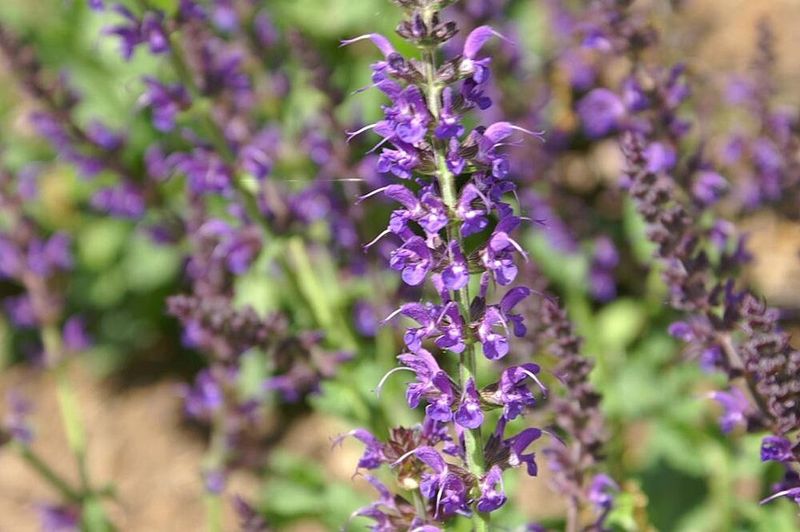
Strong vertical flower spikes can bring welcome order to a looser planting scheme, and this salvia does it with rich blue-violet color that reads beautifully from a distance. In Massachusetts, it fits neatly into sunny borders where you want a crisp, cared-for look without constant fussing.
The effect feels classic, especially alongside white and silver foliage.
Plant it in full sun with decent drainage, and cut spent spikes after the first bloom cycle for a reliable repeat show. That quick deadheading session is worth every minute because it keeps the clump compact and prevents the bed from looking worn out by July.
You will also get more pollinator traffic almost immediately.
The strongest pairings are often the simplest. Try it with lady’s mantle, peonies, yarrow, or pale pink roses for a palette that feels settled and timeless rather than loud.
I also like repeating it in front of shrubs, where the vertical stems create a neat line that visually sharpens the whole border.
Humidity can flatten some perennials, but this one usually holds itself together better than many summer bloomers. It is especially useful near entry gardens, where tidy structure matters and bloom color needs to carry.
If you want blue that brings both calm and definition, this is a very smart place to start.
Siberian Iris
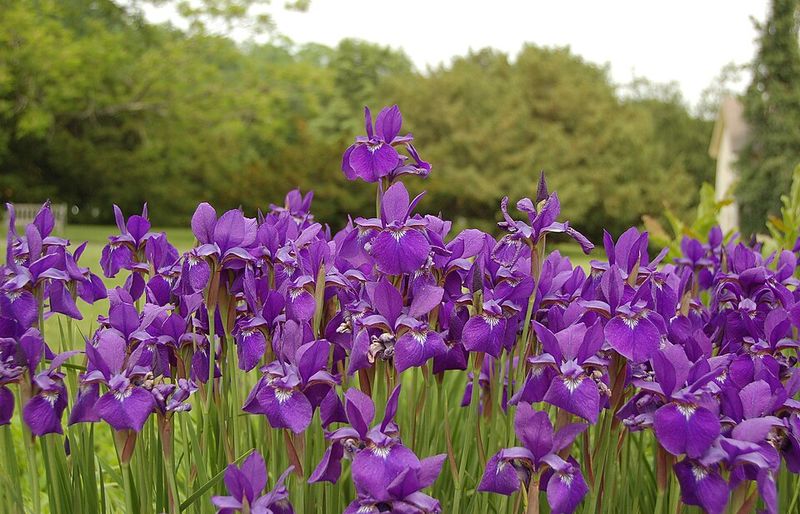
Few flowers bring grace to a planting bed quite like slender stems topped with clear blue blooms in late spring. Siberian iris has a refined, almost architectural presence, yet it never feels stiff in a New England style garden.
That balance makes it especially useful when you want calm beauty with a little structure.
Massachusetts conditions suit it well, particularly in spots with full sun to light shade and soil that does not dry out too harshly. The grassy foliage stays attractive long after bloom, so the plant keeps contributing when flashier perennials have already faded.
You can tuck it near downspouts, rain gardens, or lower beds that hold a bit more moisture.
Because the flowers are delicate in form, they pair nicely with broader leaves from hostas, peonies, or baptisia. I like using drifts of three or five plants rather than isolated singles, since repeated clumps read as calmer and more intentional.
The movement of the foliage also helps connect formal elements with looser planting areas.
Division is only needed every several years, which adds to its easygoing appeal. If your garden leans coastal, cottage, or quietly traditional, this perennial slides in naturally.
The color is unmistakably blue, but the overall mood stays serene, polished, and completely at ease in a Massachusetts landscape.
Brunnera macrophylla
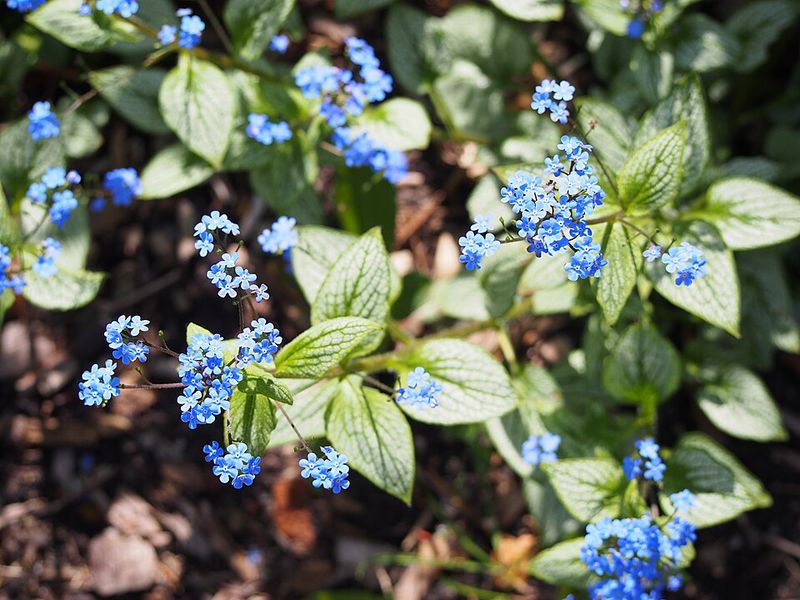
Shade gardens often need a color lift in spring, and tiny blue flowers floating above broad leaves can do that with remarkable softness. Brunnera brings a woodland calm that feels perfect for older Massachusetts neighborhoods, where maples, porches, and mature shrubs shape the landscape.
It gives you blue without asking for blazing sun.
Morning light or dappled shade suits it best, especially in soil that stays evenly moist and rich with organic matter. The flowers resemble forget-me-nots, but the handsome foliage is what keeps the plant useful for months afterward.
Variegated selections can brighten dark corners, though solid green forms often look more natural and understated.
This is an excellent companion for ferns, hellebores, epimedium, and hostas in layered foundation beds. I like placing it where you will notice the leaf texture up close, near steps, side yards, or shaded seating areas.
Because the bloom is delicate, repeating it near silver or white accents helps the blue register more clearly.
Hot afternoon sun can scorch the leaves, so placement matters more than extra maintenance. Once sited well, it asks for very little beyond moisture and a spring cleanup.
For anyone trying to create a cool, restful garden under trees, this perennial quietly solves a problem while looking completely effortless.
Amsonia hubrichtii
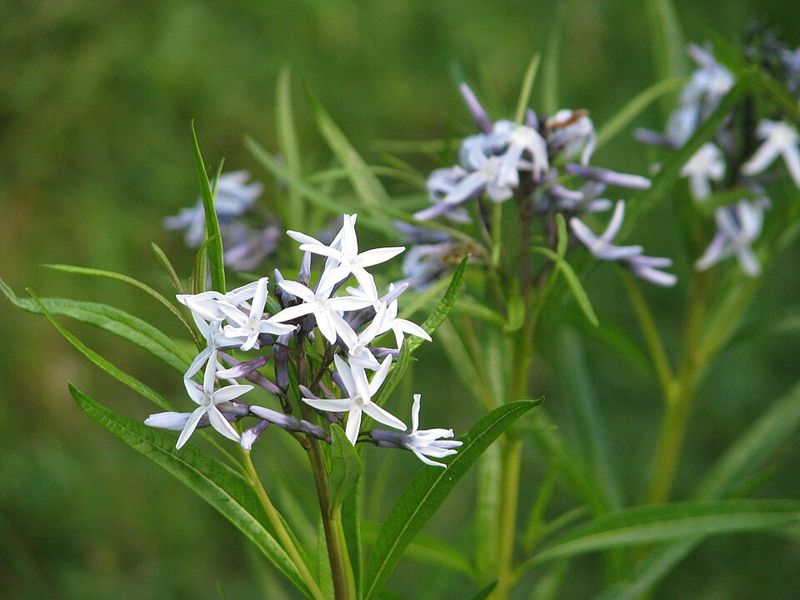
Soft blue stars in spring and fountain-like foliage through summer make this perennial one of the most useful quiet performers in a refined border. Amsonia never shouts for attention, which is exactly why it works so well in calm Massachusetts gardens.
Its texture adds movement without making a planting feel messy.
Give it full sun to light shade and enough room to develop its rounded form, because crowding hides much of its charm. Once established, it handles average conditions well and rarely needs staking or constant dividing.
That durability is helpful if you want a polished garden that still feels manageable during a busy season.
The narrow leaves contrast beautifully with broader companions like peonies, hydrangeas, and daylilies. I especially like it near paths where the fine foliage can catch low light in the morning or evening.
In mixed borders, it acts almost like a soft green-blue cloud that settles everything around it.
Autumn is the surprise bonus, when the foliage turns a clear golden yellow and extends the plant’s value beyond bloom season. That long performance makes it easier to build gardens with fewer, better plants instead of stuffing beds with short-lived color.
For understated blue in a distinctly New England palette, this one is unusually elegant.
Geranium ‘Rozanne’
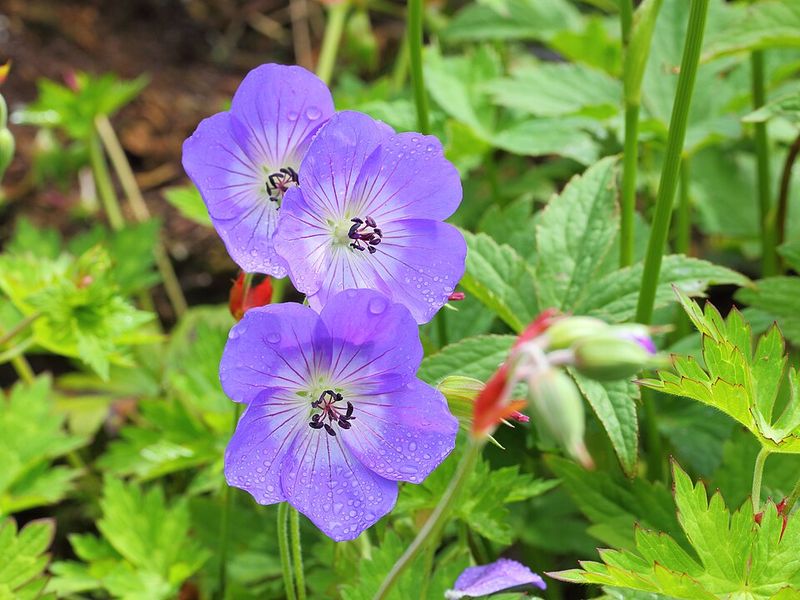
Long-lasting color can be hard to find in a perennial border, which is why this hardy geranium gets so much genuine appreciation from experienced gardeners. The violet-blue flowers keep appearing for months, weaving through neighboring plants in a way that feels relaxed but not careless.
In Massachusetts, that extended season is especially valuable.
Sun to part shade works well, and average garden soil is usually enough if drainage is reasonable. Instead of standing stiffly upright, the stems wander and mingle, so placement matters.
I like letting it spill around roses, thread through dwarf shrubs, or soften the front edge of a bed where hard lines need easing.
The broad blooms show up well against silver foliage, chartreuse leaves, and pale pink flowers. Because it blooms so generously, you can use fewer annuals to keep summer color going, which saves time and money.
If the plant starts looking too loose, a light trim can tidy things without sacrificing the relaxed effect.
One of its best qualities is how naturally it blends formal and informal areas of the yard. Near a brick walk, beneath an arbor, or at the edge of a cottage border, it feels equally at home.
For gardeners chasing calm blue with a long bloom season, this choice is hard to beat.
Veronica spicata ‘Royal Candles’
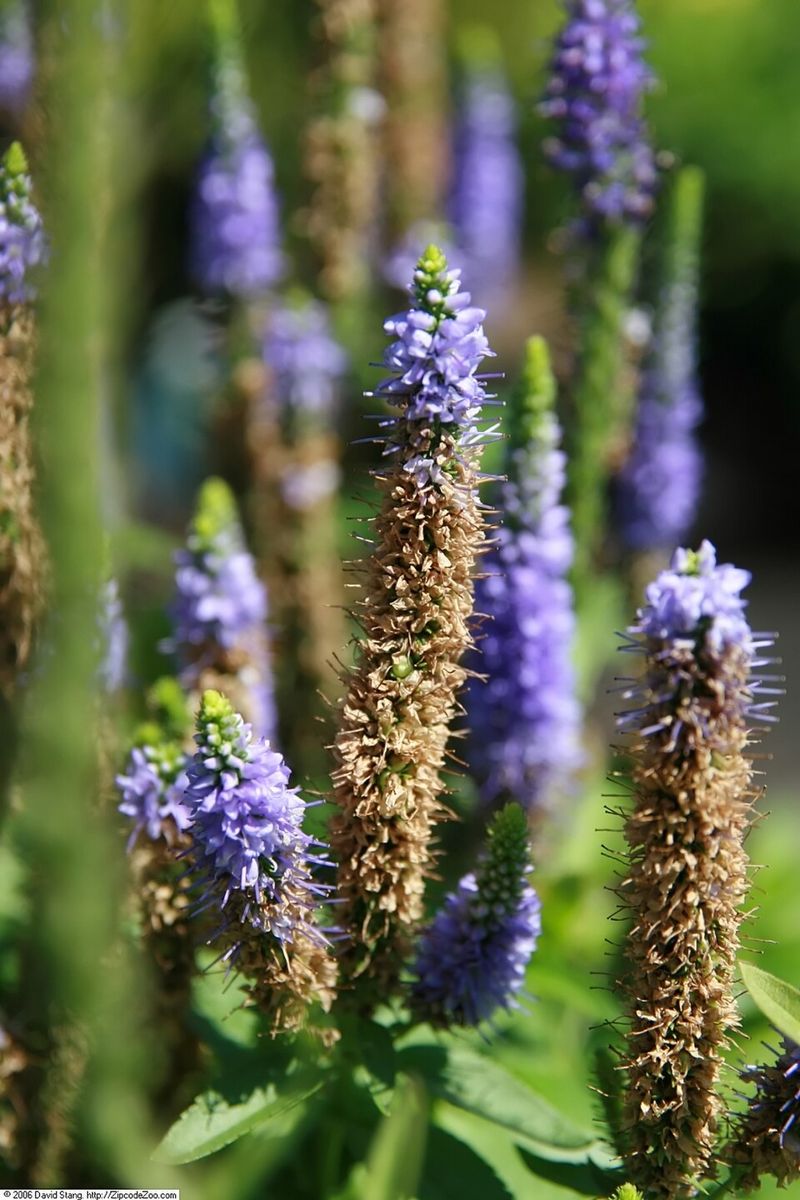
Neat blue spires can sharpen up a border in the best possible way, especially when surrounding plants are softer in form. This speedwell variety brings a clean, rhythmic look that suits Massachusetts gardens with clipped hedges, picket fences, or simply a preference for order.
The color is clear and cooling without feeling cold.
Full sun keeps it compact, and decent drainage helps the stems stay upright through summer weather. After the first bloom, removing spent flowers often encourages a second show and keeps the whole clump looking fresh.
That routine is simple enough for busy gardeners who still want a border to feel maintained.
It works nicely in front of hydrangeas, roses, or ornamental grasses because the narrow spikes contrast with larger shapes. I also like pairing it with white echinacea and catmint for a restrained palette that feels bright but peaceful.
Repetition in small drifts creates a stronger visual calm than using single plants as scattered accents.
Because the habit stays relatively tidy, it is useful in smaller urban and suburban yards where every square foot matters. You get vertical interest without bulk, and the pollinators certainly notice.
If your garden needs a dependable blue that adds structure more than drama, this perennial fits beautifully.
Campanula lactiflora
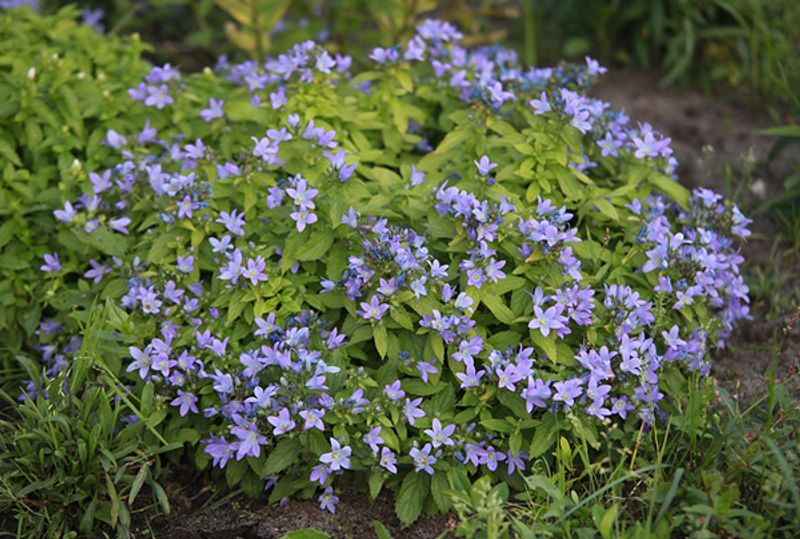
An airy cloud of blue bells can lighten a summer border in a way that feels romantic yet still grounded. This taller campanula has the relaxed elegance many people want in a New England style garden, especially around older homes and informal borders.
The flowers soften stronger shapes without disappearing into the background.
It performs best in sun or light shade with soil that does not stay parched for long. Taller stems may appreciate support in windy spots, though thoughtful placement among sturdy neighbors often solves that naturally.
You will get a better-looking display if you cut back spent blooms before the plant starts putting energy into seed.
I like combining it with phlox, nepeta, lady’s mantle, and pale roses for a classic blue-and-white-leaning scheme. Because the bloom is more open and airy than spiky salvias or veronicas, it adds a different texture that keeps the garden from feeling repetitive.
That variation is what makes a calm border feel layered instead of bland.
Give it room to breathe, especially in humid Massachusetts summers where crowded foliage can invite trouble. When well placed, it has a lovely almost luminous quality in evening light.
For gardeners who enjoy a slightly cottage-like softness without losing a composed overall look, this perennial is a beautiful choice.
Polemonium caeruleum
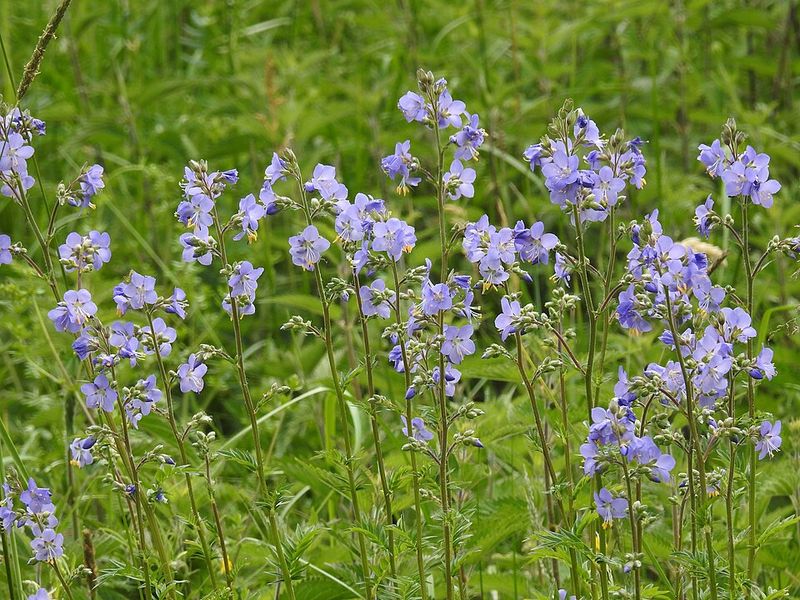
Spring shade can feel flat until a plant with sky-blue flowers and delicate ladder-like foliage wakes the whole area up. Jacob’s ladder has an old-fashioned gentleness that suits Massachusetts gardens beautifully, especially around colonial homes, stone steps, and lightly shaded foundation beds.
It reads as thoughtful rather than trendy.
Moist, humus-rich soil and part shade usually produce the happiest plants, though cooler sun can work in some spots. The foliage itself is finely textured and attractive, so you get more than just a short flowering moment.
If summer heat makes the clump look tired, nearby companions can help cover any temporary decline.
This is a smart plant for threading through hostas, ferns, brunnera, and spring bulbs in layered shade borders. I like using it where people pass slowly, because the details are subtle and worth noticing up close.
The blue flowers also echo early spring skies, which reinforces that calm, cool mood many shaded gardens need.
It may self-sow lightly in favorable conditions, but usually not in an unruly way. Deadheading keeps things tidier if you prefer a more controlled look.
For a quiet blue perennial that feels completely at home in established New England landscapes, this one brings grace without demanding constant attention.
Scabiosa ‘Butterfly Blue’
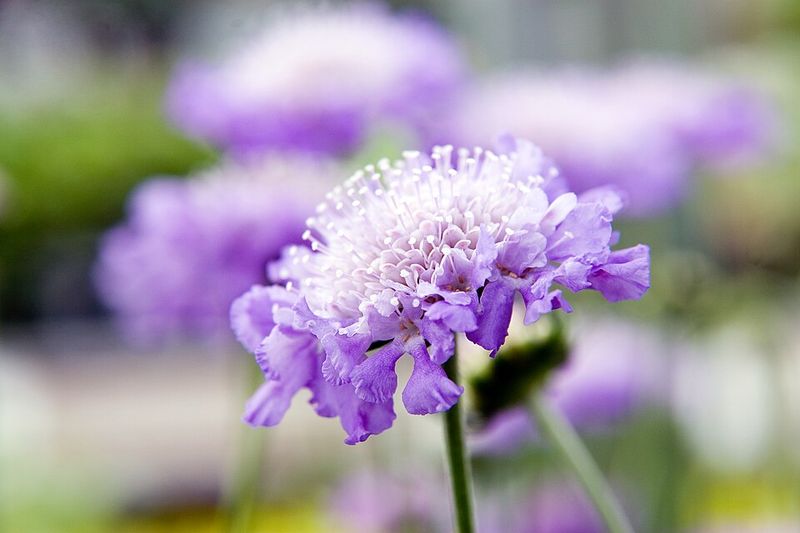
Small flowers repeated steadily through the season can calm a border more effectively than one big dramatic flush. This pincushion flower offers soft blue-lavender tones and a tidy mounded habit that slip easily into Massachusetts gardens.
It is especially useful when you want long bloom in a smaller space.
Full sun and sharp drainage are the keys to keeping it happy, particularly through humid periods. Deadheading helps maintain the display, though the routine is simple and oddly satisfying because new buds keep coming.
You will often find butterflies visiting, which adds movement without making the border feel chaotic.
Because the flowers are relatively petite, they pair best with equally graceful companions rather than oversized, coarse plants. Try it near coreopsis, dwarf salvia, lavender, or low ornamental grasses for a light, airy effect.
I also like it in edging roles where a path needs softening but not a lot of bulk.
In a calm New England planting, this perennial works as a connector between stronger shapes and colors. It does not dominate, and that restraint is part of its value.
If your garden needs a durable blue accent that keeps blooming while everything else takes turns, this one is wonderfully accommodating.
Platycodon grandiflorus
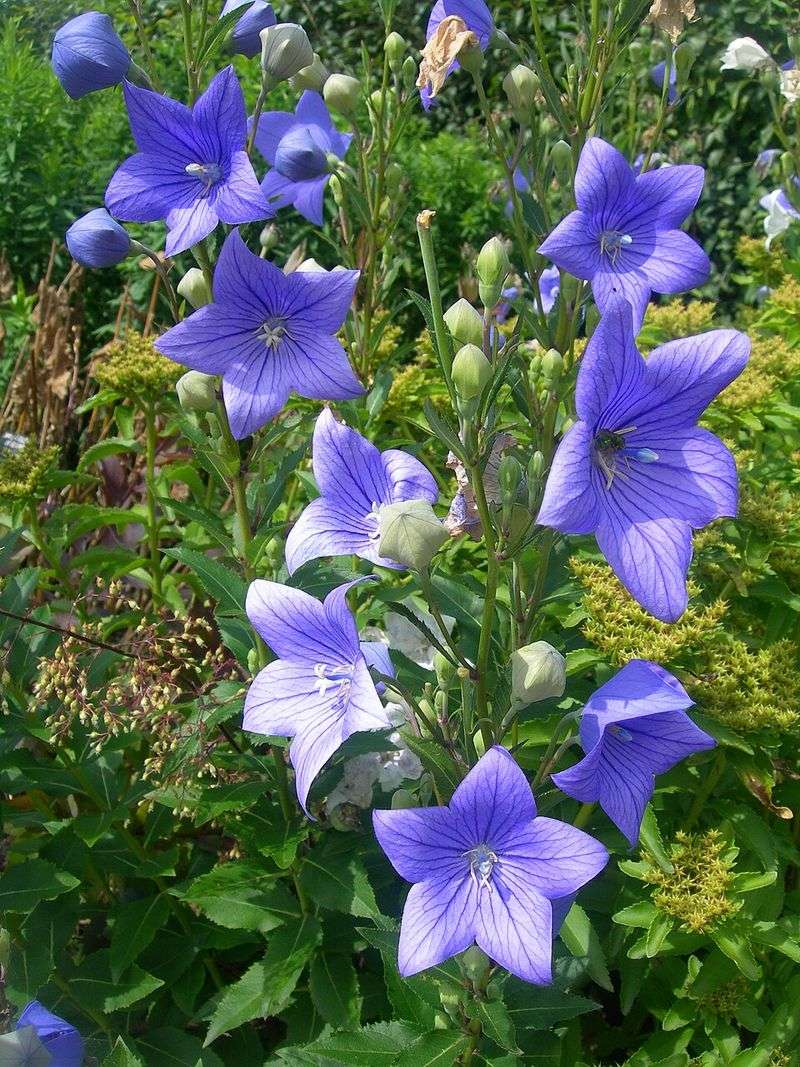
There is something quietly delightful about flower buds that puff up like little balloons before opening into blue stars. Balloon flower brings that small moment of surprise to summer borders, yet the overall effect remains neat and composed.
In Massachusetts gardens, it fits comfortably into both cottage and more tailored planting styles.
Choose a sunny spot with average, well-drained soil, and avoid moving it once established because the roots prefer stability. New growth can emerge late in spring, so marking its location prevents accidental digging.
That patience is rewarded with upright stems that generally stay tidy and presentable through bloom season.
The clear blue color works especially well near white shasta daisies, pale echinacea, and dwarf shrubs with dark foliage. I like planting it where the intriguing buds can be seen up close, such as along front walks or near seating areas.
Because the form is compact and upright, it helps add order to looser summer combinations.
Some taller selections benefit from light support, but many modern varieties remain fairly self-contained. It is also a dependable cut flower if you enjoy bringing a few stems indoors.
For gardeners who want blue with a classic feel, steady habit, and a bit of personality, this perennial is an easy recommendation.
Ajuga reptans
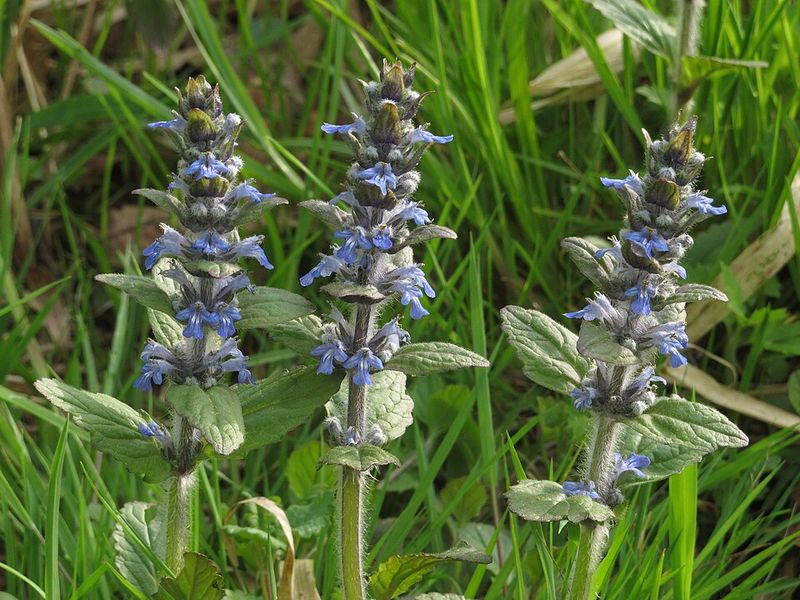
Low carpets of glossy foliage can make a garden feel settled, and spring blue flower spikes add just enough seasonal lift. Ajuga is useful when Massachusetts beds need groundcover beneath shrubs, along shady edges, or in small spaces where bare soil keeps catching your eye.
The effect is calm, cool, and pleasantly grounded.
Part shade and evenly moist soil usually give the best results, though many selections handle some sun if moisture is reliable. Because it spreads by runners, you should place it where a knit-together look is welcome rather than in precious, tightly edited beds.
Good siting makes the difference between helpful coverage and unnecessary maintenance.
I like using it under hydrangeas, around stepping stones, or at the front of woodland borders with ferns and hellebores. Dark-leaved varieties can make the blue flower spikes stand out more clearly, while green forms often blend more naturally into traditional landscapes.
In either case, the mat of foliage helps reduce weeds and visually quiet the planting.
Crowded, humid conditions can occasionally invite trouble, so a little airflow and occasional thinning are wise. Even with that caveat, it remains a valuable tool for calming fragmented garden areas.
If you need blue close to the ground to connect larger plants into one cohesive composition, ajuga does the job well.