
Do This To Your Florida Hibiscus In December Instead Of Cutting It Back Hard
Follow us on Google
Skip the hard chop this December and get ready to cover your tropical hibiscus instead. You step onto the patio on a crisp Florida morning, pruners in hand, and the forecast says a cold snap is coming.
That is the moment to pause. Here is what to do with your hibiscus in place of the big winter haircut.
Start With Your Plant And The Forecast
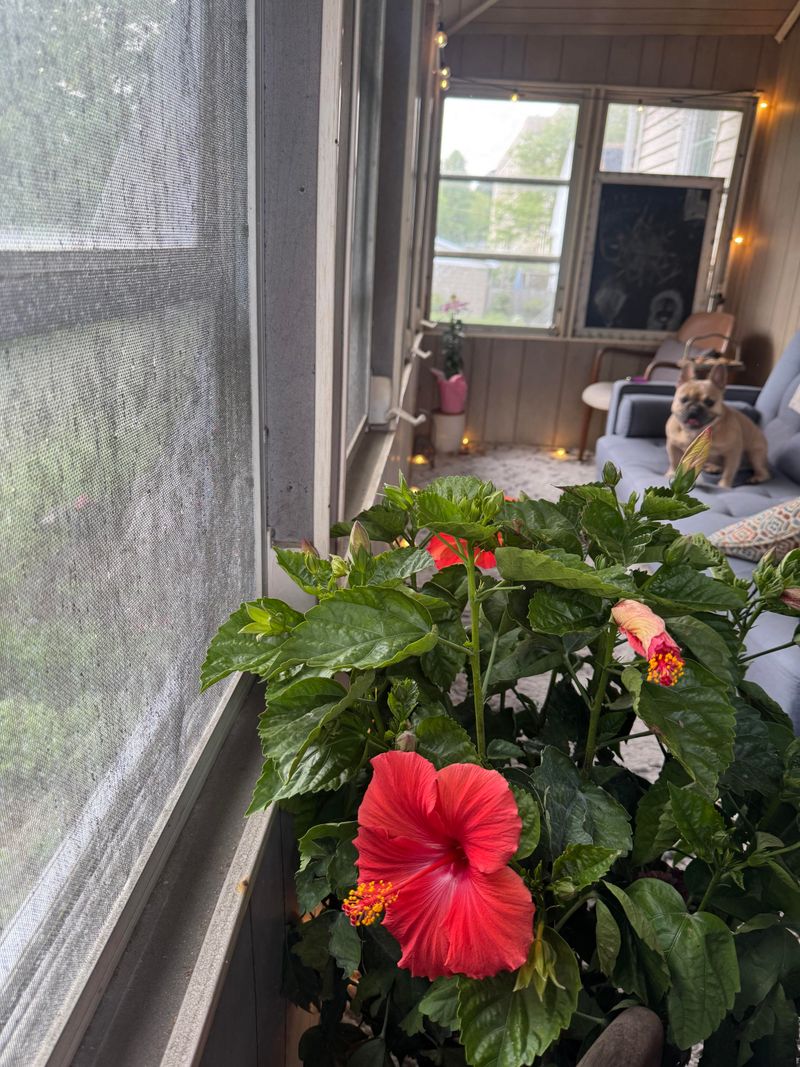
Here is the plan in one line. If a cold snap is in the forecast, get ready to protect your hibiscus instead of reaching for the pruners.
This advice is for tropical hibiscus, the plant botanists call Hibiscus rosa-sinensis. It has glossy leaves and big blooms in red, pink, orange, and yellow.
UF/IFAS Gardening Solutions describes it as cold-sensitive.
Not every plant sold as hibiscus fits this advice. Florida also has native types, such as the marsh hibiscus, that are herbaceous perennials and may die back to the ground in winter on their own.
Those plants follow a different rhythm, so do not apply this guidance to them automatically.
Conditions matter too. A sheltered yard in South Florida may never need a cover, while a plant in an open North Florida yard might.
Protection depends on your plant, your spot, and the forecast, not on the calendar alone.
UF/IFAS notes that freezing weather is normal in North and Central Florida and rare in South Florida. So check your local forecast a few days ahead, and keep a sheet or frost cloth within reach.
Think of it as being ready, not worried. Your hibiscus has been through summer storms, so a little planning goes a long way.
Why Waiting Can Preserve Living Wood
Pruning is not the villain here. Timing is.
A hard cut in late fall or early winter can nudge the plant to push out soft, tender new growth. That fresh growth is the first thing a cold night damages.
UF/IFAS cold-protection guidance advises avoiding late-season pruning for this reason.
Here is the twist. Leaves and stems that look scorched can actually act like a blanket.
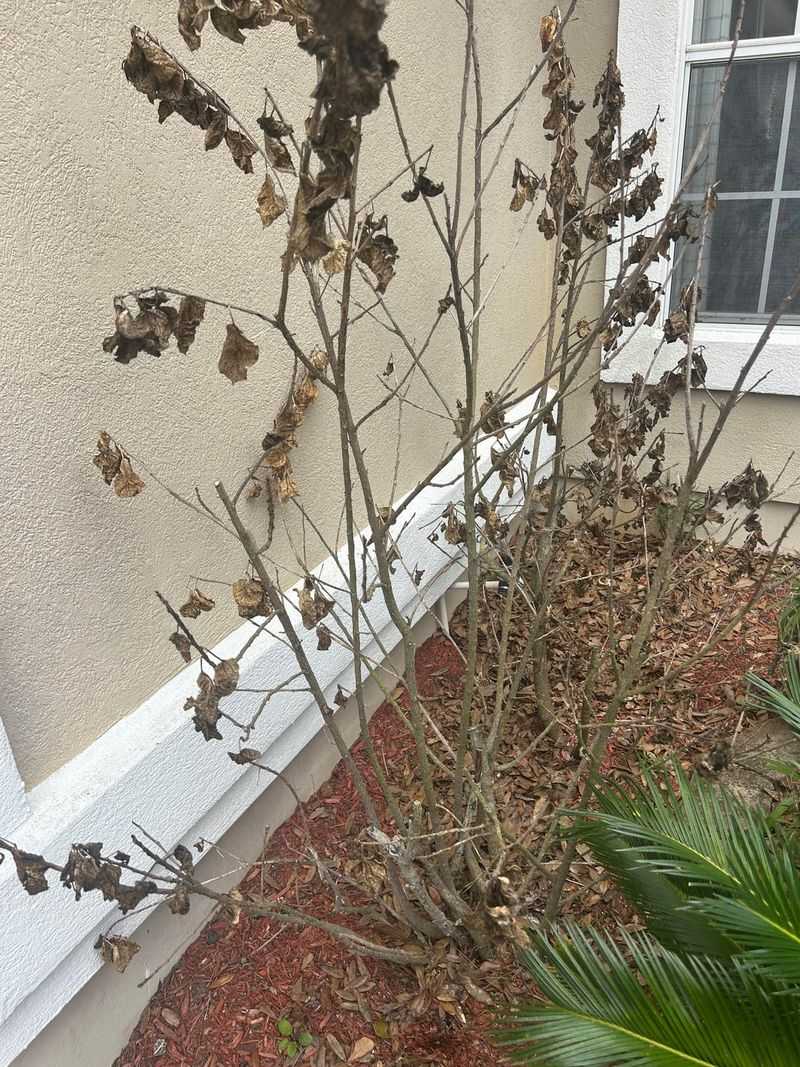
Cold-damaged growth left in place helps insulate the plant from the next chilly night.
Another thing surprises people. Stems that look dead may still hold living wood underneath.
If you cut them off right away, you may remove branches that would have leafed out again.
Pruning does have its place. UF/IFAS Charlotte County says general pruning is best in March after frost danger, while light trimming of dead, diseased, or crossing wood can happen any time.
So set the pruners down for now. Patience costs you nothing, and it lets the plant show you what survived.
Cover An In-Ground Plant From The Ground Up
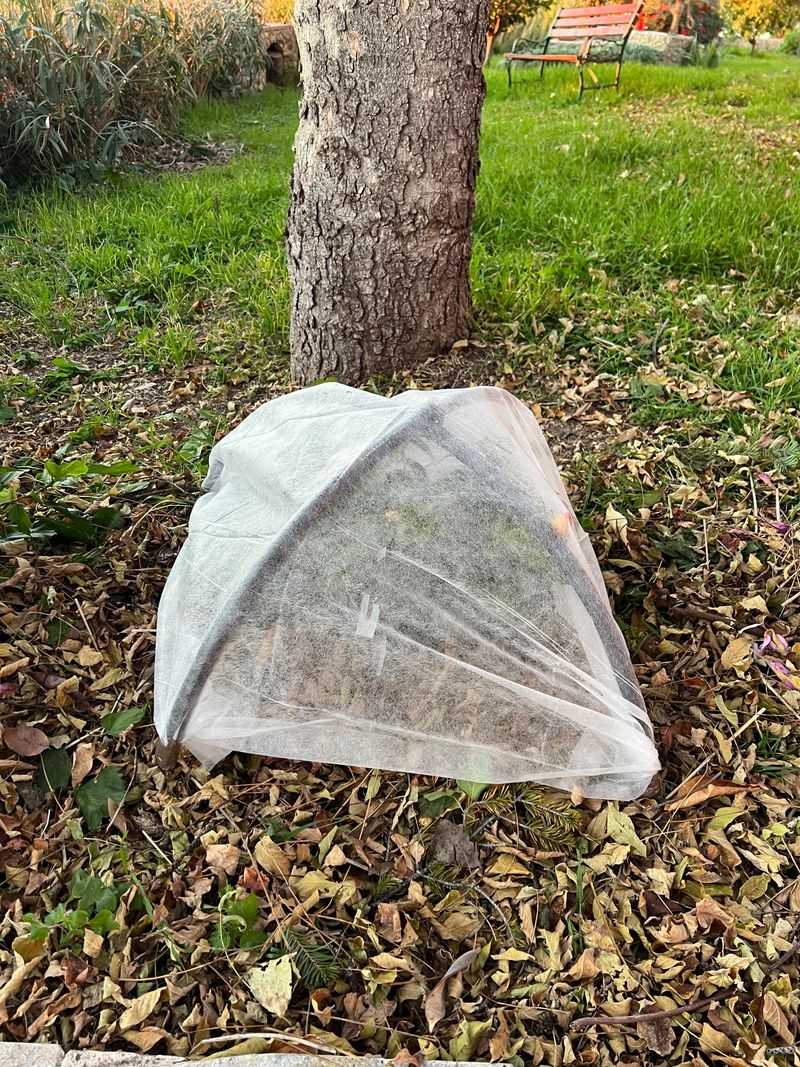
When a cold night is on the way, grab frost cloth, a bedsheet, or a light blanket. Late afternoon is a good time to do it, before the temperature drops.
Drape the cover over the plant and let it reach all the way to the soil. Anchor the edges with bricks, stakes, or landscape pins so wind cannot peel it back.
If you can, prop it up so it stays off the foliage.
The ground-reaching part matters. UF/IFAS explains that a long cover traps heat rising from the soil, like a tent holding in the day’s warmth.
Medium-weight frost cloth, about 1 to 1.5 ounces per square yard, may add roughly 4 to 8 degrees of protection. A UF/IFAS Leon County article offers that as an estimate.
It varies with the cloth, the wind, and how much ground heat gets trapped.
Take the cover off once temperatures climb above freezing, especially before sunny daytime hours can overheat the plant. A cover is not a guarantee in a prolonged or severe freeze, so treat it as one helpful layer.
Check Soil Moisture And Shelter Potted Plants
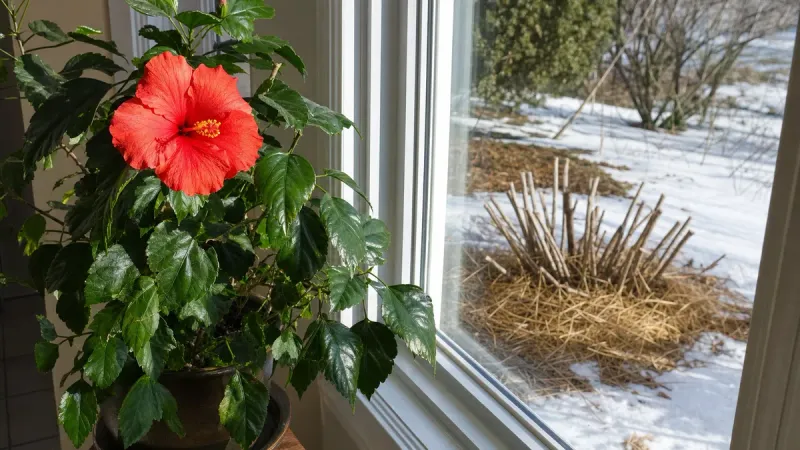
Before the cold arrives, push a finger a couple of inches into the soil. If it feels dry, give it a drink.
Moist soil holds heat better than bone-dry soil, and a thirsty plant handles stress poorly. UF/IFAS cautions against leaving soil saturated, since soggy ground can hurt roots.
Water the soil, not the leaves, and never use water as a stand-in for a cover.
Skip the idea of running your home sprinklers all night. Freeze-protection irrigation needs a steady, unbroken film of water, and ordinary home systems generally cannot deliver it.
They may do more harm than good.
Potted hibiscus play by different rules. Container roots are more exposed to temperature swings than roots tucked into the ground, as UF/IFAS Okaloosa County explains.
So when severe cold is forecast and the pot is movable, roll it onto a porch, into a garage, or against a warm wall. A hand truck or plant caddy makes this easy.
If the pot is too heavy, a cover still helps. Moving it is a good option when it is feasible, not a must.
Assess Stems Before You Prune
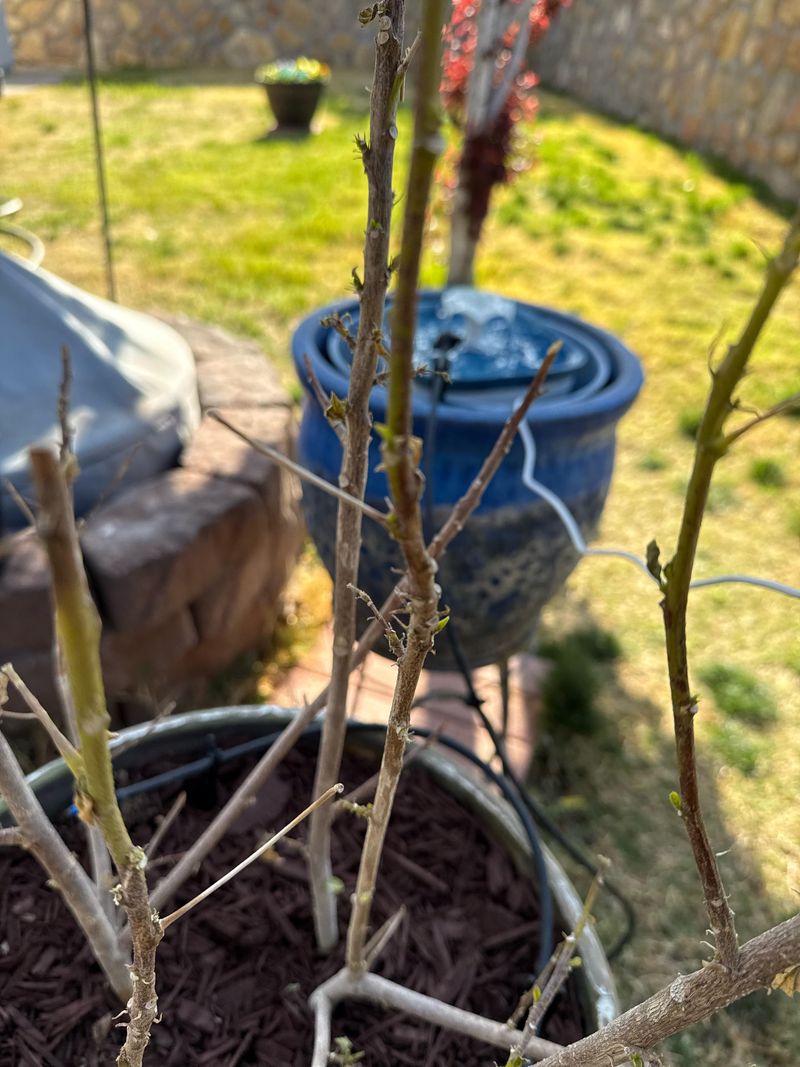
After a cold night, your hibiscus may look rough. Brown leaves and drooping tips can make it seem like a lost cause.
Hold off for a bit. UF/IFAS Okaloosa County urges gardeners not to react too quickly to cold-injured plants.
Here is a simple test. Gently scratch a small spot of bark on a stem.
UF/IFAS guidance says green tissue underneath means living wood, while brown or black tissue means injury.
Then wait for new growth. Once fresh buds and leaves appear and the risk of more frost has passed, cut damaged branches back to healthy tissue.
Make the cut just above a node, the bump where a leaf or bud grows.
Waiting does not mean leaving clearly dead or diseased wood forever. Light cleanup of those branches can be done any time, as UF/IFAS Charlotte County notes.
No one can promise every plant bounces back. But giving it time lets you prune with facts instead of guesses.
Use Local Conditions To Judge Cold Risk
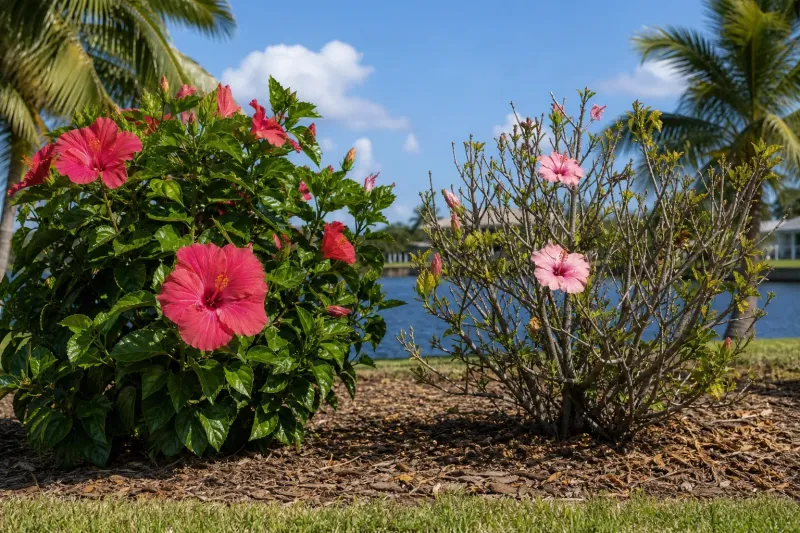
Florida is not one climate. Freezing weather shows up regularly in North and Central Florida, but it is rare in South Florida, according to UF/IFAS.
Your own yard adds more detail. A hibiscus near a south-facing wall, under a live oak canopy, or on higher ground may fare better than one in an open, low spot where cold air settles.
Numbers can mislead. UF/IFAS gave a Tallahassee example where less cold-tolerant plants may be knocked back below 40 degrees and may die at 32 and below.
Treat that as local guidance, not a rule for every hibiscus. How long the cold lasts matters too.
Frost timing also varies. In Central Florida, UF/IFAS Lake County offers about mid-March as a local guide, and parts of North Florida can see frost into March or early April.
Remember, tropical hibiscus is cold-sensitive, but no single number settles its fate.
So follow a simple order. Prepare when a cold event is forecast, wait and watch afterward, and prune once the plant and the season have made things clear.
Your hibiscus will happily tell you when it is ready.
