
Skip the Impatiens in Your Shady North Carolina Beds and Grow This Native Hummingbird Magnet Instead
Follow us on Google
Cardinal flower, Lobelia cardinalis, is a North Carolina native perennial that can take the place of garden impatiens in a shady bed. It sends up tall red spikes from summer into fall, and hummingbirds are drawn to those flowers.
The catch is moisture, because this plant wants soil that stays damp. If your shady bed holds water, you may be able to stop buying new flats every spring.
Meet Cardinal Flower
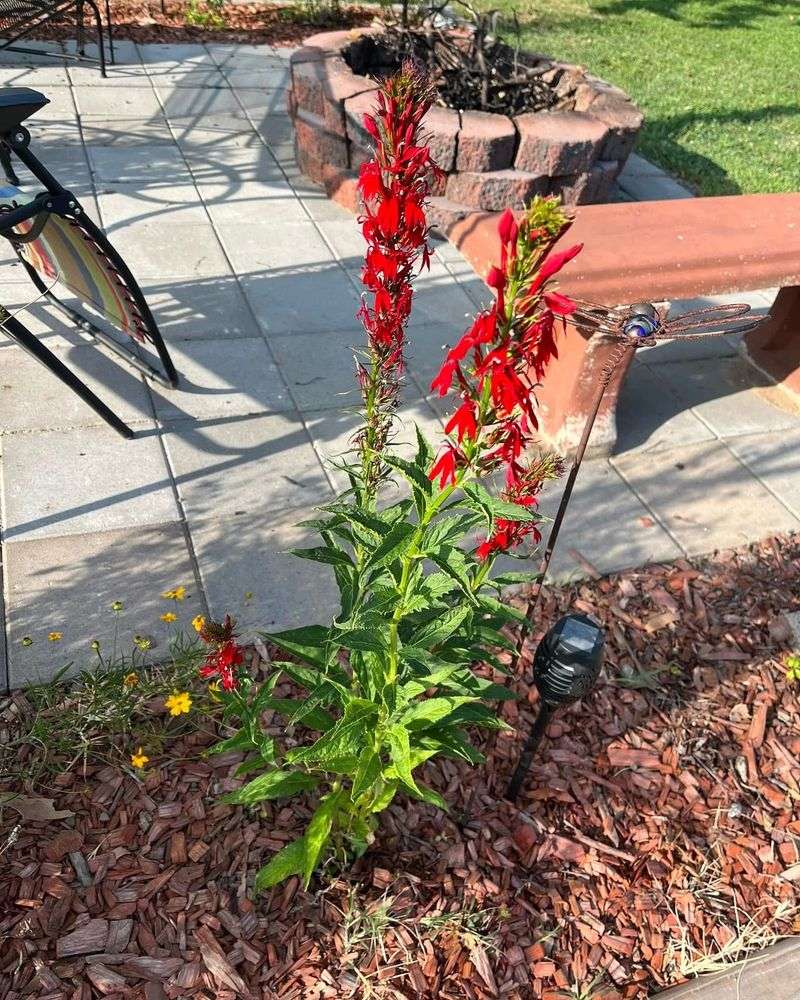
Picture your shady bed in July, the soil still dark and damp from last night’s storm. Instead of a tray of pink and white impatiens, tall red spikes rise up and glow in the dim light.
That is cardinal flower, Lobelia cardinalis, and it is a good swap for a bed that stays moist.
Here is the big difference. NC State Extension lists cardinal flower as a native herbaceous perennial, which means the plant is meant to come back from its roots in later seasons.
It belongs here, and it grows in the Coastal Plain, Piedmont, and Mountains.
Garden impatiens, Impatiens walleriana, are a different story. They are tropical plants that most North Carolina gardeners grow as annuals, since they cannot handle cold outdoors.
They are the plant most people replace each spring.
But rebuying is a habit, not a rule. NC State notes that gardeners can take fall cuttings and replant after the last spring frost, or keep potted impatiens indoors over winter.
So impatiens can be saved if you have the patience and window space.
So why try cardinal flower? Because it offers something impatiens cannot, a native perennial with red flowers that hummingbirds like.
One test decides whether it suits your yard, and that test is moisture. Walk out after a dry week and push a finger into the soil.
If it is still damp, keep reading.
Red Flowers That Attract Hummingbirds
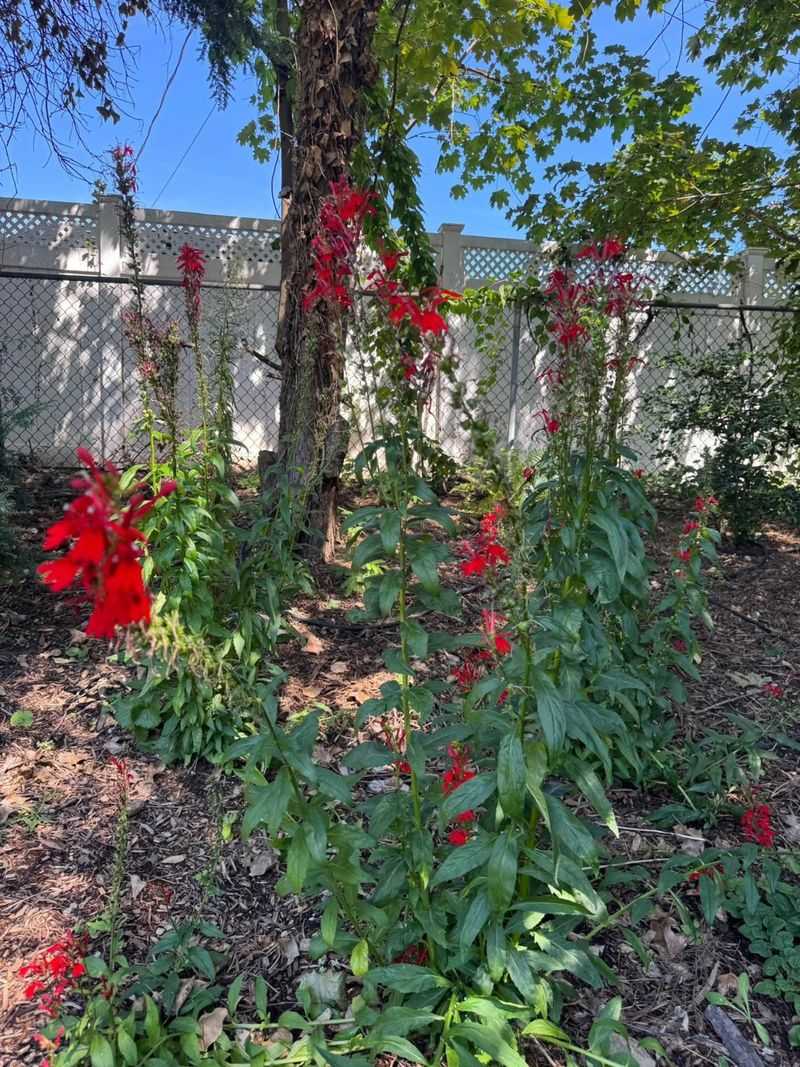
The flowers are the reason most people fall for this plant. Each upright spike carries bright red, tubular blooms, shaped just right for a long hummingbird bill.
The color stands out against green leaves and shady ground.
According to the NC State Plant Toolbox, the blooms can last from July through October. That covers summer and carries into fall, a long stretch of color from a single perennial.
It is a nice change from plants that peak for two weeks and fade.
Now for the honest part. Cardinal flower is known to attract hummingbirds, but it does not guarantee a visit.
A hummingbird may zip right past your bed and head for a neighbor’s feeder.
Red color gets a lot of credit, too. Hummingbirds do notice red, but the Cornell Lab of Ornithology covers hummingbird feeding and flower color, and the takeaway is that color is only part of the picture.
Birds also look for nectar, safe spots, and plants they can find easily.
A fair way to think about it is that you are setting a good table. Whether the guests show up depends on the neighborhood around it.
If one does hover at a blossom on an August evening, you will be glad you planted it.
Check Whether Your Shade Stays Moist
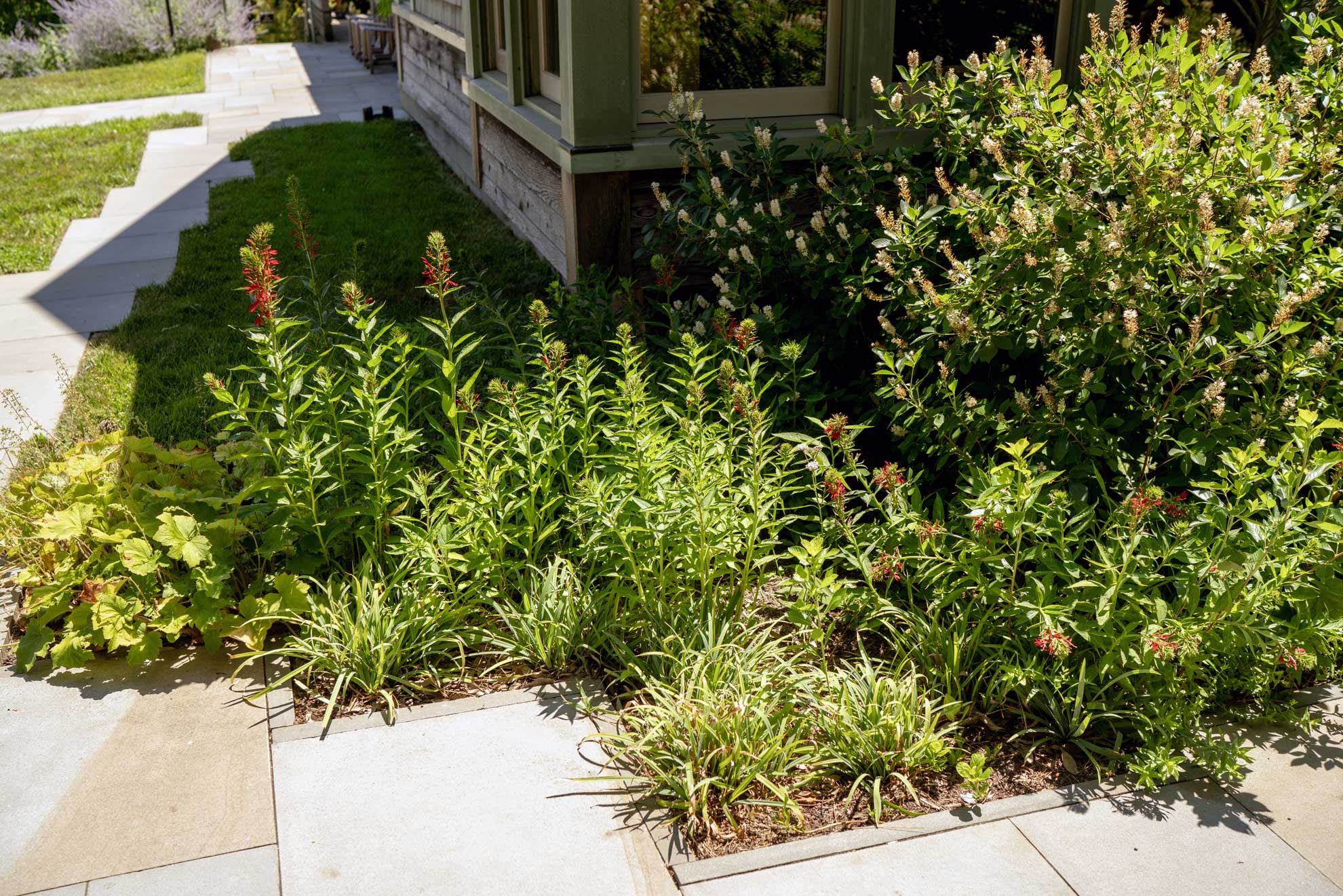
Shade alone does not decide this swap. Moisture does.
Plenty of shady beds in North Carolina turn dry and crusty by August, especially under big oaks that soak up every drop.
NC State says cardinal flower grows in dappled shade or partial shade, and it can also take full sun when the soil is adequately moist. The soil it likes is moist to occasionally wet, rich in organic matter.
That is the real requirement.
Try a simple check. After a few days without rain, dig down a couple of inches in your bed and feel the soil.
Cool and damp is a good sign. Dry and dusty means trouble.
A dry bed under trees is a poor fit unless you have a dependable way to keep it watered. Without that plan, the plant may sulk, stall, or fade out.
Impatiens may be the easier match for those spots.
The state listing covers the Coastal Plain, Piedmont, and Mountains, so the plant is suited to all three regions. But that does not mean it will succeed in every bed within them.
Your own soil and drainage matter more than the county you live in.
Site conditions can also shorten its stay. An Ask Extension answer notes that cardinal flower can be short-lived in some sites and can struggle in drought.
Treat it as a plant that rewards a damp spot, not a guarantee.
Give the Flower Spikes Room
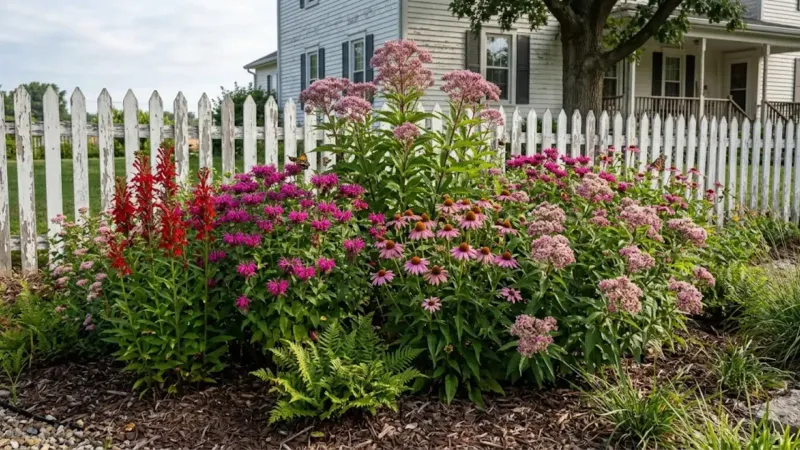
Imagine swapping a low, mounded impatiens for something that stands at your knee or hip. That is the jump you are making.
Cardinal flower is an upright plant, not a compact bedding filler.
NC State lists a typical height of about 2 to 3 feet, and some plants reach 4 feet. The flower spikes do the climbing, so plan for height rather than a low carpet.
Put it toward the middle or back of a bed, where it will not hide shorter plants.
No one has handed you a tidy spacing number here, so skip the ruler and judge by eye. Leave enough room that the plant can stand on its own and get air around it.
Where should it go? A consistently damp bed is the best match.
The edge of a rain garden can work too, since those spots collect and hold runoff.
Maryland Extension also suggests moist rain gardens and areas near downspouts, with watering during dry spells. That is regional guidance from a neighboring state, not North Carolina instructions, so treat it as a helpful idea.
A downspout area only works if it stays suitably moist. Some downspout beds drain fast and dry out between storms.
Check yours after a week of sunny weather before you plant, and you will know quickly whether it is a match.
A Clump May Expand Over Time
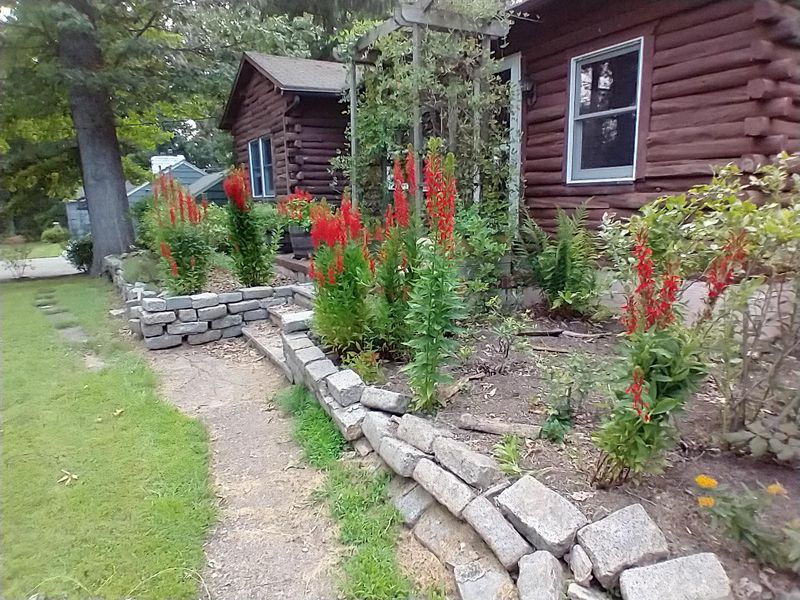
Here is where a perennial can earn its keep. After a plant blooms, the original rosette of leaves at the base can die back and leave offsets, which are small new plants that grow at its side.
Over several years, those offsets can enlarge a clump.
That guidance comes from Maryland Extension, so think of it as regional advice, not a North Carolina rulebook. It says a rosette can produce three or more offsets.
Still, not every plant will return larger. Drought, a poor spot, or a smothered base can cut a plant’s life short.
The Ask Extension page notes that cardinal flower may be short-lived in some gardens, so do not count on one plant lasting forever.
One habit matters a lot. Keep the basal rosette clear of leaf litter, mulch, and debris.
Maryland says the evergreen rosette needs to photosynthesize, which means it needs light to make food. When fall leaves pile on top, brush them off by hand.
Seed is another route. Maryland’s advice is to scatter ripe seed onto bare, wet soil, or lightly disturb the surface where seed has fallen.
Bare ground is hard to find in a heavily mulched bed, so leave a small open patch.
The takeaway is simple. A clump grows when conditions support it, not on its own.
Give it damp soil and a clear base, and it has a fair chance.
Build a Hummingbird-Friendly Yard
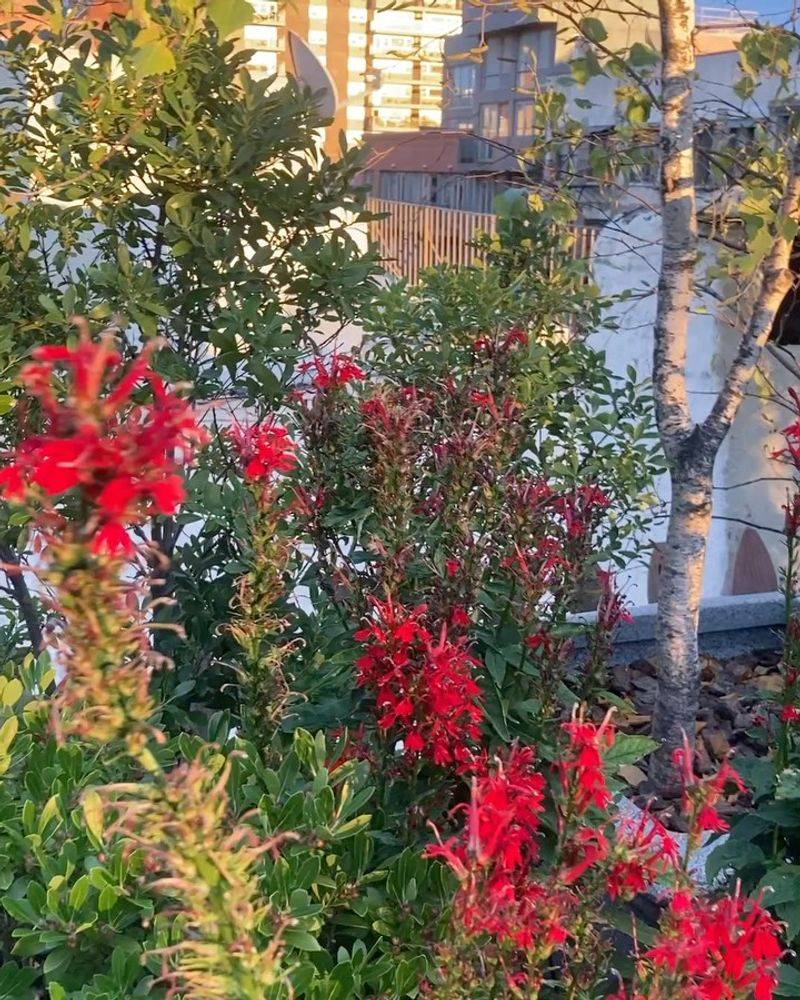
One plant does not make a hummingbird yard. Think of cardinal flower as a single dish in a full meal.
Birds do better when they have food, shelter, and places to rest.
NC State Extension recommends flowers that bloom at different times, so nectar is available across the season. It also suggests protected locations, plus trees or shrubs that provide perches and nesting sites.
There is a twist for shade gardeners. NC State says hummingbirds are attracted to sunny areas.
A bed that sits in deep shade may get fewer looks, even with red flowers. If you can, pair it with sunnier blooms nearby.
That fits the plant’s own range. The Plant Toolbox says it grows in dappled shade, partial shade, or full sun when moisture is adequate.
A bright, damp edge may suit both the plant and the birds.
Now for a safety note. NC State classifies cardinal flower as poisonous to people if large quantities are eaten, and it flags risks to pets.
The ASPCA lists it as toxic to dogs, cats, and horses.
So place it with care. Choose a spot away from where children play or pets chew on plants.
A quiet damp corner, with a little hummingbird traffic, is the right kind of stage for it.
