
7 Winter Habits That Feel Like Good Care But Slowly Kill Your African Violets
Follow us on Google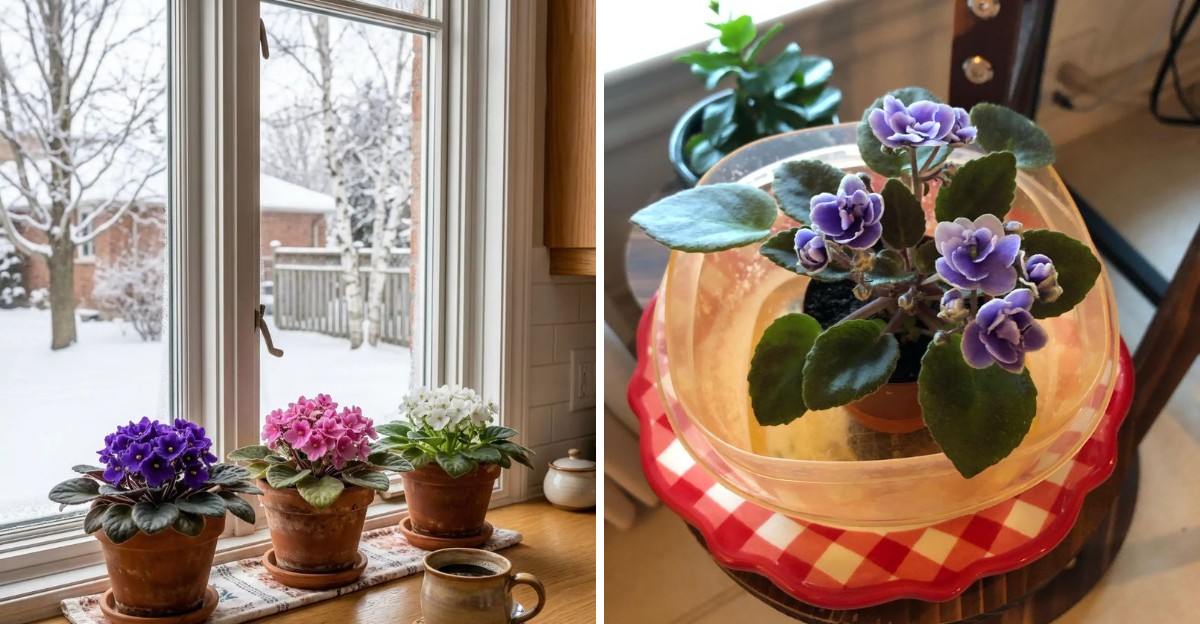
It’s a gray January morning, and your kitchen window feels cold enough to fog with one breath. On the sill, your African violet looks a little limp, so you do what any caring plant owner would do.
You water it, move it somewhere warmer, maybe give it a snack of fertilizer. But some of those kind gestures are the very things that quietly wear these plants down.
Winter changes the rules for African violets, and the habits that worked in July can backfire by February. The good news is that every one of these mistakes has a simple fix you can start today.
1. Watering With Cold Tap Water Shocks The Roots
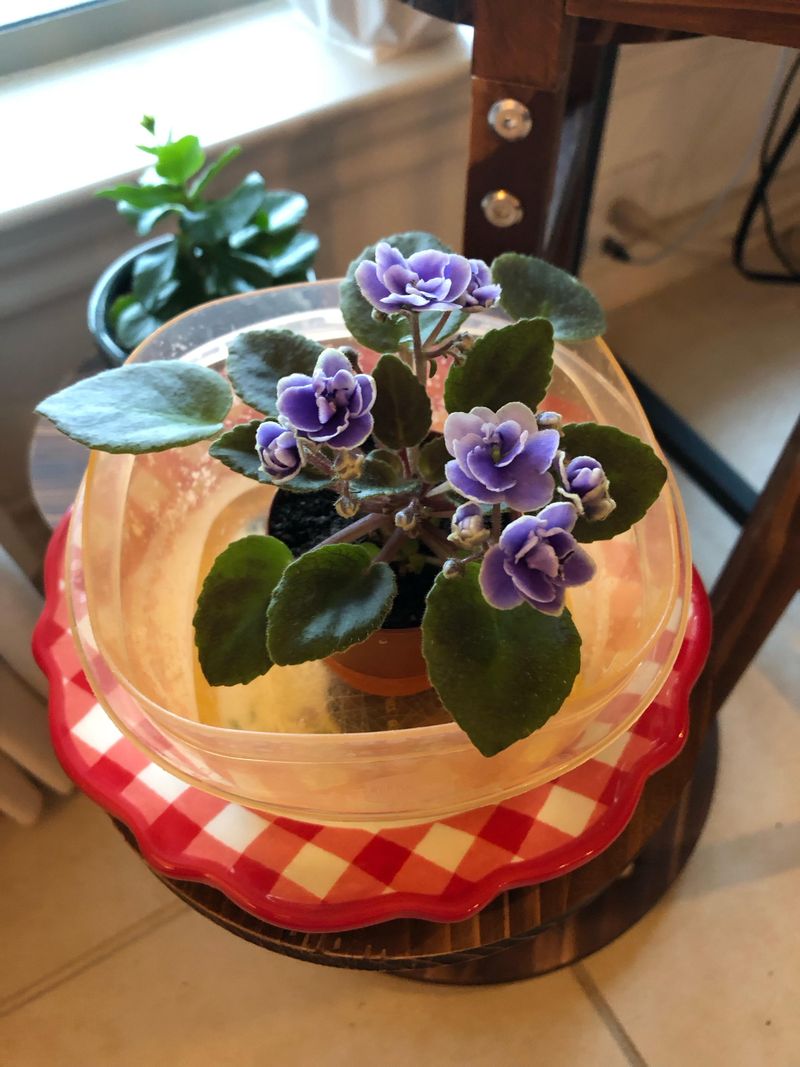
Picture a winter evening at the sink. You fill the watering can straight from the cold tap, pour it over your African violet (Saintpaulia spp.), and walk away feeling responsible.
The trouble is temperature. In much of the northern US, tap water in January can run near 40 to 50 degrees Fahrenheit.
Those tropical roots react like your bare feet on a frozen porch, they tighten up and stress. Cold drops on the fuzzy leaves can also leave pale yellow or brown rings that never fade.
Winter makes it worse because soil dries slowly in cool, dim rooms. Wet, chilly soil is the classic setup for root rot, a fungal breakdown that turns roots dark and mushy.
It is the most common way these plants die indoors.
So switch to room-temperature or lukewarm water. Better yet, water from the bottom.
Set the pot in a saucer of water for 15 to 30 minutes, then dump whatever is left. Leaves stay dry, and the soil drinks only what it needs.
Also cut back. Many growers water about 30 to 50 percent less often in winter.
Wait until the top half inch of soil feels dry before you water again. Your plant will look perkier within a couple of weeks.
2. Cozy Spots Near Vents Actually Stress Your Violets
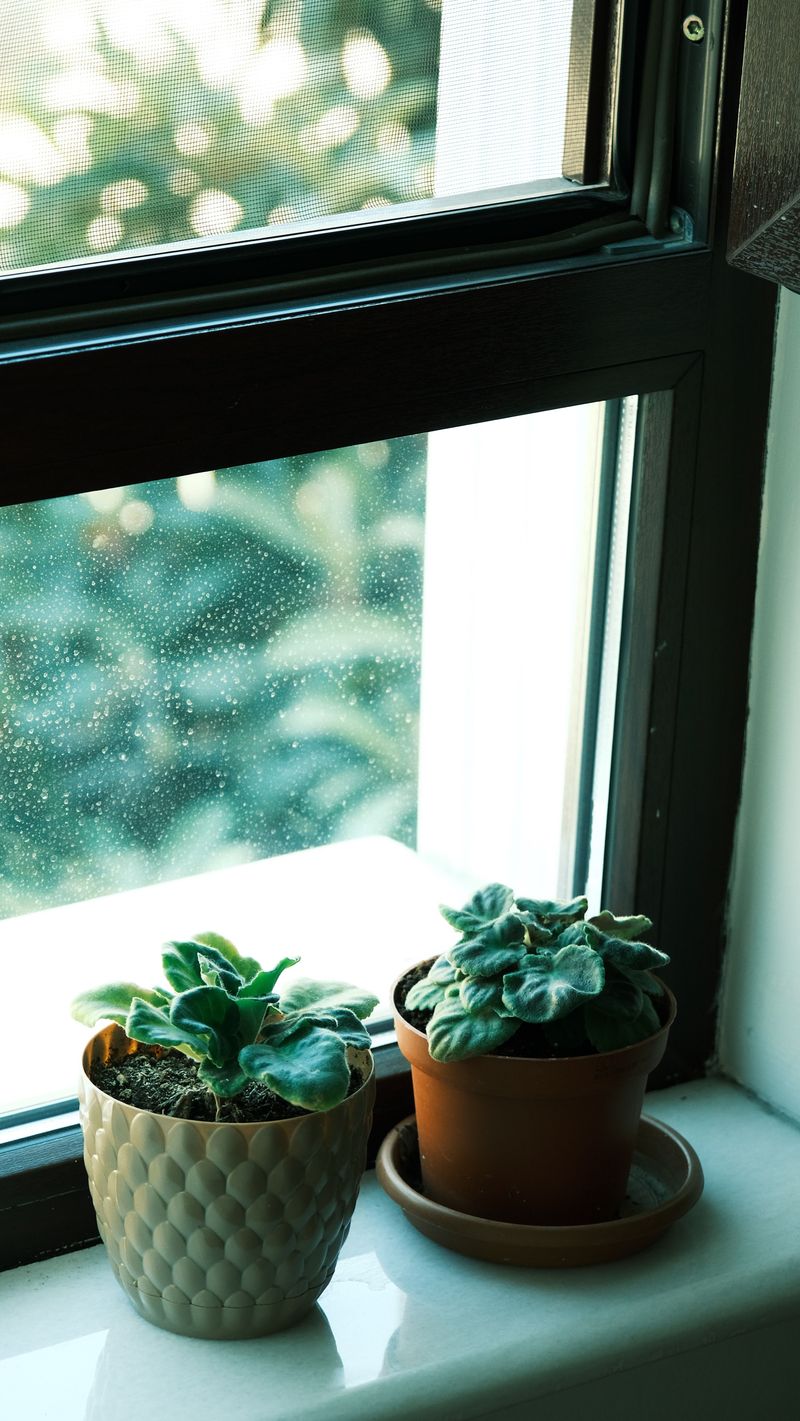
Warmth feels like love in winter. But African violets do not want warm, they want steady.
These plants come from mild, shaded forests in Tanzania and Kenya, where temperatures barely swing. They do best between 65 and 80 degrees Fahrenheit, with many growers aiming for 70 to 72.
A heating vent blasts hot, dry air, then shuts off. A frosty window does the opposite.
Your plant gets whiplash.
Hot air leads to crispy leaf edges, scorch, and flower buds that drop before opening. Cold drafts make leaves curl, turn brittle, and invite powdery mildew.
Temperatures under 60 degrees can cause wilting, and the damage sometimes shows up a day and a half later, long after you have forgotten the chilly night.
Here is a quick test. Hold your hand near the plant for a minute.
If you feel a breeze or a rush of heat, move it.
Pull the pot at least a few inches back from cold glass at night, especially in places like Minnesota or Maine where windows ice over. Keep it several feet from vents, radiators, and exterior doors.
A stable shelf in an interior room often beats the sunniest sill on a bitter night.
3. A Dim Corner Starves Them Of Winter Light

Myth: moving a violet away from the window protects it in winter. In truth, it usually stops the flowers cold.
Light is food for these plants. Winter days in Seattle or Chicago can drop below 10 hours of daylight, and the sun sits low and weak.
Tuck the pot in a corner, and it simply cannot make enough energy to bloom.
You will see the signs. Leaves turn thin and pale, stems stretch long, and the whole plant tilts toward the brightest spot it can find, like someone leaning to catch a little warmth from a campfire.
The fix is more light, not less. A north or east window works well year-round.
In winter, a south or west window that would scorch in July is often safe, as long as the plant sits back from cold glass.
Aim for 14 to 16 hours of light each day for steady blooms. If your house runs dark, an inexpensive LED or fluorescent grow light about 6 to 12 inches above the leaves does wonders.
A plug-in timer makes it automatic.
Give the pot a quarter turn every few days so it grows even and round. Within a month or so, buds often return.
4. Heavy Winter Feeding Burns Roots And Builds Salt
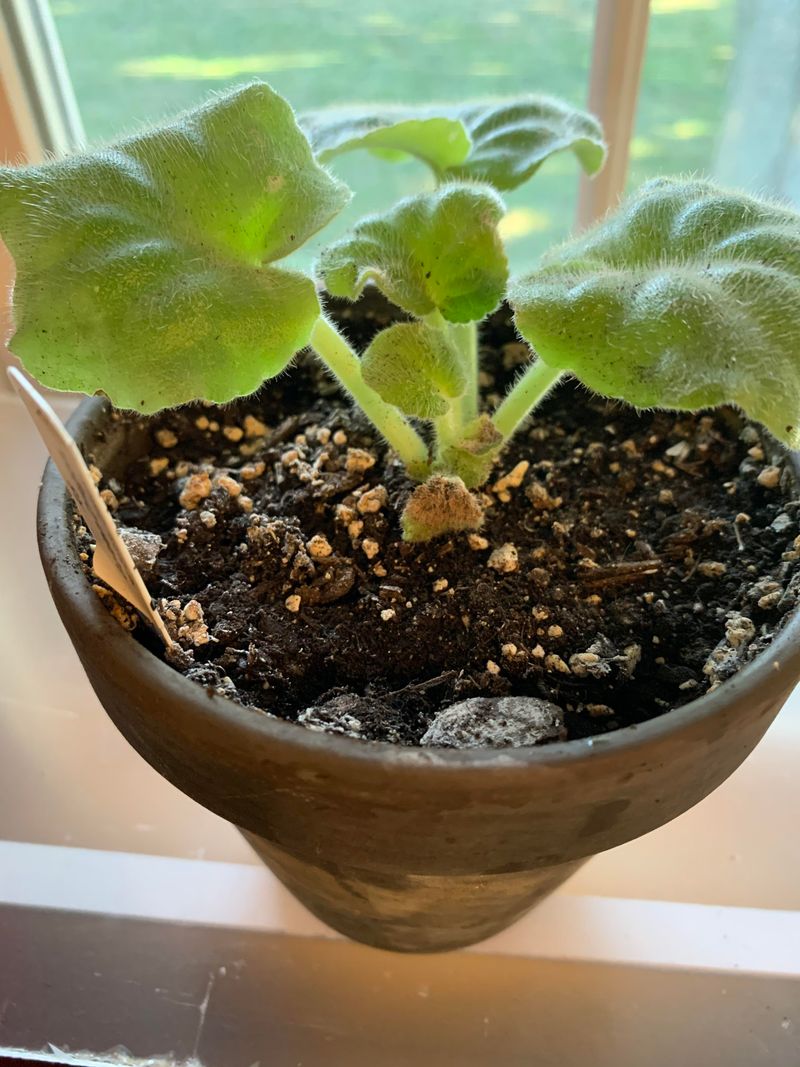
A white crust on the pot rim looks harmless. It is actually a warning sign that your plant is being overfed.
Fertilizer is made of mineral salts. When an African violet slows down in short winter days, it uses far less food.
The extra salts pile up in the soil and on the pot edge, where they can burn tender leaf stems resting against the rim.
Overfeeding shows up as brown leaf tips, brittle leaves, and fewer flowers. Think of it like eating a holiday feast every day while sitting on the couch.
The body cannot use it all.
So ease up. Many growers stop feeding or cut way back from about November through February, depending on how much light the plant gets.
Under a strong grow light, a violet may keep growing and can handle a weak dose, about one-quarter strength.
Always water first, then feed, so dry roots do not soak up concentrated salts. Every few months, flush the pot by running room-temperature water through the top until it drains freely for a minute.
When spring arrives and new leaves appear, return to a balanced African violet fertilizer, such as a 14-12-14 formula, at diluted strength. The plant will be ready for it then.
5. Misting Fuzzy Leaves Invites Rot And Spots
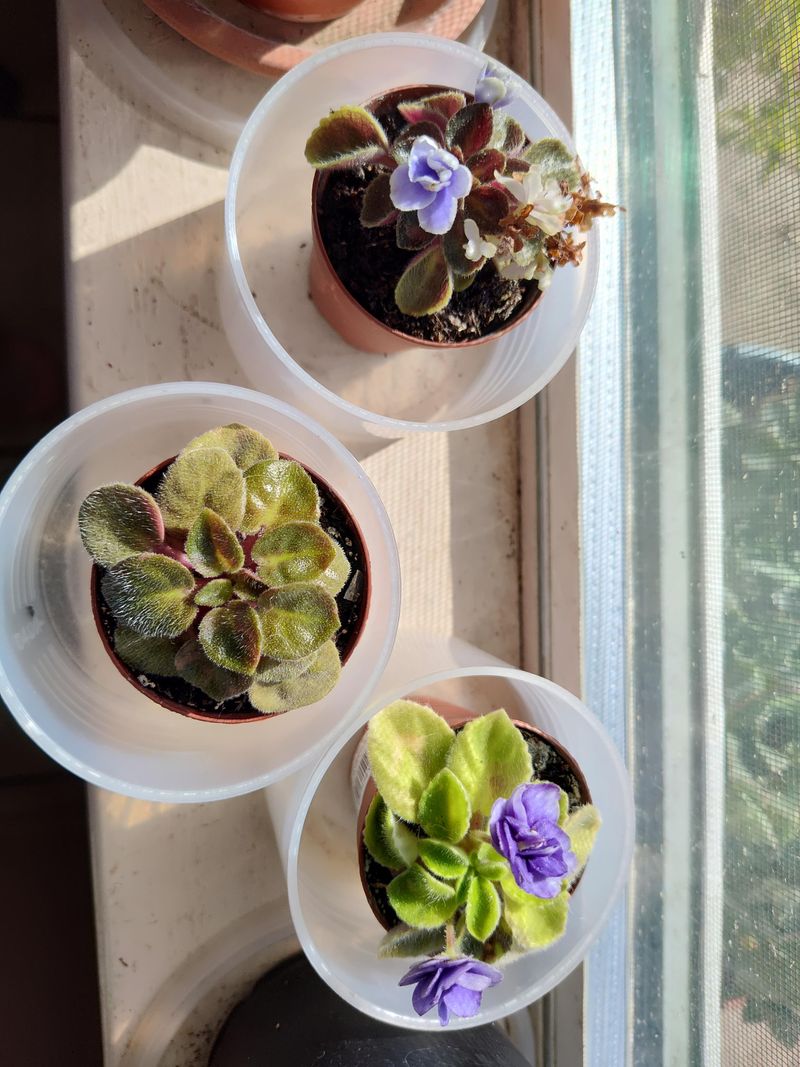
Your furnace kicks on, the air turns desert dry, and your skin feels tight by lunch. So you grab a spray bottle and mist the violets.
It feels kind. It is not.
Those velvety leaf hairs hold water droplets like a wool sweater holds snow. Moisture sits on the leaves and drips into the crown, the center where new leaves form.
That damp crown is where crown rot and leaf spotting start.
Humidity still matters, though. African violets like about 40 to 60 percent.
Many heated homes in the Midwest and Northeast drop to 20 or 30 percent in January. Dry air makes buds shrivel and leaf edges crisp.
The smarter move is to raise the moisture around the plant, not on it. Set pots on a tray of pebbles with water just below the pot bottoms.
As the water evaporates, it lifts humidity right where the plant needs it.
Grouping several plants together helps too, since they share moisture like friends huddled at a bus stop. A small room humidifier works best of all.
A cheap hygrometer, which measures humidity, tells you if your efforts are working.
6. Dusty Leaves Quietly Block Precious Winter Sunlight
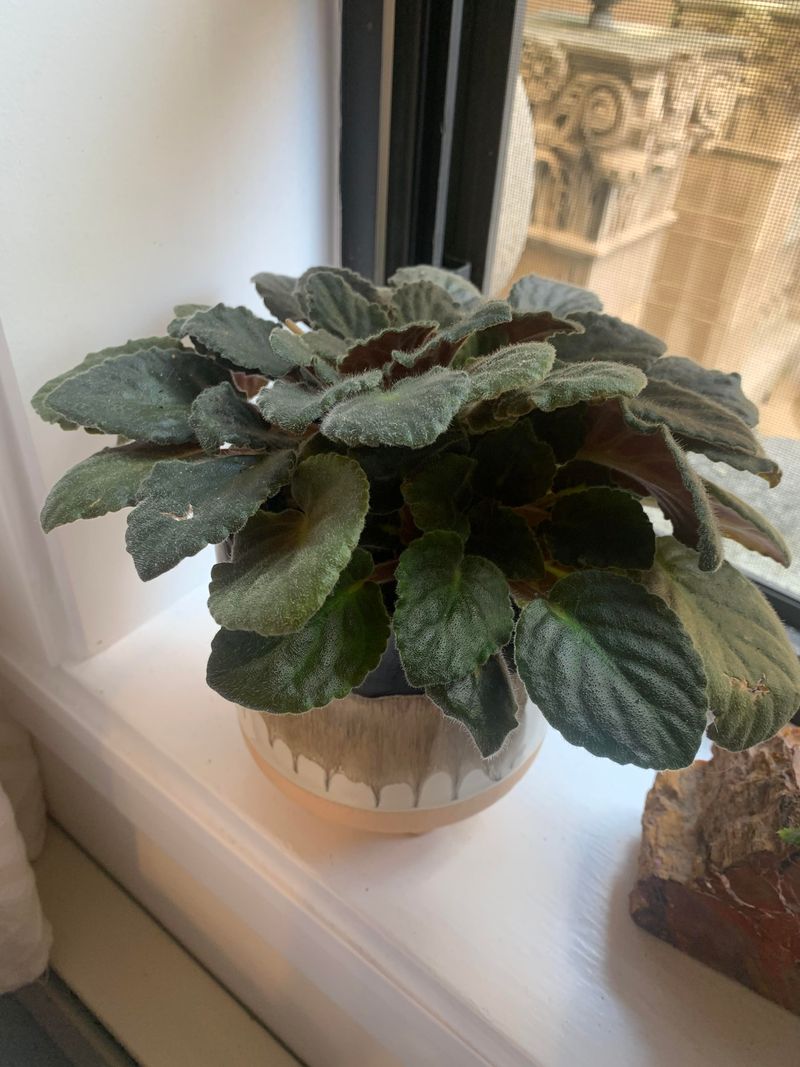
Dust feels like a spring cleaning problem. On an African violet, it becomes a winter survival problem.
Closed windows and running furnaces stir up more household dust. It settles easily into fuzzy leaves, and those tiny hairs grab it and hold on.
A gray film forms so slowly you barely notice.
That film works like a dirty windshield. Less light reaches the leaf surface, and the plant makes less energy at the exact time of year when light is already scarce.
Over weeks, growth stalls and blooms fade.
Do not rinse the plant under the faucet or scrub it. Instead, use a soft, clean brush, such as a makeup brush or small paintbrush.
Sweep gently in the direction the leaf hairs lie, from the stem out to the tip.
Try it every 2 to 4 weeks through winter. It takes about a minute per plant.
You may be surprised how much brighter the leaves look afterward, and your violet gets a real boost of usable light on the shortest days.
7. Oversized Pots Turn Winter Soil Into Swamps
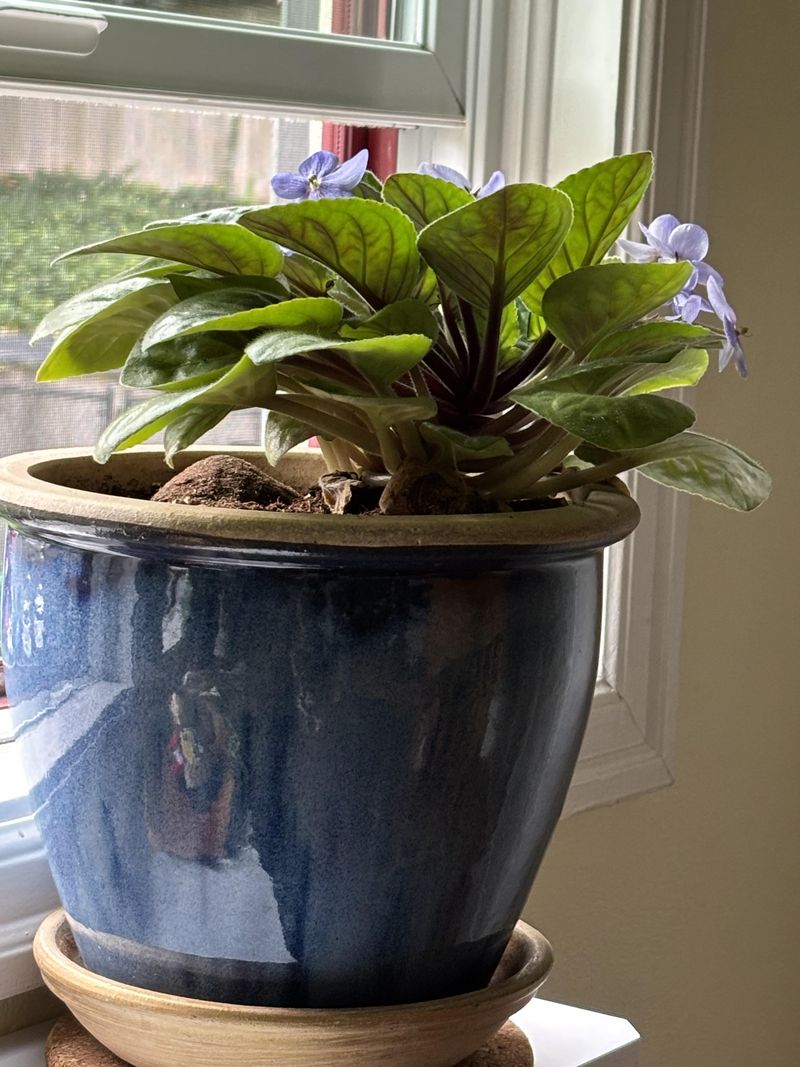
Bigger feels generous. Your violet looks crowded, so you treat it to a roomy new pot in December.
Weeks later, the lower leaves droop and the stems go soft.
Here is why. African violets like to be a little snug.
A good rule is a pot about one-third the width of the leaf spread. So a plant 9 inches across fits nicely in a 3-inch pot.
A big pot holds lots of extra soil, and extra soil holds extra water. In winter, the roots drink slowly, so that wet mix just sits there like a cold, soggy sponge.
Roots run out of air and begin to rot.
The University of Minnesota Extension notes that African violets need light, porous soil that drains well. Many growers mix peat-based potting soil with about 50 percent coarse perlite for that airy texture.
Unless the plant is truly falling over or rotting, wait until spring to repot. When you do, go up only about one inch in size, and make sure the pot has drainage holes.
No single fix saves every plant, but steady light, warm water, and a snug pot together keep most violets blooming through the darkest weeks.
