
What Pennsylvania Law Actually Says Before You Cut Your Neighbor’s Branches Over The Fence
Follow us on Google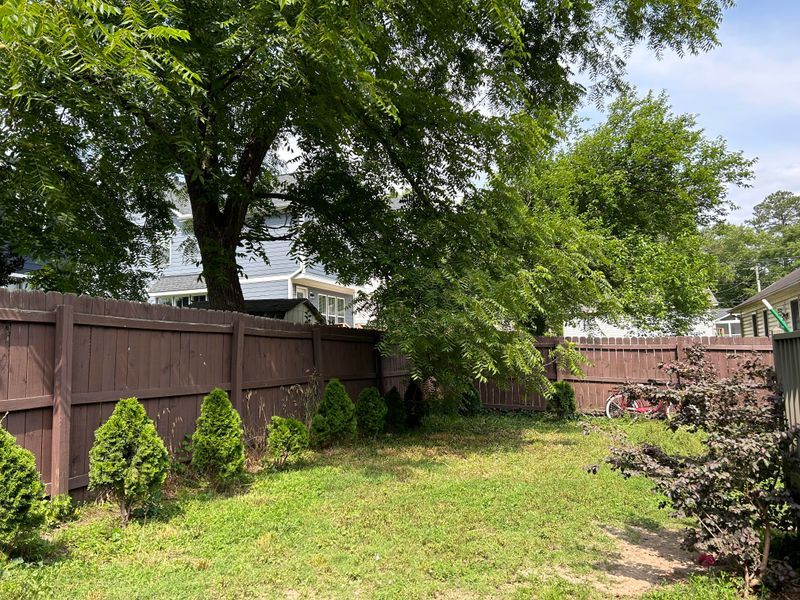
In Pennsylvania, you may trim branches that actually cross onto your property, back to the property line. That is the rule from a 1993 court decision, and you do not have to prove the branches hurt anything first.
But the right stops at the line, and a few common mistakes can turn a quick cleanup into a real fight. Here is where the line sits and how to stay on the right side of it.
You Can Trim Branches That Cross Your Property Line
Here is the plain answer. If a neighbor’s branch hangs over your yard, Pennsylvania law lets you trim that overhanging part back to the property line.
The rule comes from Jones v. Wagner, a 1993 decision from the Pennsylvania Superior Court, not the Supreme Court.
The court treated an overhanging branch as a continuing trespass. That means the neighbor’s tree is, in a sense, still reaching onto your land.
So you can use self-help and trim it without first proving the branch caused physical damage. You do not need a cracked roof or a clogged gutter to justify the cut.
Now the limits. Jones describes a narrow self-help remedy.
It is not a general right to manage your neighbor’s tree, and it does not let you take the tree down.
It also does not mean your neighbor has to do the work. Trimming is something you may do, not something you can demand be done for you.
The state’s 2025 Municipal Deskbook summarizes the same right to trim back to the line.
Think of it like a hedge that wandered over your driveway. You can nudge it back to where it belongs, but you do not get to redo the whole garden next door.
Courts can offer other remedies in some cases, and those depend on the circumstances.
A calm chat with your neighbor first often saves everyone a headache. Most people would rather hear a friendly heads up than find a pile of cuttings.
Check the Boundary Before You Cut
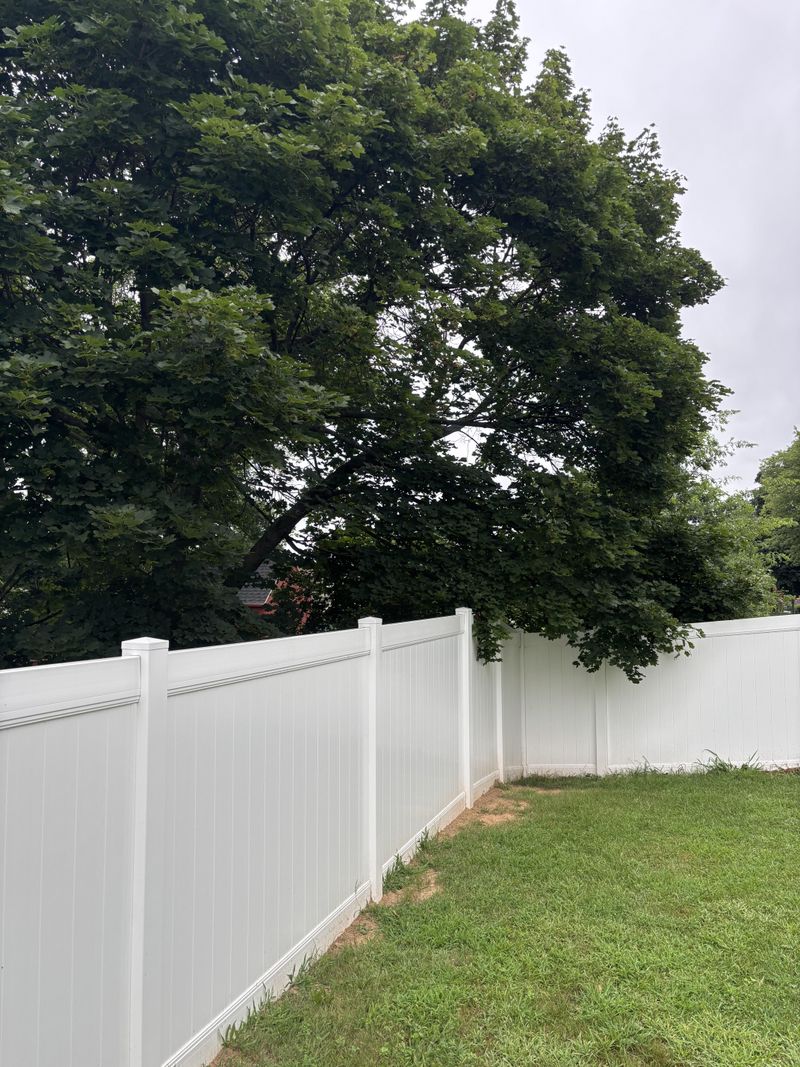
Many people assume the fence is the property line. It often is not.
A fence can sit a foot or two inside one yard, or several feet off, and still look perfectly official.
So the first step is to confirm where your land actually ends. Look at your deed, your closing documents, and any survey you received when you bought the house.
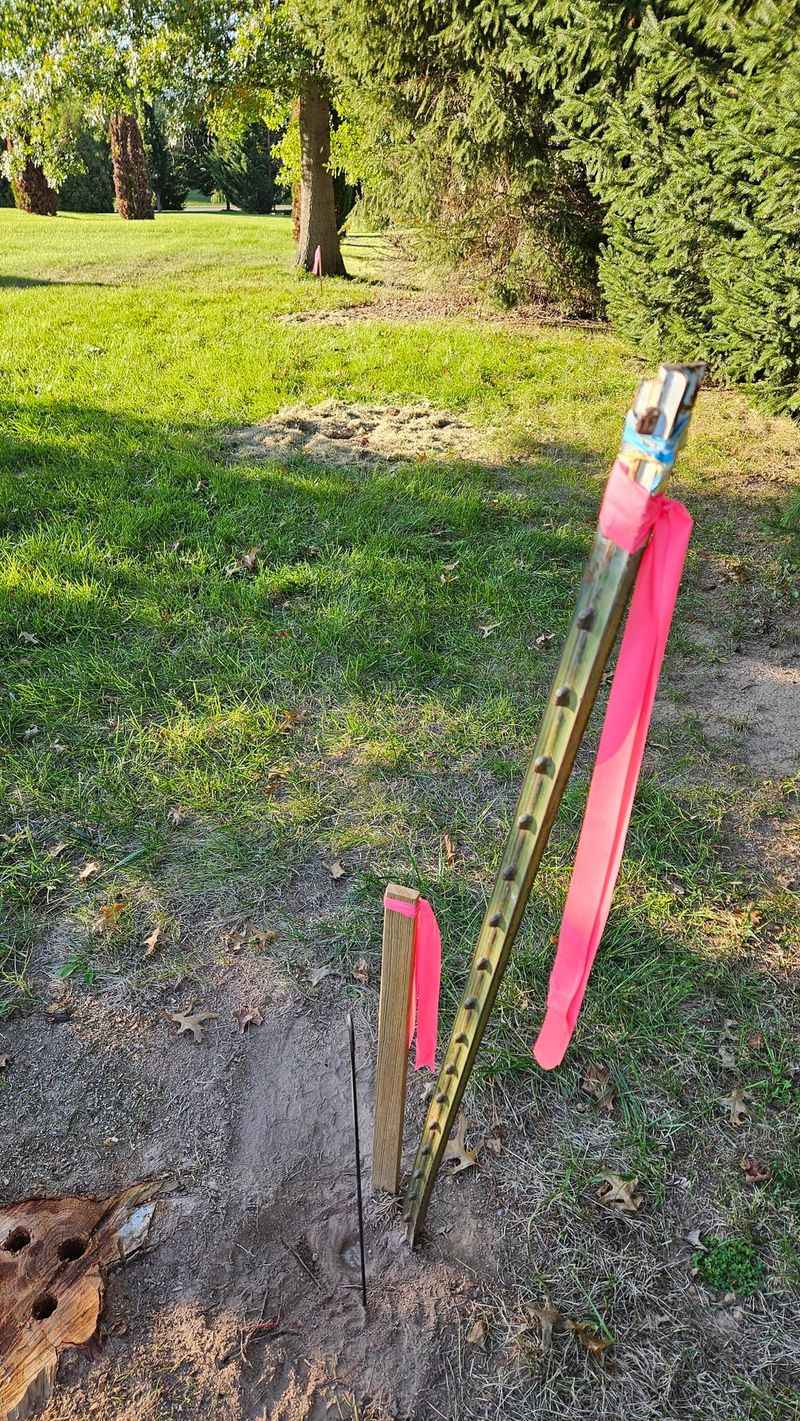
Survey pins or markers, usually metal rods in the ground, may also show the corners.
Pennsylvania courts do recognize that long-standing boundary markers, accepted by both neighbors over many years, can matter in some disputes. One Superior Court decision on consentable boundaries shows how that idea can come up.
That means an old fence or hedge line might carry legal weight, or it might not.
That uncertainty is exactly why you should not guess. The trimming right in Jones v.
Wagner depends on the branch actually crossing your real boundary. A fence does not give you permission to cut, and it does not give you permission to step into your neighbor’s yard.
If the line is unclear, or you are not sure who owns the tree, pause. A licensed surveyor can mark the line, and a Pennsylvania property lawyer can explain what an old fence or agreement may mean for you.
A few days of checking is a small price. It beats a cut that lands in the wrong place.
Stop the Cut at the Property Line
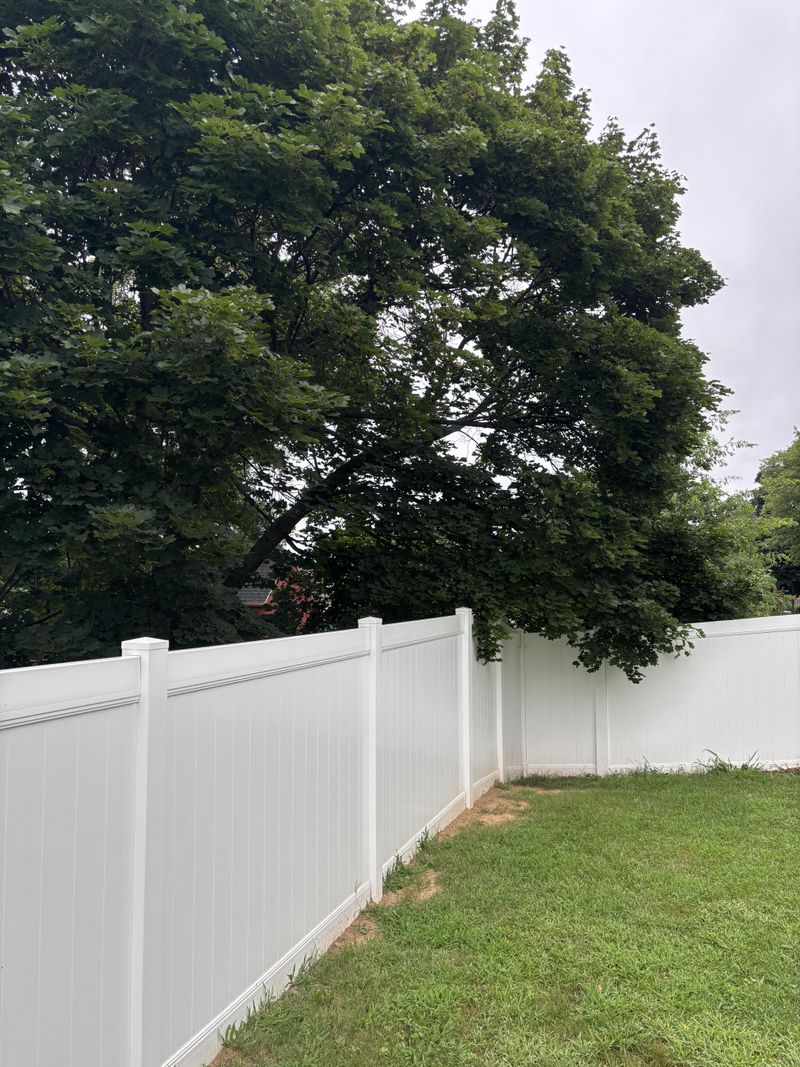
Picture an invisible wall rising straight up from the property line. Anything on your side of that wall is fair game under the trimming rule.
Anything on the other side is not.
That is the whole scope of the right. You may remove only the portions of branches that actually cross onto your property, and you stop at the line.
The court in Jones v. Wagner did not allow cutting the tree down or cutting beyond the extent of the overhang.
So if a limb crosses the line by six feet, the self-help rule covers those six feet. It does not cover the rest of that limb, the branches growing on the neighbor’s side, or the trunk.
Those parts are outside this rule.
Here is where people slip. They see a lopsided tree and want to even it out, or they decide the whole thing is a nuisance and take it down.
That is how a simple cleanup becomes a dispute.
Also remember the rule is about branches, not about walking over. It does not grant permission to enter your neighbor’s land to reach the tree or to cut from their side.
The Municipal Deskbook describes the right in the same trim-back-to-the-line terms.
Keep it modest. Cut what crosses, stop at the line, and leave the rest alone.
Get Professional Help for Risky Limbs
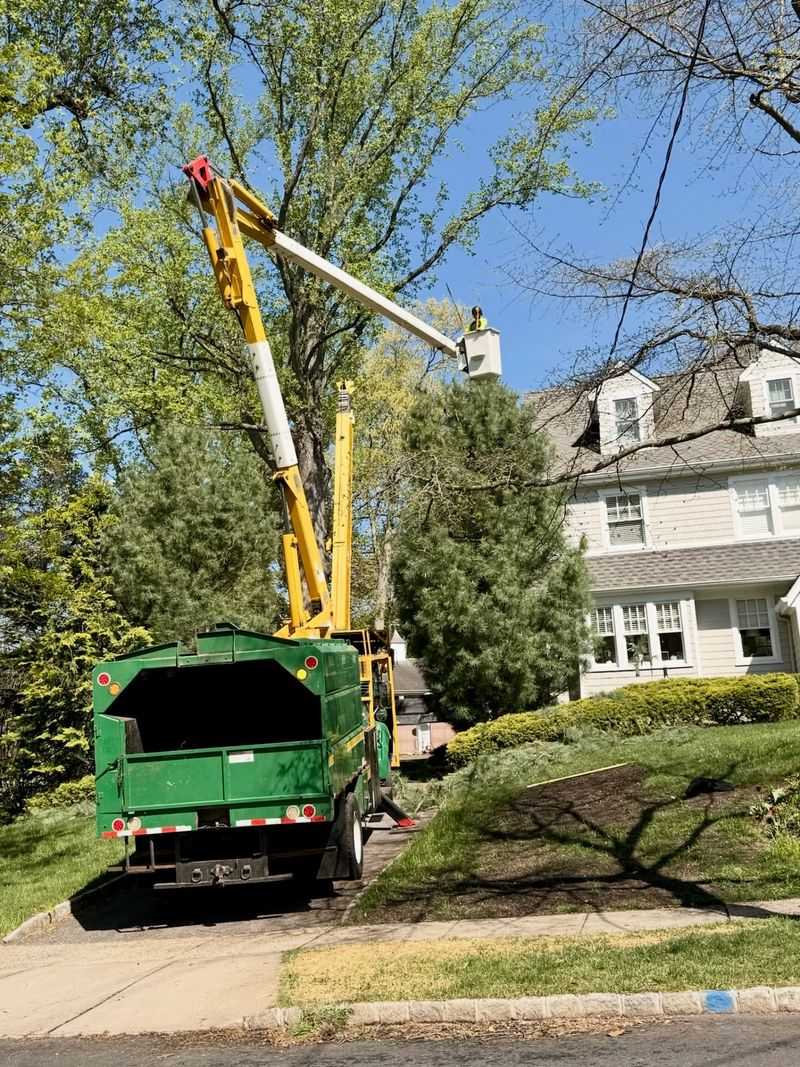
Having the legal right to trim is one thing. Doing it safely is another.
A limb that crosses your yard can still be heavy, high, and awkward to reach.
Climbing a tree, running a chainsaw overhead, and cutting near electric lines are all jobs for a qualified tree professional. Penn State Extension advises leaving that kind of work to the pros, and it warns against topping a tree, which means chopping off the main upper branches.
Power lines deserve extra respect. Penn State’s guidance on pruning for utility line clearance explains why work near wires belongs to trained crews.
If a branch touches or leans on a line, call the utility rather than reaching for a saw.
Storm damage is another trap. Penn State’s page on helping trees recover after storms points out that broken or hanging limbs can be unstable and dangerous.
A cracked branch dangling over your patio can drop without warning.
When you hire help, tell the crew exactly where your property line is, and ask them to cut only what crosses it. A good company will want that clarity too.
Saving a few dollars is not worth a ladder fall. The law lets you trim, but it never asks you to be brave about it.
A Tree Trunk on the Boundary Needs Extra Care
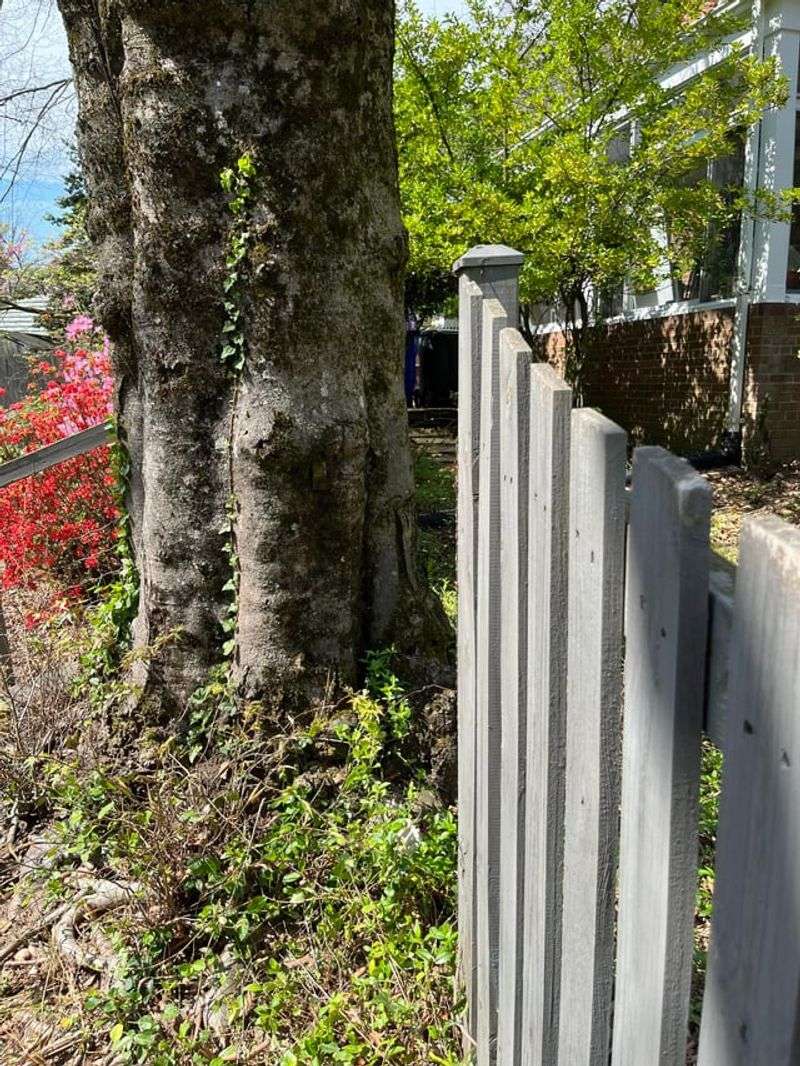
Some trees refuse to pick a side. If the trunk itself stands on the boundary, you are no longer dealing with a simple overhanging branch.
You are dealing with a tree that may belong to both of you.
That is a different and unsettled situation. WeConservePA’s Tree Law in Pennsylvania guide says it found no appellate decision settling ownership rights in that exact case.
It describes competing possible rules rather than one clear answer.
In plain terms, nobody can honestly tell you that either neighbor has a settled right to remove the tree or substantially change it on their own. The trimming rule from Jones was about branches crossing the line from a tree on the other side.
It does not neatly cover a trunk that sits on the line.
So slow down. Start by talking with your neighbor, because a shared tree is easiest to handle with a shared plan.
Some neighbors agree in writing on what will be pruned, who pays, and who hires the crew.
If you cannot agree, get advice from a Pennsylvania property lawyer before anyone cuts. A surveyor can also confirm whether the trunk truly straddles the line.
A boundary tree can be a good reason to walk next door with coffee. Once it is cut, nobody can undo it.
Trimming, Damage, and Cleanup Raise Different Questions

Trimming a branch can seem to answer every question, but several different legal ideas often get mixed together. It helps to keep them apart.
First, nuisance. The right to trim under Jones v.
Wagner does not depend on damage. A private nuisance claim is separate and needs a real and appreciable invasion of your use of your land.
Ordinary shade, leaf litter, or simple annoyance does not automatically count.
Second, money. The Municipal Deskbook says reasonable self-help expenses may be recouped.
That is possible, not automatic, and it depends on the circumstances. Keep receipts and photos, but do not count on a refund.
Third, fallen trees. Damage from a tree or limb that has already fallen is a different question from trimming a live branch.
According to the WeConservePA guide, responsibility may turn on whether the owner knew or should have known the tree was hazardous.
Fourth, cleanup. Keep cut or fallen material on your own side unless you have permission to cross the line.
Finally, the timber statute. 42 Pa.C.S. § 8311 defines timber as trees, logs, or parts of trees commonly marketed as wood products, and sets damages for cutting another person’s timber without consent. It does not make triple damages automatic for every improper branch cut.
Sorting the questions apart keeps a small cleanup small.
Check Local Rules Before Work on Public Trees
Before the saw comes out, run one last check. Confirm the boundary, limit any trim to the portions that cross onto your land, and bring in a qualified professional for anything high, heavy, or near wires.
Then look at local rules. Pennsylvania municipalities can protect trees through their own ordinances, and those rules vary from town to town.
Penn State Extension describes local tree and woodland preservation ordinances that some places have adopted.
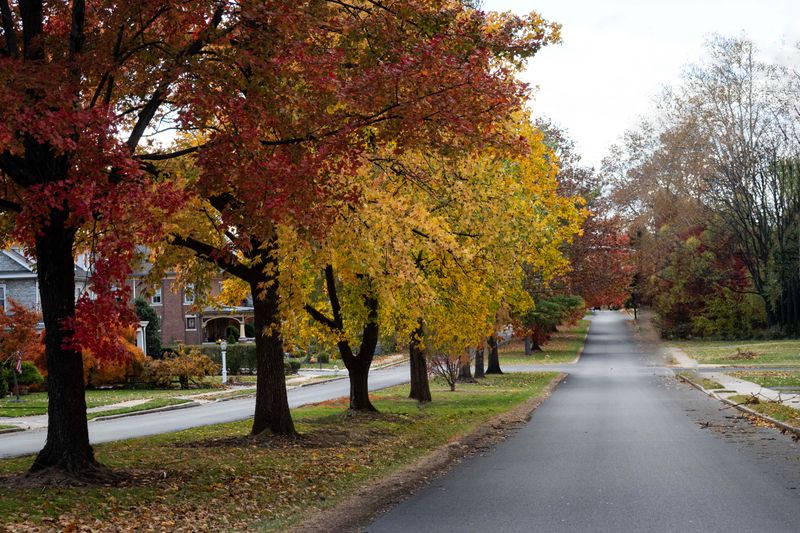
The question matters most when a tree stands in a public right-of-way, such as the strip between sidewalk and street, or on public property. Those trees may belong to the town, not to your neighbor.
Bethlehem is one local example. The city’s urban forestry bureau requires a permit for work on a public-property tree.
That is a Bethlehem rule. It is not a statewide permit requirement for ordinary private-yard trees.
So a quick call to your borough, township, or city office is a smart habit. Ask whether any tree protection rules apply to your street or your lot.
The legal line is simple once you find it. Trim what crosses, stop where your land stops, and let the rest be the tree’s business.
