
Your Florida Plumeria Is Dropping Leaves For Winter, So Do This Before The First Cold Night
Follow us on Google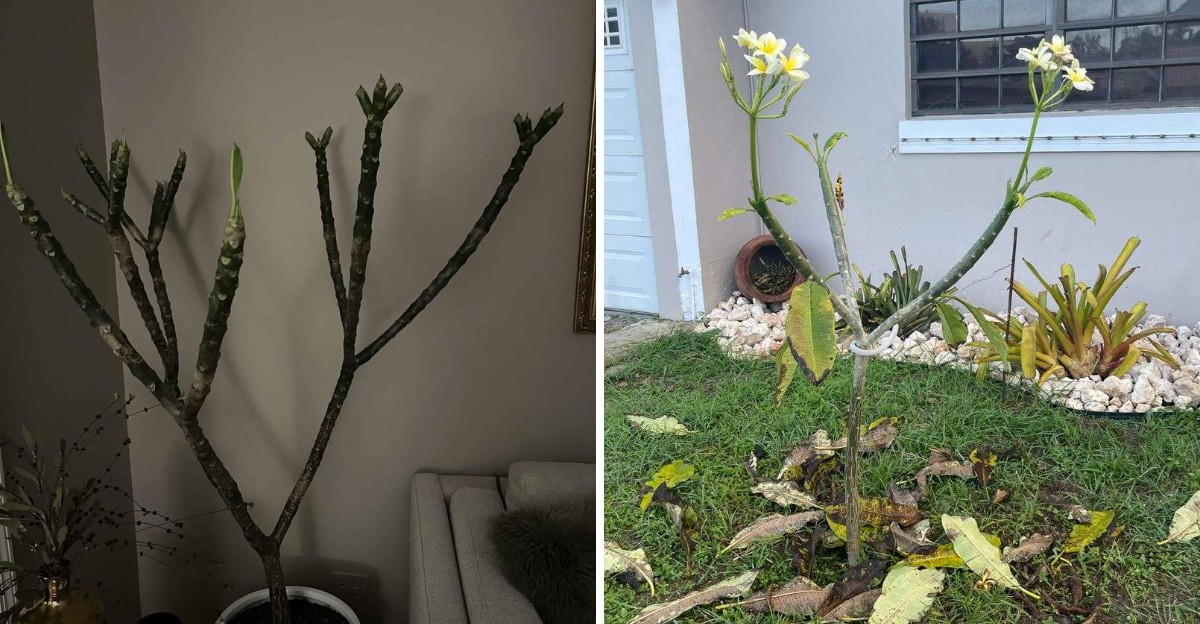
Your plumeria is dropping leaves for winter, and that is usually normal. Most Florida plumerias go bare in the cooler months, and a stick-looking plant is often just resting.
Before the first cold night, the job is to watch your local forecast and be ready to move pots to shelter. Here is how to tell rest from trouble, and what to do while you wait for spring.
Winter Leaf Drop Usually Means Rest
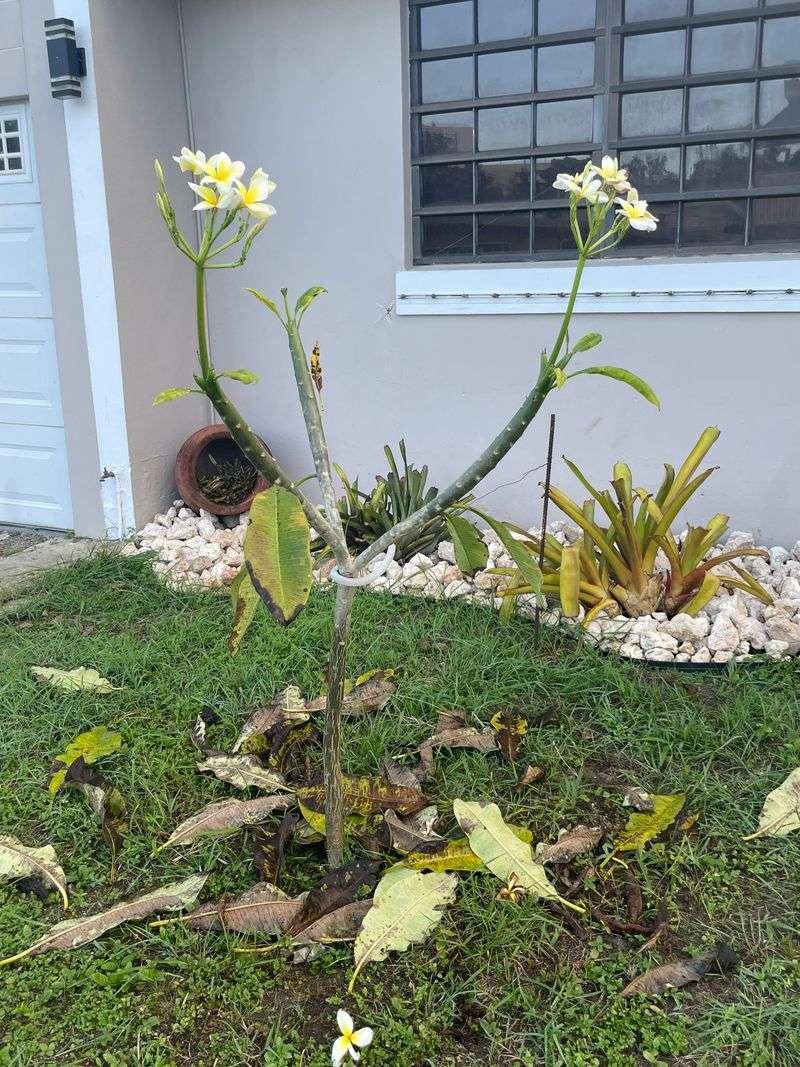
You walk out with your coffee one December morning and the plumeria looks like a bundle of sticks. Yellow leaves are scattered across the patio.
Hold off on the panic.
According to UF/IFAS Gardening Solutions, most Florida plumerias lose their leaves in winter. The plant is going dormant, which is just a long rest.
Green stems can stay alive and keep making a little food through photosynthesis even with no leaves at all.
So a bare plant is not a dead plant. Leaflessness alone tells you very little about its health.
Now the fine print. Not every plumeria follows the same script.
Location, cultivar, and growing conditions all matter, and some plants in warmer spots of South Florida may hold on to some foliage through the season. A neighbor’s leafy plumeria does not mean yours is sick, and your bare one does not mean it is thriving.
Think of the plant as a sleeper who pulled the covers over their head. It is quiet, but it is not gone.
The next few sections show you the clues that separate ordinary rest from something that needs a closer look.
When A Stem Needs A Closer Look
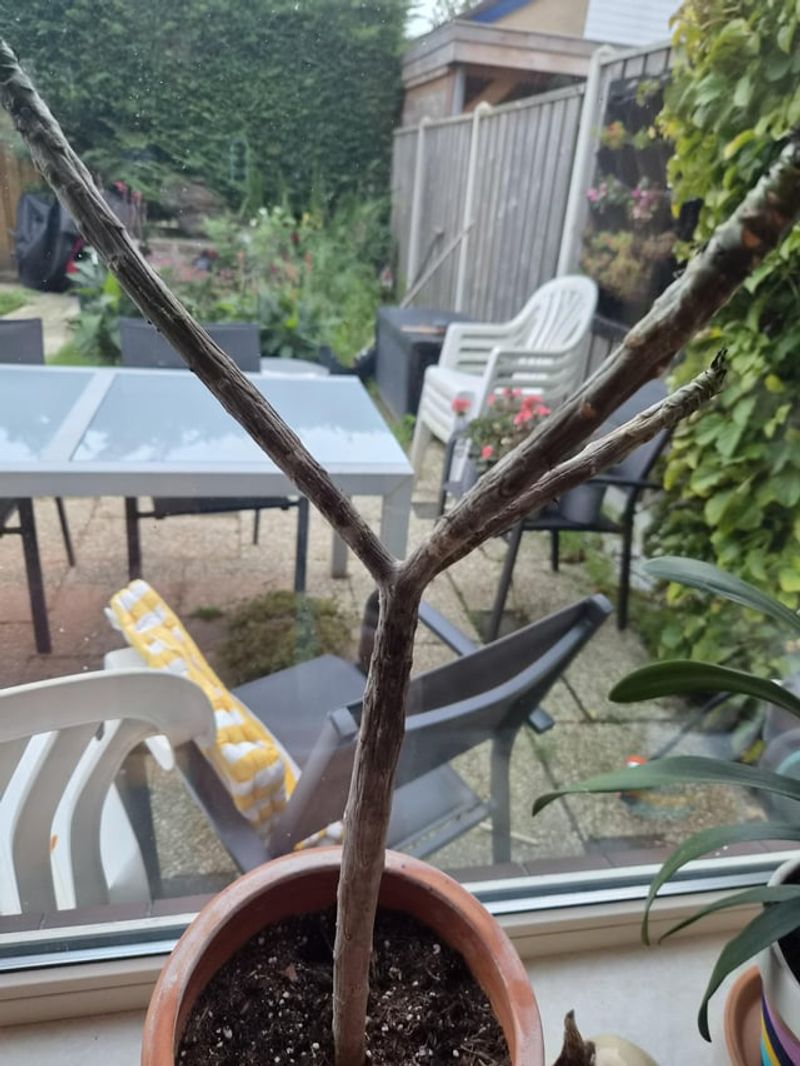
Here is where it gets tricky. A healthy dormant stem feels firm.
A stem that feels soft and is also darkening, or looks worse from one week to the next, deserves attention.
Softness by itself is not a diagnosis. A quick squeeze in the yard cannot tell you whether a stem has rot, so please do not grab the pruners based on one touch.
Look at the color, check whether the change is spreading, and give it a few days to see if it progresses.
Researchers have studied what can trigger shoot decay. In a study of two Plumeria rubra cultivars, removing leaves too early created wounds that may make it easier for decay to start.
Cold damage and wounds can also open the door. The authors say more research is needed, so treat it as a caution, not a rule that every wound leads to rot.
If a stem is mushy and getting darker, that is your cue to investigate, take photos, and keep the plant dry and sheltered. Many Central Florida gardeners find that watching a plant for a week tells them more than any squeeze test.
Patience is the quiet skill here.
Check Leaves For Rust Clues
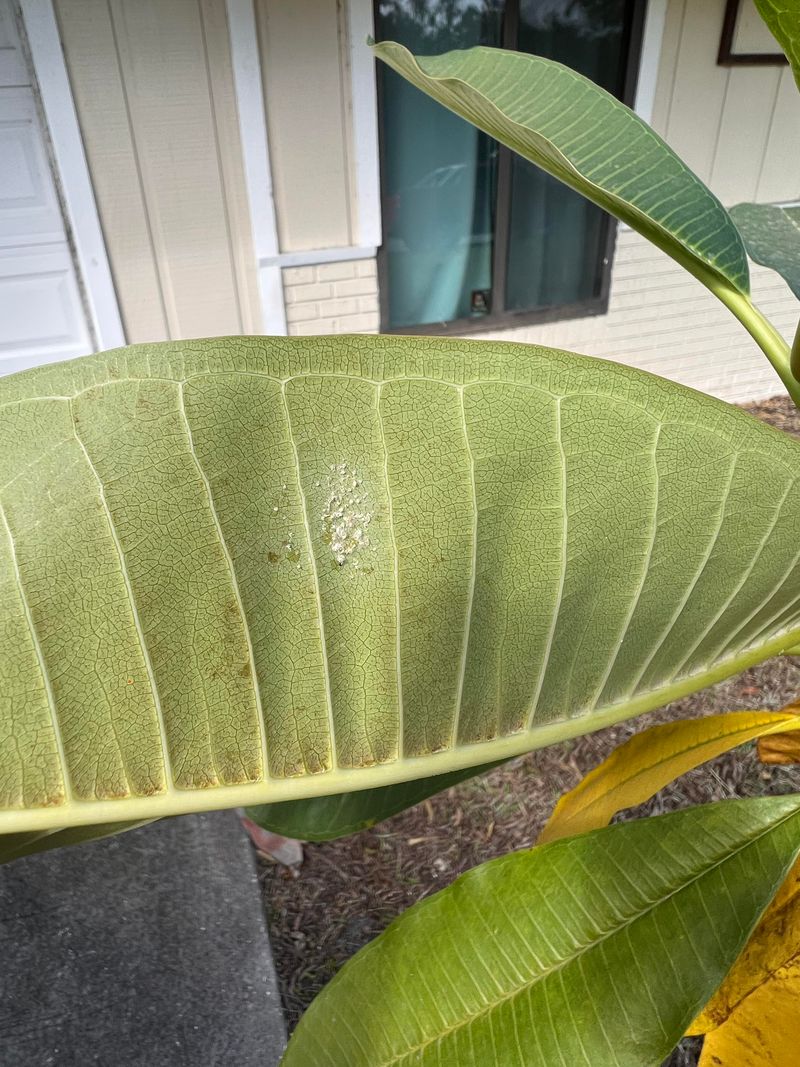
Some leaves fall for reasons that have nothing to do with winter. Plumeria rust is one of them, and it can cause leaves to drop early.
Flip a leaf over. The clue to look for is raised, orange-yellow, powdery spots on the underside, as described by UF/IFAS Extension Indian River County.
Rubbing a spot may leave orange dust on your finger.
For more background on this kind of fungus, UF/IFAS also publishes a guide to rusts on ornamentals in Florida.
Here is the important part. You cannot call it rust just because the branches are bare.
Without those spots on leaves, a leafless plumeria in December is far more likely just resting.
If leaves are dropping in late summer or early fall while still showing spots, rust becomes a real suspect. Pick up fallen leaves from the ground and throw them in the trash, not the compost pile.
Check the fallen ones too, since the spots show up easily.
A quick flashlight look takes two minutes. It can save you from guessing.
Use Your Local Forecast To Judge Cold Risk
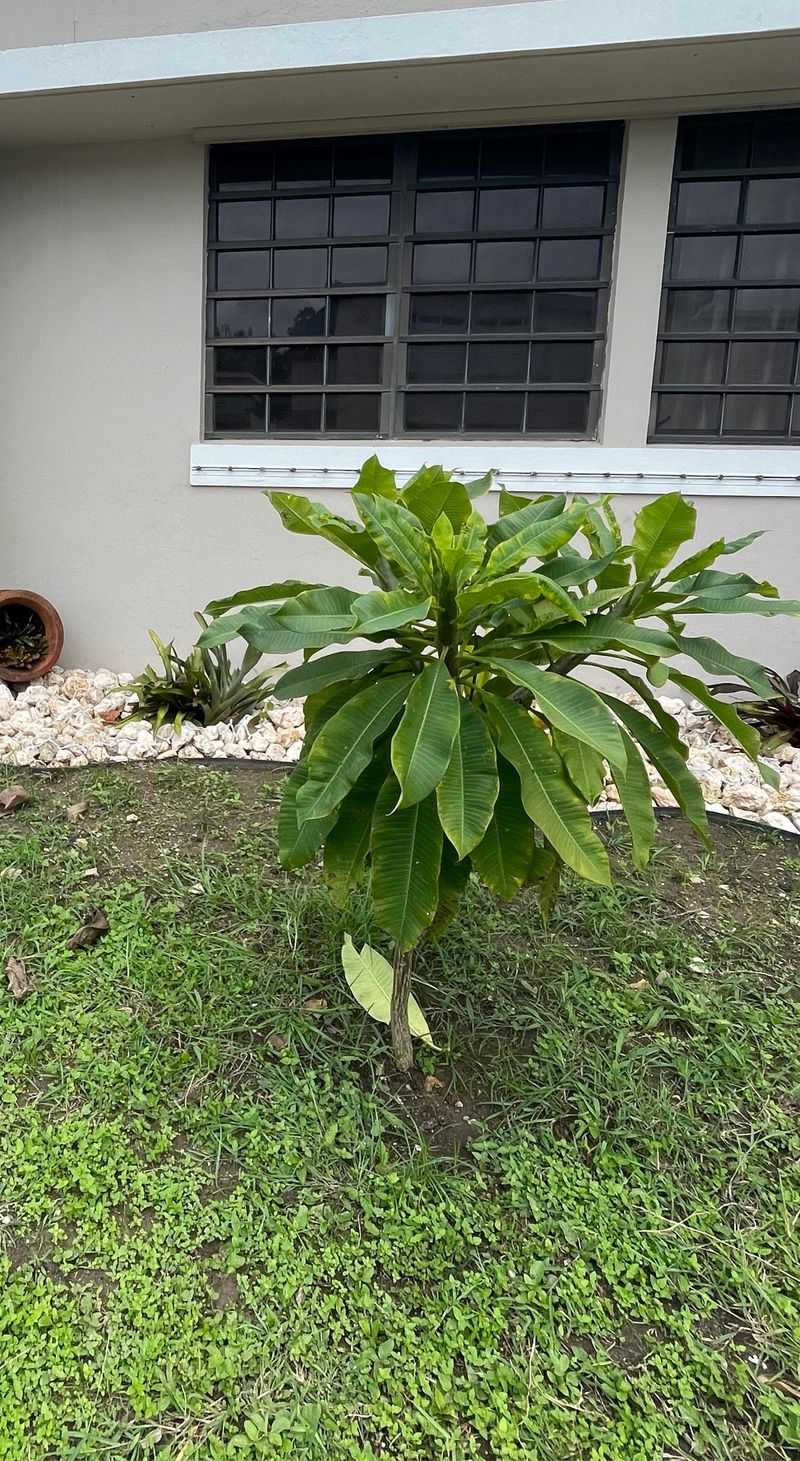
There is no calendar date for the first cold night. In Florida, it depends on where you live, so your local forecast is the real deadline.
Plumeria is best suited to USDA zones 10B to 11, says UF/IFAS. Interior Central Florida sits in zone 9B, where frost comes back again and again.
In the Keys, a cold snap is rare. In North Florida, a hard freeze is a real possibility.
You may hear that tropical plants can suffer chilling injury below 50°F. UF/IFAS cold protection guidance says that for tropical plants in general.
It is not a number made for plumeria, and it is not a guaranteed line between safe and hurt.
How long the cold lasts, where the plant sits, how healthy it is, and how fast the temperature drops all matter. A plant against a warm south wall fares differently than one in an open yard.
So check the forecast each evening once nights cool off. Treat 50°F as a gentle nudge to pay attention, and freezing as a serious threat.
Move Containers When Cold Weather Threatens
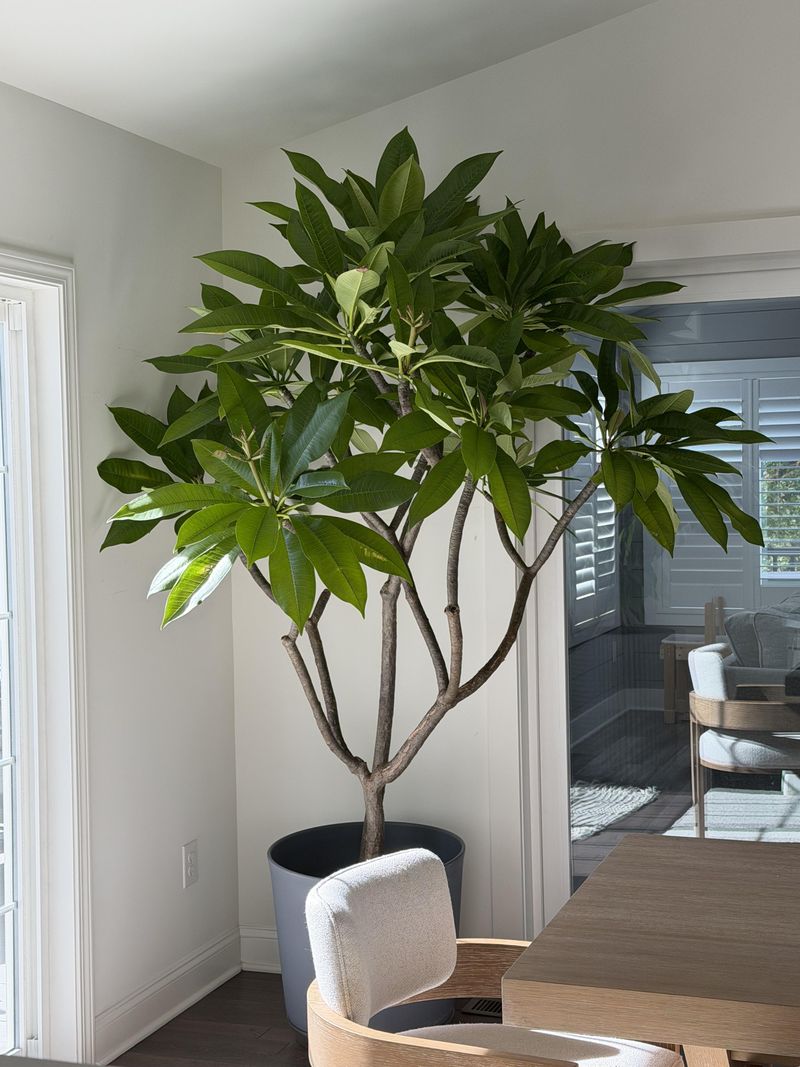
Do not wait for a freeze warning alone. When your forecast says cold weather is coming, especially a freeze, that is the time to move potted plumeria to shelter.
A garage, a covered porch, or an enclosed lanai all work. UF/IFAS advice on winter plant protection recommends moving containers to shelter for a forecast freeze.
Heavy pots roll easily on a plant dolly, so set one near the pot before you need it.
The same UF/IFAS page says that for plants you cannot move, a cover can reduce cold injury if it reaches the ground and does not touch the leaves or stems. Frames or stakes keep fabric off the plant.
Be honest about limits, though. Covers help more against frost than against extreme cold, and they are not a guarantee.
They are one layer of protection, not a magic blanket.
A plumeria planted in the ground in North Florida or the Panhandle is much harder to protect than one in a pot. Many gardeners there choose containers for exactly that reason.
Pick a spot where you can get the pot inside in five minutes, and you will sleep better on cold nights.
Keep Winter Care Gentle
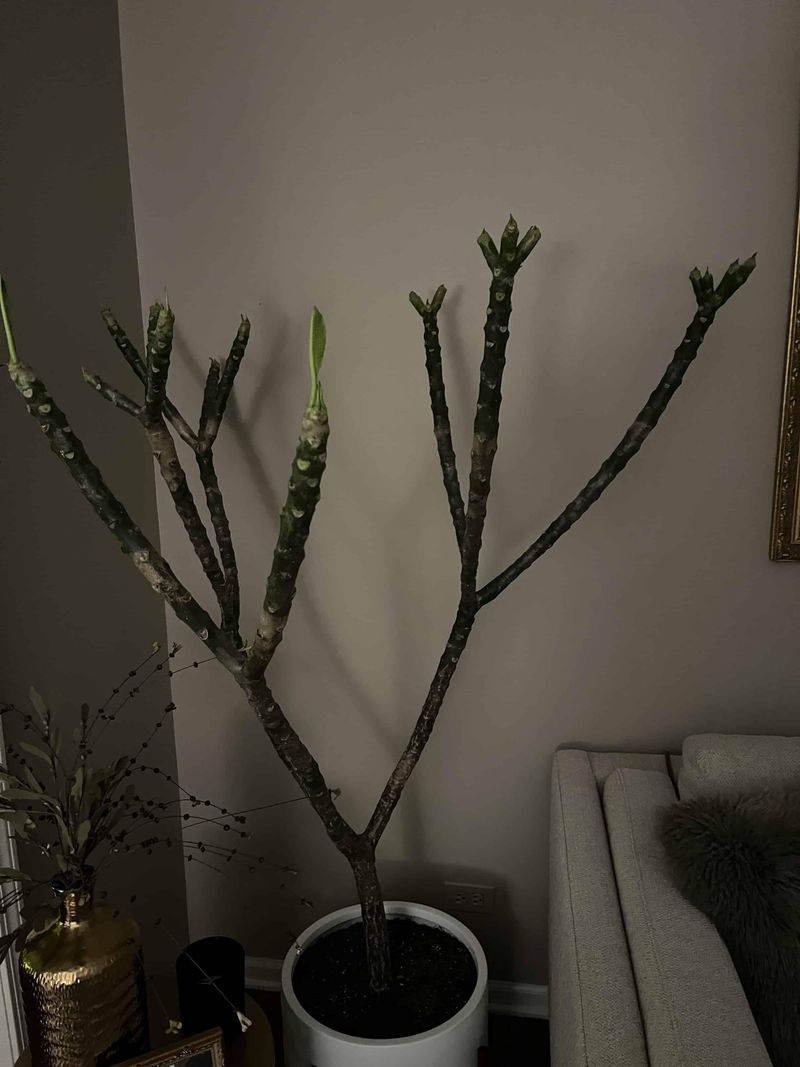
A dormant plumeria is not working hard, so it does not need much fussing. The biggest favor you can do is skip the extras.
Start with soil. Do not keep it soggy for long stretches, because UF/IFAS warns that prolonged saturation harms roots.
There is no proven plumeria winter watering schedule, so do not follow a fixed amount. Simply do not treat a resting plant like a growing one.
Skip late-fall fertilizer too. It can trigger tender new growth, and that soft growth is the first thing cold weather hurts.
Fertilizer is not freeze protection.
Then there are the leaves. Leave alone any that are still attached.
Let them drop on their own. In the Plumeria rubra study, early leaf removal left wounds that may help shoot decay get started.
That does not prove every pulled leaf causes rot. It is a good reason to avoid unnecessary removal.
Think of winter as a plumeria’s quiet season. Your job is to keep the room calm, dry enough, and unbothered.
Wait For New Growth Before Severe Pruning
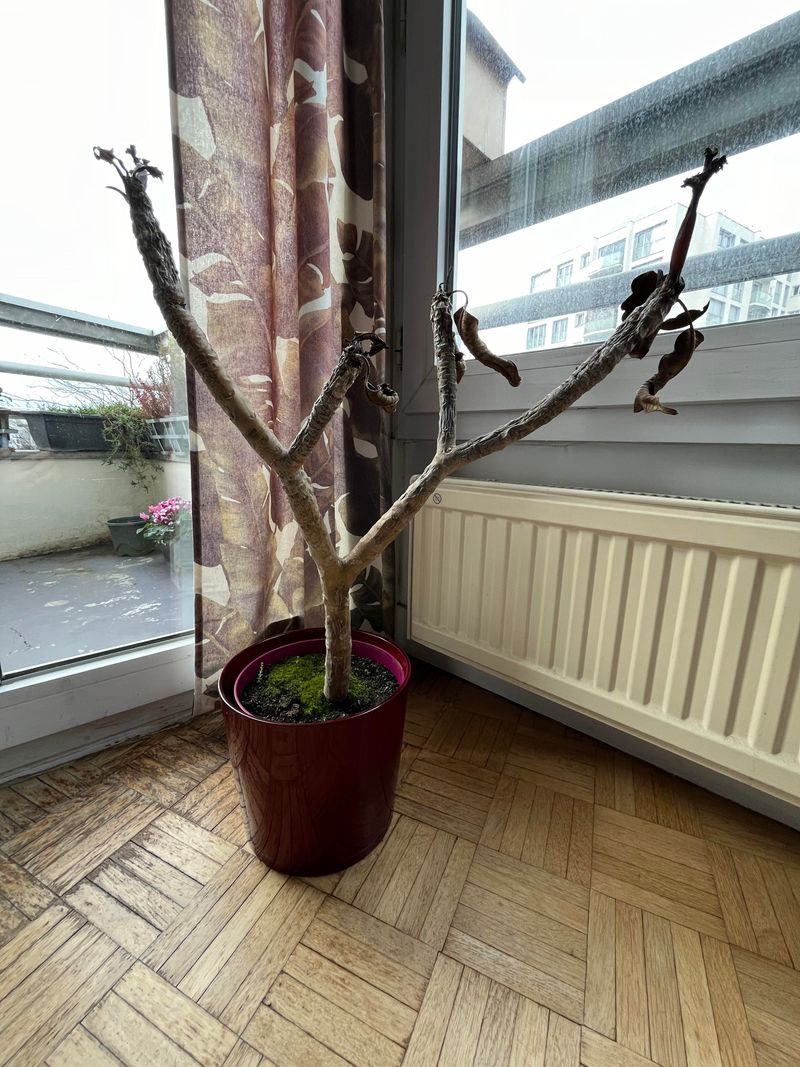
The morning after a freeze, a plumeria can look awful. Brown, wilted leaves hang everywhere, and your hand goes straight to the pruners.
Hold off. You may pull off the brown leaves if you like.
But UF/IFAS says to wait on severe pruning until new growth appears, because that growth helps show which wood is still alive.
Cutting too soon can remove living tissue while the real damage is still unclear. Waiting costs you nothing but a little patience.
No one can promise every damaged plant will recover. Some will and some will not.
But you give yours the best chance by letting spring do the sorting.
Watch the stem tips as days warm. Once buds swell and leaves unfurl, you will see where life stopped and where it carries on.
Gardening is mostly learning when not to rush.
