
7 Florida Native Trees Homeowners Plant By The Driveway Instead Of Another Crape Myrtle
Follow us on Google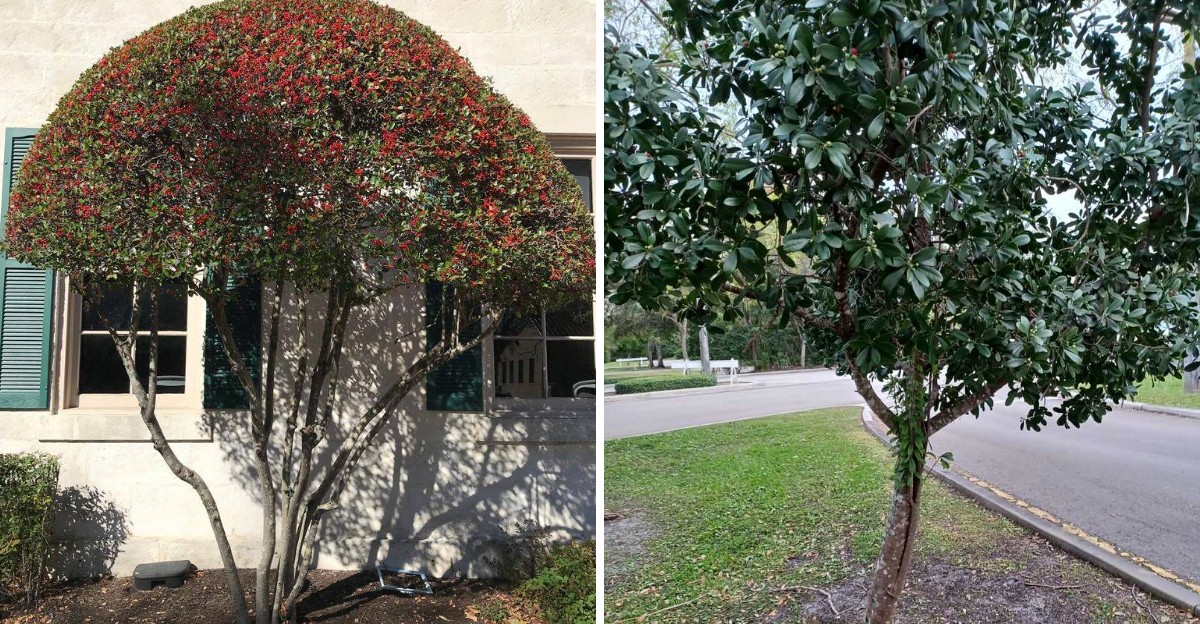
You pull into the driveway after work and your windshield is speckled with sticky gray film from the crape myrtle that has lined every Florida street since the 1990s. Then comes the annual chopping, the powdery mildew, and the bark scale that turns trunks black.
The good news is that a handful of trees that actually belong here can frame that same driveway with fragrance, berries, and evergreen shade, and most ask for far less fuss. Here are seven natives Florida homeowners are choosing instead, matched to the right corner of the state so yours settles in and stays happy.
1. Little Gem Southern Magnolia

Picture a blossom the size of a salad plate opening right where you park, and the whole car smelling faintly of lemon when you step out. Southern magnolia (Magnolia grandiflora) is a Florida native, but the full-size tree can reach 80 feet and will swallow a front yard.
That is where the cultivar called Little Gem earns its spot. It usually tops out around 20 to 25 feet tall and only 10 to 15 feet wide, which fits beside a two-car driveway without bullying the house.
The creamy flowers run 6 to 8 inches across and show up in late spring, then keep popping out sporadically through summer.
Here is where it gets tricky. Magnolias have shallow, spreading roots, so plant the trunk at least 8 feet from the pavement edge to protect both the concrete and the tree.
Give it full sun to part shade, and water 2 to 3 times a week for the first 3 months, then taper off.
Leaf drop is the honest drawback. Magnolias shed old leathery leaves in spring, and they are slow to break down.
But a few minutes with a rake beats scrubbing aphid honeydew off your windshield every week.
It works from the Panhandle through Central Florida and into much of South Florida. Plant one and your homecoming genuinely starts to feel like a welcome.
2. Dahoon Holly
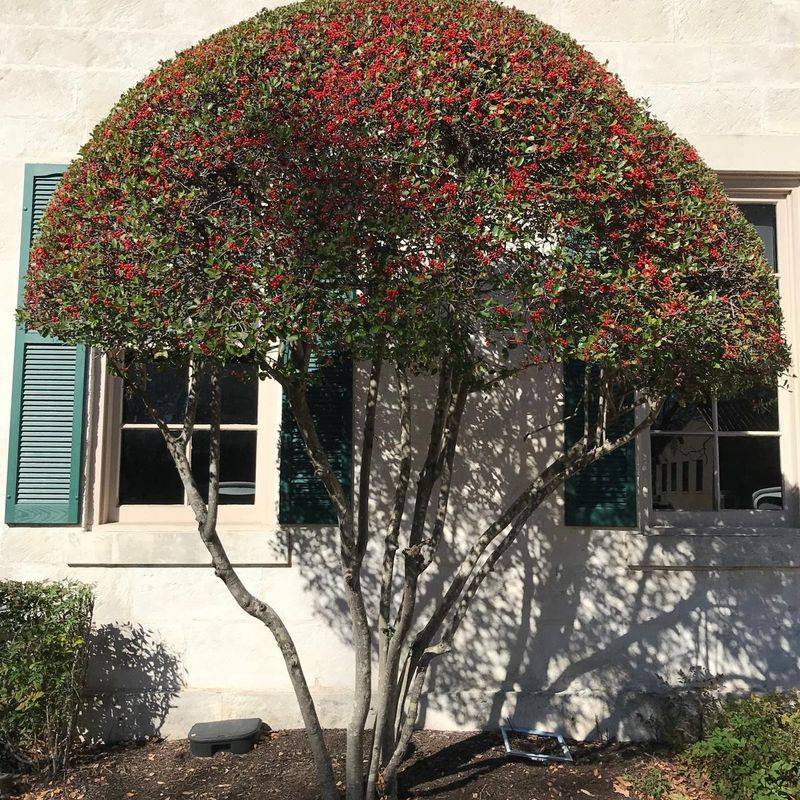
Every neighborhood has that one soggy strip by the curb where water sits for two days after a summer storm. Most trees sulk there and quietly rot.
Dahoon holly (Ilex cassine) treats it like home.
This evergreen grows naturally in Florida swamps and wet flatwoods, so poorly drained pockets do not scare it. It reaches about 20 to 30 feet tall but stays slim, often just 8 to 12 feet wide.
That narrow, upright shape slips into the tight space between a driveway and a property line where a sprawling crape myrtle would crowd the mailbox.
The red show is the payoff. Female trees load up with quarter-inch scarlet berries from fall into winter, and robins and cedar waxwings arrive in noisy flocks to strip them.
You will need a male holly somewhere nearby for berries, though many neighborhoods already have one.
Plant it in fall or early spring, setting the root ball level with the soil, never deeper. It handles acidic sandy soil easily and needs almost no pruning to hold its tidy shape.
Keep it about 6 feet from pavement so berry drop lands in mulch instead of on your car.
It grows statewide, from Pensacola down to the edge of the Keys. That wet corner you used to dread could become the spot birds visit first.
3. Simpson’s Stopper
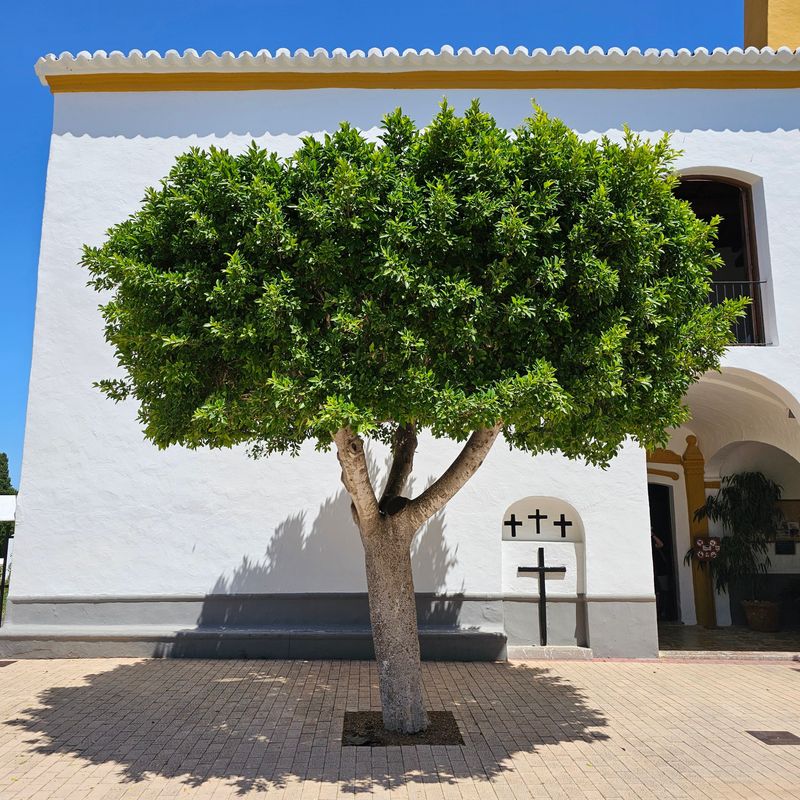
Most people walk right past Simpson’s stopper (Myrcianthes fragrans) at the nursery. That is a mistake, because few small trees reward a crushed leaf with such a spicy, nutmeg-and-citrus smell.
Think of it as the quiet overachiever of the list. You can keep it as a dense hedge or limb it up into a multi-trunk tree around 10 to 20 feet tall.
The bark peels in cinnamon-colored flakes, and small white puffball flowers appear several times a year, with the heaviest flush in spring.
Orange-red berries follow, and mockingbirds and cardinals will fight over them. Butterflies and native bees work the flowers.
Not bad for a tree that rarely needs fertilizer.
It is best suited to Central Florida, South Florida, the Gulf Coast, and the Keys, roughly zones 9b through 11. A hard freeze in North Florida can burn it back.
Once established, usually after 6 months of regular watering, it handles drought, wind, and moderate salt spray.
Keep the trunk 4 to 5 feet from the driveway, since the roots stay polite. Buy only nursery-grown plants, because the species is listed as threatened in the wild.
Your driveway ends up smelling like a spice shop after every rain.
4. Yaupon Holly
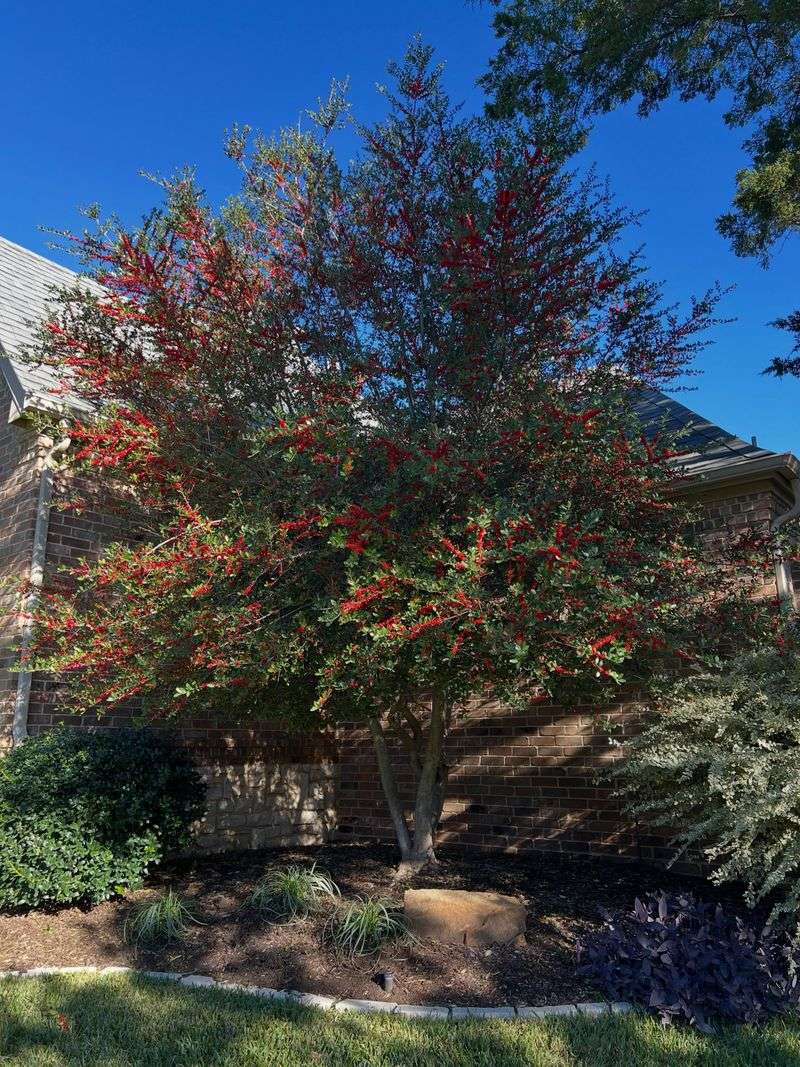
Drought, salt, sandy soil, a hurricane season that never seems to end. Yaupon holly (Ilex vomitoria) shrugs at all of it.
Most folks know it as a clipped hedge, but left to grow with a few lower branches removed, it becomes a gnarled little multi-trunk tree about 15 to 20 feet tall. The leaves are tiny and leathery, so wind passes through instead of ripping limbs off.
That makes it a smart choice for Panhandle and Atlantic Coast yards that take a beating from storms and salt spray.
Here is the fun history bit. The scientific name sounds alarming, but the leaves contain caffeine, and Native Americans brewed them into a tea long before anyone in Florida drank coffee.
The name comes from a ceremonial use, not from the tea itself.
Plant in full sun or part shade, about 5 feet from pavement. Water deeply twice a week for the first summer, then let rain handle it.
Yaupon does send up root suckers, so plan to snip them off 2 or 3 times a year to keep the tree shape clean.
Female plants glow with red berries all winter. Your driveway gets a tough little guardian that asks for almost nothing back.
5. Sweetbay Magnolia
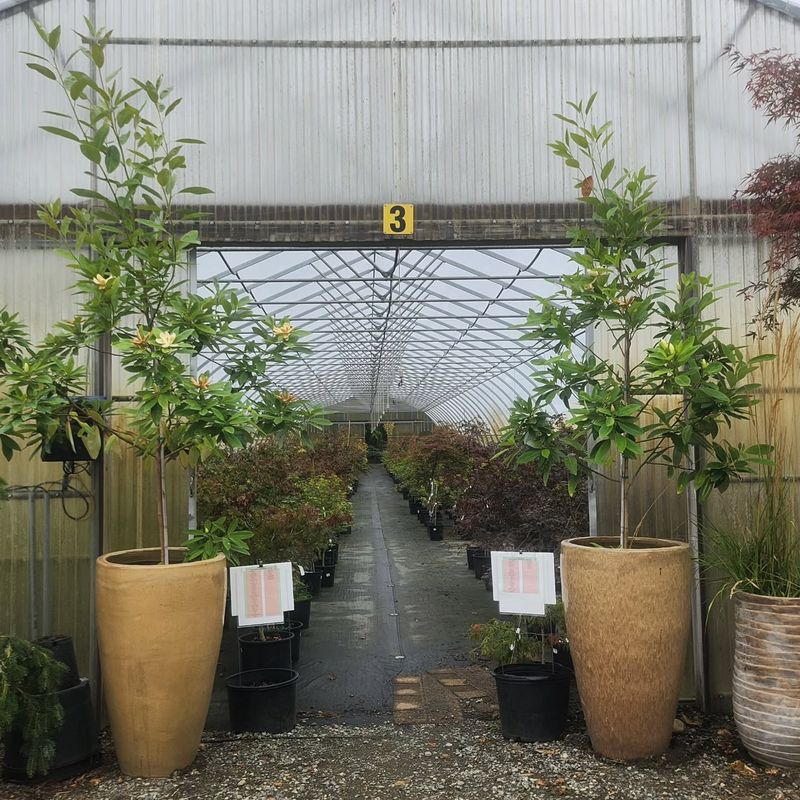
A breeze rolls in before an afternoon thunderstorm, and the whole tree flashes silver. That shimmer is sweetbay magnolia (Magnolia virginiana) turning its pale leaf undersides to the sky.
Here is the myth worth busting. Many homeowners assume magnolias hate wet feet, but sweetbay grows naturally in Florida bayheads and swamp edges.
If your driveway borders a low swale or sits near irrigation overspray, this tree may genuinely prefer that spot.
In a typical yard it grows 20 to 30 feet tall with a loose, upright shape, much lighter and airier than its big southern cousin. From late spring into summer, it opens creamy cup-shaped flowers 2 to 3 inches across, with a sweet lemony scent that drifts best in the evening.
It stays mostly evergreen in Central and South Florida, but may drop many leaves after a cold snap up north. Plant it in acidic soil about 8 feet from pavement, and mulch 3 inches deep, keeping mulch a few inches off the trunk to prevent rot.
Later, fuzzy cone-like fruits split open to show bright red seeds that songbirds love. You get perfume for the porch and a snack bar for the birds in one slender tree.
6. Fringe Tree
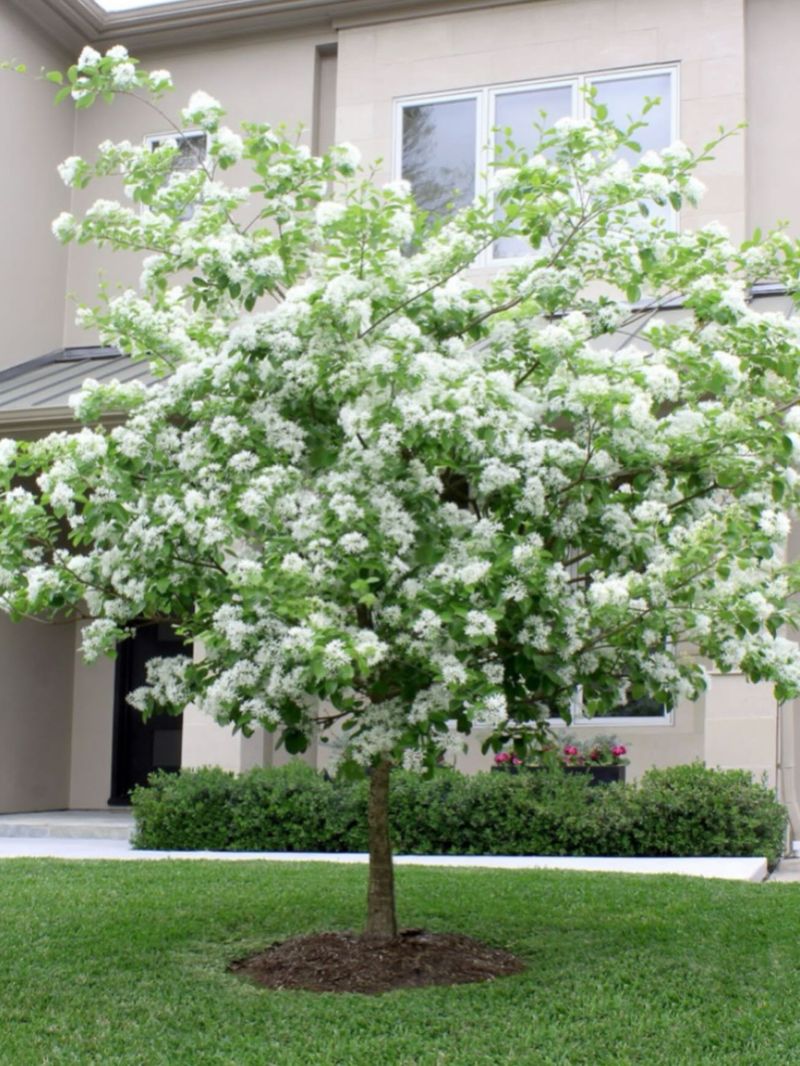
For about two weeks each spring, fringe tree (Chionanthus virginicus) looks like someone tossed shredded white tissue over every branch. Neighbors slow their cars to stare.
The flowers hang in fluffy clusters 4 to 6 inches long, usually in March or April in Florida, and they carry a soft, sweet fragrance. Locals in North Florida sometimes call it old man’s beard, and once you see it in bloom, the nickname makes perfect sense.
This is the best pick on the list for the Panhandle and North Florida, though it also does fine into Central Florida. It actually needs some winter chill to bloom well, so South Florida yards should skip it.
It stays small, about 12 to 20 feet tall and wide, which suits a short driveway or a spot near the front walk.
Be honest with yourself about patience. It grows slowly, often less than a foot a year, and it drops its leaves in winter.
Plant it in full sun to light shade, in soil that drains well but does not bake dry, and water weekly through its first summer.
Female trees produce dark blue fruits that look like little olives, a favorite of catbirds and mockingbirds. Wait a few springs, and the show belongs to you.
7. Wild Cinnamon
Down in the Keys and coastal South Florida, the real enemy is not mildew. It is salt air, thin limestone soil, and storms that strip weaker trees bare.
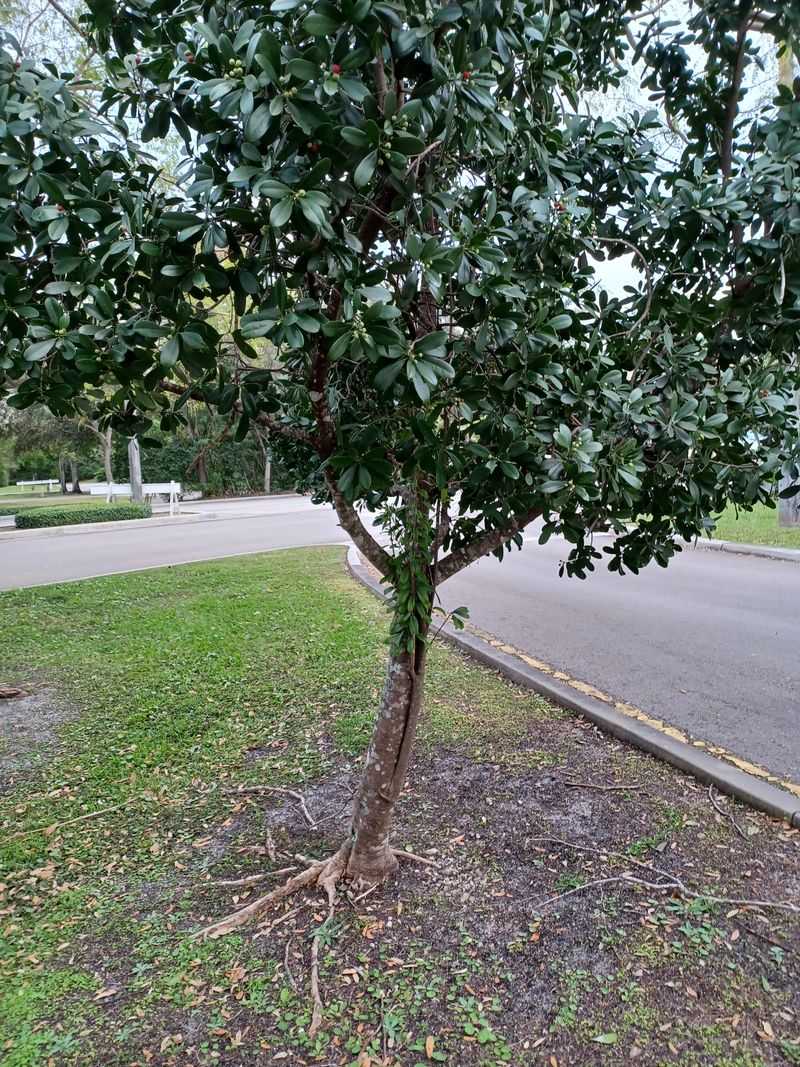
Wild cinnamon (Canella winterana) grew up in exactly those conditions. It is a compact evergreen, usually 15 to 25 feet tall in home landscapes, with a dense, rounded crown and thick, glossy leaves.
Crush one and you get a peppery, clove-like scent, and the bark smells spicy too, though it is not the cinnamon in your kitchen.
According to UF/IFAS Extension, it handles salt spray well and shrugs off drought once established. That combination makes it a natural fit for Atlantic Coast and Keys driveways where crape myrtles often struggle with salt burn.
It belongs in zones 10 and 11, so do not try it north of the Palm Beach and Fort Myers area.
Small purple and red flowers appear in late spring and summer, and berries ripen in winter for birds. Plant it in full sun to light shade, about 5 feet from pavement, and water twice a week for the first 4 months while roots push into that rocky soil.
It grows slowly, so think of it as a long game. Years from now, your driveway will hold a tough little tree that feels like it was always meant to be there.
