
The Plain North Carolina Native Shrub That Feeds Winter Birds Long After Beautyberry Is Picked Clean
Follow us on Google
Wax myrtle, Myrica cerifera, is the North Carolina native shrub that can keep birds fed in late fall and early winter, after many other berries are gone. Its pale, waxy fruit is listed as available through December in NC State’s bird guide, a little later than beautyberry’s window.
That makes it a handy late-season food and cover plant for the right yard. Here is how it works, where it fits, and what to know before you plant one.
Meet Wax Myrtle

You walk past it all summer without a second look, then one gray December morning the branches are loaded with small, pale berries. That shrub is wax myrtle, listed by NC State Extension as Myrica cerifera.
You may also see it called Morella cerifera, and Kew’s botanical database treats that as another name for the same plant.
The fruit is the star. Each berry wears a pale, waxy coating, and birds eat it.
The shrub is evergreen or semi-evergreen, so it keeps its fragrant leaves when many neighbors go bare.
That dense foliage matters too. The North Carolina Forest Service notes that wax myrtle offers cover for wildlife, which means a place to duck out of the wind as well as a place to eat.
Now the honest part. Those are potential benefits.
A wax myrtle does not promise a crowd of birds at your feeder window, and it will not fruit the same way in every yard. Think of it as a good supporting actor that sometimes steals the late-season scene.
The sections ahead cover fruit timing, which birds use it, where it grows well in North Carolina, and how to plant it safely.
The Fruit Window Can Reach December
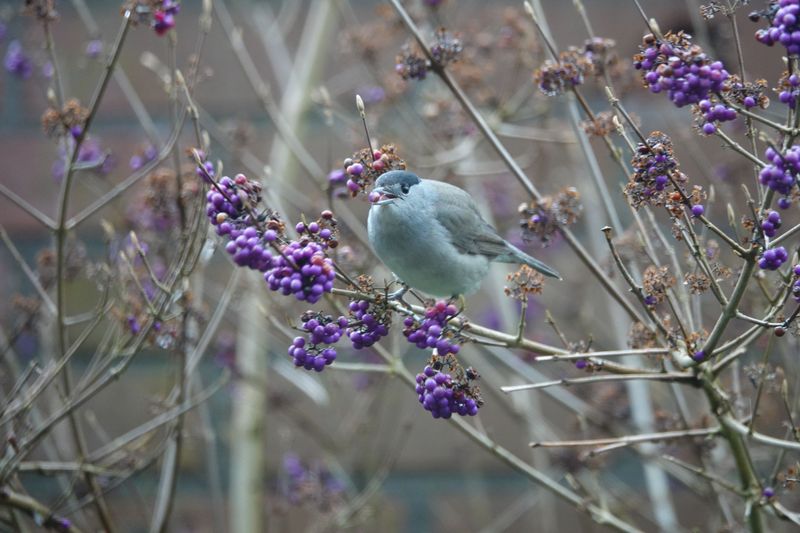
Dates depend on which page you read. NC State’s guide to managing backyards for birds lists wax myrtle fruit as available August through December.
It lists American beautyberry from August through November.
Other NC State references are more cautious. The NC State wetland plant guide gives August through October for wax myrtle fruit, and the plant profile says the same.
So the December date is a possibility, not a promise.
Beautyberry is not always picked clean, either. A U.S.
Army Corps of Engineers manual says its fruit can last well into winter if wildlife leaves it alone, though it is usually eaten by late autumn.
Put it together and the windows overlap. Wax myrtle may stretch the food supply by a few weeks, but it does not always outlast every beautyberry shrub.
What is left on a given branch in January depends on the season, the weather, and how many hungry birds found it first. Check your own shrub in early December and you will know what your yard is doing.
Why Yellow-Rumped Warblers Use the Fruit
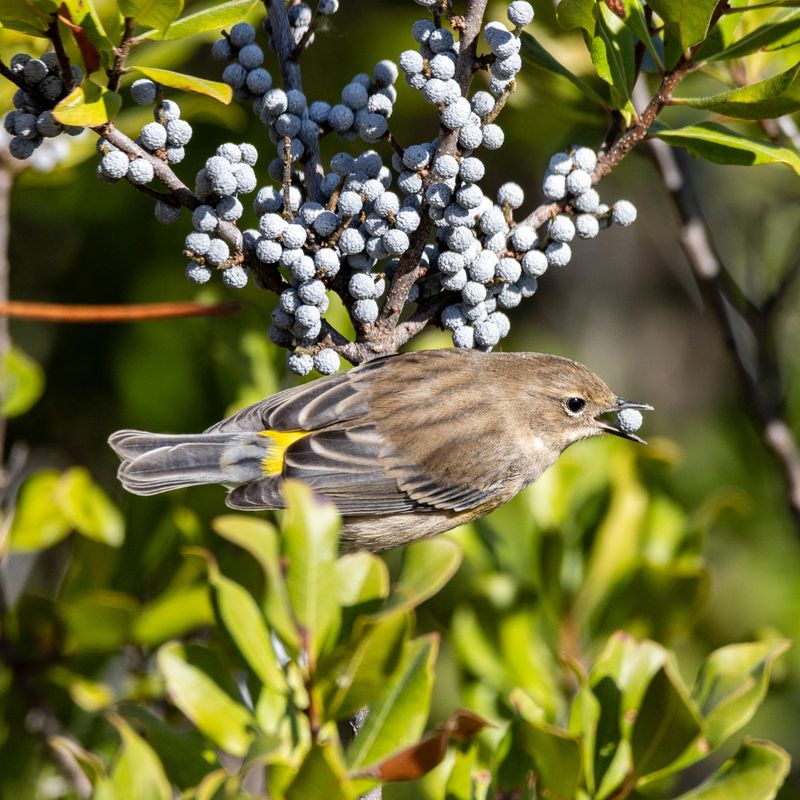
Most small birds cannot do much with a waxy berry. Yellow-rumped warblers can.
The Smithsonian’s National Zoo explains that these warblers digest the waxy coating on fruit like wax myrtle, and that berries make up a large part of their winter diet.
That is a specialized skill. It does not mean every bird in your yard eats the berries with the same ease, so do not count on a flock of every kind.
It also does not guarantee warblers at your particular shrub. It simply explains why this plant fits a bird that winters in the Southeast.
Cover is a separate benefit. Dense leaves and branches give birds a spot to rest and shelter from wind, which the NC Forest Service describes as part of the shrub’s wildlife value.
A practical tip: plant it where you can see it from a kitchen or porch window. On a cold morning, a quick flash of yellow on the rump may be your reward.
Check Your Region and Growing Conditions

Before you buy, check your map. Wax myrtle is native to North Carolina’s Coastal Plain and eastern Piedmont.
NC State’s native plants handbook does not list it as native to the mountains, so it is not a statewide pick.
If you garden in the far western part of the state, look for other native shrubs first. Your local Extension office can point you to good choices.
Where it fits, it is easygoing. The NC State Plant Toolbox lists full sun to partial shade and a range of soils.
It does want steady moisture while it settles in. Water a new shrub regularly through its first season.
After that, it can handle a wider swing between wet and dry, and the NC State wetland guide reflects that range.
Look at your own spot. Sandy, damp, or clay, with sun for much of the day, is a good start.
No source promises it will thrive in every yard, so watch how it does.
Two Plants Usually Make for Better Berry Crops
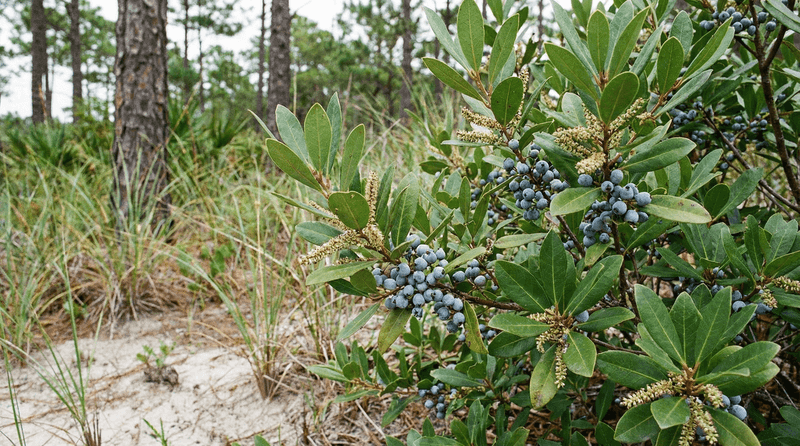
Here is where many gardeners get stuck. They plant one wax myrtle, enjoy the leaves, and wonder why berries never come.
The reason is that male and female flowers are usually on separate plants, as the NC State Plant Toolbox explains.
Good berry production usually requires both. So two plants, one of each, is the usual way to support a good crop.
It is not an exceptionless rule, since a neighbor’s shrub nearby may also play a part.
The North Carolina Wildlife Federation includes native shrubs in its pollinator planting guidance, which is a reminder that flowers matter to insects as well.
The sources reviewed do not give a reliable planting distance, so there is no magic number to share. Keep the plants in the same general area, and give each room to grow.
When shopping, ask the nursery about sex. Plants sold young may not be labeled, so buying from a grower who can tell you is worth a few extra minutes.
Plan for Its Size and Keep It Outside Defensible Space
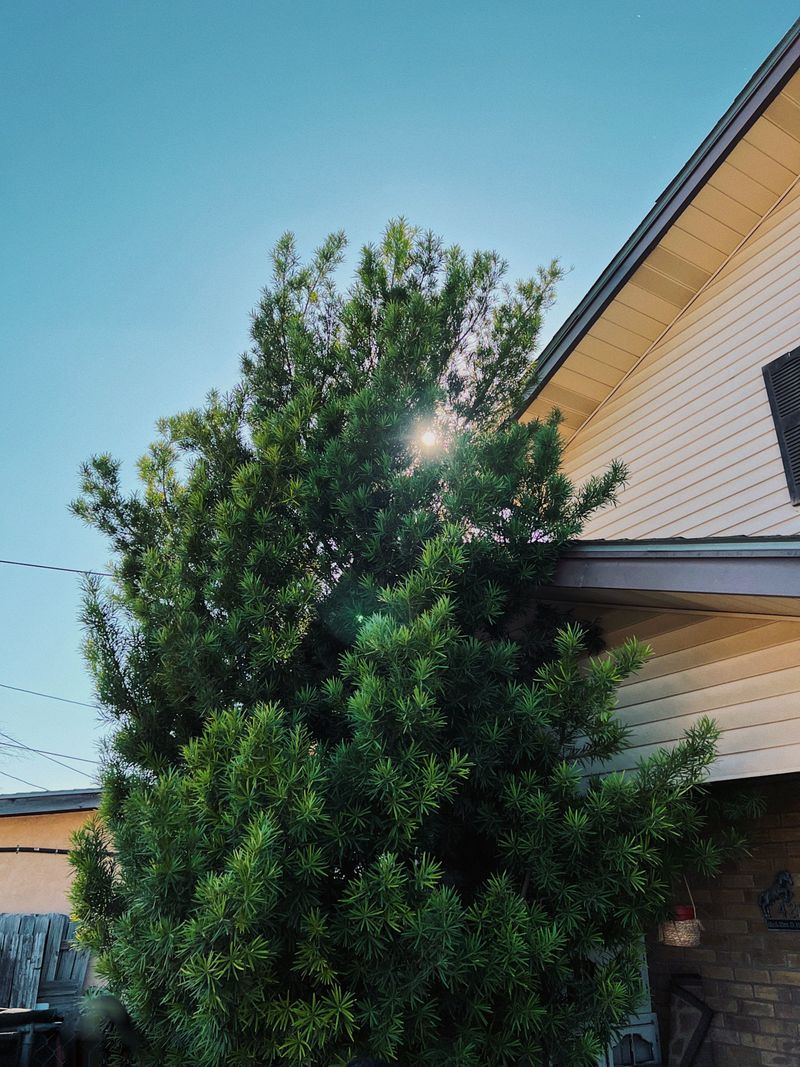
A small pot can fool you. NC State lists a potential mature size of 20 to 25 feet tall and 8 to 10 feet wide, according to the Plant Toolbox.
It is often smaller, but do not count on that.
It can also sucker, sending up new stems from the roots and forming colonies. Without management, it will not stay compact, so choose a spot with room to spread.
Pruning can shape it, but go easy. Fruit forms on older growth, so repeated hard pruning can reduce the next season’s crop.
Trim lightly and choose the timing with the berries in mind.
Now the safety point. NC State warns that wax myrtle can be a fire hazard because its leaves, stems, and branches contain flammable aromatic compounds.
It advises against planting it within a home’s defensible space.
Defensible space is the cleared zone around a house. Put wax myrtle farther out, along a back property line or a yard edge, where its size and berries can be enjoyed without crowding the house.
Build a Yard with More Than One Bird-Friendly Layer

One shrub cannot carry a whole winter. NC State’s guidance on landscaping for wildlife with native plants points to varied native vegetation so food is available across the seasons.
Dense shrubs add cover.
The state’s backyard bird guide takes the same layered view, mixing trees, shrubs, and ground plants.
So think in layers. Use wax myrtle where your region, space, and safe placement all say yes, and pair it with other suitable natives that fruit at different times.
Beautyberry for early fall fruit, an oak or two for acorns and shelter, and wax myrtle for late fruit and cover make a sensible start.
Walk your yard this weekend and find one empty corner that is safely away from the house. A shrub that waits quietly all summer may be the one that earns its spot in December.
