
Why Territorial Defense Explains Many Hummingbird Feeder Fights in Pennsylvania
Follow us on Google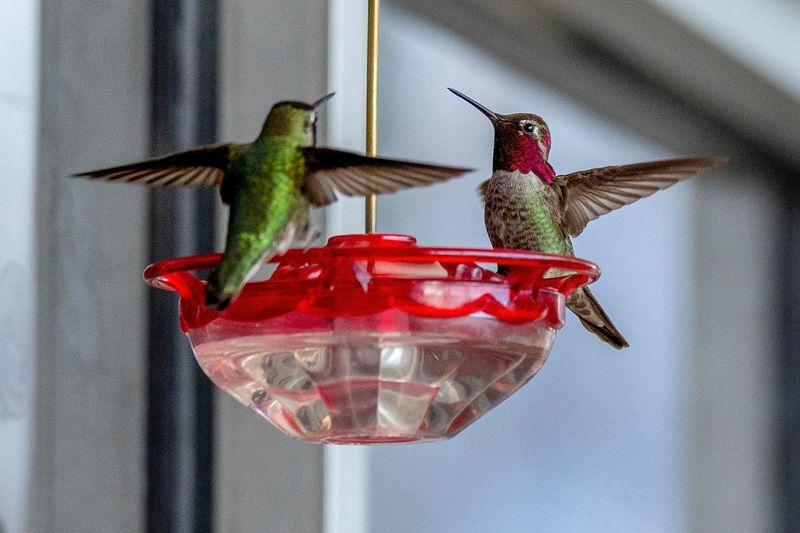
You step onto the porch on a warm July morning and hear a tiny buzz, then a blur of green and a sharp chitter. Two hummingbirds are tearing around your feeder like furious little fighter jets.
It’s not random, at least not most of the time. Here’s the territorial logic behind many of those Pennsylvania feeder fights, plus a few ways to make your yard easier on everyone.
The Feeder Becomes A Defended Territory
Picture a bird that treats your feeder like its own kitchen. That is the clearest explanation for many of the chases you see.
The Pennsylvania Game Commission reports that male ruby-throated hummingbirds defend feeding territories against other hummingbirds, and the species breeds statewide.
So when a bird zips out of a nearby maple and drives off a visitor, it may be guarding a food source it has come to rely on. A feeder is a bright, reliable, concentrated spot.
To a small bird with a big appetite for energy, that is worth protecting.
There is research that backs this up. A study of marked birds at feeders, published in Ecology and Evolution, found that breeding males who concentrated their visits at particular feeders had fewer competitor visits there.
In plain terms, the bird that claimed a feeder tended to keep others away from it.
Here is the catch. That work was done in Quebec during breeding seasons from 2007 to 2009, not in Pennsylvania yards.
The authors also describe territorial behavior as variable, not an all-or-nothing rule.
So think of it as a well-supported pattern, not a guarantee. Many chases at your feeder probably follow this logic, but your yard is its own small stage.
The bird in your sightline is not reading the research paper.
Why One Food Stop Matters
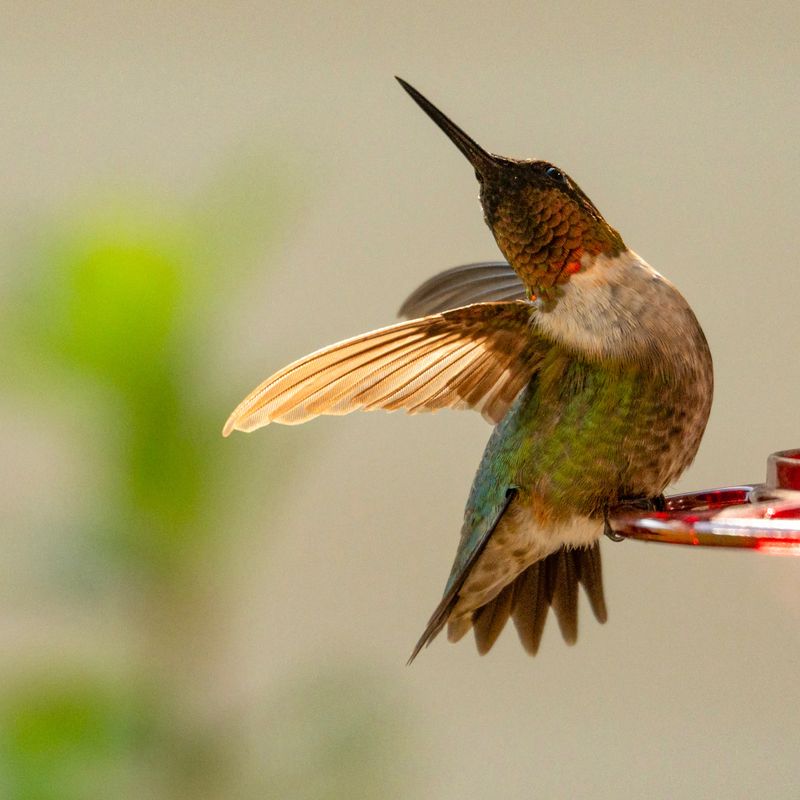
Most people assume a fighting hummingbird must simply be hungry. That is only part of the story, and sometimes not the part that matters.
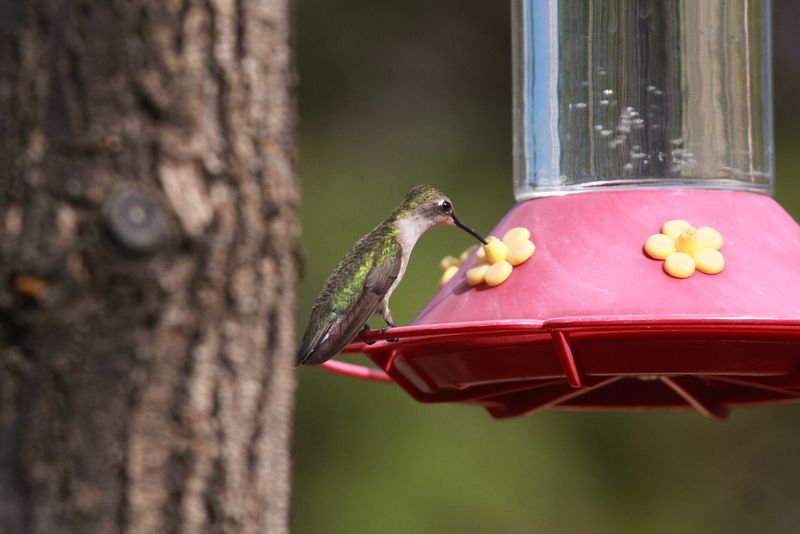
Ruby-throats feed on flower nectar, sap, and insects, as the Pennsylvania Game Commission notes in its species profile.
A feeder is just one stop on a much bigger menu. What makes it special is how concentrated it is.
One port can hold more sugar water than dozens of blossoms, all in one easy-to-find spot.
Hummingbirds burn energy at a staggering pace, so a dependable source has real value. Audubon’s look at why hummingbirds fight so much explores how that value helps explain the guarding.
Think of the feeder as the corner store that is always open, and one bird deciding nobody else gets in line.
But here is where it gets tricky. Knowing that food is valuable does not tell you why a particular chase happened at 7:40 this morning.
A bird that has just fed may still chase. A bird that is hungry may not.
So treat energy demands as a helpful backdrop, not a diagnosis. Your feeder supplements what the birds find in gardens and woods.
It does not replace it, and that is why the fight over it can look so out of proportion.
Not Every Chase Means The Same Thing
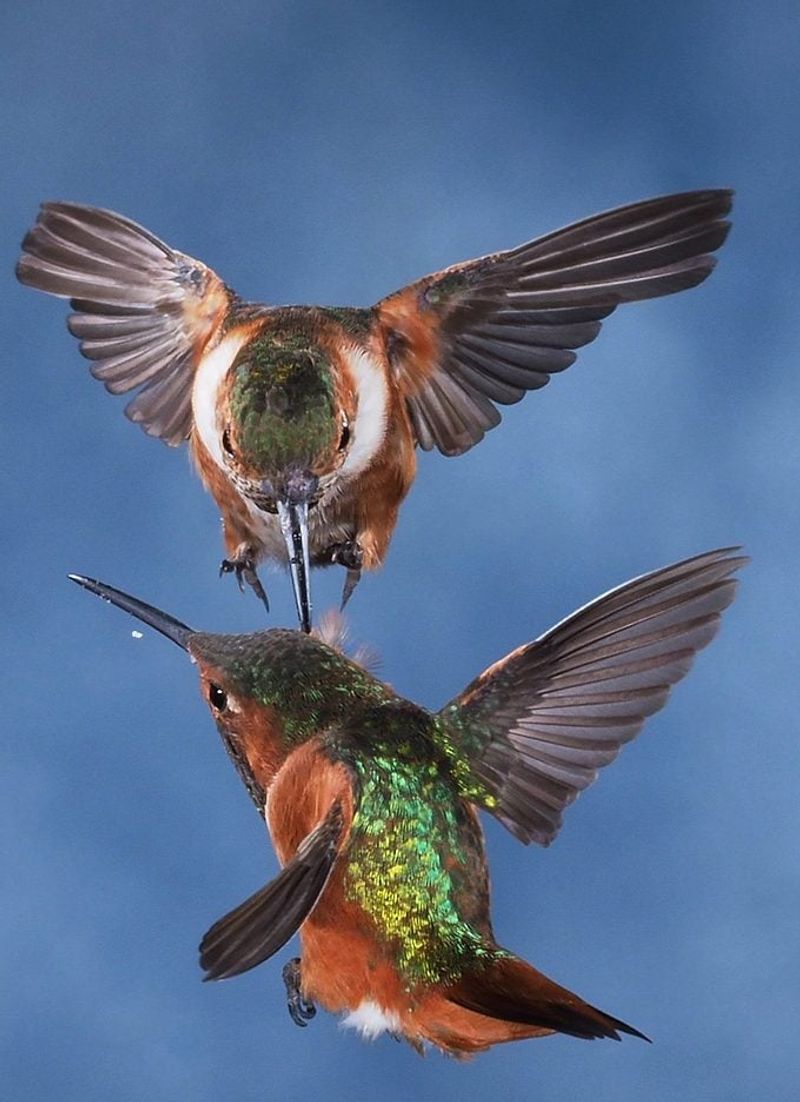
Here is a myth worth setting down: a chase always means a grumpy male guarding a feeder. Sometimes it does.
But a quick scuffle on its own cannot tell you the sex of the birds or what they were after.
Female ruby-throats may defend the space around their nests, according to the Pennsylvania Game Commission. And male courtship includes conspicuous flight displays, which, as Rutgers Cooperative Extension describes, can look dramatic to a person watching from a lawn chair.
So a swooping pass near your feeder could be a territorial warning, a nest defender, or a courtship show. From the porch, they can look nearly identical.
Hummingbirds are fast, small, and not eager to pose for identification.
The better move is to treat each encounter as a clue. Notice where it happens, how long it lasts, and whether the same bird keeps coming back to the same perch.
Over a week, patterns may start to show.
That small shift in thinking is freeing. You do not have to solve every chase.
You only have to notice that the feeder sits inside a busy, complicated little world, and the drama is rarely about you.
Arrival Timing And Food-Related Spacing
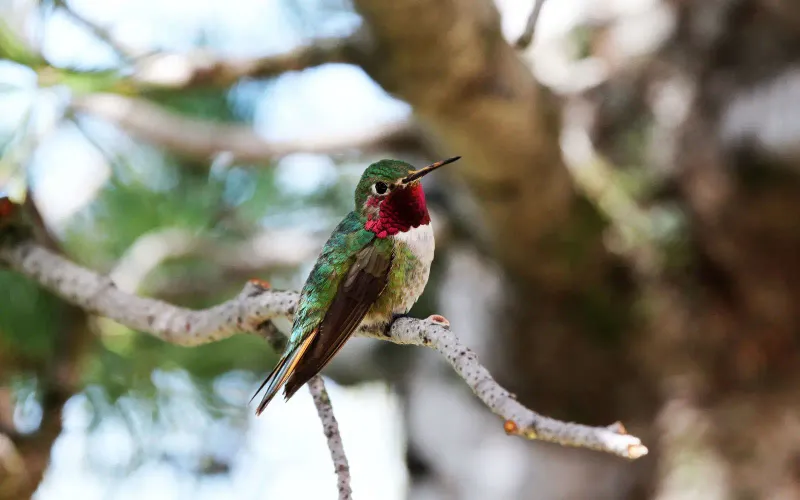
Late April is when many Pennsylvania porches get their first buzz of the year. The Pennsylvania Game Commission reports that ruby-throats arrive in late April and May, with males showing up a week or two before females.
That head start gives early males time to settle in before the rest of the crowd arrives. It is a general pattern, not a calendar.
A cold snap in the Poconos or a warm spell in the Delaware Valley can shift when you spot your first one.
The same source describes male territories as about a quarter acre. But it also notes that where food is abundant, males may be only 50 feet apart.
In other words, a rich food supply may pack birds closer together.
Do not turn these numbers into a rule for your yard. A quarter acre is not a fence line, and 50 feet is not a promised gap.
They are reported patterns, a picture of how the birds often behave.
What the numbers do suggest is that plentiful food and neighbors can coexist. That is a hopeful clue for the next section, where we look at how to give the birds more room to eat.
Can More Feeders Change The View?
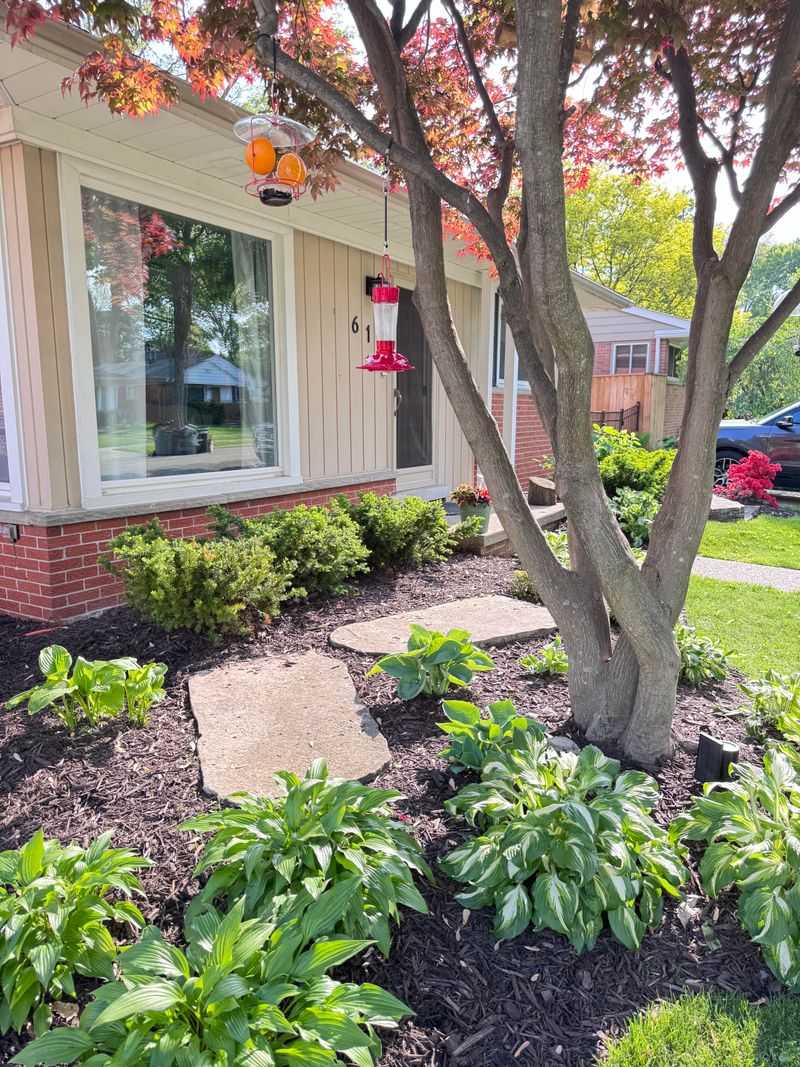
You glance out the kitchen window and see one bird perched like a sentry above your only feeder. Every visitor gets sent packing.
The simplest fix is to give that sentry something harder to watch.
Audubon’s guidance for a hummingbird-friendly yard suggests adding a feeder far enough from the first that the birds cannot see each other. Think around a corner of the house, behind a shrub, or on the far side of a tree.
The idea is visibility, not a magic number of feet. One bird can guard what it can see.
If it cannot see the second feeder, it has a much harder time dominating both.
Audubon also acknowledges, in its discussion of hummingbird aggression, that a cluster of feeders can sometimes reduce one bird’s ability to chase everyone away. Results vary from yard to yard.
So try it as an experiment. Hang the second feeder out of sight of the first, then watch for a week.
You may see more birds feeding. You may still see chases.
That is fine. More access is a genuine win, even if peace is not part of the package.
Flowers Keep The Feeder In Perspective
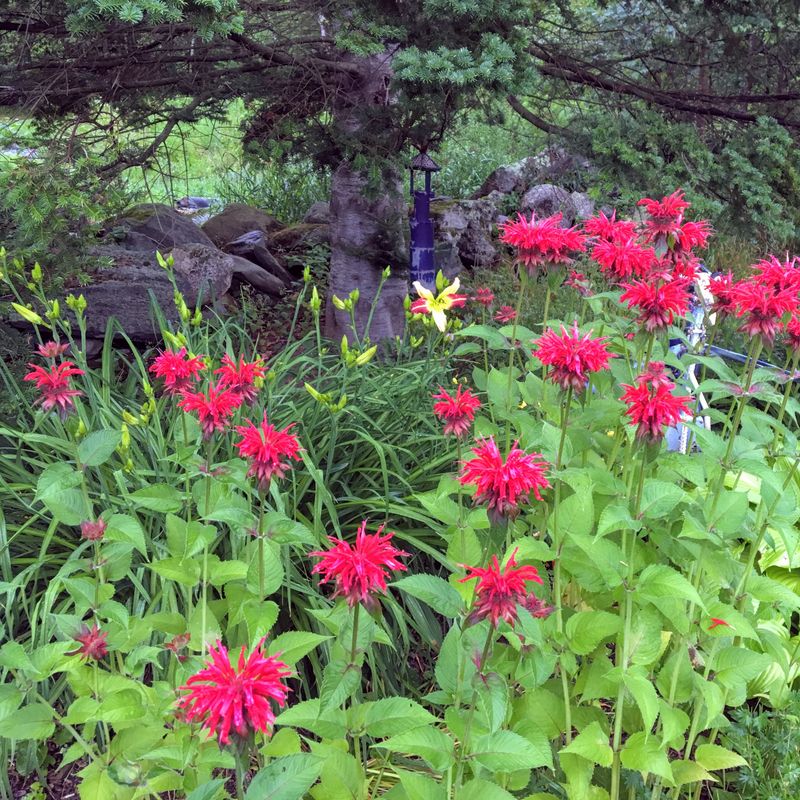
A feeder is the headline, but flowers are the story underneath. Hummingbirds in your yard are not living on sugar water alone, and the garden around the feeder can change how the whole place works.
The Pennsylvania Game Commission lists beebalm (Monarda didyma) and spotted jewelweed (Impatiens capensis) among food plants for ruby-throats. Both are Pennsylvania natives, and both reward a sunny or lightly shaded spot with tubular blooms that suit hummingbird bills.
Variety matters here. A mix of native flowers gives the birds more than one place to look for nectar.
Habitat that supports insects matters too, because, as Audubon notes, hummingbirds also eat insects and other small arthropods tied to varied native plantings.
So leave a little wildness. A patch of unmown edge, a few seed heads, and some leaf litter all help keep the small bugs coming.
None of this promises an end to territorial behavior. A bird may still guard a bloom patch the way it guards a feeder.
But flowers and insects spread the food around, and that gives the whole yard a broader menu to share.
Clean Nectar Makes A Better Backup
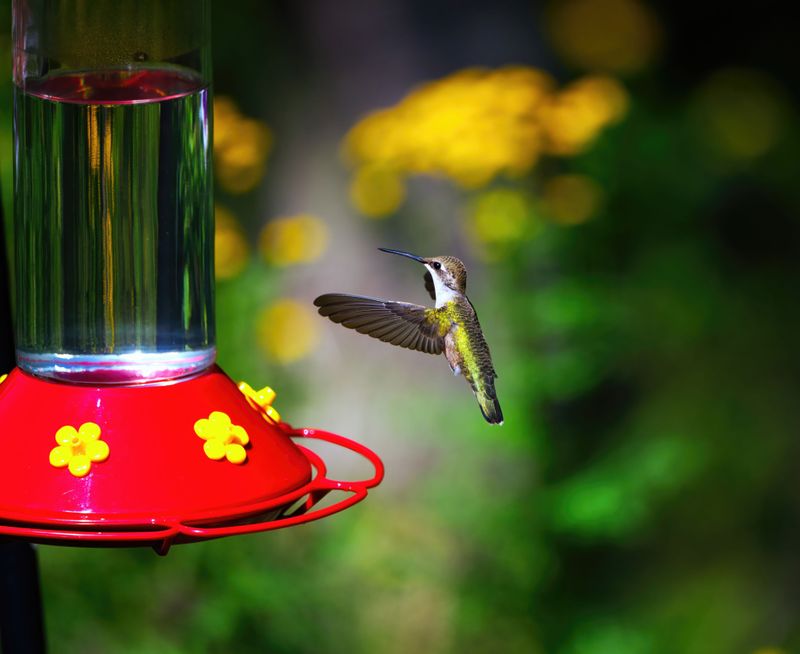
Mold does not announce itself. By the time nectar looks cloudy, the feeder has already turned from backup meal to trouble.
A few simple habits keep it on the helpful side.
The Smithsonian’s National Zoo recommends 1 part refined white sugar to 4 parts water. Skip red dye, honey, and artificial sweeteners.
Boiling is not required if the sugar dissolves fully, so stir until the water runs clear.
Cleaning depends on the weather. Audubon advises cleaning every day or every other day in hot weather, and about every three days in temperate weather.
If the nectar turns cloudy or mold appears, clean it right away.
That means a humid July week in the Susquehanna Valley calls for more frequent scrubbing than a cool May morning in the northern tier. Fill smaller amounts so less goes to waste.
A well-kept feeder is a supplement, not a replacement for flowers and insects. It also cannot promise a fight-free yard.
But a clean feeder gives every bird a safer sip, and that is worth the five minutes at the sink.
