
How to Keep Your Meyer Lemon From Sulking Once It Comes Inside for a North Carolina Winter
Follow us on Google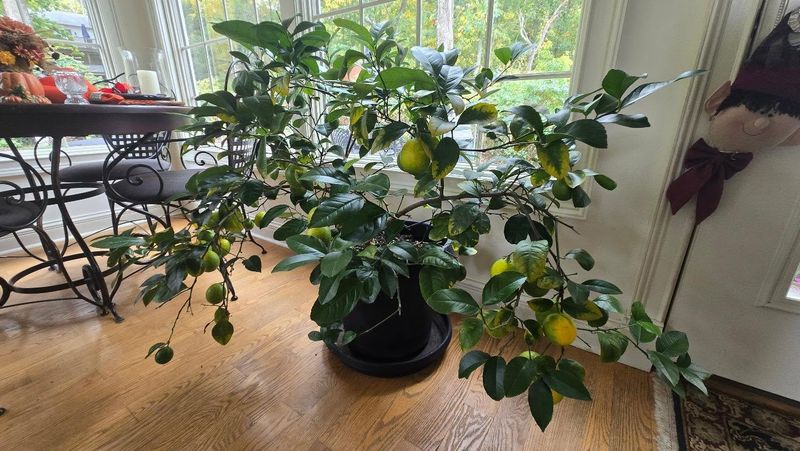
You haul the heavy pot through the back door on a chilly November evening, and by the weekend a few yellow leaves are scattered on the floor. Your Meyer lemon is sulking, and it is telling you something.
In North Carolina, that move indoors is a big change for a citrus tree used to bright sun and open air. A few small, steady adjustments can help it settle in, and this guide shows you where to look first.
Move The Tree Before Frost, Not By Calendar
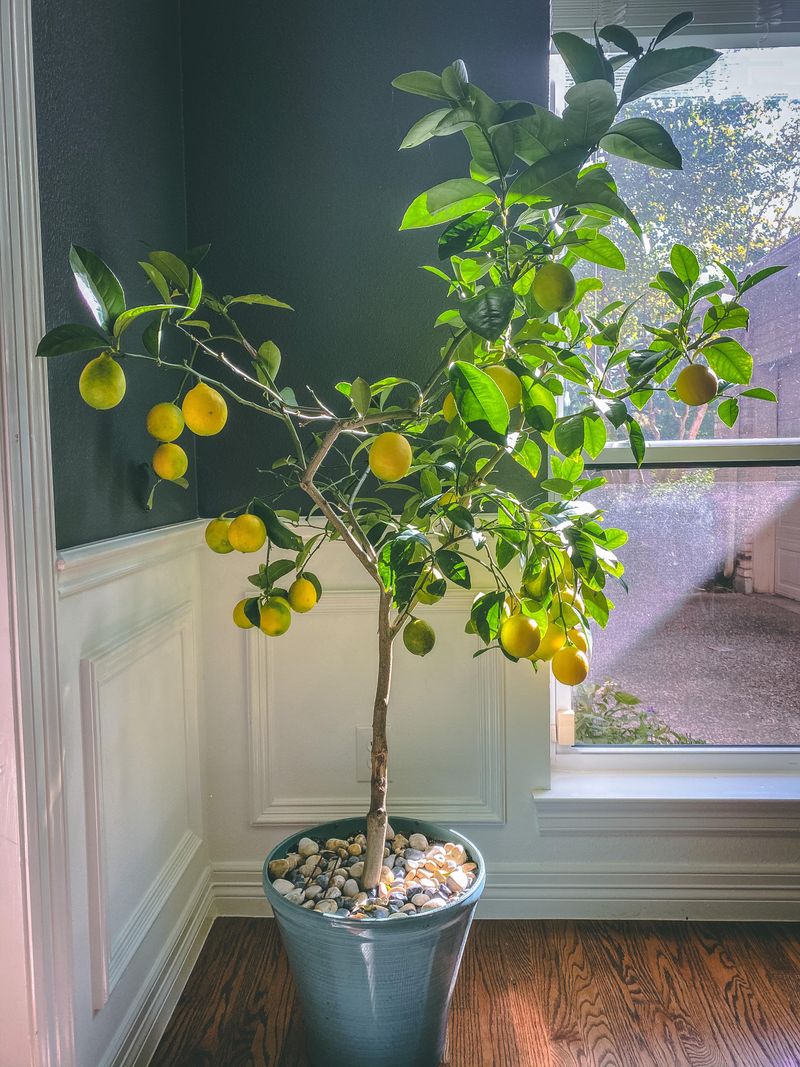
Picture a mild December afternoon in Raleigh. You are in shirtsleeves, the lemon looks happy, and the forecast app quietly says 31 degrees tonight.
That gap is where Meyer lemons get hurt.
Mild winter days do not make this tree frost-safe. NC State’s plant profile says Meyer lemon cannot survive frost and suggests growing it in a container where it must come inside.
So there is no single statewide date. The mountains, the Piedmont, and the coast all get cold on different schedules.
Let the forecast guide you instead. When frost starts showing up in the ten-day outlook, it is time to plan the move.
Bring the tree in before that first cold night, not after.
If you can spare a week or two, soften the change. Penn State Extension suggests gradually reducing the light plants receive over roughly one to two weeks before they come inside.
Moving the pot into more shade each few days is one way to do it. University of Maryland Extension also advises gradual acclimation for citrus.
Once the tree is inside, pick a spot and leave it there. Shuffling it from room to room asks it to adjust again and again.
None of this guarantees a full set of leaves. Think of it as handing your tree a gentler landing, not a promise.
What A Dropped Leaf Can—and Cannot—Tell You
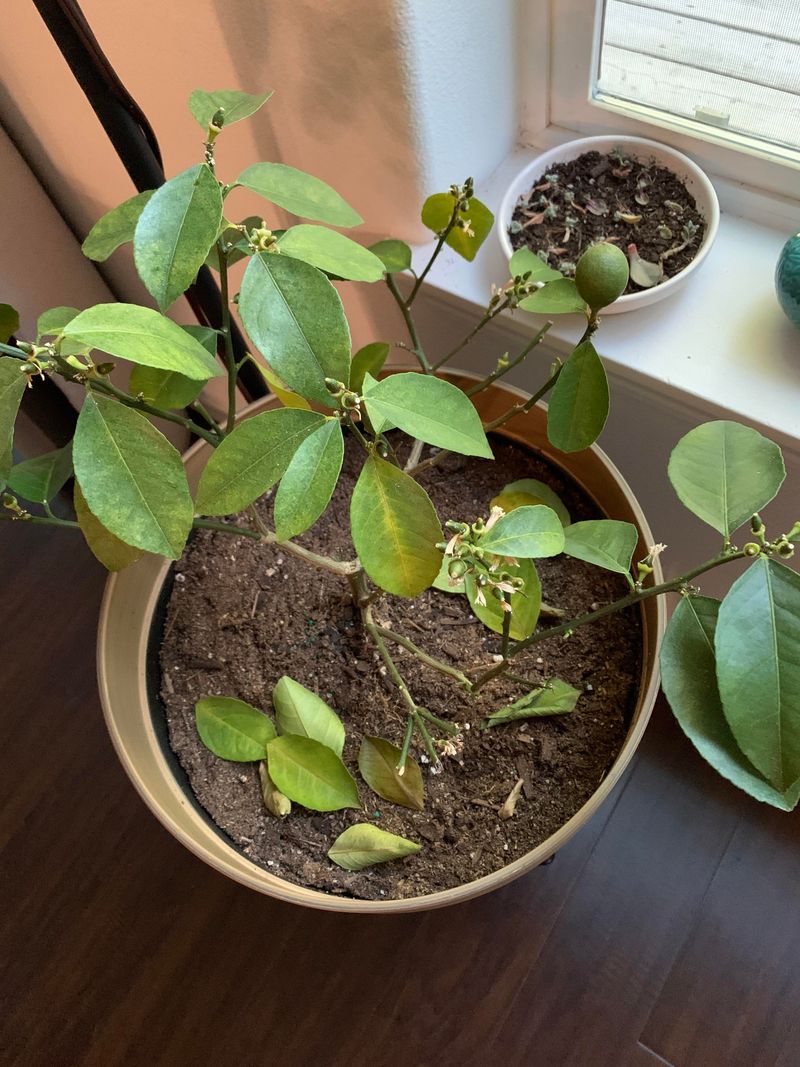
A leaf on the floor feels like a verdict. It is more like a hint, and a vague one at that.
University of Maryland Extension notes that leaf drop can reflect acclimation after a move, or conditions that are too warm, too cold, too wet, or too dry. Lower indoor light can add to the mix.
Notice that the same symptom fits all of those causes.
So a few fallen leaves in the first couple of weeks do not mean your tree is doomed. The tree is adjusting, much like you do after a long trip.
What deserves a closer look is drop that keeps going or gets worse.
Here is a calm way to investigate. Check one condition at a time, and give each a few days before judging it.
Start with light, then soil moisture, then temperature, then humidity, and last pests. The next sections walk through each one.
Resist the urge to change everything in one afternoon. If you move the pot, repot it, soak it, and buy a humidifier all at once, you will never know what helped.
Also skip the shortcut of blaming one thing. Overwatering gets blamed a lot, and dry air gets blamed just as often, but neither is proven by a fallen leaf alone.
Treat the tree like a patient you are getting to know. Look, adjust one thing, and watch.
Give The Tree The Brightest Practical Spot
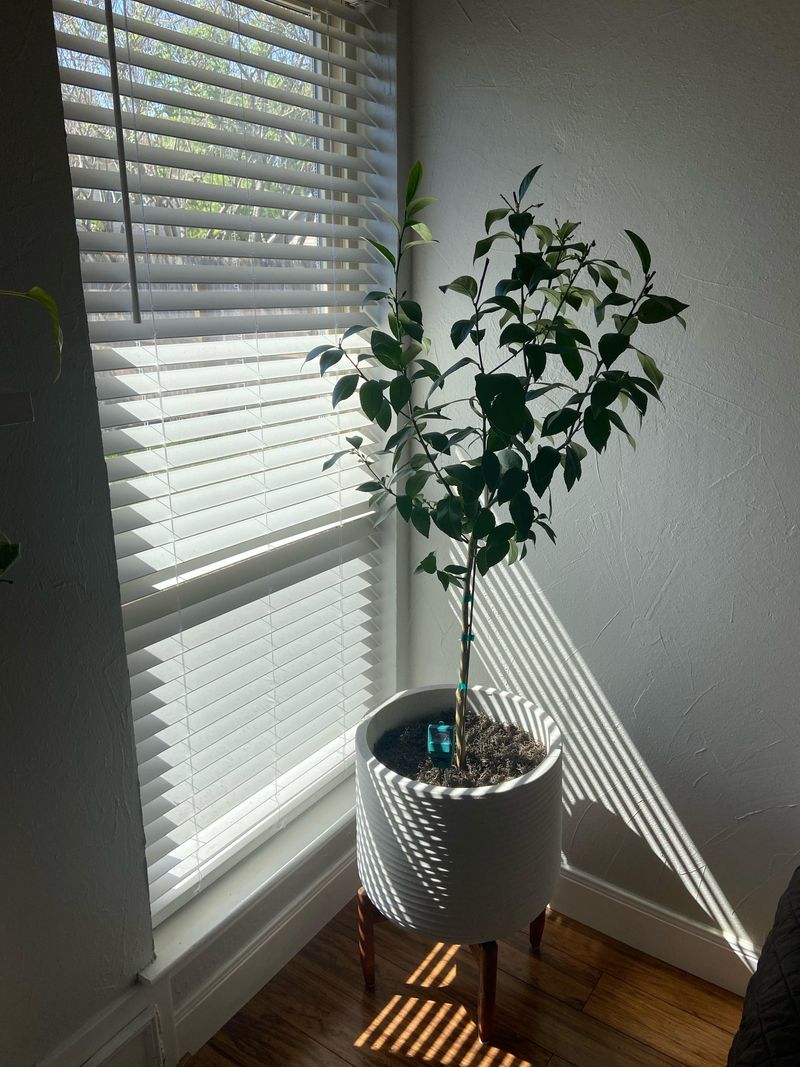
Indoor light feels bright to us, but to a citrus tree it is a dim cave. Even a sunny room can be far weaker than the open yard it enjoyed all summer.
As a guide, aim for at least 6 hours of direct sunlight daily, and 8 to 12 hours if you can manage it. That target comes from University of Maryland Extension, which also points to a bright south-facing window as a practical choice.
Not every house has that window. Trees, porches, and short winter days get in the way.
If your best window falls short, an LED or fluorescent grow light can fill in the gap, as Iowa State Extension describes for indoor citrus.
Here is a quick test. Watch the spot for a day and note how many hours the sun truly lands on the leaves.
Many people are surprised by how short that stretch is.
There is also a difference between a tree that survives and one that produces. Weak light can undermine flowering and fruiting even when the tree stays alive.
Indoor blossoms may also need hand pollination.
So place the tree for steady health first. A winter crop of lemons would be a bonus, and good placement alone does not promise one.
Let The Soil Set The Watering Pace
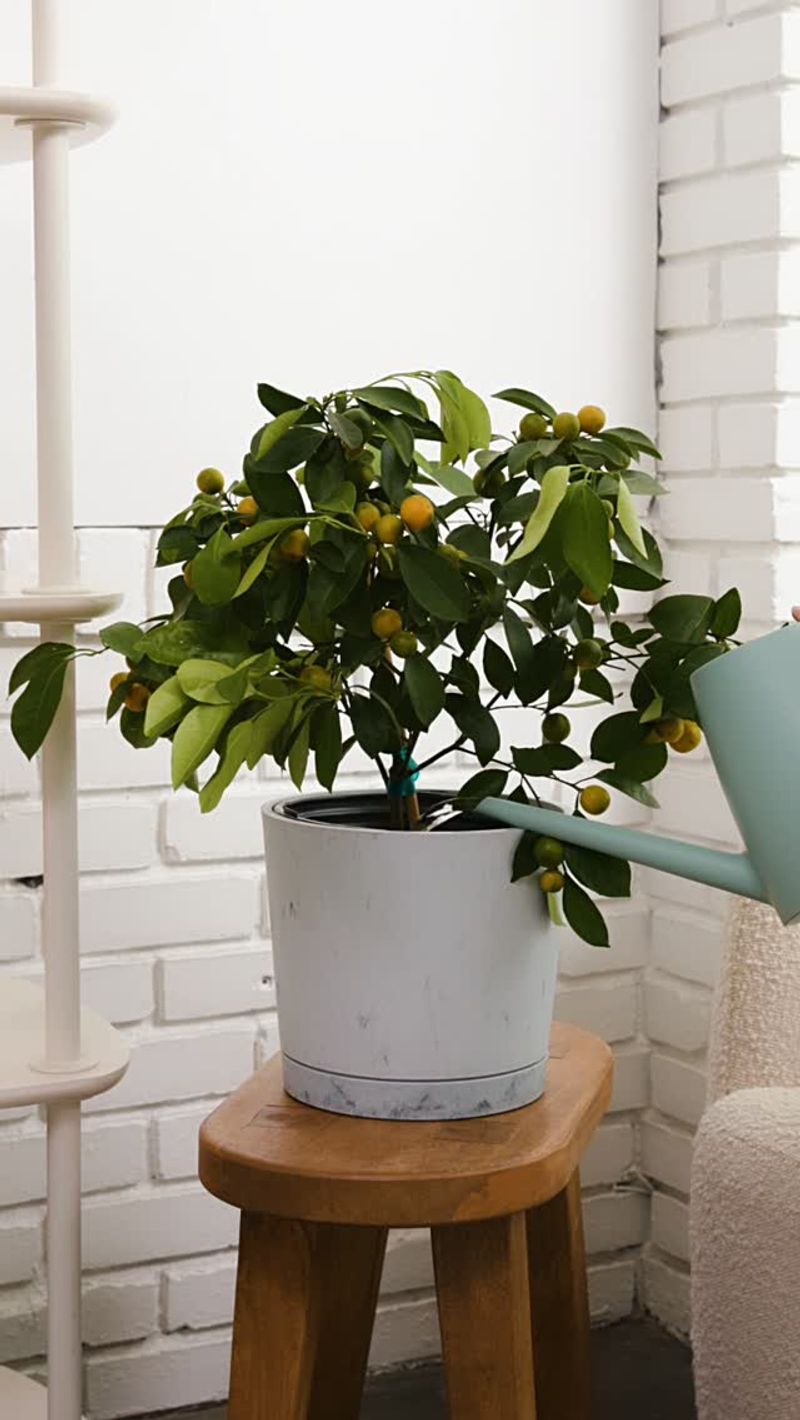
Your summer routine of a quick hose soak on the patio does not carry over. Indoors, soil dries at its own speed, and that speed changes with light, heat, and pot size.
Skip any fixed schedule like every Sunday. Instead, use your finger.
Once or twice a week, press it about 2 inches into the soil. If it feels dry, water thoroughly.
If it still feels damp, wait and check again in a day or two. That is the approach University of Maryland Extension recommends.
Thorough means water runs out of the bottom of the pot. That requires a drainage hole, so check that your container has one.
A pretty pot without holes can quietly drown the roots.
Then comes the step people forget. Empty the saucer after the water drains.
A tree sitting in standing water has roots that cannot breathe.
Roots are the hidden half of this story. They need both a drink and some air, and your finger test helps you give both.
One caution. A fallen leaf by itself does not prove you overwatered.
Maryland lists overly wet soil as one possible cause, alongside dry soil, temperature trouble, and adjustment after a move. Let the soil check tell you, not the leaf pile.
Choose Steady Temperatures Over A Cozy Corner
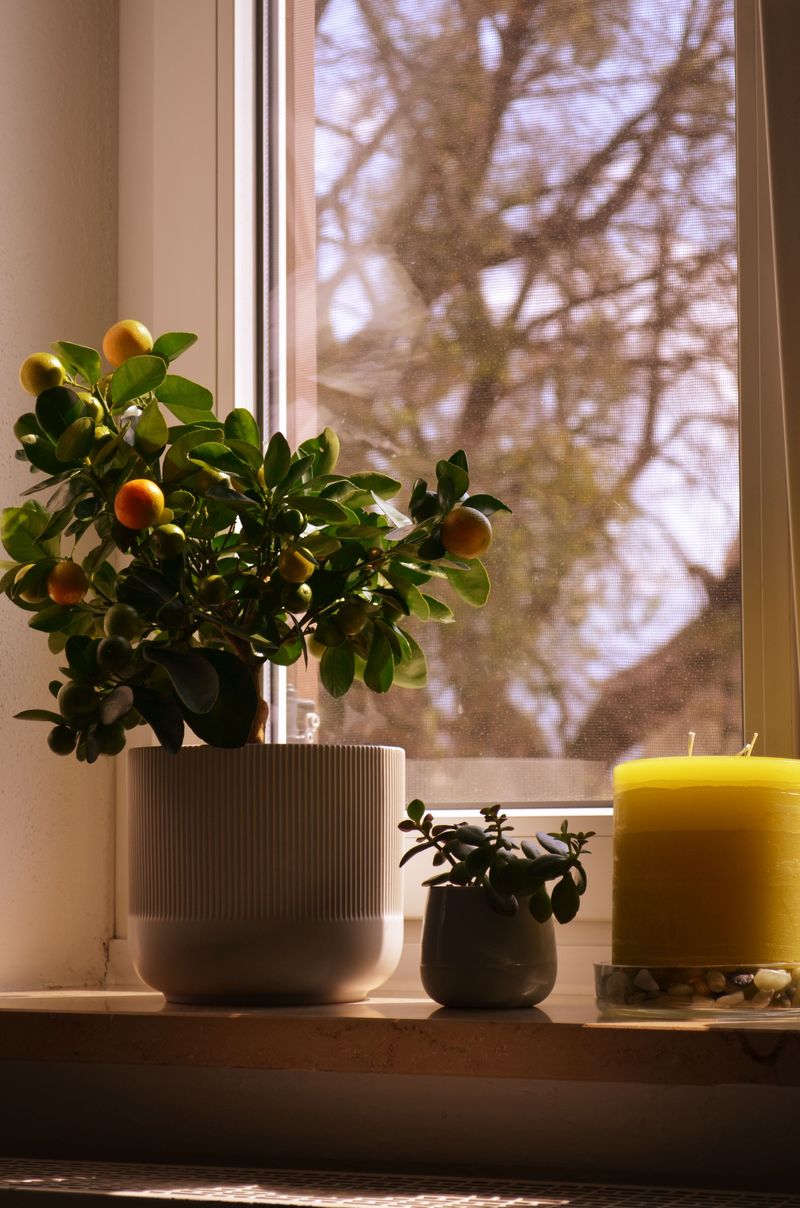
That warm corner by the floor vent looks like a perfect spot. To a lemon tree, it can feel like standing in front of a hair dryer.
Heating and air-conditioning vents can blow dry air or cause abrupt temperature changes. Both are stressful, so keep the pot away from them.
Look at doorways and drafty windows too.
For a rough target, University of Maryland Extension gives a general citrus range of about 65 to 75 degrees Fahrenheit by day and 55 to 65 degrees at night. Many North Carolina living rooms land close to that, with a slightly cooler night.
Iowa State Extension notes that temperatures below 50 degrees can cause leaf loss. So a chilly sunroom or an unheated porch on a surprise cold night is worth a second look.
Treat these numbers as guidance, not a guarantee. Hitting them will not promise that every leaf stays put.
What matters most is steadiness. A cheap thermometer near the tree tells you what it actually feels, which can differ from the thermostat.
Check it morning and evening for a few days.
If swings show up, nudge the pot a few feet. A small move can beat chasing a perfect number.
Treat Humidity As One Factor, Not A Cure
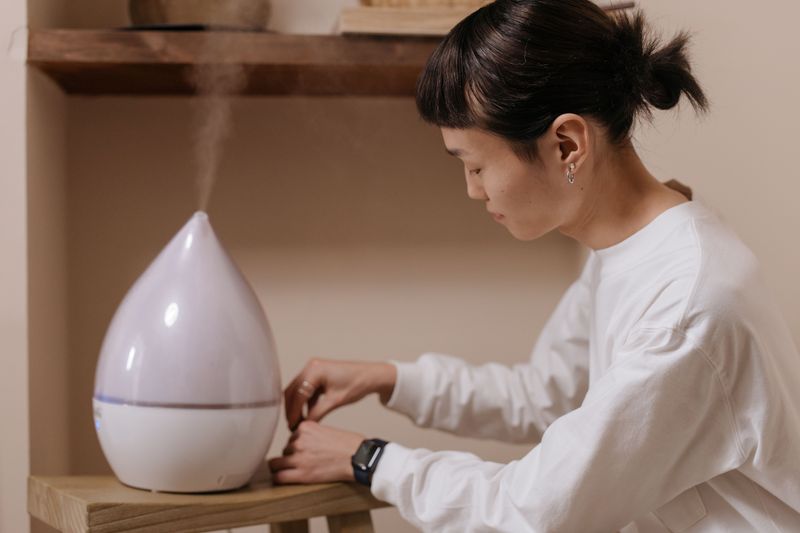
Winter heating dries the air in most homes, and dry air can stress a citrus tree. Still, humidity is one piece of the puzzle, not the whole thing.
University of Maryland Extension suggests aiming for about 50 percent relative humidity and recommends a nearby humidifier. Treat that number as a helpful target.
A small, inexpensive gauge from a hardware store can tell you where your room stands.
A humidifier can help if the air is very dry. But it cannot promise an end to leaf drop.
If the light is weak, the soil is too wet, the room is drafty, or pests are present, those problems will keep going.
You may be tempted to grab a spray bottle. Misting is not a reliable fix.
Penn State Extension says its effect on humidity is questionable and describes a humidifier as an alternative.
So skip the daily spritz and put your effort into a measured, steady approach. Add a humidifier if your gauge shows the air is dry, then keep watching the tree.
Think of humidity as one layer of care. Light, water, temperature, and pests are the others.
No single layer rescues a sulking tree on its own.
Inspect For Pests If The Problem Persists
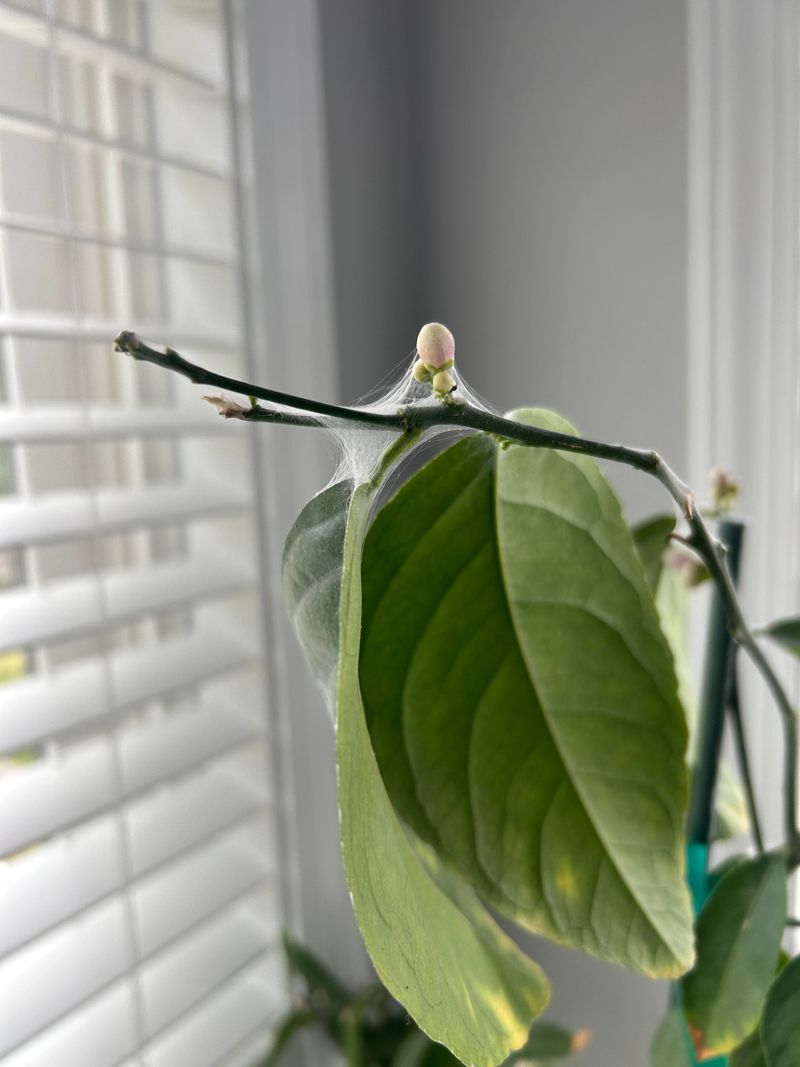
If you have checked light, water, temperature, and humidity, and leaves are still dropping, it is time to play detective. Grab a flashlight and look closely.
Turn leaves over and study the undersides. Then check stems and the soil surface.
According to University of Maryland Extension, common citrus pests include scale, spider mites, mealybugs, whiteflies, and aphids. Look for sticky residue, fine webbing, cottony blobs, small bumps on stems, or tiny insects that flutter up when you touch a leaf.
If you find a few, washing the foliage can be a sensible first step, where appropriate for the plant. Take the tree to a sink or shower and rinse it gently, then let it drain.
Should you consider a pesticide, read the label first. It must permit use on your plant and on the pest you found.
For edible citrus, Iowa State Extension advises checking that the product is labeled for edible fruit plants. Then follow the label directions exactly.
Pest treatment will not necessarily stop all leaf loss, and neither will any other single change. A tree can shed leaves for several reasons at once.
So keep looking, keep notes, and give the tree time. Steady attention does more than a quick fix.
