
Your Christmas Cactus Has Bare Stems Days Before Thanksgiving, And These Last-Minute Changes Still Bring Buds
Follow us on Google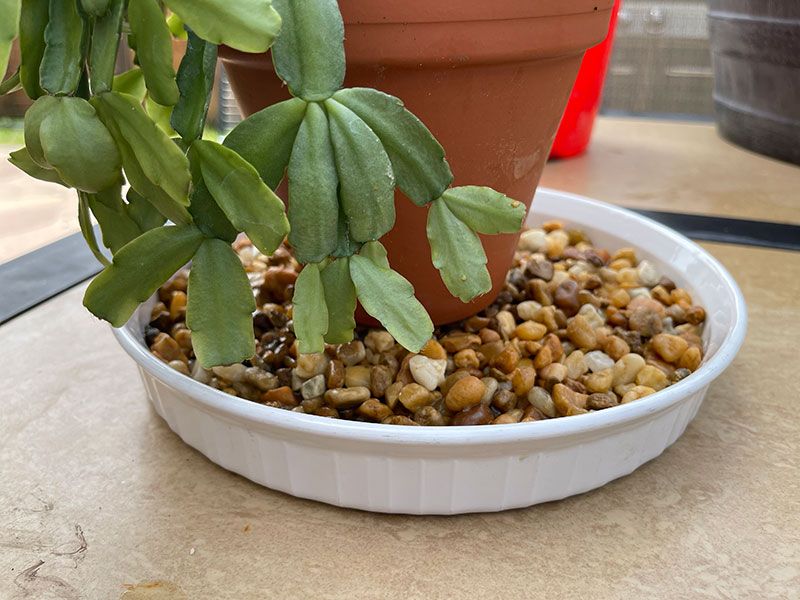
It’s a gray November evening, the turkey is thawing in the fridge, and your Christmas cactus sits on the windowsill with nothing but flat green stems. No pink tips.
No tiny bumps. Just leaves, while the holiday clock ticks louder every day.
Here’s the good news, though. The plant isn’t broken, it’s waiting for the right signals, and a handful of quick changes this week can still nudge it toward buds for December, even if Thanksgiving blooms are a stretch.
1. Long Dark Nights Flip the Bloom Switch Fast
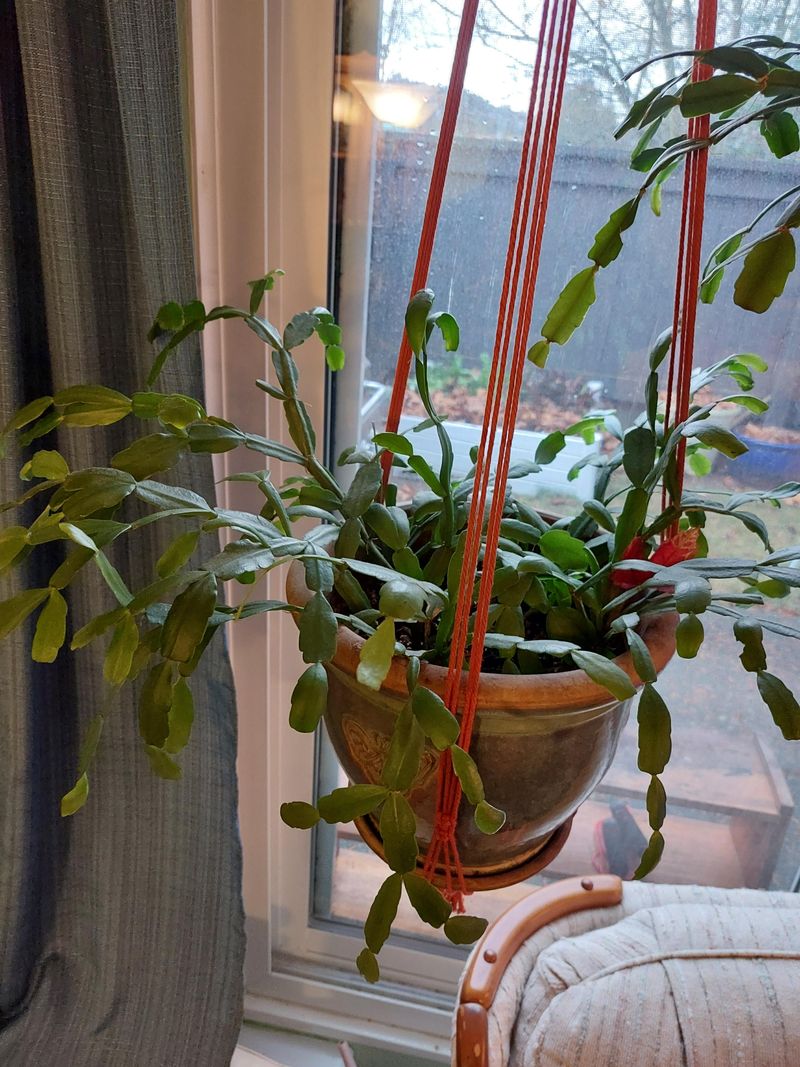
Picture the living room at 9 PM. The TV glows, a floor lamp hums, and your Christmas cactus soaks it all up like a teenager scrolling past midnight.
That steady glow is the quiet reason those stems stay bare.
Holiday cacti, Schlumbergera species, are short-day plants. That means they set flower buds when nights grow long.
University of Florida IFAS Extension notes that they need roughly 12 to 14 hours of uninterrupted darkness each night to form buds.
So starting tonight, give the plant true darkness from about 5 PM to 8 AM. A spare bedroom works, or a large cardboard box set over the pot each evening.
Even a phone screen or streetlight through the curtains can reset the clock.
Here is the honest part. The full routine usually takes 6 to 8 weeks, so starting days before Thanksgiving means buds may land closer to Christmas.
But that still counts as a win, and many plants respond faster when darkness pairs with cool nights.
2. Cool Nights Around 55 Degrees Push Buds Out
A warm house is a cozy house for you. For your cactus, it can be a bloom killer.
Nights above about 70 degrees Fahrenheit often keep buds from forming at all, no matter how dark the room gets.
The plant reads chilly nights as a seasonal alarm clock. Aim for night temperatures between 50 and 65 degrees, with days from 60 to 75.
Many Northern gardeners find this happens naturally in a mudroom, an unheated guest room, or a bright enclosed porch.
Move the pot somewhere cool, but keep it above 50 degrees. In the Upper Midwest or New England, a porch may dip into the 30s by late November, so check with a cheap thermometer before you trust it.
In Florida or South Texas, a cool interior room near an air-conditioned vent may be your best bet.
Interestingly, cool nights near 55 degrees can coax buds even when darkness is imperfect. Combine both and you stack the odds in your favor.
3. Slightly Drier Soil Tells the Plant to Get Serious
Here is a myth worth dropping. Because it is called a cactus, many people let it bake dry for weeks.
But this plant comes from the coastal mountain forests of southeastern Brazil, where it grows on tree branches in moist, misty air.
Still, a little restraint in fall helps. Let the top 1 to 2 inches of soil dry before you water again.
That slight thirst nudges the plant away from stem growth and toward flowers, a bit like a gentle tap on the shoulder.
When you do water, use room temperature water and let it drain fully. Dump the saucer after 15 minutes, because soggy roots rot quickly in cool rooms.
Once tiny buds appear at the stem tips, ease back to evenly moist soil. That shift keeps young buds from shriveling and dropping before they open.
4. Fertilizer Right Now Feeds Stems, Not Flowers

Feeding feels like helping. In late fall, it actually works against you.
Nitrogen tells the plant to grow more green segments, and it happily obeys while flower buds wait in line.
Spring and summer are the feeding seasons, usually a balanced 20-20-20 houseplant fertilizer at half strength about once a month. Once fall arrives, the job changes.
Put the bottle away until the blooms finish.
If you fed recently, do not panic. Just stop now and water normally, which slowly rinses extra salts through the pot.
Some growers use a low-nitrogen bloom formula, but skipping fertilizer entirely is the safer move this close to the holidays.
Think of it as letting the plant focus. With fewer distractions, its energy can finally turn toward buds.
5. Dry Furnace Air Quietly Shrivels New Buds
The furnace kicks on, the air turns crisp and staticky, and your skin starts cracking. Your cactus feels it too.
Indoor humidity in heated homes often falls below 30 percent in winter, far drier than the plant’s misty Brazilian forests.
Low humidity rarely stops buds alone. But it can make tiny buds dry out and fall before they show color, which is a painful loss after weeks of effort.
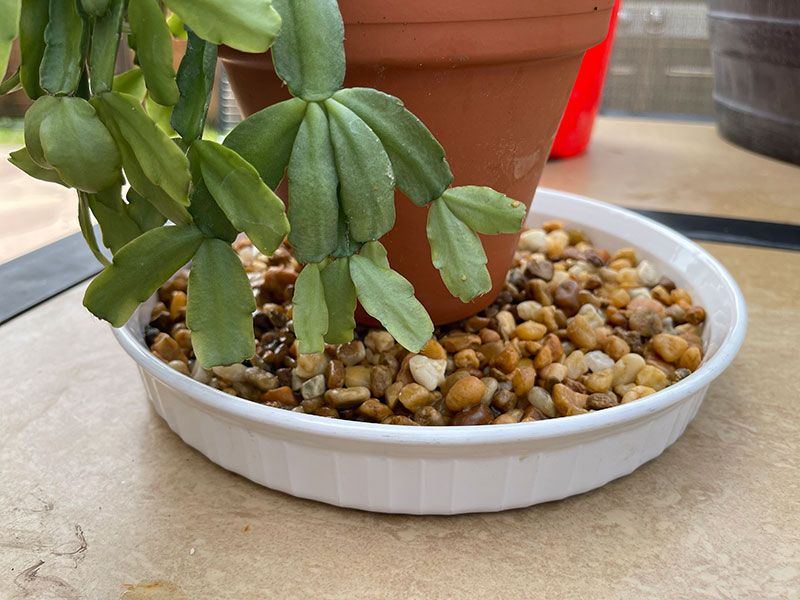
Set the pot on a shallow tray of pebbles with water just below the pot’s base. As the water evaporates, it wraps the plant in a small cloud of moisture.
Grouping it with other houseplants helps too, like friends huddling at a bus stop.
Keep it at least 3 feet from heat vents, radiators, and fireplaces. A humidifier works well if you already run one.
This is one layer, not a cure-all, but it protects the buds you are working so hard to earn.
6. Bright Indirect Days Still Matter During Darkness
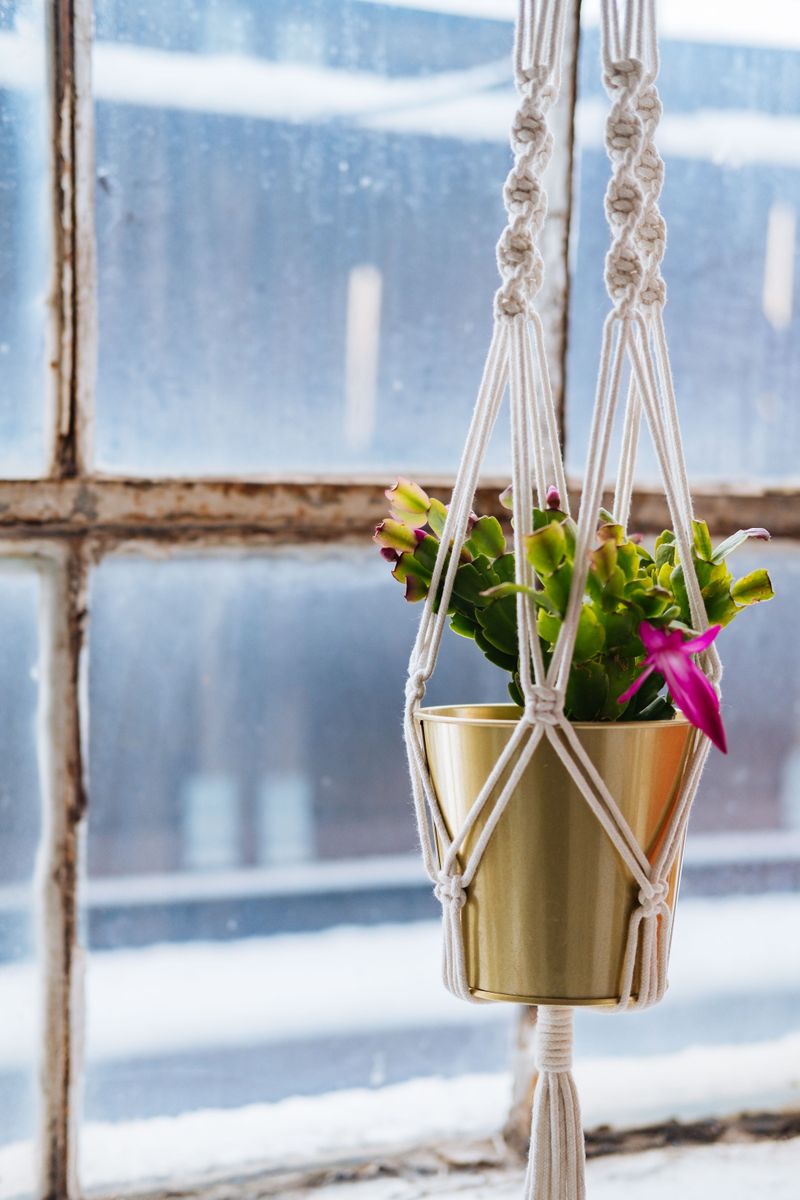
Darkness at night gets all the attention. Yet many plants stall because their days are too dim, especially in a corner far from any window.
The cactus needs daytime energy to build flowers. Bright, indirect light for about 8 to 10 hours works well.
An east window or a spot a few feet back from a south window is ideal across most of the country.
Each morning, lift the box or carry the plant back to its bright spot. In the Pacific Northwest, where November skies stay gray for days, a sunny window may be the only option, and that is fine.
In the Southwest, harsh direct sun can redden or bleach the stems, so filter it with a sheer curtain.
Balance is the goal. Bright days plus long, dark nights send the clearest signal, and the plant tends to answer.
7. Your Plant Might Be a Thanksgiving Cactus Instead
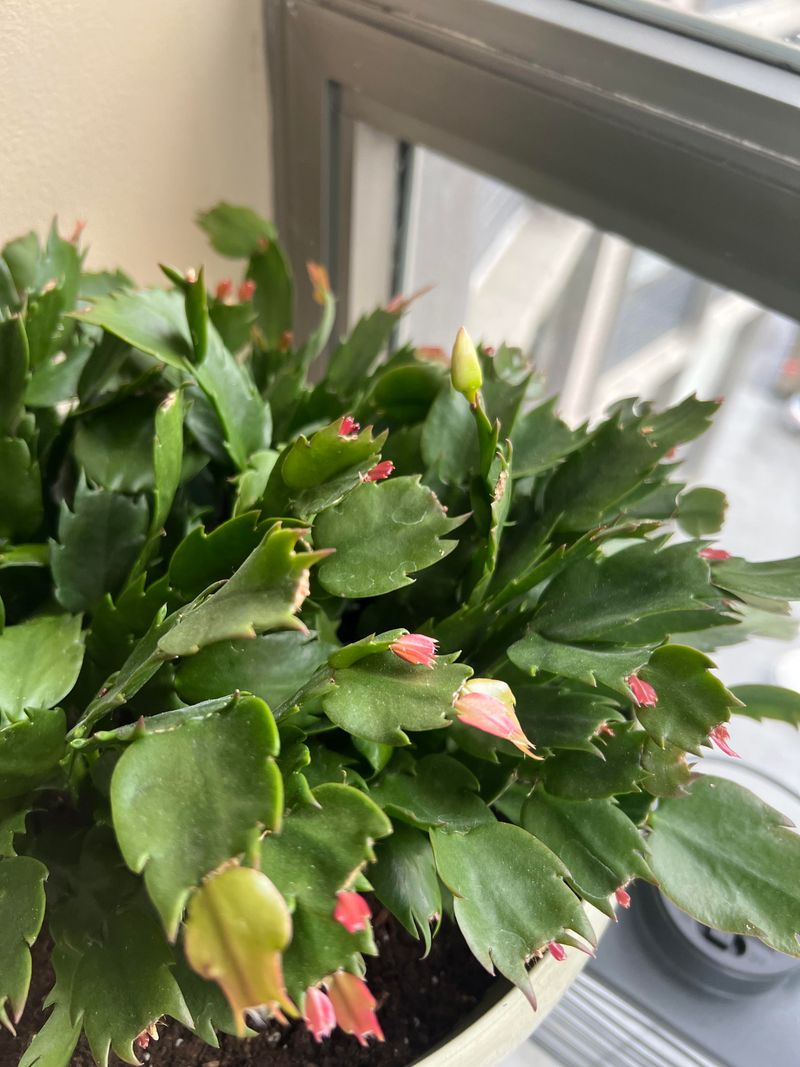
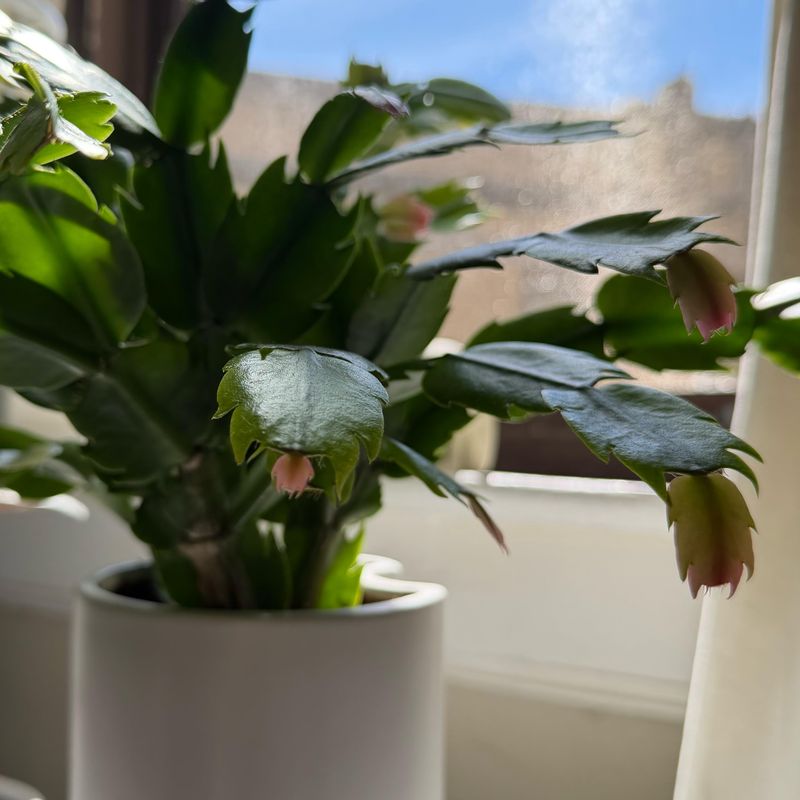
Take a close look at the stem edges. If the segments have sharp, claw-like points, you likely own a Thanksgiving cactus, Schlumbergera truncata.
Rounded, scalloped edges suggest a true Christmas cactus, Schlumbergera x buckleyi.
That difference changes the calendar. Thanksgiving types normally bloom in November, while Christmas types usually open in December or even January.
Many plants sold in stores labeled Christmas cactus are actually the Thanksgiving kind.
So if your plant has scalloped edges, bare stems in late November may be perfectly on schedule. It simply has a later appointment.
If it has pointed edges and still no buds, the darkness and cool-night steps matter more. Either way, knowing its type helps you set fair expectations, and it saves you from worrying over a plant that is just running on its own clock.
8. Once Buds Appear, Stop Moving the Pot
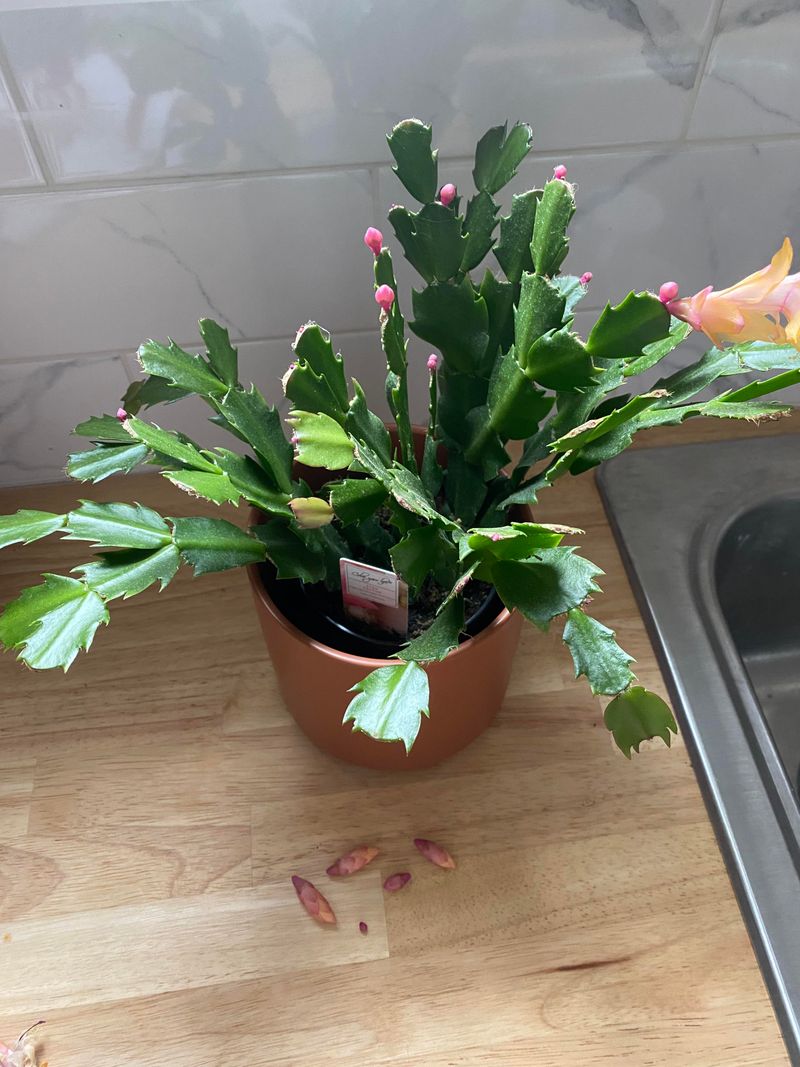
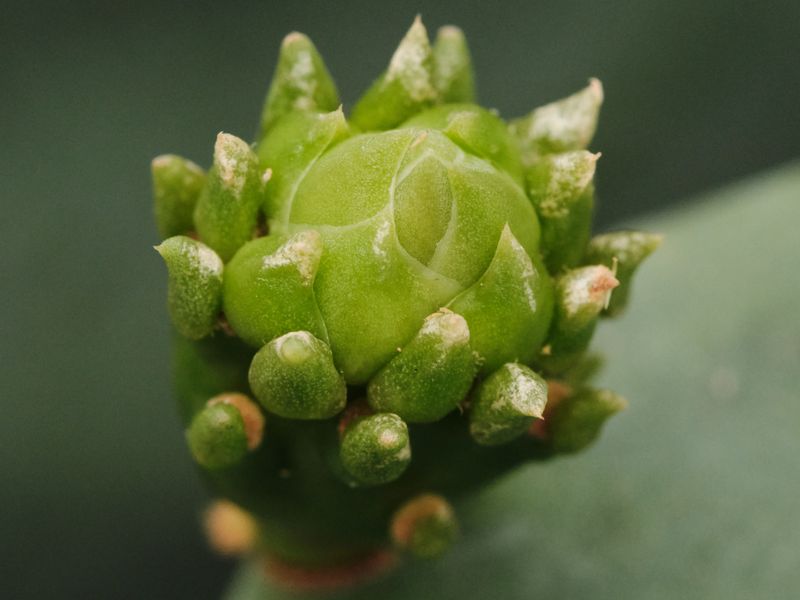
The first pink bumps show up, and you want to rush the plant to the dining table for everyone to see. Hold off.
Sudden changes are the fastest way to lose buds right before they open.
Iowa State University Extension and other horticulture sources warn that shifts in light, temperature, or drafts can cause bud drop. A plant setting buds is like a cake in the oven, and opening the door too often makes it fall.
Keep it in the same spot, with the same light and watering rhythm. Avoid cold drafts from doors and blasts from heat vents.
Even turning the pot can make buds reorient and drop, so leave it facing the same way.
When the flowers open, usually 4 to 6 weeks after buds appear, you can move it gently. By then the hard work is done, and you get to enjoy a plant that listened to every small change you made.
