
What Slow Soaking Really Means For Your Texas Shrubs Before The Next Dry Stretch
Follow us on Google
When a dry stretch is creeping in and your shrubs are already looking a little tired, the instinct is to grab the hose and run it until the bed looks wet.
But surface-wet is not the same as root-zone-wet, and that difference is exactly what slow soaking is about.
Getting this right before the heat locks in can mean the difference between shrubs that coast through a dry spell and shrubs that drop leaves and sulk all summer.
The method is simpler than it sounds, and your own yard will tell you most of what you need to know.
Slow Soaking Starts Beyond the Stem
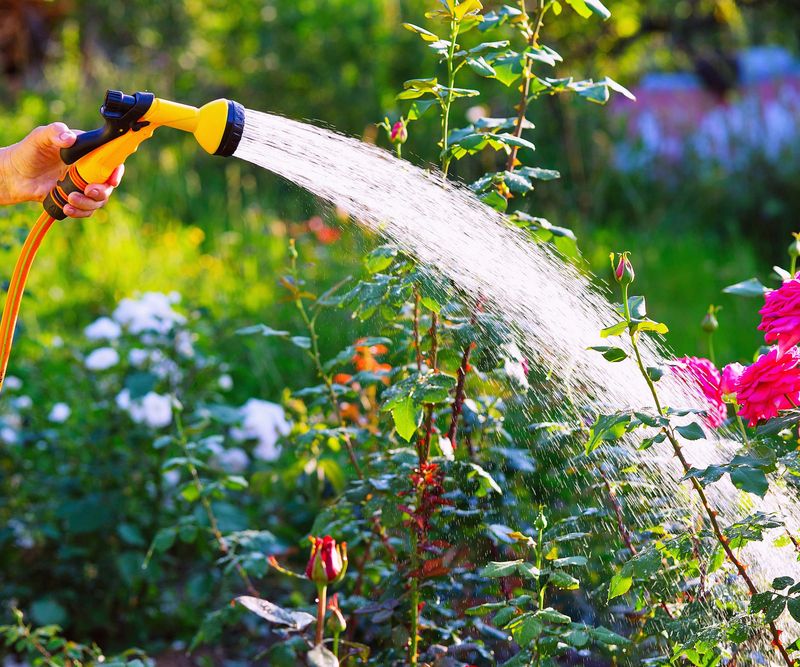
Most people aim the hose at the base of the shrub, right at the trunk, and call it done.
That feels logical, but for an established shrub, the roots doing the real drinking are spread out under and around the canopy, not packed tight against the stem.
Watering only at the base is a little like setting a glass of water two feet away from a thirsty person and expecting them to reach it.
Slow soaking means applying water gently enough that it seeps into the soil instead of sheeting across the bed, pooling on top, or evaporating before it gets anywhere useful.
The goal is thorough moisture in the active root zone, the area beneath and just beyond the canopy spread.
Texas A&M AgriLife Extension drought guidance recommends slowly running a hose around the root zone of large shrubs and moving it as each area becomes saturated, targeting roughly 8 to 10 inches of depth for large established shrubs and trees during severe drought.
That 8-to-10-inch checkpoint is not a universal requirement for every shrub in every yard.
Small shrubs, young plants, and sites with shallow soil or caliche layers may have a different practical depth.
The number is a useful target for large, established plants in a genuine dry stretch, not a rule you apply with a stopwatch.
Slow soaking ends when the soil in the root zone is thoroughly moist, not when the timer hits a certain number or the surface looks dark.
After that good soak, you let the root zone partially dry before checking it again.
Texas A&M EarthKind guidance reinforces this: deep, infrequent watering that wets the root zone thoroughly is more effective for established woody plants than repeated shallow passes that barely reach the roots.
Your Soil Can Tell You When to Water
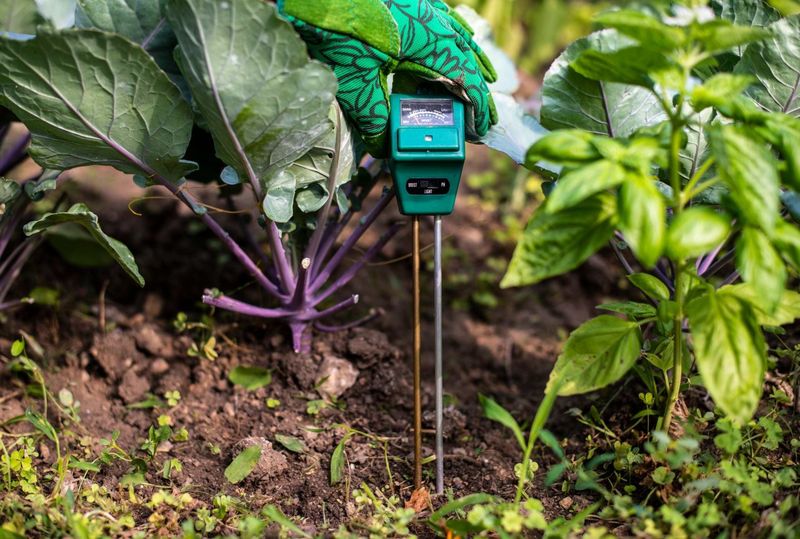
Before you drag the hose out, spend thirty seconds checking what is actually going on underground.
Texas SmartScape recommends using a roughly 12-inch piece of rebar as a soil probe.
Push it straight down into the bed near the outer edge of the canopy.
If the top 4 to 5 inches feel dry and the rod meets resistance quickly, the shrub bed may genuinely need water.
If the probe slides in easily and comes out muddy or damp, Texas SmartScape’s shrub care guidance says to wait.
That test takes less time than unwinding the hose, and it is far more reliable than a watering calendar during a Texas summer full of surprise storms, sudden cool fronts, and triple-digit stretches that can flip conditions in a day.
A calendar does not know what your soil did last Tuesday.
After you finish a soak, come back and check the moisture depth with a long screwdriver or the same rebar probe.
Push it into the watered area.
In moist soil, the tool should move through with little resistance down to the depth you were targeting.
University of Arizona Cooperative Extension guidance on watering trees and shrubs notes that the probe should meet noticeably firmer resistance once it passes the moist zone into dry soil below, giving you a clear read on how deep the water actually traveled.
A dry-looking surface does not always mean the root zone is empty.
Drip irrigation and soaker hoses often leave the top inch or two looking dusty while the deeper soil stays genuinely moist.
This check keeps you from watering a shrub that does not need it, which is just as important as catching one that does.
A Gentle Application Keeps Water in Place
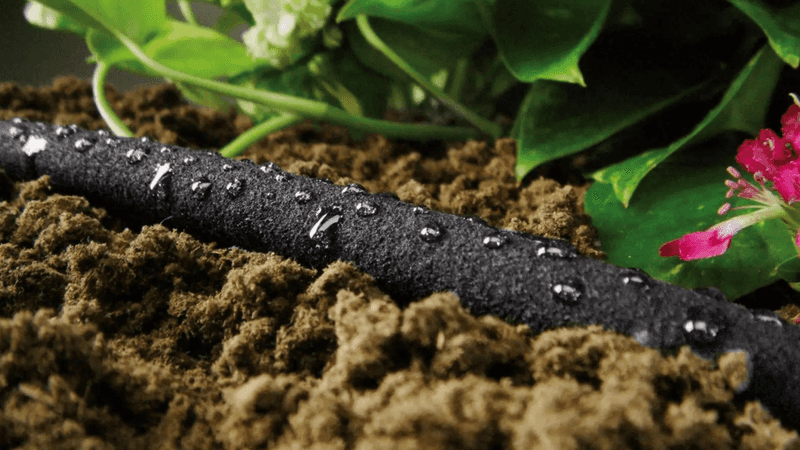
The equipment matters less than the flow rate.
A standard hose turned down to a slow trickle, a soaker hose looped around the root zone, or a properly designed drip system with emitters placed beneath the canopy can all do the job.
What you are after is an application gentle enough that the soil can absorb water as fast as it arrives.
For hand watering, start at one point around the outer root zone and let water trickle slowly into the soil.
When that spot looks saturated, move the hose a foot or two around the canopy perimeter and repeat.
Texas A&M AgriLife Extension describes this moving-hose method specifically for large shrubs and trees during drought conditions, working your way around the dripline until the full root zone has been covered.
Runoff is the signal to pause.
If water starts sheeting across the bed surface or pooling in low spots, the soil has hit its absorption limit for the moment.
Stop, give it 20 to 30 minutes, then resume.
The Texas Water Development Board’s landscape water guide is direct about this: stop irrigating when water runs off faster than the ground can absorb it.
Roots need oxygen as much as they need water.
Utah State University Extension research on efficient irrigation points out that saturated soil reduces oxygen availability, which can damage roots and produce symptoms that look exactly like drought stress.
A shiny puddle that sits for an hour is not a sign of a thorough soak.
It is a sign to back off and let the soil breathe before the next pass.
Match the Method to the Soil
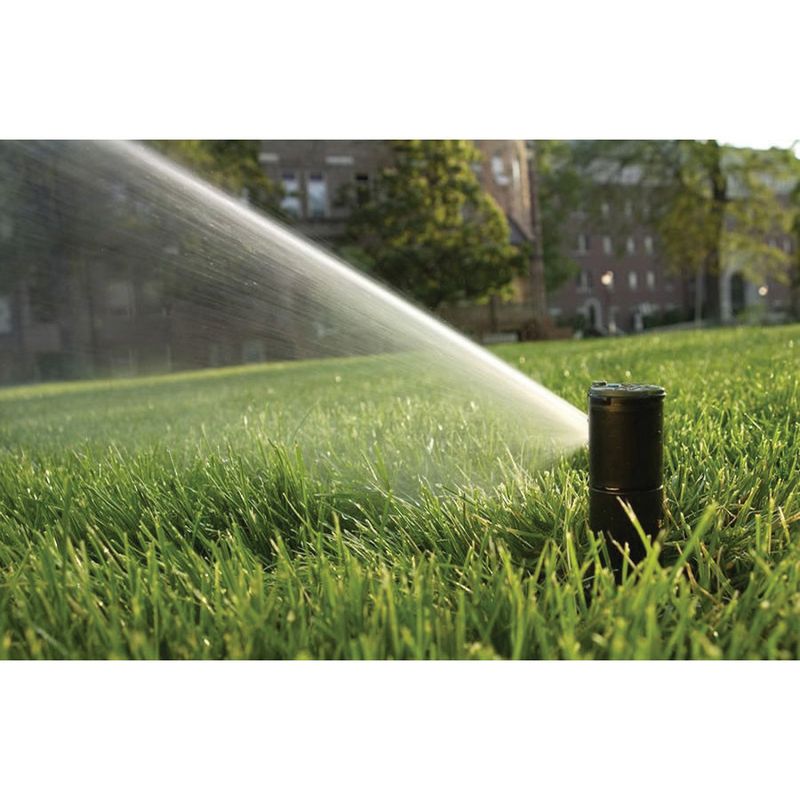
Your soil type genuinely changes how you slow-soak, and you cannot always guess it from a zip code.
Clay soil absorbs water slowly.
Texas A&M AgriLife Extension irrigation data puts clay’s maximum infiltration rate at roughly 0.2 inches per hour, compared with approximately 2 inches per hour for sand.
Real yard conditions can be slower than either of those numbers because of compaction, slope, bare soil patches, or poor grading built up over years.
On clay, compacted, or sloped sites, cycle-and-soak is the practical fix.
Run water for 5 to 10 minutes, stop and let it infiltrate for 20 to 30 minutes, then run again.
EPA WaterSense home maintenance guidance recommends dividing irrigation into shorter intervals on clay soils and slopes specifically to cut down on pooling and runoff.
The pause is not wasted time.
It is what keeps water in the bed instead of running down the driveway.
Faster-draining soils behave differently.
Sandy soils move water downward quickly and hold it less tightly, so the root zone can dry out faster between waterings.
If your soil drains freely, plan to check moisture more often rather than watering for longer stretches at a time.
Shallow soil profiles, including sites with caliche hardpan common in parts of the Hill Country and West Texas, limit how much water the ground can actually store.
Watering beyond the actual soil depth does not help the shrub.
It just moves water out of reach or creates drainage problems.
The only reliable way to know what you are working with is to probe your own bed and, if needed, dig a small test hole to see what the profile actually looks like.
Do not assume your soil matches a regional description without checking it yourself.
Established Shrubs Need a Flexible Rhythm
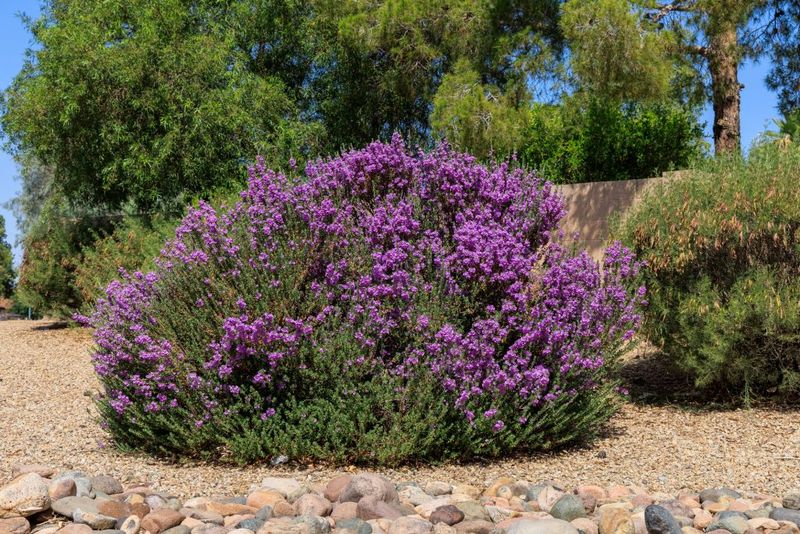
Once you have done a good thorough soak, the next question is how long to wait before doing it again.
Texas A&M AgriLife Extension drought guidance notes that during severe drought, large shrubs and trees may benefit from this type of deep watering about twice a month, but that frequency must change with soil type, plant size, rainfall, heat, wind, exposure, and local conditions.
Twice a month is a starting point, not a standing appointment.
Newly planted shrubs are a different situation entirely.
Their root systems are still mostly concentrated in the original root ball and have not yet spread into surrounding soil.
Texas SmartScape’s watering and conservation guidance recommends keeping new plants evenly moist without letting them stay waterlogged, checking soil moisture about 1 inch below the surface near the plant and adjusting based on what you find.
New plants need more frequent attention, not because they are weaker, but because their roots cannot yet reach far for water.
Species make a difference too.
A mature Texas sage (Leucophyllum frutescens) in a sunny, well-drained bed is built to handle dry stretches with minimal help once it is established.
A broad-leafed hedge planted against a south-facing wall in full afternoon sun is going to dry out faster than almost anything else in the yard.
The Texas SmartScape plant search tool can help you look up the water needs of specific plants you are growing.
Skip the one-inch-per-week rule for Texas shrubs.
EPA WaterSense watering guidance describes that figure as a general starting point for landscapes that includes rainfall, and also notes that requirements vary significantly by location, weather, plant type, and soil.
Your soil probe will always give you a better answer than a regional average.
Weather and Rain Can Change the Plan
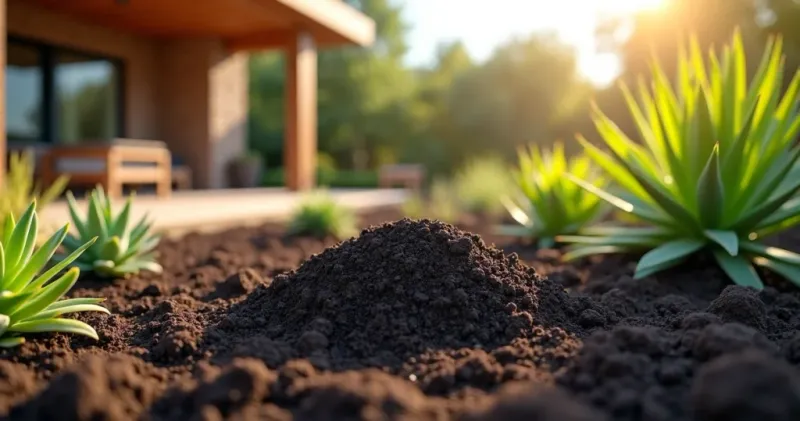
A hot, dry, windy afternoon in North Texas pulls moisture out of the soil much faster than a still, cloudy morning.
University of Arizona Cooperative Extension guidance notes that plants use substantially more water during hot, dry, and windy conditions than in cool or calm weather.
Heat, wind, humidity, soil depth, and exposure all affect how quickly the root zone dries out between waterings.
No single schedule accounts for all of that at once.
Rain is trickier than it looks.
A hard, fast downpour on compacted or sloped ground can shed most of its water as surface runoff before it ever reaches the roots.
The Texas Water Development Board’s landscape water guide advises using a soil check to verify whether rainfall actually replenished the root zone before deciding whether to irrigate.
A half-inch of rain on hard clay is not the same as a half-inch of rain on well-amended loam.
After any significant rain, push your probe into the bed before reaching for the hose.
If the soil is moist to the depth you are targeting, skip the soak and check again in a few days.
If the rain beaded up and ran off, the shrub bed may be nearly as dry as before the storm.
Watering early in the morning is a good habit when it fits your schedule.
EPA WaterSense recommends early morning to reduce evaporation and give the soil time to absorb water before peak heat.
But a shrub that is genuinely dry at noon still needs water.
Missing the ideal window is not a reason to let a stressed plant wait another day.
The Bed Design Helps the Soak Last
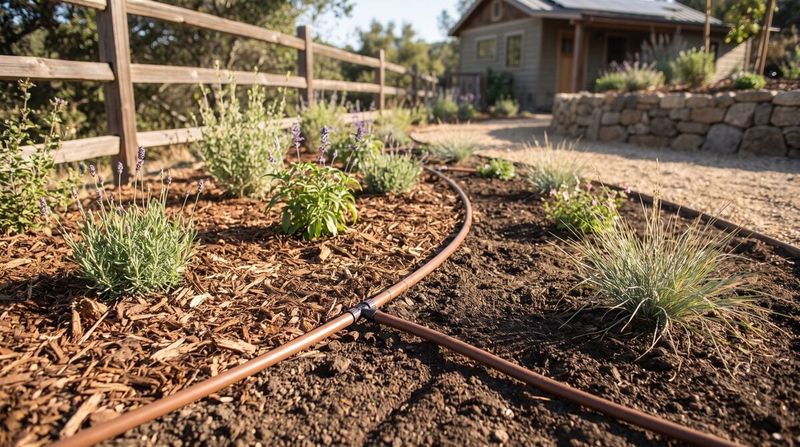
Keeping shrub beds separate from lawn irrigation zones is one of the most useful things you can do before a dry stretch hits.
Texas SmartScape’s shrub care guidance and the Texas Water Development Board both recommend watering shrubs on their own schedule, separate from turf, because grass and woody plants have different root depths and different water needs.
A lawn irrigation program that runs every other day can either leave a shrub chronically dry or keep its root zone repeatedly saturated, neither of which is good.
Mulch is one of the simplest ways to make a good soak last longer.
Texas SmartScape recommends at least 2 inches of mulch around shrubs.
A 3-to-4-inch layer in a Texas summer is genuinely helpful, reducing evaporation from the soil surface, moderating soil temperature, slowing weed growth, and holding moisture in the root zone between waterings.
The Texas Water Development Board landscape guide supports mulch as a practical water-conservation step for home landscapes.
Keep the mulch several inches away from each shrub’s stems.
Piling it against the trunk or base traps moisture against wood and bark, which can encourage rot and create a cozy hiding spot for pests.
EPA WaterSense landscaping guidance specifically flags direct stem contact as a problem to avoid.
Spread the mulch outward beneath the canopy, where it can actually do its job of protecting the root zone, not just the base of the plant.
Water placement follows the same logic.
Aim for the soil beneath and around the canopy spread, not just the ground immediately next to the stem.
The bed design and the watering method work together, and when they do, a single good soak goes a lot further.
Local Rules Finish the Decision

Water restrictions in Texas are set locally, and they can change fast when drought stages escalate.
The Texas Water Development Board advises homeowners to contact their water supplier directly for current rules on watering days, allowed hours, permitted methods, and any exemptions that apply to hand watering, drip irrigation, new plantings, or reclaimed water.
What is allowed in one city during a Stage 2 drought may be prohibited in the next town over.
Once you know your local rules, the decision sequence is straightforward.
Check the root zone with your probe before you do anything else.
If the soil is dry enough to need water, apply it gently across the root zone beneath and around the canopy.
Move the hose or let the soaker hose work its way around the bed.
Pause if runoff starts, wait for the soil to absorb what it has, then continue.
The Texas Water Development Board landscape guide reinforces this sequence: check first, apply slowly, stop at runoff, and verify the result with a post-soak probe.
After the soak, push your probe in again to confirm the moisture reached the depth you were targeting.
Then wait.
Check the soil in a few days rather than setting a timer.
Let the actual conditions in your yard tell you when to go again.
Slow soaking is not a magic number of minutes or gallons.
It is a repeatable skill built on observation, and the more you practice it, the better you will read your own yard before the next dry stretch rolls in.