
The One Task Your North Carolina Bougainvillea Needs Before Fall Or It Quits Blooming Early
Follow us on Google
Your bougainvillea put on a real show this summer, and now you are watching the color fade and wondering if that is just how it ends. For North Carolina container gardeners, there is actually one optional move worth trying before the cooler nights arrive: a light, selective prune after a flowering flush fades can encourage fresh growth and possibly another round of color.
It will not guarantee blooms through October, because frost timing, sunlight, and the plant itself have plenty to say about that. But understanding what helps and what hurts gives you a real shot at a longer display on your porch or patio.
A Light Post-Bloom Prune Can Help—But It Is Not Mandatory
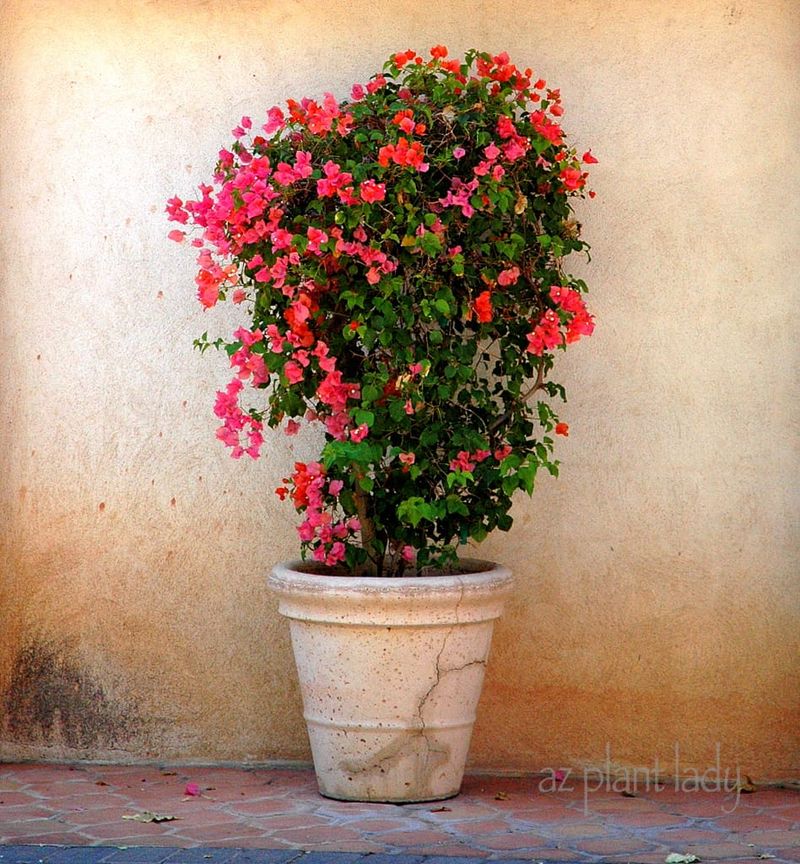
Somewhere between late summer and the first cool night, your bougainvillea container quietly shifts gears. The bracts that were blazing pink or purple a few weeks ago start to look papery and dull, and the new growth slows.
Many Piedmont gardeners take that as a sign that the show is simply over, but there is one optional technique worth knowing about before you move on.
A selective post-bloom prune can encourage a bougainvillea to push fresh shoots, and new shoots are what carry the next flush of color. University of Hawai’i extension guidance and the Royal Horticultural Society’s growing advice both support light pruning after bracts fall as a way to stimulate that response.
The key word is light. This is a selective haircut on finished shoots, not a hard renovation of the whole plant.
Here is what this technique does not do: it does not prevent early bloom loss on its own, and skipping it does not prove why your plant stopped flowering. Light, temperature, water, nutrition, drainage, and your region’s first frost date all shape what happens next.
If your plant is still carrying bracts you love, do not cut it. Wait until that flush is genuinely finished before you reach for the shears.
NC State Extension treats bougainvillea as a container plant or seasonal accent in North Carolina rather than a reliably hardy landscape shrub, which means every decision you make from here through October is about maximizing a finite outdoor window, not saving a perennial.
Why New Growth Matters More Than Deadheading
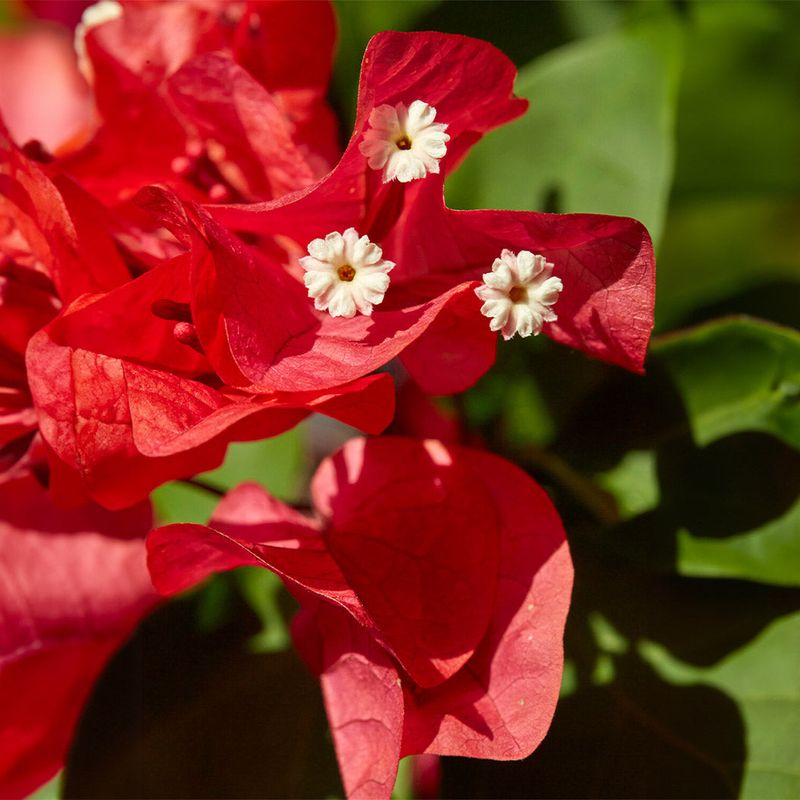
Bougainvillea (Bougainvillea spp.) blooms on new growth. That one fact changes how you think about the whole late-summer care routine.
The vivid pink, purple, red, and orange structures that make the plant so striking on a porch or hanging basket are actually bracts, which are modified leaves that surround small, true flowers that are usually white or pale yellow. The bracts are the show, and they appear at the tips of new shoots.
Deadheading, which means pulling off spent bracts for tidiness, does clean up the look of the plant. But removing only the visible bracts does not necessarily create enough new branching to push a fresh flowering cycle.
NC State Extension confirms that bougainvillea blooms on new growth, which means the more consequential action is shortening the finished flowering shoot itself, not just tidying the surface.
When you cut back a finished shoot, the plant responds by branching below the cut. Those new branches are where the next set of bracts can form.
Think of it like trimming a spent stem on any other flowering plant: the plant puts energy into what comes next rather than holding onto what is already done.
That said, pruning alone does not set the bloom date. University of Hawai’i extension research notes that high light intensity is required for good flowering, and that frequent or excessive pruning can actually inhibit blooming rather than encourage it.
The goal is a targeted cut on finished growth, not a weekly trim session.
Make a Selective Cut Instead of a Hard Chop
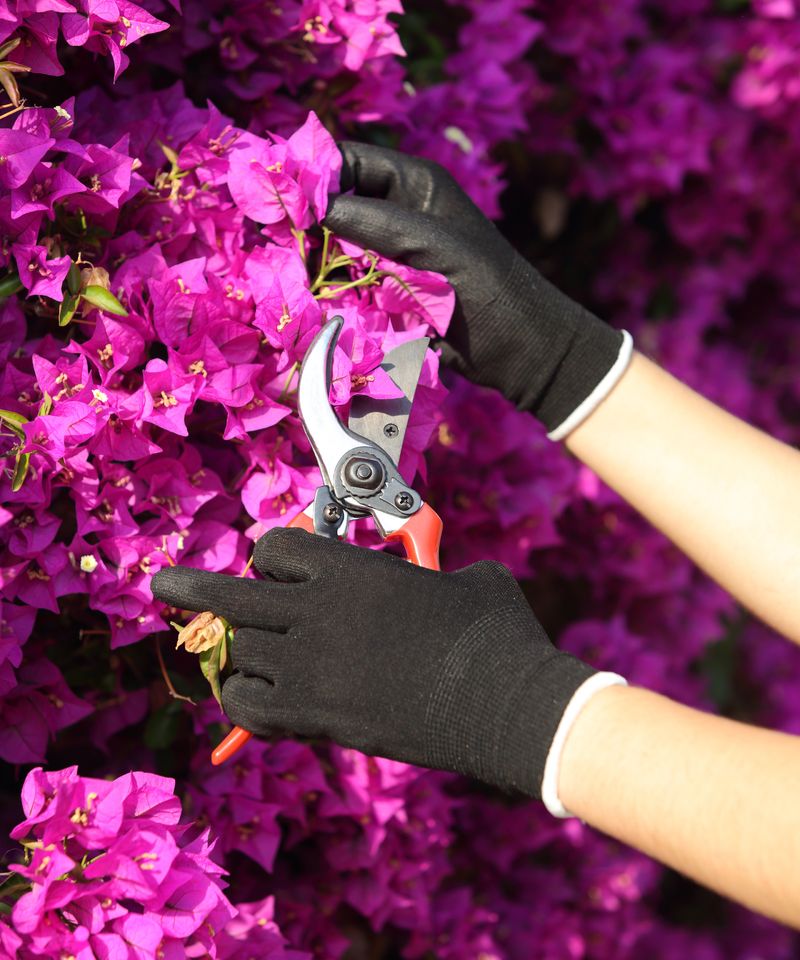
Before you touch the plant, gear up properly. Bougainvillea stems commonly carry sharp thorns, and a casual grab while trimming can draw blood fast.
Wear heavy gloves, not thin garden gloves, and use clean, sharp pruning shears. Dirty or dull blades can introduce problems and crush stems rather than making a clean cut.
For a finished flowering shoot that has grown long, a cautious rule of thumb is to shorten it by roughly one-third to one-half, cutting just above a healthy bud or side shoot. University of Hawai’i extension guidance recommends cutting lateral shoots back to two or three buds from the main stem on crowded plants, which is a useful option when your container bougainvillea has become dense and tangled.
Both approaches work, and UF/IFAS extension advice reinforces using clean, sharp tools to protect the plant’s health during any trim.
The measurement is a starting point, not a rule for every shoot on every plant. A short shoot on a compact cultivar may only need a small trim, while a long, arching shoot that has finished flowering can take a more generous cut.
Let the shoot’s length and the plant’s overall structure guide you rather than applying the same reduction everywhere.
Cutting every branch at once creates a severe reduction that may delay the next flowering display or remove shoots that were already developing buds. Work selectively: address the finished shoots, leave any that still look fresh, and step back often to see how the plant looks before continuing.
This is the difference between a helpful late-summer haircut and an accidental renovation.
Use Fading Bracts as the Timing Signal
Calendar-based pruning advice sounds tidy, but your bougainvillea does not read a calendar. Cutting the plant back simply because August has ended can mean sacrificing a flush that is still going strong, and that is a trade you probably do not want to make.
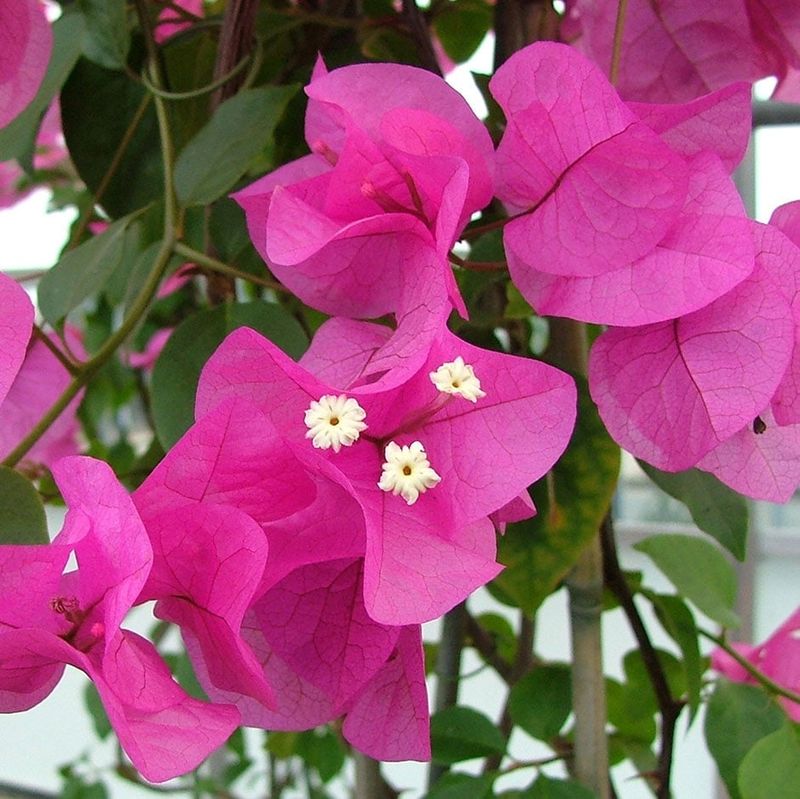
The real signal is what you see on the plant. When most bracts on a shoot have faded from vivid to papery, or have dropped altogether, that shoot has finished its cycle and is a good candidate for a selective trim.
University of Hawai’i extension guidance supports pruning after flowering as the trigger, not a fixed date. The Royal Horticultural Society similarly advises cutting long growth back after bracts fall to encourage a late-summer second flush, though their guidance comes from a greenhouse growing context rather than North Carolina outdoor conditions, so treat it as supporting evidence rather than a local prescription.
A light cut made while the season still has warmth and sunlight ahead gives new shoots a reasonable window to develop. A heavy cut made in late September or early October is a different matter.
Pruning every branch hard that late may remove shoots that were already carrying developing growth for a later display, and temperatures are declining just as the plant tries to recover.
The honest middle ground: watch the plant, not the month. When a flush is clearly done, make a selective trim on the finished shoots and leave anything that still looks promising.
UF/IFAS bougainvillea guidance reinforces that the timing of pruning relative to the plant’s cycle matters more than the date on the wall.
North Carolina Frost Sets the Real Fall Deadline
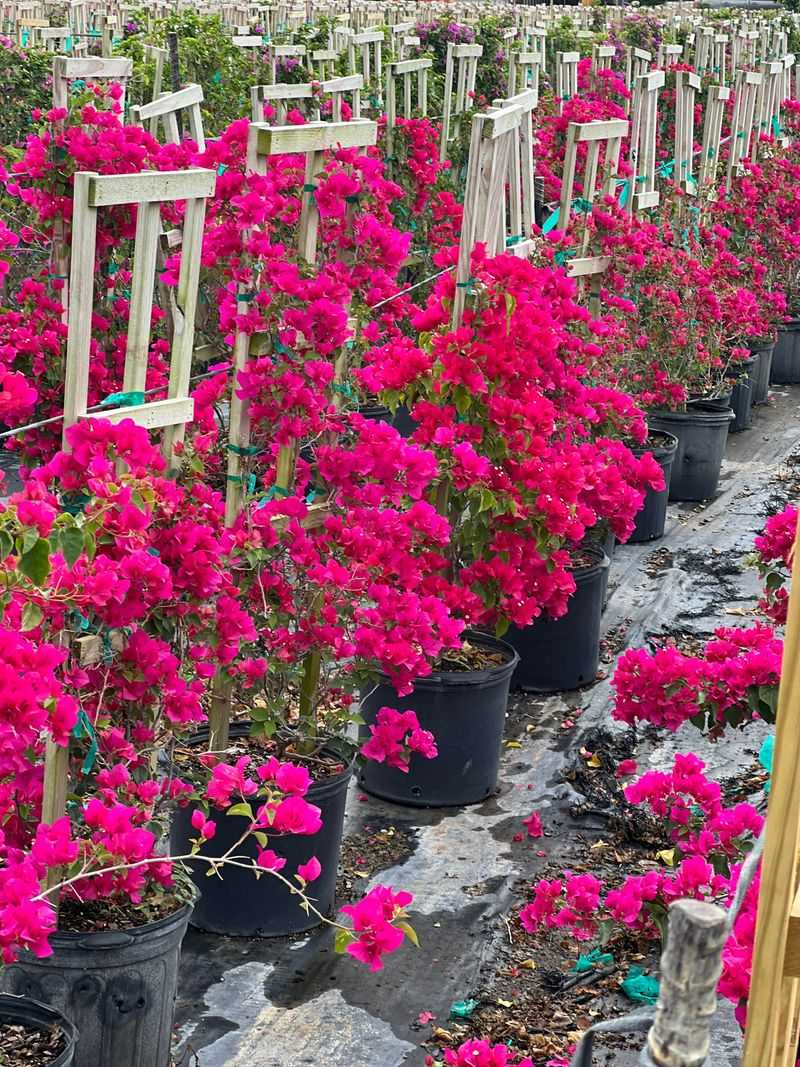
A successful late-summer prune may encourage another flush of bracts, but North Carolina’s weather sets the actual deadline for outdoor color. Bougainvillea is frost-tender, and even a light freeze can end the season in one night.
NC State Extension describes bougainvillea as a container plant or houseplant in cooler climates, which is exactly how to treat it here. The plant is not going to shrug off an October freeze in Waynesville or Boone.
NC State Climate Office freeze data show that western mountain stations commonly see their first freeze at or below 32 degrees Fahrenheit in the first half of October, while much of the Piedmont averages closer to late October or early November. Coastal Plain and coastal areas can stay frost-free longer, but that still does not make bougainvillea frost-safe outdoors.
What that means practically is that a mountain gardener near Asheville may have a narrow window of 4 to 6 weeks between a late-summer prune and the first killing frost. A Raleigh or Charlotte gardener might have a few more weeks, but surprise cold snaps are a real feature of North Carolina fall weather.
Plan the indoor move before frost arrives, not after. NC State’s container gardening handbook recommends beginning to transition tender plants indoors once nighttime temperatures approach about 55 degrees Fahrenheit, using a gradual one-week shift from full sun to shade to indoor light.
Moving the plant abruptly from a bright porch to a dim interior can cause leaf drop on top of the stress of lower temperatures, so the slower the transition, the better the plant handles it.
Give New Shoots Bright Light and Steady Moisture
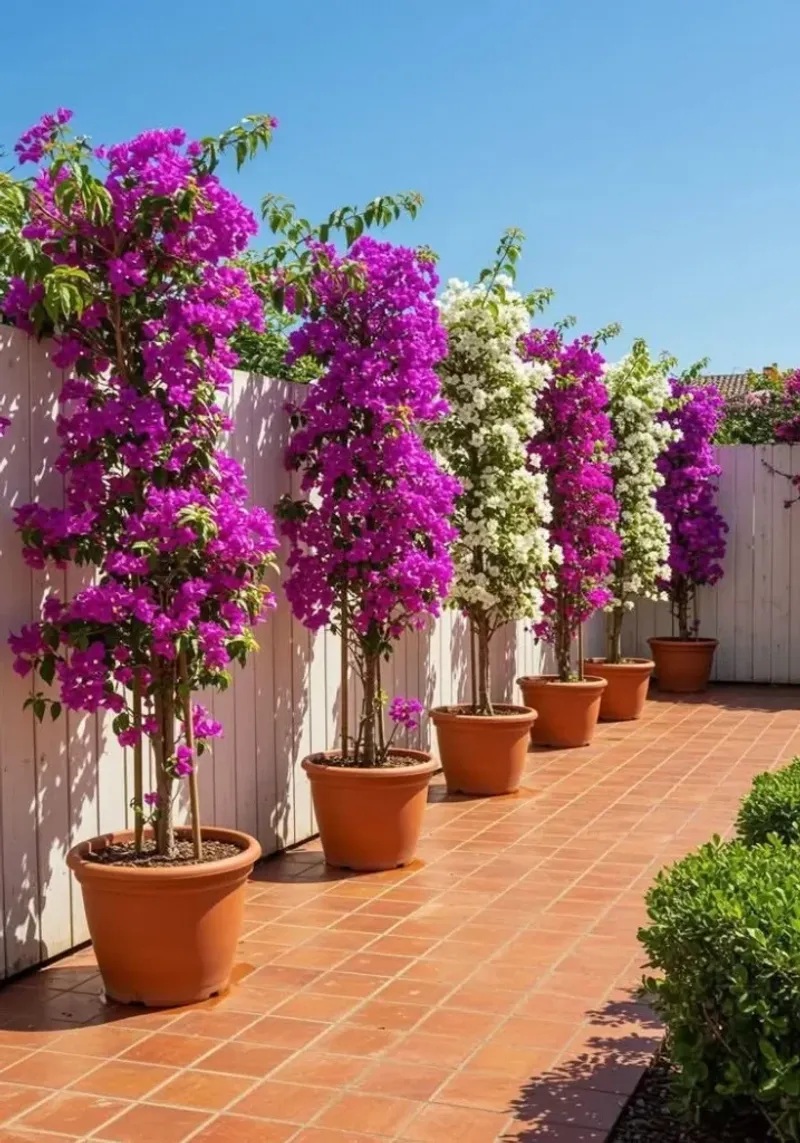
After a selective prune, the plant needs two things above almost everything else: as much direct sun as you can give it, and a consistent watering routine based on what the soil is actually doing, not a fixed schedule.
NC State Extension lists full sun as the preferred location for bougainvillea, and University of Hawai’i guidance notes that high light intensity is required for good flowering. Six to eight hours of direct sun is a useful general target for container plants, and bougainvillea tends to need the brighter end of that range.
If your container has been sitting in afternoon shade to survive the summer heat, consider moving it to a sunnier spot now that temperatures are moderating.
For watering, NC State’s container handbook recommends checking 2 to 3 inches into the potting mix and watering deeply when that zone feels dry, then allowing excess water to drain fully through the pot’s drainage holes. Do not leave a saucer full of standing water beneath the container.
Constantly wet roots reduce flowering and can lead to root problems over time.
Repeated severe drought is also not a useful strategy. Research on potted bougainvillea under different water treatments found that reduced water can affect flowering responses, but it also increased leaf loss and reduced shoot growth.
In a household container, drought can quickly tip from mild stress into leaf drop or dormancy. Let the mix dry moderately between thorough waterings, but do not push the plant to the point of wilting repeatedly.
Support the Plant Without Chasing Blooms With Fertilizer
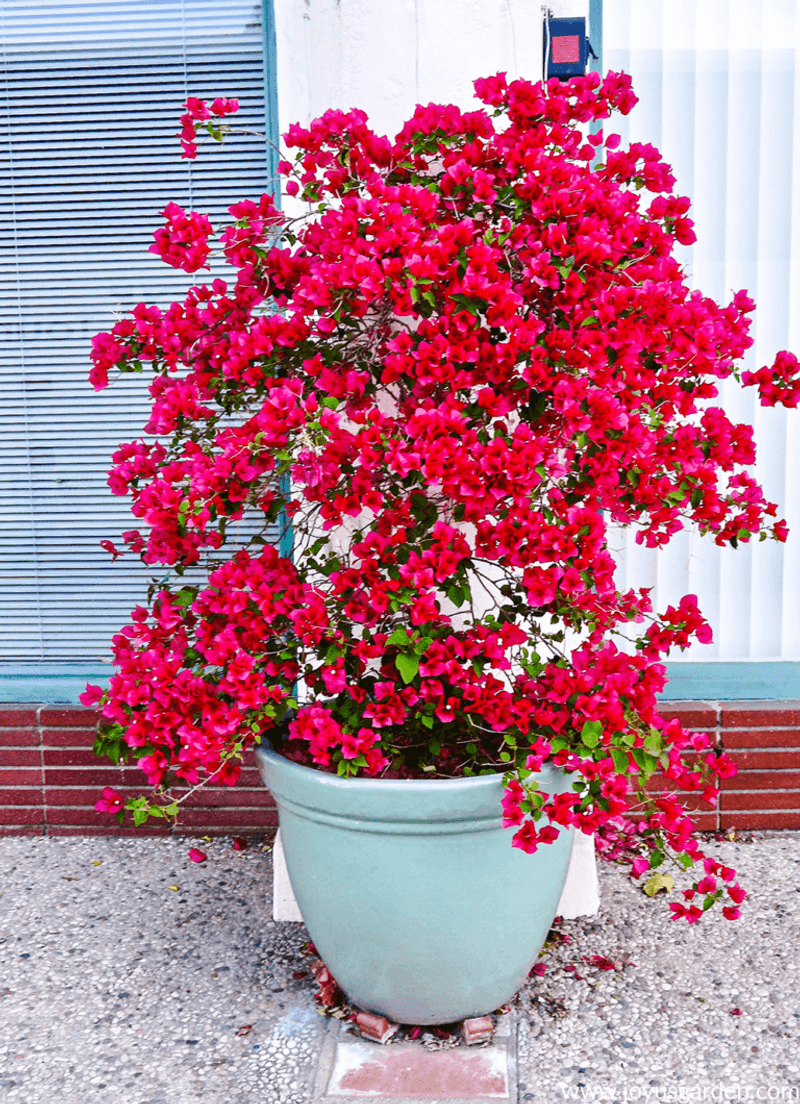
Container bougainvillea relies on you for everything that an in-ground plant finds on its own, and the potting mix situation matters more than most gardeners expect. Use a fast-draining, well-aerated mix and a container with drainage holes.
University of Hawai’i extension guidance identifies waterlogged growing media as a cause of poor roots and reduced flowering, and a dense or compacted mix can work against everything else you do right.
On fertilizer, the most common mistake is adding too much nitrogen hoping to push more color. Excess nitrogen tends to produce leafy, lush growth at the expense of bracts.
Mississippi State Extension recommends a water-soluble fertilizer during summer and fall, while University of Hawai’i guidance points toward balanced or controlled-release options and warns against overfertilizing. NC State’s container handbook adds that excessive fertilizer promotes vegetative growth and can damage roots through salt buildup.
Follow the product label, and do not feed a plant that is dry, waterlogged, or otherwise stressed.
Keep the plant in the brightest spot available while temperatures allow, avoid standing water in the saucer, and start watching nighttime lows in early September if you are in the mountains, or by mid-October if you are in the Piedmont or Coastal Plain. Get it inside before frost finds it first.
A selective cut after a finished flush may genuinely help your bougainvillea push another round of color. But what happens next depends mostly on light, moisture, nutrition, and whether you get it to shelter before the cold wins.