
7 Florida Native Ground Covers That Stay Put After A Storm When Bark Mulch Washes Away
Follow us on Google
You step onto the patio after breakfast and the air already feels heavy, thick with the promise of another afternoon thunderstorm.
A few fat raindrops splat on the pavers, and you glance toward your freshly mulched flowerbeds with that sinking feeling in your stomach.
Across Florida, homeowners spread bark mulch for a tidy finish, then watch it float down the street when a sudden downpour or tropical storm rolls through.
But what if your ground cover stayed put instead, gripping the soil and shrugging off heavy rain?
These seven Florida natives do exactly that, and you can stop replacing washed-away mulch for good.
1. Sunshine Mimosa Holds The Earth With Deep Roots
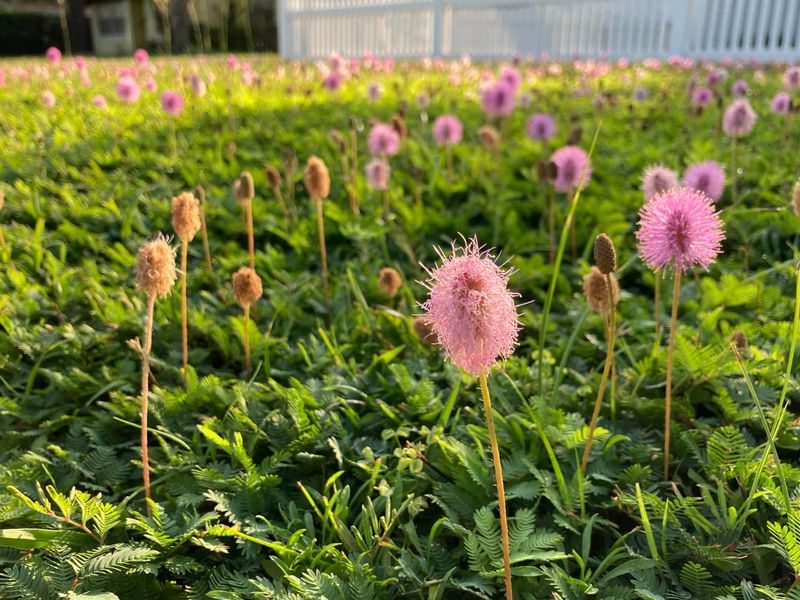
You brush a finger across those delicate, fern-like leaves and they fold up shyly, like the plant is ticklish.
That playful trick is how many people first meet Sunshine Mimosa (Mimosa strigillosa), but its real talent is holding ground that mulch abandons.
Here is where it gets good.
Deep taproots anchor this Central and South Florida native firmly, while it spreads into a dense mat that stabilizes loose, sandy soil.
Just a few plugs can cover around 300 square feet in a single season, which is genuinely fast for filling bare spots.
So plant plugs 1 to 3 feet apart in USDA Zones 8 through 11 and let them knit together.
Cheerful pink, pom-pom flowers show up spring through fall, drawing butterflies to your beds.
It tolerates light foot traffic and even occasional mowing.
One honest warning.
It can travel up to 100 feet in ideal conditions, so give it room or edge it in with a border.
As a bonus, it fixes nitrogen, feeding your soil while it works.
2. Frogfruit Creates A Living, Low-Growing Carpet
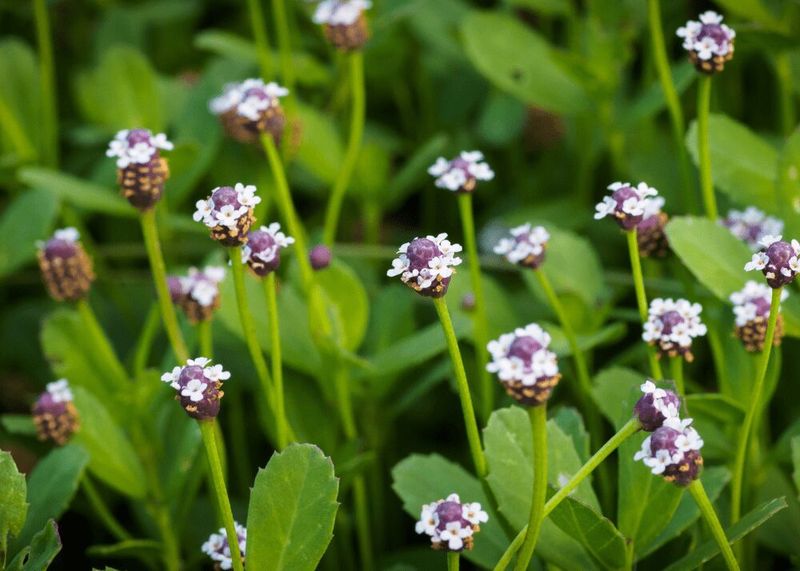
Picture a low, sprawling carpet dotted with tiny white and purple flowers, humming with bees on a warm morning.
That is Frogfruit (Phyla nodiflora), a Florida native winning fans as a lawn alternative along the Gulf Coast and across the peninsula.
The magic is in the way it moves.
Creeping stems root at each node as they spread, weaving an underground net that binds soil on slopes and in swales.
That rooting habit is what makes it so tough against washout when a storm dumps water fast.
Frogfruit stays low, usually 4 to 8 inches tall, with flower stalks reaching about 6 inches.
It handles full sun to partial shade and takes sandy or loamy soil, wet or dry, without complaint.
Plant it as close as 1 to 1.5 feet apart and it fills in quickly.
During a hard freeze it may go dormant and look sparse, so do not panic when the green fades.
Warm weather brings it right back, giving you an active, pollinator-friendly cover most of the year.
3. Dune Sunflower Embraces Coastal Challenges
Salt spray and blistering sun will melt an ordinary bed in a hurry.
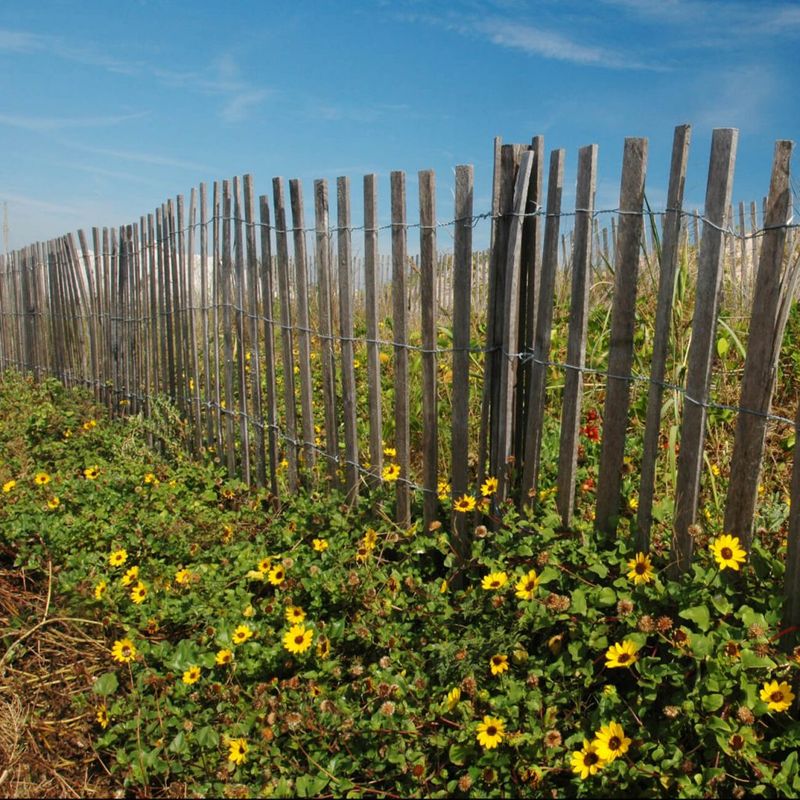
Dune Sunflower (Helianthus debilis) treats those coastal insults like a warm welcome, which is why it thrives right on Florida’s beaches.
The reason comes down to roots.
Deep taproots paired with spreading lateral roots let it stabilize shifting sand, the kind of grip that keeps soil in place when a storm would otherwise sweep loose mulch into the surf.
It grows 1 to 2 feet tall and spreads 3 to 4 feet wide.
You get bright yellow, daisy-like blooms about 2.5 inches across, nearly year-round in Florida’s warmth, with bees and butterflies close behind.
Give it full sun and dry, well-drained sandy soil, and space plugs 12 to 18 inches apart for continuous coverage.
One thing to watch.
It is a prolific self-seeder, so a little occasional pulling keeps it inside the lines.
For an Atlantic Coast or Gulf Coast yard that fights salt wind, that is a small price for a plant that genuinely will not quit.
4. Railroad Vine Forges Ahead On Sandy Shores
Some plants creep.
This one lays down its own tracks.
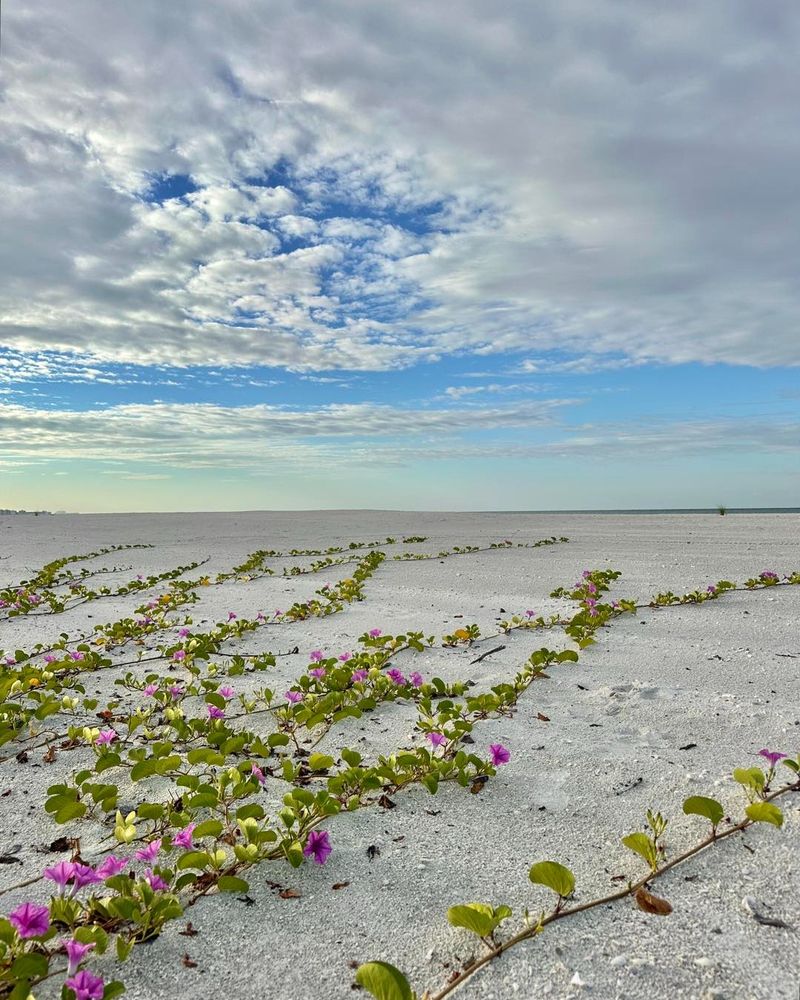
Railroad Vine (Ipomoea pes-caprae), also called Beach Morning Glory, sends out runners so long and orderly they look like rails stitched across the sand.
That habit is exactly what stabilizes dunes on both Florida coasts.
The sprawling stems, called stolons, can stretch 30 to 100 feet and root at their nodes, pinning sand down against wind and even storm surge.
It grows fast too, sometimes a full foot in a single day, so bare spots close quickly.
Stems stay low, around 6 to 16 inches high unless they find something to climb.
Showy pink to purple funnel-shaped flowers appear on and off all year, peaking May through November.
It demands full sun and well-drained sandy soil, and once established it laughs off salt, wind, and drought.
Space plants 3 to 5 feet apart in a coastal setting and give it plenty of open ground.
This is not a plant for a tidy little border, it is a plant for holding a whole dune together.
5. Beach Bean Locks Down Coastal Sands
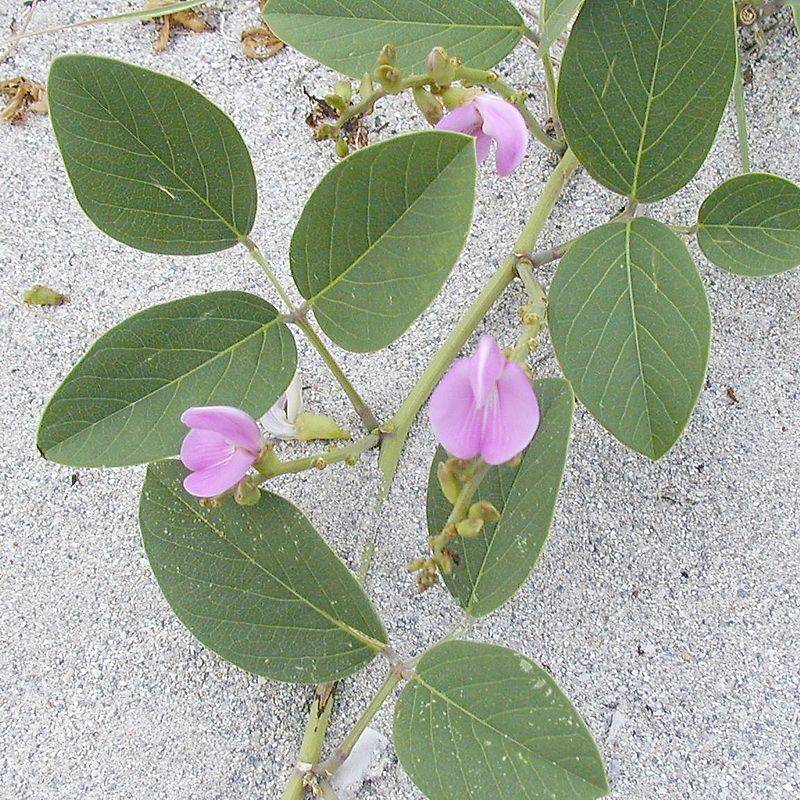
Where waves and wind keep reclaiming loose material, Beach Bean (Canavalia rosea) plants its flag and refuses to give the ground back.
This dense, evergreen cover suits sandy coastal sites from the Panhandle all the way to the Keys.
A deeply rooted network is the whole story here.
Those roots bind sandy soil and steady dunes against erosion, so a downpour that would carry off bark barely moves it.
The plant grows 6 to 12 inches high yet can spread an impressive 40 feet wide.
Full sun suits it best, and it shrugs off salt spray, wind, drought, and even nutrient-poor sand.
Pink-purple flowers appear year-round, showing off most in summer, adding color to the toughest stretch of your yard.
Space plugs 24 to 36 inches apart to allow for its quick spread.
Fair warning, the mature seed pods contain toxins, so it is not one to plant where kids or pets graze.
Beyond that, it is a quiet workhorse with real ecological value for coastal Florida.
6. Gopher Apple Forms An Indestructible Green Carpet
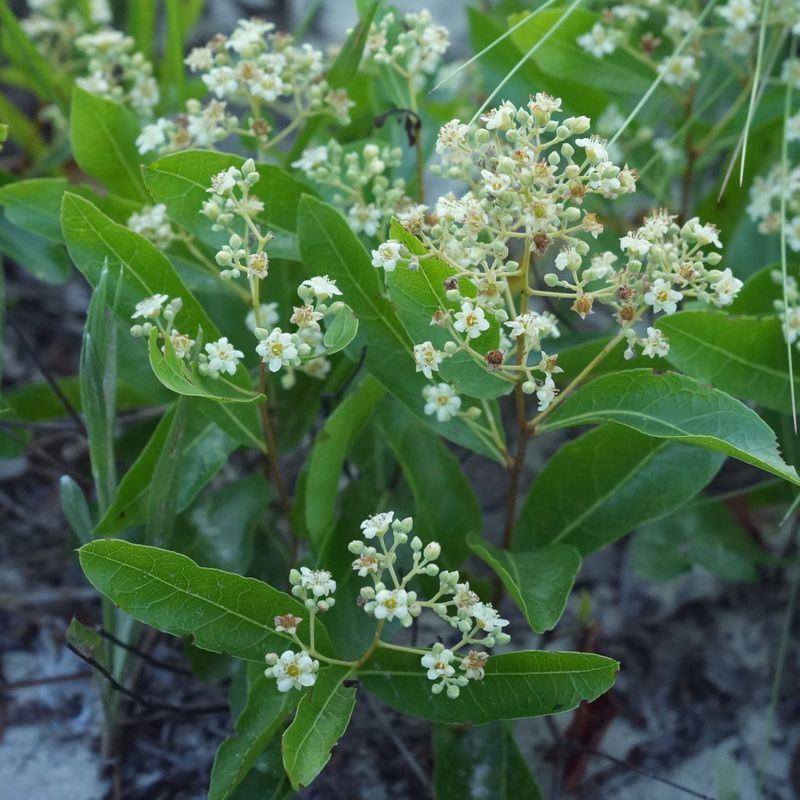
Most gardeners walk right past Gopher Apple (Licania michauxii, sometimes listed as Geobalanus oblongifolius) without a second look.
That is a mistake, because for dry, sandy banks away from direct salt, few natives are tougher.
The turn is in how it builds.
Underground rhizomes push out dense colonies that knit soil together across several square yards, a living mesh that stays anchored when mulch would pack down and shed water.
It works across North, Central, and South Florida.
This woody evergreen usually stays 3 to 12 inches tall, though some forms reach up to 3 feet.
Give it deep, dry sand and full sun, and it delivers genuinely remarkable drought and fire tolerance.
Small white flowers open in summer, followed by edible fruit that gopher tortoises and other wildlife line up for.
Space plants 2 to 3 feet apart to let the colony spread.
Once it settles in, it asks for almost nothing, which makes it an honest low-maintenance answer for the harshest spot in the yard.
7. Muhly Grass Adds Texture And Stability
Sometimes flat cover is not enough and you want a little height, a little movement in the breeze.
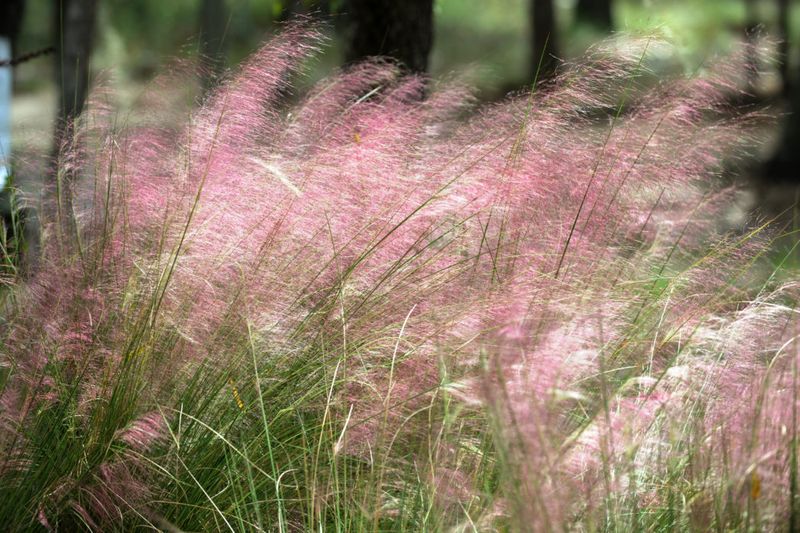
Muhly Grass (Muhlenbergia capillaris) answers with fine, airy texture and a fall show that stops traffic.
Underneath the beauty is grit.
Fibrous roots grip the soil firmly, making this native grass a smart pick for erosion control across Florida’s varied ground.
It forms neat clumping mounds about 2 to 3 feet tall and up to 3 feet wide, with pink to purple plumes rising up to 5 feet in autumn like a low cloud caught in the yard.
Full sun to light shade works, and it accepts sandy, rocky, acidic, or alkaline soil without fuss.
It handles occasional flooding and long dry spells once established, so it fits rain gardens and coastal sites with moderate salt tolerance.
UF/IFAS Extension often lists it among dependable natives for tough Florida landscapes.
Plant clumps 24 to 36 inches apart for a striking mass and room to mature.
In cooler North Florida it browns out in winter, then rebounds with fresh green each spring, ready to hold your ground through another storm season.