
The Everyday Magic Kids Find In Rustling Leaves And Butterflies Beats Any Screen In Your House
Follow us on Google
A child crouches at the edge of the yard, completely still, watching a painted lady butterfly open and close its wings on a warm flat stone.
That moment costs nothing and requires no setup, but it is the kind of sensory, unpredictable experience that a backyard can offer in ways a screen simply does not replicate.
Research links outdoor time and nature exposure with physical activity, positive feelings, and nature connection, though no study proves that leaves and butterflies universally beat every device in your house.
What the evidence does support is this: a small, well-designed green space can give children a changing, living reason to step outside, and that is a genuinely useful thing for any family trying to balance a busy digital life.
What Outdoor Discovery Adds to Family Media Time

A child stops mid-run because something moved in the grass.
That pause, that split-second redirect of attention toward a living thing, is one of the clearest examples of what a backyard can offer that most screens do not provide in the same way.
The sensation is physical, unpredictable, and entirely self-directed.
Outdoor time and nature exposure have been studied extensively, and the associations are generally positive.
A large systematic review of more than 188,000 children aged 3 to 12 found that outdoor time commonly ranged from 42 to 240 minutes per day and was linked with physical activity, less sedentary behavior, and nature connection.
The authors rated much of the underlying evidence as weak, so those figures describe what researchers observed across many families, not a daily target every child must hit.
A separate experience-sampling study of 66 third graders found that children reported higher self-worth and more positive feelings during nature exposure than during periods without it.
Because the study was small and conducted in China, it points toward a plausible benefit rather than a universal guarantee.
Screen time is also not a single thing.
A 2024 systematic review and meta-analysis concluded that content, context, co-use, and timing shape outcomes far more than total minutes alone.
Educational video calls, a nature-identification app used outdoors, passive autoplay videos, and late-night gaming are all counted as screen time, but they are not the same experience.
The American Academy of Pediatrics recommends making room for outdoor play and other activities rather than treating screen time as a simple number to reduce.
A backyard works best as a practical complement to a family media plan, a place where unscripted, whole-body, sensory encounters become possible, not as a cure for every digital habit in the house.
Design a Small Invitation to Look Closer

Most families do not need a landscape overhaul to give children something worth noticing outside.
One sunny plant patch, a flat stone placed where a child can crouch beside it, a stem left standing through the season, and a small defined area where leaves are allowed to stay can be enough to make the yard feel genuinely different from the living room.
The goal here is to make unscripted exploration possible, not to engineer a lesson.
A mixed-methods systematic review of nature-based early childhood education found positive but non-significant attention findings across several studies, and one study showed a non-significant negative result.
That range of outcomes means a habitat corner is worth building for the sensory richness it offers, not as a treatment for behavior or attention.
Concrete things to notice matter more than abstract beauty.
A caterpillar chewing a leaf, a spider rebuilding after rain, a stem that held seeds last month and now holds nothing, these give children something to compare across visits if their interest and the local wildlife align.
Whether a child returns to look again depends on season, species, temperament, and plain luck.
Keep an open path or viewing spot beside the habitat so a child can observe without trampling the plants.
University of Illinois Extension recommends placing butterfly habitat in full sun, roughly 6 to 8 hours of direct sun per day, which also happens to be the spot most children gravitate toward naturally.
No expensive equipment is needed, and the setup does not need to be large to create an opportunity worth taking.
Build a Butterfly Habitat That Supports the Full Life Cycle
Flowers alone will not keep butterflies around for long.
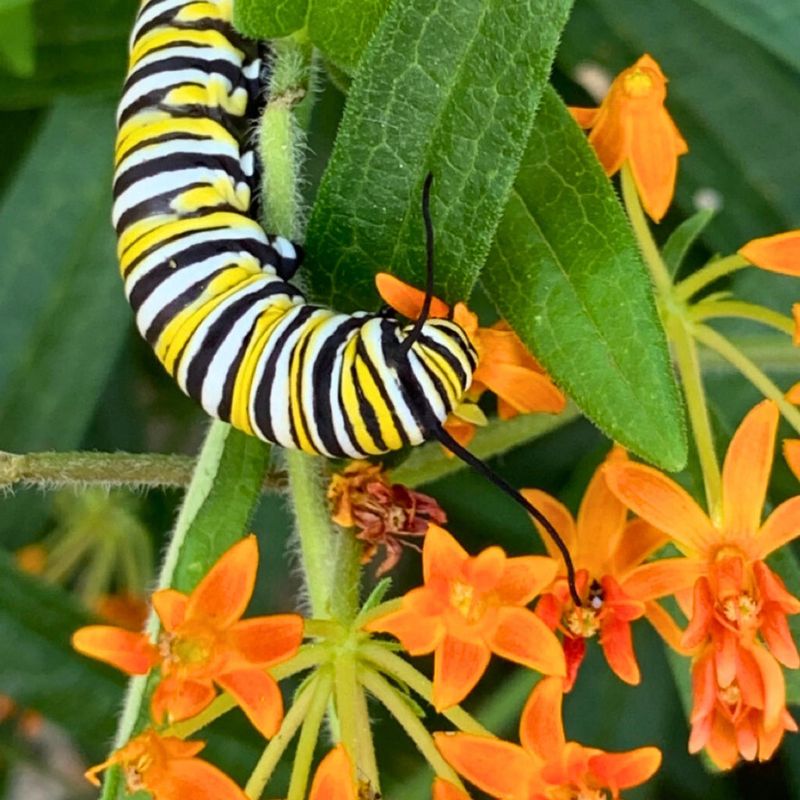
Adult butterflies need nectar plants to feed, but caterpillars need something different entirely: specific host plants where females lay eggs and larvae eat foliage.
A yard with only nectar flowers may attract passing adults without ever supporting the part of the life cycle a child finds most fascinating, a caterpillar doing its slow, deliberate work on a leaf.
Host-plant choices depend heavily on which butterfly species live in your region.
Milkweed, or Asclepias species, is the host plant for monarch caterpillars, while parsley, Petroselinum crispum, and dill, Anethum graveolens, can serve black swallowtail caterpillars in many parts of the country.
Those are examples tied to specific species and regions, not universal recommendations.
Penn State Extension’s butterfly larval host plant list is one useful starting point, and your state’s Cooperative Extension service or a regional native-plant society will give you the most accurate options for your area.
Illinois Extension advises placing the habitat in a location with approximately 6 to 8 hours of direct sun and some protection from strong prevailing wind.
Staggering bloom times across nectar plants extends the window when adult butterflies may visit.
A shallow puddler, made from a dish filled with sand, soil, a little water, and a few small stones, can give butterflies a place to gather minerals.
Keep the water shallow rather than using a deep container that could become a drowning hazard for small wildlife or a mosquito breeding site.
Illinois Extension also notes that chewed foliage on host plants is a sign of caterpillar activity, not garden failure.
If the damage bothers you, place host plants in a less prominent corner or plant a few extras.
Accepting some chewing is part of the deal.
Before planting anything, check your local invasive-species list.
Butterfly bush, for example, is flagged by Penn State Extension and others as potentially invasive in natural areas, and Illinois Extension identifies it as non-native.
Commercial butterfly houses have little evidence behind them as reliable shelter.
Natural features like loose bark, brush, and leaf litter in a defined zone serve overwintering insects far better.
The USDA NRCS Habitat Assessment Guide for Pollinators cautions that plant lists are not exhaustive and that regional and site conditions must guide every planting decision.
Keep Leaf Litter in the Right Place
Rustling leaves are central to the image this article started with, and they genuinely do serve a purpose in a habitat garden.
Many butterflies overwinter as eggs, caterpillars, or pupae tucked into leaf litter, tree crevices, and brush piles.
USDA Forest Service pollinator guidance confirms that leaving some leaves, dead stems, and small log piles in a defined habitat area can provide meaningful shelter for overwintering insects.
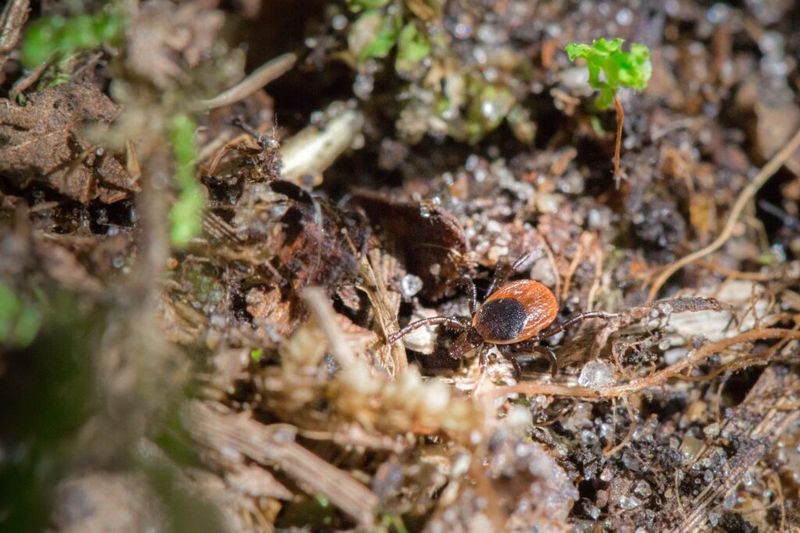
The complication is that leaf litter, tall grass, and brush near children’s play spaces can increase tick exposure.
Those two facts pull in opposite directions, and the practical solution is zoning rather than choosing one over the other.
Reserve a defined habitat corner away from primary play areas for leaves, dead stems, and any brush you allow to accumulate.
Keep the lawn, paths, and the space around play equipment open, visible, and mowed regularly.
The CDC also advises keeping play equipment, decks, and patios away from yard edges and tree lines where practical.
A habitat corner positioned along a back fence or a side border, separated from the swing set by open lawn, lets you keep leaves where they shelter insects without placing them where children roll in the grass every afternoon.
This zoning approach is a practical compromise, not a guarantee that ticks will stay out of the yard entirely.
Tick populations vary by region, season, and local wildlife activity, so the zone reduces exposure opportunity rather than eliminating risk.
Use the Habitat Without Setting a Screen-Time Quota
Checking one leaf takes about thirty seconds.
Comparing how a stem looks before and after a rainstorm takes a little longer.
Neither activity requires a schedule, a timer, or a rule about devices, and that low-friction quality is part of what makes a habitat corner a practical addition to a regular afternoon rather than another obligation.
Outdoor play during childcare sessions has been associated with more movement and less sitting.
A systematic review of outdoor play in childcare settings found a strong association between outdoor sessions and moderate-to-vigorous physical activity, along with reduced sedentary behavior.
That finding applies to structured childcare outdoor time, not necessarily to a quiet ten minutes of backyard observation at home, so the connection is suggestive rather than direct.
Observed ranges from research give useful context without setting a target.
The large systematic review noted earlier found that children’s outdoor time commonly ranged from 42 to 240 minutes per day and outdoor play from 60 to 165 minutes per day, with much of the underlying evidence rated as weak.
Those numbers describe what researchers found across many different families and settings, not what your child specifically needs each day.
Technology can fit into this without undermining it.
A nature-identification app used to look up a caterpillar species, or a phone camera used to document what the puddler looks like after a week, is a form of thoughtful co-use rather than passive consumption.
A 2024 meta-analysis on early childhood screen use contexts found that how screens are used matters as much as how long.
The AAP’s family media plan framework encourages making room for outdoor time and hobbies within a balanced approach, not treating every screen minute as something to eliminate.
Set Boundaries Around the Living Parts
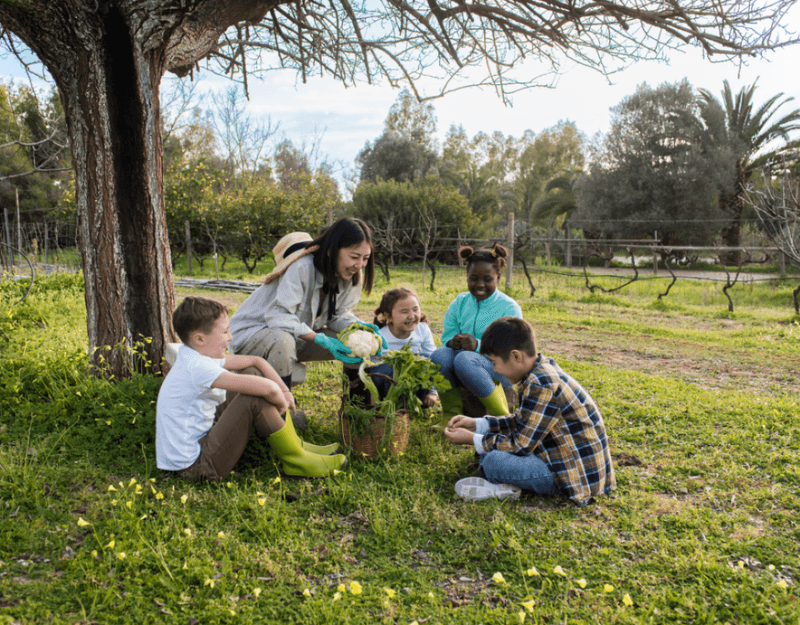
A habitat garden introduces sun, soil, shallow water, stinging insects, unfamiliar plants, and occasional wildlife into a space where children play without always stopping to look first.
Age-appropriate supervision is the starting point, not an afterthought.
For sun protection, CDC guidance recommends shade, hats, protective clothing, and water breaks for all outdoor play.
Use sunscreen with SPF 15 or higher on children older than 6 months, and reapply at least every 2 hours or more often after sweating or water exposure.
Babies 6 months and younger should be kept out of direct sun rather than covered with sunscreen, unless a clinician advises otherwise.
For insect repellent, choose an EPA-registered product and follow its label exactly.
Apply it to your own hands first, then to the child’s exposed skin, and keep it away from hands, eyes, mouth, cuts, and irritated skin.
Products containing oil of lemon eucalyptus or para-menthane-diol should not be used on children younger than 3 years.
After outdoor time, wash treated skin with soap and water.
After play in tick-prone areas, including your own backyard if it borders wooded or brushy ground, do a full-body tick check.
The CDC specifically recommends checking the scalp, ears, underarms, waist, backs of knees, and between the legs.
Habitat design reduces some tick habitat near play areas but does not eliminate tick risk.
Keep thorny or irritating plants well away from toddler zones, and position any shallow puddler where a young child cannot fall into it.
Identify every plant in the habitat and teach children firmly not to eat any plant, berry, mushroom, or garden material without an adult present.
Around stinging insects, the practical rule is to observe rather than swat.
Avoid disturbing nests, do not let children handle bees or wasps, and take extra precautions for any child with a known severe allergy.
CDC NIOSH guidance on stinging insects notes that severe allergic reactions require immediate emergency care.
Keep snakes, rodents, stray animals, and other wildlife at a respectful distance, and supervise children around any garden tools or soil work.
Let the Evidence Set a Modest Expectation
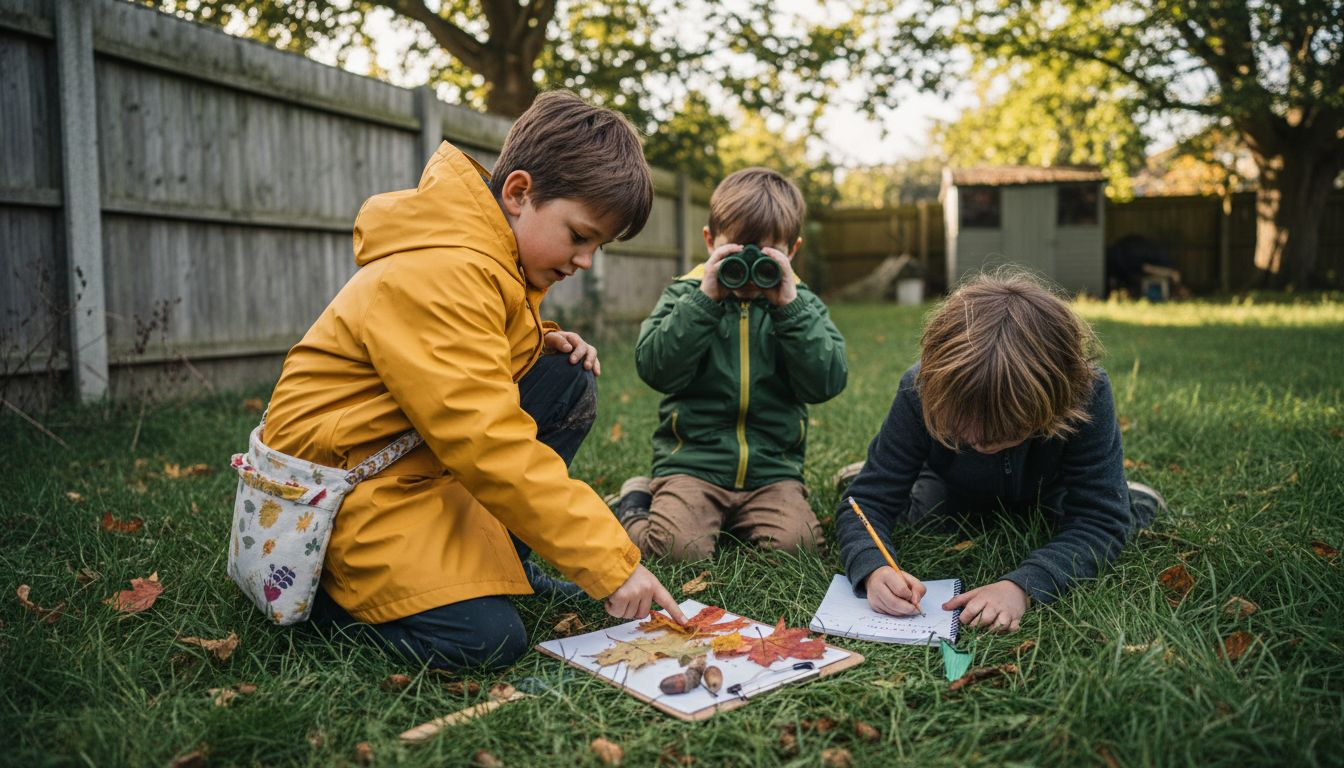
Two claims that circulate around nature play are worth setting aside before you start digging.
The first is that outdoor time fixes attention problems.
A systematic review of screen exposure and attention in young children found mixed longitudinal results and suggested the relationship may run in both directions, meaning early attention difficulties can also influence how much screen time a child seeks.
The second claim is that a butterfly garden improves ADHD symptoms, grades, or behavior.
A mixed-methods review of nature-based early childhood education found promising but non-significant results across several studies, including one non-significant negative finding.
Neither body of research supports presenting a habitat corner as a developmental treatment.
Screen research adds its own nuance.
The 2024 systematic review and meta-analysis on screen use contexts found that context and co-use shape outcomes more than raw minutes, which means outdoor time and thoughtful screen use are not opposites.
The AAP recommends building a family media plan that makes room for outdoor play, hobbies, and sleep alongside digital time, rather than framing the goal as eliminating screens.
The practical decision rule that fits the evidence is simpler than most parents expect.
Create one regionally appropriate habitat corner using plants your state Extension service recommends.
Preserve one clear, open play zone.
Accept some chewed foliage as evidence the habitat is working.
Minimize unnecessary pesticides, since many formulations, including some approved for organic use, can harm the pollinators you are trying to attract.
And build outdoor time into the week as a complement to your media plan, not as a replacement for it.
A backyard cannot beat every screen in your house, but it can offer a child something a screen rarely does: a living thing that changed since yesterday, for no reason anyone planned.