
8 Privacy Plants That Actually Thrive In Florida’s Heat And Brutal Humidity
Follow us on Google
You step onto the patio after breakfast and the air already feels heavy, thick with that familiar Florida humidity that promises another blazing day.
You glance at the thin gap between your yard and the neighbor’s, and the old fence just is not cutting it anymore for a quiet coffee or an evening grill.
Building a real privacy screen here can feel like a losing battle against the intense sun and those sudden summer downpours.
Most homeowners rush for quick coverage, then watch plants sulk, brown out, or beg for constant fuss.
The trick is picking varieties that genuinely love our long humid summers and shrug off cold snaps or salt spray near the coast.
These eight hardworking plants are the quiet heroes, ready to stand tall and hand you back your personal space without turning gardening into a second job.
1. Areca Palms Provide Instant Tropical Seclusion
You might picture a plain wooden fence for privacy.
But a living wall of feathery fronds can hand you that same enclosure with a resort feel instead.
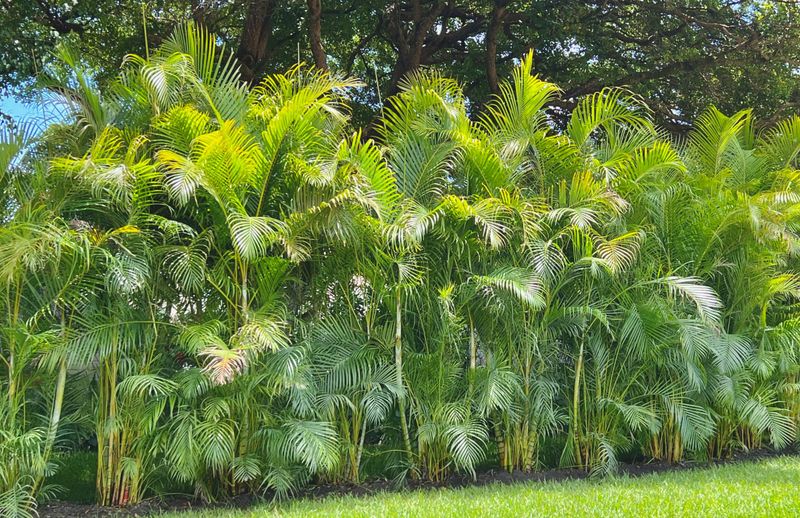
Many South Florida and Central Florida gardeners reach for Areca Palms (Dypsis lutescens) because they build a lush tropical screen that thrives in our warmth.
They grow full, light, and airy, easily climbing 15 to 20 feet.
Here is where it gets tricky.
These palms have a thirst.
Like you on a scorching afternoon, they need steady water to stay green and dense, especially in sandy soil.
Skimp on it and the fronds thin out and brown, leaving gaps for curious neighbors.
So water them regularly, not just while they settle in.
Space them about 6 to 8 feet apart for a solid wall that still breathes.
Trim off browning fronds now and then, and fertilize roughly three times a year to keep them full.
Picture a poolside gathering, the gentle sway of those palms blocking the outside world.
Your yard finally feels like a private getaway.
2. Clusia Offers Thick, Glossy, Modern Privacy
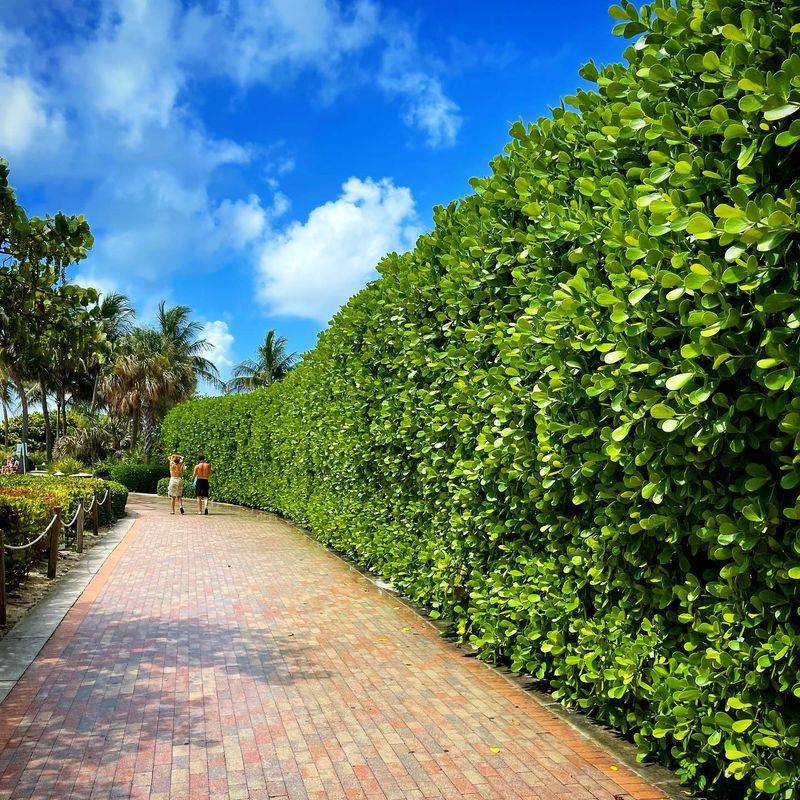
You have seen those clean, dense hedges wrapped around newer homes on the Gulf Coast, almost like a solid green wall.
Chances are you were looking at Clusia (Clusia rosea or Clusia guttifera), nicknamed the autograph tree because you can scratch messages into its thick leaves.
The tension shows up when you notice how much sun and salt some coastal spots get.
Clusia simply shrugs it off.
It handles heat, drought once established, and salt spray without complaint.
Those leathery, paddle-shaped leaves stack up into a near-total visual blockage, which makes this a perfect primary hedge.
Left alone it can hit 60 feet, but regular pruning keeps it a tidy 4 to 8 feet.
Space plants about 3 to 5 feet apart for a dense screen.
Clusia is genuinely low-maintenance once settled, with almost no pest trouble.
You get a sleek, modern privacy wall that practically looks after itself.
3. Podocarpus Delivers A Formal, Narrow Screen
Not every backyard is a sprawling estate.
Sometimes it is a cozy space where every foot counts, and a wide hedge simply will not fit.
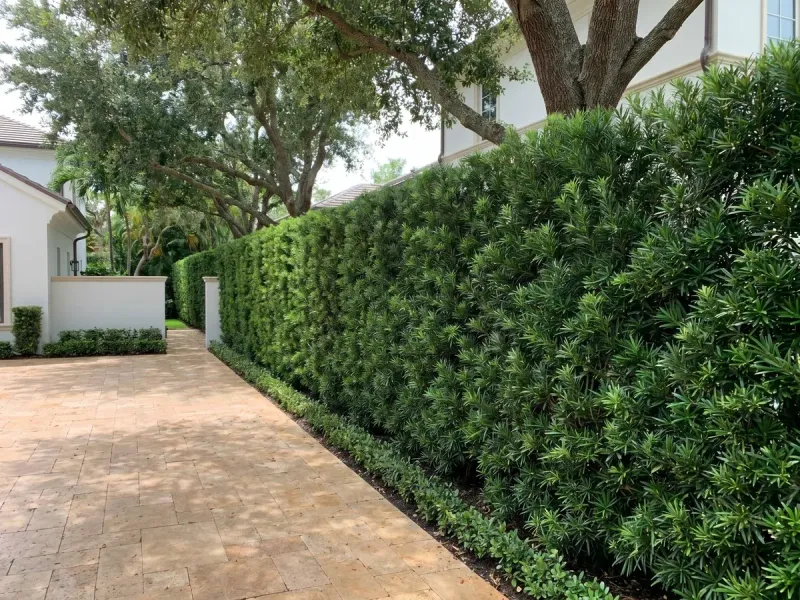
For tall, narrow privacy along a side yard or driveway, Podocarpus (Podocarpus macrophyllus) is your quiet champion.
Its column-like growth slips into tight spots a bushy hedge would swallow.
The surprise for many Florida gardeners is how well it handles our range of conditions.
Podocarpus is cold-hardy down to USDA Zone 7b, so it works from the Panhandle to the Keys.
It takes heat, salt, and drought once established, and even holds up in partial shade where tropical hedges go thin.
Expect about 1 to 3 feet of growth per year, with the Maki cultivar staying naturally slimmer.
Space 3-gallon plants 2 to 3 feet apart, and leave 3 to 4 feet from a fence line for trimming and airflow.
Clipped into a sharp vertical wall, its needle-like foliage stays polished year-round.
Your space feels intentional, designed, and genuinely private.
4. Wax Myrtle Creates A Fast-Growing Native Hedge
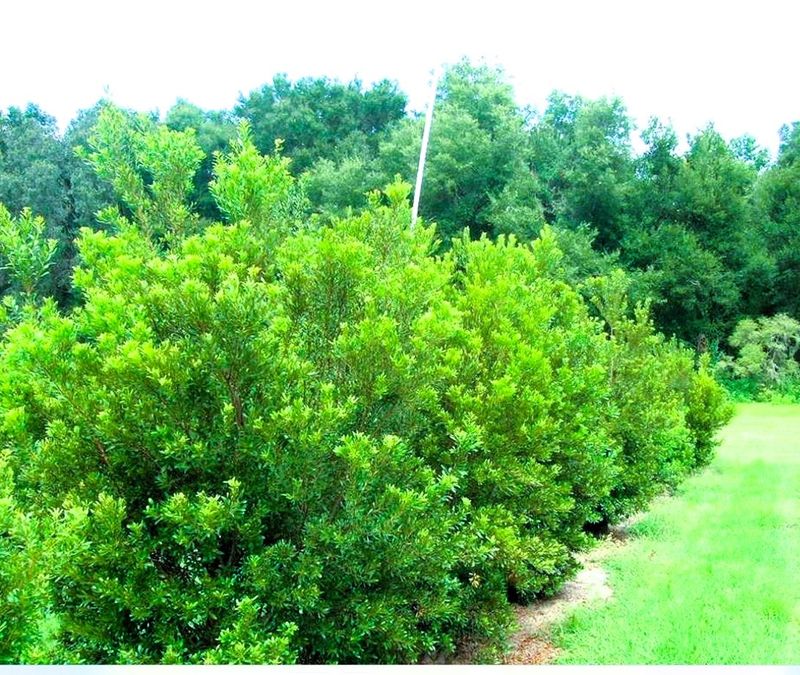
Maybe you want privacy that also gives back to Florida’s wildlife.
Wax Myrtle (Morella cerifera, once known as Myrica cerifera) steps in as a fast-growing, aromatic native evergreen that screens and shelters at the same time.
Homeowners are often stunned by how quickly it builds a real hedge.
If you needed privacy yesterday, this native is your best bet, often shooting up several feet a year.
It bends to almost any ground, from low mucky pockets to well-drained sandy spots, and it is genuinely salt-tolerant for coastal yards along both shores.
For a dense hedge, space shrubs about 3 to 4 feet apart.
Left untamed it reaches 15 to 20 feet, but it takes pruning beautifully, so you keep it right where you want it.
And its blue-gray winter berries feed hungry birds, while the leaves host the red-banded hairstreak butterfly.
That is privacy with a purpose, buzzing quietly with life.
5. Sweet Viburnum Offers Fragrant Fast Coverage
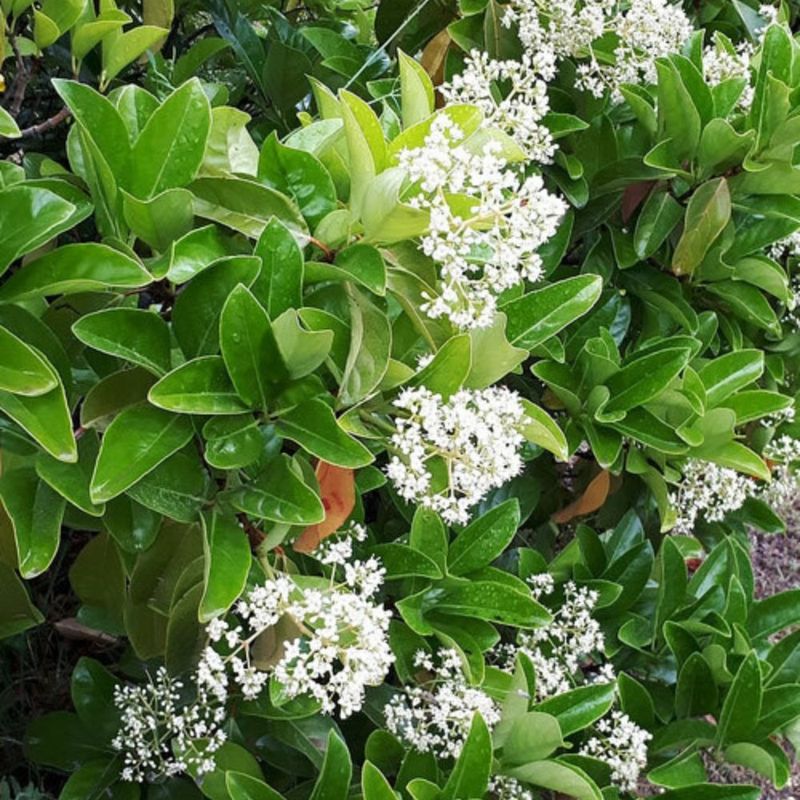
Fast, lush, and pleasantly scented.
Sweet Viburnum (Viburnum odoratissimum) checks all three, packing dense glossy foliage and clusters of fragrant white spring flowers into a thick wall of green.
Central and North Florida landscapes lean on it hard, and for good reason.
The usual challenge is finding a speedy grower that still looks refined, and this shrub adds 1 to 2 feet of height a year while staying handsome.
It also holds up through USDA Zones 8 through 10.
Here is the turn, though.
While it takes many soils and moderate drought once established, it is not a good pick for coastal properties or spots with heavy salt exposure.
Keep it inland.
For real density, space plants about 3 to 4 feet apart, especially if you start small.
It wants full sun to partial shade for the thickest growth, since deep shade leaves it thin and open.
On a spring evening that sweet fragrance drifts across the yard while the hedge stands as a solid, living backdrop.
6. Firebush Brings Vibrant Color And Wildlife
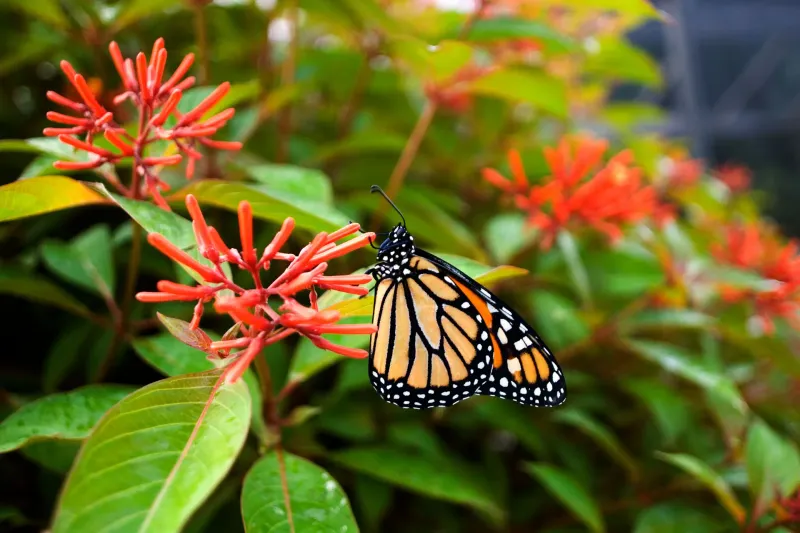
You dream of a backyard buzzing with butterflies and hummingbirds, but you still need a screen.
Firebush (Hamelia patens) is a Florida native that does both, mixing fiery orange and red blooms with a dense, bushy habit.
The sheer volume of wildlife it pulls in surprises most homeowners.
Tubular flowers open almost year-round, strongest spring through fall, drawing hummingbirds and butterflies like the zebra longwing and gulf fritillary.
You might wonder whether such a showy bloomer can really block a view.
It genuinely can.
Firebush thrives in USDA Zones 9a to 11, taking heat, drought once established, and even salt exposure, so it suits much of Florida including coastal yards.
It climbs 8 to 12 feet, and up to 15 with support, forming a full informal screen.
Plant it in full sun to partial shade in well-drained soil, and water regularly through the first growing season.
Let it ramble for a soft screen, or prune it tighter.
Either way you get a color show and winged visitors while you finally sit unwatched.
7. Simpson’s Stopper Offers Natural Elegance
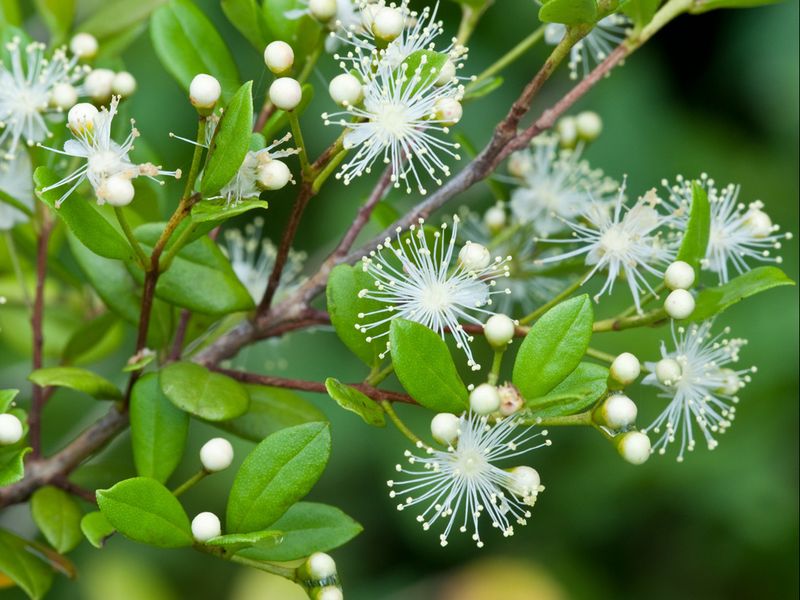
Want a privacy plant that feels genuinely Floridian, native and graceful while still doing the hard work of screening?
Simpson’s Stopper (Myrcianthes fragrans) fits perfectly, earning its wildlife-magnet reputation with fragrant white blooms and orange-red berries.
Its versatility is the real surprise.
Depending on how you prune, it grows as a dense shrub or a small tree, shaping into a formal hedge or a relaxed screen without endless shearing.
Because it grows at a moderate pace, it is easier to manage than the runaway fast hedges.
That steadiness means less chasing and more enjoying.
It handles much of Florida, from coastal sand to average inland soil, and stays drought-hardy once established.
The dense branching naturally fills in for solid coverage.
Small spring flowers give way to berries that birds devour, turning your quiet corner into a busy little haven.
This is a plant that genuinely gives back, beauty and seclusion in one.
8. Cocoplum Creates A Salt-Proof Native Barrier
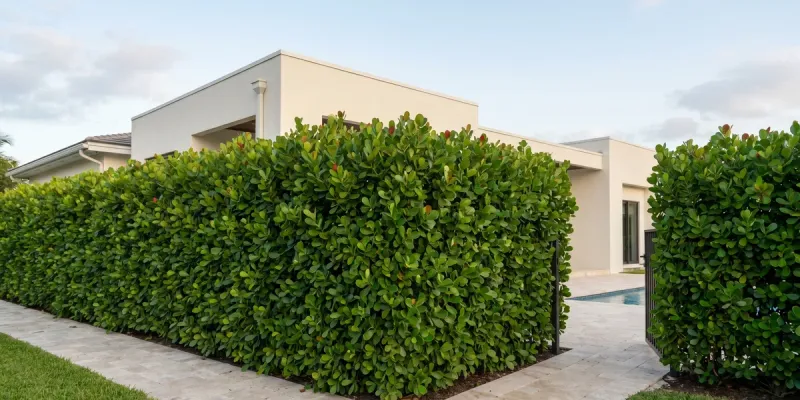
Living along the Gulf Coast or the Atlantic Coast, you know the harsh truth about salt spray.
Plenty of pretty plants simply cannot take it.
If you need a native hedge that is truly salt-proof and tough as nails, Cocoplum (Chrysobalanus icaco) is the answer.
It builds a dense, glossy, evergreen wall for South Florida and coastal yards that stands up to brutal conditions.
The struggle for coastal homeowners is finding anything that thrives under direct ocean spray.
Cocoplum does more than survive out there, it flourishes, which makes it the strongest native privacy hedge for many South Florida properties.
It is also remarkably drought-tolerant once established, so dry spells will not send you scrambling.
Expect a dense screen in the 6 to 10-foot range, up to 12 feet untrimmed.
For a solid wall, space plants 1.5 to 3 feet apart.
Three forms exist, the popular red-tip with coppery new growth, the all-green version, and a lower horizontal type.
You get handsome foliage and a plant that actually belongs here, quietly guarding your porch evenings while you relax, proud of a yard that finally works with Florida instead of against it.