
The Fast-Growing Shade Tree Texans Plant Now For A Cooler Yard Next Summer
Follow us on Google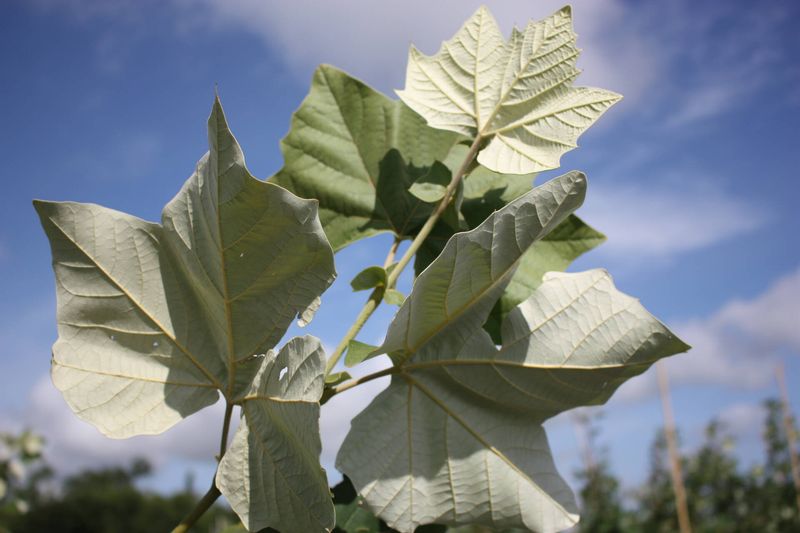
Your patio bakes from May through September, and a shade umbrella only goes so far.
Plenty of Texas homeowners are looking for a real, rooted solution, something that grows fast enough to actually matter in a few seasons.
Mexican sycamore has been getting a lot of attention lately, and for good reason, but there are a few things worth understanding before you dig the first hole.
Meet Mexican Sycamore
Platanus mexicana earns its reputation fast.
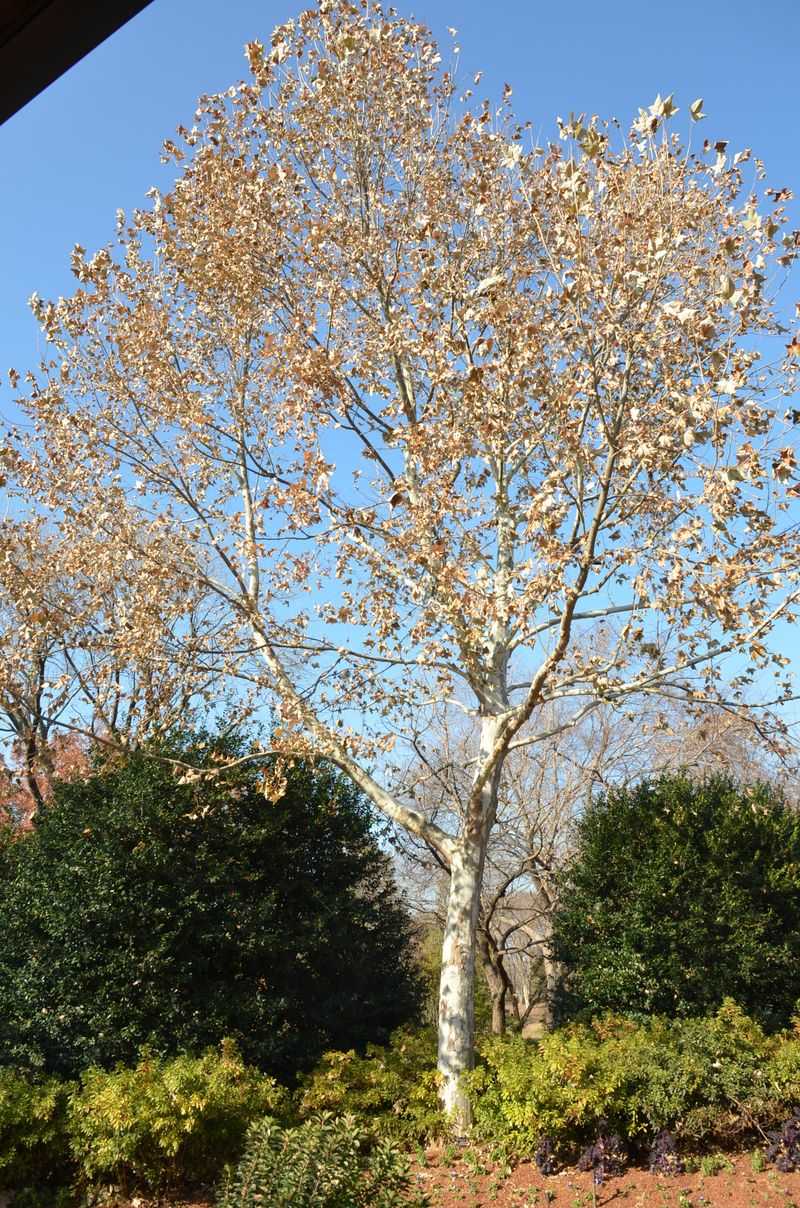
Walk past a mature specimen in a San Antonio neighborhood or along a Central Texas creek bottom and you notice the bark first, peeling away in cream, tan, and pale gray patches like a puzzle reassembling itself.
The leaves are enormous, often broader than an outstretched hand, and the canopy fans out generously as the tree ages.
The Texas Tree Selector at Texas A&M classifies Mexican sycamore as a large, rapidly growing tree with drought tolerance and alkaline-soil tolerance.
Those two traits matter a great deal in a state where soils can be hard, rocky, or heavily calcareous.
Most fast-growing trees either demand rich soil or fall apart in a dry summer.
This one is built differently.
The canopy starts narrow and upright when the tree is young, then gradually broadens into the kind of wide overhead coverage that turns a hot patio into a shaded one.
That broadening takes time, but the rapid growth category means the tree is working toward it faster than many alternatives.
A couple of honest tradeoffs belong in any fair introduction.
Mexican sycamore produces seed balls and drops leaves, and cleanup after a windy fall day can take some effort.
The tree is also listed as possibly lacking cold tolerance, which matters if you garden in a colder part of the state.
Those are real considerations, not dealbreakers, but they belong on the table from the start.
A Young Tree Cannot Promise Next-Summer Shade
Here is where the headline needs a small correction.
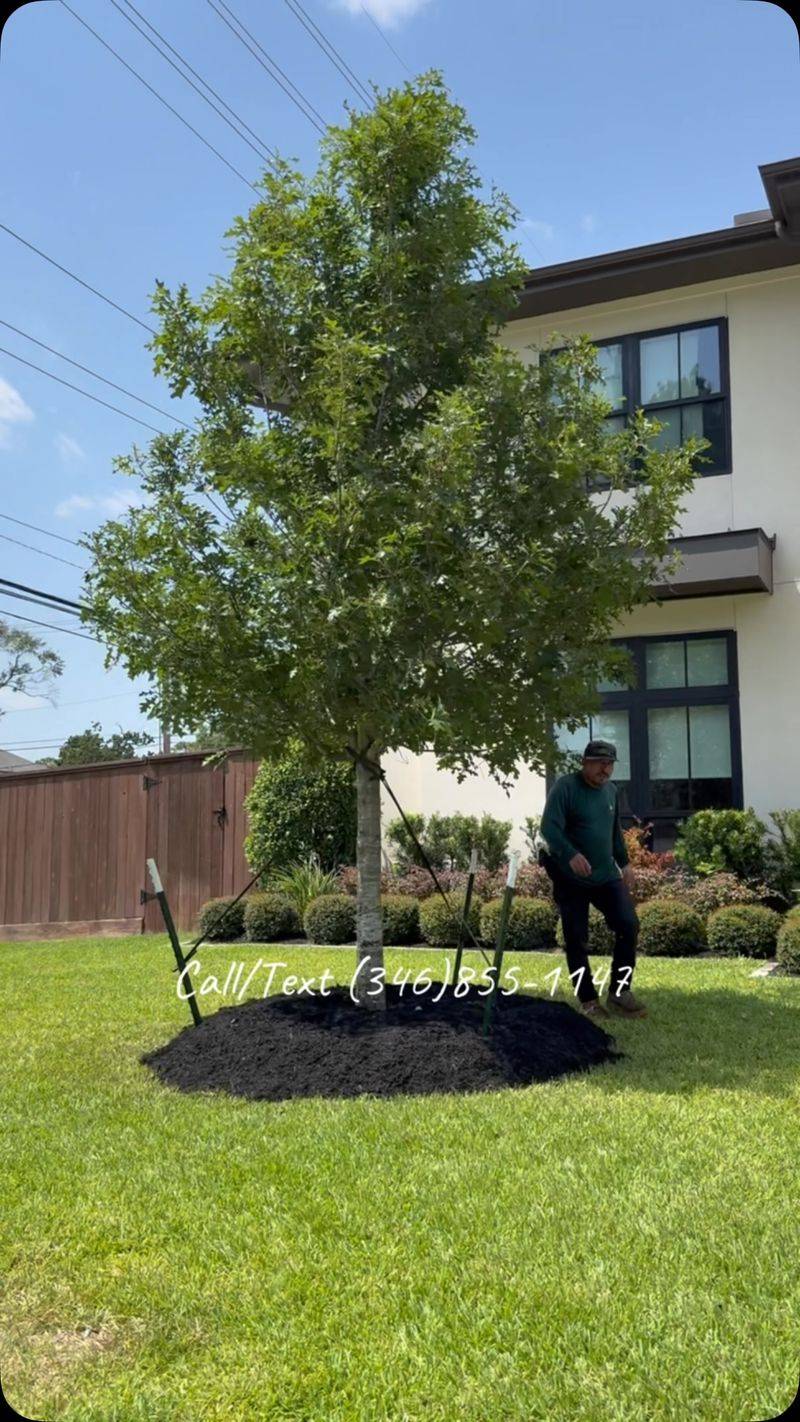
A freshly planted tree, even one rated as rapid-growing, will spend its first season putting energy into roots rather than canopy spread.
You may see encouraging new growth by late spring, but a single young tree is unlikely to turn a completely exposed yard into a cool outdoor room within twelve months.
Several factors shape how quickly useful shade arrives.
The size of the nursery tree at planting matters enormously: a 15-gallon container tree and a 65-gallon container tree are not on the same timeline.
Soil depth, irrigation consistency, summer heat load, and the tree’s exact placement relative to your patio or seating area all influence how fast the canopy reaches a practical overhead width.
Landscape shade does build real comfort over time.
Texas A&M Forest Service guidance on planting for energy efficiency and broader U.S.
Department of Energy landscaping research both support shade trees as a long-term strategy for reducing heat around patios, pavement, windows, and portions of a home.
The key phrase is long-term strategy.
While the tree establishes and its canopy matures, a shade sail, a pergola, or a large patio umbrella can fill the gap.
Think of the sycamore as the permanent answer you are building toward, not the quick fix for this coming July.
That framing actually makes the tree more appealing, because you are investing in something that will still be shading your grandchildren’s cookouts decades from now.
Let the Site Decide
Before buying a tree, walk your yard slowly.
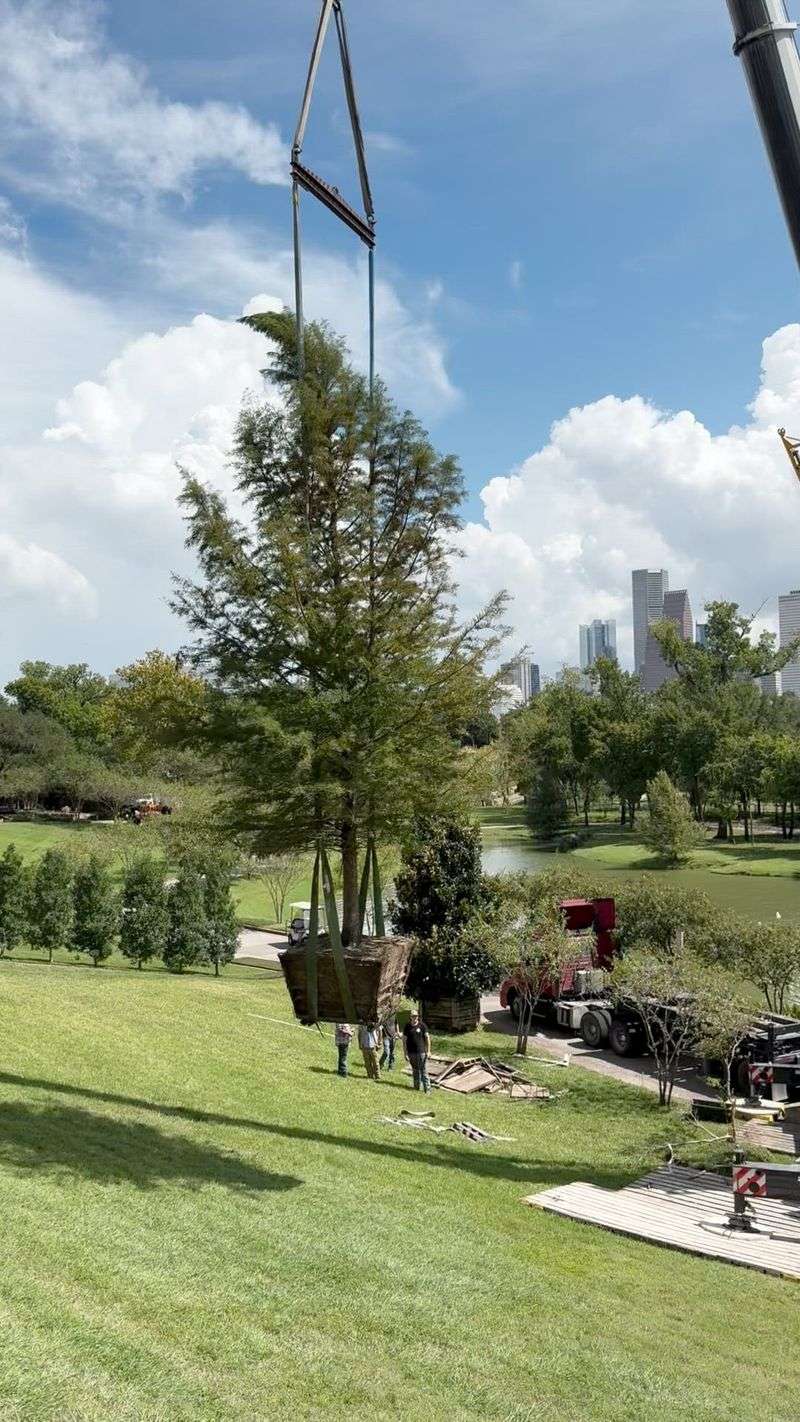
Mexican sycamore can reach approximately 60 feet tall and 40 feet wide at maturity, and that is the size you are planning around, not the size of the nursery container sitting in your truck bed.
A tree that large needs room above, below, and to the sides.
Regional guides describe the tree as performing best in deep, moist, riparian-type soils rather than shallow or dry sites.
A Central Texas native and adapted plant guide specifically recommends it for those conditions, which means portions of Central Texas, the San Antonio area, and suitable Gulf Coast locations tend to be stronger candidates than shallow Hill Country caliche or dry West Texas hardpan.
Cold tolerance is another real variable.
The Texas Tree Selector notes that Mexican sycamore may not be cold tolerant, which makes it a poor fit for the Panhandle and potentially risky in colder pockets of North Texas without local verification first.
Check your county’s recommended species list before committing.
Texas A&M Forest Service guidance on right tree, right place estimates that large trees may ultimately need more than 1,200 cubic feet of soil volume for healthy root development.
That number helps explain why a promising tree planted in a tight urban strip or over shallow bedrock can underperform or fail entirely.
Evaluate actual rooting depth, drainage, and soil structure rather than relying on a general soil-type label.
A site with good depth and reliable moisture, whether from rainfall, a drip line, or proximity to a drainage swale, gives this tree a genuine chance.
A site without those conditions calls for a different species or a different location within the same yard.
You can also check the Texas Tree Selector’s county-level results for Blanco County and Bexar County to see which large trees are recommended for your specific region.
Choose the Right Season and Planting Depth
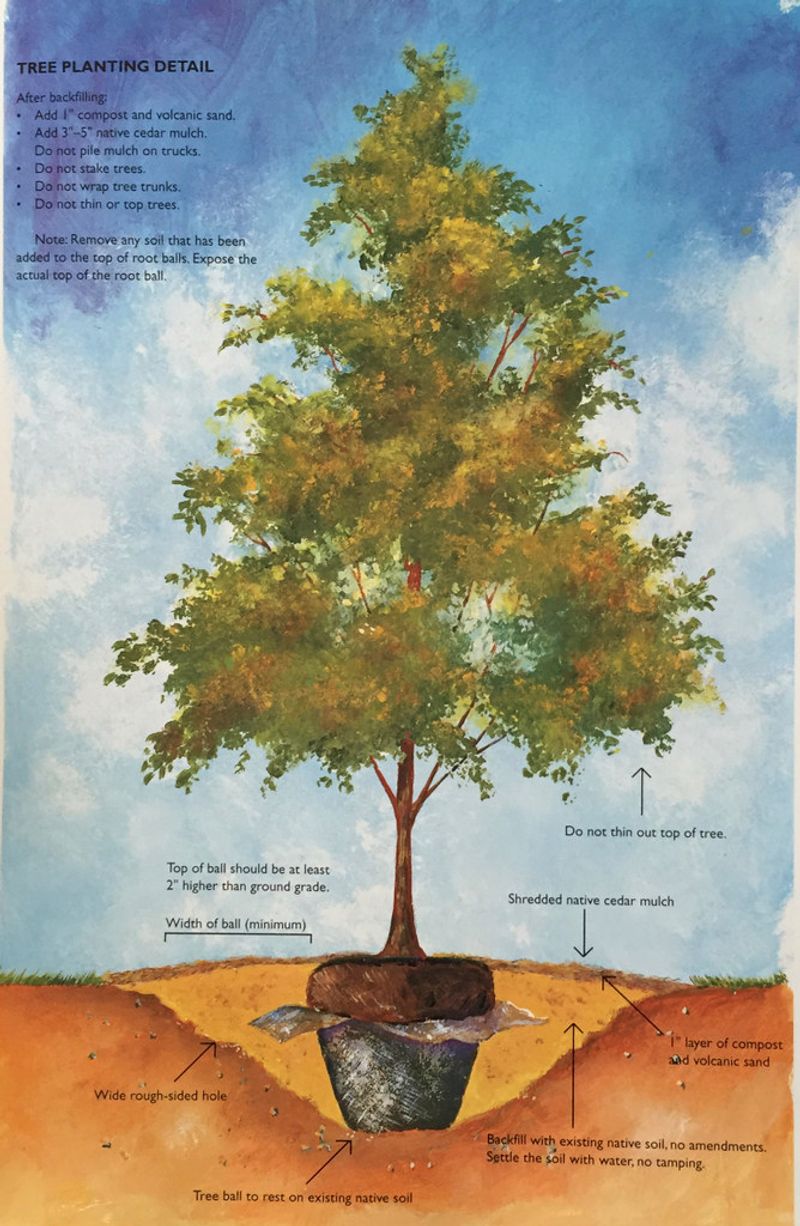
Fall through late winter is the planting window that gives a Texas shade tree its best start.
Roots can establish during cooler, wetter months before the next round of triple-digit heat arrives.
Many Central Texas gardeners target October through March, and Hays County guidance from Beautiful Hays County and the City of Austin’s planting guide both point to this seasonal window as advantageous.
The headline says “plant now,” and that framing is genuinely useful in fall or early spring.
If you are reading this in late August during a heat siege, though, slow down.
A container-grown tree can technically go in the ground any time, but hot, dry conditions increase stress significantly, and you will need to monitor and water far more closely than you would in October.
The USDA Natural Resources Conservation Service tree planting guide for Texas and Texas A&M Forest Service planting guidance both caution against hot, dry planting conditions when avoidable.
When the right season arrives, dig the hole at least twice as wide as the root ball but no deeper than the root ball.
Keep the root flare, the point where the trunk widens at the base, visible above the soil line.
Backfill with the original soil you removed, not a heavily amended mix.
Amended backfill can actually discourage roots from spreading outward into the surrounding ground.
Deep planting, poor watering after installation, and girdling roots are the three most common reasons newly planted trees fail in Texas yards.
Getting the depth right on planting day costs nothing and protects everything that comes after it.
Water for Establishment, Not Just Survival
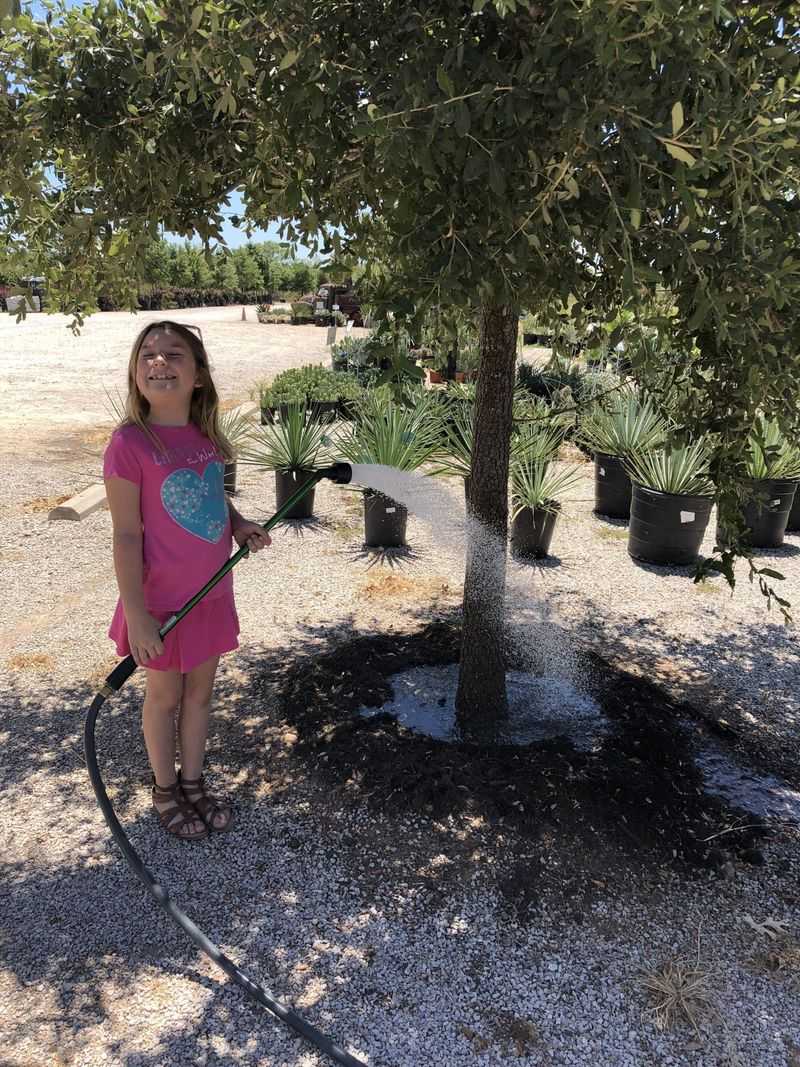
Drought tolerance is one of the traits that makes Mexican sycamore appealing to Texas homeowners, but that tolerance kicks in after the tree is established, not on day one.
Texas A&M lists the tree as having moderate water needs, and regional guides favor deep, moist soil conditions for strong performance.
Those two facts together mean you cannot plant and walk away.
Plan on at least two full years of attentive watering.
The general Texas A&M Forest Service guideline is roughly 6 to 8 gallons of water per inch of trunk diameter per week, adjusted for rainfall, soil type, heat, and drainage.
That number is a starting point, not a rigid prescription.
A week with 2 inches of rain calls for less supplemental water than a week with zero.
The Texas A&M Forest Service guide on watering newly planted trees recommends a deep, infrequent pattern during the first year: water three times per week during month one, twice per week during month two, once per week during month three, then once or twice per month through the rest of the first year when rain is absent.
Deep and infrequent watering encourages roots to reach downward, which is exactly what you want heading into a Texas summer.
Apply 2 to 3 inches of mulch over the root zone and extend it outward as the tree grows, aiming toward the drip line.
Keep the mulch pulled back a few inches from the trunk itself.
Texas A&M Forest Service mulching guidance confirms that a proper mulch layer slows moisture loss from the soil, moderates soil temperature, and reduces competition from grass and weeds.
Mulch supports your irrigation effort, but it does not replace it.
The tree needs actual water moving through the root zone, especially during the first two summers in the ground.
Aim the Mature Canopy Carefully
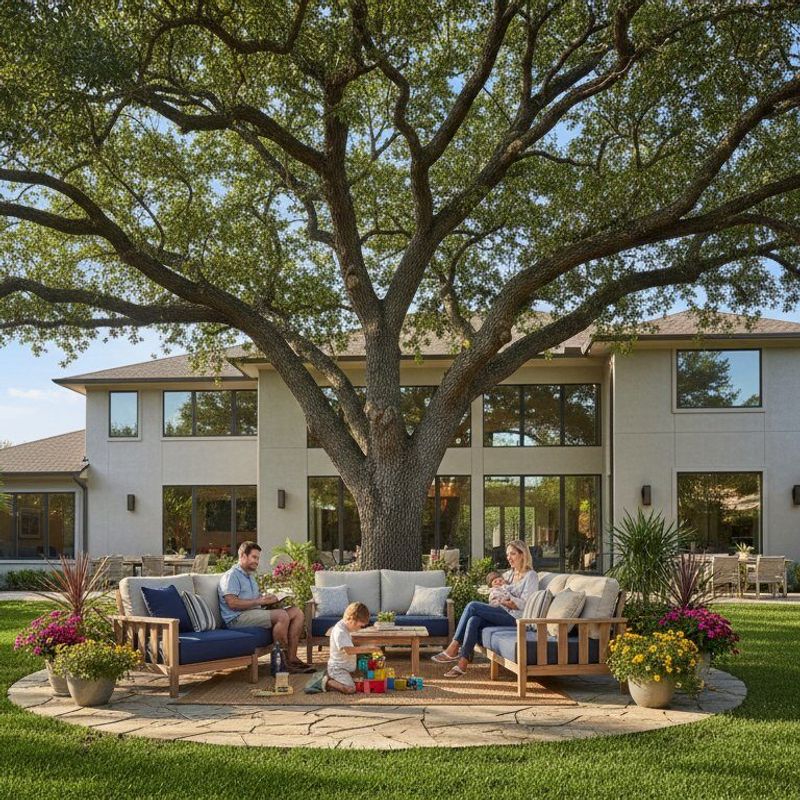
The nursery tree looks manageable sitting in a 30-gallon container.
The mature tree, potentially 60 feet tall and 40 feet wide, is a different conversation entirely.
Placement decisions made on planting day will either pay off beautifully or create expensive problems twenty years from now.
Texas A&M Forest Service guidance on planting for energy efficiency recommends thinking through the home’s orientation when siting a large shade tree.
A tree positioned to shade west-facing windows or a south-facing patio can genuinely reduce the amount of heat entering your home during the long Texas afternoon.
That is the kind of placement that earns its keep every summer for decades.
Documented clearance concerns include foundations, sidewalks, driveways, overhead power lines, and other permanent structures.
Texas A&M Forest Service right-tree, right-place guidance makes clear that mature canopy spread and root spread both need open room.
A tree crowded against a foundation or planted directly under a power line is not a shade asset, it is a future maintenance problem.
Leaf litter and the round seed balls that Mexican sycamore produces are worth factoring into your placement decision as well.
A tree positioned over a roof, a gutter system, or a pool deck will generate cleanup work.
Positioned over an open lawn or a gravel seating area, that same litter is a minor seasonal chore.
The Texas Tree Selector profile for Mexican sycamore lists fruit and leaf drop as noted characteristics, and planning around them from the start keeps the tree in the asset column rather than the liability column.
Choose a Different Tree When the Site Demands It
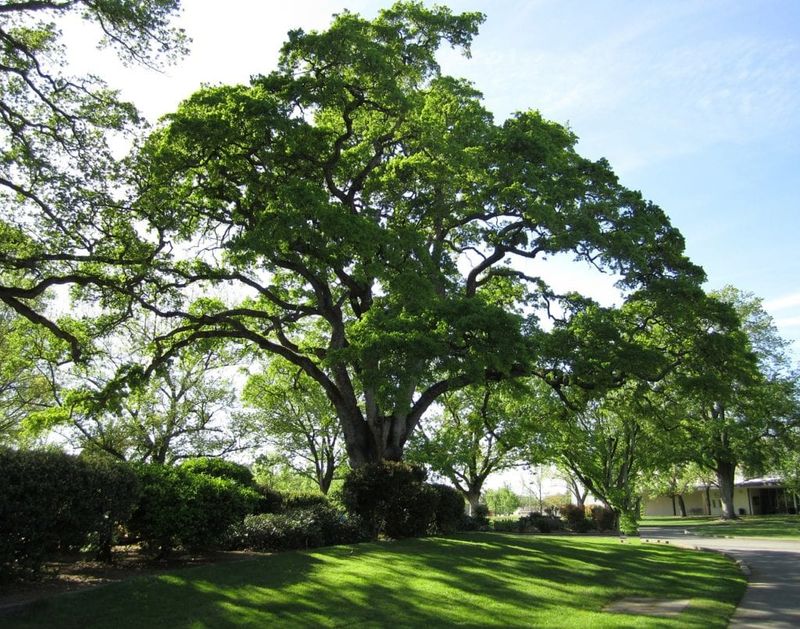
Mexican sycamore is a strong candidate for the right yard, but not every Texas yard is the right yard.
The conditions that support this tree are specific: a suitable warm region, adequate soil depth and rooting volume, reliable establishment water for at least two growing seasons, and enough clearance for a mature canopy approaching 40 feet wide.
When those conditions line up, the tree can begin building the kind of shade that transforms an outdoor space.
When they do not line up, pushing this species into a mismatched site produces a stressed, slow-growing tree at best and a dead one at worst.
Shallow Hill Country caliche, dry West Texas sites, and colder locations in the Panhandle or northern reaches of North Texas call for a different answer.
Texas A&M Forest Service right-tree guidance and the Central Texas native plant guide both point toward matching species to actual site conditions rather than planting a popular tree in an unsuitable spot.
Cedar elm is one conditional alternative worth knowing.
It is tough, drought-adapted, and handles a wider range of Texas soils and cold exposure than Mexican sycamore.
The Texas Tree Selector profile for cedar elm supports it as a broadly adapted shade option for many Texas conditions.
Escarpment live oak is another possibility for Hill Country sites where deep soil is limited.
Its selector profile reflects its suitability for alkaline, rocky terrain.
Check your county’s recommended species list, talk to your local Texas A&M AgriLife Extension office, and let the actual site make the final call.
Mexican sycamore can start a long-term shade project on the right property, but no single tree guarantees a cooler yard by next summer.
The right tree in the right place, though, is the one that actually gets there.