
Planting A Seed Is A Favorable Bet, Not A Guarantee, But It Often Pays Back In Food And Flowers
Follow us on Google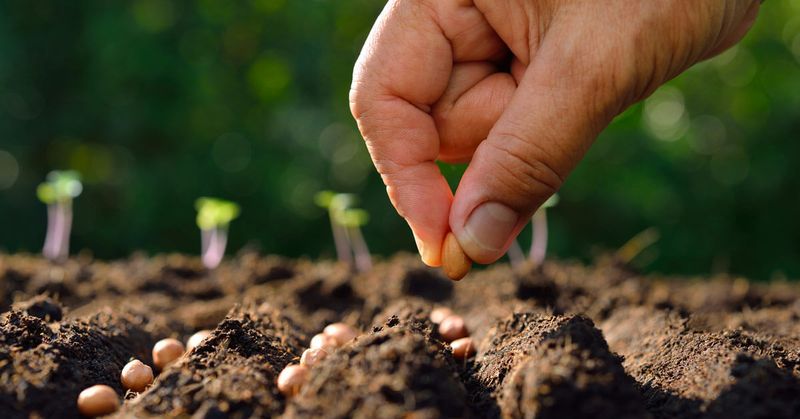
Most packets of seeds cost less than a cup of coffee, yet each one holds dozens of chances to grow something you can eat, cut, or simply enjoy from the back porch.
That is a genuinely good deal, but it is not a sure thing.
Seeds can fail for reasons that have nothing to do with effort, and understanding that gap between promise and reality is what separates a frustrated first-timer from a gardener who keeps trying.
The honest payoff from planting seeds is not a guaranteed harvest but a growing set of skills, meals, and outdoor moments built one small bet at a time.
A Seed Offers Chances, Not a Guarantee
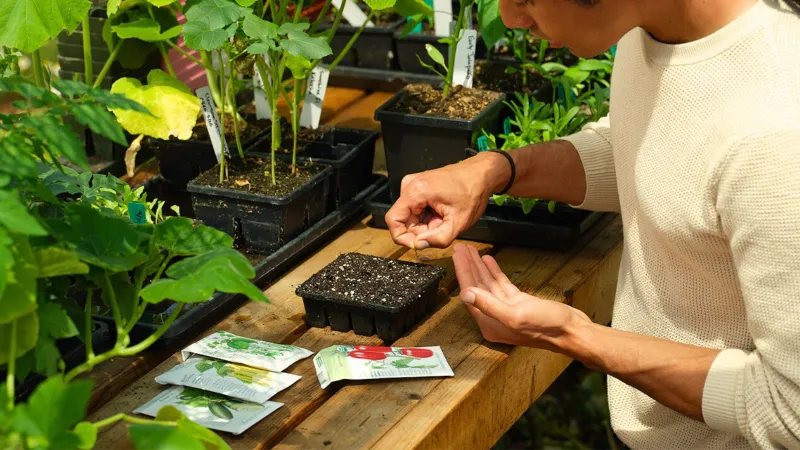
Picture a Sunday morning with a cup of coffee going cold on the porch rail while you press a tiny seed into a tray of dark, damp mix.
You want tomatoes by July.
Maybe you will get them, maybe you will not.
That honest uncertainty is where any good conversation about seeds has to start.
The headline on this article needed a qualifier before it could be published, because planting a seed does not always pay you back.
University of New Hampshire Extension is direct about it: not all seeds germinate, and even among those that do, timing and conditions vary.
A seed can fail because of its age, how it was stored, soil temperature, too much or too little water, incorrect planting depth, poor light, pests, disease, or weather that simply does not cooperate.
One seed is one roll of the dice, and the house does not always lose.
What changes the math in your favor is the packet.
Most packets hold 20, 50, or even 100 seeds, which means you get multiple chances to observe, adjust, and resow.
Penn State Extension notes that starting plants from seed can give gardeners access to varieties unavailable as transplants, often at a fraction of the cost of buying established plants.
That repeatable opportunity is the real argument for seeds.
Gardening may also do something quieter for the person holding the trowel.
Research compiled in a 2024 umbrella review on gardening and well-being found generally positive associations between gardening activity and quality of life, though study methods varied widely and no one should treat a seed packet as a substitute for medical care.
The payoff is real but conditional, and improving those conditions is exactly what the rest of this article is about.
A Packet Buys More Than One Chance
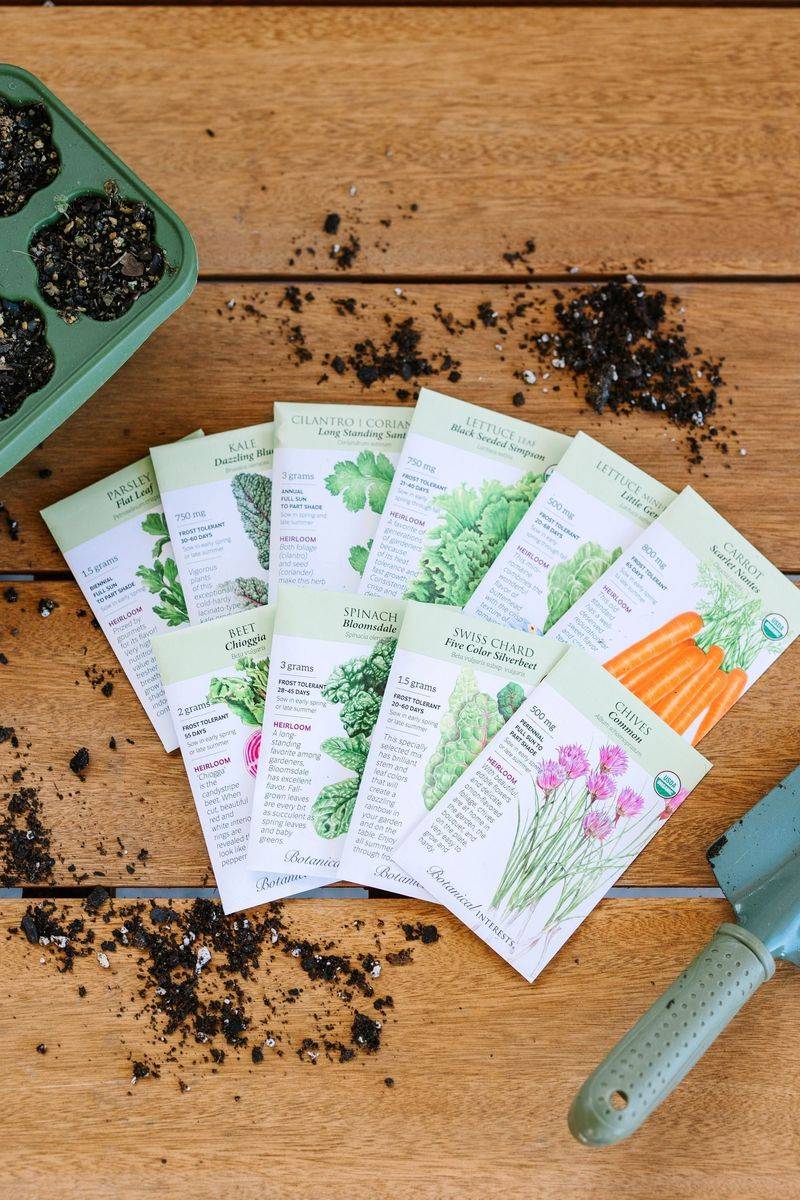
Flip a seed packet over and you will usually find a price between one and four dollars for somewhere between 25 and 200 seeds depending on the crop.
Compare that to the cost of buying a single established tomato or pepper plant at a garden center, often three to six dollars each, and the math starts to look interesting.
University of Minnesota Extension points out that starting from seed lets gardeners grow varieties that simply do not show up on nursery benches.
Heirloom tomatoes in unusual colors, striped beets, cutting flowers in shades no big-box store stocks, these options exist in seed catalogs and rarely anywhere else nearby.
A single packet can supply enough seed to fill a raised bed, share starts with a neighbor, and still have seed left for a second sowing if the first one struggles.
That said, the financial advantage only materializes if the seeds actually grow, and a transplant can be the smarter spend when the season is short or a crop is genuinely difficult to start.
Penn State Extension frames seeds and transplants as complementary tools rather than competitors.
The packet is not always the right answer, but when conditions suit it, one small purchase creates far more growing opportunities than a single plant from the nursery ever could.
Think of the packet as a low-cost membership to repeated tries.
Each sowing teaches you something about your soil, your light, your timing.
Even a tray that produces only half the expected seedlings is a lesson worth more than what you paid for it.
The Crop Decides Where You Start
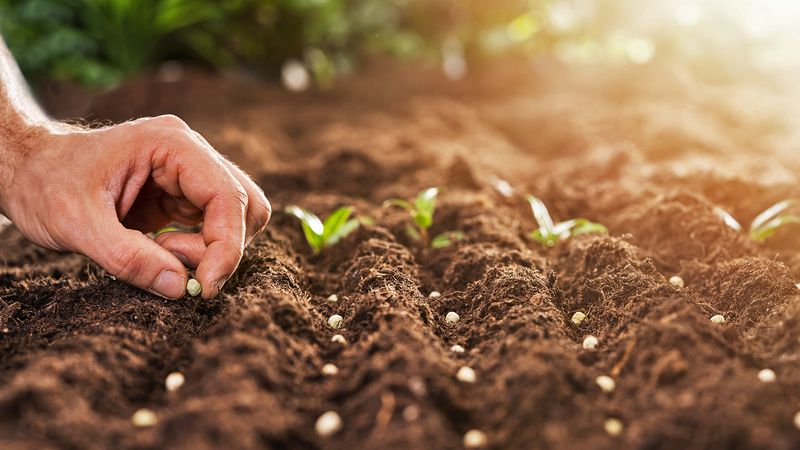
Before you tear open a packet, the crop itself tells you whether to sow it where it will grow, start it inside under lights, or skip seeds entirely and buy a transplant.
Getting that first decision right saves a lot of frustration later in the season.
Crops that dislike having their roots disturbed do best when you sow them directly in the ground or container where they will finish growing.
Carrots, beets, radishes, peas, beans, and corn all fall into this group.
Pull a carrot seedling and replant it and you will likely get a forked, stunted root.
Penn State Extension confirms that direct seeding works well for these crops and removes the extra step of hardening off entirely.
Tomatoes, peppers, and eggplant are a different story.
They need a long, warm growing season, and in many parts of the country the outdoor window is too short to take them from seed to ripe fruit if you wait until it is safe to plant outside.
UNH Extension explains that transplants give these crops a head start that direct sowing simply cannot match in short-season climates.
Check your local Cooperative Extension or a regional planting calendar like Utah State’s to understand your specific frost window before committing to either path.
Strawberries deserve a separate mention because they are a common source of confusion.
You may see strawberry seeds for sale, but gardeners generally establish strawberries from dormant crowns, runners, or nursery plants, not from seeds.
Oregon State University Extension explains that strawberries do not breed true from seed, meaning a seedling grown from a berry you bought at the store is unlikely to produce fruit that matches the parent plant.
For reliable strawberry harvests, start with certified crowns or runners, not a seed packet.
Give the First Sprout the Right Conditions
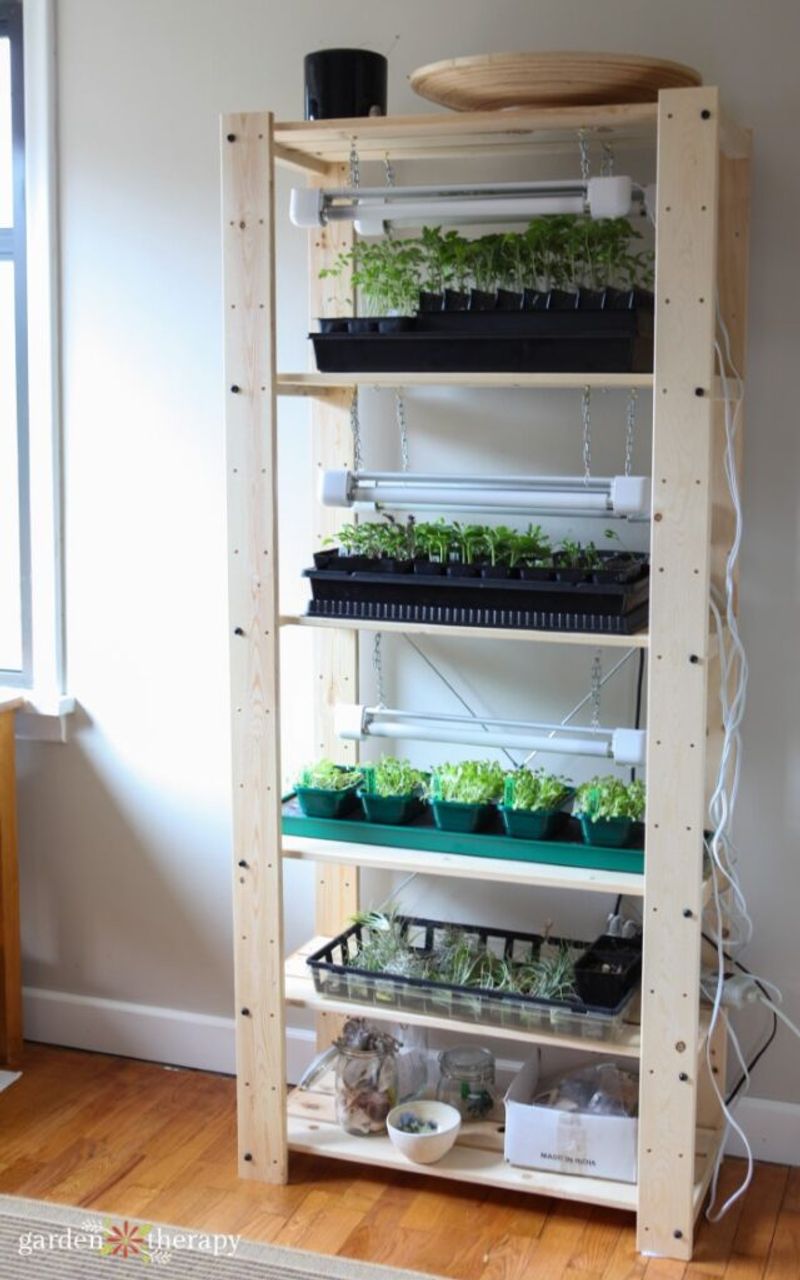
An indoor seed-starting setup does not need to be elaborate, but it does need to get a few things right.
The packet is your first stop, not a gardening blog or a general rule of thumb.
Depth, spacing, days to germination, light needs, and whether the crop should even be started indoors are all printed right there.
Use a sterile, lightweight seed-starting mix rather than scooping soil from the garden.
Garden soil compacts in small cells, drains poorly, and can carry pathogens that kill seedlings before they have a second set of leaves.
Utah State University Extension recommends keeping the mix evenly moist but not soggy, which in practice means it holds together when squeezed but does not drip.
A common mistake is overwatering early and then wondering why seedlings collapse at the soil line, a fungal problem called damping-off.
Planting depth matters too.
A general rule is to sow seeds at about two to three times their diameter, but treat that only as a fallback when the seed packet does not specify.
Some seeds, like lettuce, need light to germinate and should barely be covered at all.
Temperature affects germination speed and success more than many beginners expect.
A common indoor range is roughly 65 to 75 degrees Fahrenheit, but warm-season crops like peppers may prefer the higher end or benefit from a seedling heat mat underneath the tray.
Penn State Extension notes that each crop has its own preferred temperature, so the packet range is more reliable than any single number.
Light is where many indoor starts go wrong.
Seedlings reaching toward a window usually are not getting enough.
Follow your fixture manufacturer’s instructions for height above the foliage, since the right distance depends on the type and power of the light.
A basic shop light and a full-spectrum LED bar behave differently, so intensity, coverage, and heat management matter more than a single distance rule.
UNH Extension’s seed-starting guidance recommends running lights for 14 to 16 hours a day for most seedlings.
Before those seedlings go outside, they need roughly 7 to 10 days of gradual exposure to outdoor wind, sun, and temperature swings.
Start with an hour or two in a sheltered, shaded spot and work up from there.
Skipping this step, called hardening off, can shock plants that have only ever known a calm, controlled room, and a shocked seedling can set back your timing by weeks.
Succession Sowing Spreads the Risk
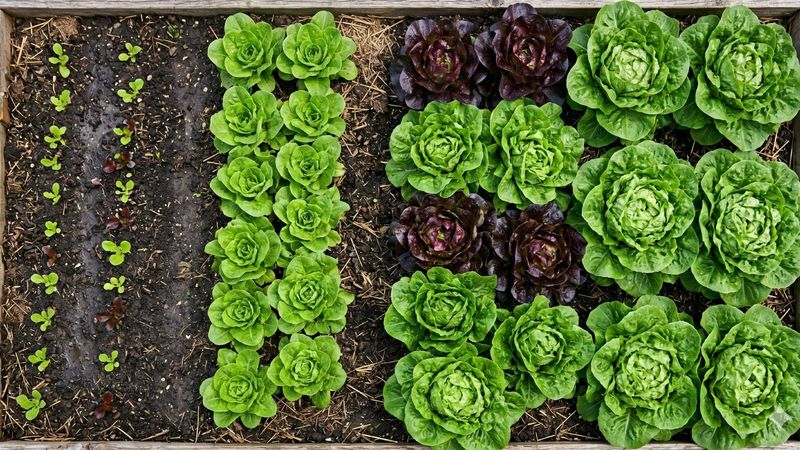
Sowing every seed in a packet on the same afternoon feels efficient, but it concentrates all your risk into one moment.
A late frost, a week of heavy rain, or a slug patrol on the wrong night can take out the entire planting at once.
Staggering your sowings is a straightforward way to spread that exposure across time.
Oregon State University Extension describes succession planting as sowing smaller batches at regular intervals, often around every two weeks, to extend harvests and reduce the chance that one bad event wipes out everything at once.
Quick-maturing crops like radishes, lettuce, carrots, and beans are the best candidates because they cycle fast enough to make the staggering worthwhile.
Penn State Extension notes that succession sowing can keep salad greens coming from early spring well into fall with the right variety choices.
Radishes make a clear beginner example because the numbers are concrete.
Utah State University Extension recommends sowing them about half an inch deep, thinning seedlings to 1 to 3 inches apart, and expecting emergence in roughly 5 to 10 days.
Harvest can begin in as few as 25 days or stretch to 55 days depending on the variety.
Sow a short row every two weeks and you can have radishes on the table across much of the spring and again in fall.
One thing succession sowing cannot do is protect every planting from a storm that lasts two weeks, a pest that spreads across the whole bed, or a disease that moves through the soil.
It may reduce the chance that one setback affects your entire crop, but it is a risk-management tool, not a guarantee.
Always confirm timing with your packet and local conditions rather than following a fixed calendar.
Food and Flowers Follow Different Clocks
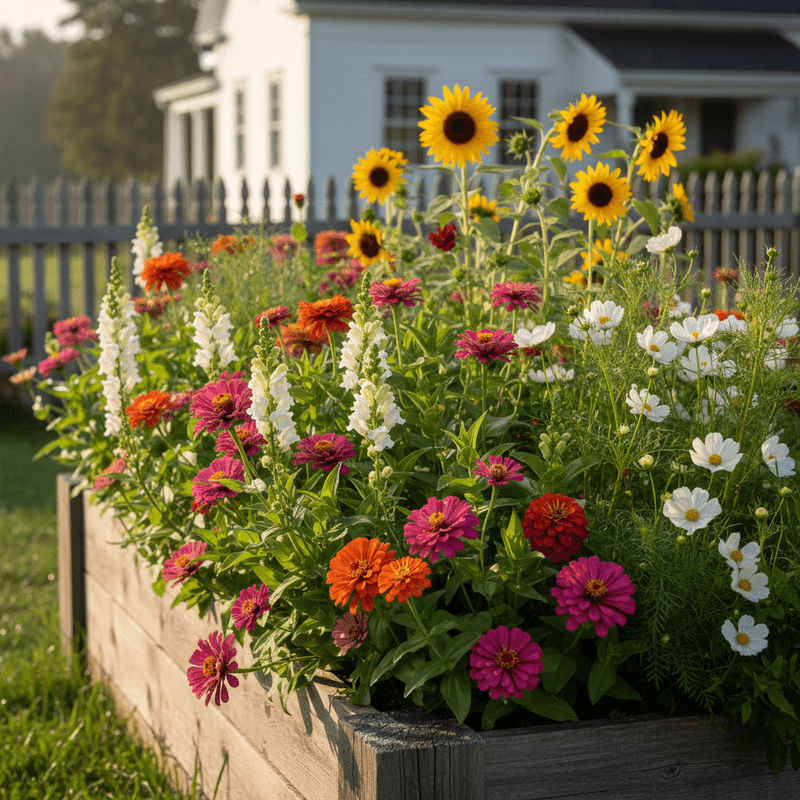
Lumping food and flowers into one category can set up a gardener for a confusing season.
A tomato and a zinnia both grow from seed, but they operate on entirely different schedules and reward patience in different ways.
Annual flowers are the most forgiving entry point.
Zinnias (Zinnia elegans), sunflowers (Helianthus annuus), cosmos (Cosmos bipinnatus), bachelor’s buttons (Centaurea cyanus), and nasturtiums (Tropaeolum majus) can all be direct-sown after local frost danger passes, or started indoors a few weeks earlier for blooms that arrive sooner.
Penn State Extension notes that many annuals are straightforward from seed and can flower within the same growing season they are planted.
University of Minnesota Extension points out that a small cutting garden started from seed can supply fresh bouquets all summer for very little cost.
Biennials and many perennials work differently.
A biennial like foxglove (Digitalis purpurea) typically grows leaves in its first year and flowers in its second.
Many perennials seeded in spring may not bloom until the following season, and some require a period of cold, moist conditions called stratification before they will even sprout.
University of Minnesota Extension’s flower guidance separates annuals, biennials, and perennials precisely because the timelines are so different.
Wildflower seed mixes deserve a separate caution.
A pretty bag with a meadow photo on the front does not guarantee first-year blooms, reliable pollinator habitat, or plants suited to your region.
Penn State Extension’s guide to wildflower mixes recommends checking the species list carefully for regional suitability and any plants that could become invasive in your area before you scatter a single seed.
The mix that works beautifully in one state may cause problems in another.
When Germination Fails, Test Before Guessing
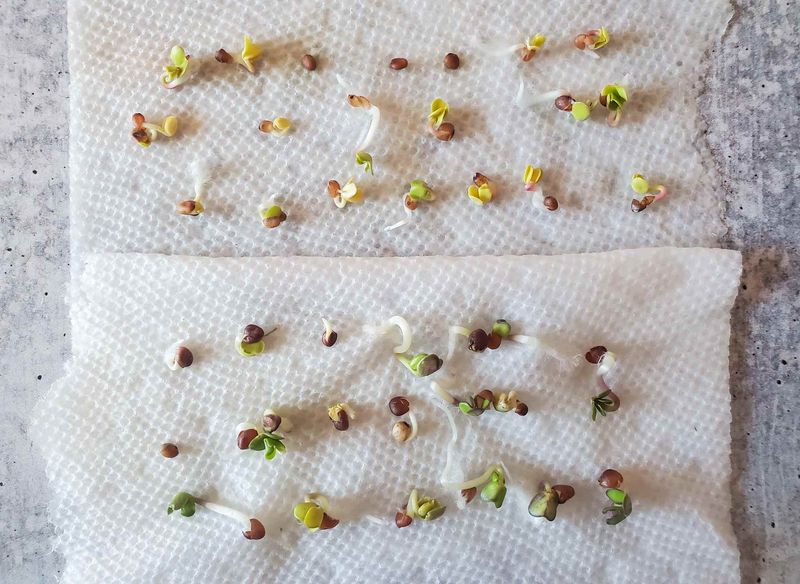
An empty tray or a bare garden row a week after sowing is discouraging, but it is not necessarily a sign that you did anything wrong.
Seeds fail for a long list of reasons, and sorting out which one applies is faster than starting over blind.
Age and storage are the first things to check.
Seeds stored in a hot, humid garage or shed lose viability faster than those kept in a cool, dry place.
Oregon State University Extension describes a simple test: place 10 seeds in a damp paper towel, fold it over, and keep it warm for roughly 5 to 10 days.
Count how many sprout.
If only 3 out of 10 germinate, you know to sow more heavily or replace the seed before investing more time in a tray.
Beyond seed age, the most common indoor failures come from overwatering, underwatering, temperatures that are too cool for the crop, and planting too deeply so the seedling exhausts its energy before it reaches light.
Penn State Extension lists damping-off, a fungal collapse at the soil line, as a frequent cause of seedling death that is usually linked to poor drainage or overly wet conditions.
Outdoors, the list of culprits expands to include soil crusting over the seed, slugs, birds, cutworms, and cold snaps that arrive after a warm spell tricks seeds into sprouting.
Utah State University Extension recommends adjusting one variable at a time when troubleshooting, rather than changing depth, moisture, temperature, and light all at once.
If the season still has time, resow with fresh seed and corrected conditions.
If the window is closing, a purchased transplant may be the most practical recovery, not a failure of the gardening approach itself.
The Honest Return Includes Time Outdoors
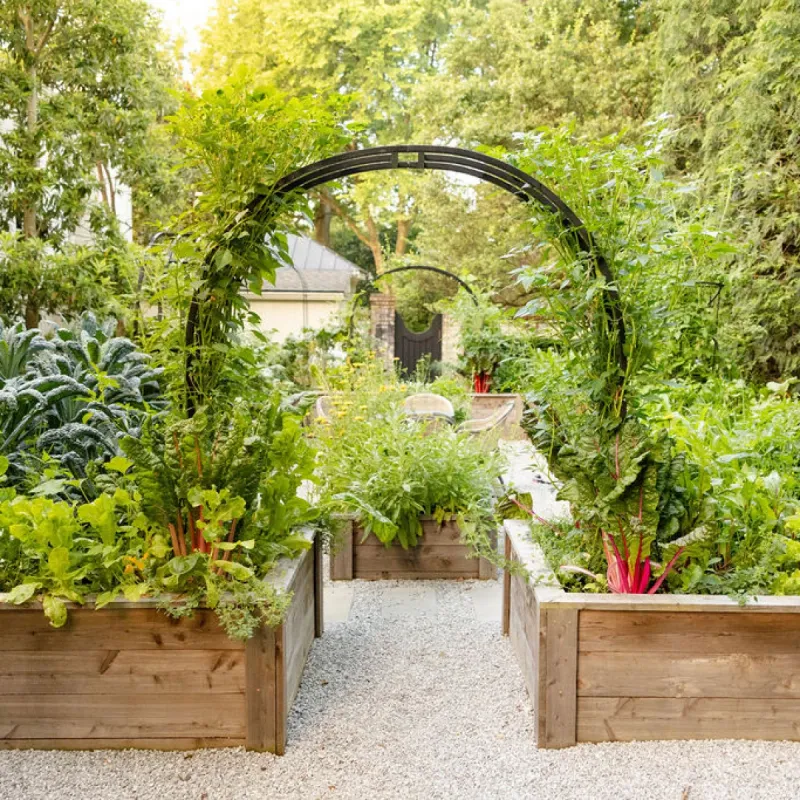
Harvest day is satisfying in a way that is hard to explain to someone who has never pulled a carrot they grew themselves.
But the return from a season of gardening is not limited to what ends up on the dinner table, and it is worth being honest about what the research actually shows.
Studies consistently find positive associations between gardening and measures of well-being, stress, and quality of life.
A 2024 umbrella review found an overall positive effect on well-being across multiple studies, but the authors were careful to note that evidence quality and study designs varied substantially.
A separate meta-analysis found no statistically significant overall effect across all gardening trials before sensitivity analysis was applied.
Gardening may support a calmer mood and a sense of purpose, but it is not a medical treatment for anxiety or depression, and no seed packet should be mistaken for a prescription.
Physical activity in the garden does carry well-documented benefits.
CDC guidance on physical activity links regular moderate movement to lower risk of heart disease, improved mood, and better sleep, and digging, weeding, and watering qualify.
The outdoor time itself has value even when the harvest falls short.
Before you eat anything from a new garden bed, consider the soil’s history.
Ground near older homes built before 1978, busy roads, former orchards, industrial sites, or recent demolition may contain lead or other contaminants.
EPA guidance on lead in soil recommends testing before planting edibles in questionable areas, washing all produce thoroughly, and using raised beds filled with clean soil when contamination is a concern.
USDA NRCS guidance on healthy garden soil reinforces that a soil test is one of the most useful steps any new gardener can take.
The honest payoff from planting seeds is not a guaranteed bowl of tomatoes or a guaranteed calmer mind.
It is a growing collection of chances, small skills, occasional meals, a few cut flowers on the kitchen table, and some evenings outside with dirt under your fingernails, which turns out to be a pretty good return on a two-dollar packet.