
The Low-Growing Herb That Keeps North Carolina Zinnia Beds Weed-Free All Summer
Follow us on Google
Pull a single crabgrass clump from your zinnia bed in July and two more seem to appear by Friday.
North Carolina summers are generous with sun and rain, which is exactly what weeds love as much as your flowers do.
Creeping thyme, known botanically as Thymus serpyllum, is a low, spreading perennial herb that can close off bare soil around zinnias and reduce the number of weeds that get a chance to sprout.
It is not a magic fix, but for the right bed in the right spot, it is genuinely one of the more practical living-mulch strategies a North Carolina gardener can try.
Meet The Groundcover Behind The Claim
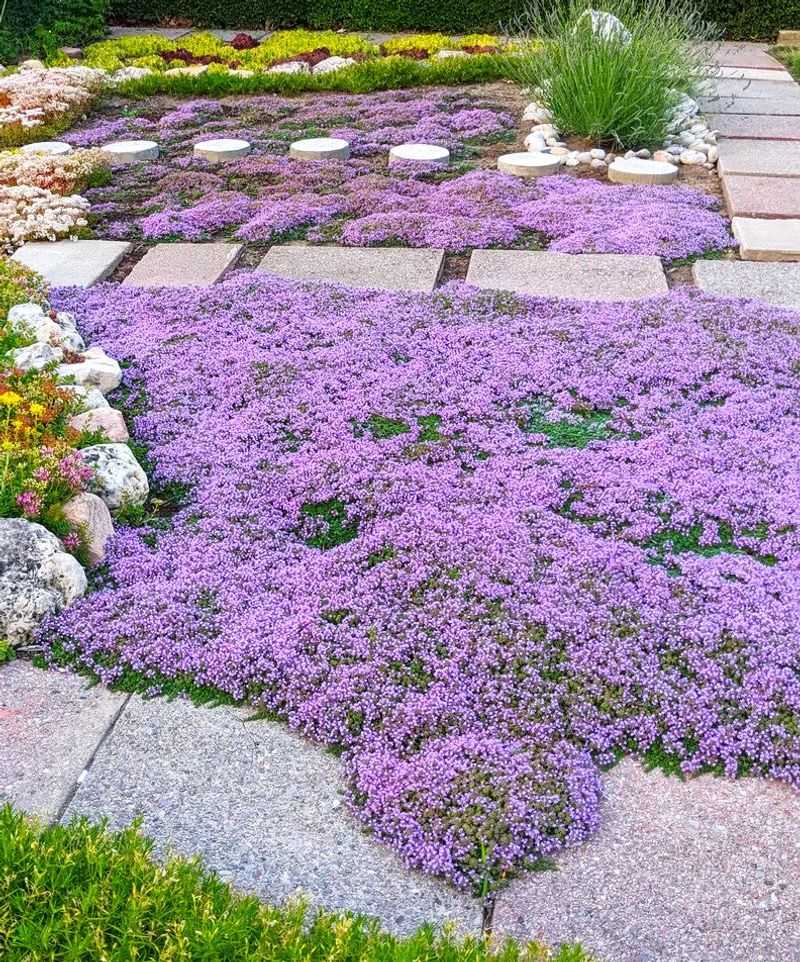
Creeping thyme, sold under the botanical name Thymus serpyllum, grows only about 2 to 3 inches tall and spreads in a dense, low mat that hugs the soil surface.
NC State Extension’s plant profile describes it as a semi-evergreen perennial with a creeping, spreading habit and an approximate spread of 3 to 12 inches per plant, with small flowers that generally open from June through September.
That combination of low height and spreading density is exactly what makes it interesting as a groundcover around taller annuals like zinnias.
What it actually does is occupy the open soil between plants.
A bare patch of ground in a sunny bed is an open invitation for weed seeds, and creeping thyme, once established, covers that ground with a tight layer of foliage that reduces the light reaching the soil surface.
The promise of a completely weed-free summer is an overstatement, but a well-established planting genuinely can reduce how many weeds find a foothold in exposed patches.
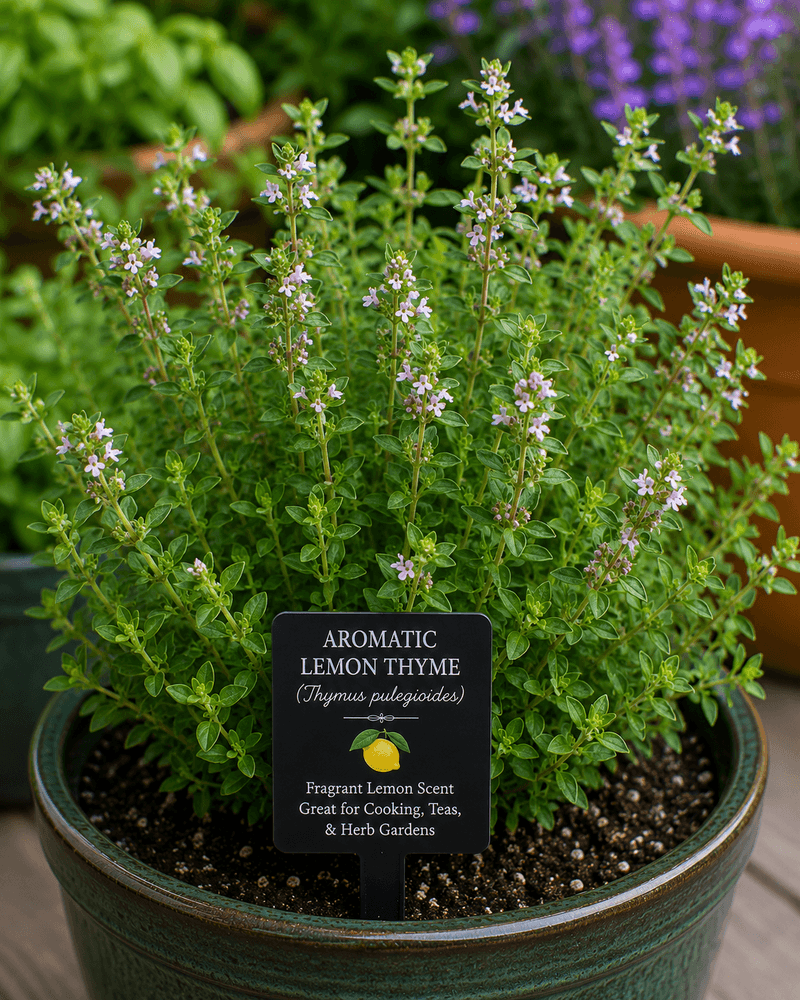
One distinction worth making right away: this is not culinary thyme.
NC State identifies Thymus serpyllum as primarily ornamental and notes that its leaves are not generally of culinary quality.
Do not assume every creeping thyme plant at the garden center belongs in the kitchen.
If cooking is the goal, look for a labeled culinary variety of Thymus vulgaris instead.
For the zinnia bed, treat creeping thyme as an ornamental groundcover that happens to smell pleasant when you brush against it while weeding.
How A Living Carpet Suppresses Weeds

Bare soil is a weed seed’s best friend.
The moment you clear a patch and walk away, airborne seeds settle in, rain splashes more in from nearby areas, and the first warm week does the rest.
A dense groundcover interrupts that cycle by taking up the space before weeds can claim it.
Research on perennial groundcovers points to canopy density, planting density, and reduced light at the soil surface as the key factors in weed suppression.
A study published in HortScience found that creeping thyme was among the groundcovers that successfully suppressed weeds in field evaluations, with canopy cover and light reduction identified as the primary mechanisms.
The denser the mat, the less light reaches the soil, and the harder it becomes for small-seeded annual weeds to germinate and survive.
Here is where it gets tricky, though.
Perennial weeds with deep roots or underground rhizomes, think nutsedge or bindweed, can push right through an established groundcover.
Those require hand-pulling and repeated removal regardless of what is growing around them.
Penn State Extension’s guidance on landscape weed control makes clear that groundcovers reduce establishment of new weeds rather than eliminating existing ones, and that continued monitoring and removal remain necessary.
Creeping thyme works best as one layer of weed management, not the whole strategy.
Think of it as a teammate alongside mulch and occasional hand-weeding, not a replacement for either.
The goal is fewer open patches where annual weeds can sprout, and on that narrower promise, an established thyme mat can actually deliver.
Test The Site Before You Plant
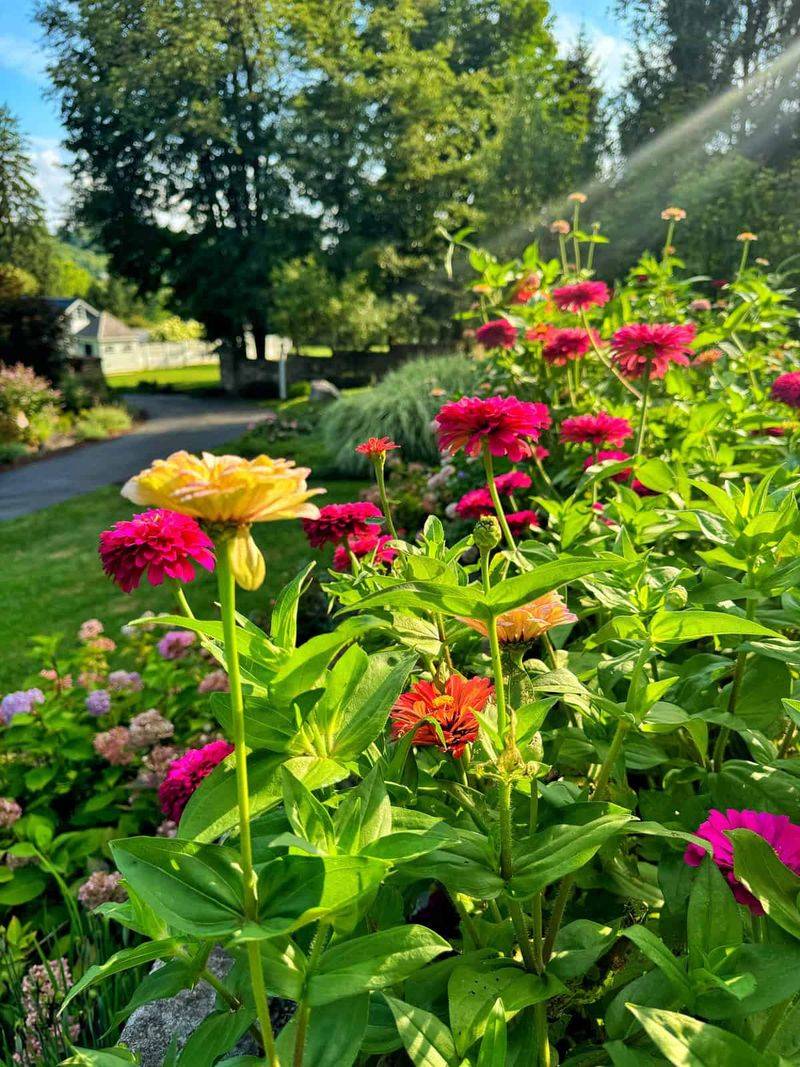
Before buying a single plug of creeping thyme, spend a few minutes honestly looking at the bed.
Full sun means at least 6 hours of direct sunlight every day, and creeping thyme needs every one of them.
A bed that gets morning shade from a fence or afternoon shade from a large shrub is not the right spot, even if it feels mostly sunny from the porch.
NC State’s profile for Thymus serpyllum is direct about drainage: this plant prefers sandy, gritty, or rocky soil and is susceptible to rot when the ground stays wet.
That matters enormously across North Carolina, where conditions vary from one end of the state to the other.
In the Coastal Plain and Sandhills, naturally sandy soil often drains fast enough to suit thyme well, provided there is irrigation available during the establishment period.
Piedmont red clay is a different story.
Compacted clay holds water around roots, and a thyme plant sitting in wet soil through a humid August is likely to rot rather than spread.
Mountain gardeners generally deal with better-drained slopes, but local winter conditions vary and cold snaps can be sharper than in the Piedmont or coast.
Check your specific site rather than assuming regional averages apply to your yard.
Zinnias share the preference for full sun and good drainage, which is part of why this pairing makes sense on paper.
NC State’s zinnia page notes that good air circulation, full sun, and good drainage help reduce the fungal leaf diseases that North Carolina’s hot, humid summers can bring on fast.
A bed that drains well and gets a full day of sun benefits both plants, and that shared requirement is the strongest argument for trying them together.
Clear Weeds And Correct The Soil First
Planting creeping thyme into a weedy, compacted bed and hoping for the best is a reliable way to be disappointed by midsummer.
The preparation work done before the first plant goes in the ground matters more than most gardeners expect.
Start by removing every perennial weed you can find, roots and all.
Nutsedge, dandelion, and any grass that spreads by rhizome will not be stopped by a young thyme planting.
Pull them now, while the soil is loose and before the thyme is in place to complicate the work.
Penn State Extension’s weed control guidance is consistent on this point: removing established perennial weeds before planting a groundcover gives the new planting a much better chance of closing the canopy without constant interruption.
Next, deal with drainage if the site needs it.
Do not plant thyme into wet clay and expect the plant to adapt.
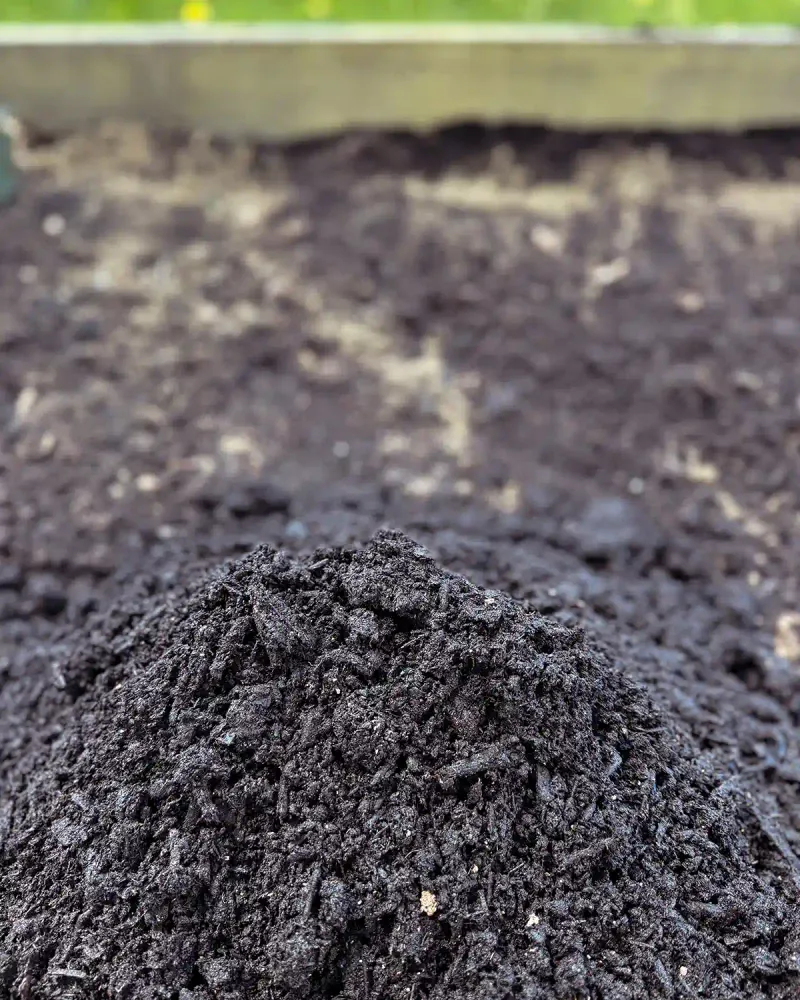
Loosen compacted soil with a fork or tiller and work in organic matter.
The NC State Extension Gardener Handbook recommends incorporating about 1 to 3 inches of compost into the upper 12 inches of soil when improvement is needed.
That addition opens up clay structure, improves drainage, and gives both thyme and zinnias a better root environment.
Good preparation reduces early competition, but it does not guarantee that weeds stay gone.
Seeds blow in from neighboring yards, wash in with rain, and arrive in bags of nursery soil.
The preparation work simply removes the head start that existing weeds would otherwise have, and that alone is worth the effort before a long North Carolina summer.
Plant For A Future Carpet
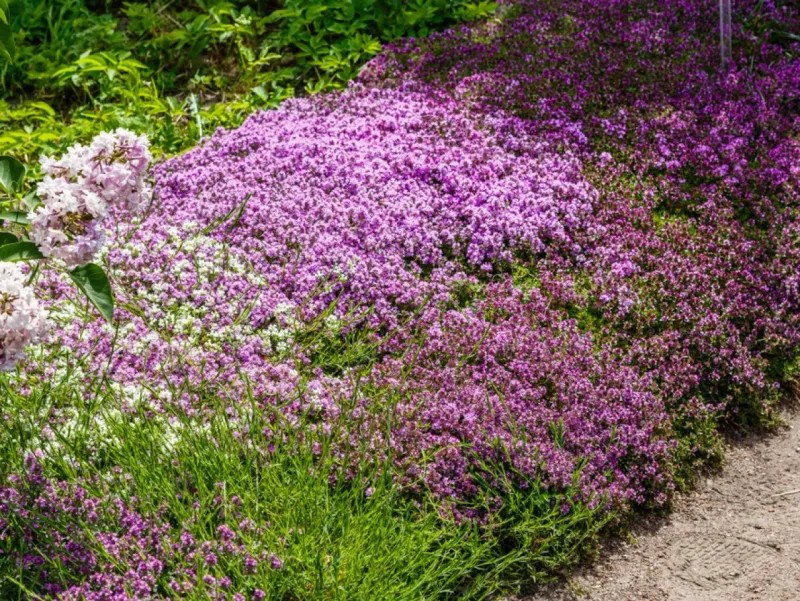
Timing the planting well makes a real difference.
Penn State Extension recommends planting most groundcovers in spring or fall so the plants can root in before summer heat and drought stress arrive.
A spring planting in North Carolina, say March through early May depending on your region, gives the thyme several weeks to establish before temperatures regularly push above 90 degrees.
Fall planting works too, and the cooler soil often encourages faster root development.
Spacing is where many gardeners want a single rule, and honestly, the nursery tag is the better guide.
NC State lists creeping thyme as needing approximately 12 inches to 3 feet of available space, and cultivar growth rates vary enough that one universal distance does not apply.
A faster-spreading selection planted too close will crowd the zinnias; a slower one planted too far apart leaves bare soil gaps that weeds will fill before the thyme does.
Read the tag, then space accordingly.
Keep the thyme away from zinnia crowns.
Reviews of living-mulch systems identify competition for water and nutrients as a real concern when a groundcover grows directly against the main crop.
Leave a small open ring of bare soil around each zinnia stem, and watch through the season for wilting, slow growth, or excess moisture collecting at the base.
If the thyme creeps too close and the zinnia looks stressed, pull the thyme back a few inches.
The most important decision here involves the long view.
Zinnias are annuals, meaning they finish their season and come out.
Creeping thyme is perennial and will remain in the bed year after year, with woody stems that can complicate renovation.
Plant it only where a permanent low groundcover will stay welcome after the zinnias are gone.
Use Mulch While Thyme Fills In
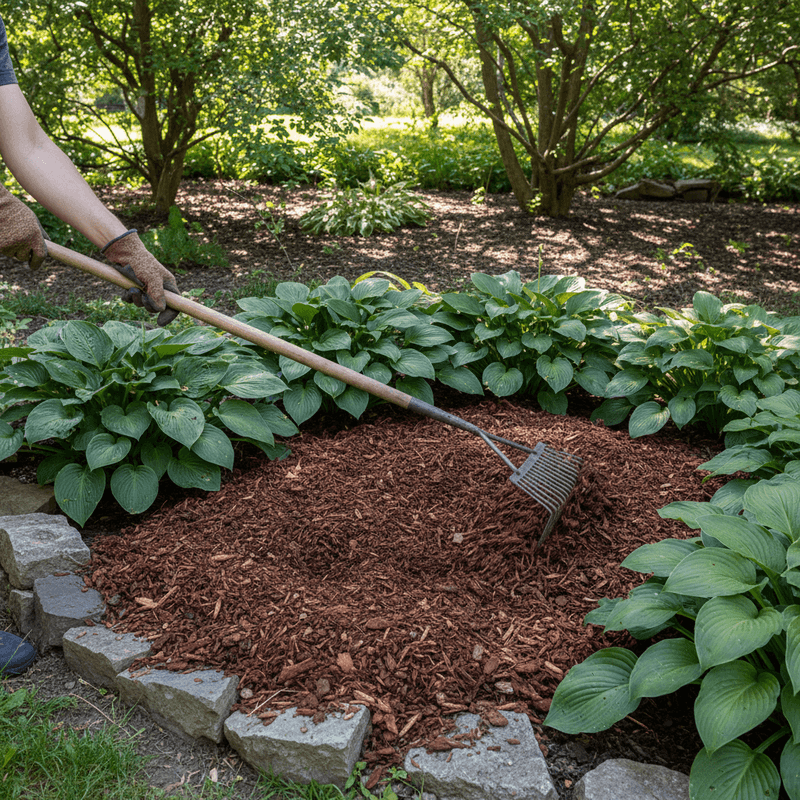
A newly planted thyme plug covers maybe 4 inches of ground.
The rest of the bed is still bare soil, still open to every weed seed that floats in on a July breeze.
That gap between what the young plant covers and what you need covered is exactly why mulch remains necessary even after the thyme goes in.
Penn State Extension’s groundcover guidance supports applying at least 2 inches of organic mulch after planting while keeping it away from plant crowns and stems.
Shredded hardwood, pine bark, or pine straw all work well in North Carolina beds.
The mulch handles early-season weed suppression while the thyme slowly spreads toward its neighbors, and it also moderates soil temperature and holds some moisture during the dry stretches between afternoon storms.
Watering is not optional during establishment, even though mature creeping thyme is drought tolerant.
New roots need consistent moisture to push into the surrounding soil, and a plant that dries out in its first month will not spread the way you need it to.
Water young thyme regularly until you see active new growth extending beyond the original plug size.
Zinnias have their own water needs.
The NC State Extension Gardener Handbook on herbaceous ornamentals notes that garden annuals generally perform best with consistent moisture during the growing season, roughly 1 inch of water per week depending on soil type and rainfall.
During a Piedmont heat stretch with no rain for 10 days, that 1-inch target matters a lot.
Mulch reduces evaporation and helps you stay closer to that goal without watering every single day.
Think of the mulch as the workhorse for the first season, doing the job the thyme will eventually take over.
Manage Competition Through Summer
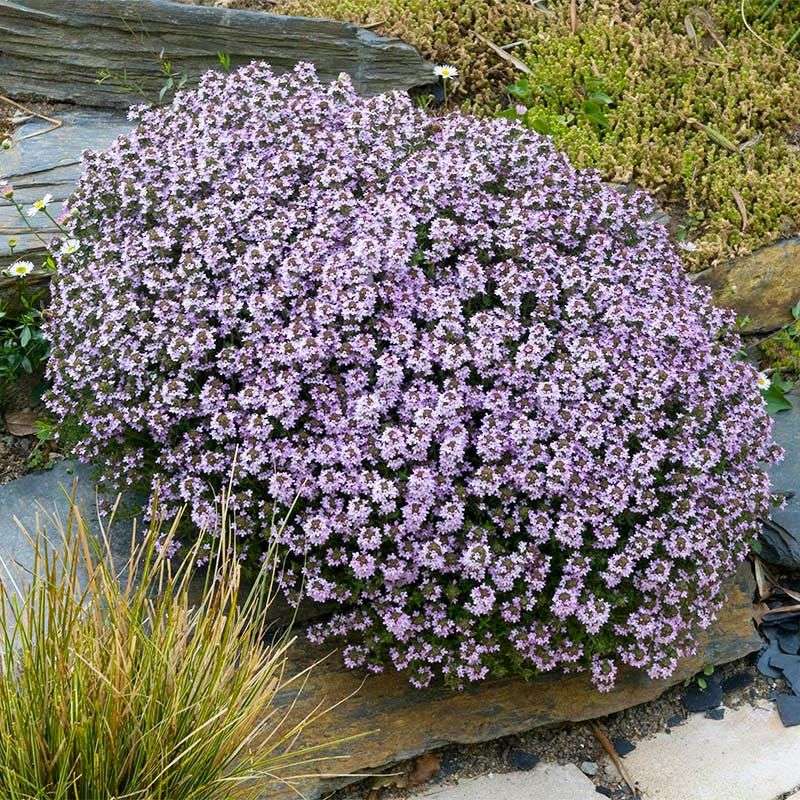
Once the thyme is established and spreading, the temptation is to walk away and let it work.
That approach will cost you.
An established groundcover reduces the number of weeds you pull, but it does not reduce the number of times you walk the bed and check on things.
Perennial weeds are the ones to watch most closely.
Penn State Extension’s weed control guidance is consistent: perennial weeds with underground roots or rhizomes push through established plantings and must be pulled repeatedly before they get large enough to set seed or spread further.
Pull them young, when the roots are shallow and the soil is soft after rain.
Watch the thyme itself as summer heats up.
During dry spells, a spreading groundcover competes with nearby plants for the same limited soil moisture.
Living-mulch research identifies water and nutrient competition as a real factor that can reduce main-crop performance.
If a zinnia starts wilting on a morning that is not especially hot, check whether the thyme has crept against its base and pull it back a few inches.
NC State notes that light pruning helps manage creeping thyme’s growth and reduce woody stems as the season progresses.
Trim back any stems that are getting thick or sprawling too far into the zinnia zone.
No precise shearing formula applies to every cultivar, so let the plant’s appearance guide you rather than following a rule of thirds.
Good drainage, full sun, and appropriate watering are what actually protect zinnias from North Carolina’s summer fungal diseases.
The thyme does not prevent powdery mildew or leaf spot.
Success in this bed looks like fewer bare patches, lower weed pressure overall, and zinnias that are not competing with a groundcover that has outgrown its welcome.
Decide Whether A Permanent Carpet Fits
Creeping thyme is a good fit for a sunny, well-drained bed where you want something permanent and low-maintenance at ground level.
Sandy Coastal Plain soil, a south-facing Sandhills border, or a well-amended Piedmont raised bed with reliable drainage are the kinds of sites where it can genuinely perform year after year.
If the bed drains slowly, stays shady part of the day, or gets replanted frequently, a different approach will serve you better.
NC State confirms that creeping thyme is native to Northern Europe, Western Asia, and Northern Africa, not to North Carolina.
It can attract bees and butterflies when it flowers, which is a genuine benefit for a pollinator-friendly yard, but do not expect it to repel ticks, mosquitoes, Japanese beetles, or any other pest.
Its documented value for insects is attracting them, not driving them away.
The woody stems that develop over time can make bed renovation harder than it sounds in October.
If you replant your zinnia beds from scratch each spring, the thyme will outlast the zinnias and complicate the digging.
Install it only where a lasting low border will stay welcome for several seasons.
Penn State Extension’s groundcover guidance frames the realistic formula well: site preparation, correct plant selection, mulch during establishment, consistent watering until rooted, and continued monitoring through the growing season.
Creeping thyme fits inside that formula as a useful living layer, not a substitute for it.
A bed that gets all five elements right will genuinely have fewer weeds to pull by August, and that is a summer evening well worth the spring effort.