
The Native Texas Plants Homeowners Grow Along Fence Lines Instead Of Crape Myrtles
Follow us on Google
You step outside before breakfast and the patio already feels warm, a familiar Texas summer greeting.
That heat can feel like a heavy blanket, especially when you eye a bare fence line begging for something beautiful and tough.
Crape myrtles seem like the obvious answer, but many Texas homeowners end up fighting mildew, pests, and endless spraying instead of enjoying the porch.
There are native heroes that laugh off triple-digit days, feed the birds, and ask for almost nothing.
Let us walk the fence line together and find plants that genuinely belong in your Texas yard.
1. Crape Myrtles Bring Hidden Headaches Along The Fence
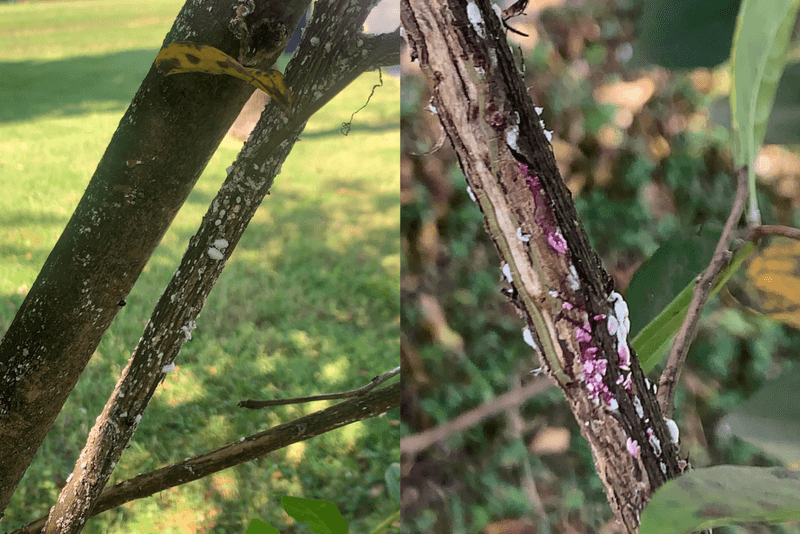
You have probably admired crape myrtles (Lagerstroemia indica) blooming through summer, but look closer and the trouble shows up.
Many Texas gardeners battle powdery mildew, a white-to-gray fungus that coats new shoots when nights hover between 60 and 80 degrees Fahrenheit, which is basically our spring and fall.
Then come the pests.
Crape myrtle aphids leave sticky honeydew that grows into black sooty mold.
Crape myrtle bark scale, first spotted in Texas in 2004, crusts the branches gray and white.
Fixing all this means fungicides and insecticidal soaps on repeat.
Here is where it gets tricky.
These plants also want high-nitrogen feeding in April, June, and August, plus deep watering after each meal, or the blooms slow down.
Their thin bark scrapes easily against a lawnmower along a busy fence line.
None of that is a disaster, but it is a lot of evenings spent spraying instead of relaxing.
And you have better options waiting.
2. Autumn Sage Offers Reliable, Radiant Color
Picture a plant that shrugs off the scorch and still blankets your fence with color for months.
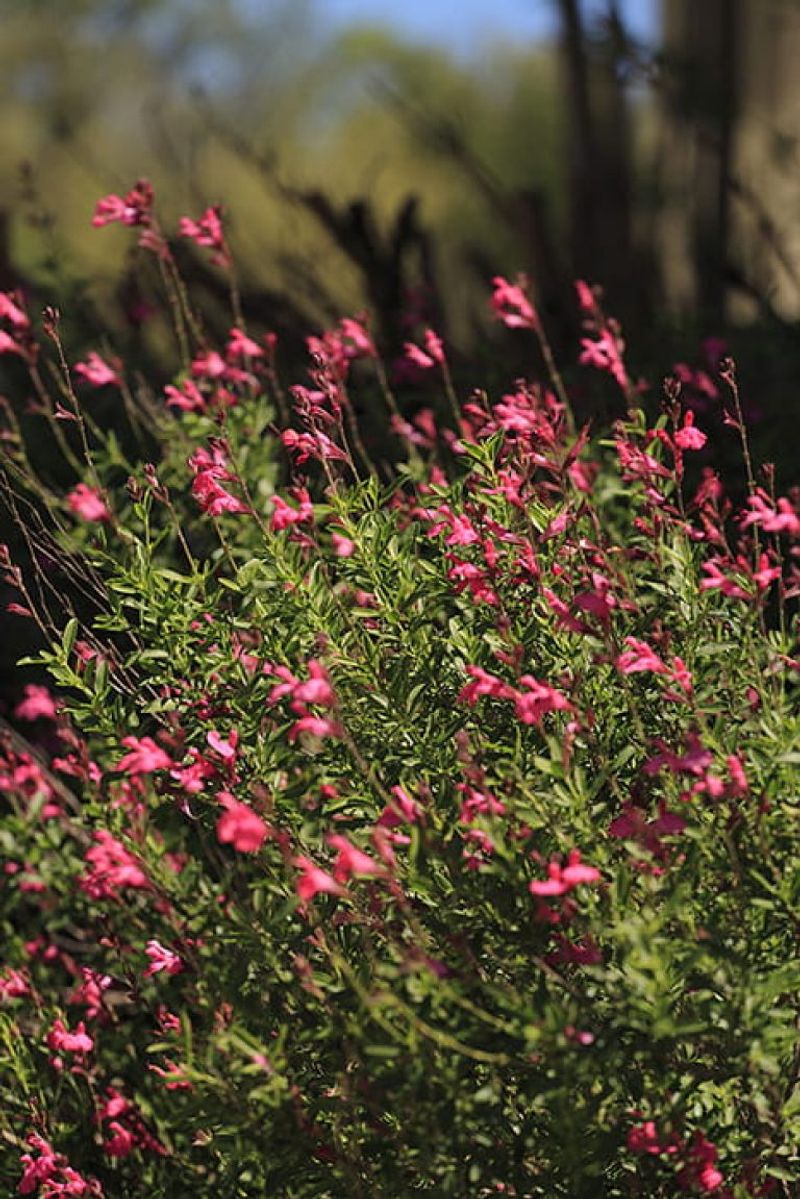
That is autumn sage (Salvia greggii), sometimes called cherry sage, and it blooms from February through November across the Hill Country and Central Texas.
It comes back every year and genuinely loves our heat.
Flowers arrive in red, pink, purple, white, and two-tone, on a tidy plant about 2 to 3 feet tall and wide.
That size makes a soft, flowing screen without swallowing your yard.
Give it full sun, though a little afternoon shade helps during the worst July heat.
Once established, it needs almost no extra water, even through long dry stretches.
To keep it full, trim it by half in mid-February and again by a third in mid-August.
Hummingbirds, bees, and butterflies show up like clockwork.
And deer usually walk right past it, which is a small miracle in Texas.
3. Flame Acanthus Brings Hummingbirds To Your Yard
Some spots along the fence bake so hard that most plants quit.
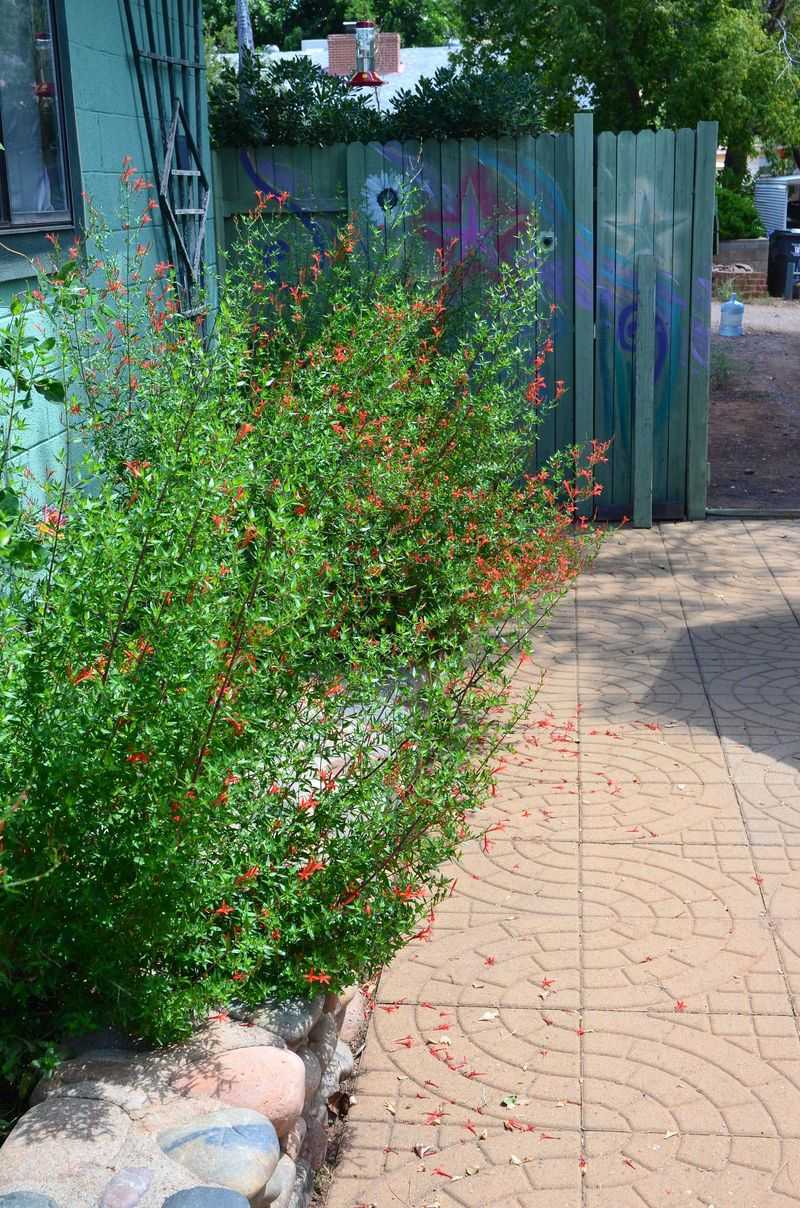
Flame acanthus (Anisacanthus quadrifidus var. wrightii), also called hummingbird bush, actually thrives in that reflected heat.
Its bright orange-red tubular flowers pour out from late spring into fall, right when hummingbirds need them most in South-Central and West Texas.
The plant grows 3 to 6 feet tall and 3 to 5 feet wide with an airy, mounded shape.
For a screen, space plants about 3 to 4 feet apart.
It is not picky about soil.
Rich garden loam, heavy clay, or rocky shallow ground all work, as long as water drains away.
Overwatering actually saps its vigor, so this hero prefers a little neglect.
Prune it after the main flower flush so you do not cut off new buds.
Just know it self-seeds happily, quietly filling empty gaps with fresh plants.
Deer leave it alone, and your water bill will thank you.
4. Turk’s Cap Thrives In Shade And Sunlight Alike
Finding one plant for a fence line with patchy sun and shade feels genuinely tricky.
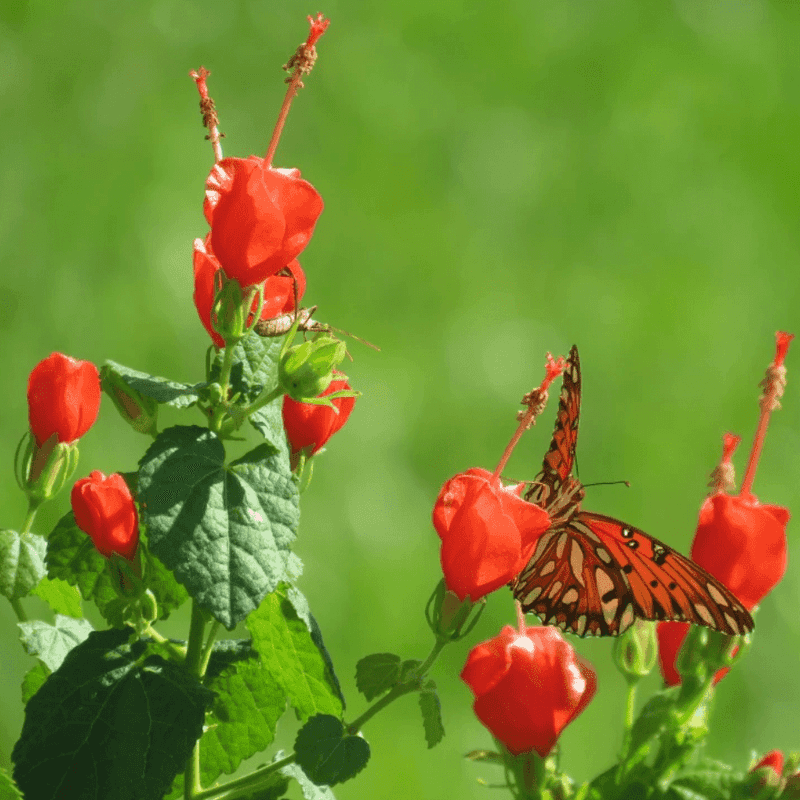
Turk’s cap (Malvaviscus arboreus var. drummondii) solves it by thriving in full sun or deep shade without complaint.
Sometimes called sleeping hibiscus, its red, twisted blooms never fully open, curling into little turban shapes from May through November.
That is six straight months of color in spots where other plants sulk.
It usually stays 2 to 3 feet tall and about 4 feet wide, though it can stretch to 10 feet in perfect conditions.
In Central and South Texas it returns year after year.
Up in North Texas it may die back in winter and sprout again from the roots in spring.
Once settled, it handles heat and drought beautifully, though a deep soak during long dry spells keeps it lush.
Hummingbirds and butterflies work the flowers, and birds devour the little red fruits.
Cut it back in late fall, and it bounces back strong.
5. Texas Lantana Is A Butterfly Haven For Sunny Spots
That stretch of fence that turns into an oven by noon needs a plant that treats 100 degrees like a compliment.
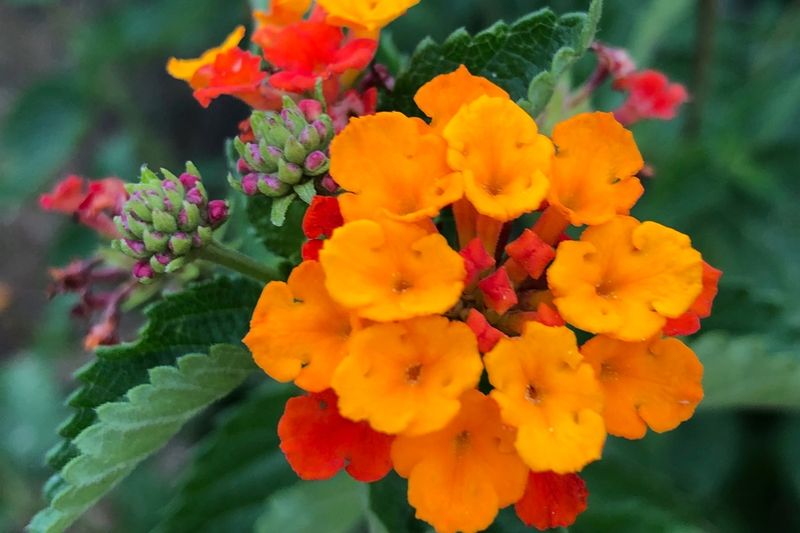
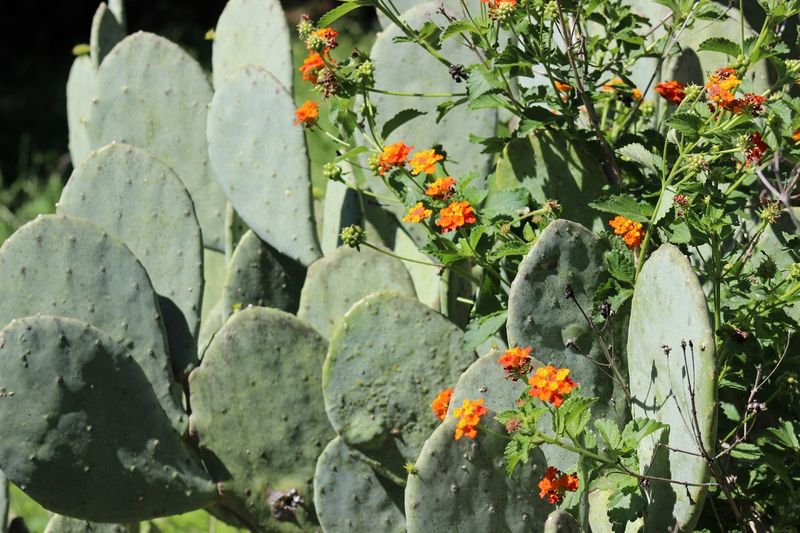
Texas lantana (Lantana urticoides, also listed as Lantana horrida) is that superstar.
Its flower clusters open yellow, mature to orange, then deepen to red, and it blooms harder as the heat climbs.
New growth starts around April, and color runs from May through November.
The plant reaches 4 to 6 feet tall and wide, forming a dense, showy screen.
It handles sandy, clay, or thin soils, but it truly hates standing water.
Even in triple-digit weather, one deep watering a week is usually plenty, and the leaves droop slightly to tell you when they are thirsty.
Butterflies, hummingbirds, bees, and cardinals all crowd in, though the dark berries are poisonous to people and pets, so plant with care around kids.
After it hardens off in winter, cut it nearly to the ground.
And choose the true Texas native, since many commercial types are non-native and can spread invasively.
6. Evergreen Wax Myrtle Gives You Year-Round Privacy
Sometimes what you genuinely want is a wall of green that never drops its leaves, even in the coldest Texas winter.
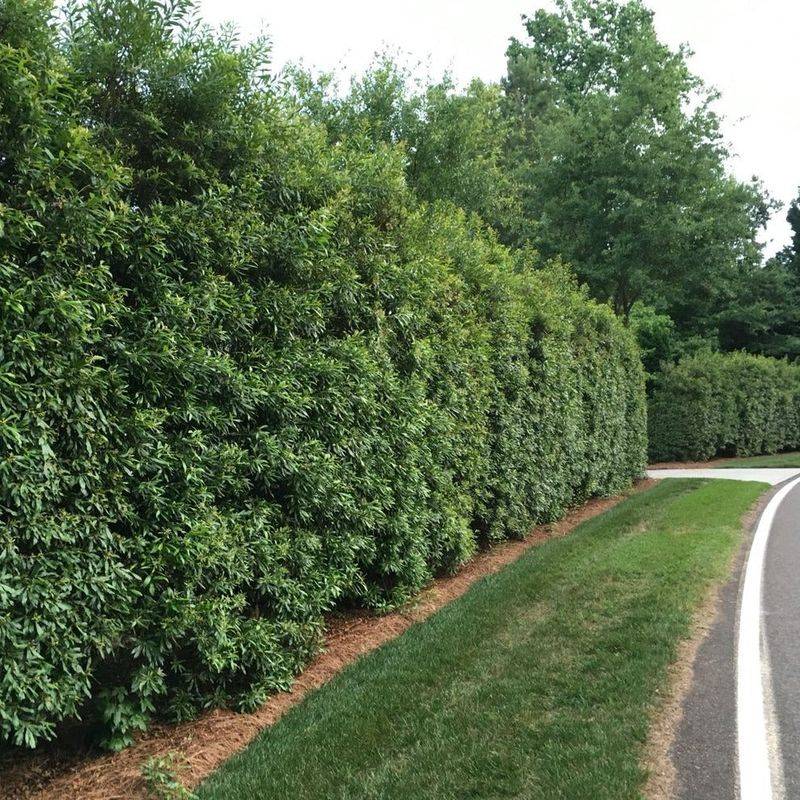
Wax myrtle (Morella cerifera) delivers that solid, dependable screen.
Brush against its leaves and they release a clean, fragrant scent.
It adapts to heavy blackland clay in North and Central Texas and tolerates both soggy downpours and long dry stretches, which is rare toughness.
Wax myrtle grows fast, filling gaps quickly to build privacy.
Left alone it can reach 10 to 20 feet tall with an 8 to 15 foot spread, but you can prune it to any height.
For a thick hedge, set plants 4 to 6 feet apart.
Its berries feed birds through winter when food runs thin, so expect goldfinches darting through the branches.
It takes full sun to partial shade and needs little water once established.
Just give it room, or plan on regular trimming to keep it in bounds.
7. Gregg’s Mistflower Throws A Fall Festival For Butterflies
As summer eases, most plants coast, but Gregg’s mistflower (Conoclinium greggii) is just clearing its throat.
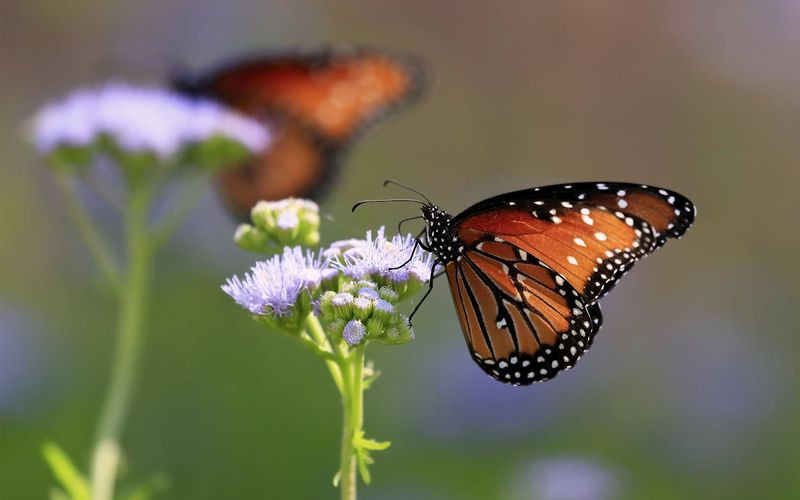
This West Texas native, also called palmleaf thoroughwort, puts on the best butterfly show of the year.
From late summer through fall, its fuzzy sky-blue flowers vanish under monarchs and queens during the great migration through Texas.
Few plants pull that kind of crowd.
It grows about 1.5 to 2 feet tall and spreads up to 6 feet, quietly colonizing space along a fence or filling in as a lively underplanting.
It is remarkably drought tolerant, hanging on with almost no irrigation even out in the demanding Trans-Pecos.
It loves full sun but appreciates a little afternoon shade in the hottest zones.
After the first hard freeze it dies back to the ground, then returns strong from the roots in spring.
Deer may nibble it, but its toughness means it usually recovers.
Plant it in a mass, then step back and watch your fence line come alive.
It is a simple way to bring genuine wonder home.
8. Match The Plant To Your Texas Soil And Region
The fastest way to lose a good plant is dropping it into the wrong ground.
Texas hides at least four soil personalities, and each one changes your choices.
North and Central Texas sit on heavy blackland clay that holds water, so wax myrtle and Turk’s cap feel at home there.
East Texas leans acidic and sandy, which autumn sage and lantana handle well with good drainage.
The Hill Country and West Texas run shallow, alkaline, and full of caliche, where flame acanthus and Gregg’s mistflower genuinely shine.
Zones matter too, stretching from about 6b in the Panhandle to 10b in the Lower Rio Grande Valley.
A hard freeze that kills a tender plant up north barely registers down south.
Texas A&M AgriLife Extension recommends matching natives to your local conditions rather than fighting them.
Dig a test hole, fill it with water, and if it drains within a few hours, most of these heroes will thrive.
Pick right, and you plant once instead of replanting every spring.
9. Plant Now And Water Deep To Get Them Started
A native plant only earns its low-maintenance reputation after its roots settle in, and getting there is on you the first season.
So timing matters.
Fall is the sweet spot in most of Texas, roughly October through November, because cooler air and occasional rain let roots grow while the tops rest.
Spring works too, as long as you beat the brutal summer heat.
When you plant, dig a hole twice as wide as the root ball but no deeper, then backfill with the same native soil.
Water slowly until the ground is soaked about 8 to 10 inches down.
For the first few weeks, water deeply once or twice a week, then taper off as the plant proves it can stand on its own.
Spread 2 to 3 inches of mulch around the base, keeping it a couple inches off the stem to avoid rot.
Mulch keeps roots cool and locks in moisture during those long dry stretches.
Do this right, and by next summer you will be watering far less and admiring more.
Your fence line will feel cooler, greener, and genuinely yours.