
These Invasive Plants Are Actually Illegal To Have Growing In Your Pennsylvania Yard
Follow us on Google
You walk out to grab the mail on a warm May morning in Pennsylvania and notice a pretty white-flowering tree at the edge of your lawn.
It smells a little off, but it fills in the fence line nicely, so you leave it.
Here is the quiet problem.
Some of the plants people have grown for years are now on the state noxious weed list, and a few are genuinely against the law to sell, plant, or move around.
Below are ten worth knowing about, plus what to do if one is hiding in your yard right now.
1. Pennsylvania Keeps An Official Illegal Plant List
Most folks have no idea their state keeps a list of plants you legally cannot sell or plant.
Pennsylvania does, and it is called the Controlled Plant and Noxious Weed Control List, run by the Pennsylvania Department of Agriculture.
Here is the plain-language version.
A noxious weed is a plant the state has decided is harmful to public health, crops, livestock, or property.
Once a plant lands on that list, you cannot sell it, move it, plant it, or propagate it inside the Commonwealth.
The list breaks into three groups.
Class A weeds are still limited in Pennsylvania and targeted for full eradication.
Class B weeds are already everywhere, so the state bans selling them but does not force you to rip out what you already have.
Class C weeds are not here yet but would cause real trouble if they arrived.
So there is a difference between owning and buying.
You will not get a knock on the door for a shrub you planted in 2009.
But that same shrub cannot legally be sold to your neighbor anymore.
Sellers usually get a short grace period to clear inventory before the ban kicks in.
Knowing which group a plant falls into tells you exactly how urgent your weekend is.
2. Giant Hogweed Can Burn Your Skin For Years
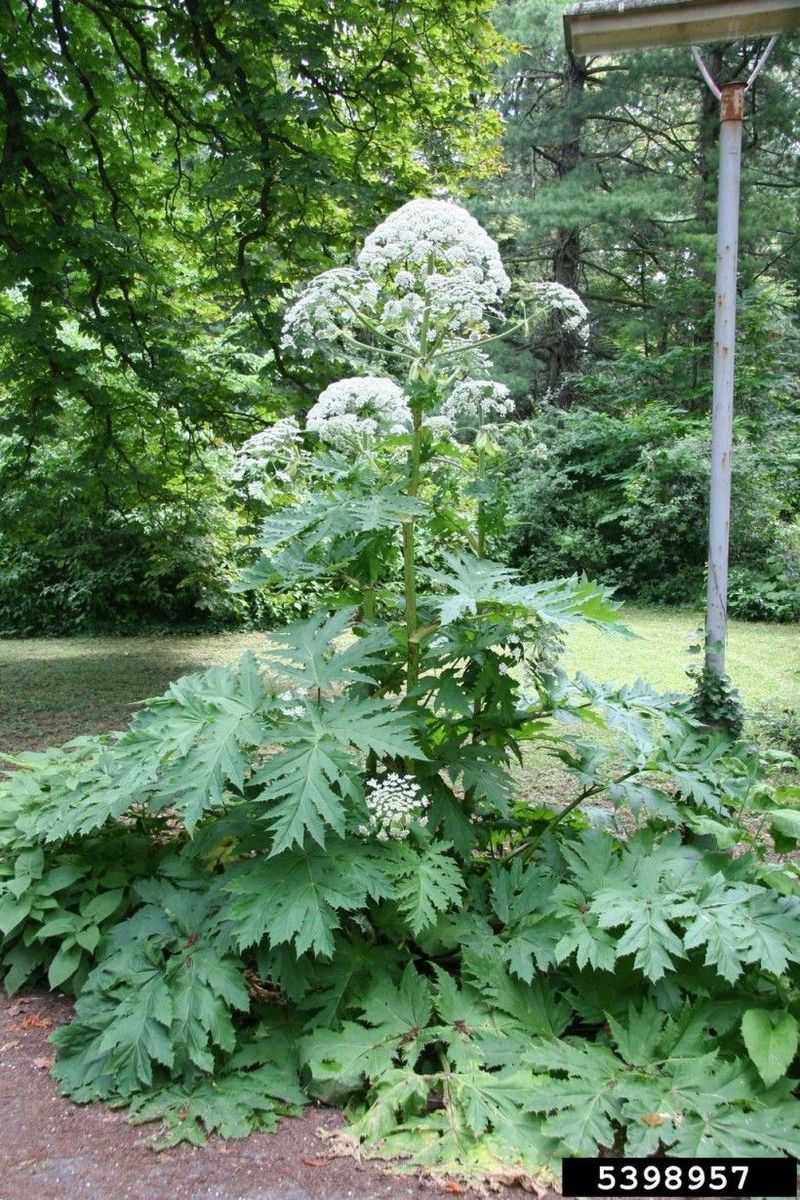
Picture a plant taller than your garage with white flower clusters the size of dinner plates.
Giant hogweed (Heracleum mantegazzianum) can reach 15 feet, and it is the one weed on this list that can actually hurt you.
Its sap is the villain.
If it touches your skin and then sunlight hits that spot, you can get severe, blistering burns that scar and come back for years.
A casual brush while weeding is enough to ruin your summer.
Giant hogweed is a Class A noxious weed with active eradication programs in Pennsylvania.
It loves moisture, so you will often find it along streams and ditches in central and western Pennsylvania, though it can pop up anywhere.
Look for the sturdy, hollow, purple-spotted stems.
Do not touch it.
Do not mow it, because that flings sap everywhere.
If you find it, report it.
Removal calls for full protective clothing, eye protection, and often a professional, and your local Penn State Extension office can walk you through safe next steps.
This is one weed where doing nothing yourself is the smart move.
3. Callery Pear Trees Are Now Banned To Plant
For decades the Bradford pear was the neighborhood darling.
Early white blooms, tidy shape, and every new development seemed to line the street with them.
That love story is over.
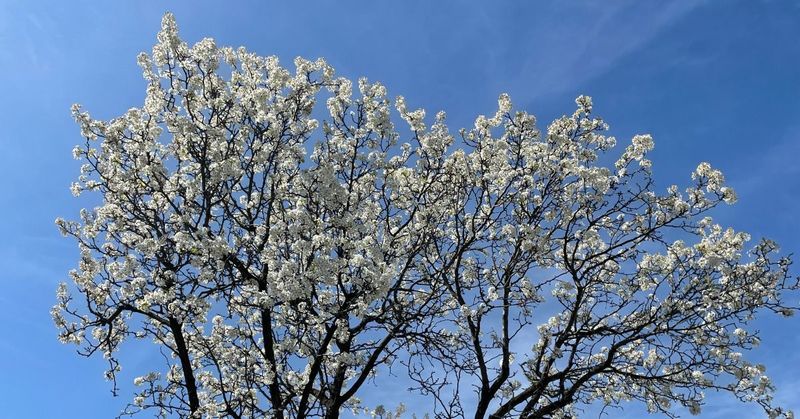
Callery pear (Pyrus calleryana), including the Bradford, is now a Class B noxious weed in Pennsylvania, and planting or buying new ones is illegal.
The trouble is twofold.
Those blossoms carry a genuinely unpleasant smell, and the trees escape into wild areas across southeastern Pennsylvania and the central valleys, forming dense thickets that crowd out native trees.
Their weak, tight branch angles also split easily under the ice storms and strong winds this state hands out every winter.
You are not required to cut down an existing Callery pear.
But if it is young or already dropping seedlings, taking it out is a real gift to the land around you.
For a spring bloom you can plant legally, try Allegheny serviceberry (Amelanchier canadensis) or eastern redbud (Cercis canadensis).
Space either one about 15 to 20 feet from the house.
You lose nothing on beauty, and you gain a tree the birds and bees actually want.
4. Japanese Barberry Is A Tick Motel
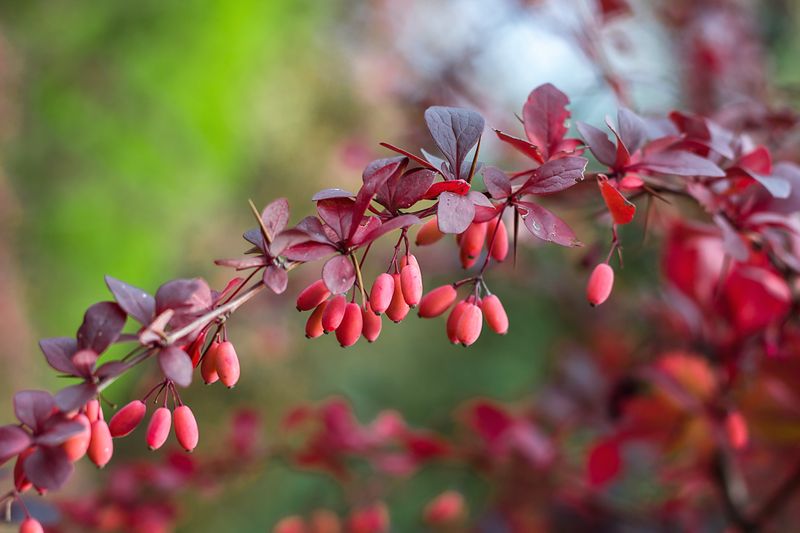
That neat little reddish-purple hedge shrub so many people planted around Pittsburgh and Philadelphia has a dirty secret.
Japanese barberry (Berberis thunbergii) is one of the best tick habitats in your whole yard.
Here is where it gets tricky.
The plant grows so dense and thorny that it traps humidity underneath, creating a warm, sheltered pocket that ticks love, including the ones that carry Lyme disease.
Many southeastern Pennsylvania gardeners have noticed more tick encounters right around their barberry patches.
It is a Class B noxious weed now, so its sale and propagation are banned in Pennsylvania.
On top of the tick problem, it shoulders out native understory plants and even shifts the soil chemistry.
Removing it is a thorny job, so wear thick gloves and long sleeves.
Cut the plant back, then dig out the root crown, or cut it repeatedly across one growing season to starve the roots.
Replace it with mountain laurel (Kalmia latifolia) or spicebush (Lindera benzoin), spaced about 4 to 5 feet apart.
A few approved sterile cultivars exist, but the plain species stays a problem.
Fewer ticks near the patio is a payoff you feel by June.
5. Japanese Knotweed Grows Through Concrete
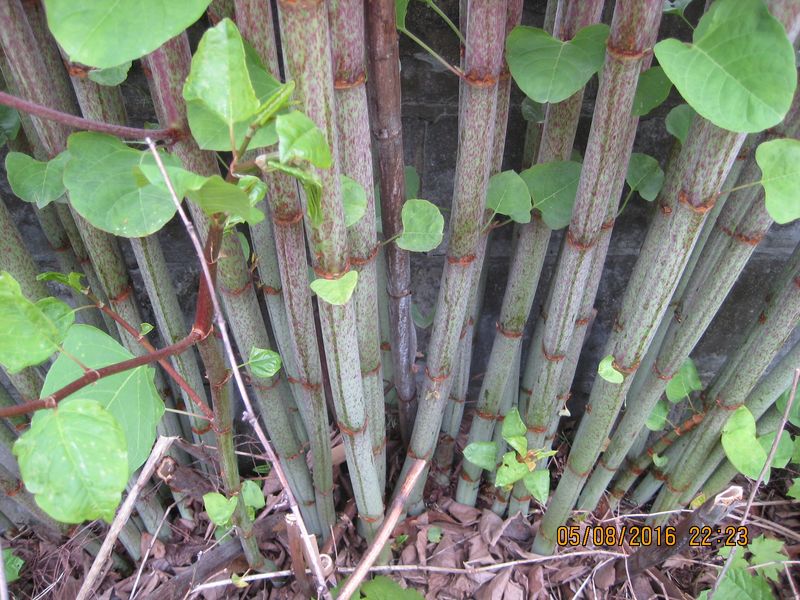
Imagine a bamboo-looking plant shoving up through a crack in your driveway, then heading for the foundation.
That is the everyday reality of Japanese knotweed (Reynoutria japonica), a Class B noxious weed.
You will spot the hollow, reddish-brown, bamboo-like stems that can top 10 feet, forming stands so thick nothing else survives underneath.
It shows up along stream banks, roadsides, and disturbed ground everywhere from the Poconos to the Lake Erie region.
The real muscle is underground.
Its rhizomes, which are underground stems, can run 20 feet sideways and 10 feet deep.
Even a half-inch fragment can grow a whole new plant, which is why tossing clippings in the compost spreads it.
So do not rototill it, and do not haul cuttings around casually.
That is how a small patch becomes a neighborhood problem.
Beating it takes a long-term plan of repeated cutting plus herbicide, applied in late summer or early fall when the plant is pumping energy down to its roots.
Expect to treat it for several years running.
Patience is genuinely the whole strategy here.
Persistence, not a single heroic weekend, is what wins.
6. Japanese Stiltgrass Takes Over Shady Spots Overnight
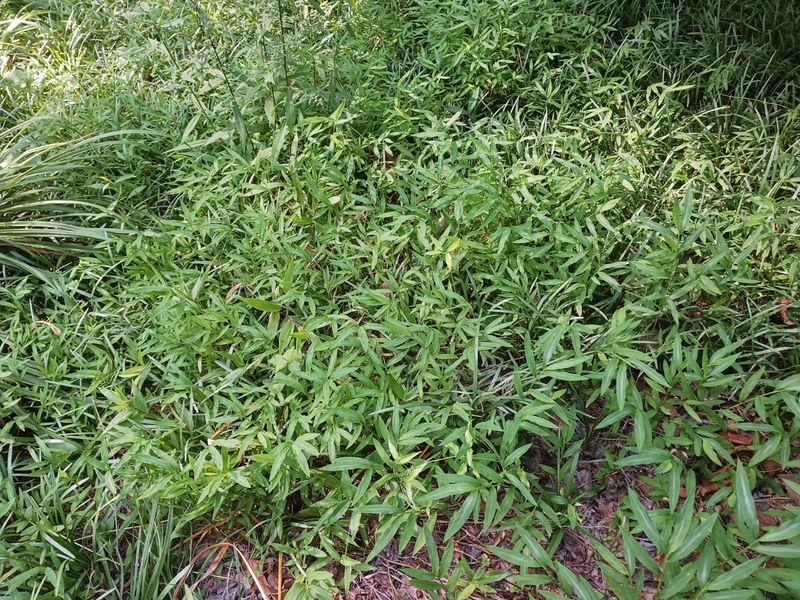
You step out on a late summer morning and a shady garden bed that looked fine in June is suddenly carpeted in pale green grass tinged with red.
That is Japanese stiltgrass (Microstegium vimineum), a Class B noxious weed recently added to Pennsylvania’s list.
The tell is a silvery stripe running down the middle of each leaf.
This annual grass climbs to about 3 feet and blankets shaded to part-shaded ground, thriving in the humid Pennsylvania summer along woodland edges and garden borders.
Here is the catch that makes it stubborn.
It dumps huge amounts of seed that stay alive in the soil for 5 to 7 years, so one bad season sets up many more.
Meanwhile it smothers native wildflowers and tree seedlings.
For a small patch, hand-pull it before it sets seed in late summer, since the shallow roots give up easily.
For bigger stretches, a selective herbicide in late spring or early summer can help.
Mowing low in mid to late summer, around mid-August in central Pennsylvania, catches it just before seeding and cuts down next year’s crop.
Get it before the seed drops and you shrink the problem instead of feeding it.
7. Mile-A-Minute Weed Lives Up To Its Name
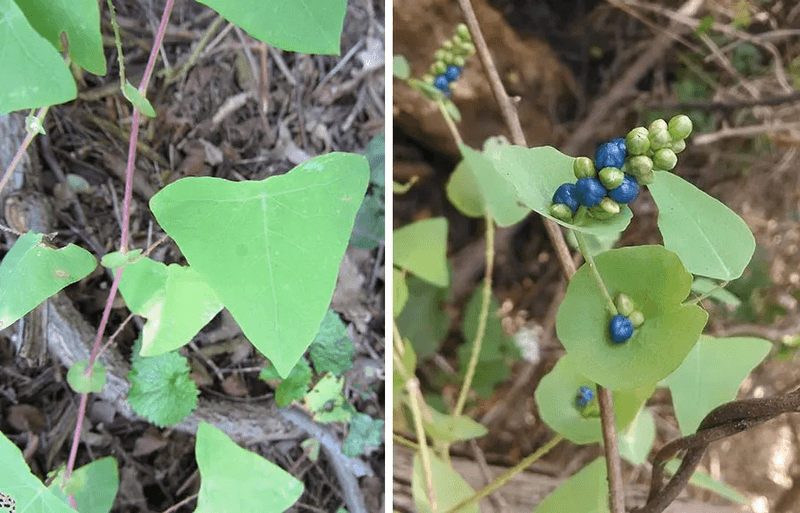
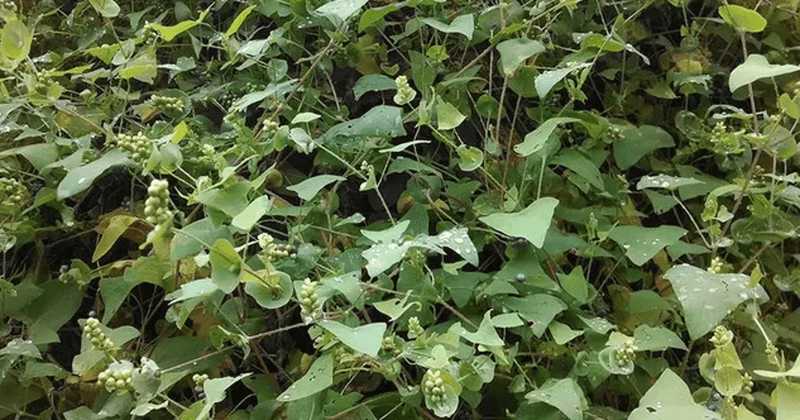
A thorny vine with little triangle-shaped leaves can blanket your shrubs so fast it feels like time-lapse video.
Mile-a-minute weed (Persicaria perfoliata) is not exaggerating with that name.
During peak summer it can grow up to 6 inches in a single day, a genuinely astounding pace.
It is a Class B noxious weed found across much of Pennsylvania, especially the central and southeastern regions.
Look for light green triangular leaves, barbed stems that grab at you, and bright blue berries in late summer and fall.
The vine throws a dense blanket over other plants, blocks the sun, and slowly kills whatever is underneath.
Birds spread the seeds, and those seeds stay viable in the soil for up to six years, so fall cleanup has to be careful.
Any vine carrying mature berries can start a fresh patch next spring.
For small infestations, pull the vines before they berry, ideally after a spring rain when soft soil lets the roots slip out.
For larger areas, selective herbicides work when timed to beat seed set.
A weevil called Rhinoncomimus latipes has helped manage big infestations in some spots, offering one more layer of control.
Handle it early and you skip years of chasing berries.
8. Owning A Plant And Selling It Are Different Crimes
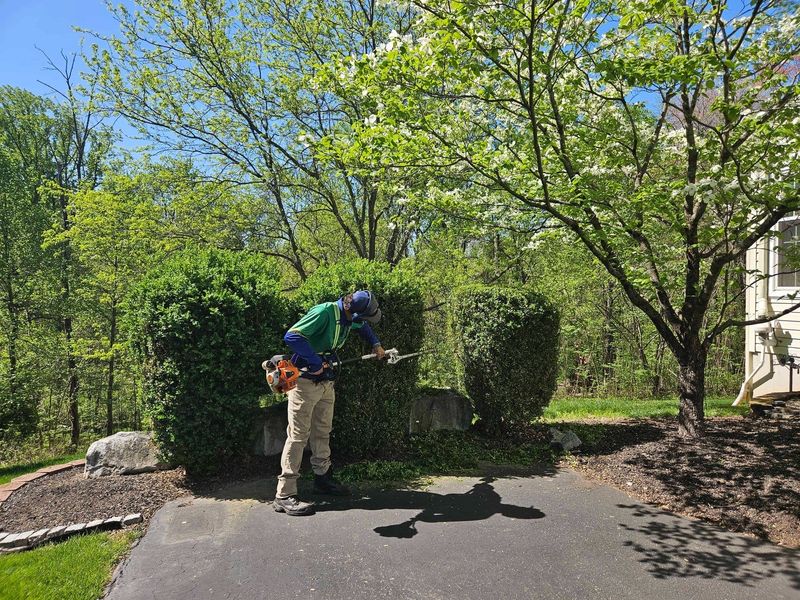
People panic when they hear illegal, picturing a fine for the shrub they inherited with the house.
Take a breath.
The law mostly targets movement and money.
Selling, transporting, planting, and propagating a listed noxious weed is what crosses the legal line in Pennsylvania.
For Class B plants, you are not required to remove what is already growing.
So the older Callery pear or barberry in your yard is not going to get you in trouble on its own.
What you cannot do is dig up a piece, pot it, and hand it to a neighbor or sell it at a plant swap.
Class A weeds like giant hogweed are the exception worth taking seriously.
Those are targeted for active eradication, so finding one means reporting it rather than ignoring it.
Here is the honest middle ground.
Even when removal is only encouraged, taking out a Class B invader is one layer in protecting the woods, streams, and yards around you.
Think of it less as avoiding a ticket and more as being a good neighbor to the whole street.
9. Native Swaps Give You The Look Without The Trouble
Ripping out a beloved plant feels like a loss until you see what can take its place.
Pennsylvania’s native lineup covers every spot those invaders were filling.
Want the white spring show the Callery pear gave you?
Serviceberry and eastern redbud handle it and feed migrating birds and native bees on the way through.
Redbud does well across much of the state, from the warmer Delaware Valley up into the central valleys.
Need a shrub where barberry used to sit?
Spicebush and mountain laurel bring texture without the thorns or the ticks.
Mountain laurel, the state flower, actually thrives in the acidic, rocky soils of the Allegheny Plateau and Laurel Highlands.
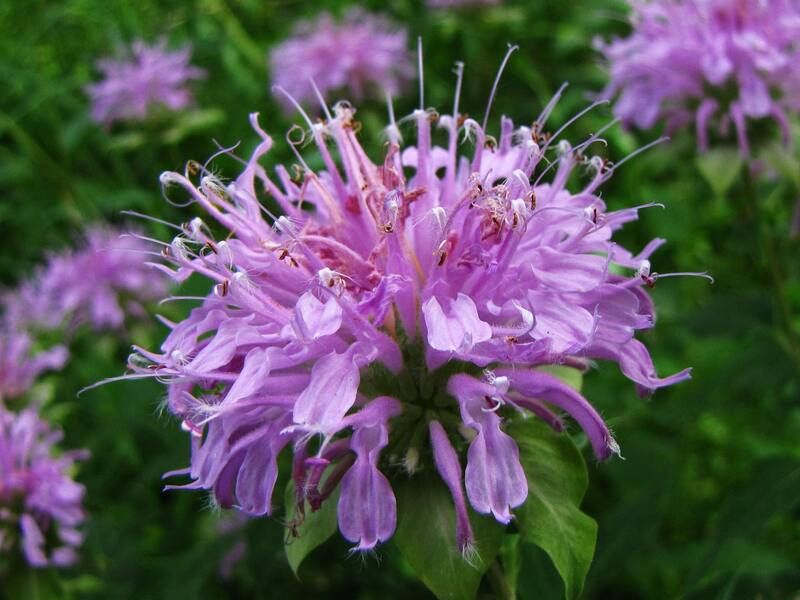
For sunny beds and pollinators, plant bee balm, black-eyed Susan, Joe Pye weed, native asters, goldenrod, or a native milkweed for the monarchs that pass through in late summer.
Space bee balm about 18 inches apart to keep airflow up and powdery mildew down.
Switchgrass and Pennsylvania sedge fill ground that stiltgrass would have grabbed, and they hold together through freeze-and-thaw winters.
You end up with more butterflies, fewer legal worries, and a yard that actually belongs here.
10. When To Call Penn State Extension For Help
Sometimes the smartest move is admitting a plant is over your head.
That is not giving up, that is knowing when to bring in the pros.
Giant hogweed is the clearest example.
With sap that burns skin for years, it is worth a call to your county office or the Pennsylvania Department of Agriculture rather than a risky solo attempt in shorts and sneakers.
Penn State Extension is the free, trusted resource for the rest too.
They can confirm an ID from a photo, tell you which class a weed falls under, and lay out timing for cutting or herbicide that actually matches your region and soil.
Timing really is everything with these plants.
Late summer into early fall works for knotweed treatment, while late spring suits stiltgrass, and the northern tier and higher elevations run a few weeks behind the warmer southeast.
So take a clear photo, note where the plant is growing and how big the patch is, and reach out before it seeds.
You do not have to memorize every rule on that state list.
You just have to notice the plant, ask a good question, and pick one weekend to start.
That is enough to make your corner of Pennsylvania a little wilder in all the right ways.