
The 8 Florida Edible Ornamentals UF/IFAS Says Belong In Every Front Yard
Follow us on Google
You walk out to grab the mail on a warm Florida morning and your front yard is all lawn, all thirst, all nothing you can eat.
The water bill keeps climbing and the grass keeps demanding.
But there is a smarter way that neighbors keep walking past without noticing.
Plenty of plants can look sharp by your front door and hand you fruit, tea, or herbs at the same time.
Here are eight that UF/IFAS Extension trusts for Florida yards, one at a time.
1. American Beautyberry
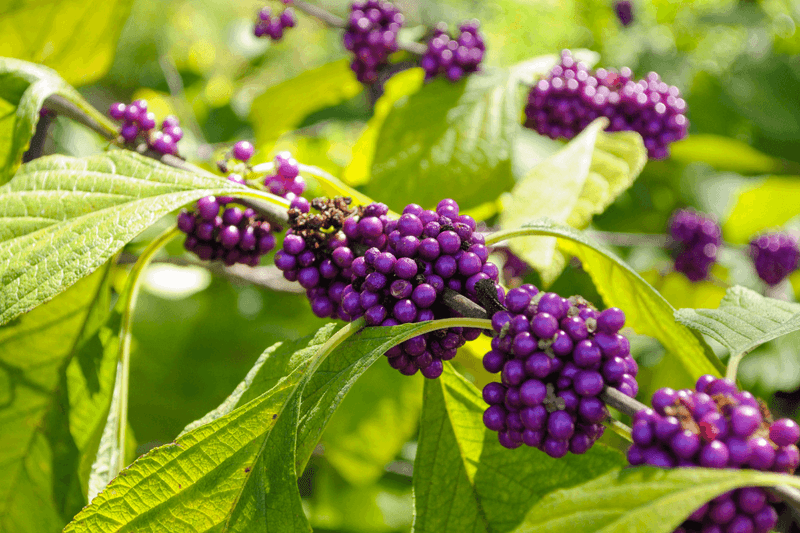
Nothing stops a walker like a shrub dripping in purple.
Those berries look almost fake, metallic clusters that wrap the stems of American beautyberry (Callicarpa americana) from late summer straight into winter.
Here is the turn most folks miss.
The fruit is genuinely edible, just tart, so people cook it down into jelly, sauce, or wine with sugar.
Straight off the branch it puckers, but a batch of beautyberry jelly surprises people every time.
Plant it in full sun to partial shade for the heaviest berry load, and give it room, since it reaches 3 to 8 feet tall and wide.
It handles USDA zones 7 through 11, which covers nearly all of Florida, and shrugs off drought once its roots settle in after a few months.
Prune in late winter to keep it bushy.
It stays mostly free of serious pests, so you are not spraying anything before the cookout.
And the birds work it hard in fall.
So you feed cardinals and mockingbirds while you keep the jelly, that is a fair trade for a plant that asks almost nothing back.
2. Southern Highbush Blueberry
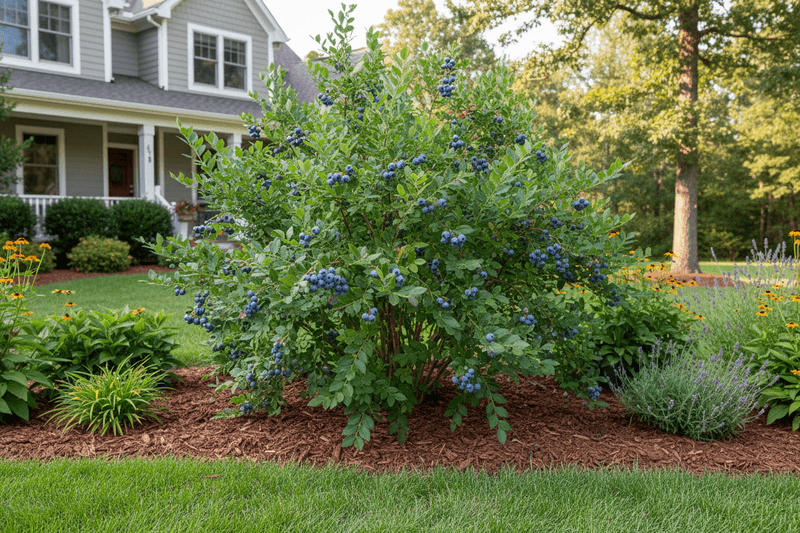
Picture a hedge along your walkway that hands out breakfast in May.
Blueberries (Vaccinium spp.) do that, and they earn their spot with more than fruit.
Spring brings little white and pink bell flowers, summer keeps the leaves clean and green, and fall can turn them red and orange.
Four seasons of looks, one sweet harvest.
Now the tricky part.
Blueberries want acidic soil, a pH between 4.5 and 5.5, which much of Florida already has in its sandy ground.
Give them full sun, at least 6 to 8 hours, and plant at least two cultivars of the same type so they cross pollinate.
Reach for Southern Highbush or Rabbiteye varieties bred for our low winter chill, especially in Central and South Florida.
Space plants about 5 feet apart for a hedge.
Southern Highbush stays around 3 to 6 feet, while Rabbiteye can stretch 5 to 15 feet.
They are not a set it and forget it plant.
Water regularly during dry spells and fruiting, and feed with an acid blueberry fertilizer two to three times a year.
Poorly drained pockets invite root rot, so avoid soggy spots.
Birds will find them fast.
Netting saves your crop, and a bowl of homegrown blueberries genuinely tastes like you won something.
3. Loquat
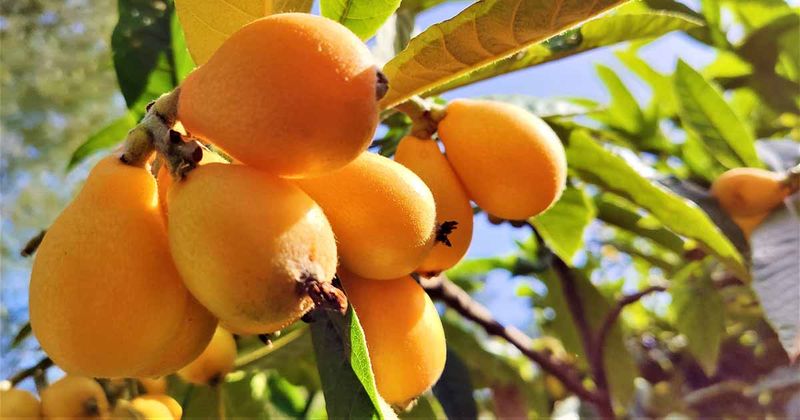
Late winter, when most fruit trees are bare sticks, the loquat (Eriobotrya japonica) is loaded with sweet orange fruit.
That off-season timing is its whole trick.
Big, stiff, corrugated leaves give it a bold evergreen look all year.
Fragrant white flowers open in fall and winter, then clusters of yellow-orange fruit ripen from late winter into early spring.
You harvest when your neighbors are still waiting on everything else.
The fruit tastes sweet and tangy, good fresh, in preserves, or baked into pies.
Even the flower petals are edible, mild and faintly sweet.
Loquats settle into most of Florida and have grown here since the late 1800s.
They want well-drained soil and prefer full sun, though they take some partial shade.
A mature tree hits 10 to 25 feet, but you can prune it down to a tidy front-yard size, spacing roughly 10 by 15 feet.
Once established it handles drought fairly well, though watering during dry spells and fruit set helps.
Feed two or three times a year with a balanced fertilizer.
Watch for fruit flies, scale, and fire blight in some areas.
But the fragrant blooms pull in pollinators, and a small shade tree that fruits in January is a genuinely rare gift in Florida.
4. Pineapple Guava
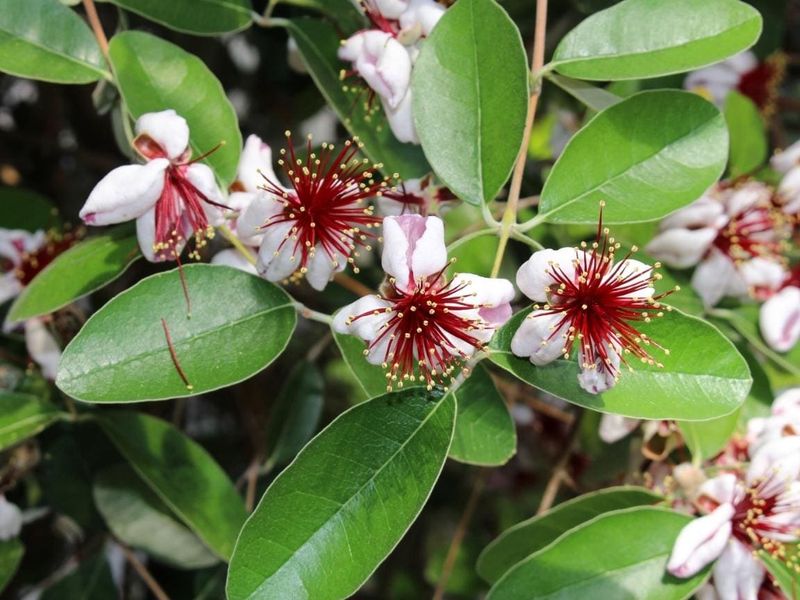
The flowers taste like candy.
That is the part that hooks people on pineapple guava (Acca sellowiana), because you can pluck a fleshy pink and white petal in spring and eat it right there, sweet and delicate.
Silver-green foliage sets this evergreen apart in a yard full of plain green.
In spring the blooms show off pink-white petals around bright red stamens, a display that stops traffic without trying.
Come late summer the fruit ripens, fragrant with a sweet guava-like flavor.
Most folks scoop it from the skin with a spoon or turn it into jam.
Tough is the word here.
It handles high heat and mild freezes, which fits many Florida regions from the Panhandle down through Central Florida.
Give it well-drained soil and full sun for the best flowers and fruit, though it tolerates light shade.
Expect a dense rounded shrub around 10 to 15 feet tall and wide, easily pruned smaller.
Once established it is moderately drought-tolerant, and a couple of feedings a year keep it productive.
A little winter chill helps fruit set.
It brushes off most pests.
So you get edible flowers, spoonable fruit, and silver leaves, all from one low-fuss plant that earns its place at the front door.
5. Rosemary
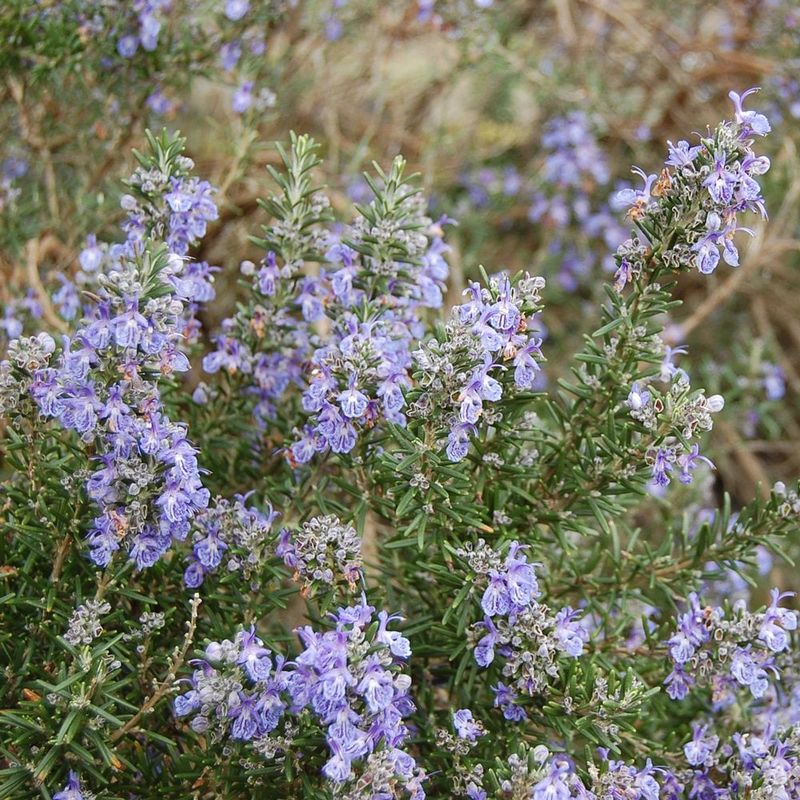
Brush past it and your whole hand smells like Sunday dinner.
Rosemary (Rosmarinus officinalis) does double duty, a fragrant evergreen shrub that also seasons your roast.
Fine needle-like leaves range from deep green to silvery, holding their look year round.
Small blue, pink, or white flowers open in winter and early spring.
Upright forms make neat little hedges, and trailing types spill beautifully over a retaining wall.
Here is where Florida works in your favor.
Rosemary loves the sandy, poor soils that frustrate other plants, and it wants full sun with sharp drainage.
It absolutely refuses wet feet, that is its one hard rule.
Depending on the cultivar it grows 2 to 6 feet tall and wide, and it asks for almost nothing once rooted.
Prune as you cook, snipping branches for the kitchen keeps it shaped.
The real threat is our humid summers and heavy downpours.
Overwater and root rot moves in fast, so plant it high and dry and let it dry out between soakings.
Stressed plants can pick up mealybugs or spider mites.
Being this drought-tough makes it a genuinely Florida-Friendly pick that trims your water bill.
A hedge you can smell, shape, and cook with feels a little like cheating.
6. Kumquat
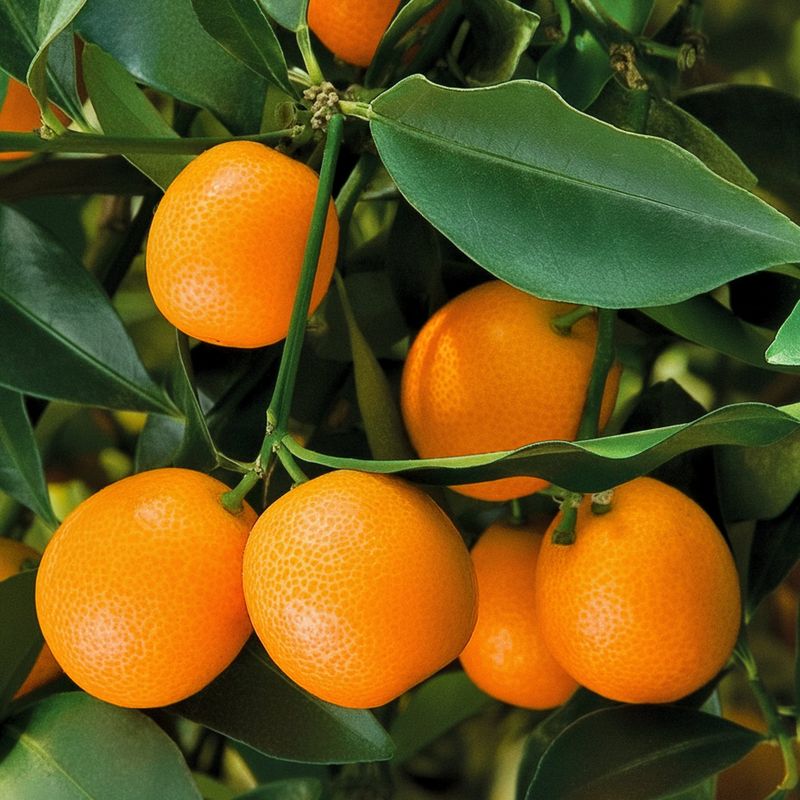
You eat the whole thing, peel and all.
That is what makes kumquats (Fortunella spp.) so much fun, the sweet skin plays against the tart pulp in one bite.
As a small evergreen tree it looks the part too, with dense glossy dark green leaves and bright orange jewels clinging to the branches through the cooler months.
Its compact frame fits a front yard or a large container by the porch.
Kumquats are the easygoing member of the citrus family.
Give them full sun and well-drained soil and they ask less than most citrus, which makes them forgiving for newer gardeners.
They reach a manageable 6 to 10 feet, though some push to 15.
Water young trees regularly and through dry periods, and feed three to four times a year with a citrus fertilizer.
Enjoy the fruit fresh, candied, or in marmalade.
They shrug off cold better than most citrus, tolerating the brief snaps of North and Central Florida.
Still, they share the family troubles, citrus canker, scale, whiteflies, and leafminers all pay visits.
Keep an eye on them and act early.
A tree this pretty that hands you a whole snack in December is worth the watching.
7. Muscadine Grape
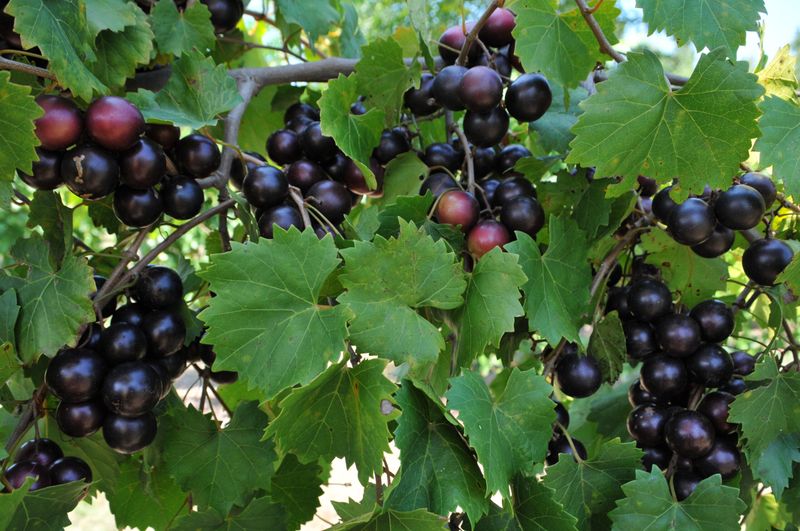
Train it over an arbor and your front walk gets instant shade plus dessert.
Muscadine grapes (Vitis rotundifolia) are native to Florida and the Southeast, so they actually thrive in the heat and humidity that melts fussier grapes.
Big, thick-skinned, and boldly flavored, these grapes go fresh, into juice, jelly, or wine.
The lush vine looks like a living roof, and the ripening clusters add their own show.
Do not underestimate its muscle.
A mature vine can spread 15 to 30 feet or more, so it needs a genuinely sturdy arbor or trellis, not a flimsy one.
Space multiple vines about 5 feet apart.
Give it full sun, 6 to 8 hours, and well-drained soil.
Some varieties are self-fertile, others need a compatible pollinator vine, so check before you buy.
Heavy winter pruning is the price of admission.
Cut back the old wood, what gardeners call the previous season’s growth, so new fruiting shoots come on strong.
Water through establishment and dry fruiting stretches.
Pierce’s Disease and the grape leaf skeletonizer are the local antagonists here, so lean on disease-resistant varieties.
As Florida natives, they are built for our storms and swelter, and an arbor of ripe muscadines is a backyard cookout waiting to happen.
8. Yaupon Holly
Here is a fact that surprises almost everyone.
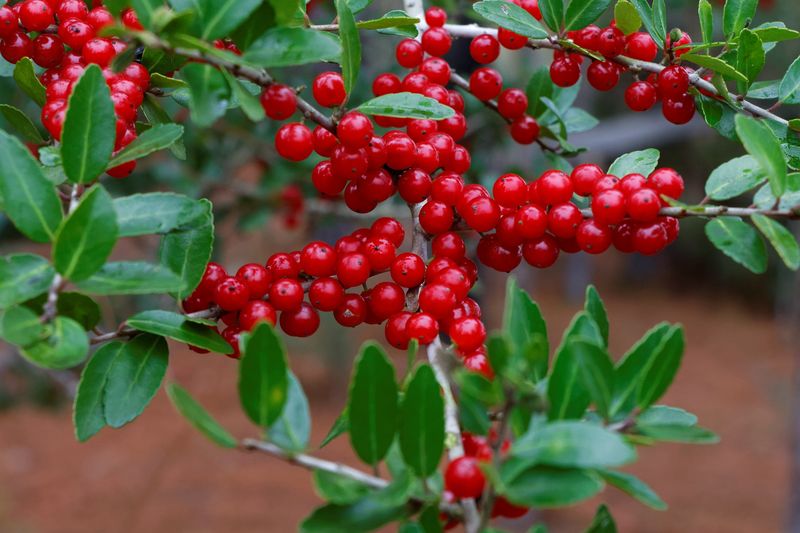
The only caffeinated plant native to North America grows right here, and it is yaupon holly (Ilex vomitoria).
Its dried leaves brew into a mild tea, the old cassina tea Native peoples drank for centuries.
Skip the berries though, those are for the birds, not for you.
On female plants they turn bright red in fall and winter and glow against the dark green leaves.
Few shrubs bend to your will like this one.
Cultivars run from 2 to 5 foot dwarfs perfect for foundations to small trees hitting 15 to 25 feet, plus weeping forms with real character.
Prune it into a crisp hedge or let it go natural.
It is genuinely tough.
Full sun to partial shade, sandy acidic soil, even poorly drained low pockets, it takes them all.
Salt tolerance makes it a smart pick along both the Gulf and Atlantic coasts, where salt spray burns lesser plants.
Once established it barely needs water.
For a heavy berry show you need a male plant somewhere nearby, since only females fruit.
Native across Florida, it handles hard freezes up north and year-round warmth in the far south, and it stays essentially pest and disease-free.
Grow your own caffeine and feed the winter birds, that is a quiet kind of proud.