
Why A Black Racer Sliding Through Your North Carolina Yard Is Actually Good News
Follow us on Google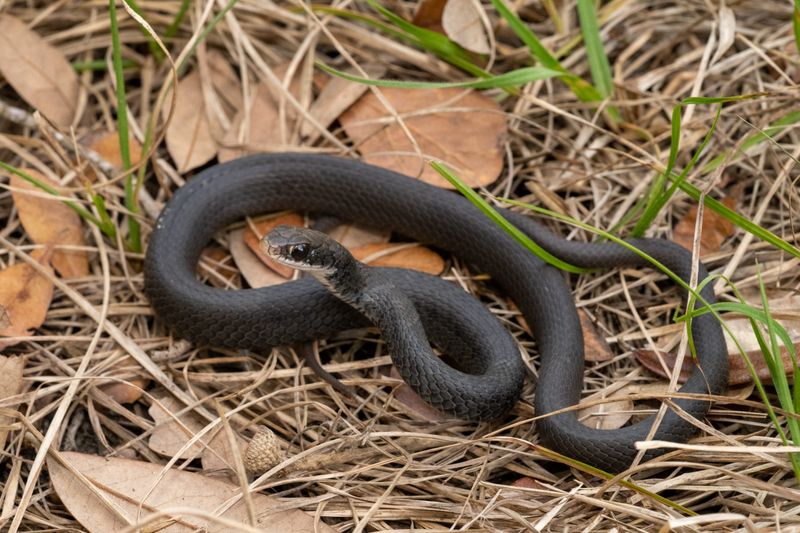
You’re pulling weeds along the fence line when something long and dark slips through the grass about three feet away.
Your heart jumps, the trowel goes flying, and suddenly the whole yard feels a little less safe.
But before you call anyone or reach for anything, take a breath, because that sleek black snake may be doing quiet work in your yard that most homeowners never realize.
A confirmed black racer, Coluber constrictor, is a native North Carolina predator, and understanding what its visit actually means can change how you think about your yard entirely.
A Confirmed Black Racer Is a Native North Carolina Snake
Before anything else, the sighting has to be confirmed.
Not every dark snake crossing a North Carolina lawn is a black racer, and that distinction matters before you decide how to feel about it.
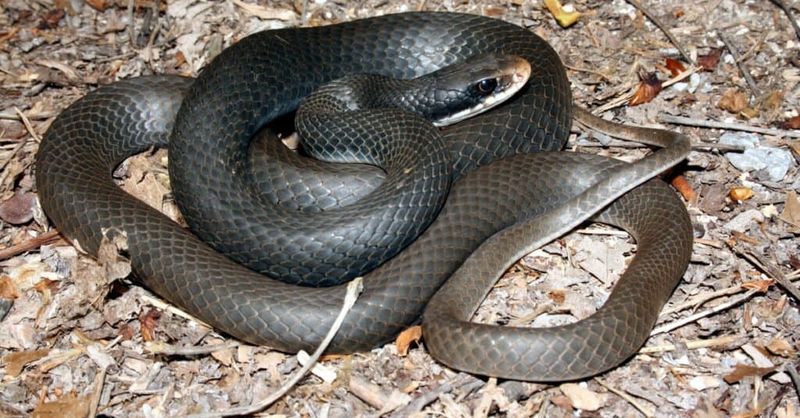
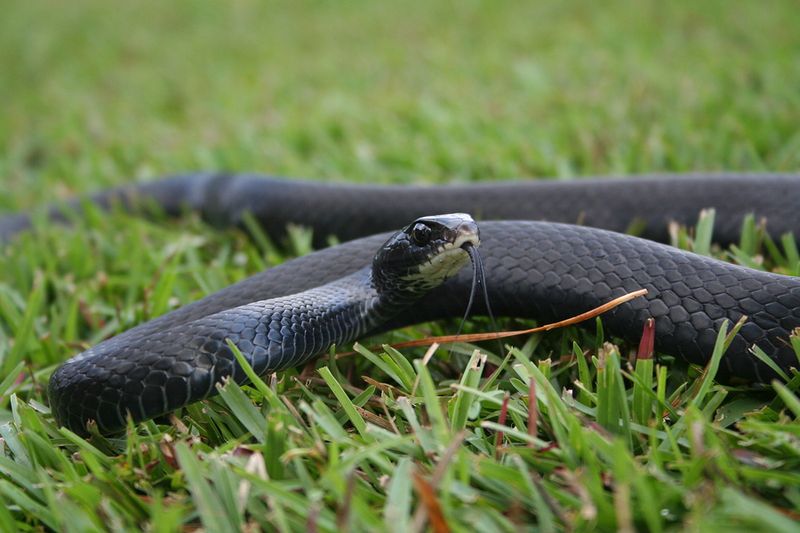
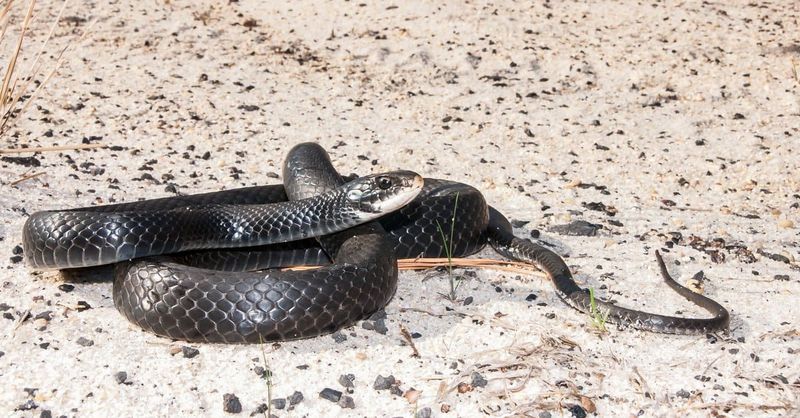
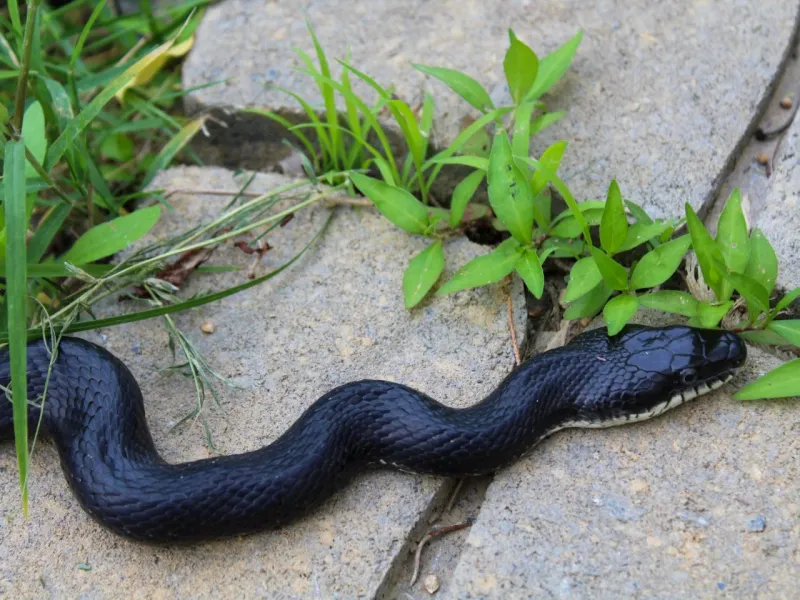
An adult black racer is slender and smooth-scaled, usually solid black or very dark gray, often with a white or pale chin.
North Carolina Wildlife Resources Commission notes that adults can reach about 66 inches, which is long enough to get anyone’s attention.
They are found statewide, from the mountains to the Coastal Plain, and they hunt during the day, so a daytime sighting in the yard is exactly what you would expect.
Here is where people trip up: juvenile racers look nothing like the adults.
Young ones may be gray with brown or reddish blotches along the back, which makes them easy to confuse with other species.
A dark-snake description alone cannot pin down the species, and that matters because your response should depend on what you are actually looking at.
One more thing worth clearing up: the scientific name Coluber constrictor sounds like this snake squeezes its prey to death, but NC State Extension explains that racers actually consume prey alive rather than wrapping around and suffocating it.
The name is a historical quirk, not a behavioral description.
The article’s qualified premise is this: a confirmed black racer can be a genuinely beneficial native predator in your yard.
But an unidentified snake is just that, unidentified, and no one should handle or reassure themselves about an animal they cannot name with confidence.
Its Presence Signals Habitat and Prey, Not a Yard Score
Spotting a racer along your back fence or near the garden bed can feel like a verdict on your yard.
It is not.
What a racer sighting actually tells you is narrower and more useful than that.
Racers favor open, shrubby edges, recently disturbed ground, and places where mowed lawn meets taller vegetation or woods.
They need basking spots, cover, and access to prey.
If your yard offers any combination of those things, a racer may pass through, hunt, warm itself on a sunny driveway, or move between habitat patches nearby.
Forest Service study on racer habitat use found that landscape disturbance can affect how racers move and how often people see them, meaning more sightings do not automatically equal more snakes or better habitat.
Sometimes a change in vegetation just makes an existing snake more visible.
What prey the racer is after is also an open question.
It may be hunting insects, frogs, lizards, or rodents, or it may simply be crossing your yard on the way somewhere else.
Florida Fish and Wildlife guidance notes that frequent snake sightings near buildings can sometimes indicate available rodents, so a racer’s presence does not prove the yard is rodent-light.
It also does not prove a serious infestation.
The honest read is that your property offers something the snake can use right now.
Think of the racer as one data point, not a report card.
NC State Extension’s wildlife guidance frames native snakes as part of a functioning food web rather than a measure of yard quality.
A racer belongs in that web.
Whether your yard earns high marks overall is a separate question that one snake visit cannot answer.
A Racer Helps, But It Cannot Run Your Pest Program
Here is the part that surprises most people: the racer’s diet is genuinely broad.
North Carolina Wildlife Resources Commission lists small rodents, lizards, frogs, and insects among its prey.
NC State Extension adds amphibians, birds, reptiles, eggs, and mammals to that list.
That range makes the racer a generalist predator, not a dedicated mouse-control specialist.
A regional study published in the Herpetological Journal found that insects made up the majority of recorded prey for racers in one population, which shows how much diet can shift by location, season, size, and sex.
Calling any racer a dedicated mouse hunter is a stretch the evidence does not support.
That matters for pest expectations.
A racer may eat some animals you would rather have fewer of, and that is a real ecological contribution worth appreciating.
But the reviewed evidence does not show that one racer in your Piedmont yard will substantially reduce your rodent count, cut your tick exposure, shrink your mosquito population, or clear out Japanese beetles or stink bugs.
Those problems need their own targeted responses.
Address the rodent question directly: predators tend to use places where prey and shelter are available.
Florida Fish and Wildlife points out that a snake’s presence can coexist with an available prey base rather than signal a depleted one.
Seeing a racer does not mean your yard is overrun, but it does not mean it is clean either.
The most accurate framing is that a black racer is one helpful predator layer within a broader yard-management system.
It earns its place in the food web.
It just cannot carry the whole pest-control load on its own.
Do Not Confuse a Black Racer With Another Snake
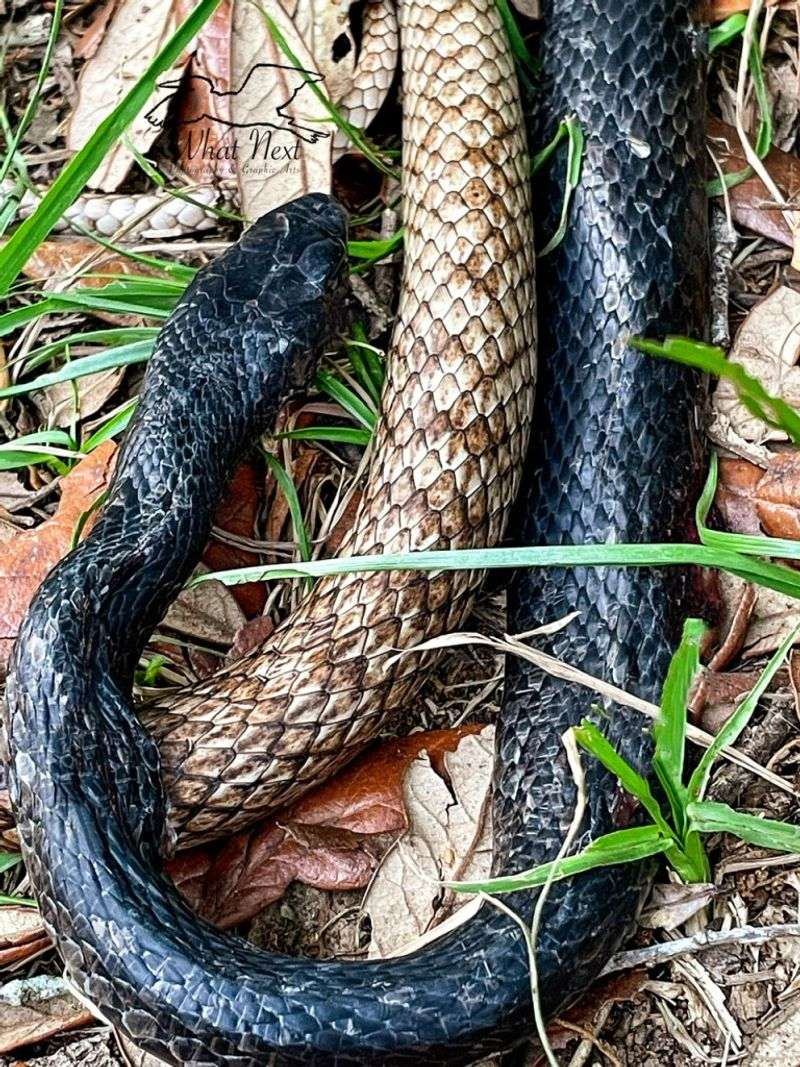
North Carolina homeowners use the words “black snake” for more than one species, and that casual label can create a false sense of safety.
Getting the identification right matters before any reassurance is offered.
The most common mix-up is with the eastern rat snake, which many people across the state also call a black snake.
An adult black racer has smooth, glossy scales and a noticeably slender build.
NC State Extension’s colubrid guide points out that eastern rat snakes have weakly keeled scales, giving the skin a slightly ridged feel, along with a checkerboard belly pattern.
NC Wildlife’s rat snake profile can help you compare the two side by side using a photograph.
Juveniles make things harder.
Young racers carry gray bodies with brown blotches, young rat snakes look similar, and northern water snakes plus eastern milk snakes can enter the picture too.
A dark or patterned juvenile snake near a porch or garage is genuinely difficult to name without a close look you should not take by hand.
North Carolina has six venomous snake species: the copperhead, cottonmouth, timber rattlesnake, eastern diamondback rattlesnake, pigmy rattlesnake, and eastern coral snake.
NC State Extension identifies copperheads as the most commonly encountered backyard venomous snake in the state.
Do not try to confirm species by head shape, pupil shape, or color alone.
NC State Extension cautions that distinguishing venomous from nonvenomous snakes by quick visual shortcuts is unreliable.
Keep children and pets back, give the snake space, and if you want a record, photograph it from a safe distance of at least 6 feet.
Identification from a photo is always safer than identification from arm’s reach.
Give the Snake a Clear Way Out
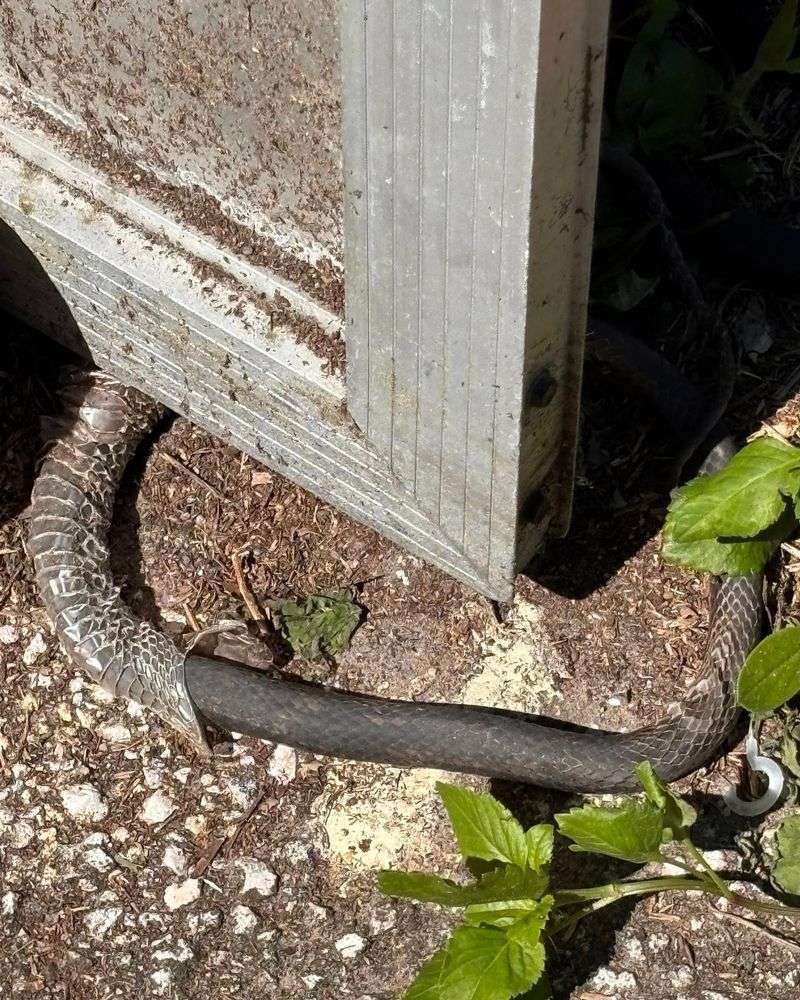
You come around the corner of the porch and there it is, coiled near the steps or stretched across the driveway in the afternoon sun.
The instinct is to do something immediately.
The right move is almost always to do less.
Keep people and pets back, stop moving toward the snake, and leave an unobstructed path away from the area.
NC Wildlife’s spring snake guidance says most snakes move away on their own when left undisturbed.
Give it time and a clear exit.
If the snake is moving slowly or seems reluctant to leave, it may be warming its body in the sun.
NC Wildlife notes that snakes are ectothermic, meaning their body temperature follows the surrounding environment, so a cool snake on a warm surface is often just thermoregulating, not threatening.
If you genuinely need the snake to move along, NC Wildlife’s coexistence guidance describes gentle spraying with a garden hose as an option for encouraging a yard snake to move away.
That is the extent of the intervention list.
Shovels, grabbing, pinning, and casual relocation are all off the table.
NC State Extension warns that moving snakes long distances can increase mortality because racers have distinct home ranges.
A cornered or handled racer may vibrate its tail, strike, release musk, or cause a superficial bite that breaks the skin.
The bite is not a medical emergency in the way a venomous bite would be, but it is an entirely avoidable outcome.
Distance is the practical rule that protects both the snake and the household.
Step back, wait, and let the racer do what it wants to do, which is leave.
Reduce Close Encounters Without Chasing Away Every Snake
Repeated encounters near the house, especially near a crawlspace door, garage, or porch foundation, are a signal that the area offers cover, prey, or both.
Changing those conditions is more effective than any product sold in a garden center.
Start with the structure itself.
NC State Extension recommends sealing gaps around foundations, doors, windows, pipes, crawlspaces, and vents using mortar, sheet metal, or hardware cloth.
NC State’s storm-response guide notes that openings one-quarter inch and larger are potential entry points, which is smaller than most homeowners expect.
A pencil-width gap under a door or beside a pipe is enough.
For a small protected area such as a play yard or garden bed, NC State Extension’s wildlife handbook describes a snake-proof fence built from one-quarter-inch mesh, extending 30 inches above ground and buried 6 inches underground, with a tight-fitting gate and cleared vegetation along the outside edge.
It is not a casual weekend project, but it works for a defined space.
Around the yard, remove debris piles, elevate firewood at least a foot off the ground and away from the house, reduce heavy mulch immediately beside foundations, and mow closely near structures.
These steps cut down on the cover and warmth that make a spot attractive to snakes and their prey alike.
Rodent food sources matter too.
NC Wildlife’s conflict-prevention guidance warns that outdoor pet food and bird feeders can attract rodents, and rodents attract the predators that follow them.
NC Wildlife also recommends removing spilled birdseed, fallen fruit, and accessible garbage to reduce that chain reaction near the house.
Skip the commercial repellents, mothballs, sulfur, and essential oils.
NC State Extension is direct: those products have not been scientifically shown to repel snakes and may harm people or pets if misused.
None of these yard changes will guarantee a snake-free property, but they can meaningfully reduce access, cover, and prey close to the places where your family spends time.
Manage Ticks and Mosquitoes Directly

A racer in the yard is genuinely good news in the limited sense that it is a native predator doing native-predator things.
But it cannot reliably reduce your tick or mosquito exposure, and waiting for a snake to handle those problems is a plan that will leave you itching.
For ticks, CDC tick-prevention guidance focuses on habitat management and personal protection: keep grass mowed short, clear tall grass and brush within 3 feet of the house, remove leaf litter, and place a wood-chip or gravel barrier at least 3 feet wide between the lawn and any wooded area.
Check people and pets after time outside, and use EPA-registered repellents as directed.
CDC’s Lyme disease prevention page reinforces those same steps as the core household strategy.
For mosquitoes, the most effective single action is removing standing water.
CDC’s Fight the Bite guidance recommends emptying containers, toys, buckets, saucers, and any other small water-holding items at least once a week.
Mosquitoes can complete a breeding cycle in as little as a week in a bottle cap’s worth of water.
For permanent water features like rain barrels or ornamental ponds, NC State Extension identifies Bacillus thuringiensis israelensis, commonly called Bti, as a larvicide option that targets mosquito larvae without harming other wildlife.
You can concentrate these changes around porches, play areas, and foundations while choosing how much broader yard habitat to retain elsewhere.
That balance does not guarantee every wildlife group will thrive, but it does mean your family spaces get targeted protection and the wider yard stays useful to native animals.
A confirmed black racer is one real contributor to your yard’s food web, and that is worth something.
It just works best as part of a system, not as a stand-alone answer to the bugs that cut the cookout short.