
Before You Spray That Yellow Patch, Here Is What It Might Actually Be Doing In Your North Carolina Lawn
Follow us on Google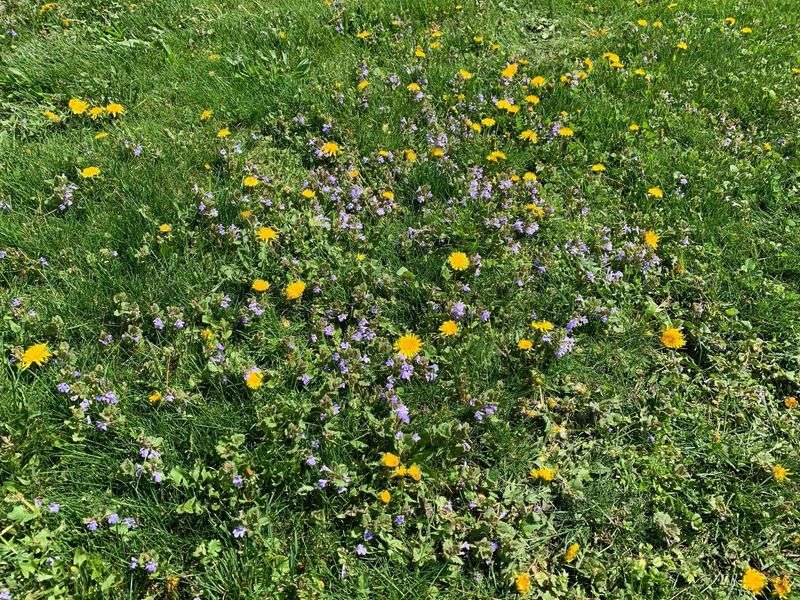
You step outside one morning, coffee in hand, and there it is again: that low yellow patch spreading through your grass like it owns the place.
The urge to grab the sprayer is completely understandable, but hold off for just a minute.
That little cluster of yellow flowers might be feeding bees that are already working your yard, and spraying the wrong plant at the wrong time can do more harm than you expect.
Knowing what you have growing there changes everything about how you handle it.
First, Check Which Yellow Flower You Have
Get down close before you do anything else.
A low yellow flower in a North Carolina lawn is not one single plant, and treating the wrong weed with the wrong product is a fast way to damage your turf without solving the problem.
The two most common culprits look surprisingly similar from a standing position but behave very differently once you know what to look for.
Check the leaves first.
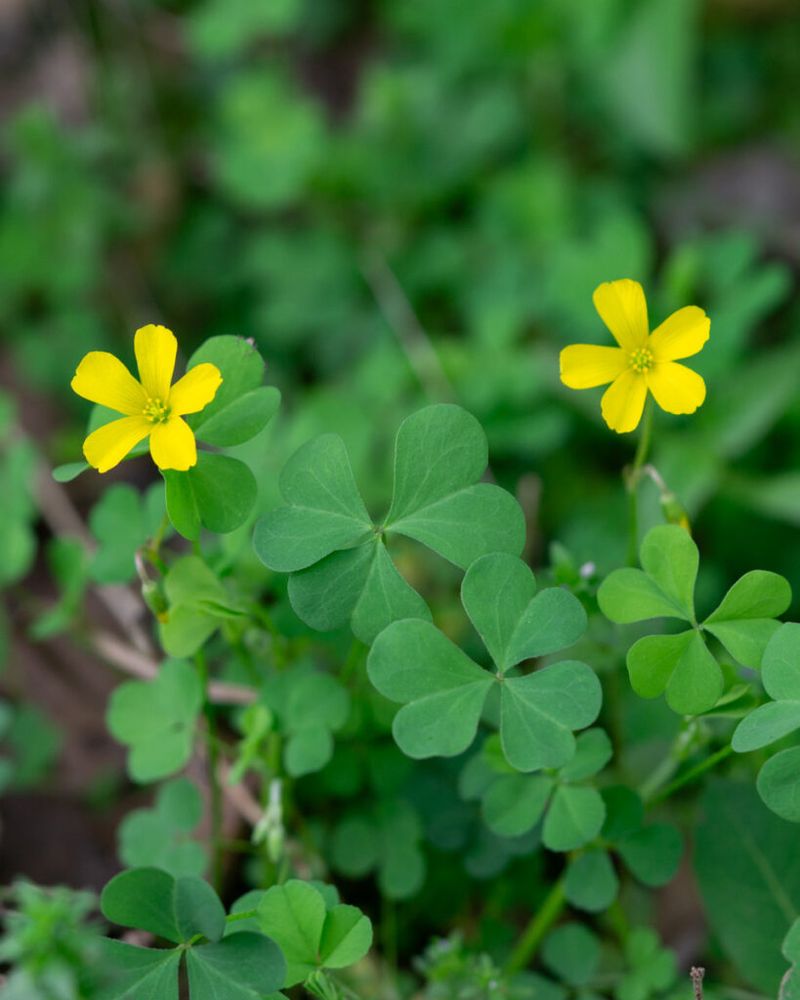
If the plant has three small heart-shaped leaflets that fold down at night and look a bit like shamrocks, you are probably looking at yellow woodsorrel, Oxalis stricta.
The stems tend to be lightly hairy, the plant stays low, generally 4 to 10 inches tall, and the flowers have five small yellow petals.
NC State Extension describes yellow woodsorrel as a low-growing perennial turf weed that spreads through seeds, rhizomes, and stolons, which explains why a small patch can quietly double in size by midsummer.
If the leaves are long, toothed along the edges, and arranged in a flat rosette right at soil level with no leafy stem, you are likely looking at common dandelion, Taraxacum officinale.
Its flower sits alone on a hollow stalk, and NC State’s weed identification guidance notes that the flower head is actually a composite of many small ray flowers packed tightly together.
Other yellow-flowering lawn weeds show up in North Carolina too: cat’s-ear dandelion, common groundsel, buttercup, and yellow cress can all appear in weak or disturbed turf.
The NC State Extension Gardener Plant Toolbox and TurfFiles are both good places to confirm an identification before you reach for any product.
Identification first, treatment second, every time.
Yellow Woodsorrel Is One Possible Match
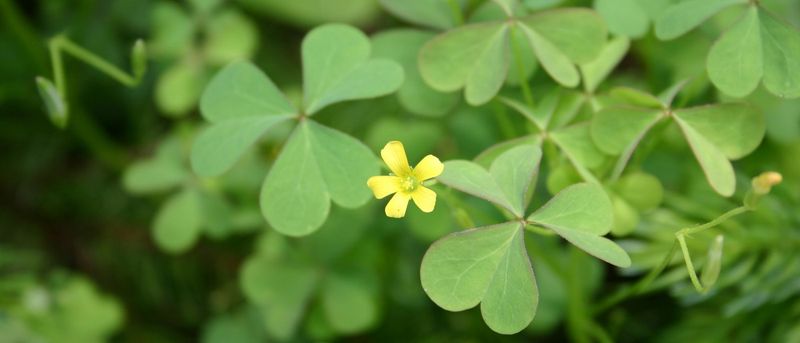
Those shamrock-shaped leaves are the giveaway.
If your yellow patch has three heart-shaped leaflets per stem and tiny five-petaled flowers no bigger than a pencil eraser, yellow woodsorrel is the most likely match.
The stems are noticeably hairy and stay low, spreading outward rather than growing upright, which is part of why the plant can cover a surprising amount of ground without ever getting tall enough to notice from the porch.
The NC State Extension Gardener Plant Toolbox classifies Oxalis stricta as native to North America, though it is worth knowing that native status for similar-looking Oxalis species can get complicated.
Some references note uncertainty about the plant’s full historical range, and several Oxalis species look nearly identical.
Treating the plant as commonly native to North Carolina, as NC State does, is the reasonable working position, but not every yellow Oxalis in every lawn carries the same classification.
What makes this plant persistent is its three-part spread strategy.
NC State Extension notes that yellow woodsorrel spreads through seeds, rhizomes, and stolons, and the seed capsules can actually eject seeds several feet from the parent plant when they dry and split.
That is how a single plant becomes a patch by August.
Small bees and other insects do visit yellow woodsorrel flowers for pollen and nectar.
That visit is real and worth acknowledging.
What the evidence does not support is saying that native bees depend on this plant or that removing it harms bee populations in any measurable way.
The value is supplemental, not essential.
Dandelion Offers Supplemental Early Forage
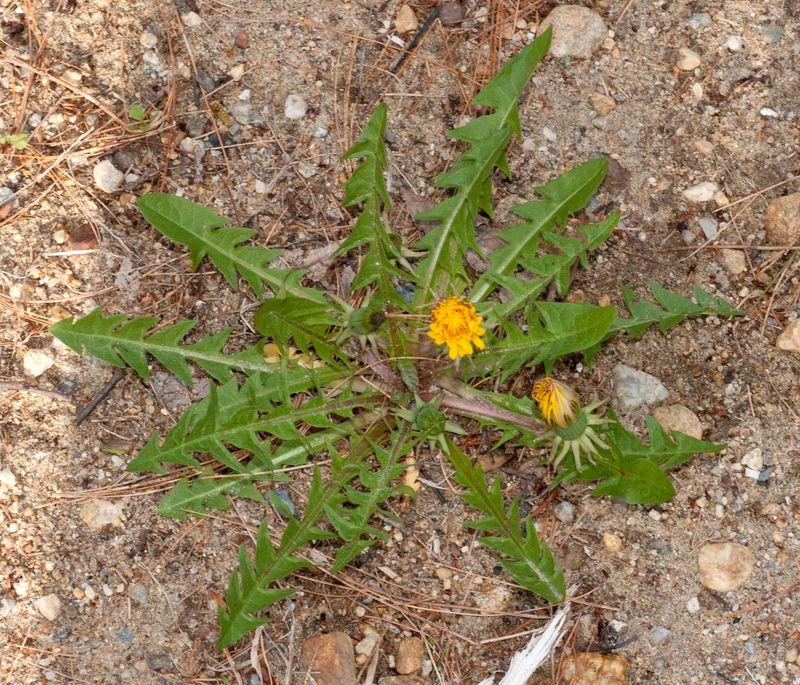
Flip the identification checklist and the picture changes completely.
No shamrock leaves, no hairy stems: just a flat rosette of long, deeply toothed leaves radiating out from a central root, a thick taproot that anchors hard into Piedmont clay, and one bright yellow flower head per hollow stalk.
That is common dandelion, and it is not native to North Carolina.
Forest Service documentation confirms that Taraxacum officinale is a European introduction that has naturalized widely across North America.
The flower head that looks like one simple yellow bloom is actually a tight cluster of many individual ray flowers, each one accessible to a visiting insect.
That structure is part of why dandelion can be useful to early foragers.
In late winter and early spring in North Carolina, before redbud and dogwood fully open, dandelion is sometimes one of the few things blooming in a neighborhood lawn.
Bees, flies, and beetles visit it during that gap.
The usefulness is real but limited.
Research on dandelion pollen’s amino acid profile found it low in several nutrients important to honey-bee brood development when dandelion is a major or sole pollen source.
That finding applies specifically to honey bees, and the nutritional picture for every native bee species is not the same.
The honest framing is that dandelion can be a helpful early supplement, not that it provides a complete diet or that leaving it guarantees healthy bees.
And NC State’s weed guidance treats it plainly as a broadleaf lawn weed with a long management history.
A Flower Can Help Without Being Essential
Here is where the story gets a little more nuanced.
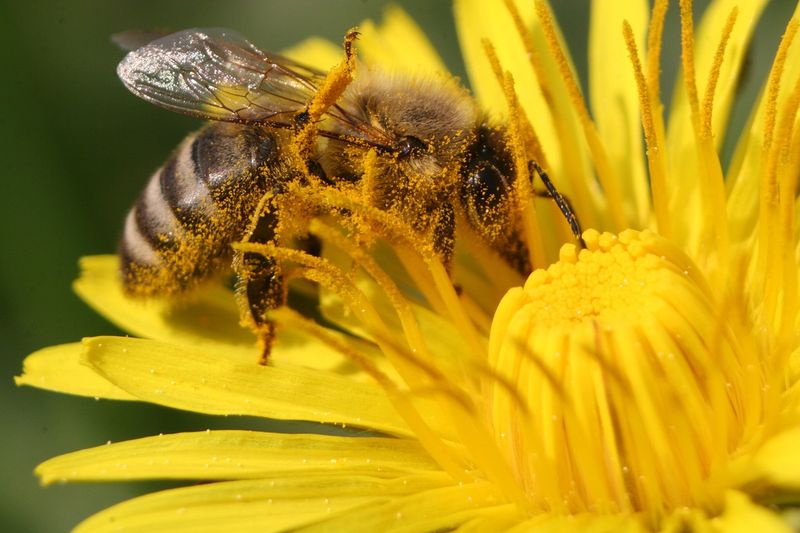
Native bees can and do visit nonnative, weedy, and ornamental flowers.
They are not locked into a list of approved native plants.
A bumblebee working a dandelion in your Piedmont yard is doing exactly what bumblebees do: finding food wherever it is available in the moment.
A Forest Service study of suburban lawns in Massachusetts documented 111 bee species visiting spontaneous lawn flowers, with dandelion and clover among the most abundant.
The researchers described those plants as supplemental floral resources, not complete habitat.
That distinction matters.
A bee visiting your dandelion patch is not a bee that has been saved by your dandelion patch.
Visitation is not dependence.
One yellow patch in one lawn cannot replace the seasonal range of flowering plants a healthy bee community needs, cannot provide nesting habitat, and cannot offset pesticide exposure, disease, or the loss of diverse forage across a full active season.
The amino acid research on dandelion pollen reinforces this: a flower can be useful at a moment in time without being nutritionally sufficient on its own.
USDA wild-bee habitat research supports providing complementary flowers across the full active season rather than relying on any single plant.
The yellow patch in your lawn is one small data point in a much larger picture.
It can be worth keeping for a few weeks without being the thing that makes or breaks your local bee population.
You Can Keep A Small Flowering Patch
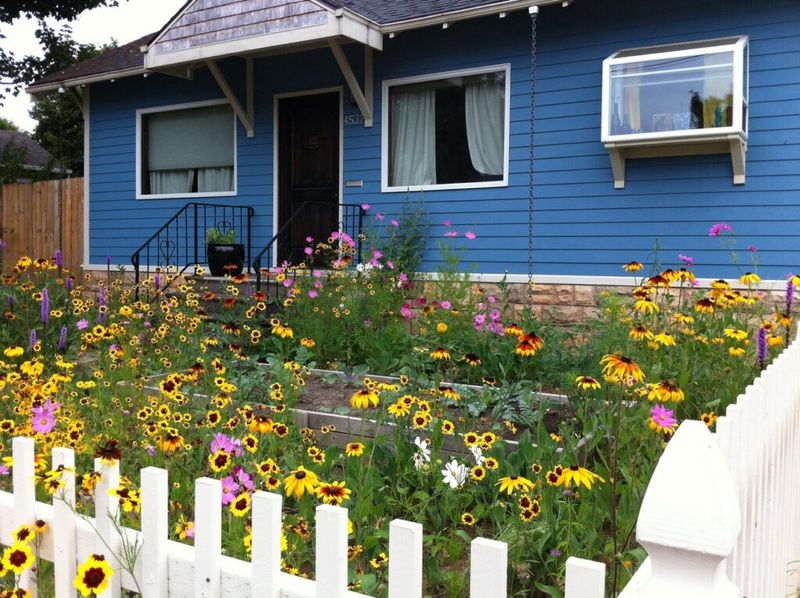
Leaving a small patch is a reasonable choice, and nobody is going to cite you for it.
Many Piedmont homeowners let a corner of the lawn flower for a few weeks in spring without the rest of the yard looking neglected.
The practical move is to delay mowing that one area until the flowers close and the plant sets seed, then mow it along with the rest of the grass on your regular schedule.
Mowing is not automatically harmful to your lawn or to visiting insects.
But mowing while flowers are open does remove forage, and timing your mow for after peak bloom costs you almost nothing.
NC State Extension notes that yellow woodsorrel flowers through a long growing season, so a complete hands-off approach would leave the patch blooming far longer than most homeowners want.
A short delay of a week or two around peak flowering is the practical middle ground, not a permanent no-mow zone.
This is a habitat choice, not a bee-conservation requirement.
The suburban lawn bee study found supplemental value in spontaneous flowers, but the researchers were not suggesting homeowners abandon lawn maintenance.
Keeping a small patch gives visiting insects a brief resource.
Removing the patch does not collapse the local bee community.
Both are acceptable outcomes, and the decision belongs entirely to you and your yard.
A less uniform lawn for two weeks in April is a small trade-off.
Whether that trade-off is worth it depends on how much you care about the patch and how much you care about the bees working it on a given morning.
Hand Removal Can Help Control A Small Patch
Wanting a tidier lawn is not a crime against pollinators.
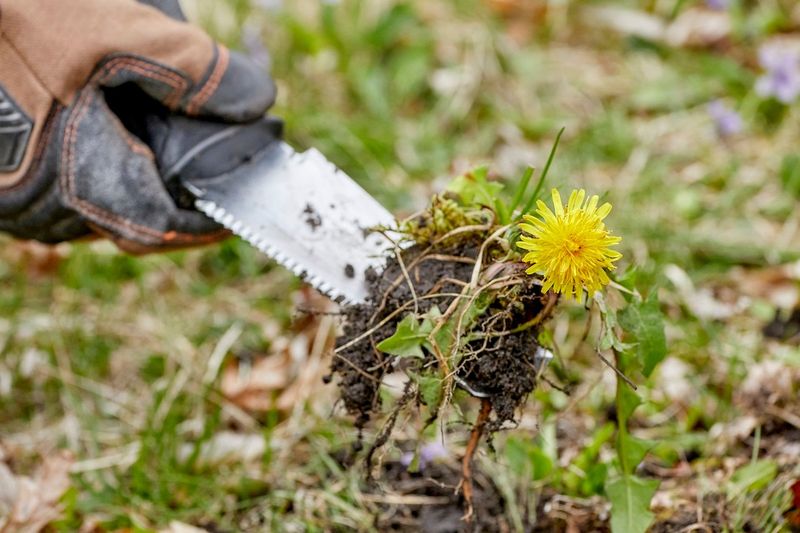
If the yellow patch is small and you want it gone, a spade or hand trowel is the right starting tool, and doing the job correctly the first time saves you from repeating it every few weeks.
For dandelion, the taproot is the whole game.
That root can run 6 to 18 inches deep in loose soil, and snapping it off halfway down means the plant regrows from whatever stays behind.
NC State’s organic lawn care guidance recommends removing weeds with a spade or trowel and taking out the full root system to reduce regrowth.
Wet the soil first if your Piedmont clay is dry and cracking; the root comes out cleaner and the surrounding grass stays less disturbed.
Yellow woodsorrel is a different challenge.
Pulling the visible top often leaves the rhizomes and stolons behind in the soil, and those underground runners will push up new growth within a few weeks.
NC State Extension’s woodsorrel profile makes clear that this plant spreads through multiple routes, which is why hand removal alone may not be a complete fix.
Remove as much of the underground material as you can reach, but plan for the possibility that repeated removal or additional management will be necessary before the patch stays gone.
Recurring weeds in the same spot are usually a signal from the turf itself.
Thin or weak grass leaves gaps, and woodsorrel in particular tolerates poor soil and low competition.
NC State’s chemical weed control reference connects weed pressure to turf health and recommends adapted turfgrass varieties, appropriate fertilization, correct mowing height, and consistent watering to encourage dense coverage.
Denser turf crowds out opportunistic weeds over time, though no single lawn practice eliminates every weed entirely.
Spraying A Blooming Patch Takes More Care
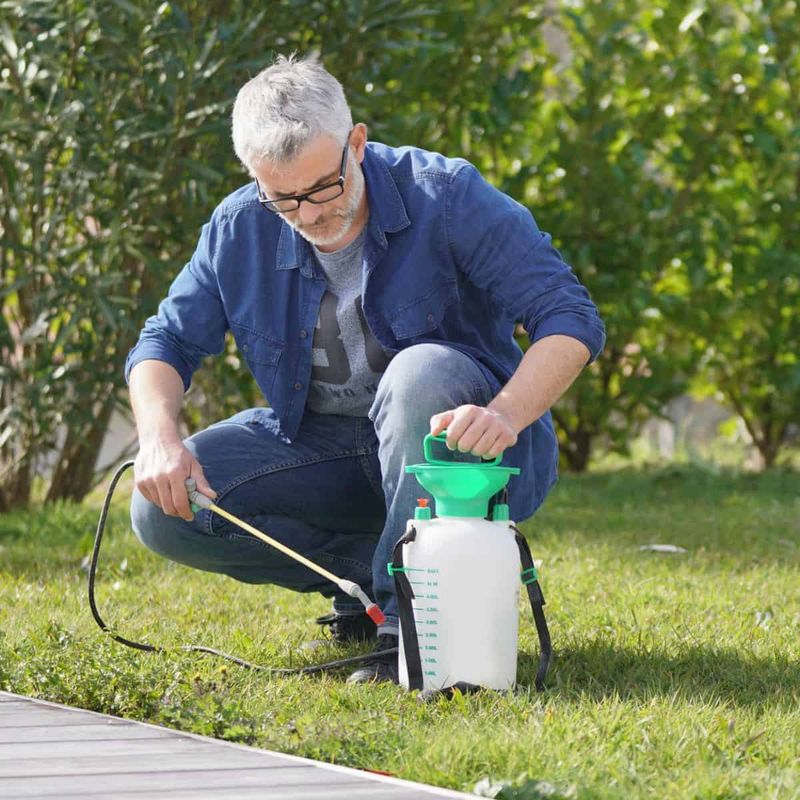
Reaching for a sprayer is not automatically the wrong call, but doing it without a plan can create more problems than the original patch.
The first step is knowing exactly what you have growing, because herbicide options for yellow woodsorrel and dandelion differ, and some products that work on one weed can injure certain turfgrass species at the same time.
NC State’s chemical weed control reference for turf shows that control options, effectiveness timing, and turf-injury risk vary by weed species and grass type.
A product that is safe on tall fescue may not be safe on centipede, and a product labeled for dandelion may not be the most effective choice for established woodsorrel with a developed rhizome system.
Read the current label for your specific product, your specific turfgrass, and your specific weed before you mix anything.
Spraying a blooming patch carries pollinator risk that goes beyond the obvious.
EPA pollinator protection guidance recommends avoiding applications while pollinators are actively foraging, preventing spray drift onto flowering plants nearby, and following any bloom-time or time-of-day restrictions printed on the label.
Some products carry explicit restrictions; others do not.
The label is the legal document, and it controls.
The idea that spraying after dusk is automatically safe for bees is not accurate.
Night application reduces exposure for some daytime foragers, but it does not eliminate residue risk, drift to nearby blooms, or label requirements that may set stricter conditions.
Follow the current label on your specific product, and when in doubt, mow the blooming patch short before treating so you are not applying over open flowers.
Build Better Bee Forage Beyond The Grass
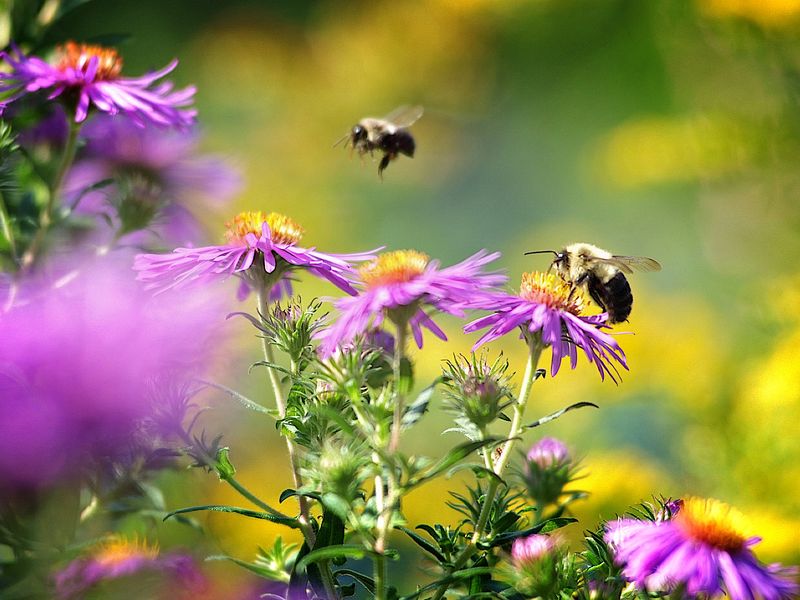
One yellow patch in a lawn is a starting point, not a strategy.
The most reliable way to support bees in a North Carolina yard is to plant a mix of native species that bloom at different times from late winter through fall, so foragers have something available across the full season rather than one brief window.
NC State Extension recommends a diversity of native plants with staggered bloom periods for pollinator habitat, and the plant list for North Carolina is genuinely good.
Eastern columbine and serviceberry open early in spring.
Redbud and flowering dogwood follow.
Bee balm and mountain mint carry midsummer.
Goldenrod and aromatic aster close the season in fall, which is exactly when migrating monarchs are moving through the Piedmont and Coastal Plain.
Plant selection should match your site.
NC State’s native plants handbook sorts options by region, light, and soil moisture, which matters because a plant that thrives in mountain loam may struggle in Sandhills sand or Piedmont red clay.
Matching the right plant to the right spot is what makes a habitat planting actually work instead of just look good for one season.
Forage is only half the picture.
Many native bees nest in bare or sparsely vegetated soil, and others use hollow or pithy stems left standing through winter.
Leaving a small brush pile, a patch of undisturbed ground, or last year’s perennial stems standing until late March gives ground-nesting and stem-nesting bees somewhere to overwinter.
USDA wild-bee habitat research consistently points to complementary seasonal resources and suitable nesting sites as the foundation of a healthy bee community.
Start by identifying what is actually growing in that yellow patch, then decide what to keep and what to plant next.
That small act of looking before spraying is genuinely the best first move you can make.