
The Meaning Behind An Indigo Bunting Turning Up In Your Pennsylvania Garden
Follow us on Google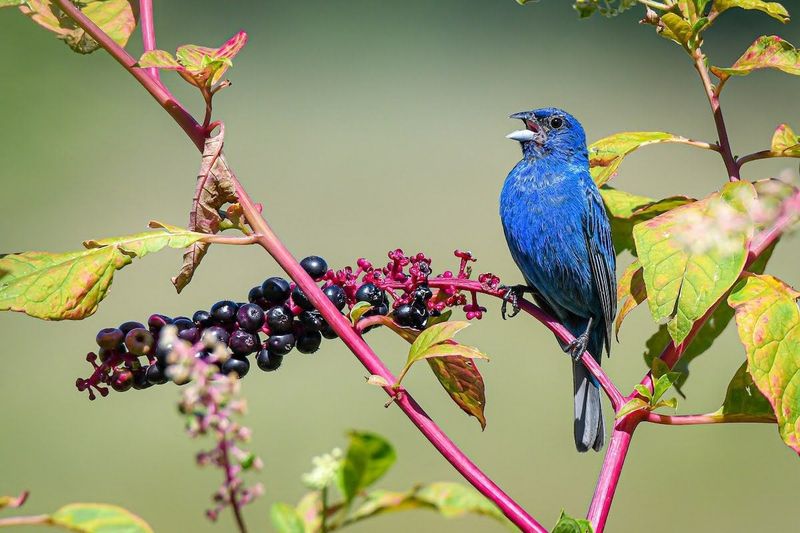
You step outside on a May morning in Pennsylvania and catch a flash of blue so bright it almost looks painted on.
For a second you wonder if you imagined it, then the little bird lands on a branch and just sits there, impossible and calm.
That blue visitor is an Indigo Bunting, and its appearance in your yard carries a real, grounded message about the landscape around you.
Understanding what drew it here is more useful and honestly more interesting than any lucky-omen story you might have heard.
The Indigo Bunting Means Usable Habitat Is Nearby
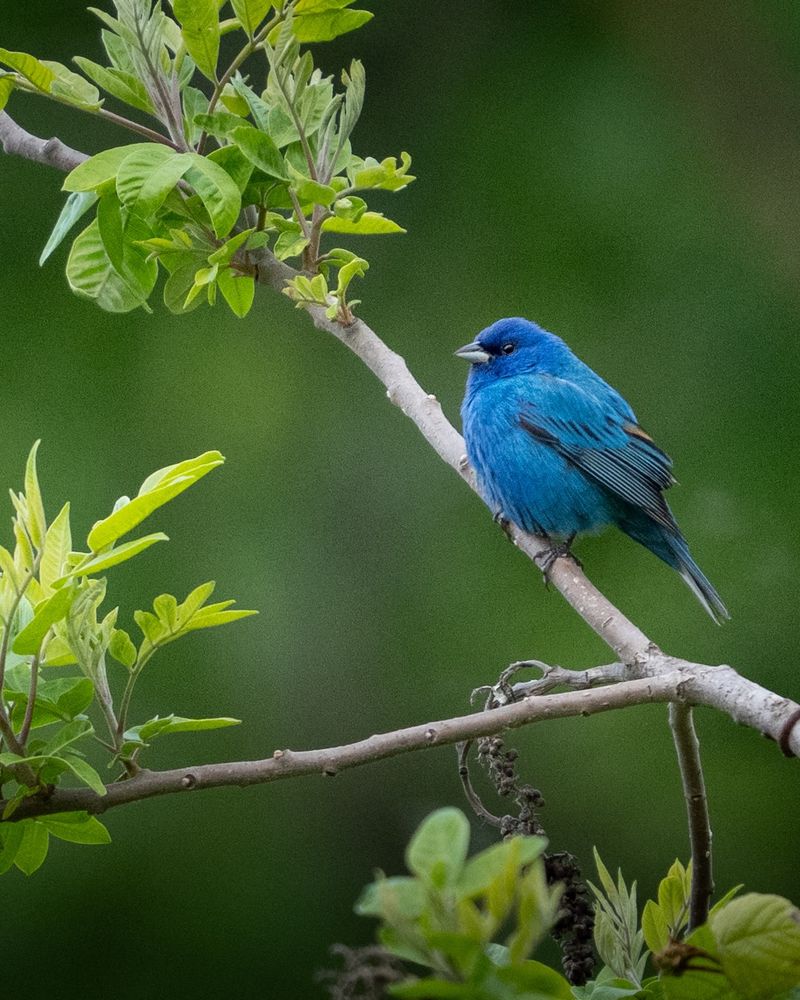
A sudden blue bird in a Pennsylvania garden is not a random event.
According to the Pennsylvania Game Commission, Indigo Buntings are statewide and common across the commonwealth, but they are drawn to specific landscape conditions: brushy edges, weedy patches, hedgerows, reverting fields, power-line corridors, and places where a stand of trees gives way to open ground.
That means the bird in your yard is almost certainly using the surrounding landscape for food, cover, or a travel stop during seasonal movement.
It found something useful nearby, and your property sits close enough to benefit.
A tightly mowed suburban lot may see one briefly during migration, while a yard beside an overgrown fence line or an unmowed back corner may attract repeated visits.
What the sighting does not mean is equally worth knowing.
Indigo Buntings are not omens of good luck, messages from a loved one who has passed, or predictors of rain or personal fortune.
Those stories are understandable, because the bird genuinely does look like something out of a dream, but the actual explanation is more grounded and, in its own way, more satisfying.
According to Cornell Lab of Ornithology’s life history for the species, Indigo Buntings use open grasslands and lawns during migration and favor shrubby, weedy habitat during breeding season.
So when one turns up at your place, the landscape around you is doing something right.
That flash of blue is the yard telling you something worth listening to.
Why The Blue Looks Almost Impossible
Here is where it gets genuinely interesting.
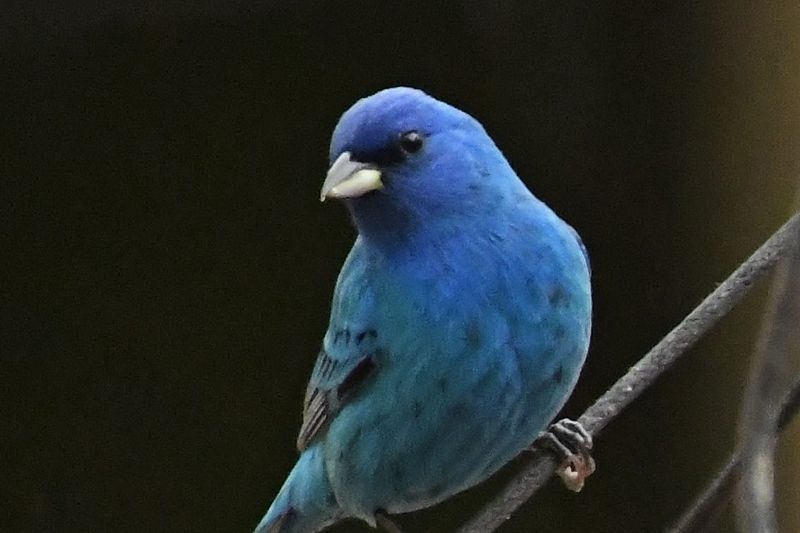
The male Indigo Bunting does not actually have blue pigment in his feathers.
As Cornell Bird Academy explains in its guide to bird coloration, that brilliant color comes from microscopic feather structures that scatter and reflect light, similar to the way a soap bubble catches color.
In direct sun the bird blazes.
Move him into the shade and he can look so dark he almost disappears.
Knowing that helps you confirm what you are looking at.
The adult male is blue overall, with the richest, deepest blue concentrated on the head.
He is a small bird, roughly 4.7 to 5.1 inches long and weighing between 0.4 and 0.6 ounces, with a wingspan of about 7.5 to 8.7 inches.
His tail is short and his bill is thick and conical, built for cracking seeds.
Those details matter because not every blue bird is an Indigo Bunting.
An Eastern Bluebird is larger, holds a very different posture, and has rusty-orange coloring across the breast.
A Blue Grosbeak is noticeably bigger than a bunting and carries a heavier, more imposing bill.
If the bird you spotted is small, entirely blue, and has that compact seed-cracker bill, Cornell’s identification guide for the species points clearly to an Indigo Bunting.
Also keep in mind that females and young birds look completely different.
They are brownish overall, sometimes showing a hint of blue on the wings, tail, or rump.
Many people walk right past a female bunting because she blends in like a plain sparrow.
She is the same species, just not showing off.
Pennsylvania Timing Reveals A Seasonal Visitor Or Neighbor
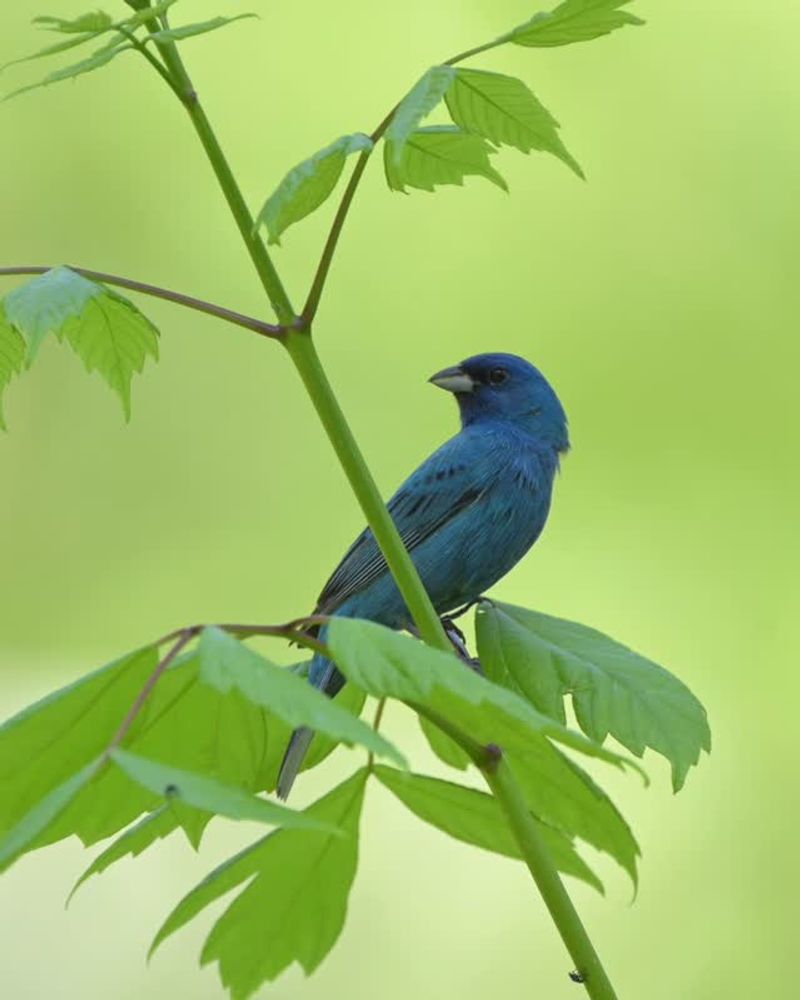
Timing a sighting actually tells you quite a bit about why the bird is there.
The Pennsylvania Game Commission places northward male migration broadly in late April and May, which means a brilliant blue bird at your feeder or in your hedgerow during those weeks is most likely a male moving through or just arriving on his breeding grounds.
Local arrival can shift earlier or later depending on elevation, weather patterns, and available habitat, so a yard in the Poconos or on the Allegheny Plateau may see migrants a week or two behind a yard in the warmer Susquehanna Valley or southeastern Pennsylvania.
Cornell Lab of Ornithology notes that during migration, Indigo Buntings use open grasslands, lawns, and weedy areas.
During breeding season they shift toward shrubby, weedy habitat.
So a May sighting could be a passing migrant fueling up, or it could be a male sizing up your neighborhood as a possible territory.
A fall sighting, when birds move south again, often involves small flocks foraging quietly in weedy patches, and those birds tend to be less showy about it.
What a perched, singing male does not confirm is that there is a nest on your property.
Pennsylvania Game Commission describes breeding territories covering roughly 2 to 6 acres, and Cornell reports that nests are concealed in low vegetation and genuinely difficult to find.
A male may be singing from your yard while his nest is tucked into a blackberry thicket two properties over.
The singing is a claim, not a confirmation.
One sighting, in other words, is a clue, not a census.
But it is a clue worth taking seriously, because it tells you the surrounding landscape still has enough structure to support the species through at least part of the season.
Your Feeder May Not Be The Attraction
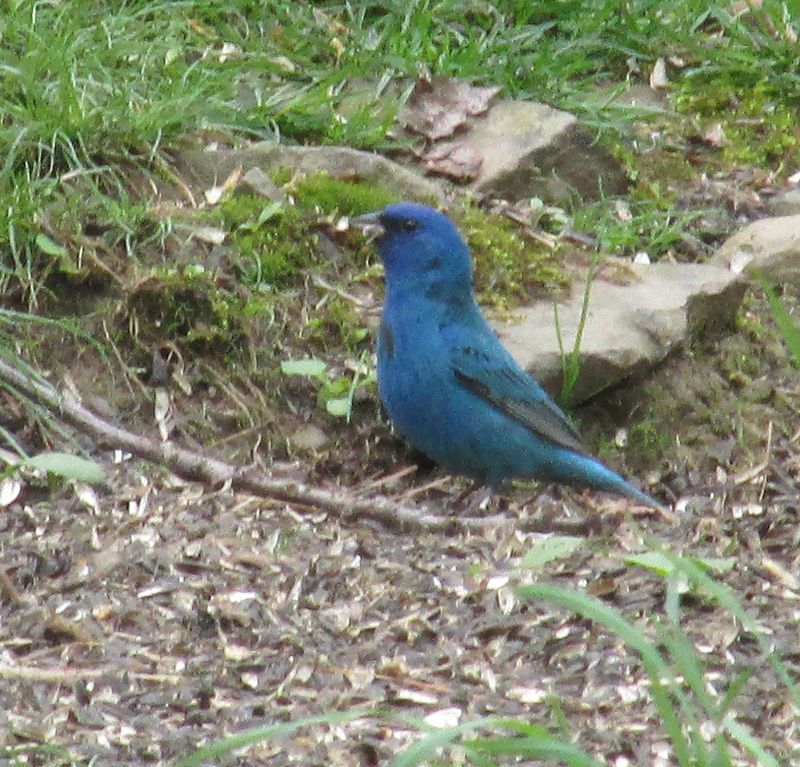
Many people assume that because they spotted an Indigo Bunting near the feeder, the feeder is what brought it.
That assumption is worth questioning.
Indigo Buntings naturally forage on the ground and in low bushes, eating insects, seeds, grains, and wild fruits.
A bird near your feeder may actually be working through the spilled seed on the ground, hunting small insects in the nearby grass, or picking at berries in a shrub a few feet away.
Cornell does identify thistle or nyjer seed as possible backyard attractants for the species.
But Penn State Extension’s overview of Pennsylvania bird feeding does not list Indigo Buntings among the ten most common feeder visitors in the state.
They show up at feeders, but they are not regulars the way House Finches or Dark-eyed Juncos are.
Habitat and migration timing likely matter more than any single seed choice.
That does not mean a feeder is useless.
Offering thistle or nyjer seed in a tube feeder is a reasonable, low-effort option if you want to try.
Put out modest amounts, only what birds can finish in a day or so, and keep the feeder clean.
According to Penn State Extension’s guidance on reducing disease risk at feeders, platform feeders and deck feeding areas should be cleaned weekly with soap and disinfectant, and moldy seed should be removed promptly.
Think of the feeder as one small piece of a larger picture.
The brushy corner, the patch of weedy grass, and the nearby hedgerow are doing as much work as anything you hang from a shepherd’s hook.
The bunting is reading the whole yard, not just the one spot where you hung the seed.
A Messier Garden Can Offer Better Cover
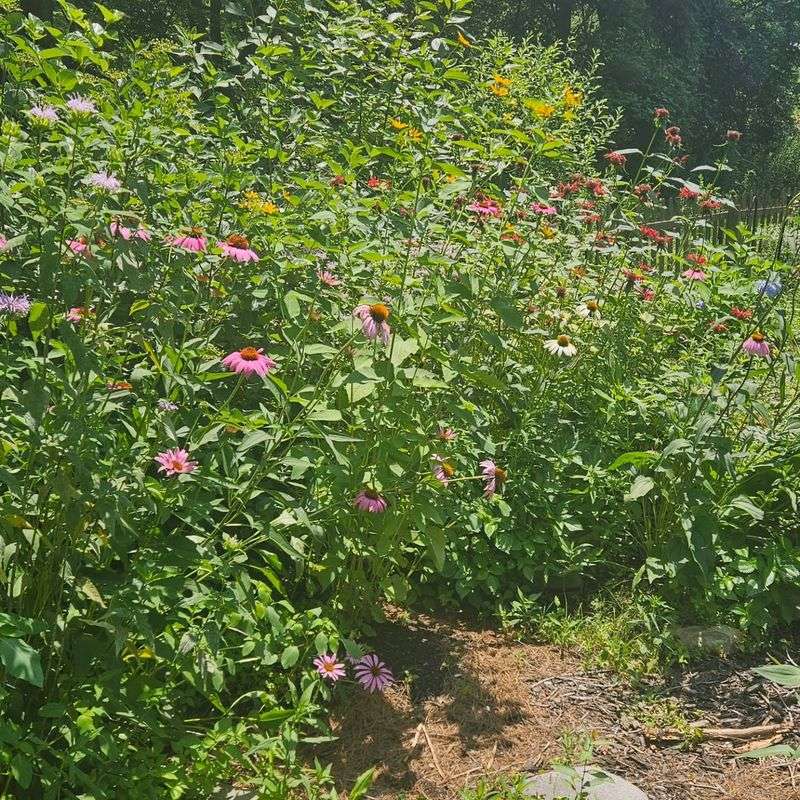
The single most useful thing a Pennsylvania homeowner can do after spotting an Indigo Bunting is resist the urge to tidy everything up.
The habitat conditions the species actually uses are the ones most yards treat as problems: overgrown fence lines, weedy patches, low shrubs, blackberry thickets, and the kind of brushy edge where a mowed lawn gives way to something rougher.
Documented food plants for Indigo Buntings include goldenrods (Solidago spp.), dandelions, thistles, grains, berries, and serviceberries (Amelanchier spp.).
None of these are exotic or expensive.
Most of them are already present in Pennsylvania yards that have not been fully manicured.
Leaving a corner unmowed through spring and summer, letting a native grass clump stay put, or allowing a serviceberry to grow along a fence line can increase the usefulness of your property without requiring a single trip to a garden center.
A layered edge with open ground at the bottom, low cover in the middle, and a few taller shrubs or small trees behind it is more genuinely useful to this species than a flat, uniform lawn.
Indigo Buntings also eat insects, including beetles, caterpillars, grasshoppers, and aphids, as part of their diet.
But one visiting bird will not actually control spotted lanternflies, Japanese beetles, or spongy moth caterpillars at a meaningful garden scale.
The sources simply do not support that kind of promise, so enjoy the insect foraging for what it is: a bird doing what birds do.
Retaining suitable habitat can increase a property’s usefulness, but it cannot guarantee a return visit.
Cornell’s life history for the species and Pennsylvania Game Commission’s species page both point to brushy, weedy, open-edge conditions as the real draw.
Keep one rough corner and you have done the most important thing.
Bird Friendly Means Cleaner And Safer
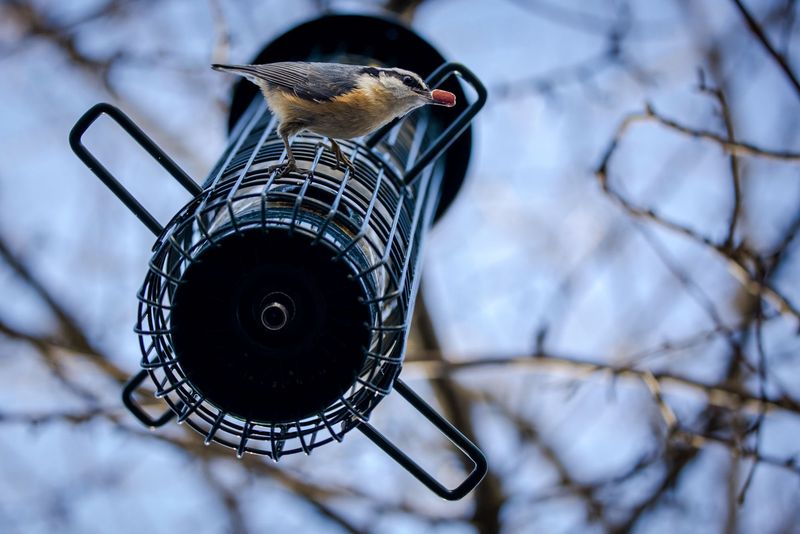
Attracting any bird to a yard also means taking responsibility for what happens once it arrives.
Feeders concentrate birds in one spot, and that can spread disease fast if the setup is not maintained.
Penn State Extension recommends cleaning platform feeders and deck feeding areas weekly with soap and disinfectant, removing moldy seed immediately, storing fresh seed in a cool, dry container, and regularly raking up droppings and debris from any ground-feeding area.
These are not optional extras; they are the baseline for feeding birds responsibly.
A birdbath can support backyard birds through warm Pennsylvania summers, though no source specifically proves it draws Indigo Buntings.
Penn State Extension’s guidance on water for wildlife recommends changing the water daily in summer, scrubbing the bath weekly, and keeping it away from feeders so droppings and seed debris do not contaminate the water.
If you place a ground-level bath, position it at least 10 to 15 feet from shrubs or other hiding spots where a cat could crouch and wait.
Windows are a serious hazard that most people underestimate.
Audubon recommends placing feeders either within 3 feet of a window or more than 30 feet away.
The risky middle distance lets a bird build up enough speed to cause real injury.
A single hawk decal on the glass is not enough.
Dense exterior patterns, properly spaced window markers, exterior screens, or hanging strings spaced about 4 inches apart give birds a visual warning that the glass is solid.
Cats deserve a direct mention.
Audubon notes that free-roaming cats are a serious hazard to small birds, especially ground-foraging birds and fledglings, and Audubon Connecticut’s bird feeding guide is clear that bells are not a reliable substitute for keeping cats contained.
A yard that concentrates birds near a roaming cat is not actually bird-friendly, no matter how good the feeder setup looks.
Let The Visit Stay A Small, Useful Signal
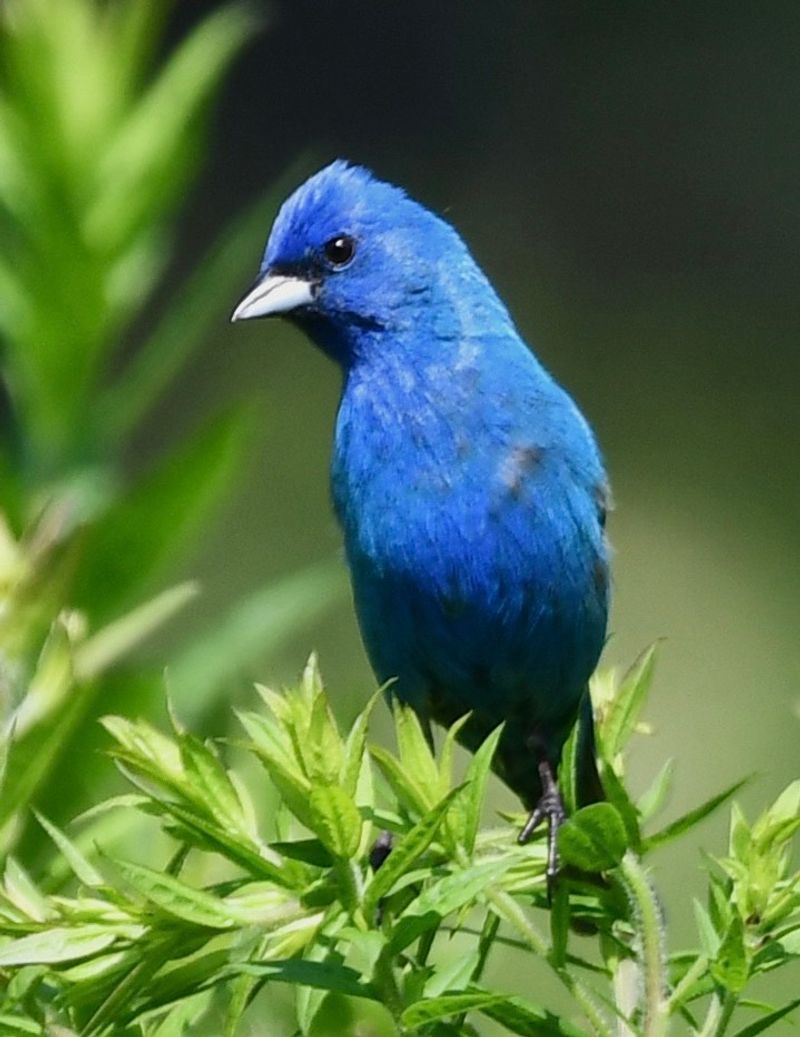
One Indigo Bunting in the yard is a small event with a real meaning.
It tells you that the landscape around your property still has enough connected habitat, food, and cover to support a species that needs all three.
That is worth something, especially in a state where suburban development, frequent mowing, and intensive land use have steadily reduced the brushy edges and weedy corridors these birds depend on.
The species remains generally abundant across Pennsylvania and much of its range, but Cornell Lab of Ornithology reports an estimated 28 percent cumulative population decline from 1966 through 2019, linked to factors including intensive agriculture, reforestation of former edge habitat, frequent mowing, urbanization, and collisions.
The bird is not endangered, but it is not completely free from pressure either.
A sighting is genuinely good news, and it is also a quiet reminder that the conditions making it possible can disappear.
The practical response is not complicated.
Observe carefully and confirm the identification before telling the story.
Retain at least one rough, brushy edge on the property and let it stay that way through the breeding season.
Keep any feeding area clean and sanitary.
Make windows safer with proper spacing and exterior barriers, not a single sticker.
And keep cats contained, because the Pennsylvania Game Commission and bird conservation groups agree that free-roaming cats are among the most preventable hazards small birds face.
The bunting did not come to deliver a message about your luck or your future.
But it did land in your yard, and that is its own kind of good news, the kind you can actually do something about.